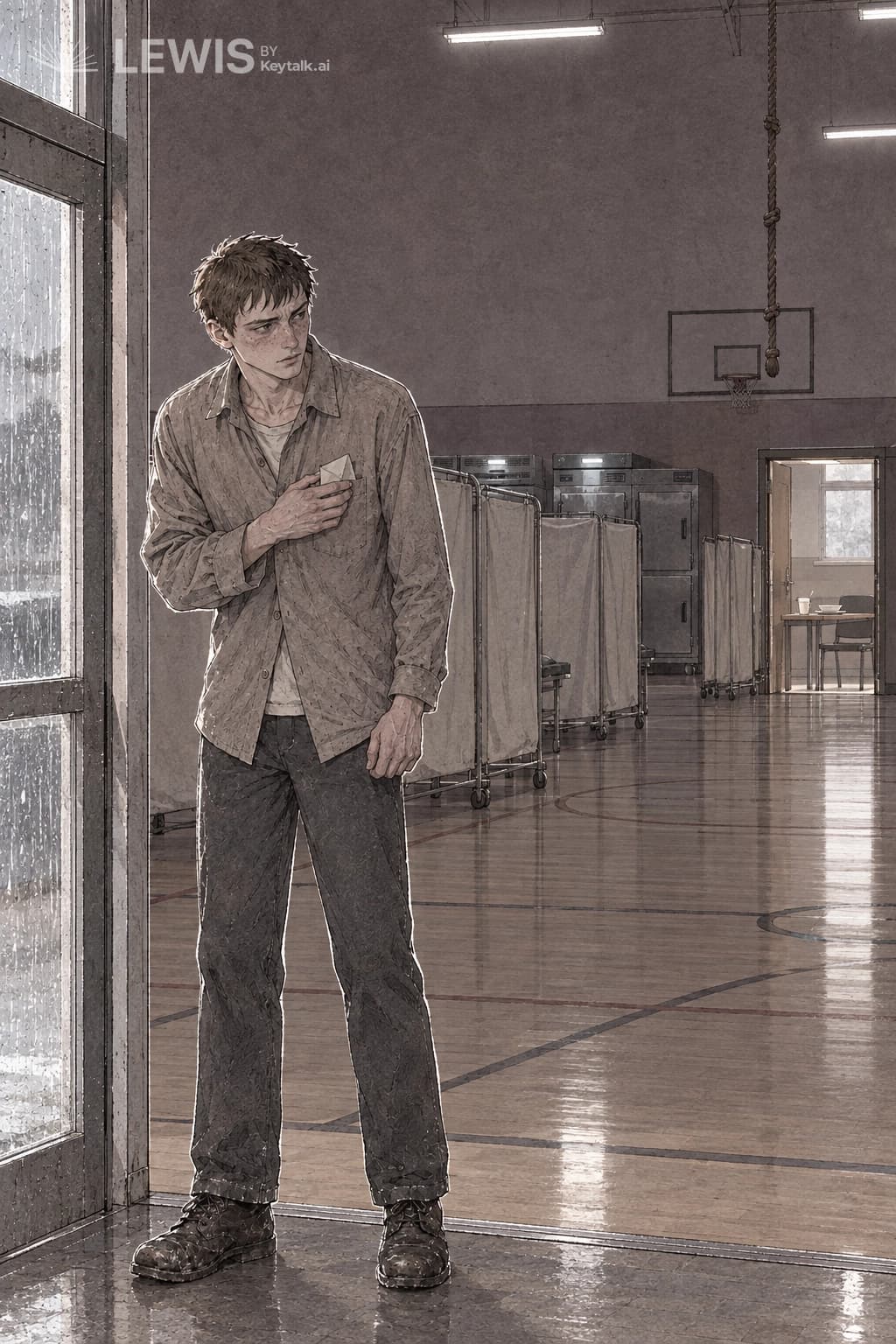
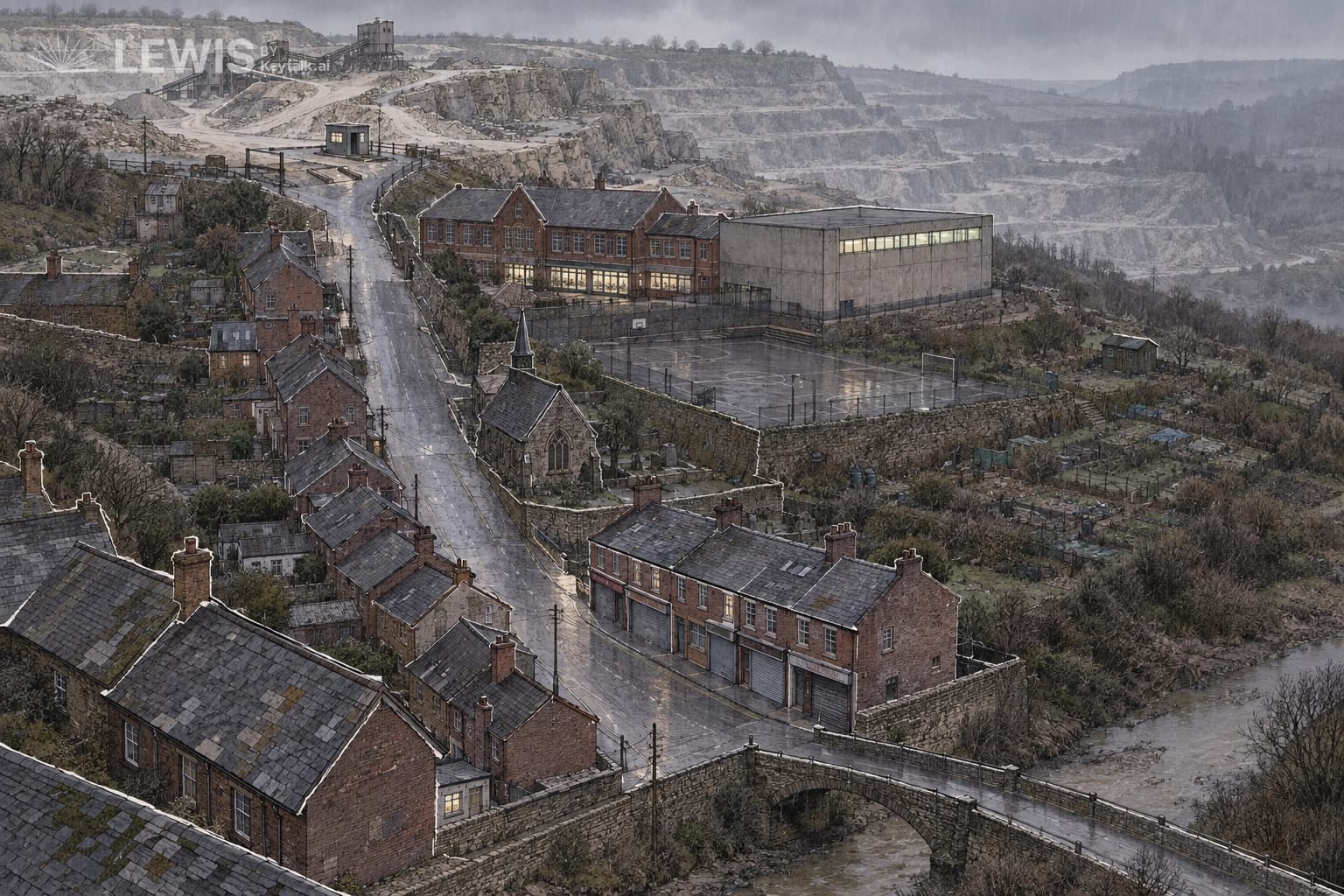
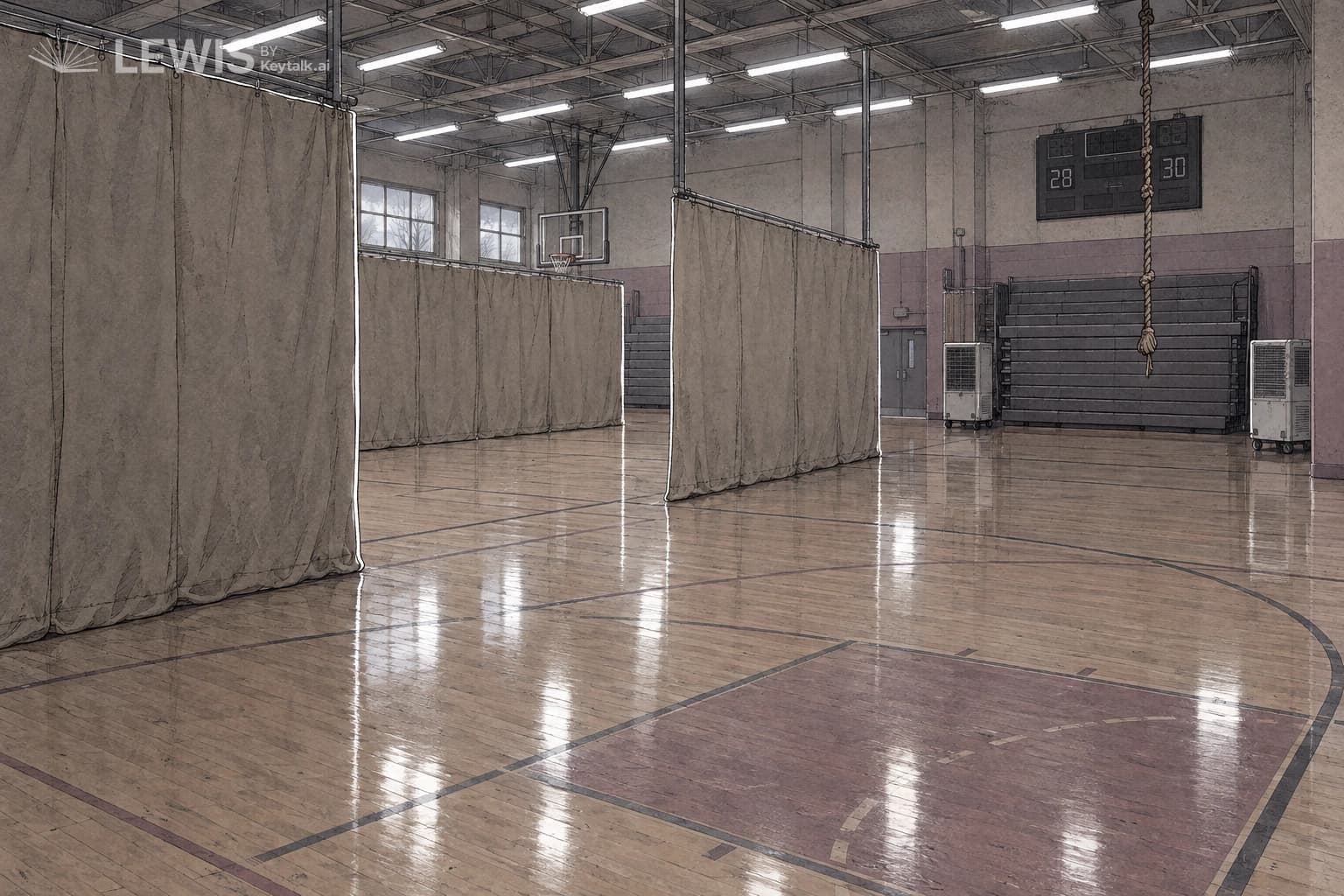
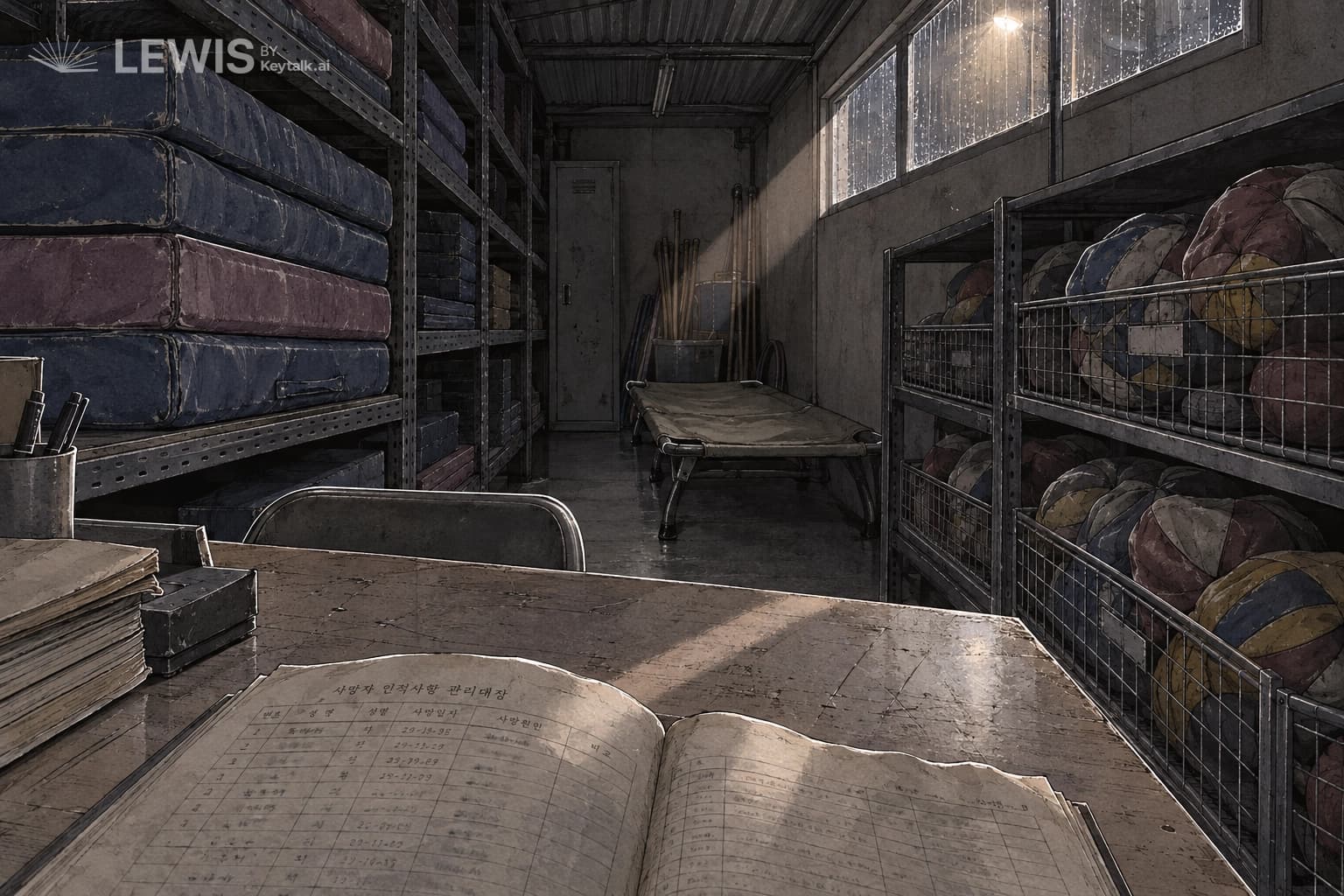
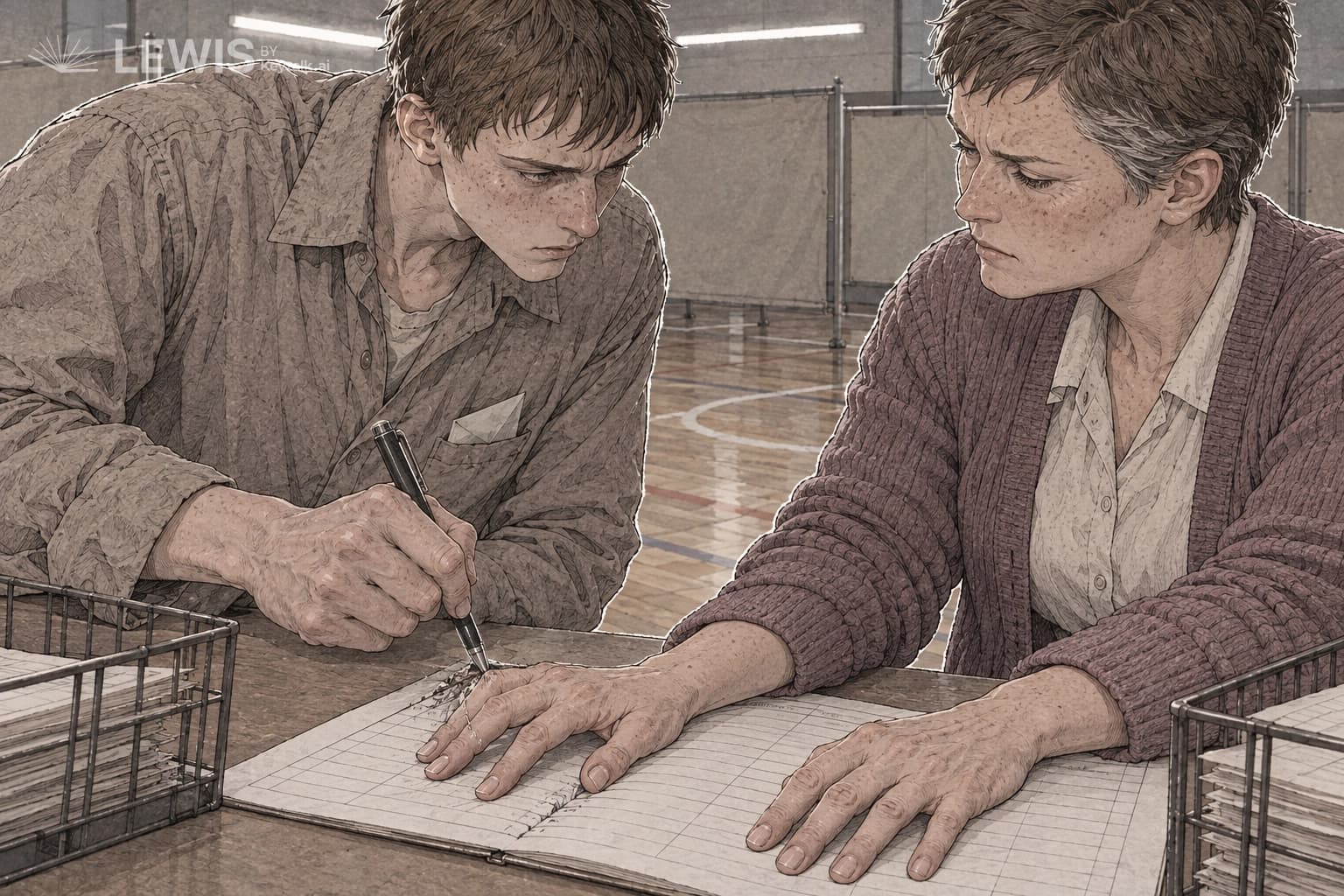
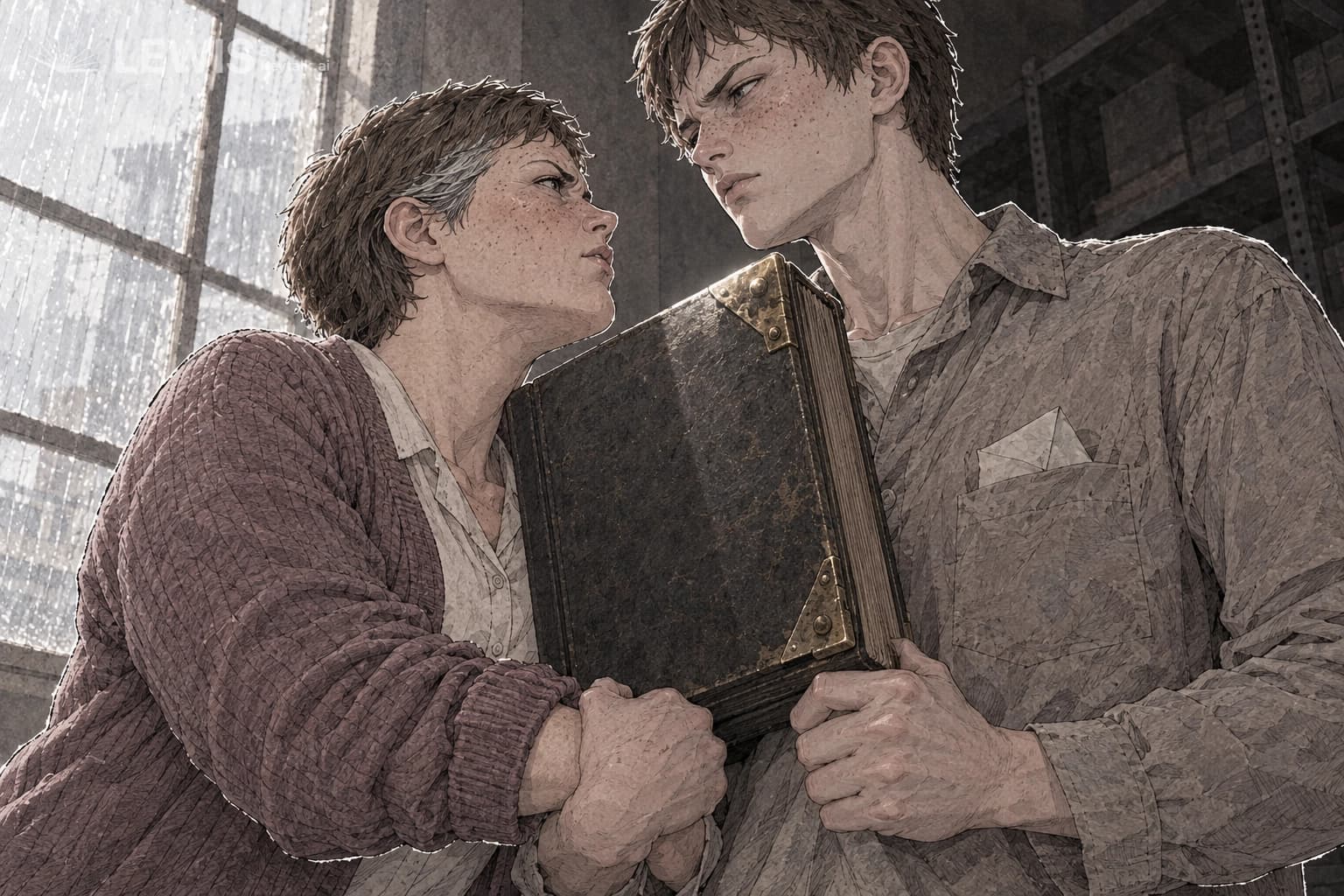
Ellis Rusk walks through the Bellwether School gymnasium under humming strip lights, the floor marked for basketball beneath rows of canvas screens. In the equipment office, Della Pike guards the mortuary register, refusing to let Ellis enter the name of his nineteen-year-old sister, Tamsin Rusk, because no body matches her description and no town ledger proves she ever lived. Della keeps one line blank, covering it with her palm whenever relatives pass, fiercely protecting the memory of a boy whose hand she claims she held while the town gathered to die. Ellis’s mother, Verna Rusk, serves donated broth from the cafeteria counter and sets an unbroken breakfast place at home for Tamsin every morning. At home, Ellis refuses to sit beside the empty chair, sleeping with his work boots laced tight to avoid Verna’s watchful eyes. The unspoken terror between Ellis and Della turns physical late that first evening: locked inside the darkened sports equipment office with rain pounding the corrugated roof, Ellis confronts Della over the register. When Della slams her ledger shut against his chest, Ellis grabs her wrists, pulling her against the metal shelving. The panic and grief collapse into raw, desperate friction; Della pulls his mouth to hers, yanking his slate-blue shirt open, and Ellis backs her against the desk, their bodies colliding with furious, breathless need among the folded gym mats, clinging to each other’s skin as the only solid fact in a town dissolving into collective delusion.
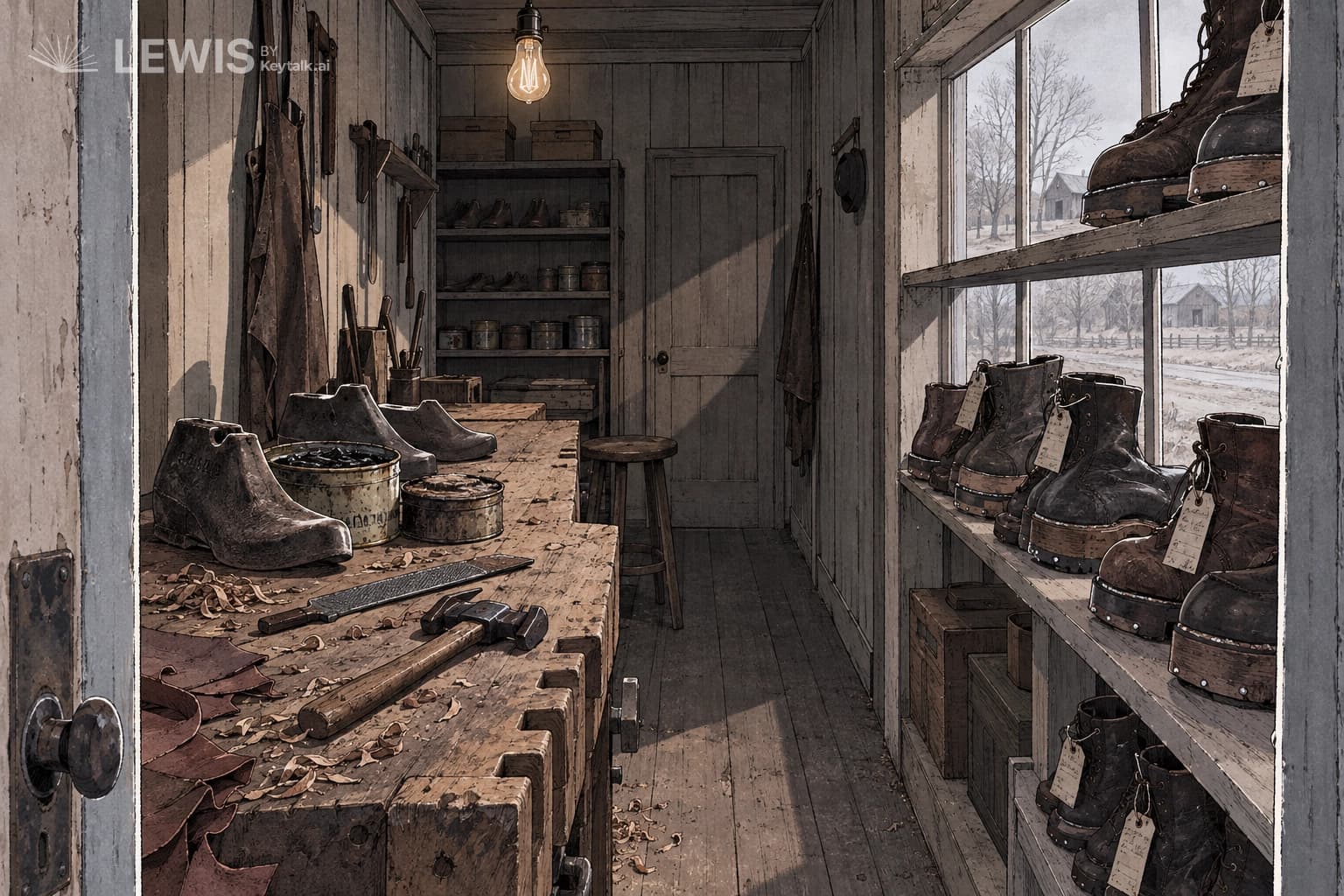
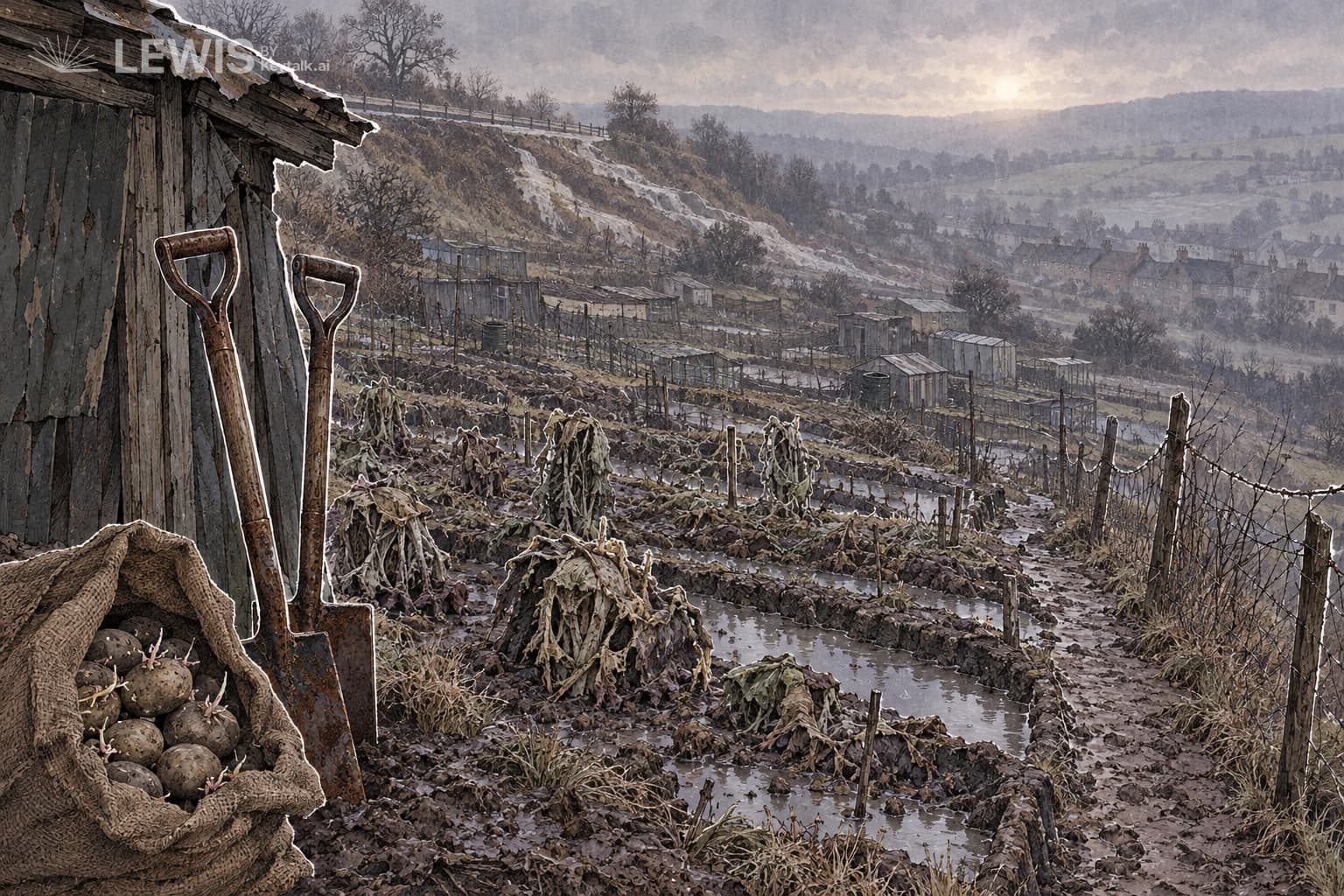
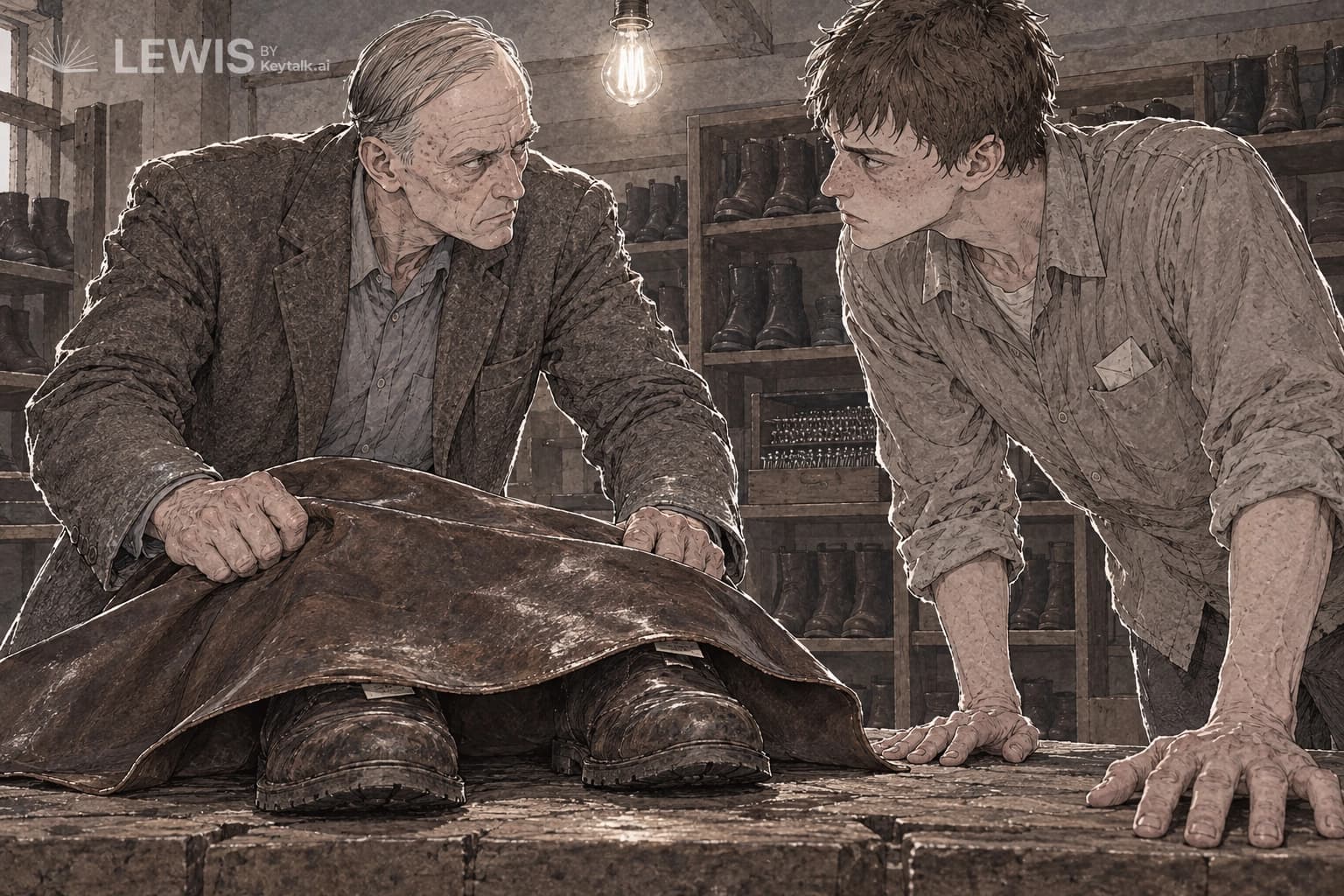
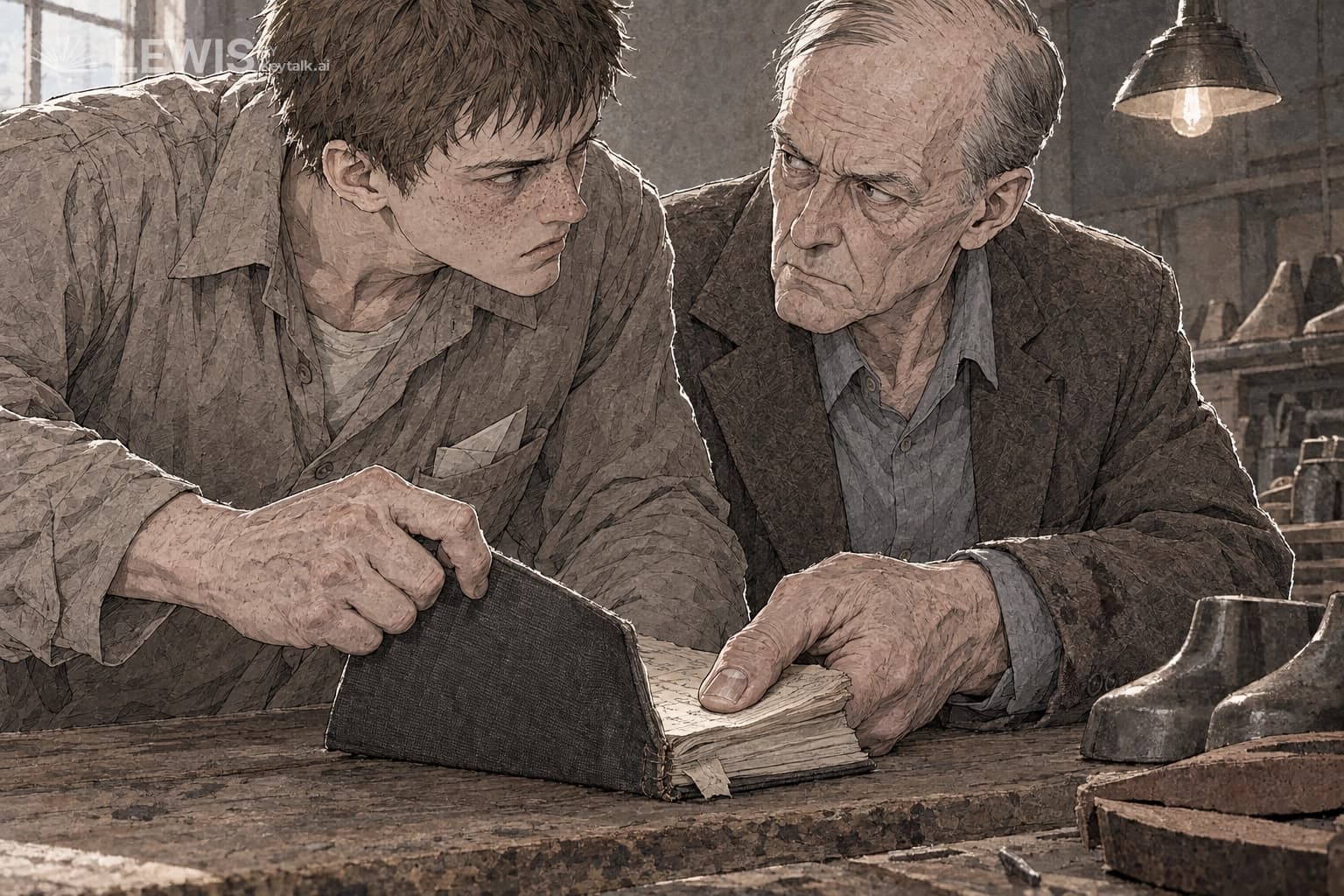
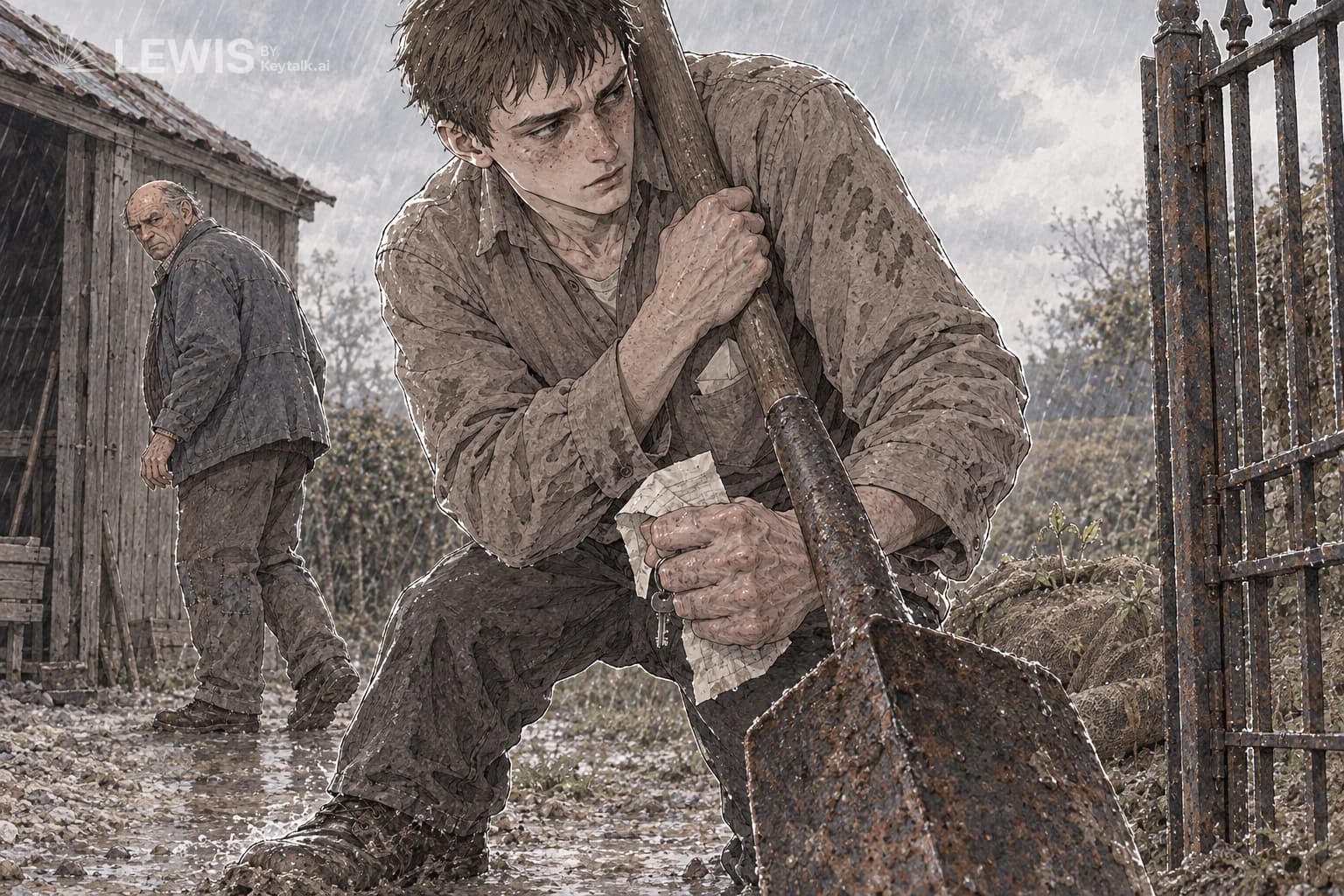
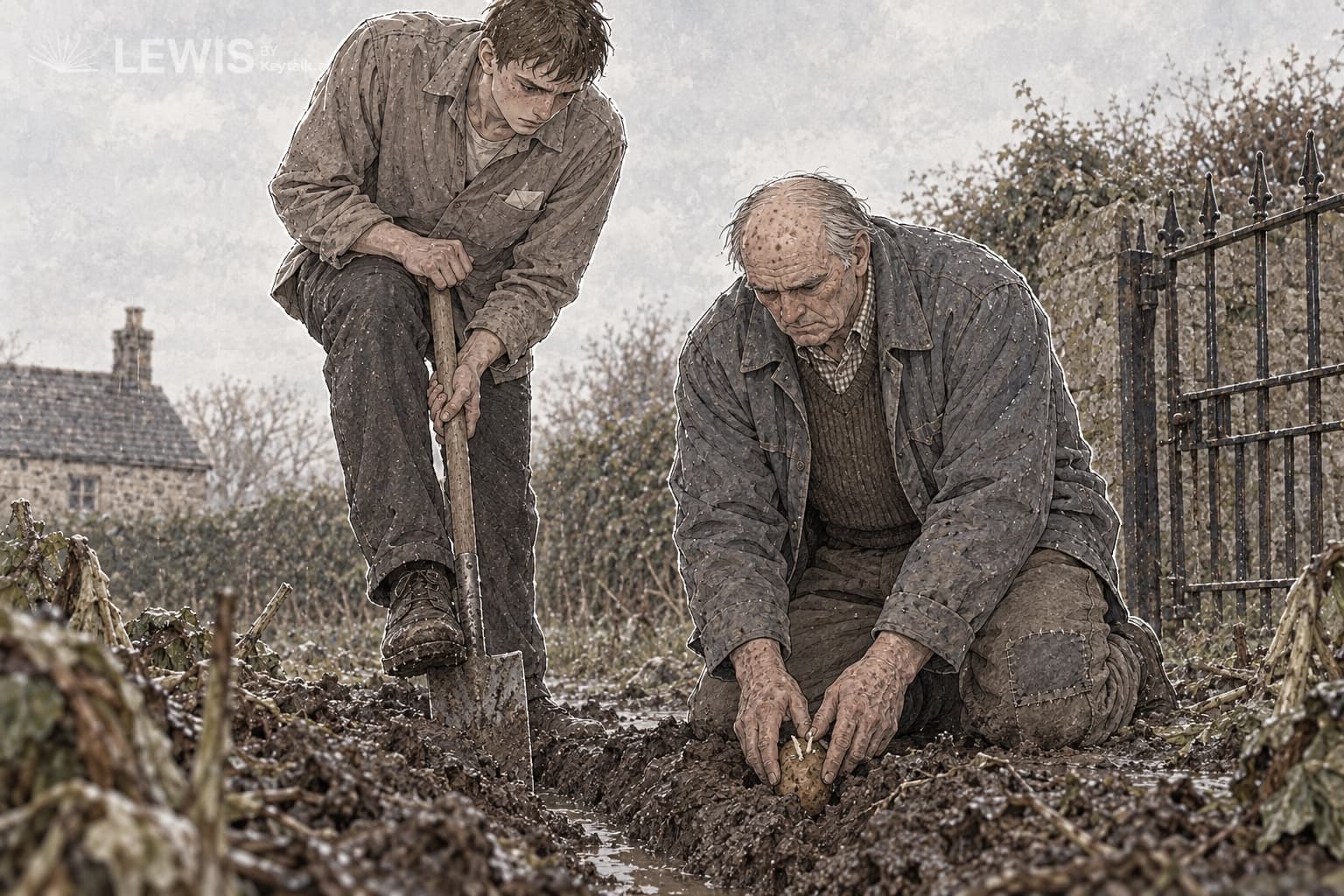
The next day, Ellis tries to trace the source of the mass suicide. Outsiders call it a cult, but the survivors tell fragmented, irreconcilable stories. Escorting Cletus Venn, the boot-repairing lay preacher, through the mortuary, Ellis watches Cletus produce his appointment diary to prove his innocence. Cletus presses his broad thumb over a jagged stub where a page has been torn out—the record of an ordinary Tuesday evening where neighbors gathered in a kitchen and Cletus sat quietly, offering no pastoral objection as they calmly agreed to cease planting, cease working, and die together. Cletus begs Ellis to secure him a speaking slot at the joint funeral so he can defend himself against Verna’s growing campaign to paint him as a fanatic instigator. Later, Ellis visits Hollis Creed at the edge of the abandoned allotments. Hollis presses an iron gate key and a crumpled seed-order receipt into Ellis’s hand, insisting on entering his own name onto an allotment reopening roster for the following month. Hollis remembers the finality of the gathering, yet his own handwriting proves he bought seed potatoes after the kitchen door was closed. Hollis grips Ellis’s forearm, demanding he commit to digging the trenches with him after the funeral, forcing Ellis to confront the impossible contradiction between deliberate death and habitual survival.
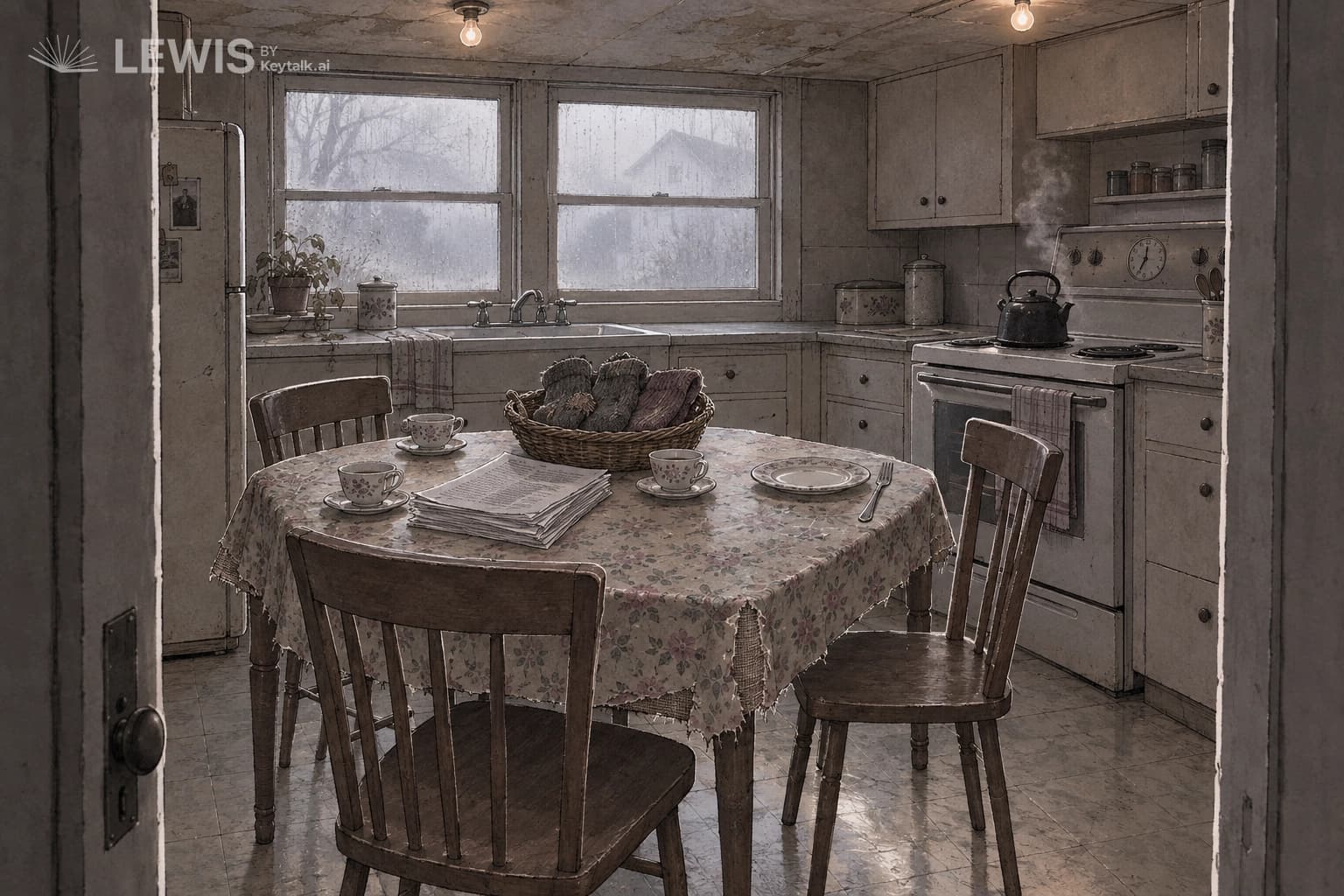
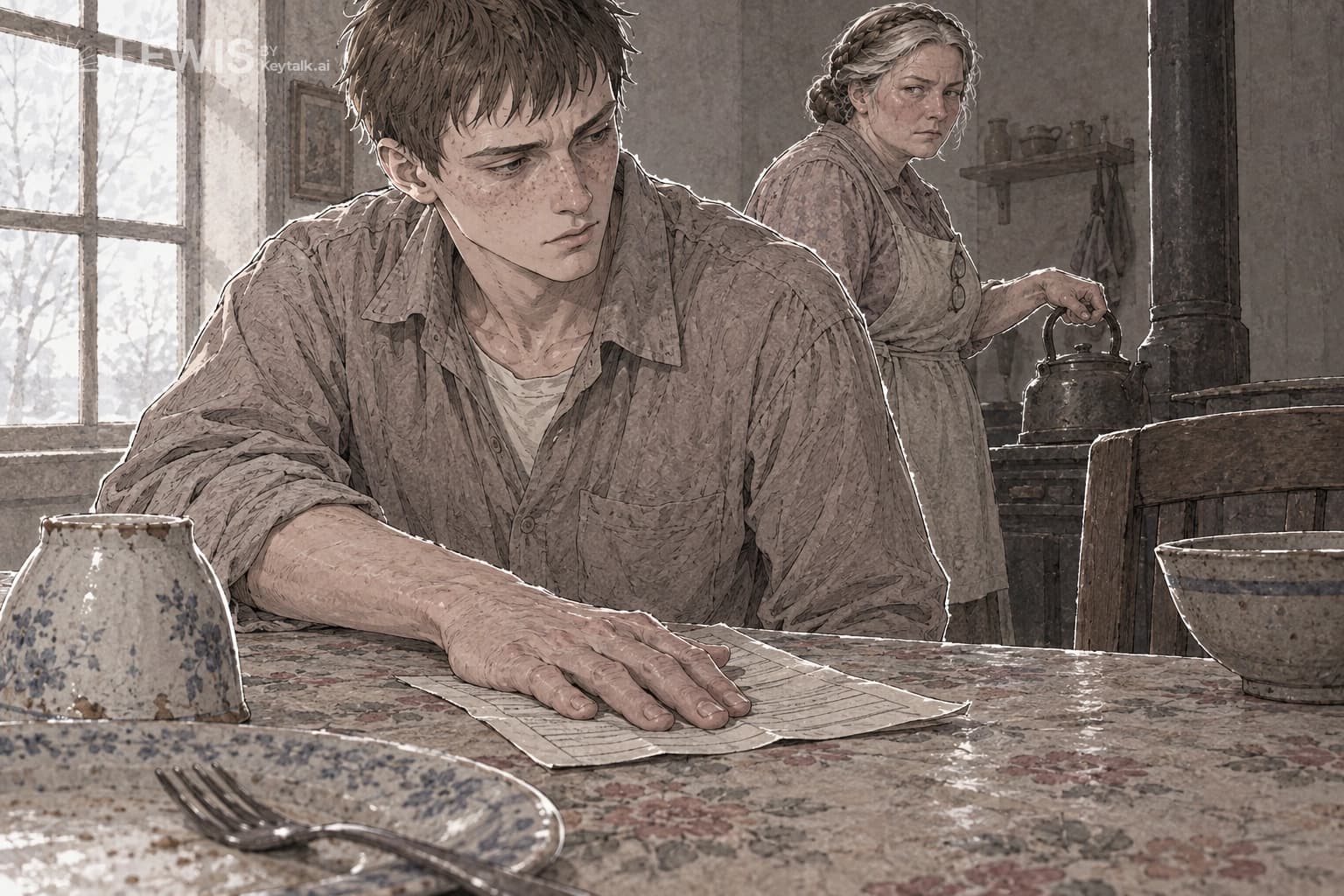
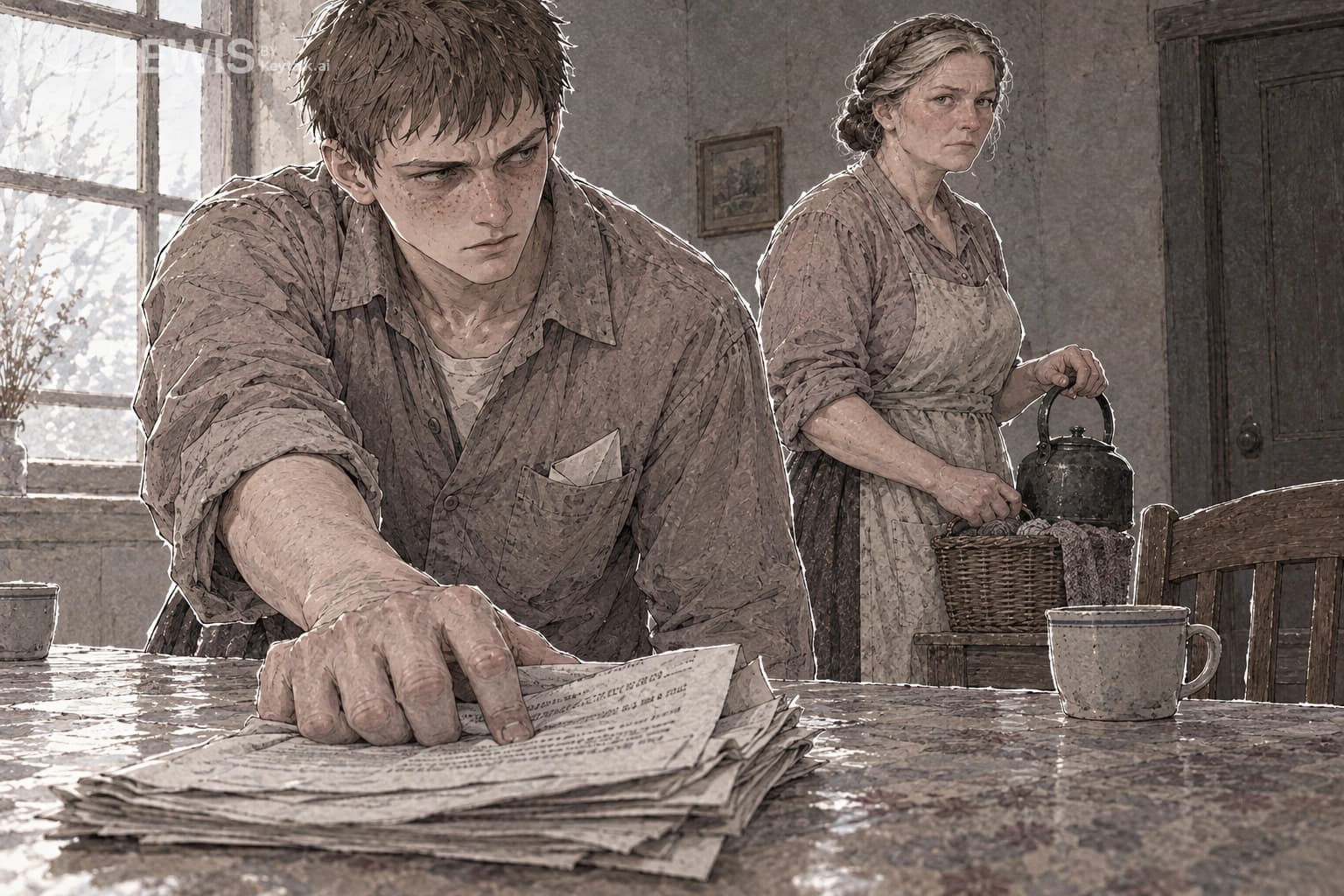
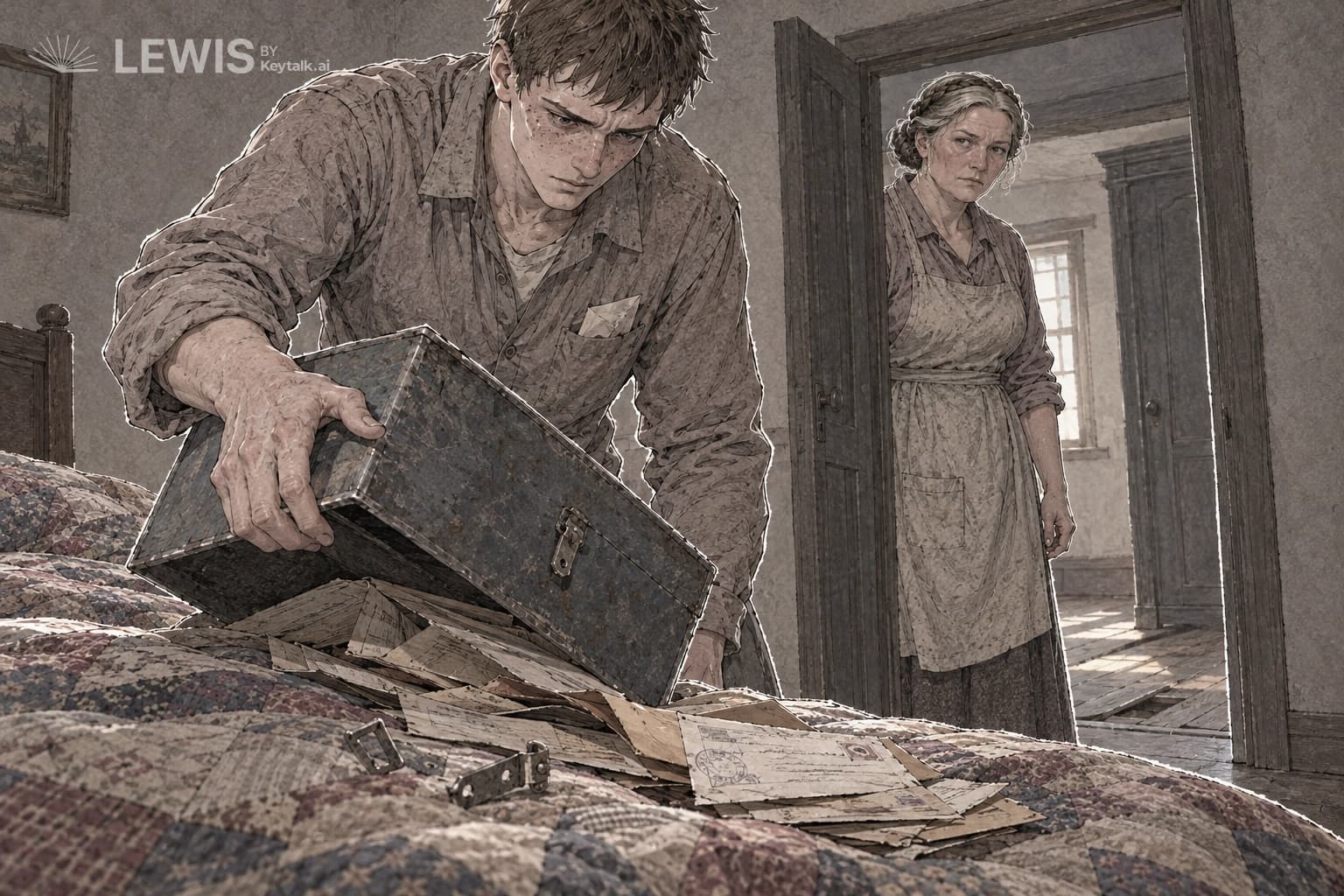
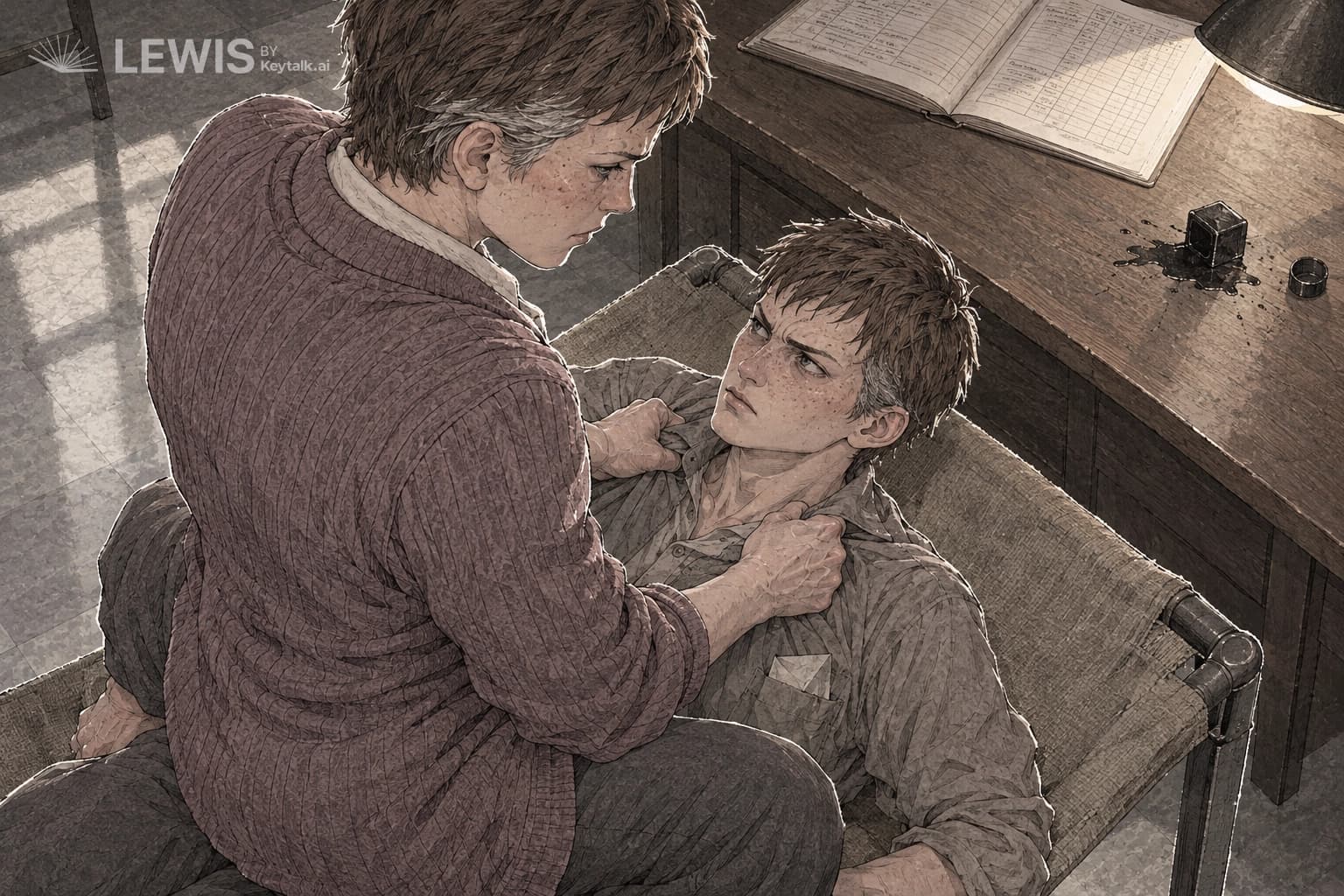
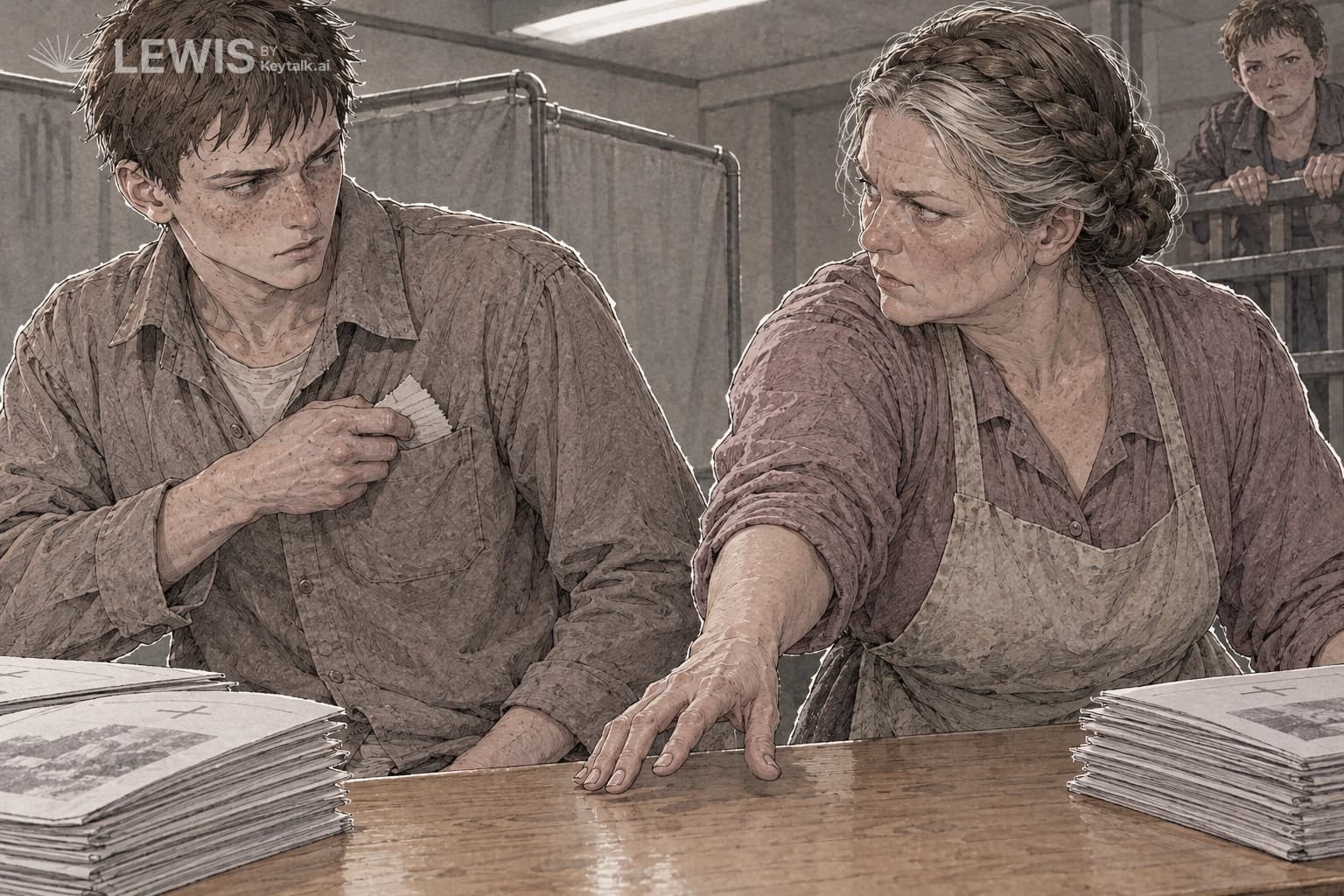
Verna escalates her grip on the town’s narrative. Using the school’s photocopier, she circulates neatly typed funeral programs that explicitly blame Cletus Venn, pairing each distributed script with freshly mended coats and hot meals. When Ellis confronts her in the family kitchen, demanding the unedited handwritten statements from the survivors, Verna refuses. Instead, she looks him in the eye and tells him he sat in those very kitchen meetings of his own free will, listening in agreement while neighbors gave away their tools. She insists Tamsin was real, yet when Ellis tears through the house searching for proof, he finds only his own name on tax forms and school records. That night, haunted by memories of Tamsin counting her grocery wages on his quilt and begging him to drive her to the bus station before the rot set in, Ellis sneaks into Della’s darkened office at the school. Della finds him there. The tension breaks into a ferocious, reckless encounter: Della pushes him back onto the cot, straddling him with rough insistence, biting his shoulder to stifle her cries, demanding through every hard, urgent thrust that he stop looking for paper ghosts and feel the pulse of someone still breathing. They tangle on the narrow mattress until both are bruised and exhausted, bound by a carnal pact to survive the town’s communal grave.
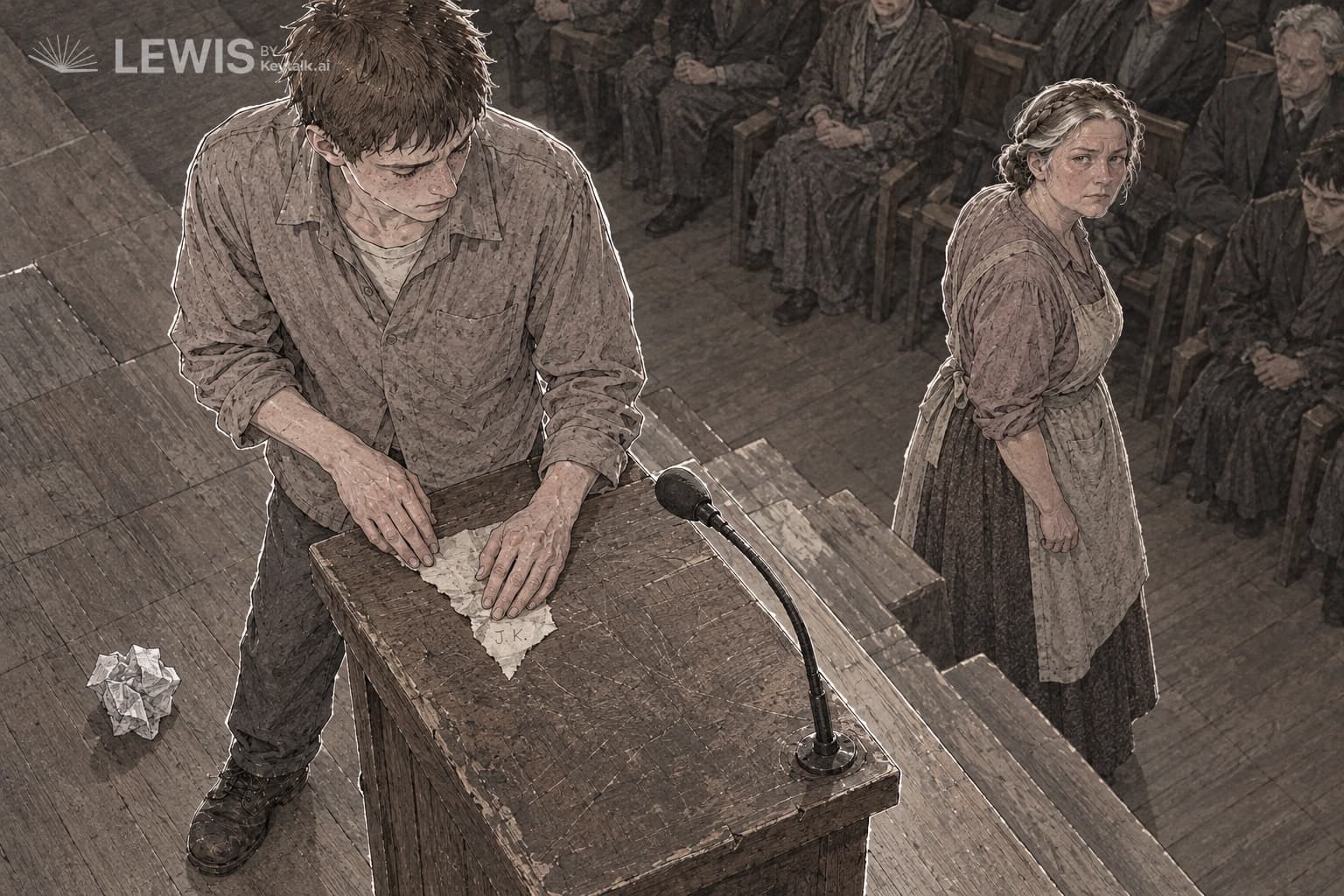
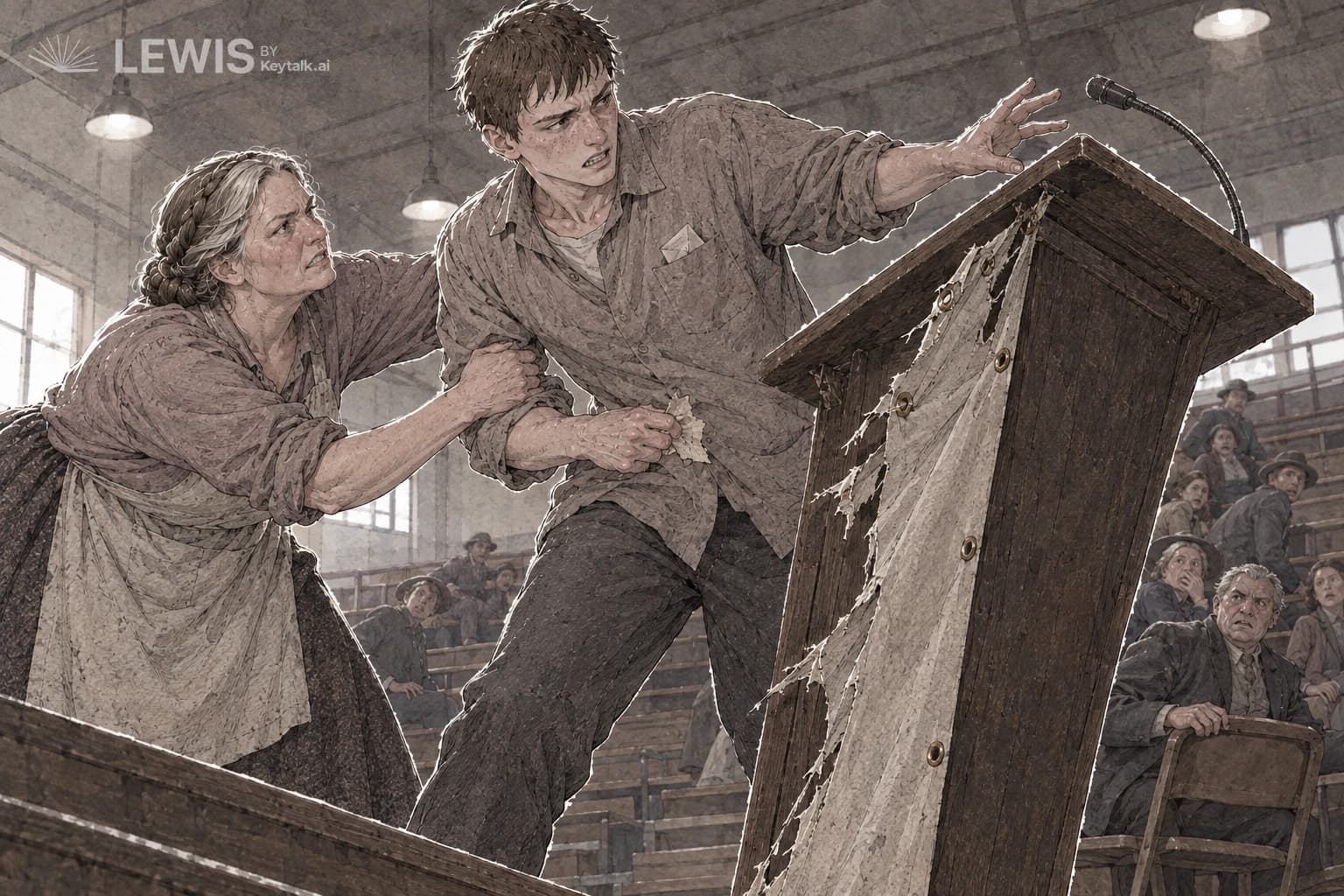
On the morning of the joint funeral, the entire community packs the school gym, seated on folding chairs between the draped screens. Verna stands near the podium, pressing her revised eulogy into Ellis’s palm, demanding he read the speech condemning Cletus Venn so the survivors can mourn in peace behind a shared scapegoat. Cletus sits in the front row, his appointment diary clenched white-knuckle in his lap, bracing for public ruin. Della sits beside the identification ledger, her hand still shielding the blank entry. As Ellis mounts the platform, the weight of the paper in his fist suffocates him. He looks at Verna, then at Cletus, and finally at Della. Instead of reading the manufactured accusation, Ellis crumples Verna’s speech and throws it to the gym floor. He speaks into the microphone, stripping away the lie of an outside cult and naming the kitchen meetings for what they were: ordinary neighbors who sat around kitchen tables, looked at the failing quarry and the empty roads, and quietly decided to stop living—conversations he himself attended and failed to stop.
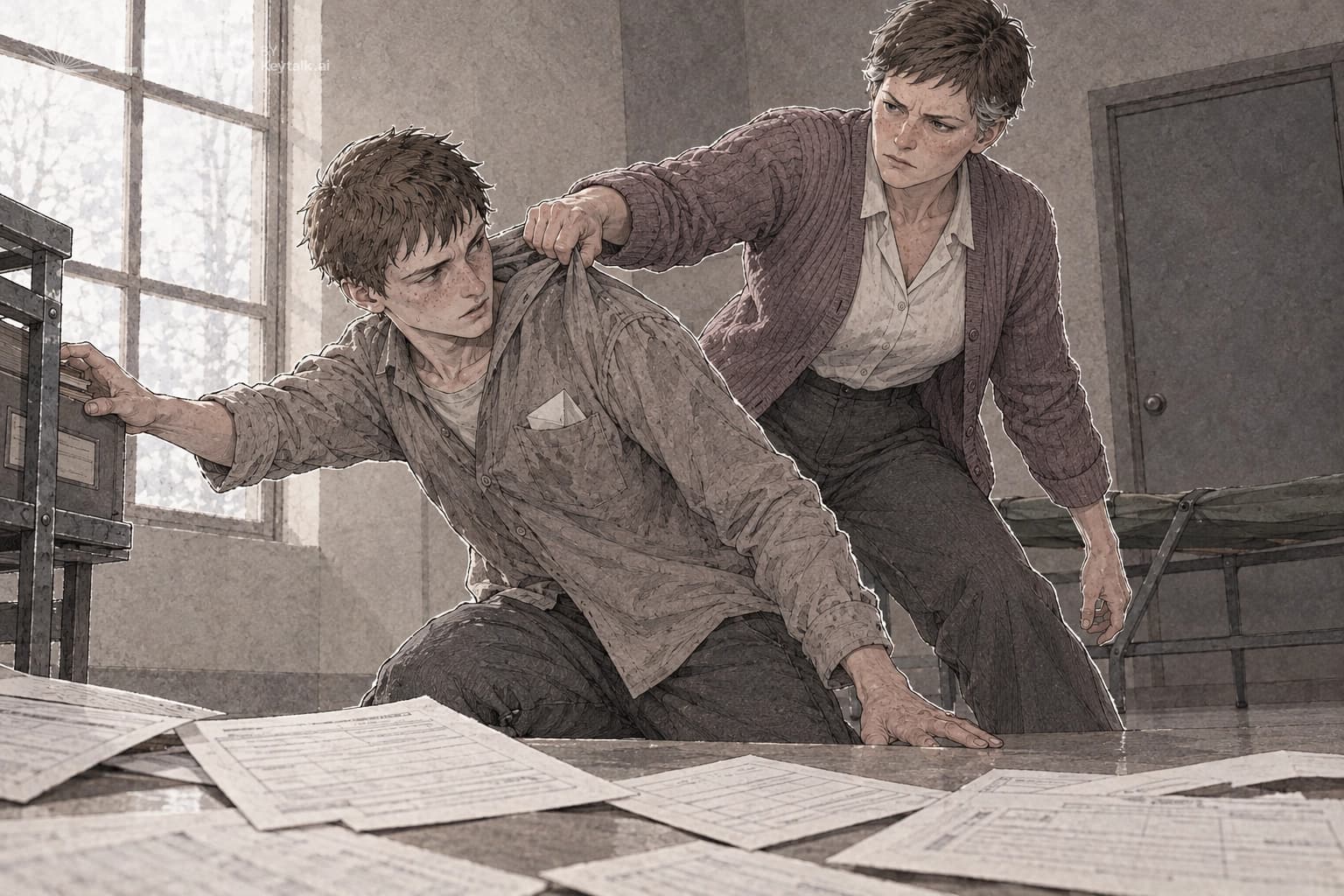
Verna lunges forward to pull him away from the lectern, grabbing his collar in a violent struggle before the stunned congregation, but Ellis holds his ground, exposing the torn pages, the altered tributes, and the seductive, manufactured certainty that kept them from looking at their own complicity. He acknowledges the blank lines in the book, declaring that whether Tamsin or the boy on the ledger ever walked Bellwether’s streets matters less than the fact that living people deliberately erased their own tomorrows. After the chaotic assembly fractures, Ellis walks out of the school into the gray limestone mud. He makes his way past the silent cafeteria to the allotments, where Hollis Creed is already waiting with two iron spades. Ellis steps into the wet trench, takes the shovel from Hollis’s dirt-caked hands, and drives the blade into the earth, choosing the heavy, unredeemed labor of tomorrow over the soothing fiction of the dead.








Comments
Comments · 0