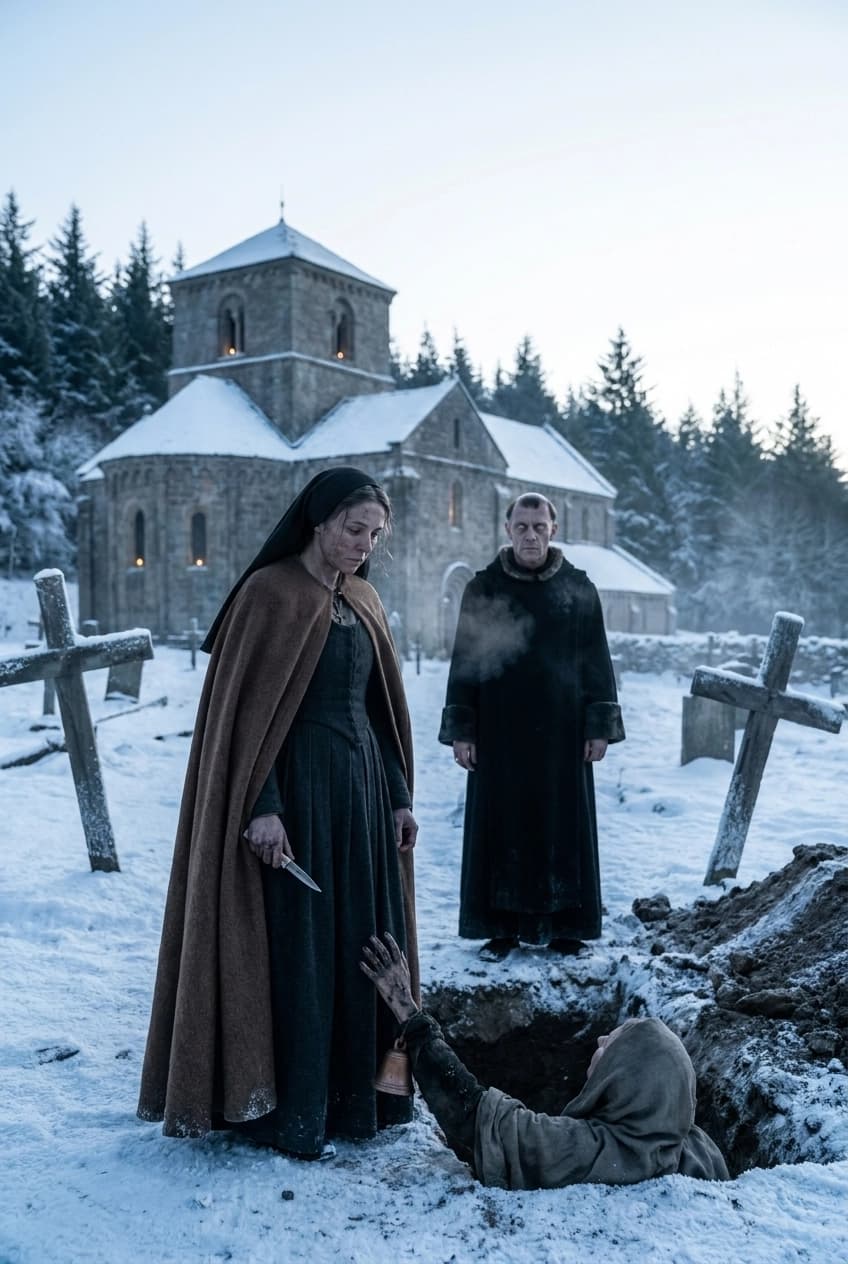
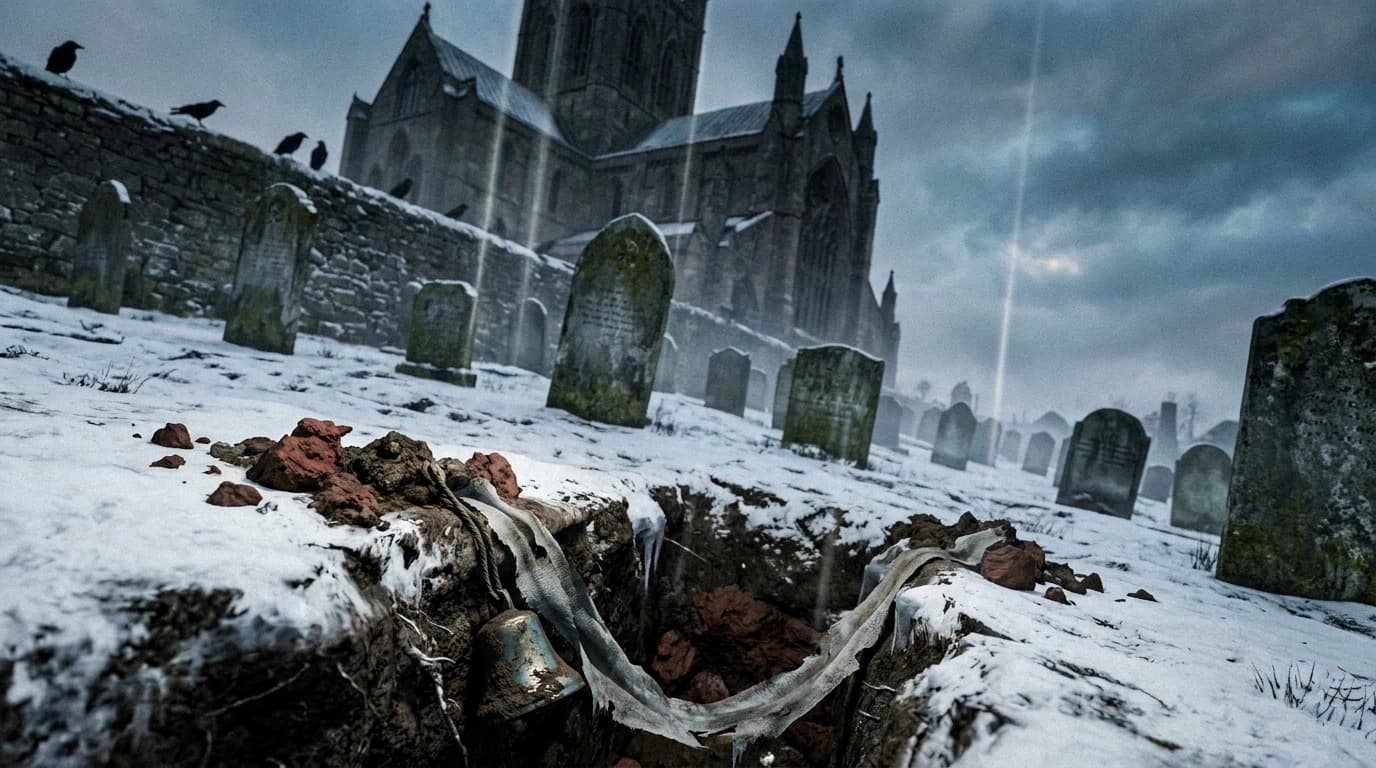
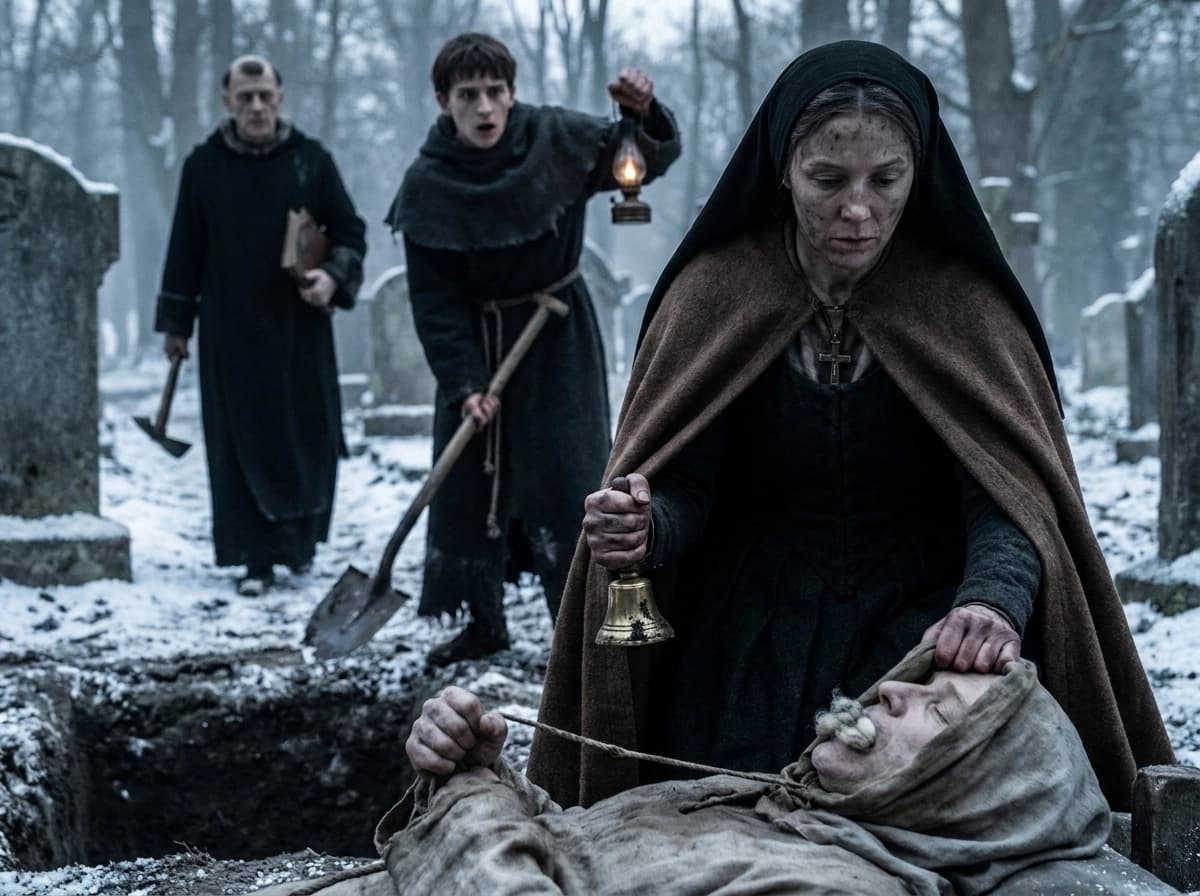
When Ysabeau de Falaise is brought up through the storm to replace dead hands in the abbey scriptorium, she expects mildew, hunger, and pious concealment. The first morning gives her worse. In the graveyard at dawn she sees a fresh grave split open at one edge, the shroud dragged tight across the dead man’s face as if he had strained upward before freezing still. A clay bell hangs from his wrist. His teeth are packed with burial wool. Brother Lucien Varet, white with cold and terror, cannot stop staring at the bell as though he expects it to ring. Abbot Matthieu d'Aubrac orders the body reburied before Prime and has Ysabeau read the burial office aloud because his own sight is gone. While she speaks, she feels the shaved unevenness of his silver ring against the page and notices that the little bell in Lucien’s hand is heavier than its clay should allow.
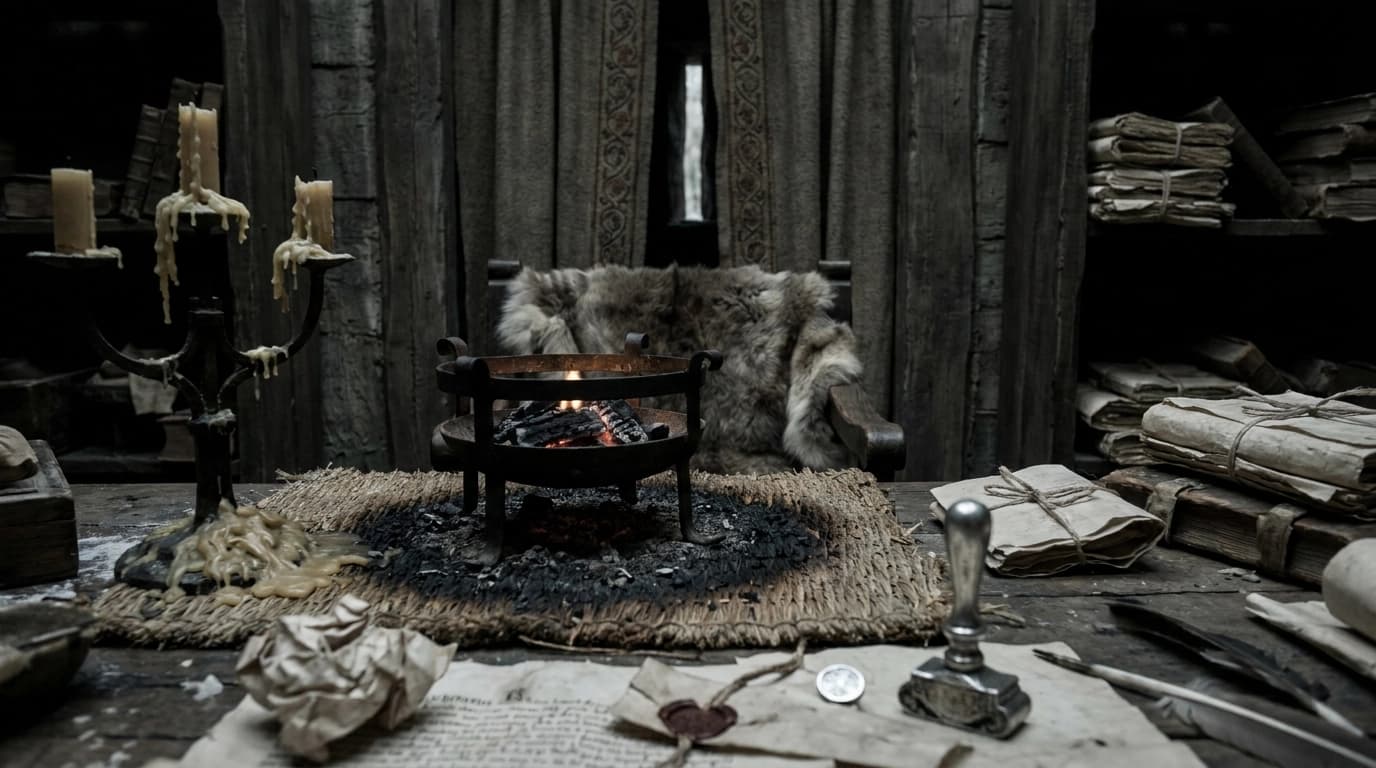
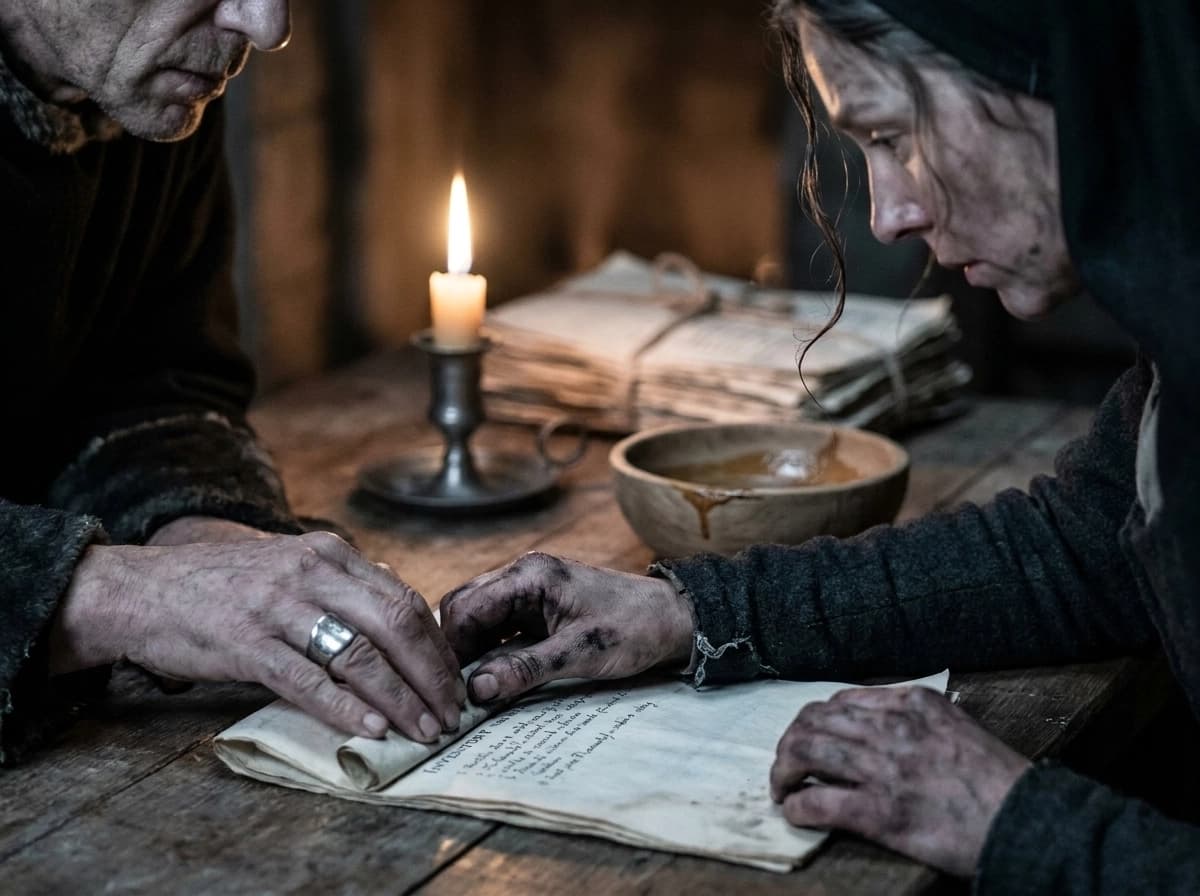
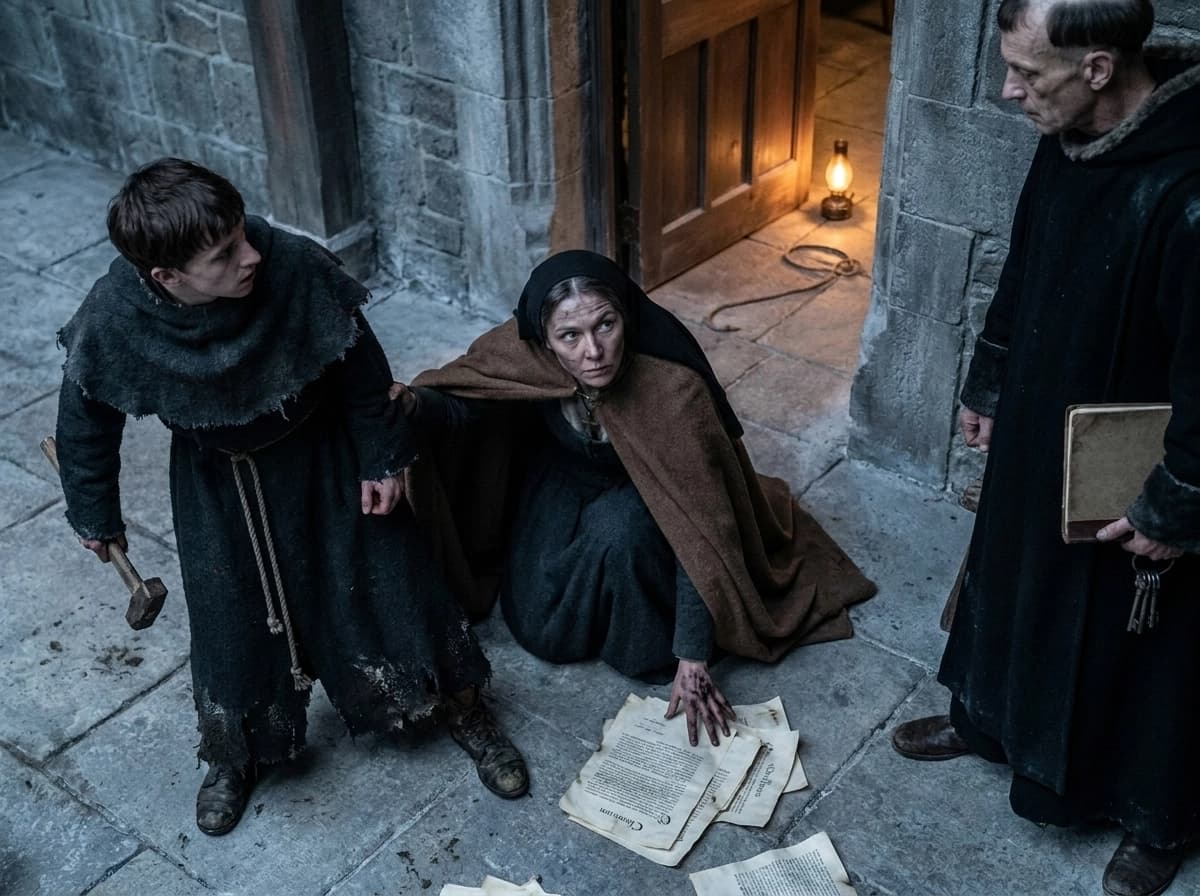
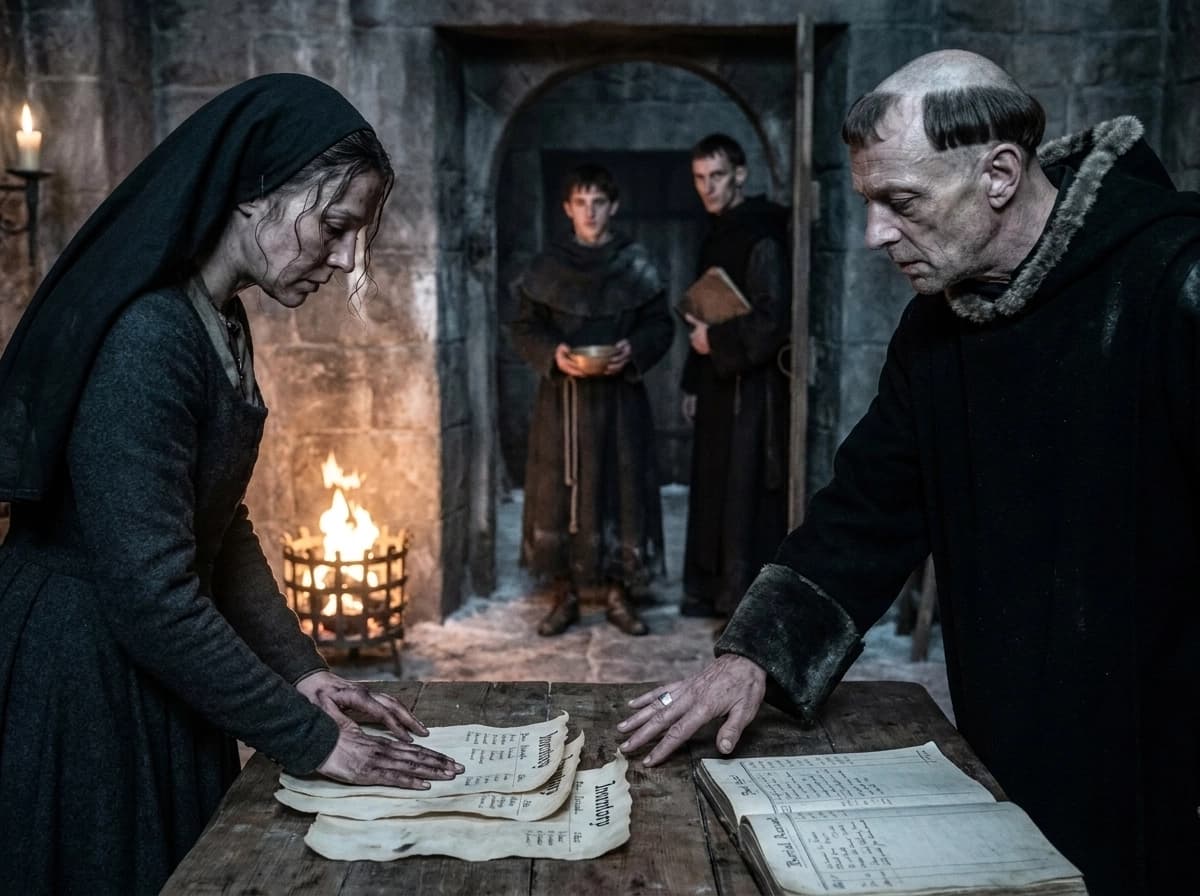
Matthieu keeps Ysabeau close at once. He sets her to copying charters, mending damp books, and reading inventories into his ear in a chamber warm enough to thaw her ink. Each favor is shelter bought with obedience. Each page gives her another glimpse of strain in the house: lamp oil gone missing, burial cloth consumed twice as fast as before, altar plate listed in older accounts at a greater weight than it bears now. Matthieu’s requests are soft, but he holds Lucien by the wrist when he sends him below the chapter house after Compline, and the novice returns with mud on his hem and a splintered hammer in his hand. When Ysabeau asks what lies under the crypt stairs, Lucien says only that the dead do not stay quiet there, then flinches at his own words.
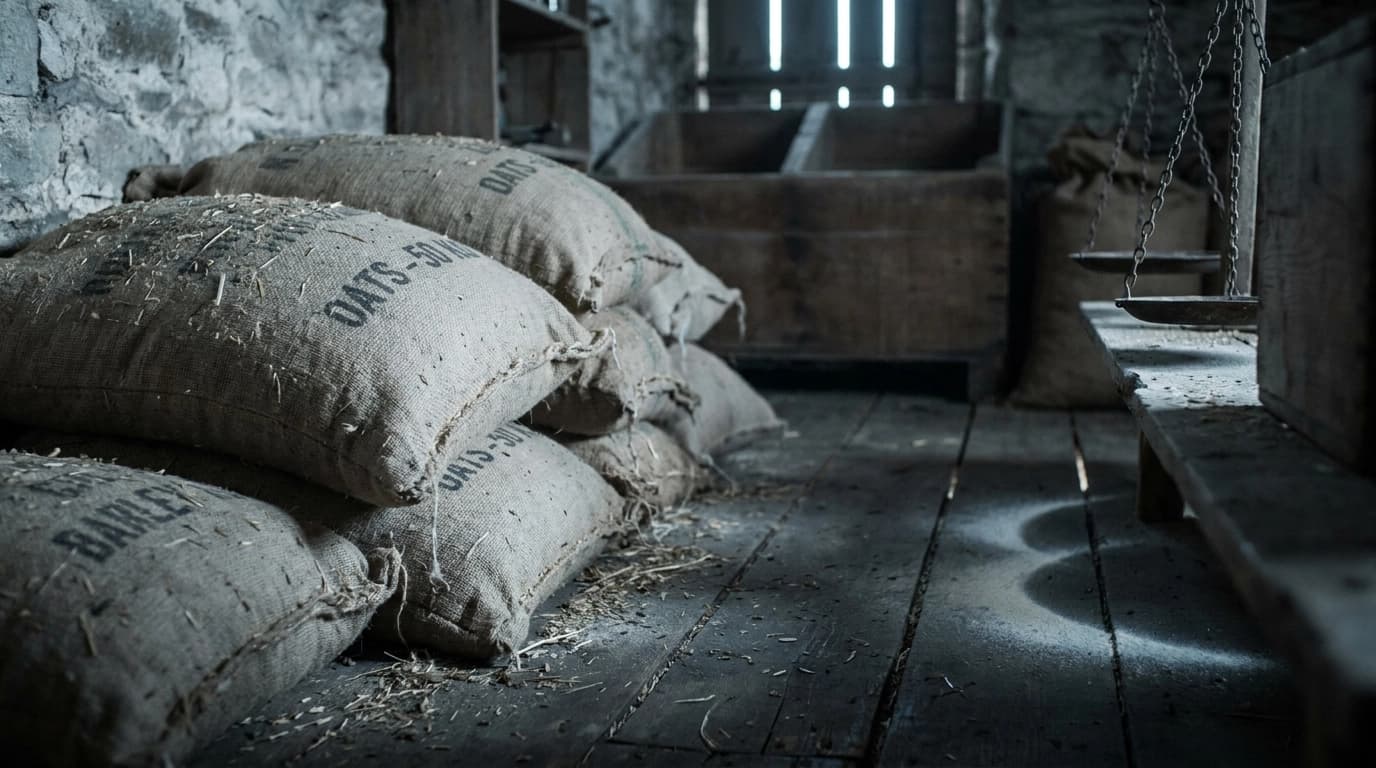
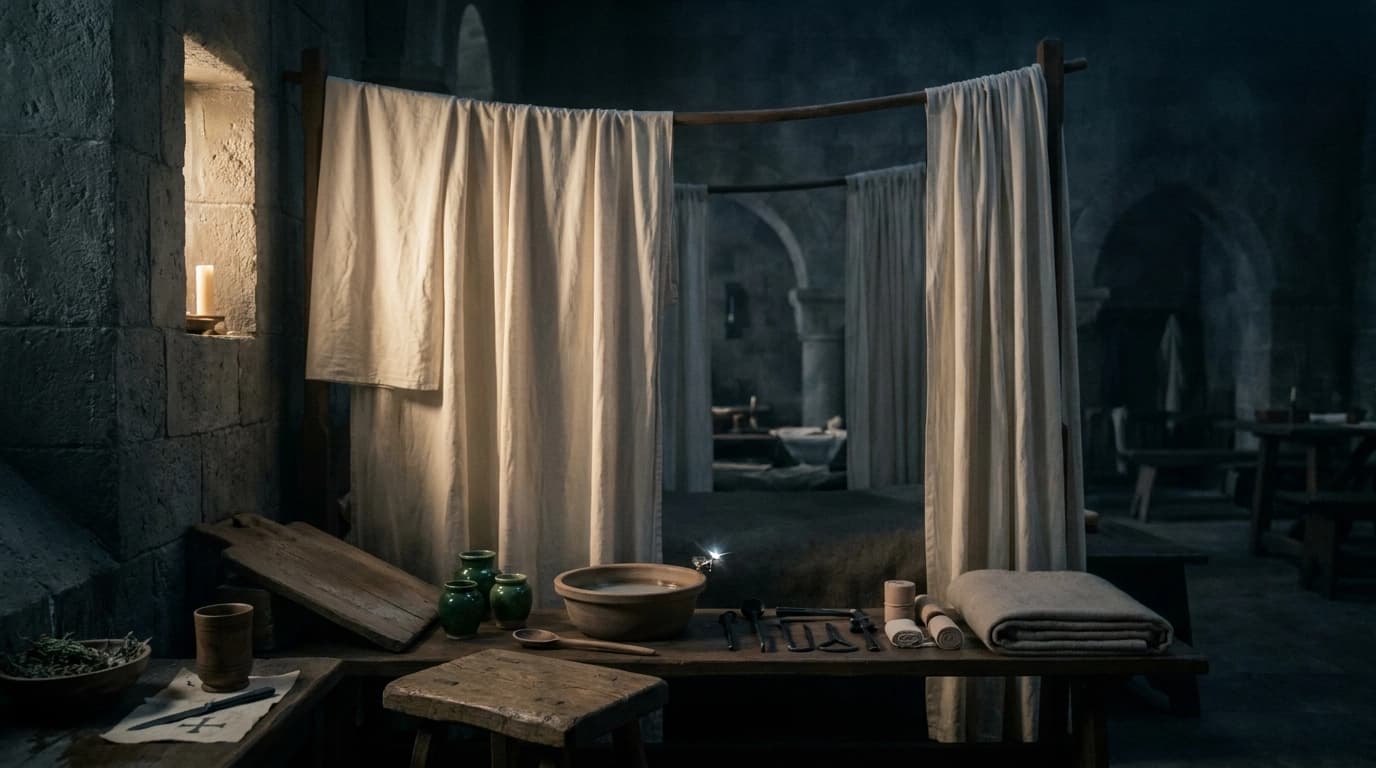
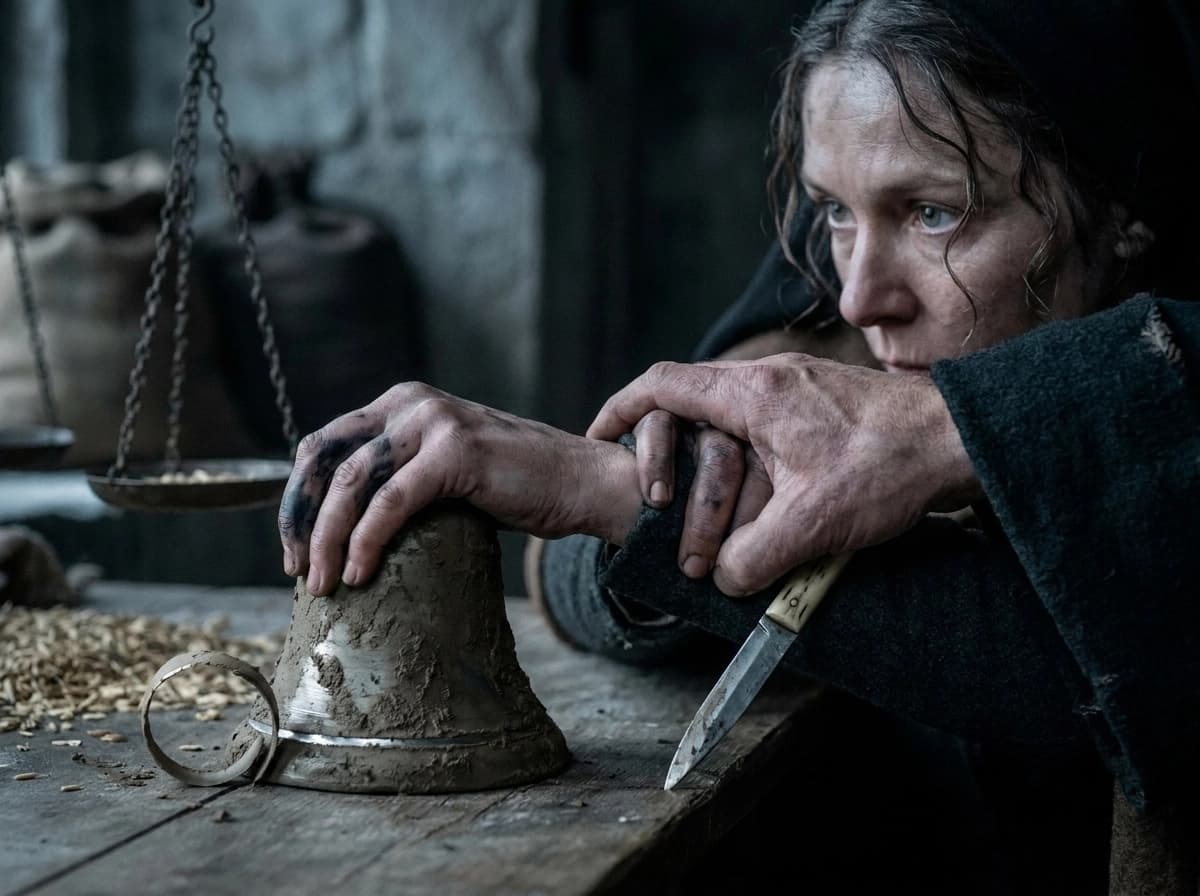
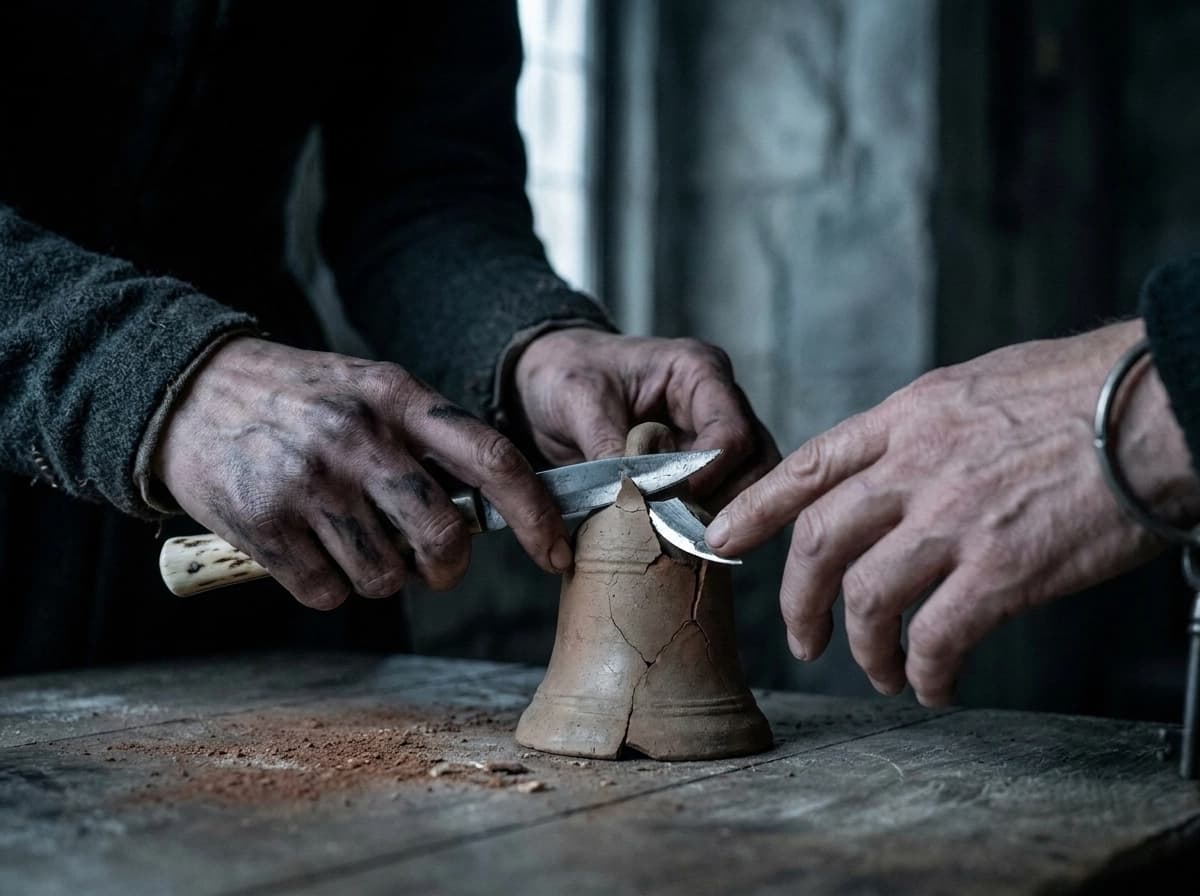
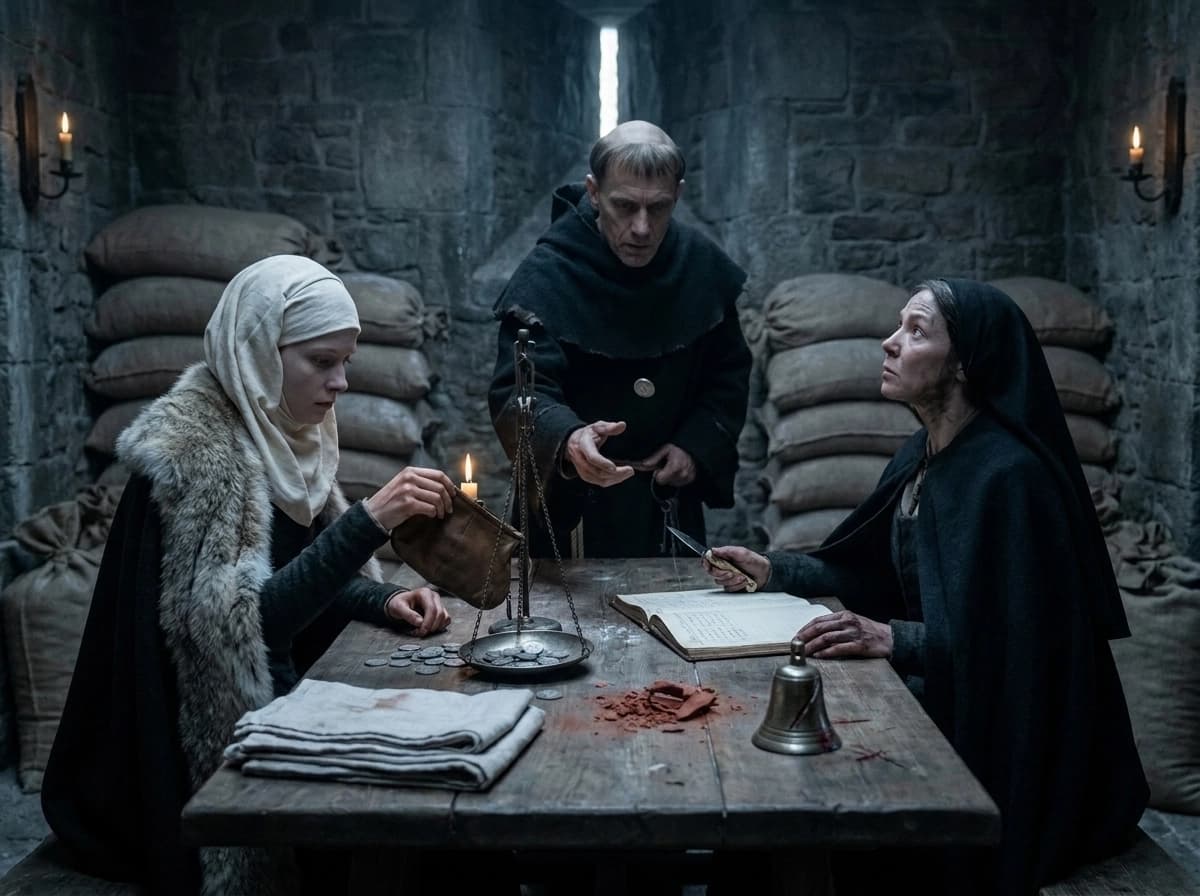
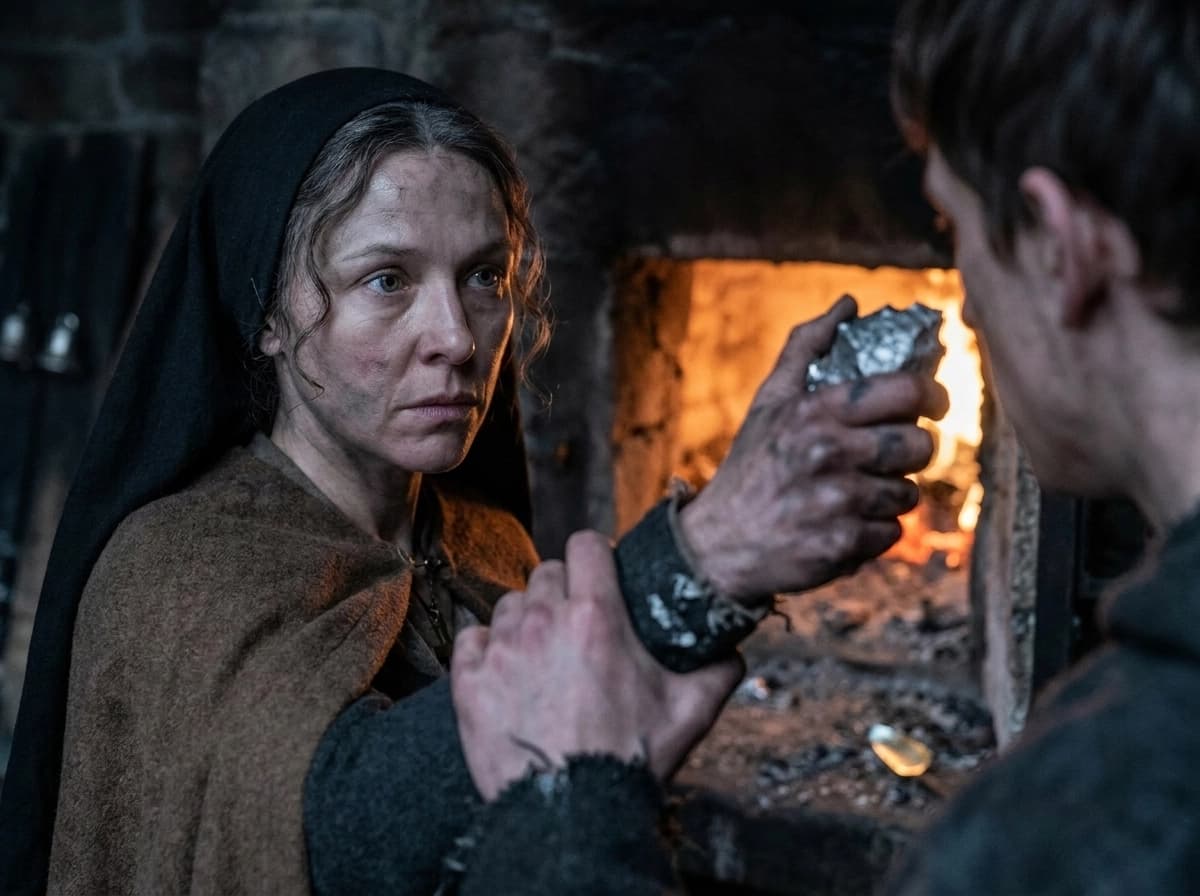
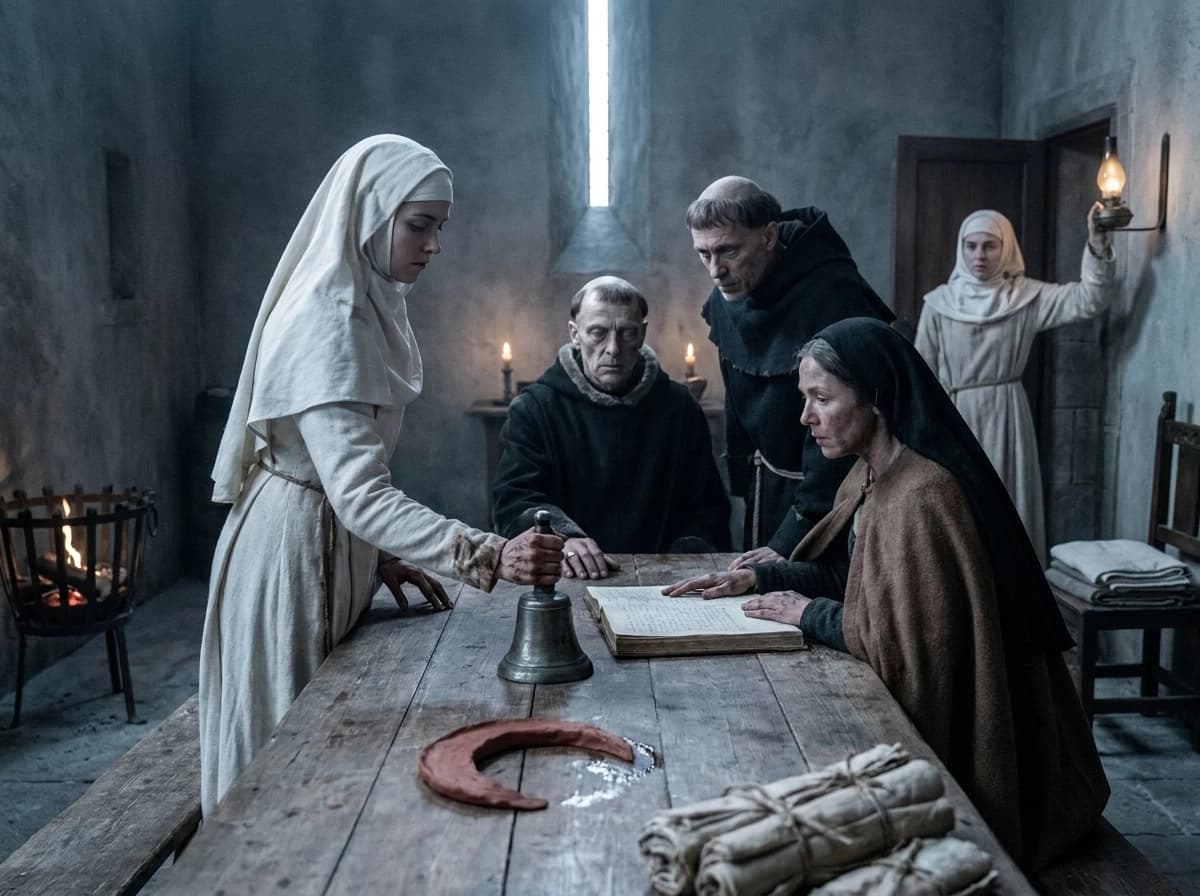
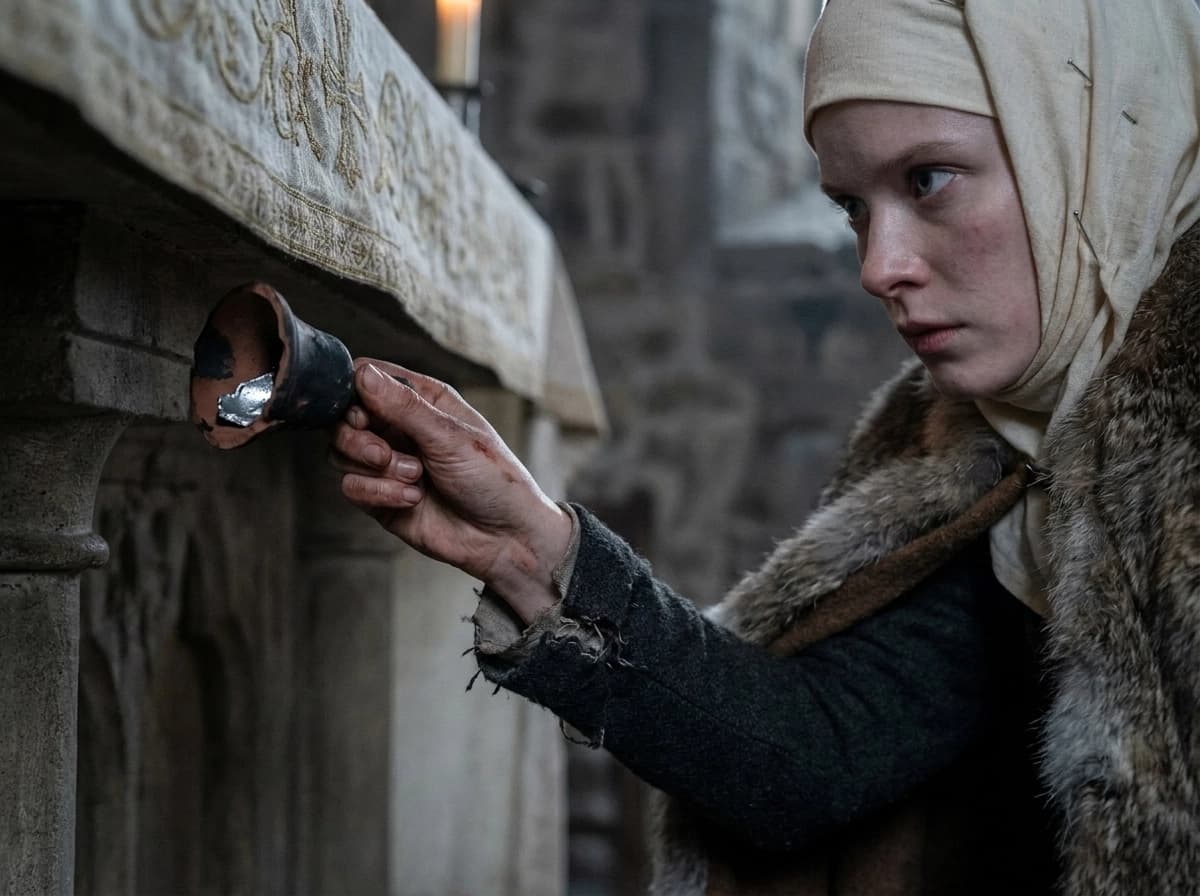
The abbey’s fear has rules. Every corpse must go into the ground with its jaw bound, its mouth packed, and a bell tied to the wrist. Ysabeau begins testing the bells like a craftswoman rather than a penitent. She warms one stolen from the washhouse under her sleeve, scrapes its base with her penknife, and finds silver bright under the red clay. Prior Anselm of Mirepoix catches her at it in the storeroom. Instead of accusing her, he shuts the door with his back, lays the bell on his grain scale, and then leads her by candlelight to the altar after Vespers. He puts her fingers on the cloth-covered edge where silver has been shaved away in tiny patient bites. His exact ledgers and her exact eye answer each other. Someone has been feeding holy metal into the graves.
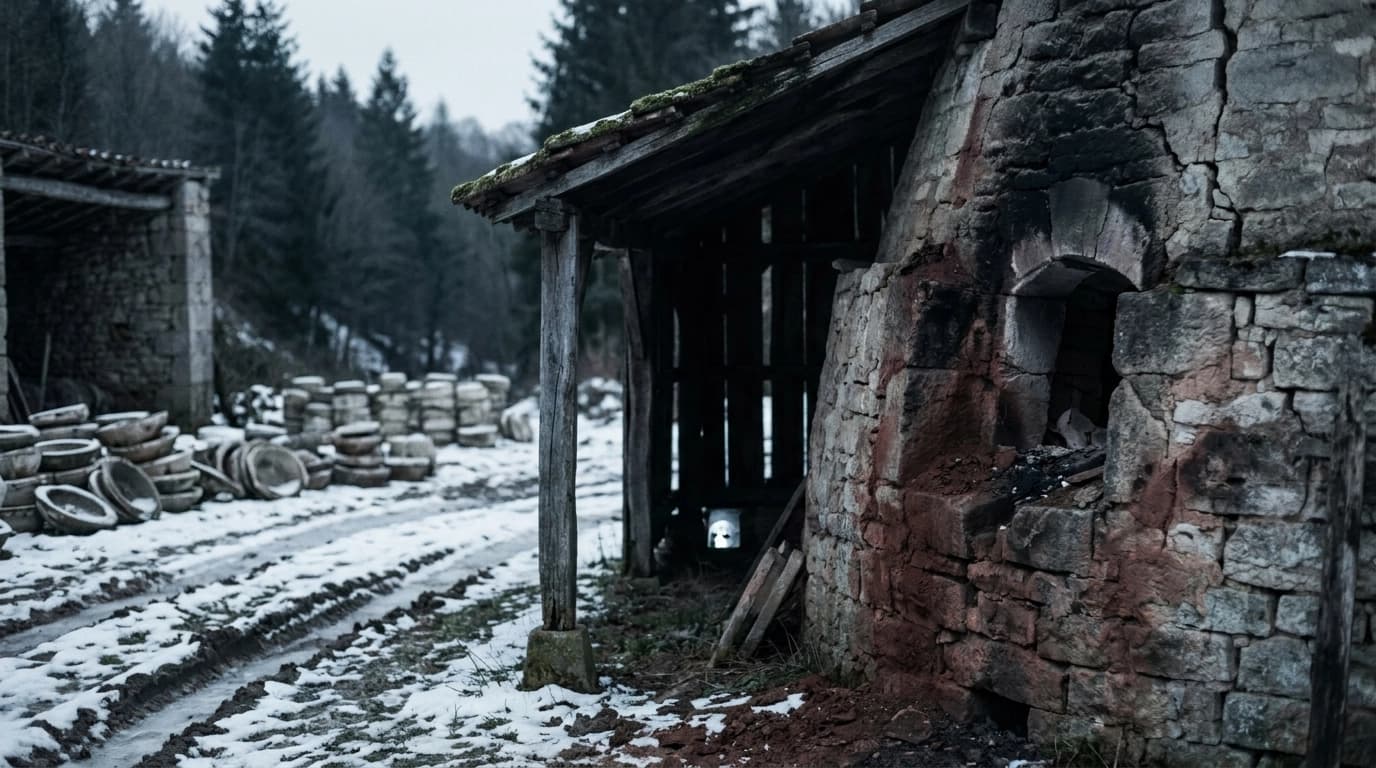
Aélis de Montvert enters the struggle not as a mourner but as a patron who makes refusal expensive. She pays for linen, physic, and candles from her own purse until the infirmary and graveyard both depend on her. Then she asks, in the graveyard with snow blowing into the open earth, that her brother’s grave be opened before dawn prayers. She says she saw him die on the mule track and will not have his return called a wonder. Anselm resists because exhumation without authority will tear the house apart. Matthieu forbids it outright. Ysabeau sees Aélis kneel by the grave after everyone leaves and straighten the shroud corners with bare hands through the crusted snow. On one finger there is a red clay stain that does not wash away. Pressed hard, Aélis admits only one piece of truth: the bells’ clay comes from her father’s abandoned kiln below the pass, and someone in the abbey has reopened that lower work.
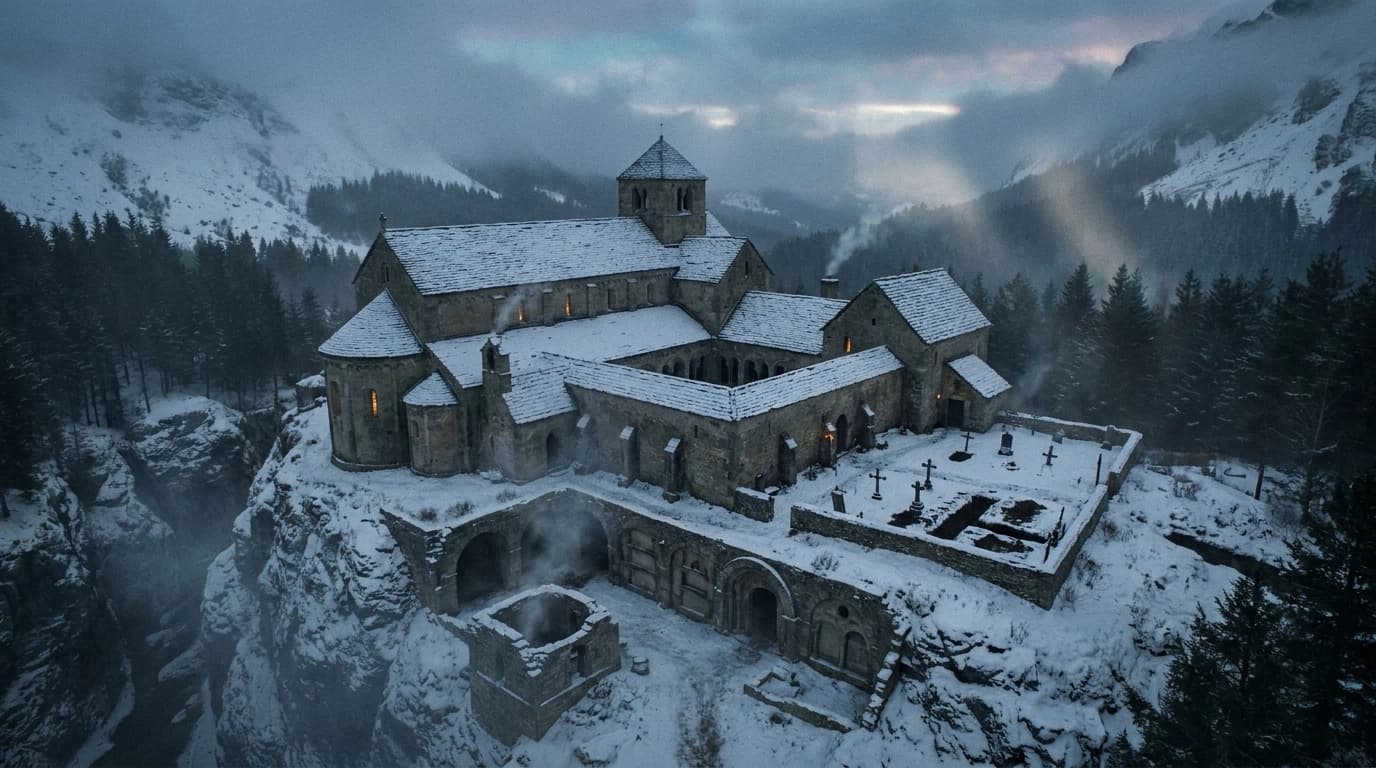
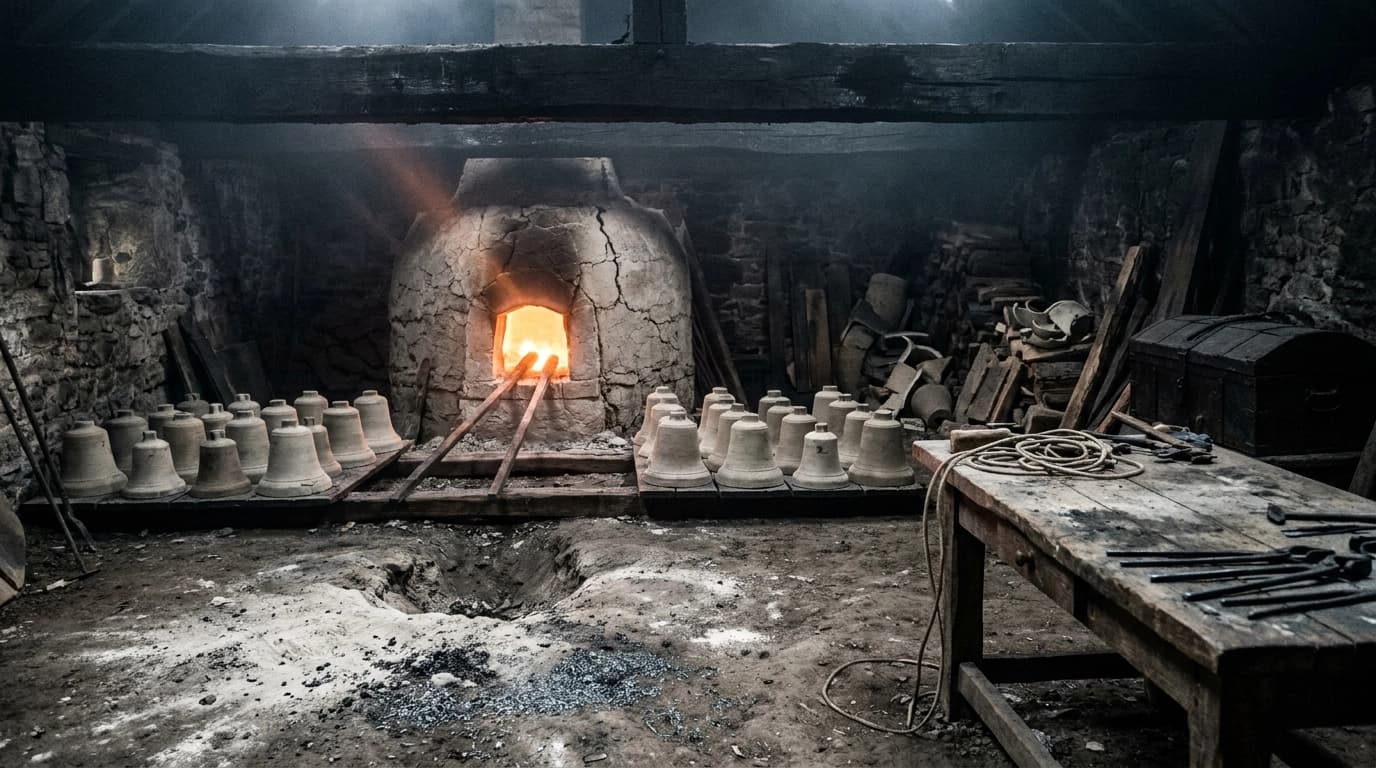
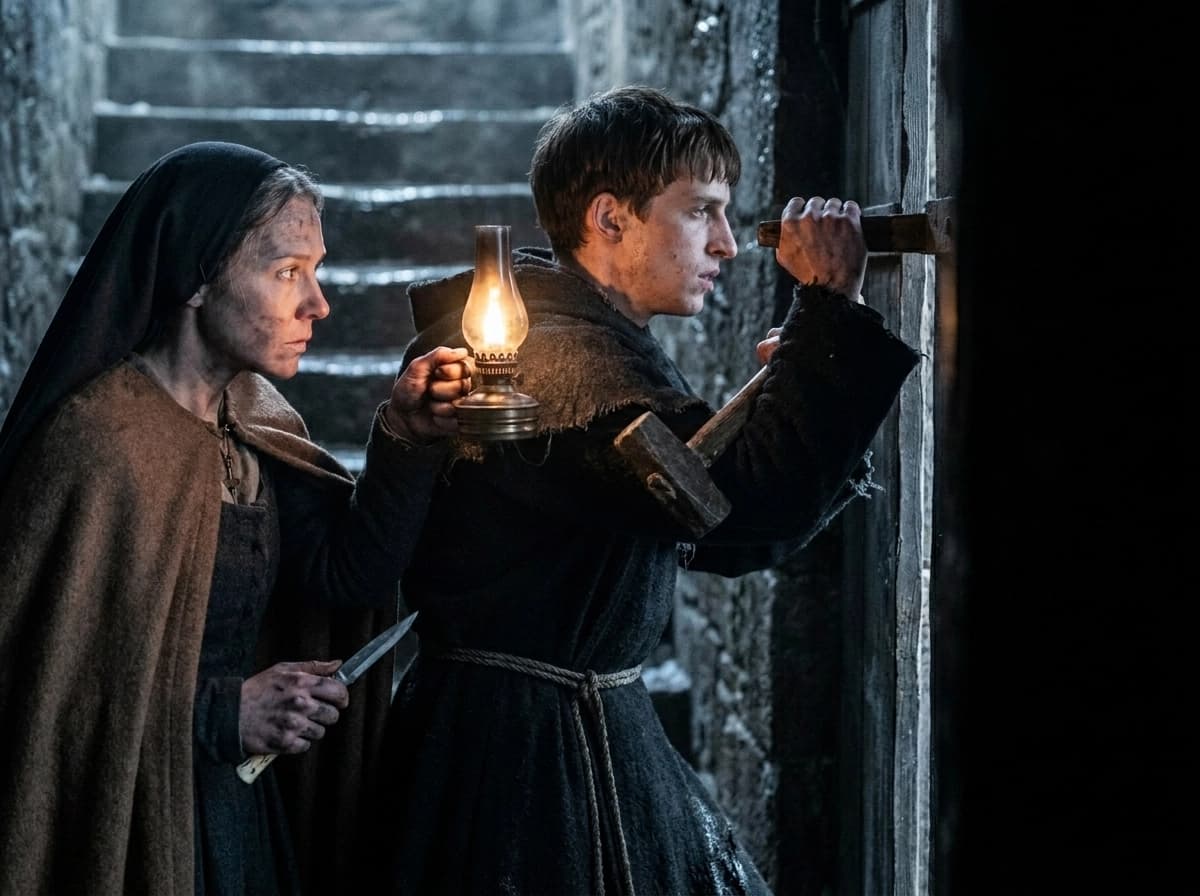
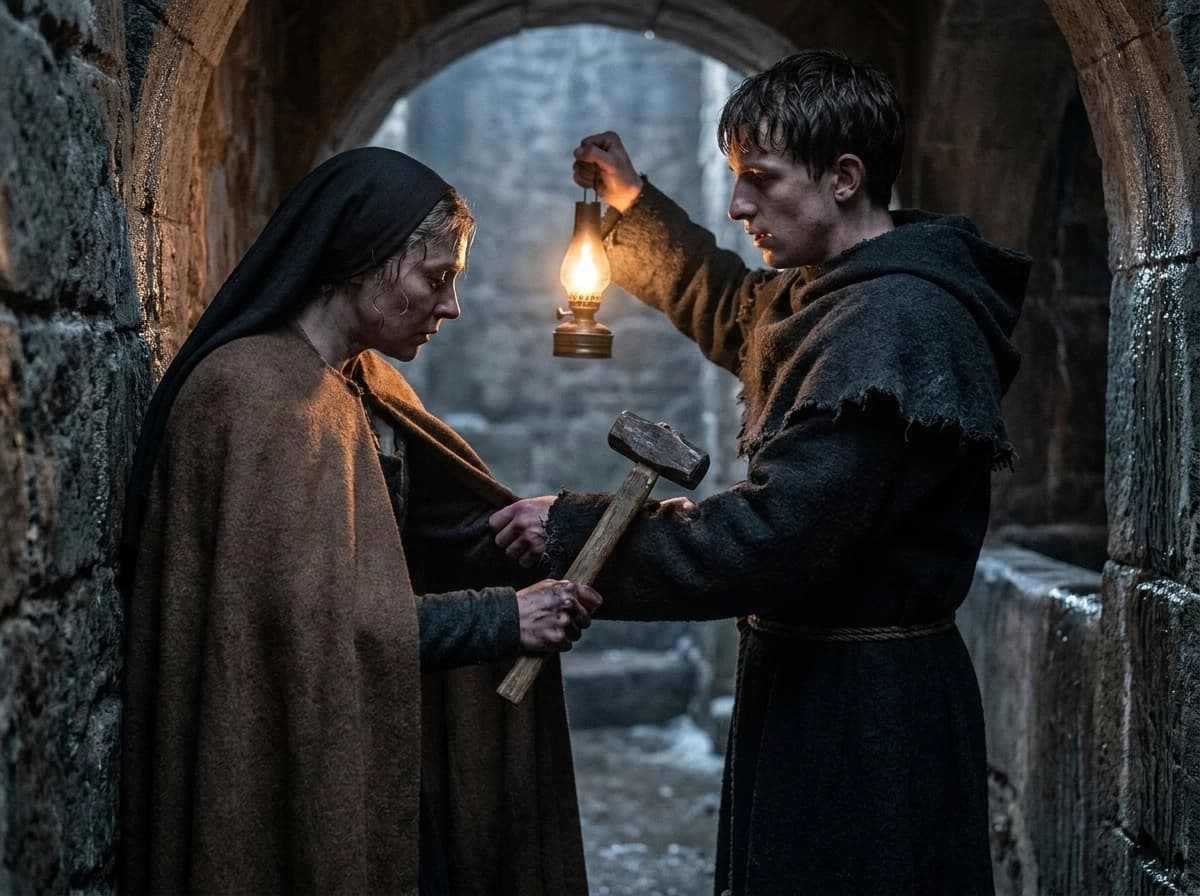
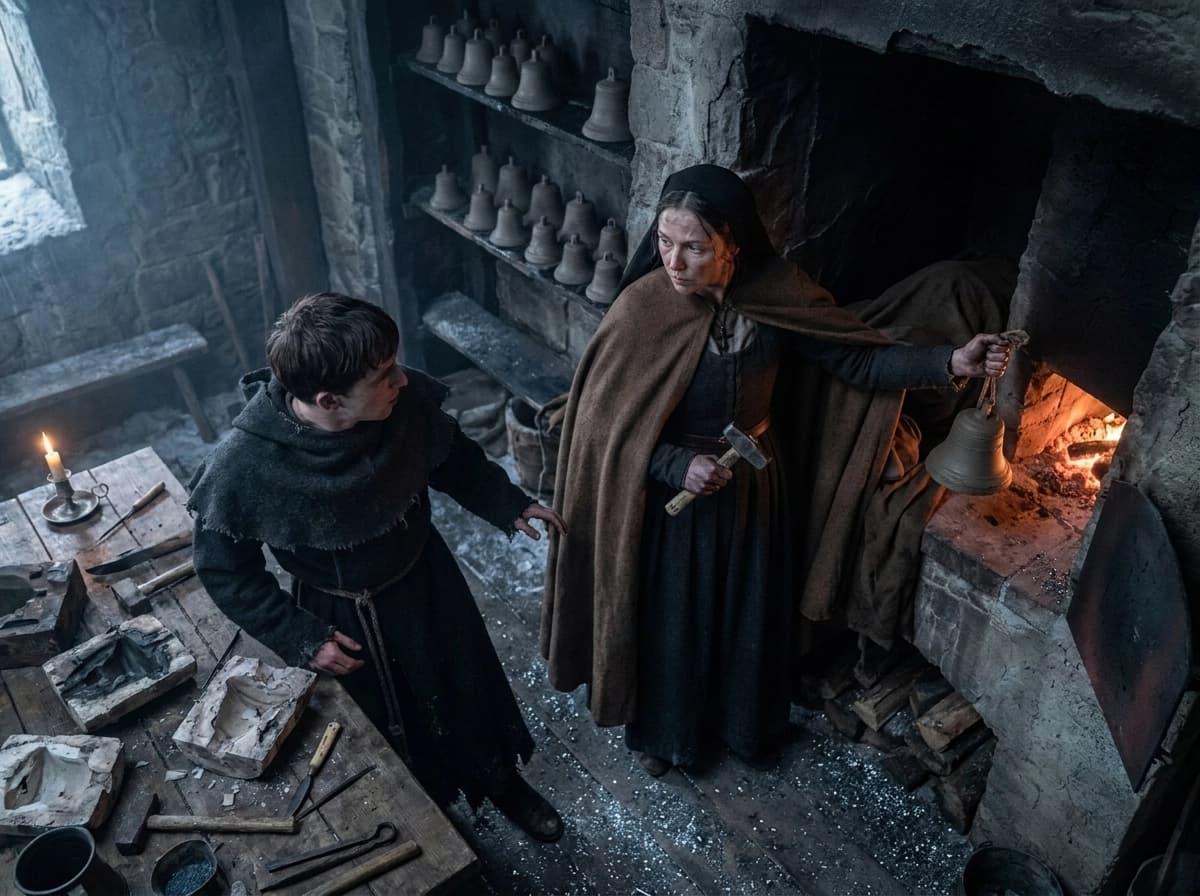
The next dawn another grave has heaved. This time Lucien swears he heard his own name spoken from inside the earth before the brothers hauled the body out. His fear makes him reckless. He leads Ysabeau into the crypt after Compline with a lamp cupped in both hands and shows her what he has been made to do. In the old bell-casting room beyond the Roman cistern stand fresh molds, ash not yet cold, a cracked furnace coaxed back into service, and a row of unfinished clay bells drying on boards. There are also narrow burial niches with mismatched mortar, some old, some newly opened and sealed again. Lucien confesses that Matthieu has sent novices down to move bodies in the night, hammer open niches, and fetch silver shavings hidden in a reliquary chest. He has obeyed because Matthieu promised grain to his sisters in the town below. Then he says the thing he has not dared say: one body they dragged from a niche was not newly dead. It wore a wool shroud years old and still had a bell at its wrist.
Ysabeau’s first theory breaks. The risen dead are not all plague burials disturbed by frost or panic. Some are older bodies drawn back into the traffic of the crypt because Matthieu has run out of safe places to hide what he is doing. The bells are not merely disguises for stolen silver. They are markers. Each weight corresponds to a niche, each niche to a dead patron or prior whose burial gifts were hidden with him when roads failed and wars shifted. Matthieu, blind and pressed by famine, has been mining the abbey’s own dead. The novices open sealed burials, strip silver from old offerings, recast it into bells, and tie the bells to fresh corpses so sacred metal can leave one grave and enter another without any inventory naming the theft. When the graveyard “coughs one back up,” it is often because a body has been exhumed below, shifted, and reburied in haste above to conceal the emptied niche. The wool in the mouths comes from rough handling, not resurrection.
That answer should end the terror, but it makes the house more dangerous. Anselm confronts Matthieu in the chapter house with the shaved altar edge under his fingers and one of the bells on the table between them. Matthieu does not deny the theft. He says the abbey would have been stripped by creditors, villagers, and frightened brothers alike if he had let sanctity sit idle while winter closed. He says dead patrons need no silver. Living men need broth. He says obedience has kept panic from becoming pillage. Anselm answers that once sacred metal is hidden on corpses, every burial becomes suspect and every grave a purse. The argument ends when Matthieu orders Lucien back below that same night to open Aélis’s brother’s niche in the old crypt and move what lies with him before dawn. Aélis hears enough from the passage to understand that her brother’s body has been used. Her composure breaks for the first time. She strikes Matthieu across the face with her bare hand.
From then on the abbey splits into open camps but cannot separate physically; snow and rule keep everyone inside the same walls. Matthieu tightens silence. He has the outer crypt door barred except by his order, and he keeps Ysabeau in his chamber longer each day, making her read old charters and burial donations aloud while his thumb counts against the table. He is listening not to the words but to where her breath catches. Ysabeau starts marking what she learns not in books he can seize but in the abbey itself: a nick on a shelf, soot rubbed on a lintel, tiny cuts in wax drippings near the chapter-house stair. She copies the house into physical signs so that if she is searched, the map remains in place. Lucien, seeing her method, begins leaving hammer marks in the crypt passages to match hers. Together they turn the abbey’s silence into a hidden script.
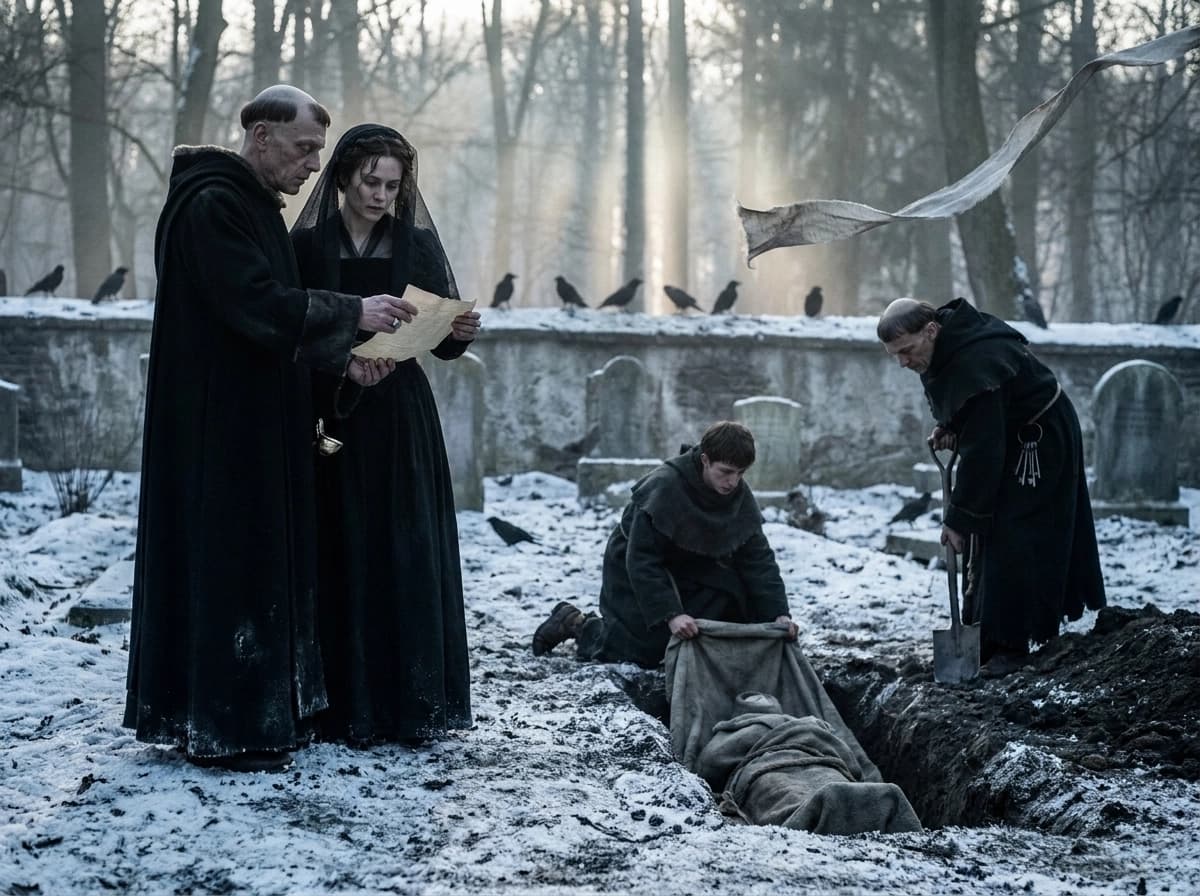
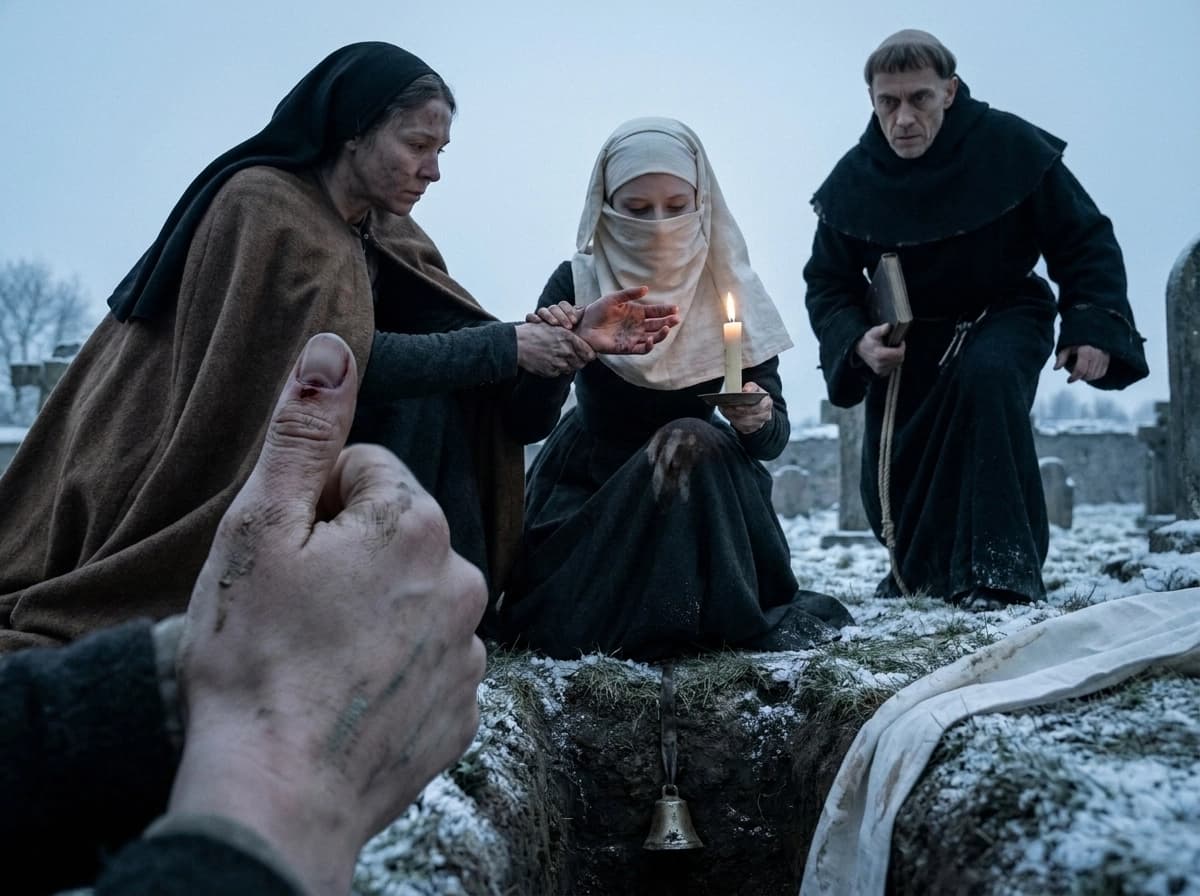
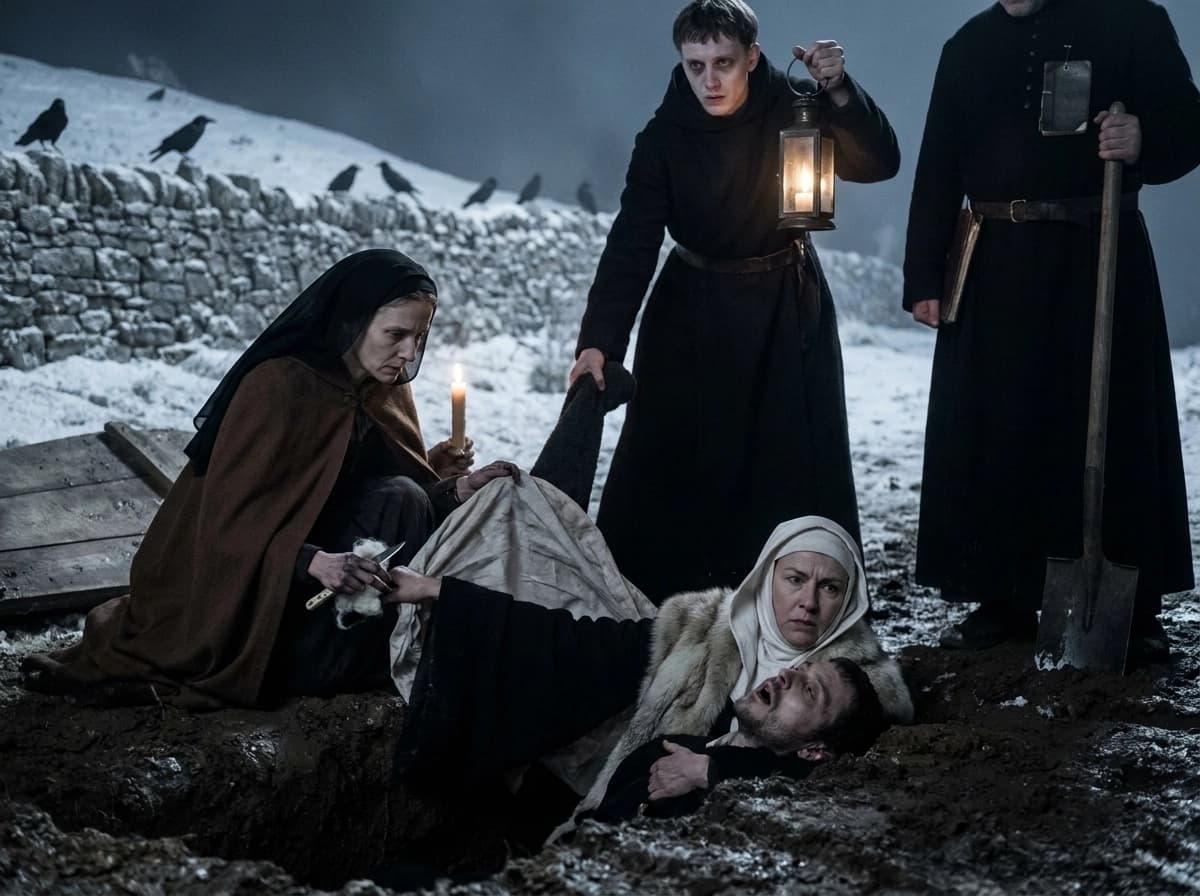
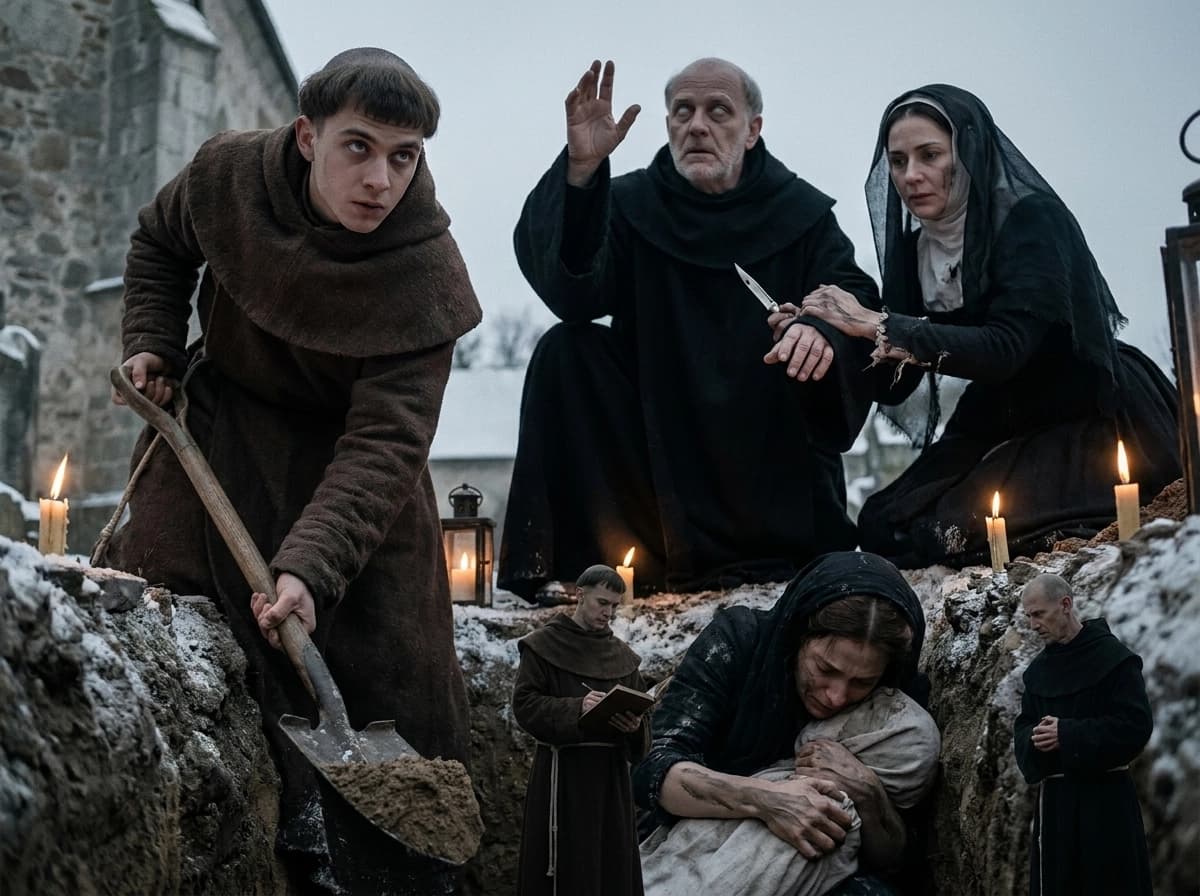
Aélis forces action. She gives Anselm the last of her silver and demands spades, lamp oil, and two witnesses. Before dawn she, Ysabeau, Lucien, and Anselm go to the graveyard and open her brother’s grave in the hard ground while crows shout from the wall. They find the body not miraculous and not whole. The wrist is raw where a bell was tied and retied. The shroud has been replaced. More damning, the mouth is packed not with the coarse burial wool Aélis herself tucked there on the mule track, but with fresh carded wool from the abbey stores. Someone reopened him after burial. Aélis climbs into the grave with her skirts darkening in the slush and cradles the body while Anselm stands over them with the ledger tucked under one arm like a shield. Matthieu arrives led by two remaining brothers, hears the shovel strikes, and orders them all to stand away. No one obeys.
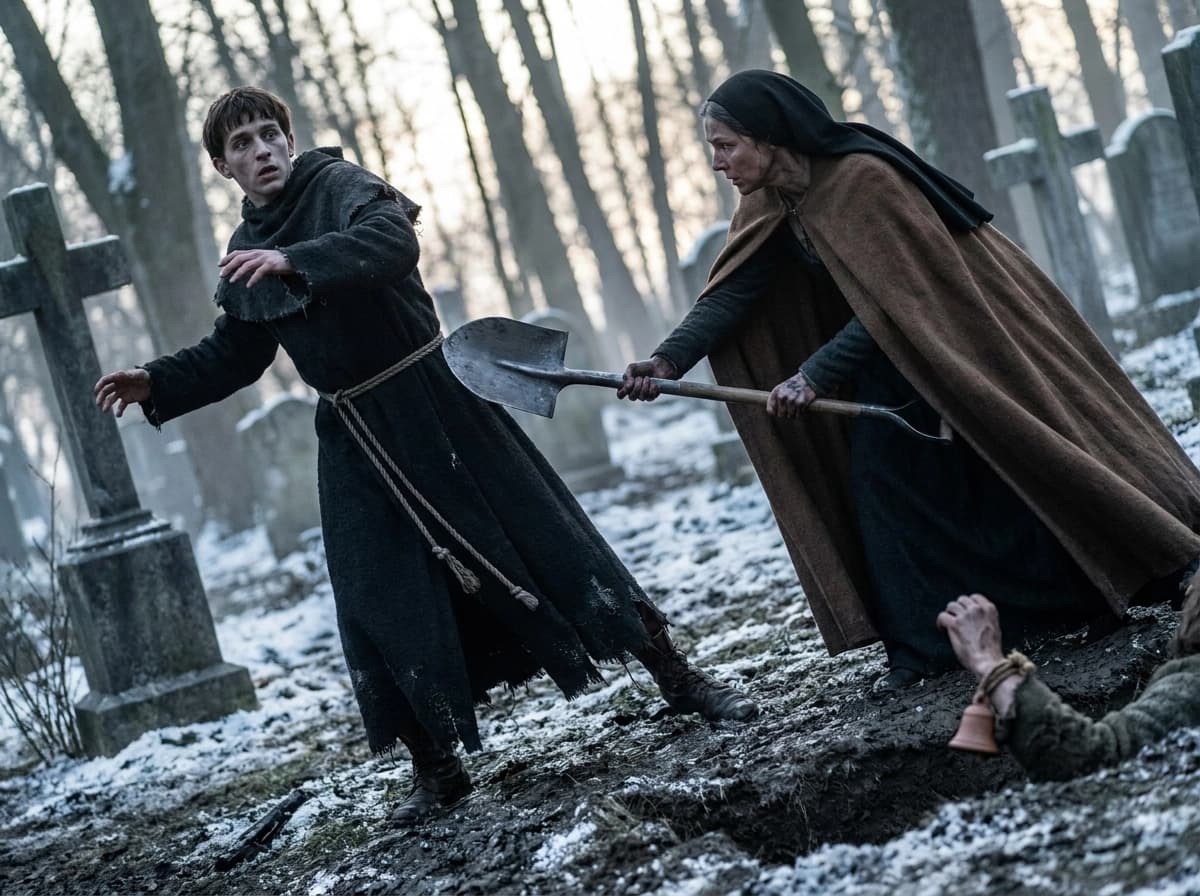
The standoff turns violent not because anyone wants blood but because the house has run out of room for contained lies. Matthieu seizes Lucien’s wrist to drag him from the pit and the novice jerks back so hard he falls against a stone. Ysabeau steps between them. Matthieu, unable to see her, grips her shoulder and mistakes resistance for insolence. She feels how light he has become under the wool, how much of his authority is now carried by others’ fear. She tells him plainly that if another corpse is moved in darkness, she will read the altered burial accounts aloud at Mass. Matthieu answers by ordering her locked in the scriptorium. Anselm does not stop it. His mercy has narrowed into bookkeeping. He wants proof arranged so perfectly that no accusation can be denied. That delay costs them. In the night Lucien is sent below again, this time under guard, to break open the sealed niche of Aélis’s brother in the old crypt and remove what remains hidden there.
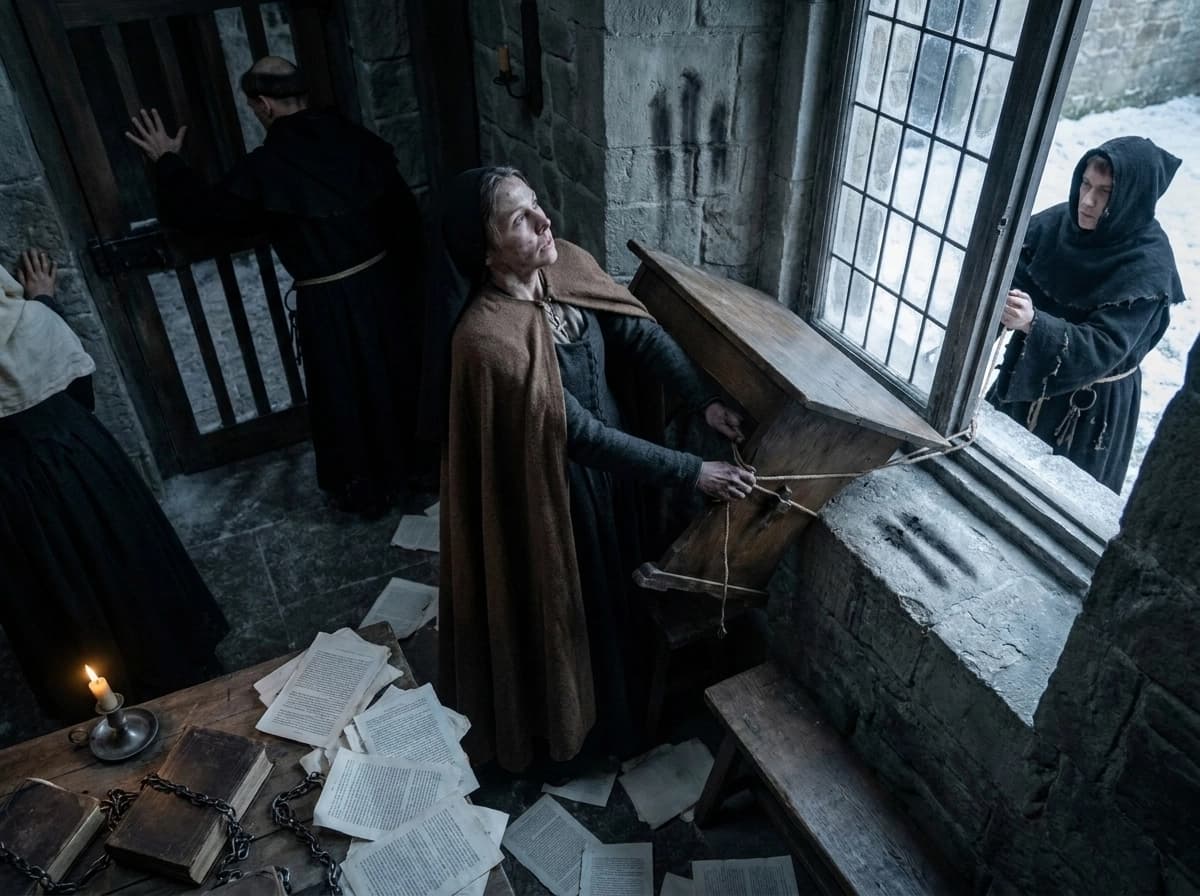
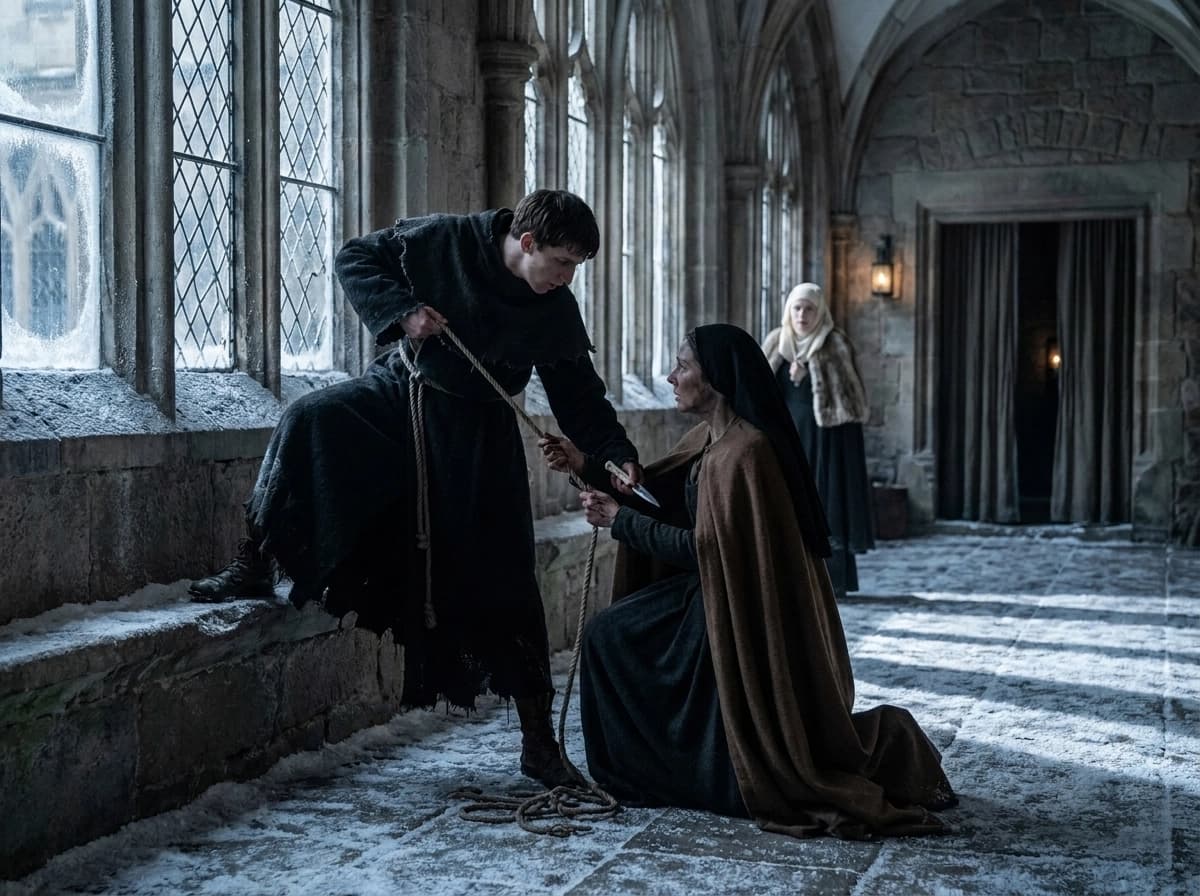
Lucien chooses at last whom to betray. Instead of obeying, he doubles back through the cistern passage and frees Ysabeau from the scriptorium window by lowering her a rope of knotted binding cords. Together they race through the cloister, collect Aélis from the infirmary, and force Anselm to come by pounding on his door until he opens with keys in hand. They go below as a body, not as whisperers, carrying lamps, a pry bar, and one of the heavy grave spades. In the lower crypt they find Matthieu already there, one hand on the wall, the other clamped around Lucien’s abandoned hammer. Two frightened brothers stand with him over a niche broken open to the knees. Inside lies Aélis’s brother and, beneath his shoulders, a wrapped bundle of altar silver, reliquary fittings, and rings taken from older dead. Matthieu had hidden the abbey’s emergency wealth inside the patron burial most protected from suspicion, then shifted the corpse whenever rumor drew near.
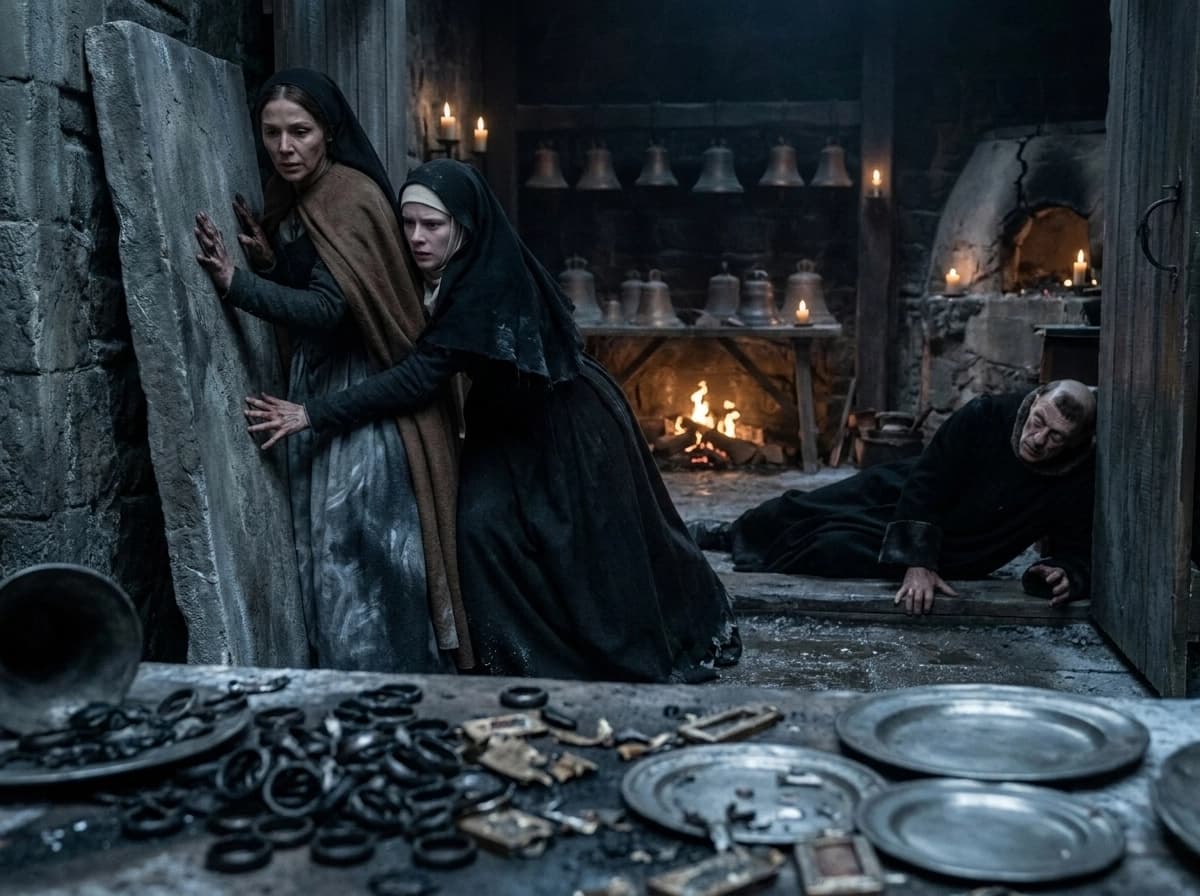
The climax comes in the crush of bodies, smoke, and stone. Aélis lunges for the niche. Matthieu catches her sleeve and nearly tears her back. Anselm grabs the abbot around the chest to pull him off her. One lamp goes over and oil runs fire across the old boards stacked by the furnace. Lucien drags one of the younger brothers clear while Ysabeau climbs into the half-open niche itself to keep anyone from closing it again. Matthieu, blind and coughing, still tries to command the room. He says if the silver is shown, the abbey will be ruined, its lands contested, its poor unfed, its dead desecrated by every claimant in spring. Anselm, choking on smoke, says the ruin has already happened. Then the cracked kiln wall, heated too fast too many nights, gives way. Stones crash down and pin Matthieu’s legs across the threshold of the casting room.
What follows is not a clean judgment but a hard human scramble. Fire pushes smoke low along the ceiling. The younger brothers flee. Aélis can either drag out her brother’s body or help free the man who used it. Lucien can either seize the silver bundle that would feed his sisters or use both hands on the fallen stones. Anselm can either save his ledger from the sparks or leave it to blacken while he hauls at the rubble. Ysabeau, wedged in the niche beside the dead, makes the choice that breaks the pattern for all of them: she throws the silver bundle out into the passage where everyone can see it and then orders them to pull Matthieu free first, because if he dies buried with the hoard, the abbey will make him a martyr and the truth will be sealed under his body. Her command lands because she is the only one not speaking for office, inheritance, or accounts. Lucien obeys first. Aélis, shaking with rage, obeys second. Anselm drops his ledger into slush from an overturned water jar and gets both hands under the stone.
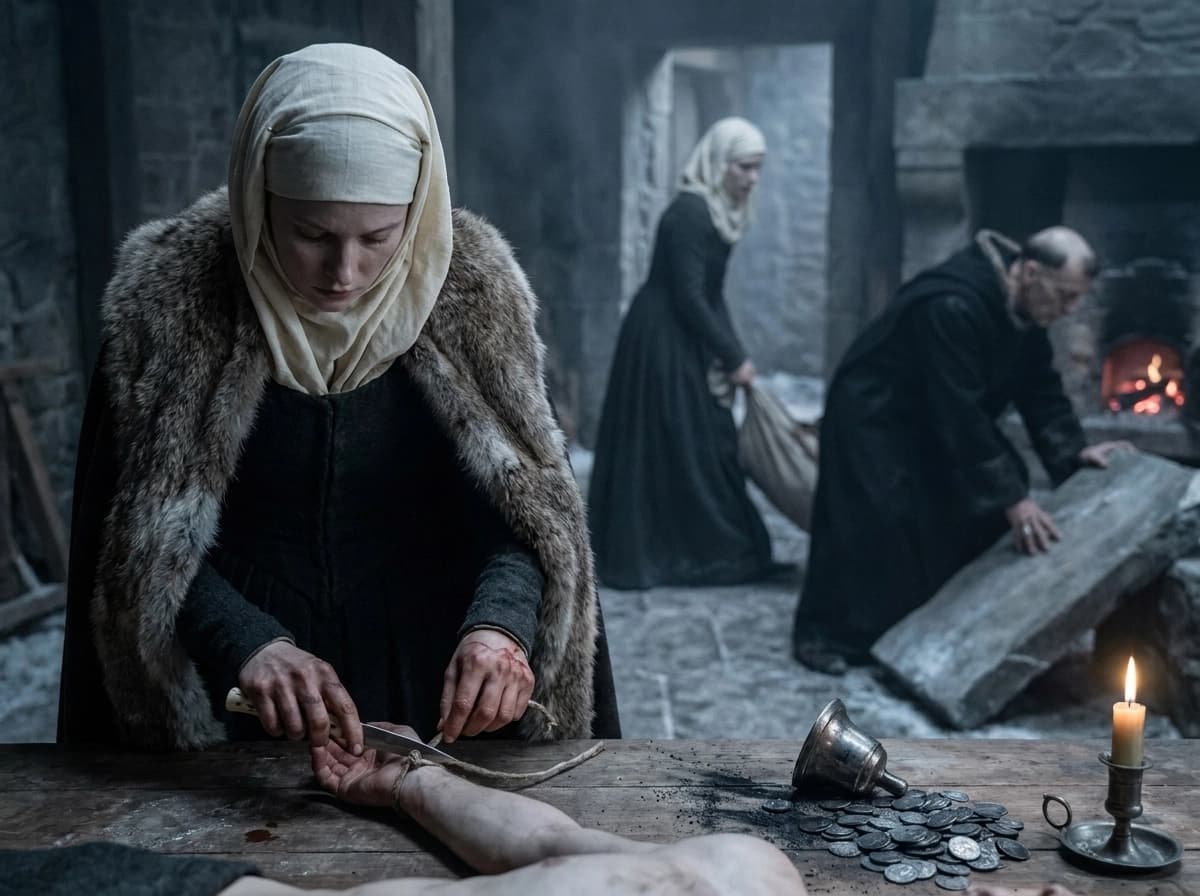
They drag Matthieu clear just before the furnace roof collapses. His legs are crushed. The silver lies in the passage blackened with soot, no longer deniable as bells, alms, or rumor. Aélis kneels by her brother and cuts away the false bindings with Ysabeau’s penknife. Lucien stands over the exposed hoard with the hammer hanging loose in his hand and does not take a single ring. Anselm, wet ledger ruined against his chest, hears the brothers gathering above and understands that memory kept in columns can burn as quickly as kindling. So he does the one thing his whole nature has resisted: he leaves the ruined book and carries the silver itself upstairs in both arms, making the evidence bodily and public.
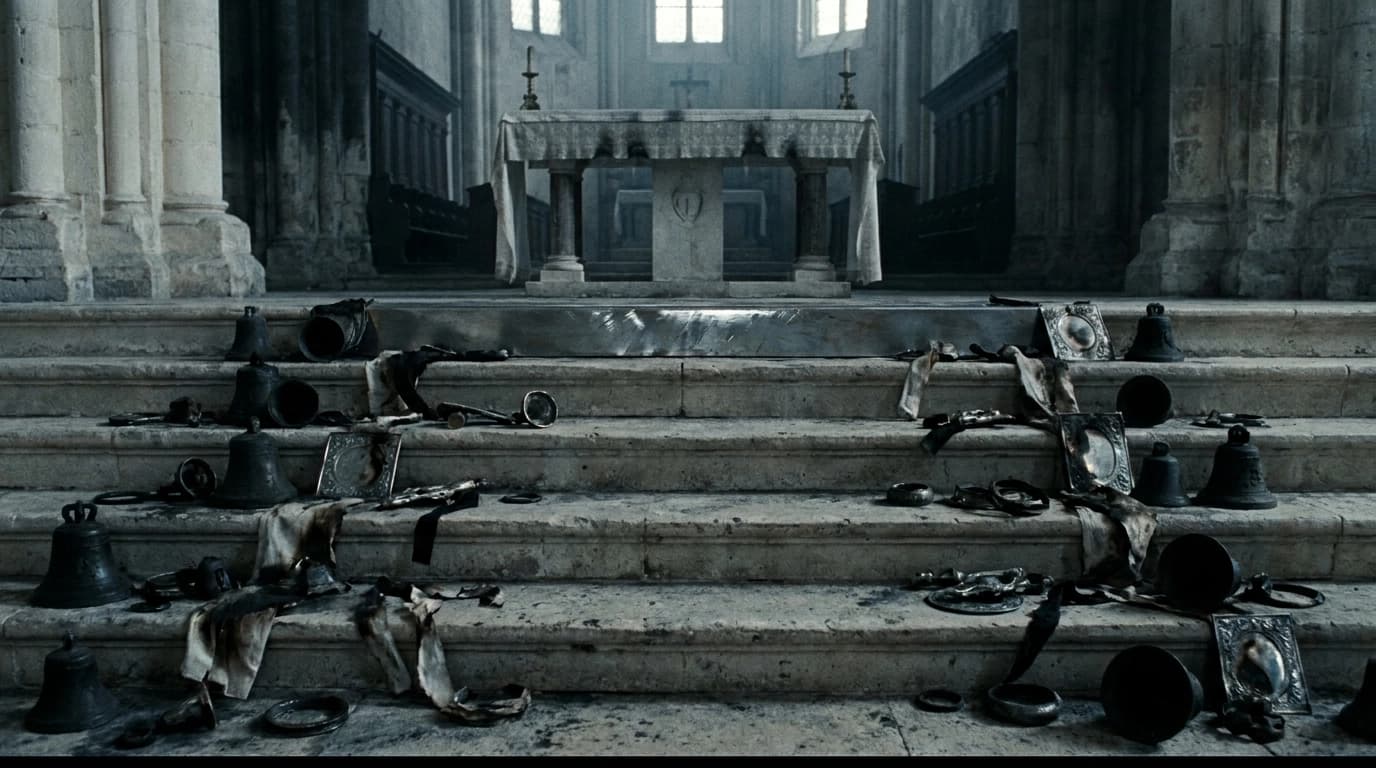
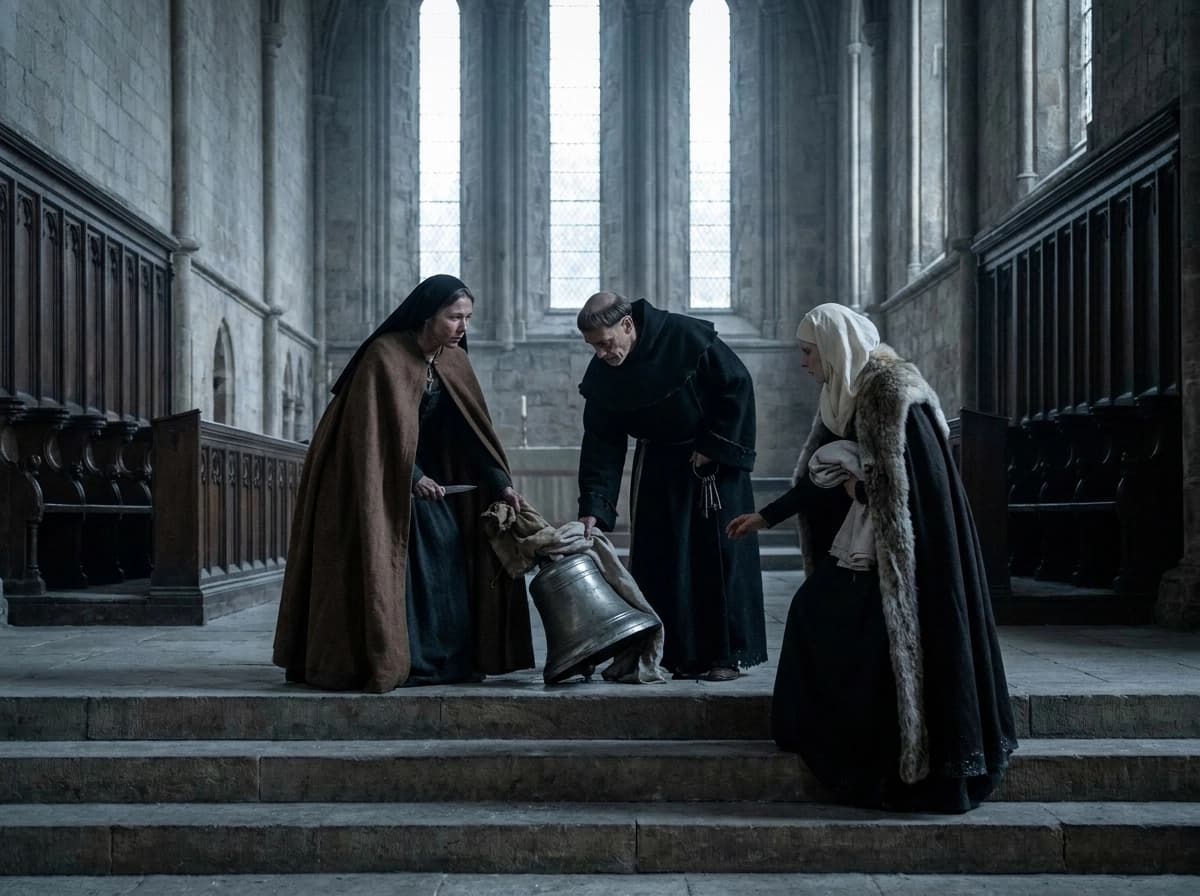
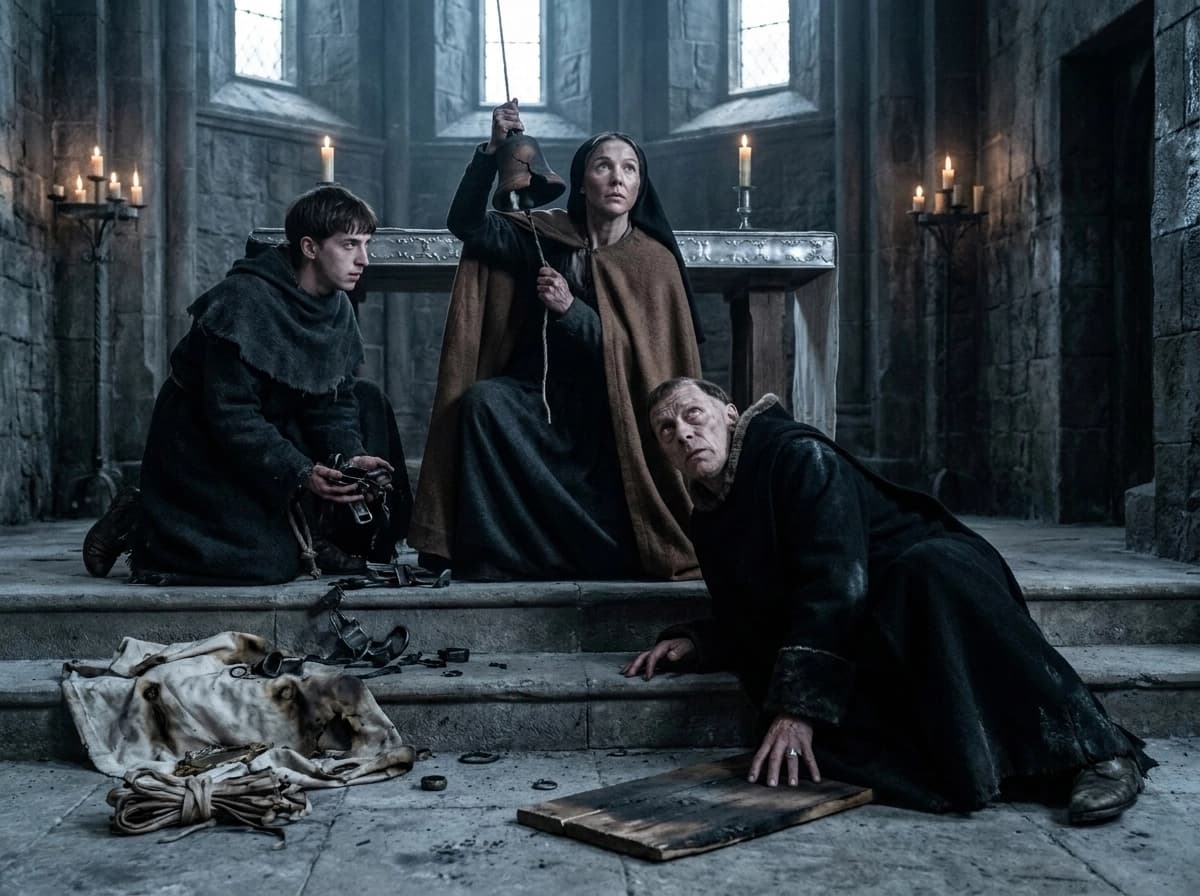
At Lauds, with smoke still in the church and snowlight coming thin through the high windows, the abbey sees what has been hidden. The altar silver, reliquary scraps, patron rings, and clay bells are laid out on the steps before the shaved altar edge. Matthieu, feverish and broken-legged, is brought on a litter and made to hear Ysabeau read not a ledger but the names of the dead whose graves were opened, including Aélis’s brother. She does not accuse him of sorcery or miracle. She names acts: who was moved, what was tied, what was taken, where it was found. In a house built on controlling memory, speaking the sequence aloud before witnesses becomes the one punishment that cannot be buried again. Matthieu does not repent cleanly. He says he would do it again to keep the abbey alive. That answer prevents anyone from turning him into either monster or saint.
When the pass opens weeks later, the abbey is not destroyed, only changed in ways no one can fully master. Matthieu is removed from rule but not cast out; he remains alive, blind, and dependent in the infirmary, forced to hear bells with no power to assign them. Anselm takes temporary charge of stores and burials, but the loss of his ledger cures him of trusting numbers alone; he orders every grave witnessed by two pairs of hands and every bell broken after burial so no metal can travel twice under clay. Aélis funds a stone marker for her brother and for the older unnamed dead disturbed in the crypt, binding her inheritance to exposure rather than silence. Lucien asks release from vows and receives it, but before he leaves he spends three dawns helping Ysabeau reopen the false graves and set each body back where it belongs. They work with numb fingers, in mud and thin light, tying no bells at all until new ones can be made from honest clay.
Ysabeau stays through the thaw long enough to copy a fresh mortuary roll and a plain account of the winter for the house and for herself. She does not write wonders into it. She writes weights, cuts, shroud changes, names, and the day the kiln fell. Then she leaves by the reopened pass with her ink horn thawed under her mantle and the bone-handled penknife at her belt. Behind her, the abbey remains what it always was: a place of prayer, hunger, fear, and human hands. But the graves no longer speak with borrowed silver in their mouths.







댓글 · Comments
댓글 · 0