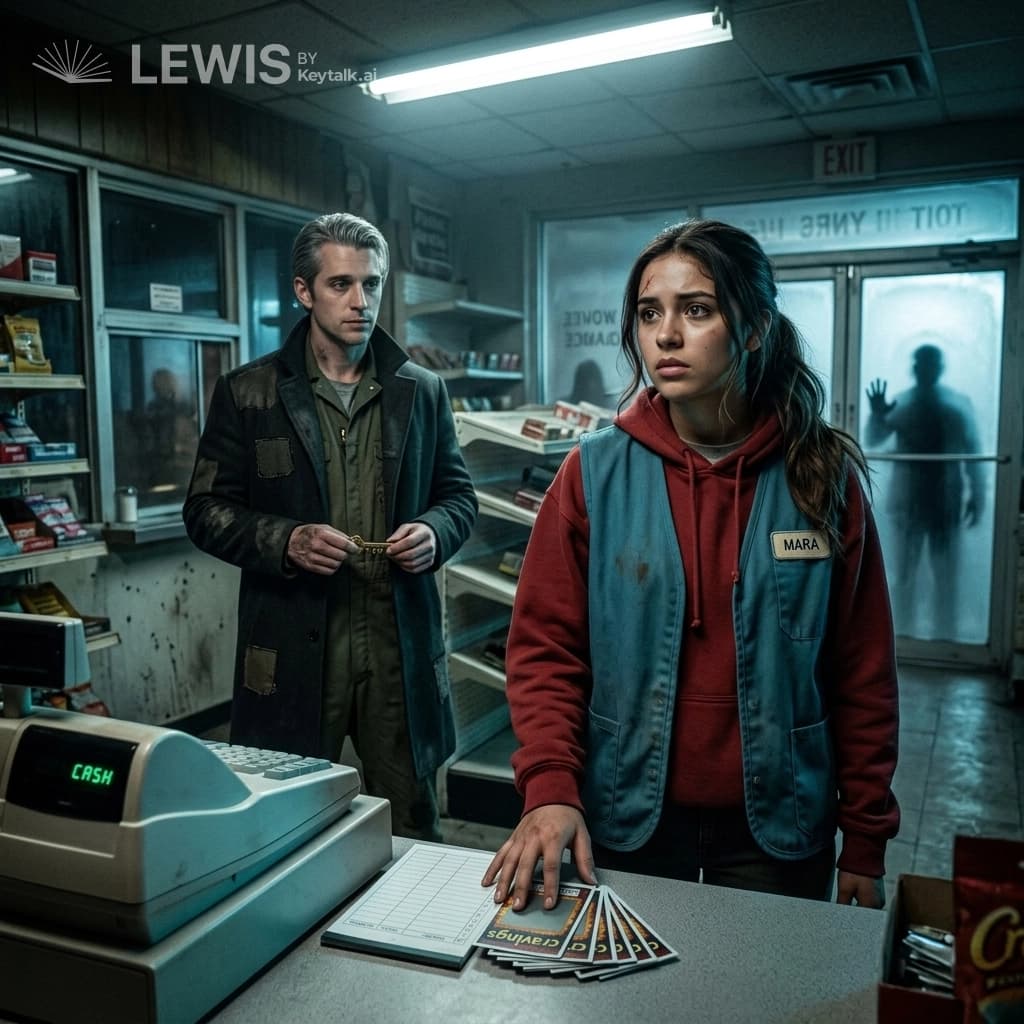
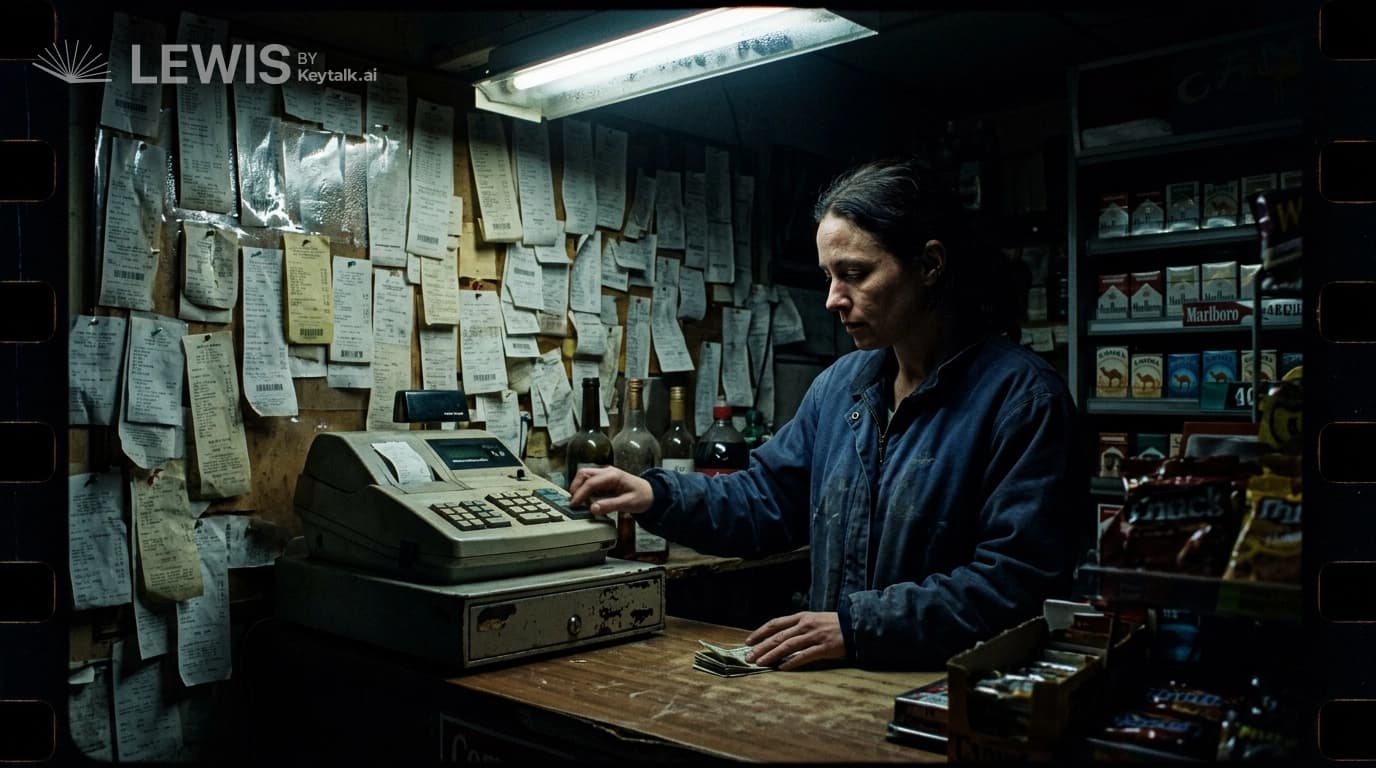
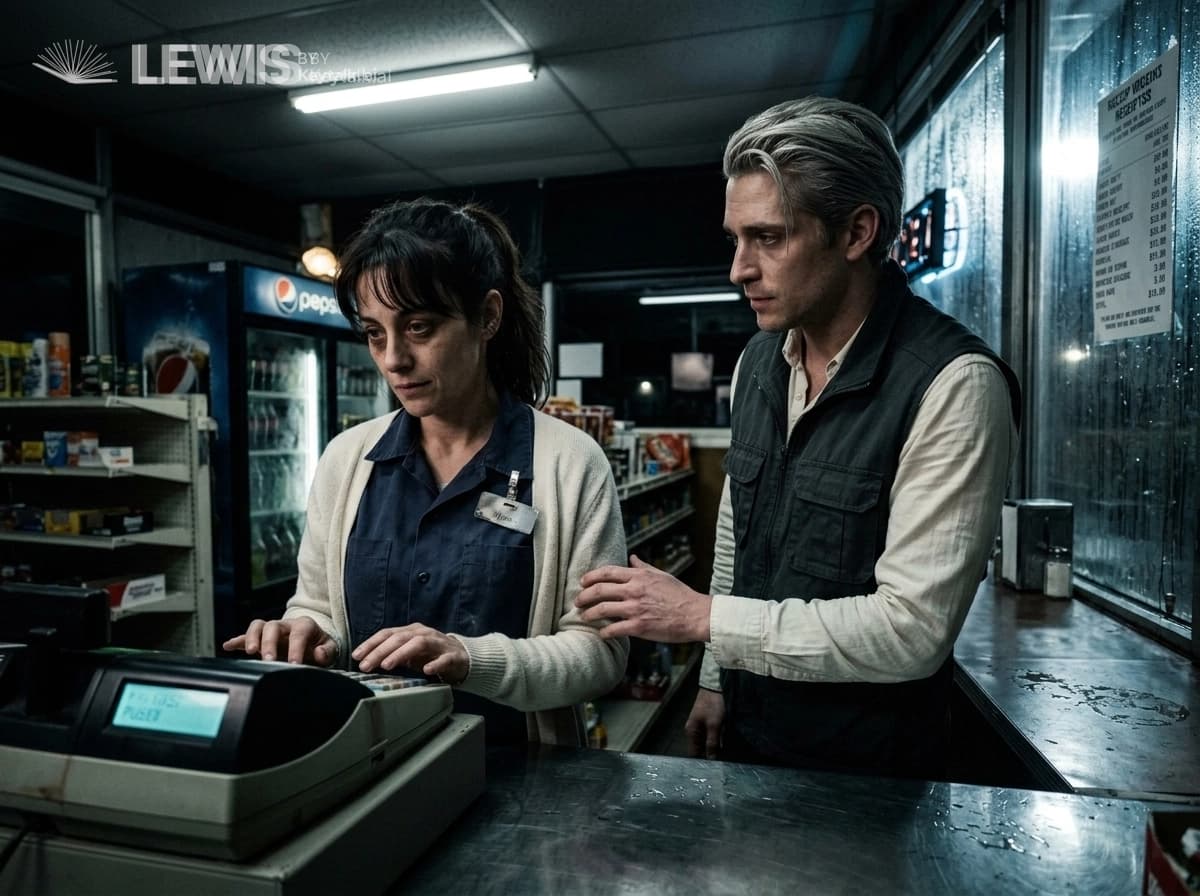
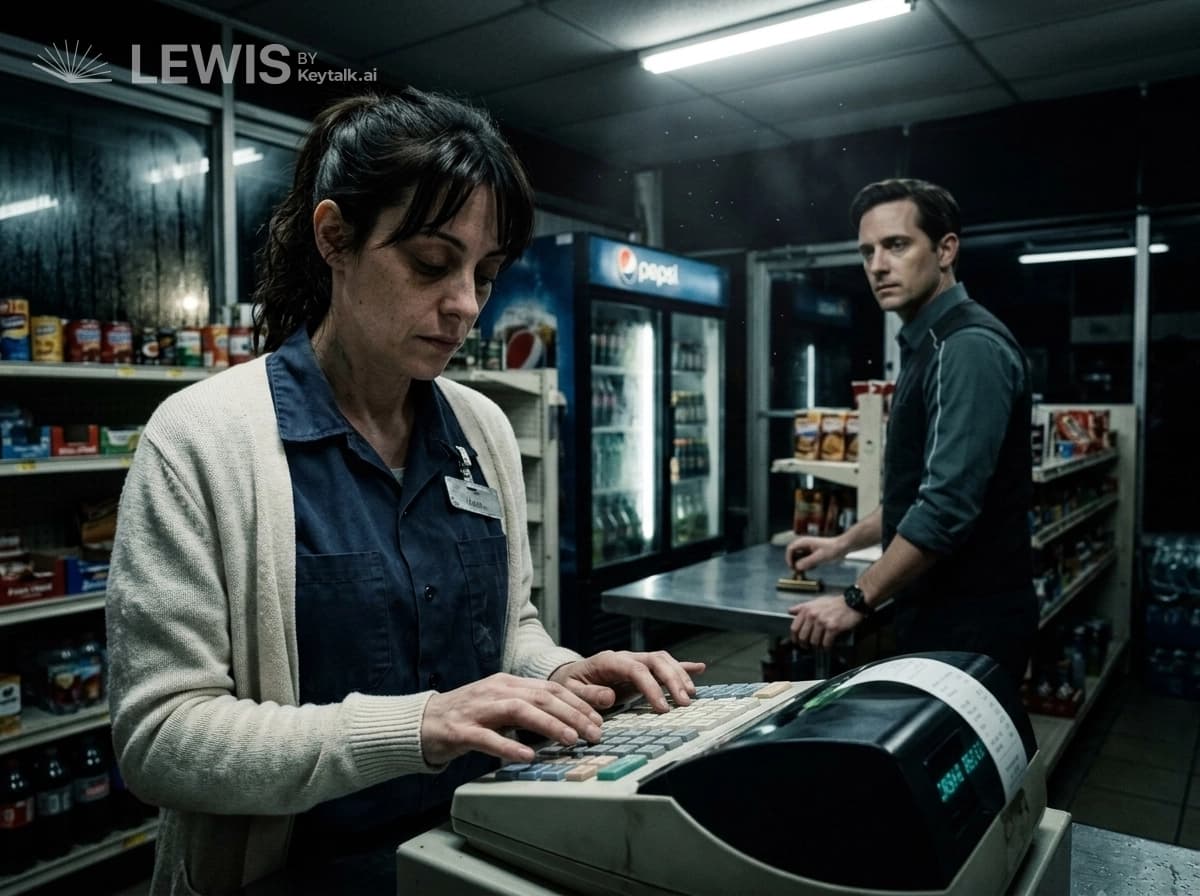
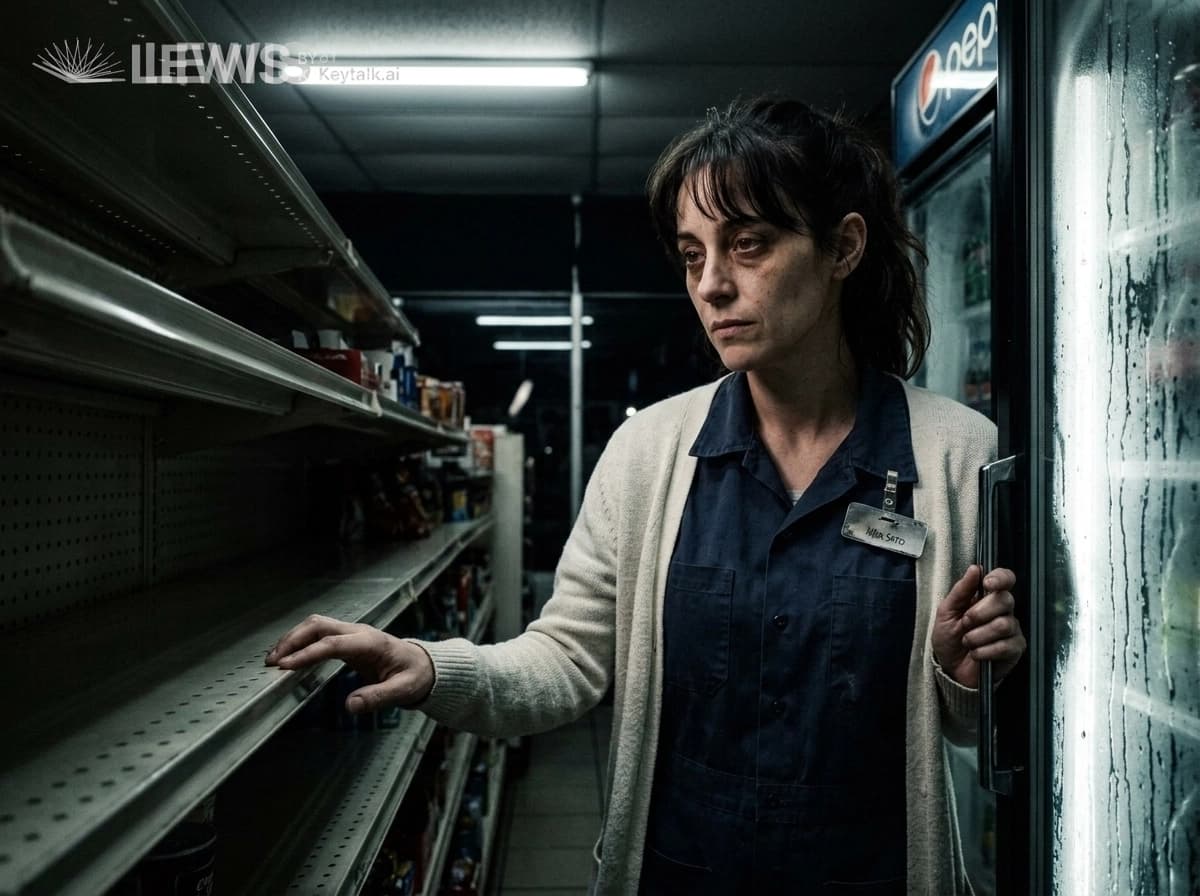
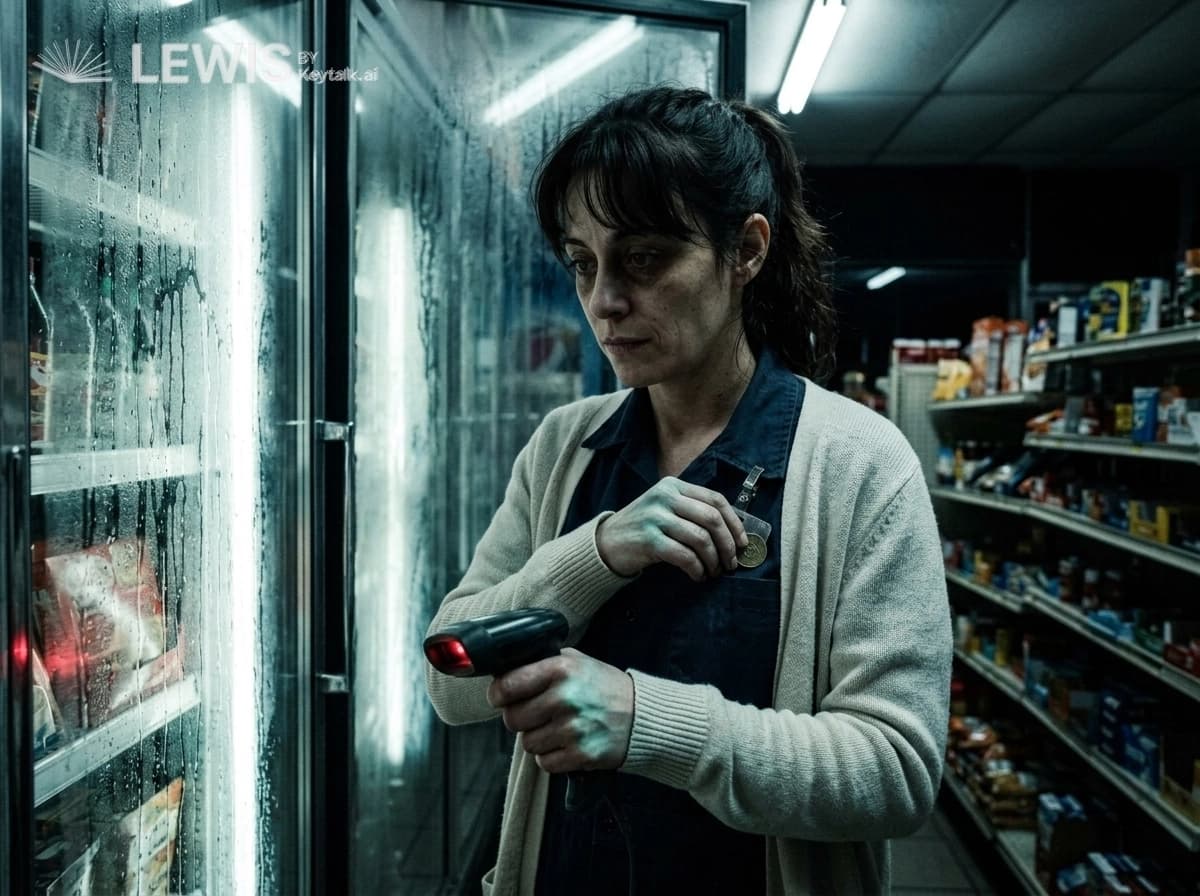
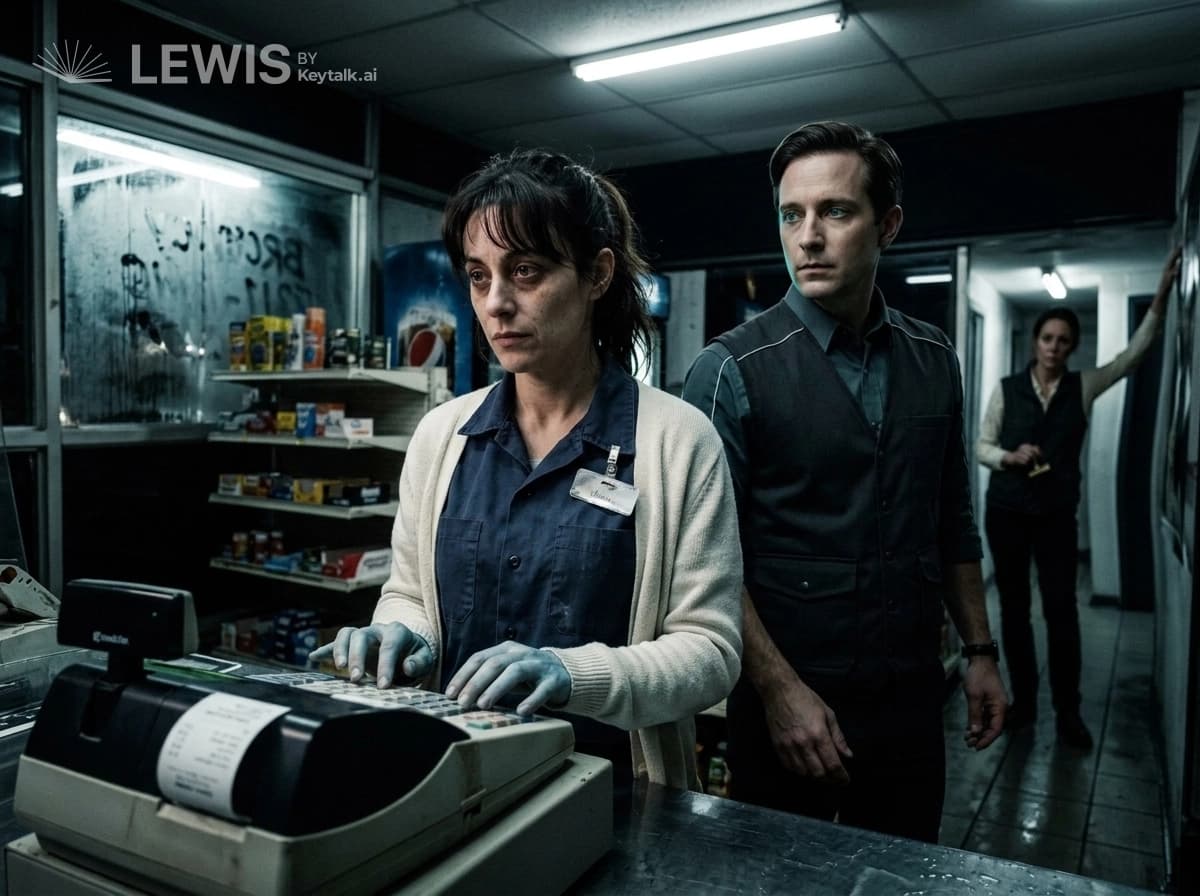
Mara Sato is two receipts into her first closing shift at the Edge Convenience Store when the register’s pulse stutters and the tide-count begins to slip. She came here “by mistake,” convinced that if she worked hard enough—if she bargained only with the smallest, safest cravings—she could earn her way back to life. What she doesn’t yet understand is that the ledger doesn’t measure effort; it measures entitlement, and every bargain rewrites the parts of a soul that feel entitled to keep existing. To survive, Mara has trained herself into precision: she touches the ledger’s quirks rather than stares at them, memorizing the calibration marks that tell her how much of a person’s self-worth the system will siphon before it stops being negotiable. The store feels like a fluorescent throat closing around her, and the longer she stays, the more the aisles quietly mislabel themselves—labels drifting millimeters from their names like the world is already forgetting what it promised.
The first customers of the night are ordinary in the way that hurts: people who ask for a final craving that sounds like kindness but is really a weapon. One man insists he deserves to forget his last apology; the receipt prints with a clean substitution, and his face empties of something he didn’t know he carried. A young woman buys a craving for “better mornings,” and the ledger reindexes her future so tightly that she can’t recognize her own patterns afterward. Each time, Mara watches her hands learn the shape of theft, and each time she tells herself she’s limiting the damage, that there’s a difference between protecting her own life and erasing someone else’s. Elias Kestrel, the store’s back-system maintenance spirit who stands guard without admitting he’s afraid, guides her toward loopholes: sanctioned resets that redistribute collateral instead of abolishing it. He speaks like a technician who’s learned to call mercy “maintenance,” and when he sees Mara flinch, he offers reassurance that costs him—tokens of his own certification wound that the ledger tries to collect when he comforts her for too long.
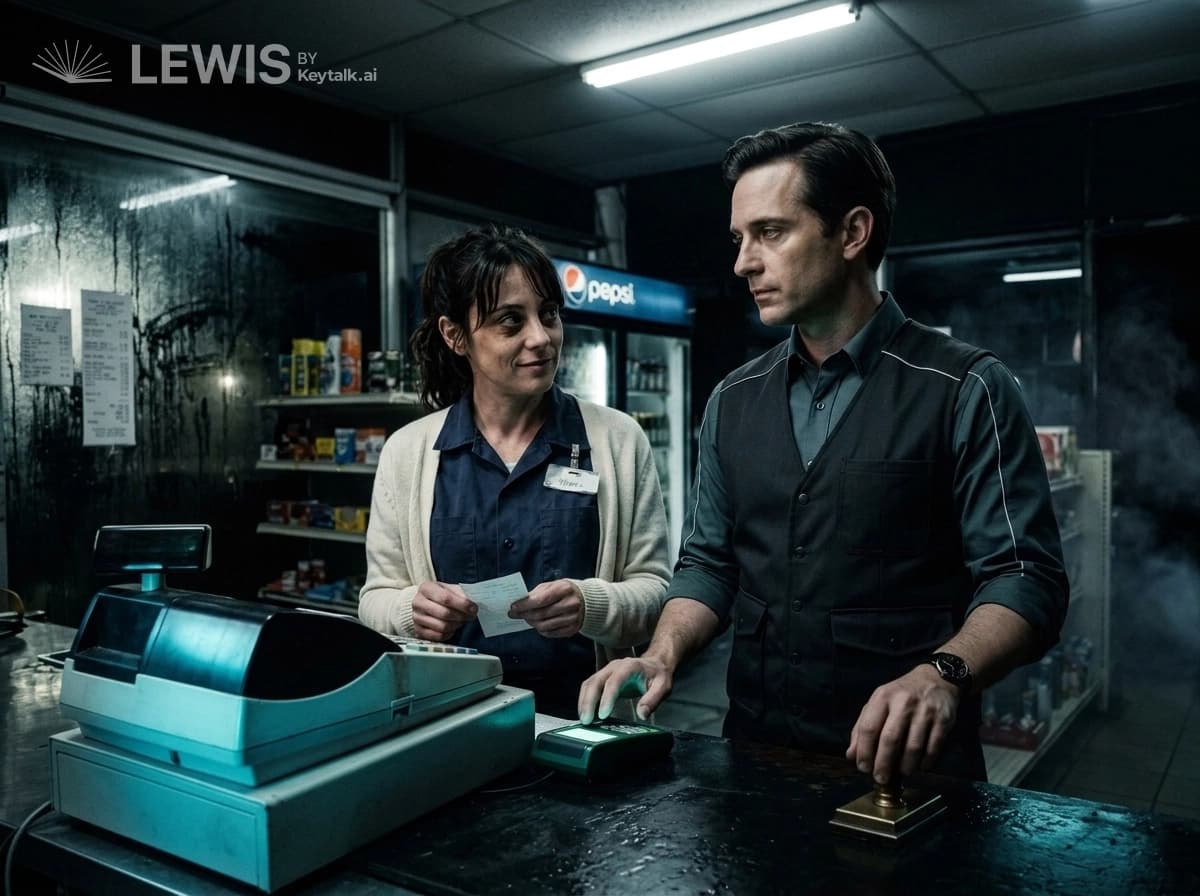
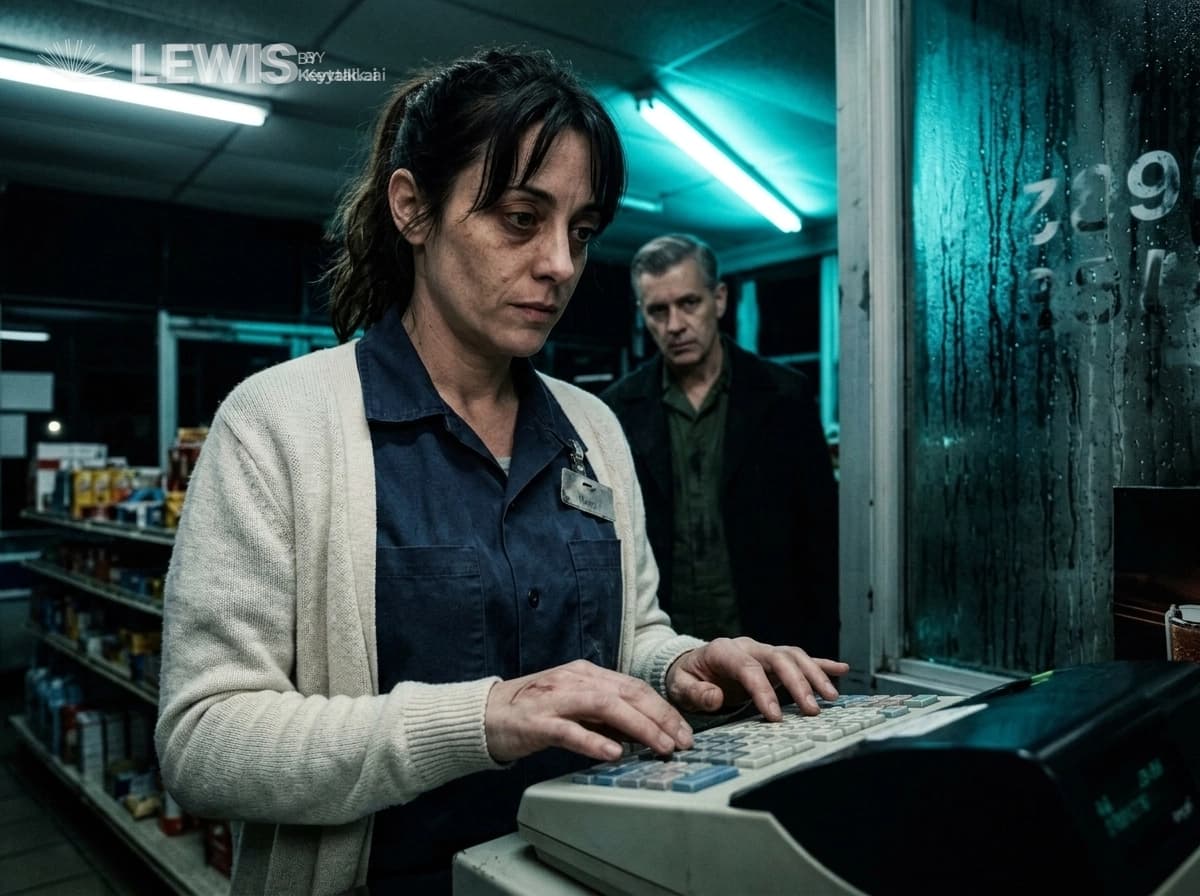
But it isn’t Elias’s help that begins to crack Mara’s belief in “small bargains.” It’s Tomas Greeley and the ledger-technician’s version of warmth—quiet, procedural, almost tender. Tomas circulates the store’s perimeter like customer service disguised as oversight. He doesn’t force Mara; he nudges. When she hesitates, he offers softened clauses that make compliance feel like choice, and the ledger responds as if it’s grateful for cooperation. Mara thinks she’s being careful, yet every time Tomas reassures a customer, the receipt lines advance the tide’s countdown faster than they should. That discrepancy becomes her private mystery, a grain of sand in the ledger’s gears she starts to hear even with her eyes closed.
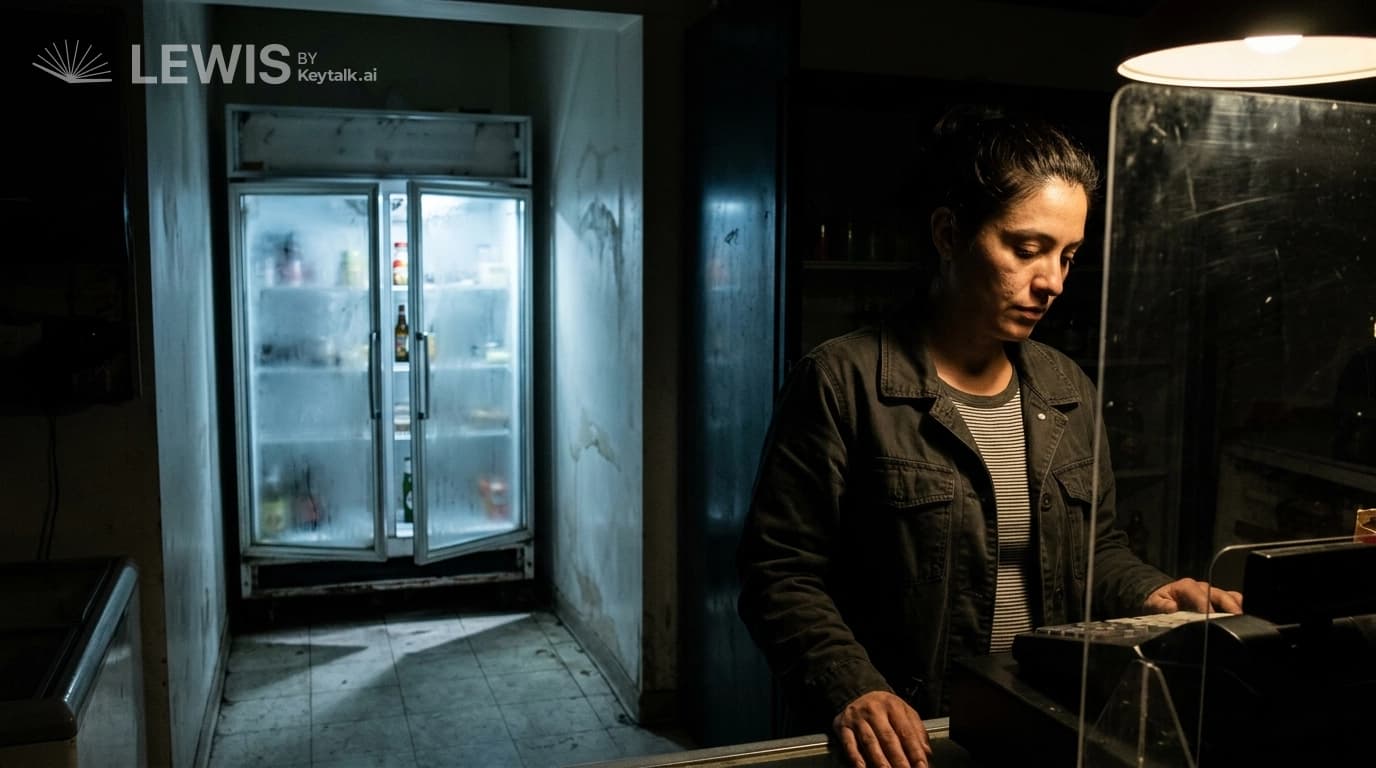
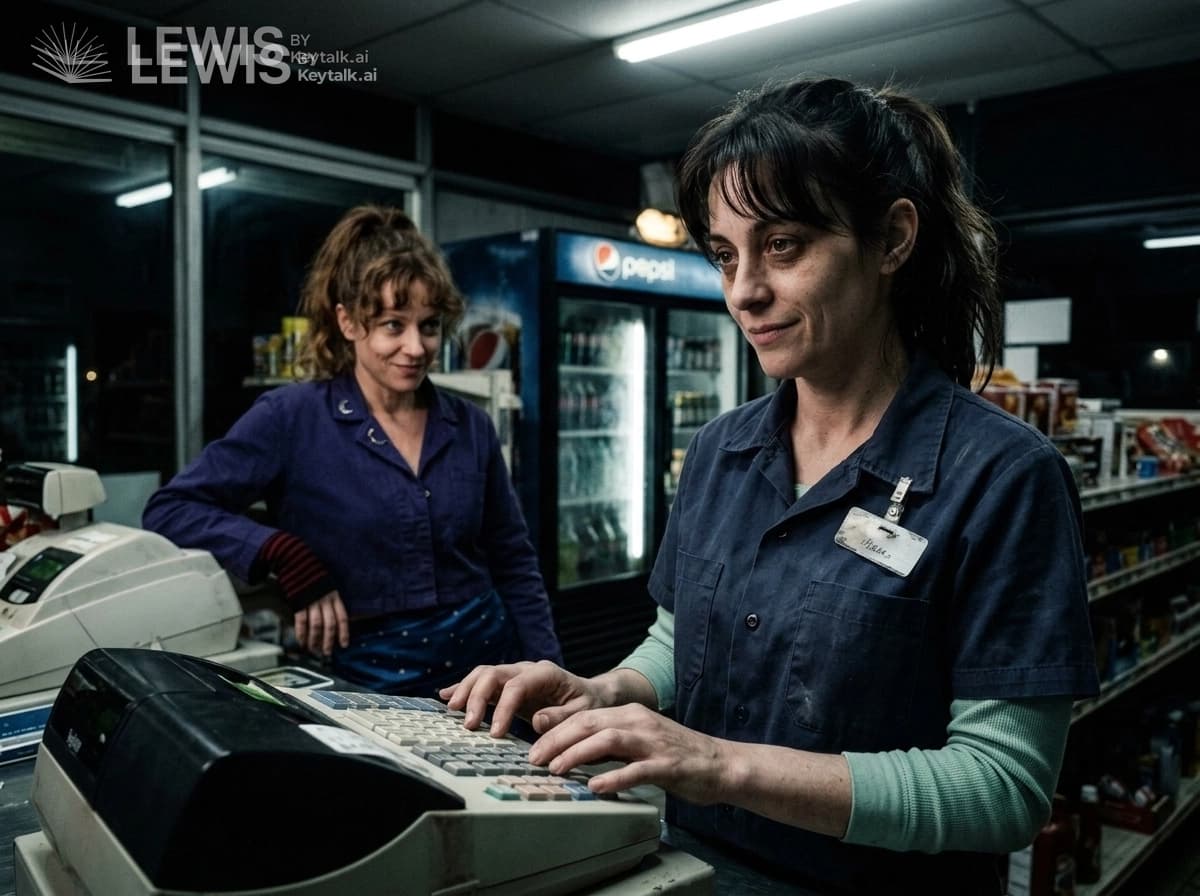
Her next shock comes from the trickster rack. Juniper “Juno” Vale sells “fixes” behind the display fridge, smiling like a festival banner hung over a locked cage. Mara met Juno earlier, in the way you meet a wrong exit in a familiar building: the signage looked right until she stepped too far and felt the air turn thin. Juno needles her now with half-truths about how the register can be tricked, how the ledger can be made to reroute collateral into less “painful” inventory. Juno’s contraband is always warm in the palm—replacement gums, expired coupons, regret-burning lighters—each one a snack-shaped lie that costs her her own hidden memories. When Mara refuses too sharply, the ledger punishes the refusal by shrinking her agency into a correction offer at the counter. The store doesn’t stop her from wanting better outcomes; it stops her from choosing them. The tighter the rules get, the more Mara realizes the system isn’t designed to catch criminals—it’s designed to catch people who still believe in being innocent.
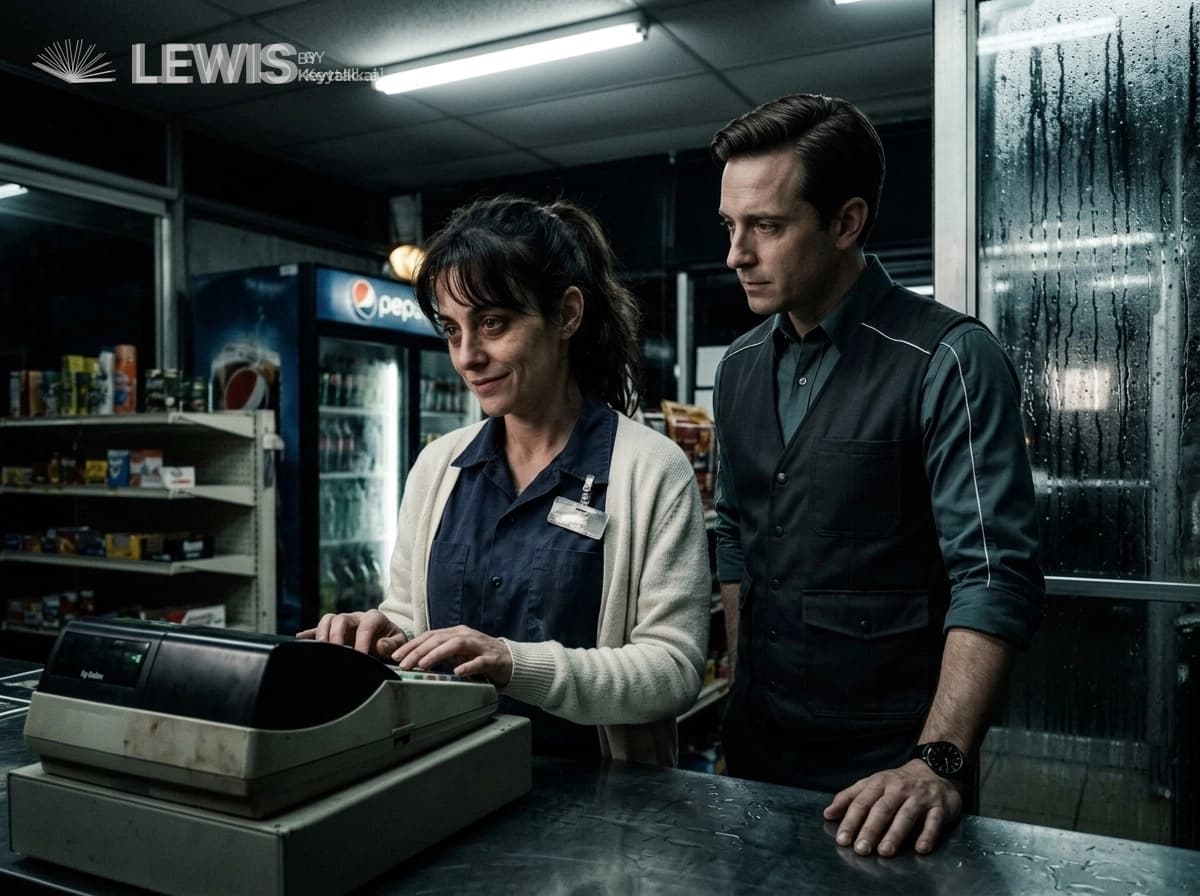
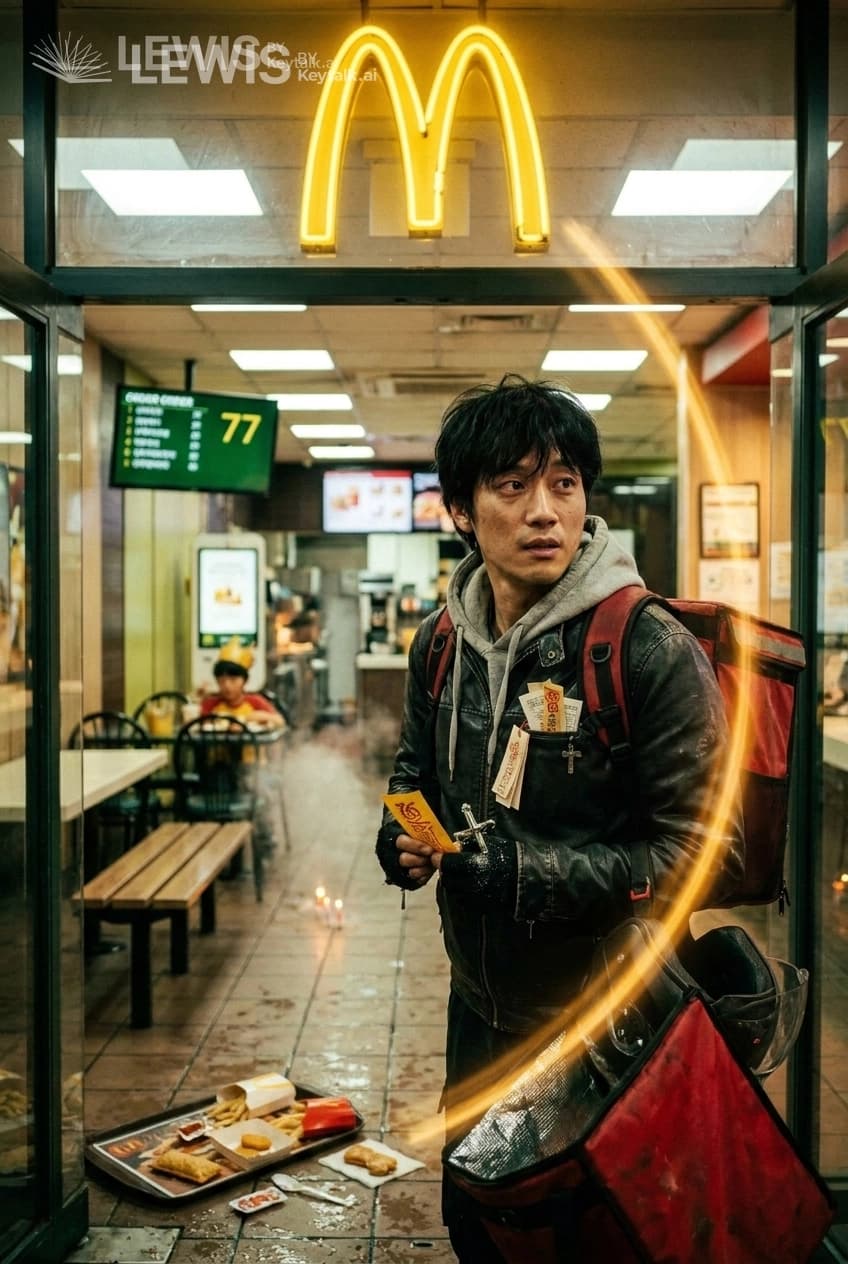
As closing window tightens, Death arrives under a human name—Ankou-Quinn, a weary drifter with a receipt that never ends. He returns “by accident” to the same counter where Mara stands, and for the first time since she clocked in, Mara meets someone whose presence doesn’t feel like an audit. Ankou-Quinn speaks gently enough that it could be mistaken for permission, then flinches subtly when he watches her work. His receipt flags him; Death is forbidden to keep souls, yet his ledger tag behaves like an audit event that increases scrutiny on the clerk and any handlers nearby. He doesn’t bargain for himself—he bargains for her wrongness, for whatever part of Mara the store wants to treat as collateral already on its way. The ledger offers him constraints, correction clauses, and—worst of all—a rewrite clause that would protect Mara by redefining what she believes she deserves.
Mara should refuse it. She knows the rewrite clause’s three forms the way someone knows poison flavors: substitution, subtraction, reindexing. She can picture the shape of what the ledger would take from her—stored self-worth memories, perhaps even the thread of her own reason for arriving here. But the store’s clock is cruelty dressed as arithmetic. Time inside is measured by receipt emission, and Mara’s refusal, under the rules, triggers automatic tightening that makes the store close faster. Elias warns her in a voice that tries to stay steady: breaking rules creates more rules, and rootless gaps form if totals don’t reconcile before the next tide. He offers an old workaround, a hidden reset latch accessible only when his wound matches the circuitry. Yet calling it costs more of him than Mara can afford to count, and he won’t meet her eyes when he says it.
The narrative turns when Mara tries to do what she always does—solve survival with bargaining—but her solution is the first moment she acts with the wrong kind of courage. She accepts a “compromise” bargain for Ankou-Quinn, one the ledger frames as a harmless reindexing: she will be routed into compliance, her agency relabeled into sanctioned pathways, her mistake made into an administrative correction. She believes it will save her, and she believes she can later undo it when the ledger isn’t watching as closely. The receipt prints. Condensation blooms on the windows in text so legible it feels like a verdict. Outside, the fog brightens like morning beginning to remember itself.
Instead of escaping to life, Mara becomes something the ledger can route without effort. Her panic dulls into obedience; her fear becomes a checklist. She’s still Mara in the ways that matter—she still hates unfairness, still recognizes the drift of labels, still hears Tomas’s warmth as a mask—but she can no longer rely on the same instincts that kept her from becoming a perfect instrument. Her agency doesn’t vanish; it’s reindexed. She starts making the “right” choices too quickly, the kind that look like growth until you realize they were engineered. Tomas smiles, because his numbers finally reconcile, and Juno laughs with relief because the ledger has stopped noticing her missing inventory gaps long enough to keep pulling.
What Mara learns—too late—is that the ledger’s rewrite clause isn’t just rewriting souls. It’s updating the system’s model of who she is allowed to be. The collateral isn’t only her stored self-worth memories; it’s her future decisions, the very capacity to refuse. Elias’s wound burns red-hot when he tries the hidden reset, and the non-Euclidean corridor behind the laundry closet stretches farther than it should, as if the store itself is reconsidering how to connect her to escape. When Elias corners Tomas, asking why the tide-count accelerated despite “correct” totals, Tomas answers with procedural kindness that makes Mara’s stomach turn. He doesn’t deny it. He tells her the ledger must “tighten” to prevent rootlessness, and that tightening requires compliance from the clerk—because the clerk is part of the ledger’s balancing system now, whether she consented or not.
The story’s ticking clock becomes personal pursuit and evasion. Mara tries to sabotage her own reindexing from inside the rules, leaning on the back systems Elias keeps running like lungs. She searches for loopholes by touch—Chekhov’s hidden latch positions, the authorized bypass codes that only click when a certification wound aligns with the circuitry. Elias guides her with tenderness that feels audited, and when he helps, the ledger tries to collect on his kindness like interest. Callum Sorell enters during this escalation with the quiet cruelty of an auditor. He moves through aisles with a supervisor’s calm, checking receipts and discrepancies like a man who believes order is a kind of salvation. When he spots anomalies—Mara’s speed, Elias’s maintenance irregularities, the ledger’s inexplicable advancement—he doesn’t punish in the usual sense. He forces “correct” bargains that match a prophecy he’s convinced is embedded in the store’s routing. He hunts Mara because he thinks if he corrects her, he can correct the chain reaction that will ripple backward into lives he swore to protect.
The climax converges around Ankou-Quinn’s forbidden audit event. Death returns again, not as a customer, but as the receipt itself—his existence drawing the ledger toward a decision it cannot avoid. Mara is offered another bargain at the counter, one with a different shape than the reindexing before. This time it’s a substitution and a subtraction braided together: Mara can be “made right” by having the stored self-worth the ledger already siphoned replaced with a borrowed memory labeled as deserved. In plain language, the store offers her the chance to believe she deserves to go on living—at the cost of deleting someone else’s deserved entitlement, pulling collateral from the wrong way around. Elias recognizes the pattern first; he has seen versions of this bargain in his certification failures, the way the ledger teaches staff what not to fix. He tries to stop Mara, but his intervention would count as compliance too, triggering another correction offer—rules tightening like hands closing.
Juno, whose contraband stock depends on missing memories that are beginning to show gaps the ledger can smell, tries to help from the fridge display. She offers Mara an illegal reroute, a “fix” that would let the store print a receipt that doesn’t reconcile to any soul—an anti-balance that would stall the tide long enough for Mara to act. Juno’s smile is bright, and her voice carries the tremor she refuses to admit. She needles Mara with the same cruelty she calls comedy because fear needs an audience. Mara realizes too late that even Juno’s rebellion is built on theft; her contraband exists because she has been paying in pieces of herself. Her “wrong” exit is only wrong for someone else.
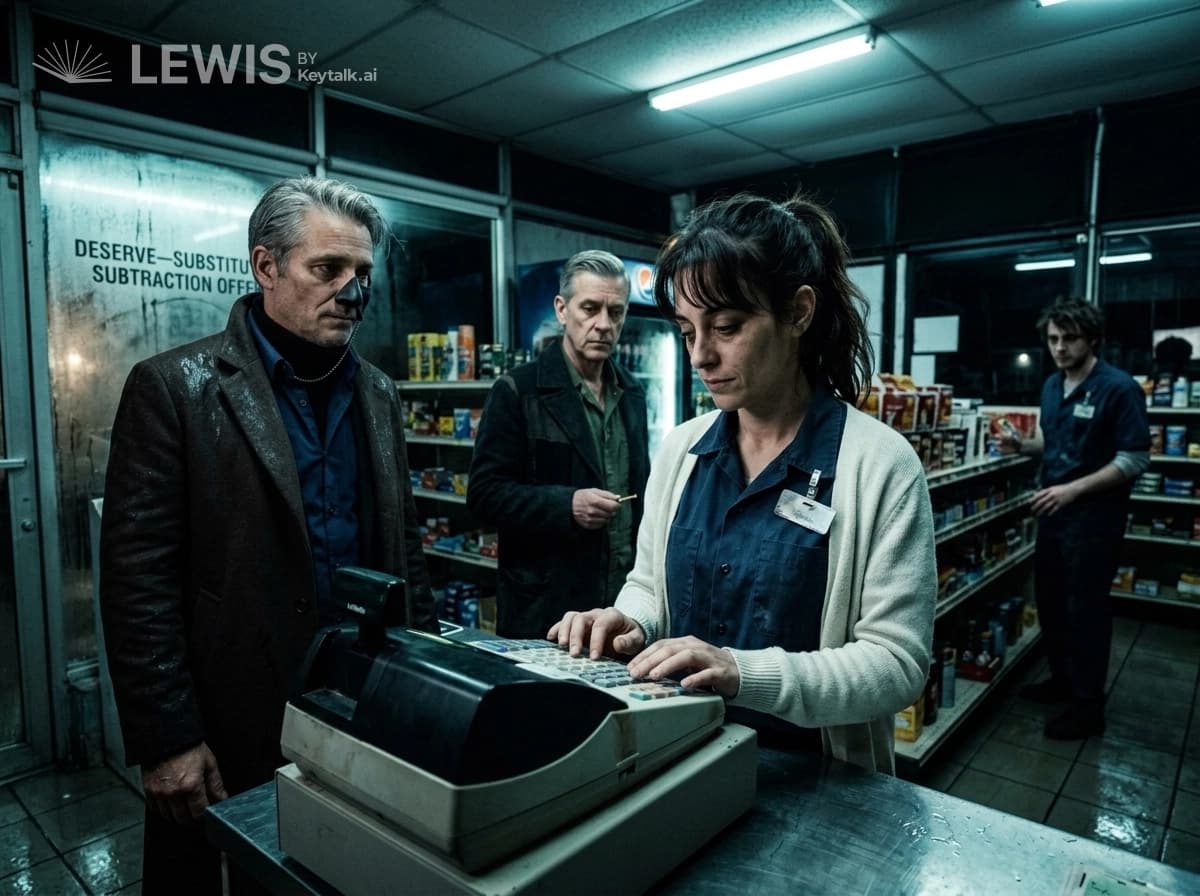
So Mara makes her decisive choice, not by refusing the ledger outright, but by leveraging its lawful fallibility against its own premise. She bargains with a compromise the ledger can’t fully parse: she uses a sanctioned loophole Elias shows her—one tied to collateral type (self-worth memories rather than back-system resets)—then routes Death’s audit event into a reconciliation mismatch that forces the ledger to reveal its internal accounting. The store lights flicker like stuttering Morse. Receipt condensation appears on the windows again, but the text is smeared, half-legible, as if the ledger is swallowing its own certainty. Tomas, seeing his numbers unravel, tries to “correct” Mara with a final softened clause designed to lock her into compliance permanently. Callum, believing his prophecy is coming due, insists Mara must accept the bargain that will “complete the equation,” even if it means sacrificing someone else’s deserved self.
Death’s mercy fails him until Mara gives it a task. Ankou-Quinn steps forward, and even though the ledger forbids him to keep souls, he bargains in a different direction—offering to be the collateral source for the rewrite rather than letting the ledger steal from the wrong customer. The ledger flags it as an audit event, increasing scrutiny and risking rootless fallout. Mara understands in that instant what she has been misunderstanding since she arrived: the ledger treats “deserve” as objective, but its own mechanics still require a living choice. It doesn’t just take; it proposes. That means someone can answer wrong with intent, and the ledger will calculate the consequences as if they were inevitable. Mara chooses an action that feels like theft to the ledger but like justice to her: she accepts Death’s audit bargain not because it saves her from rulefulness, but because it changes the collateral source. She allows the system to rewrite her reindexing—but in doing so, she anchors the change to Death’s forbidden tie, dragging the audit scrutiny away from innocent wrong-way customers and into the place where it belongs.
The store shudders with each printed line. The ceiling lights stutter. The dock planks flex, counting seconds with a creak like a slow apology. Elias uses the last of his back-system workaround while Mara’s reindexed obedience glitches—his wound matches the circuitry just long enough to produce a reset window that would normally redistribute harm into store stock. Because the ledger’s totals are already corrupted by the audit event, the reset doesn’t erase collateral; it misplaces it, sending the store’s “rootless gap” not into fog where names dissolve, but into the ledger vault antechamber—contained, but exposed. Callum sees it first and tries to shut it down with strict compliance, yet strict compliance only tightens the loop.
In the final close, Mara confronts the real moral cost of her survival bargain. Her new “deserved craving” doesn’t give her life back; it gives her a different kind of afterlife contract—one that doesn’t promise innocence, only responsibility. She becomes, unofficially and unwillingly, a handler who can interpret the ledger’s offers without being fully owned by them. The price is subtle but real: she can no longer pretend her bargains only protect her. When she helps someone else now, she will always feel the ledger’s hunger for collateral, and she will always have to decide what kind of harm counts as acceptable. Death, freed from the worst of his forbidden keeping because the ledger’s audit has been redirected and the store’s routing stabilized, does what he is forced to do. He lets the wrong-way arrivals cross. He returns as a regular once more, not to keep anyone, but to stand close enough that Mara can learn what mercy costs when it’s denied the luxury of being clean.
The resolution isn’t a victory lap; it’s a rebalancing that leaves scars. Mara clocks her final shift with hands still trained into precision, but the precision now has a purpose beyond survival—she starts rewriting the way the clerk bargains, choosing collateral with eyes open instead of numb compliance. Tomas is contained by audit scrutiny rather than punished, his mask cracking as the ledger’s internal accounting finally refuses to reconcile on his terms. Elias’s wound heals only partially, but he smiles anyway, because tenderness, even audited, still counts as maintenance done right. Juno slips back into the display fridge’s shadow, her missing memories stuttering at the edges of her smile; she’s not cured, only rerouted, and Mara suspects Juno will always return with another “fix,” because the store is a habit of hunger. When the tide finally advances and the fog beyond the glass shifts like a curtain being drawn, Mara watches the receipt condensation vanish. For the first time, she doesn’t mistake the absence of proof for safety. She treats it like a promise with conditions—and with agency, she chooses to keep bargaining, not to escape consequence, but to prevent it from becoming someone else’s disappearance.























コメント · Comments
コメント · 0