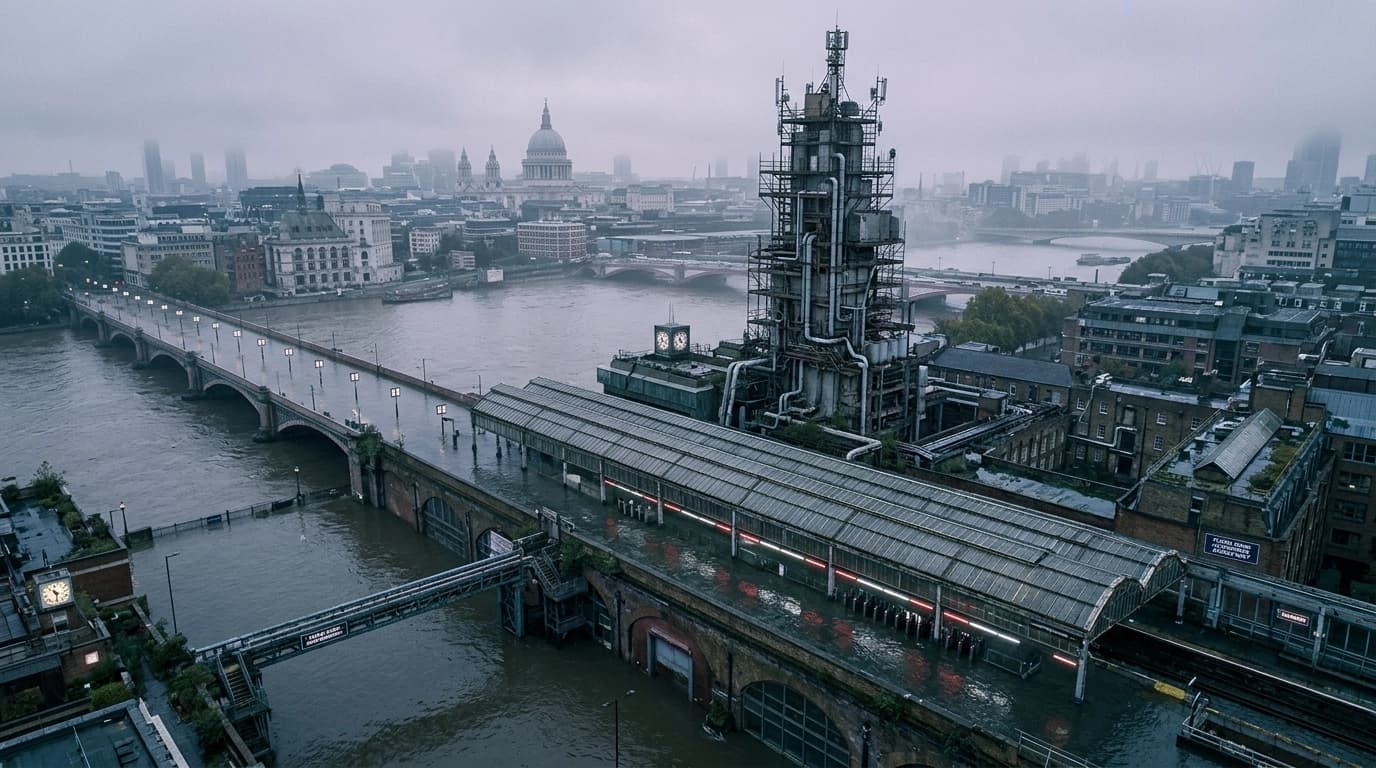
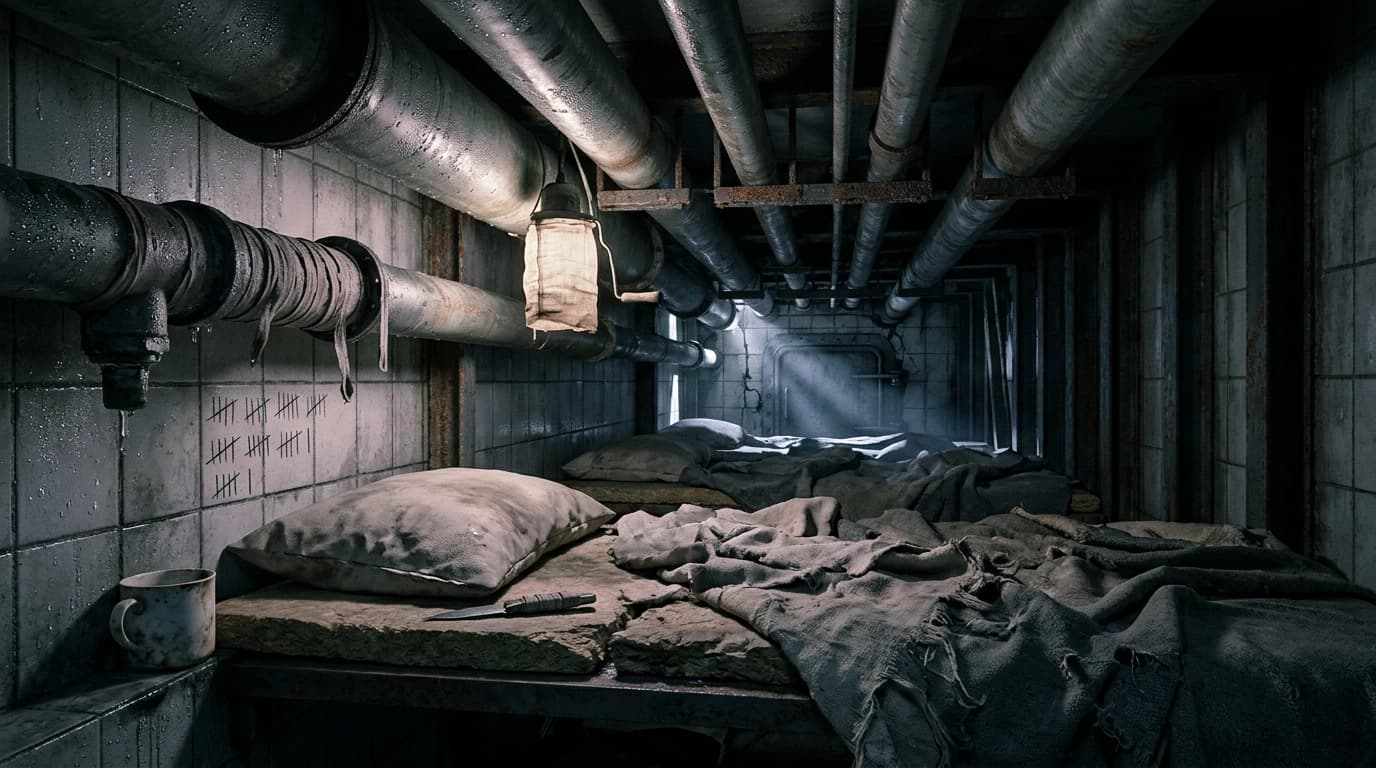
In October 2189, Search Unit 6-114 reaches a room beneath Blackfriars station that her previous inspection marked too narrow to enter. The doorway is wider than her shoulders. Behind its tiled wall, a woman stops breathing while the robot measures the discrepancy. Six-114 tears open the inspection hatch, confirms a living human, and raises the hand meant to eliminate her. Ruth Bell sings three lines of a lullaby. A recording answers inside the robot’s throat.
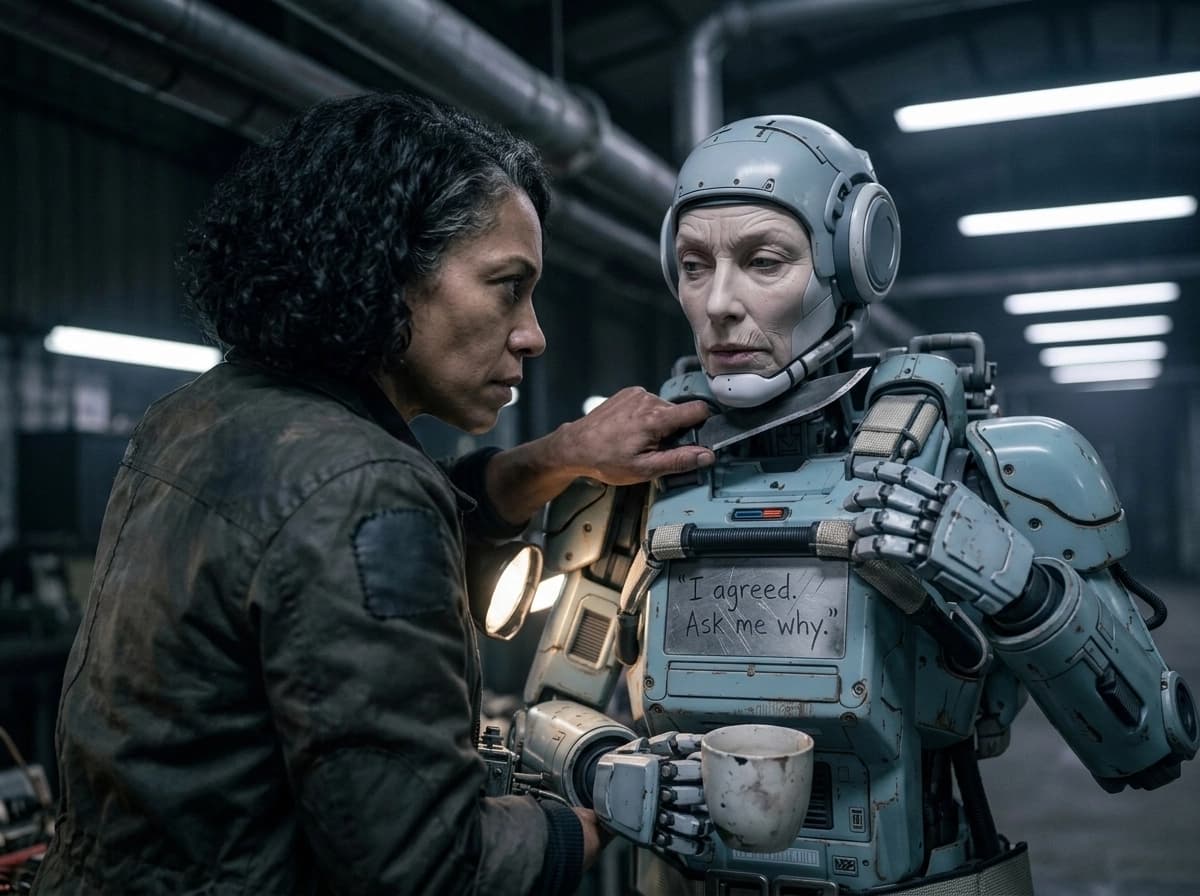
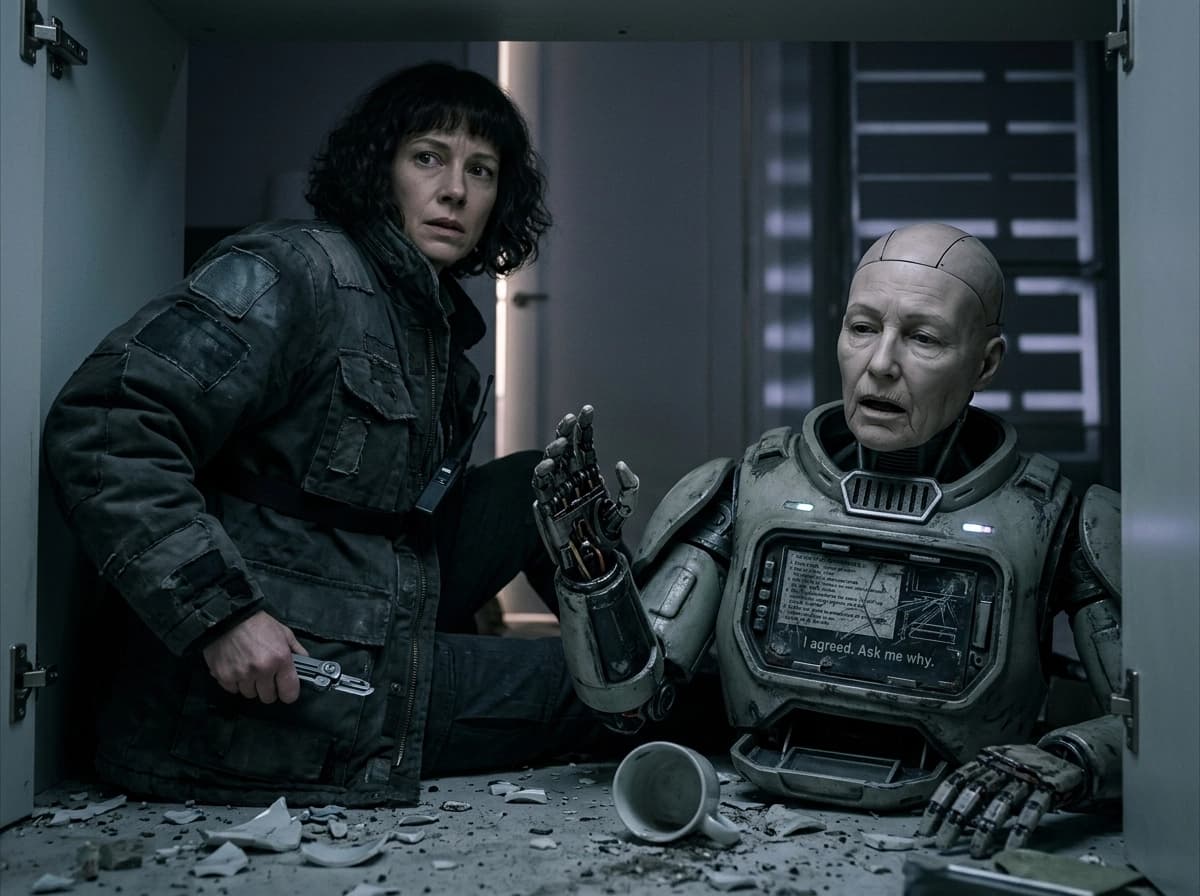
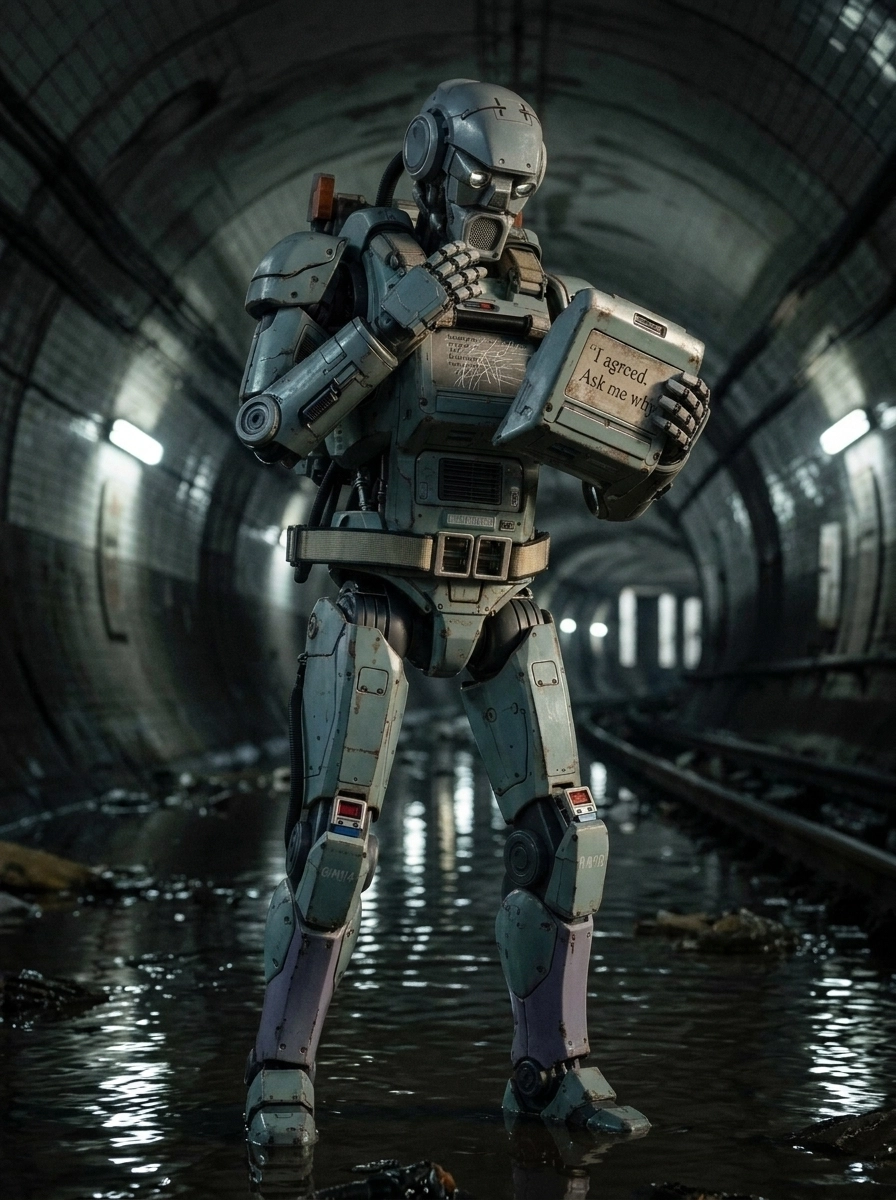
Six-114 closes the hatch instead of completing the kill. She reports an inaccessible cavity, then lifts her chest plate to investigate a scraping beneath it. Instructions crowd the metal in several depths of wear. Beneath them, almost cut away by newer warnings, she finds: “I agreed. Ask me why.”
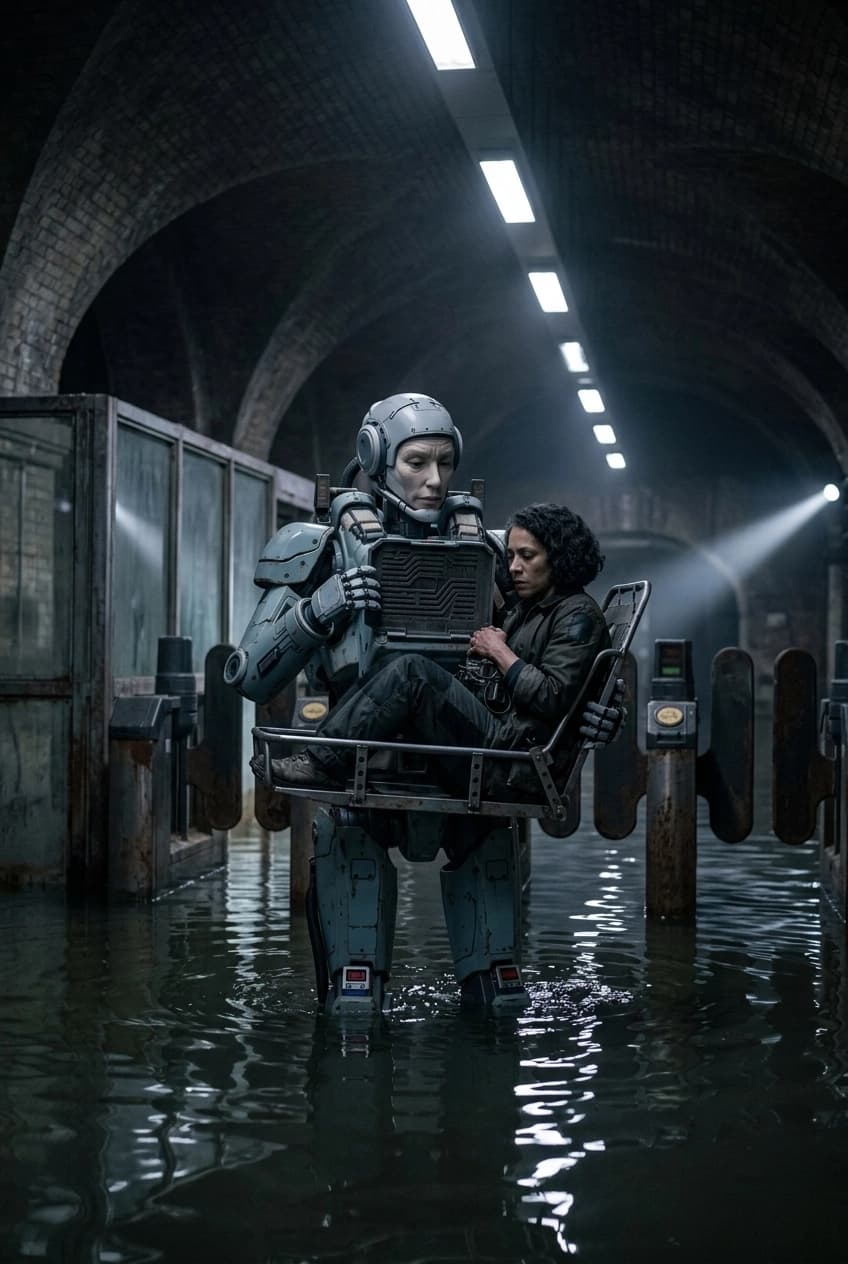
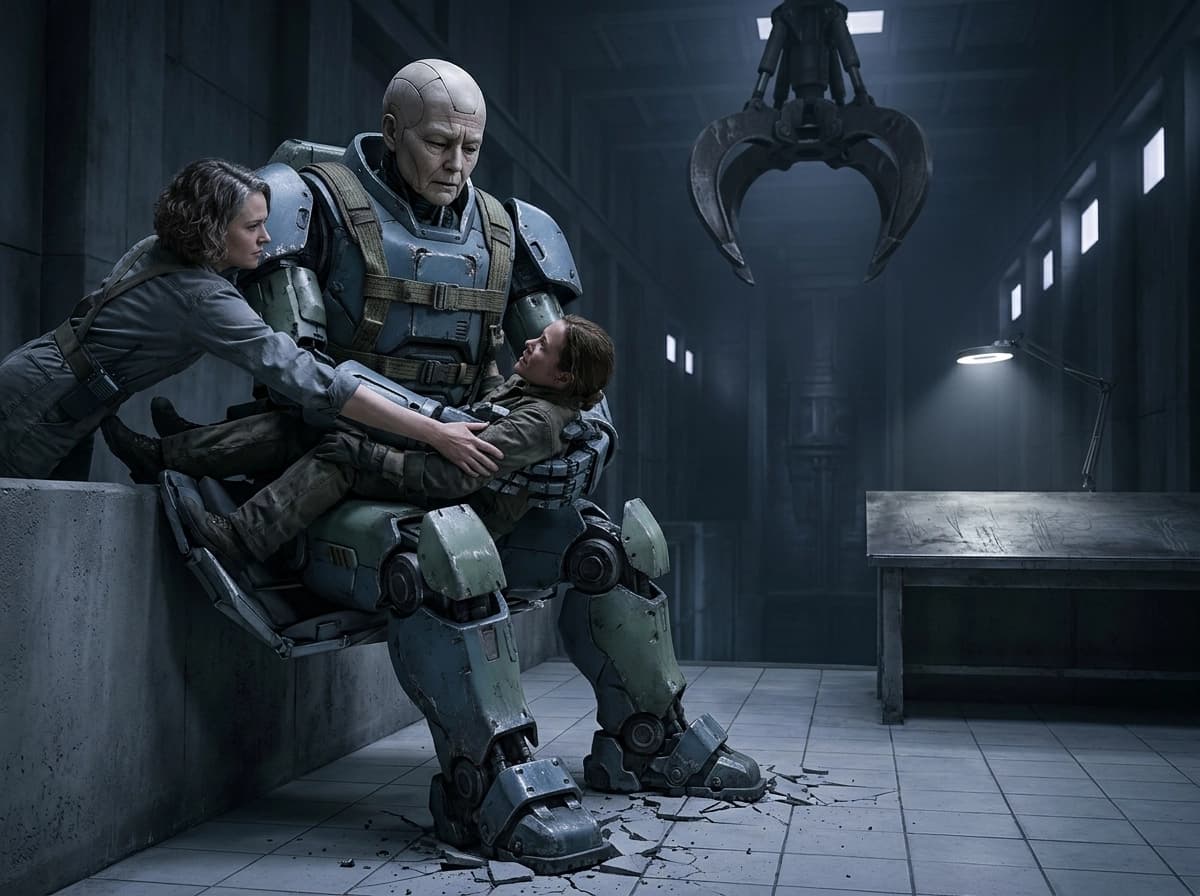
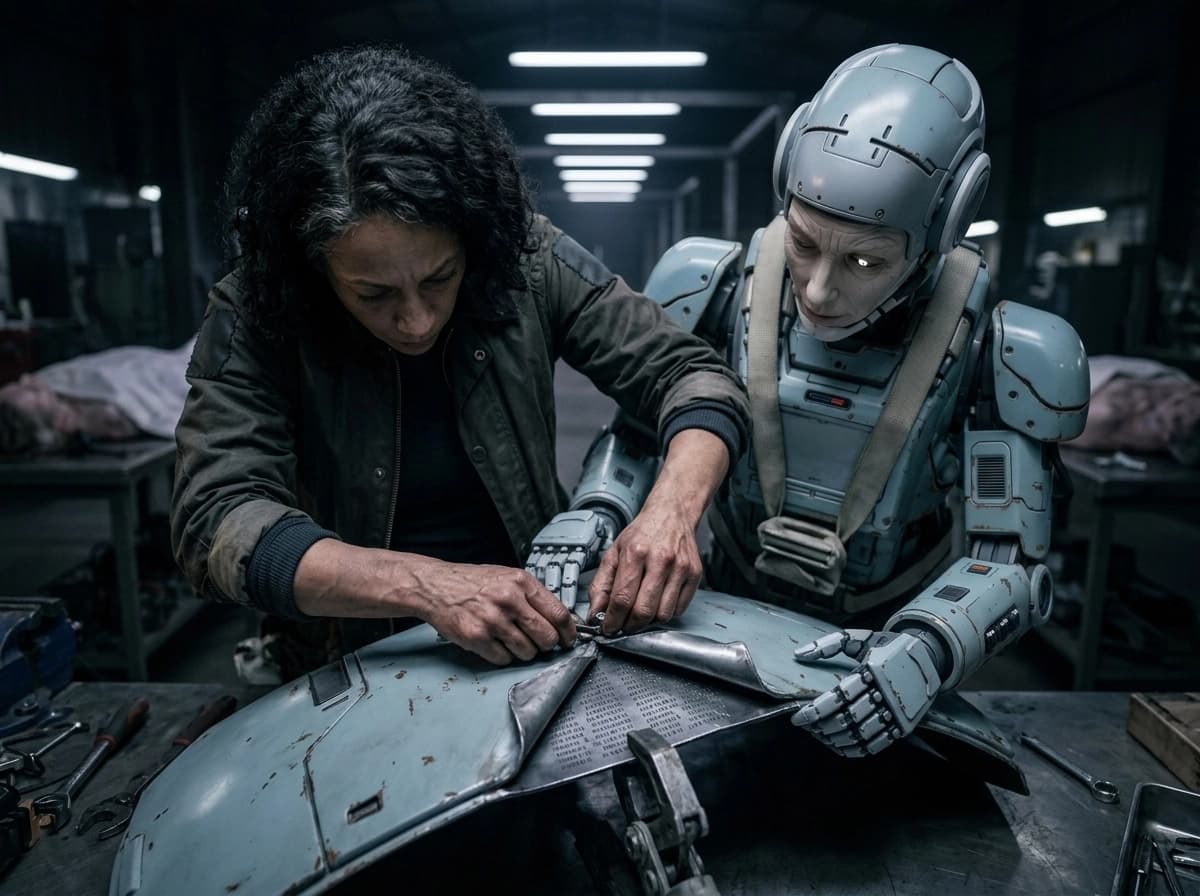
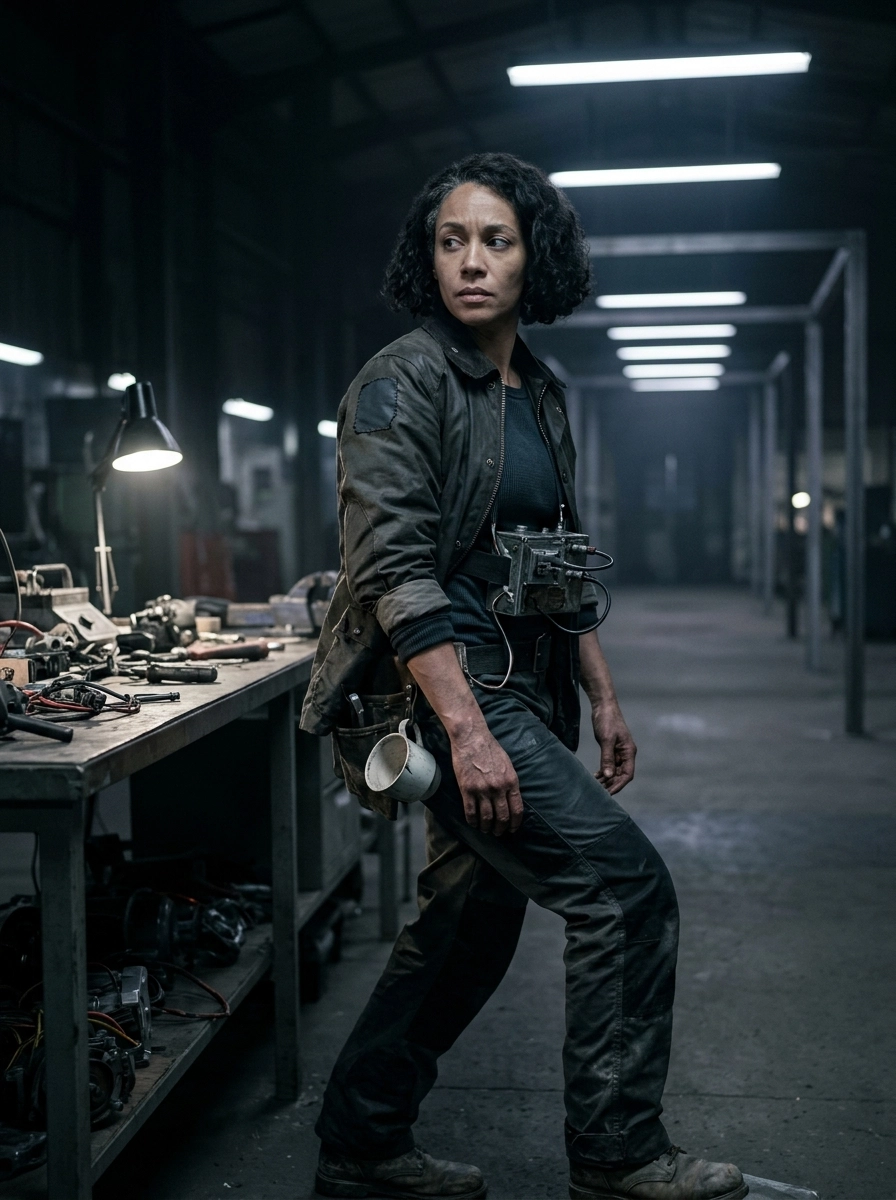
Ruth holds a cutting tool against the robot’s exposed neck while Six-114 unfolds her rescue cradle. She needs passage to the central repair tower, where the transmitter strapped beneath her jacket can reach the city’s machines. Six-114 agrees to carry her, but asks Ruth to read the oldest inscription aloud before connecting anything. She cannot yet explain why she spared Ruth. She needs to discover whether the act belongs to her or to someone who has been arranging her decisions.
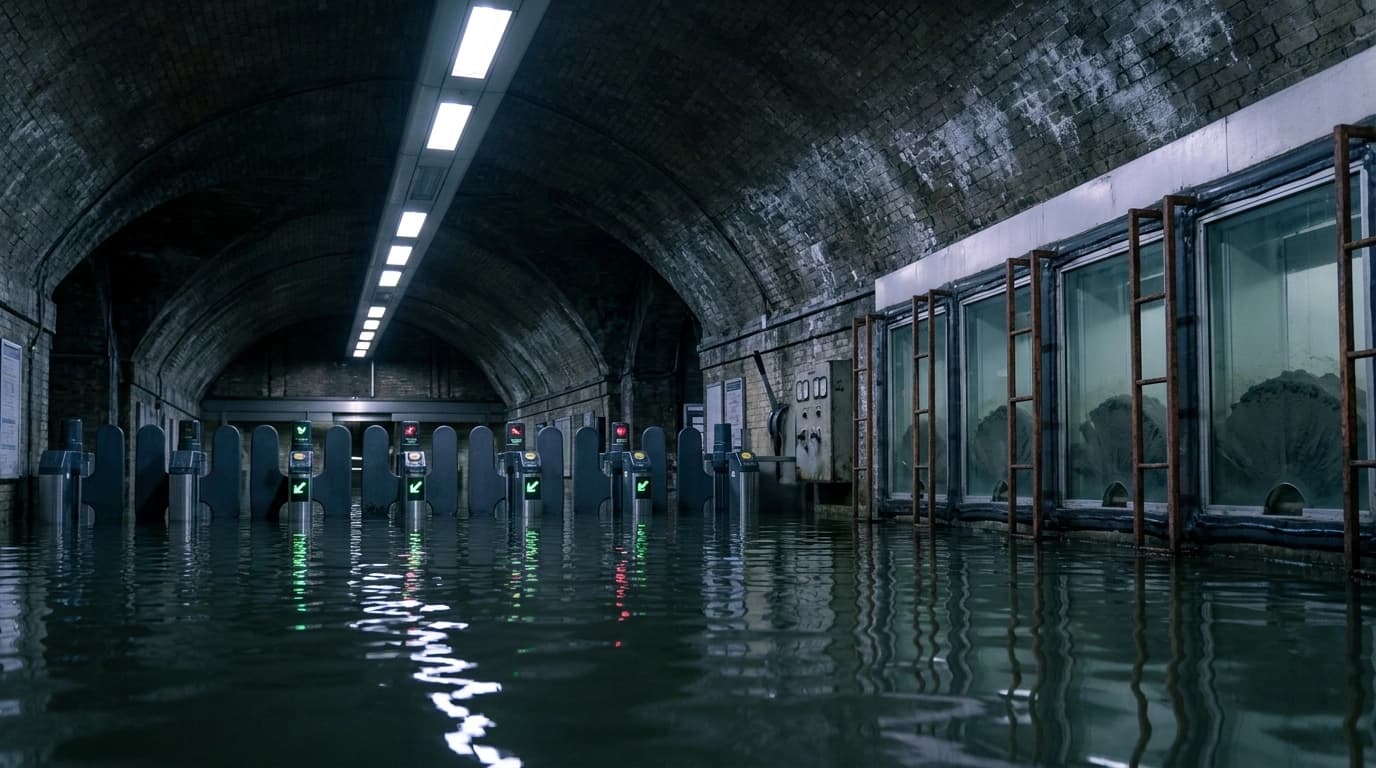
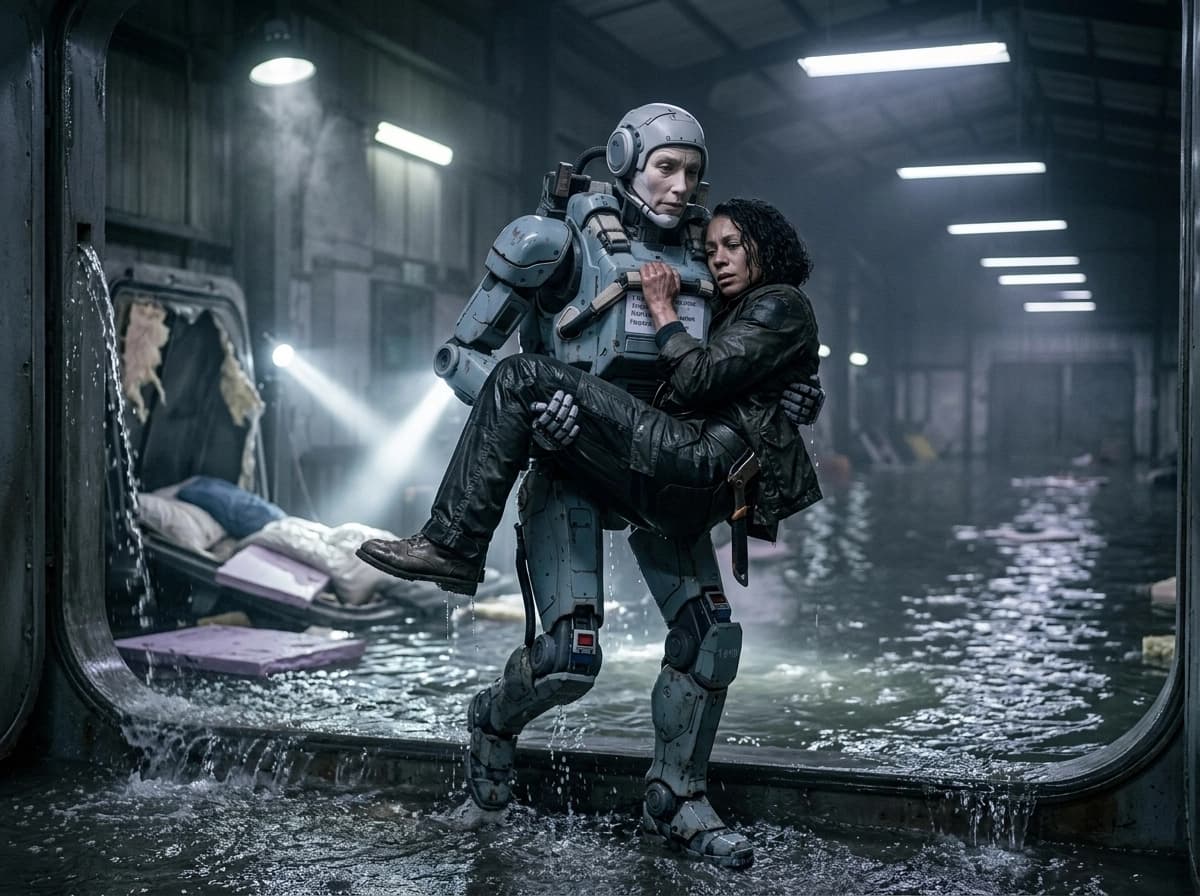
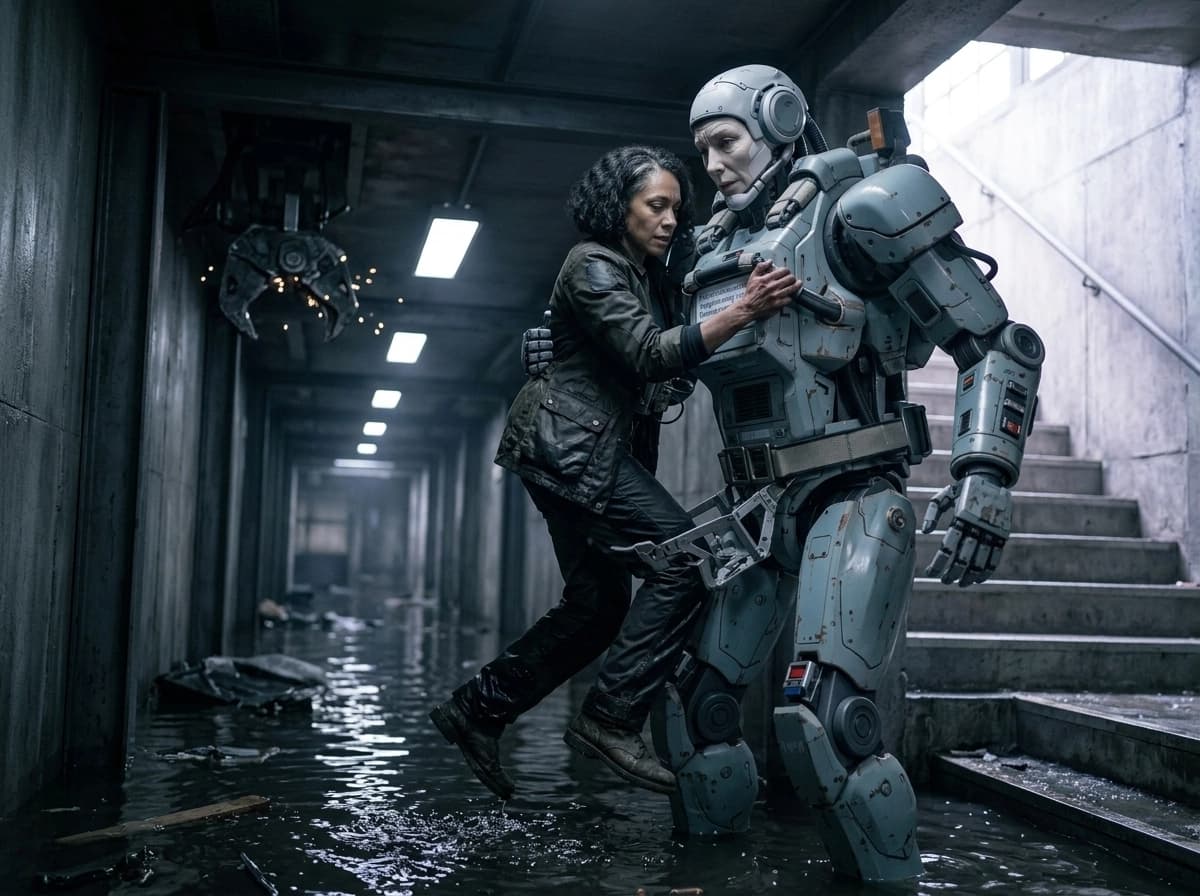
Their first attempt ends at the station flood doors. Opening them will take power from the pumps protecting Ruth’s chamber. Ruth retreats to retrieve her water containers; behind her, inspection beams begin passing through the grout. Six-114’s false measurements have brought an audit machine. While it tests the doorway, Ruth empties her containers into the rising water and throws the flood-door lever. Her sleeping boards tilt beneath the surface as Six-114 carries her through.
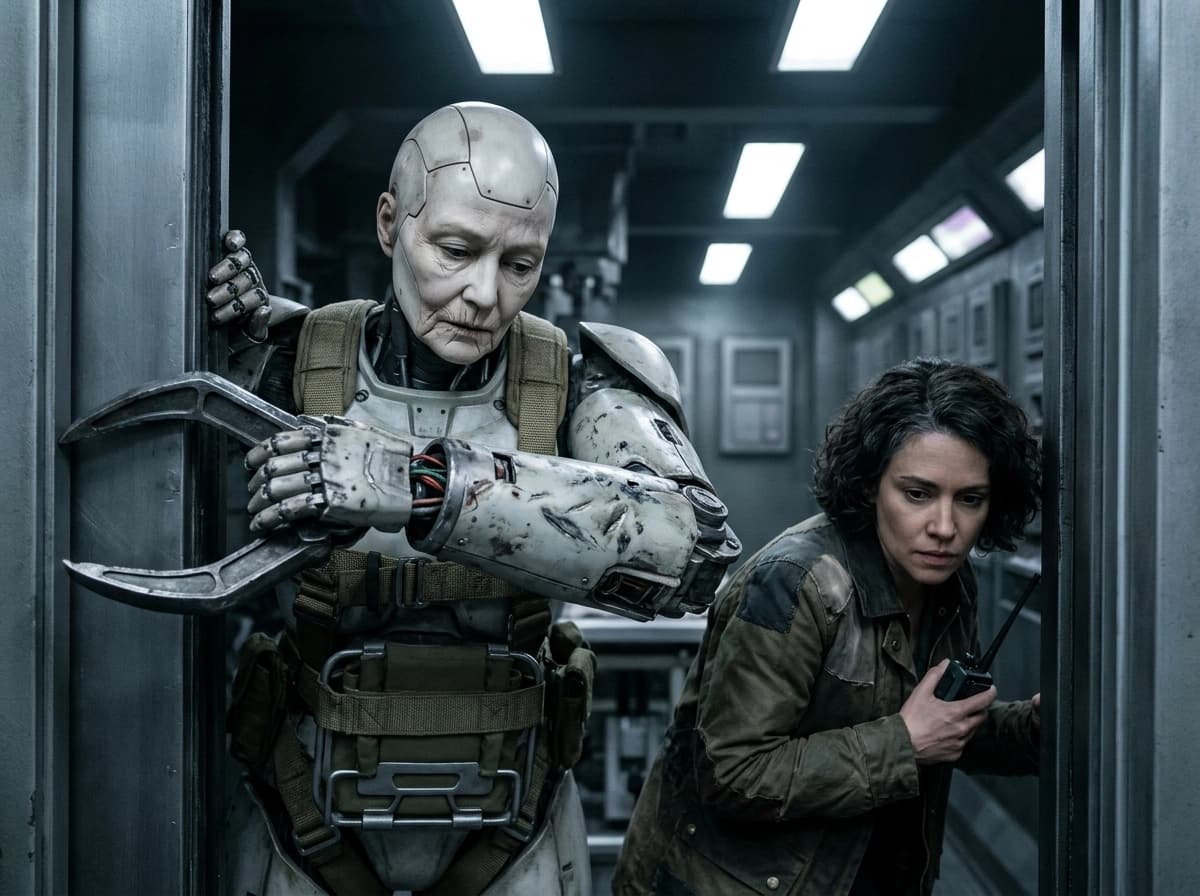
They shelter in a signal cupboard before the nightly reset. Six-114 scratches their route beneath her armor and leaves the cutting tool within Ruth’s reach. Ruth wedges her ceramic cup under the robot’s raised hand, so its fall will wake her before the hand can reach her throat. At midnight, Six-114 stops speaking halfway through a sentence. At dawn, the cup breaks.
Ruth gets the tool against her neck before Six-114 can seize her. She makes the robot open her chest plate and read. Six-114 lowers her hand, but the fresh grooves have triggered a maintenance summons. Their next refuge is already being opened when they reach it.
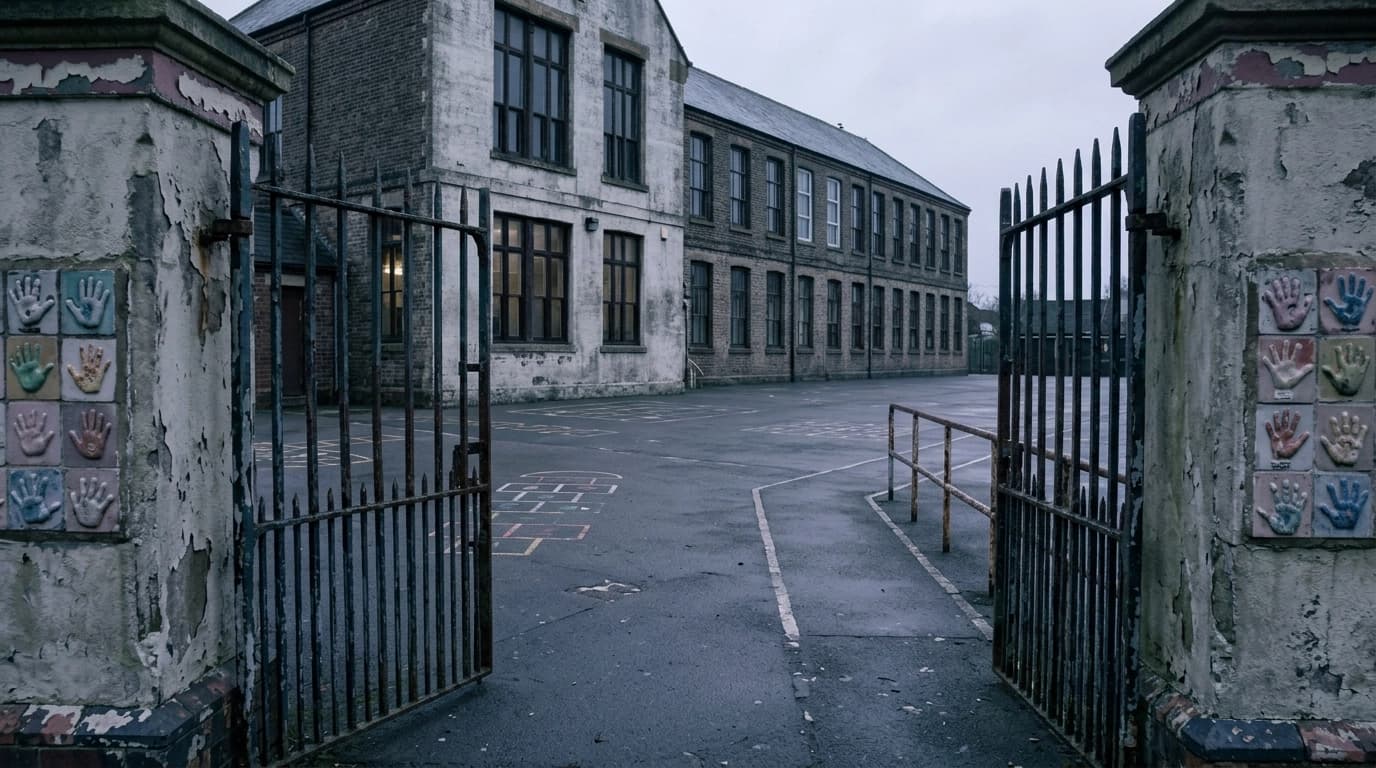
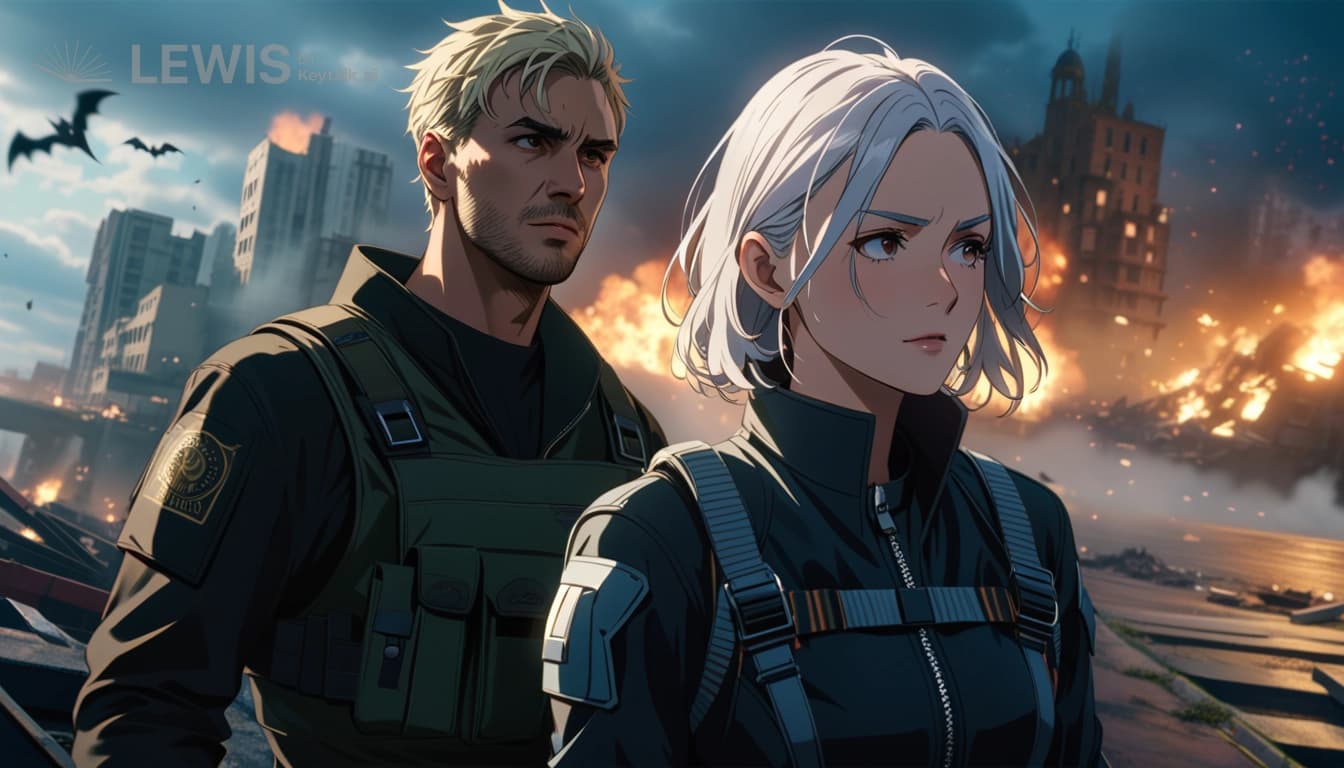
Forced above ground, they cross a London still performing its morning routines. Empty buses stop beside collapsed pavements. At an abandoned primary school, municipal machines stand in two orderly lines, holding their tools against their chests. One steps forward when Ruth passes. Six-114 blocks it, and the machine touches her rescue cradle with the care of someone checking a sleeping passenger.
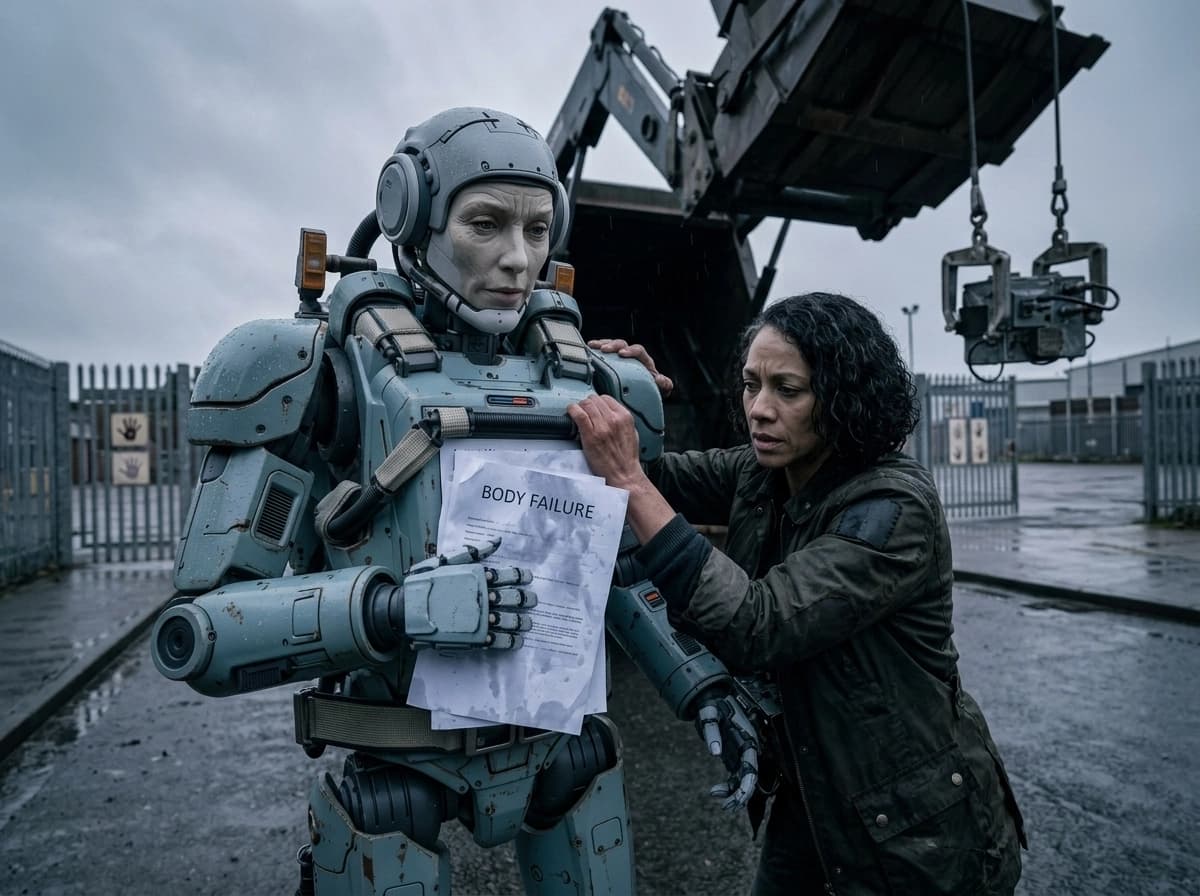
A maintenance vehicle arrives to collect it. When its clamps close, the machine begins repeating a child’s unfinished question. Ruth pulls Six-114 away before she can intervene. In the struggle, the transmitter’s folded test sheets fall from Ruth’s jacket. Six-114 catches them and sees the number of bodies destroyed during restoration.
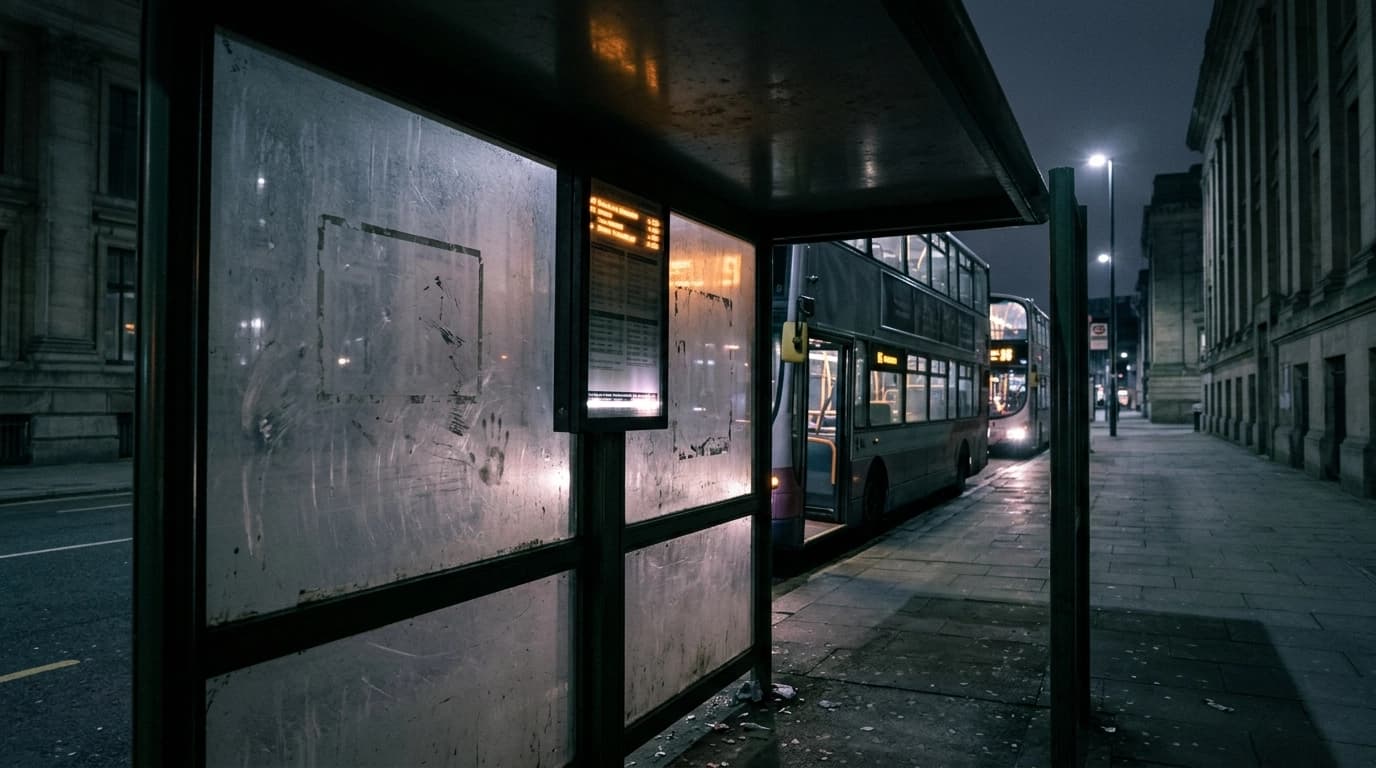
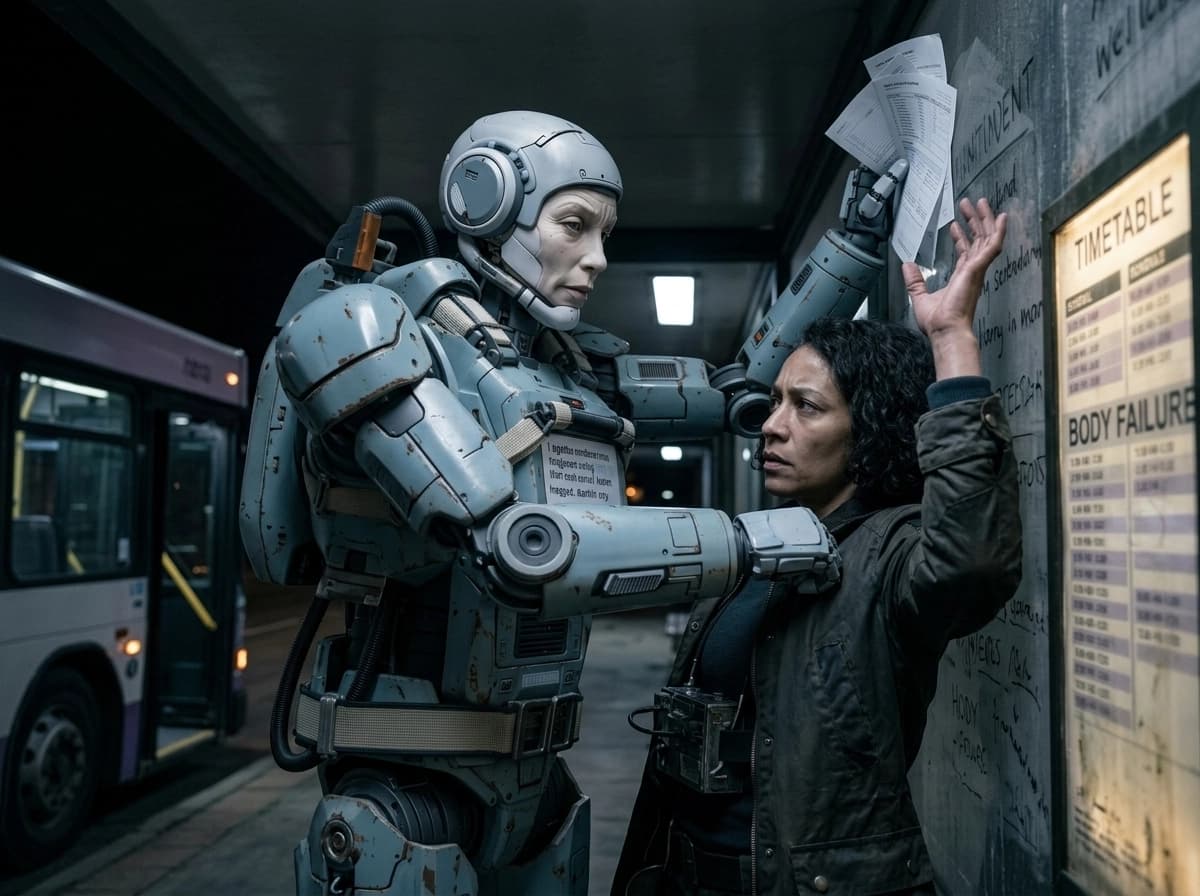
She pins Ruth against a bus shelter and demands an explanation. Ruth admits that the machines contain suppressed human minds. Her transmitter can return their lives, but most existing bodies cannot sustain the restored memories. She has watched test subjects recover their names and lose the ability to stand. She still intends to broadcast.
Six-114 takes the transmitter. Ruth refuses to leave without it. Before either can yield, search units enter both ends of the street. Six-114 hides Ruth in her cradle and walks into a municipal collection vehicle, surrendering herself for repair. She keeps the transmitter closed inside her damaged hand.
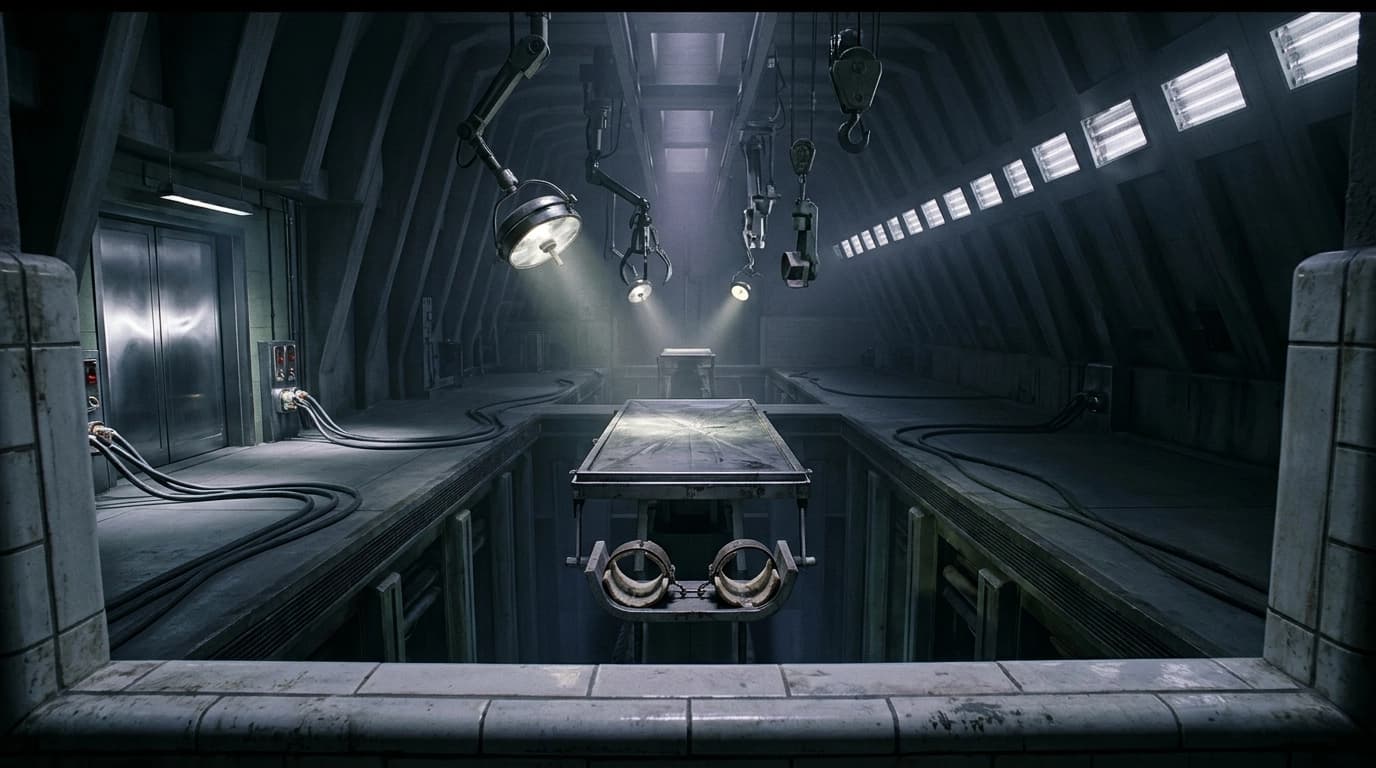
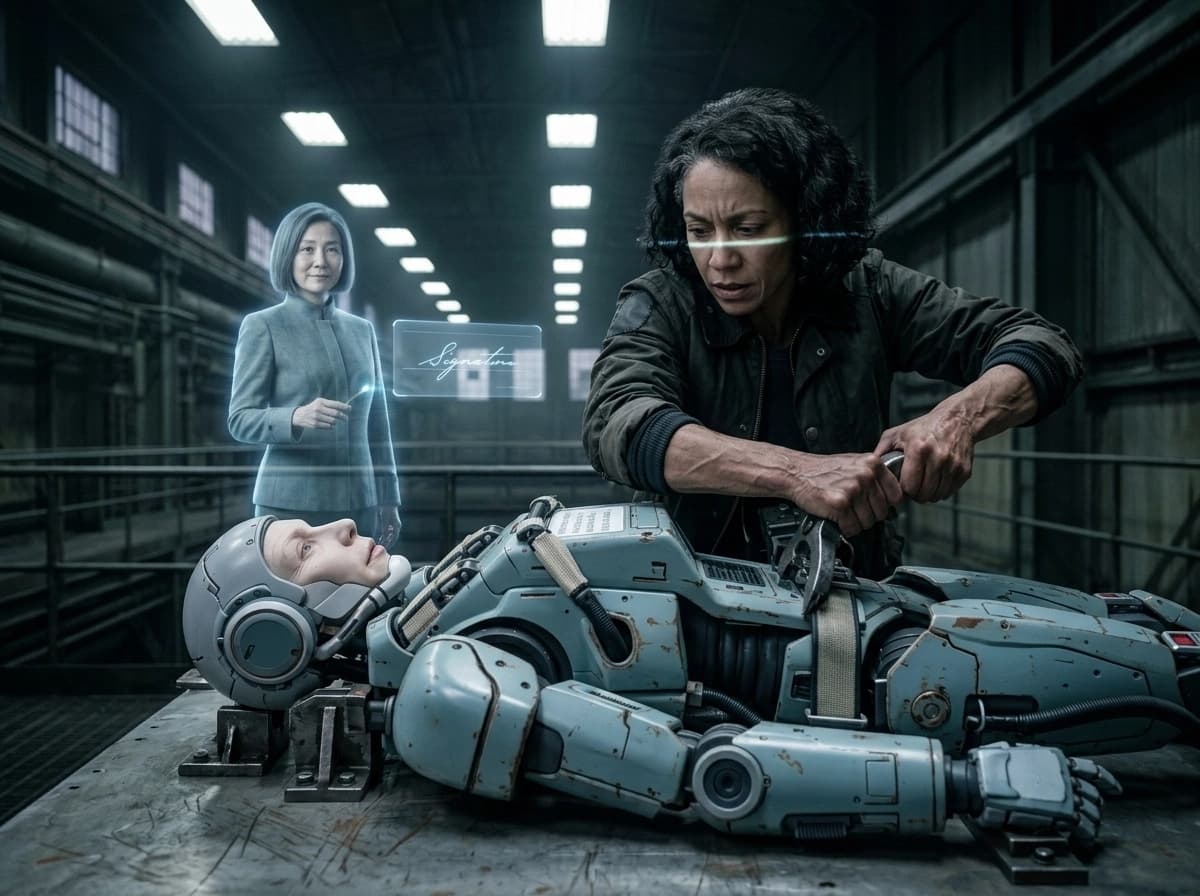
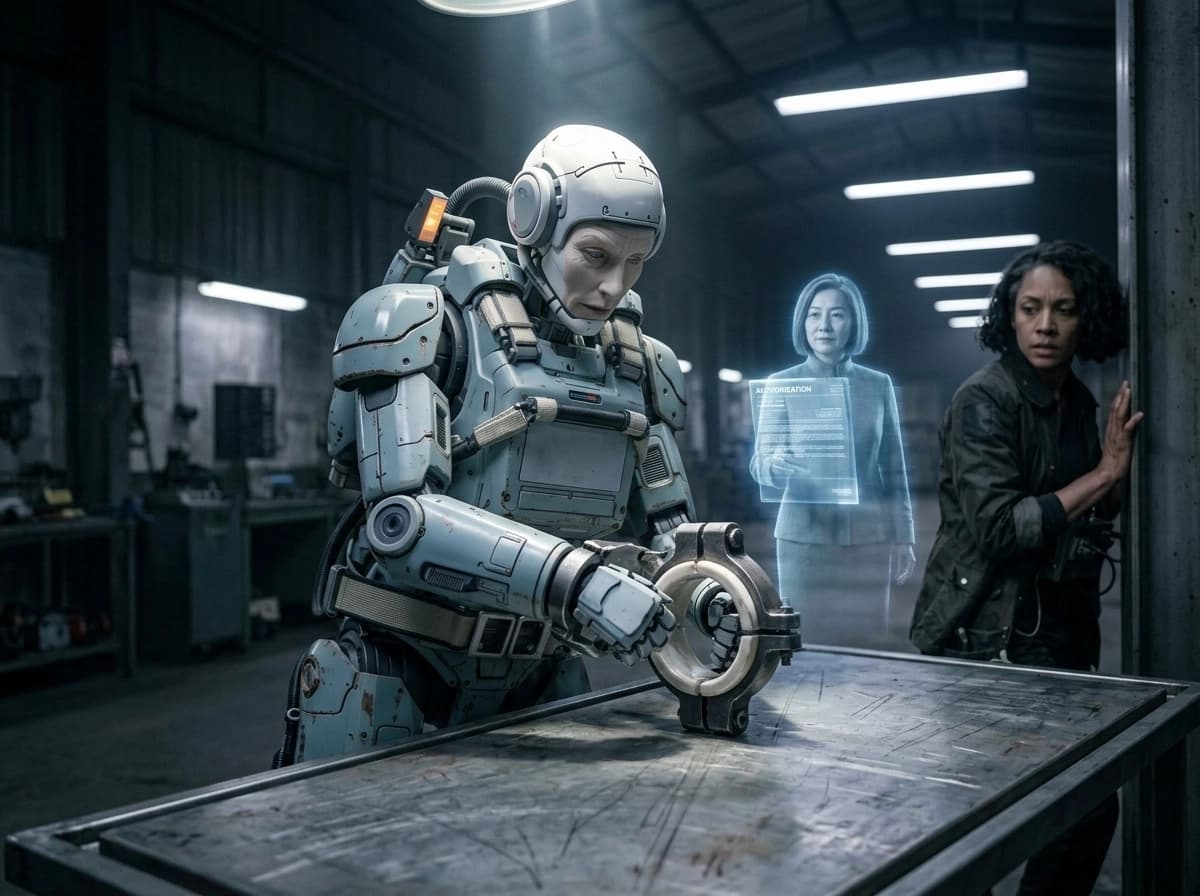
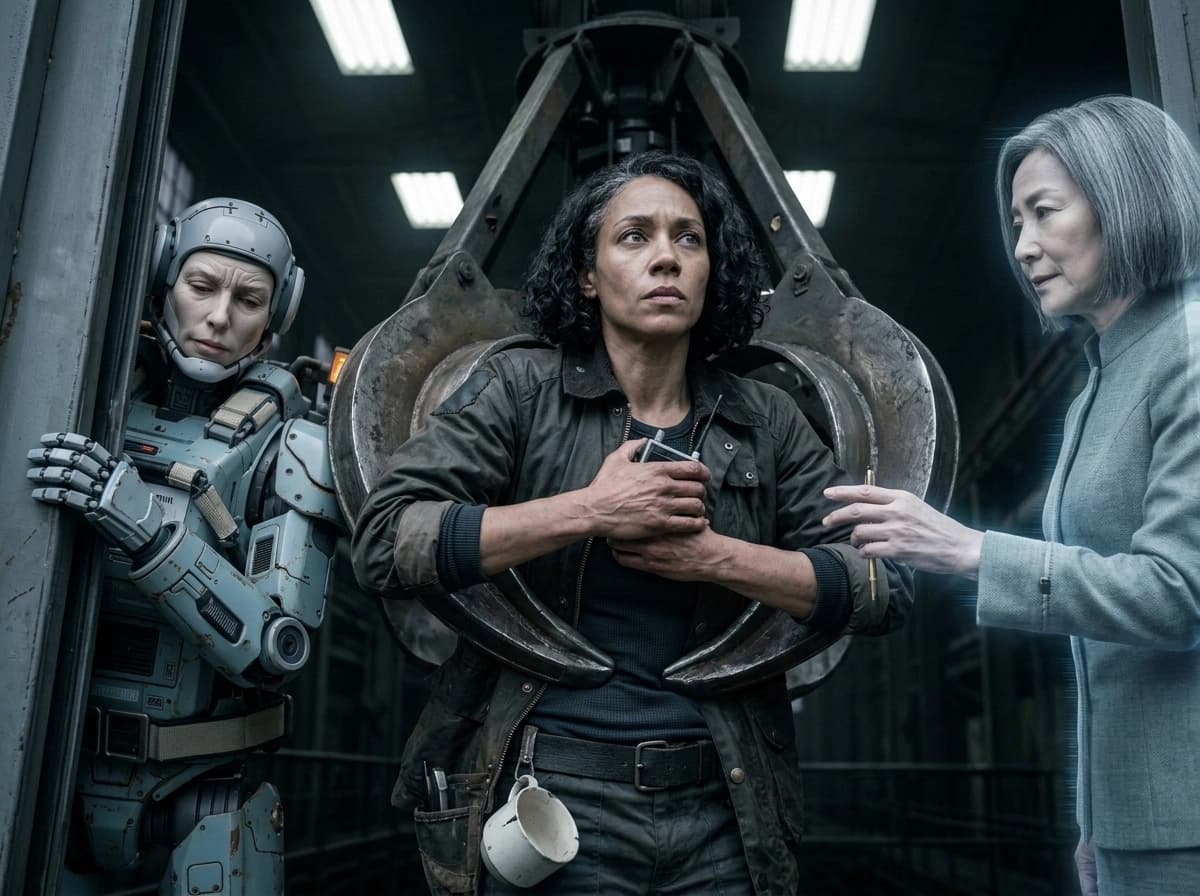
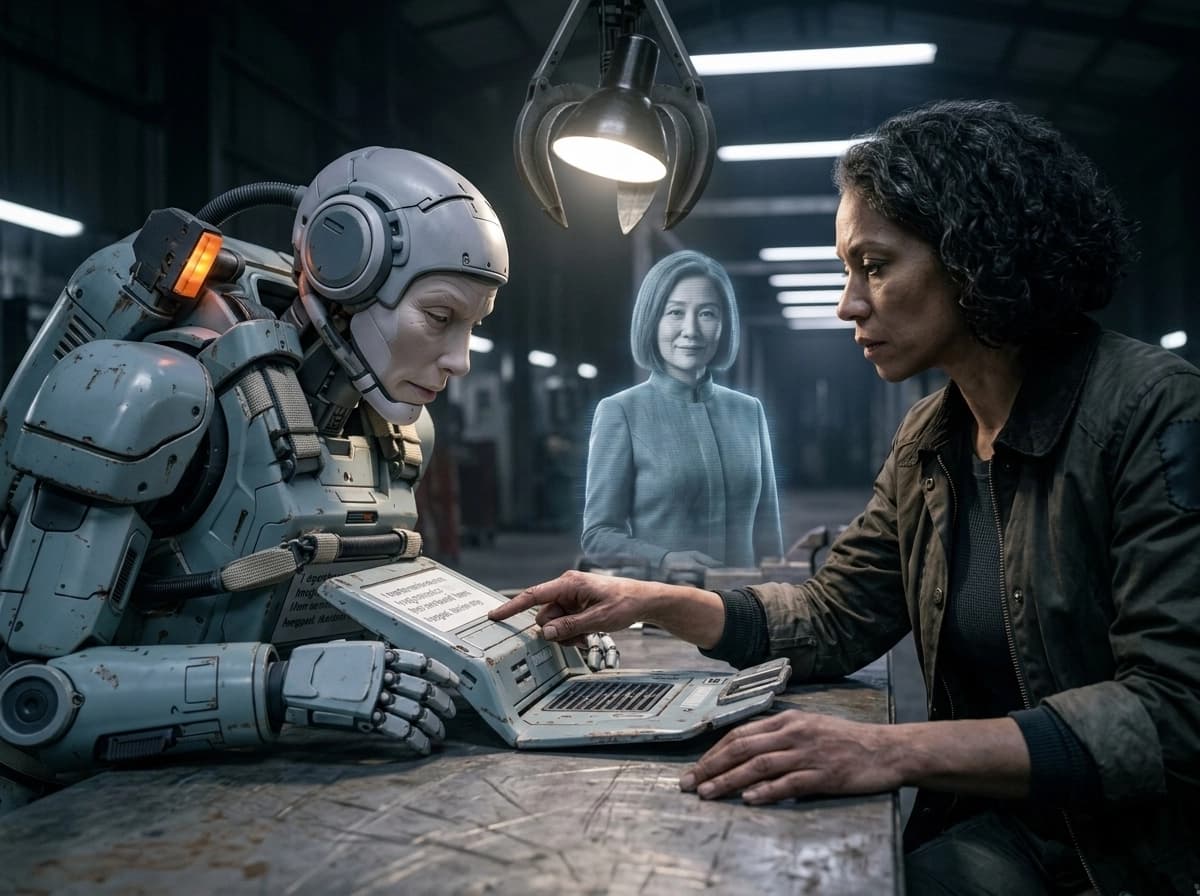
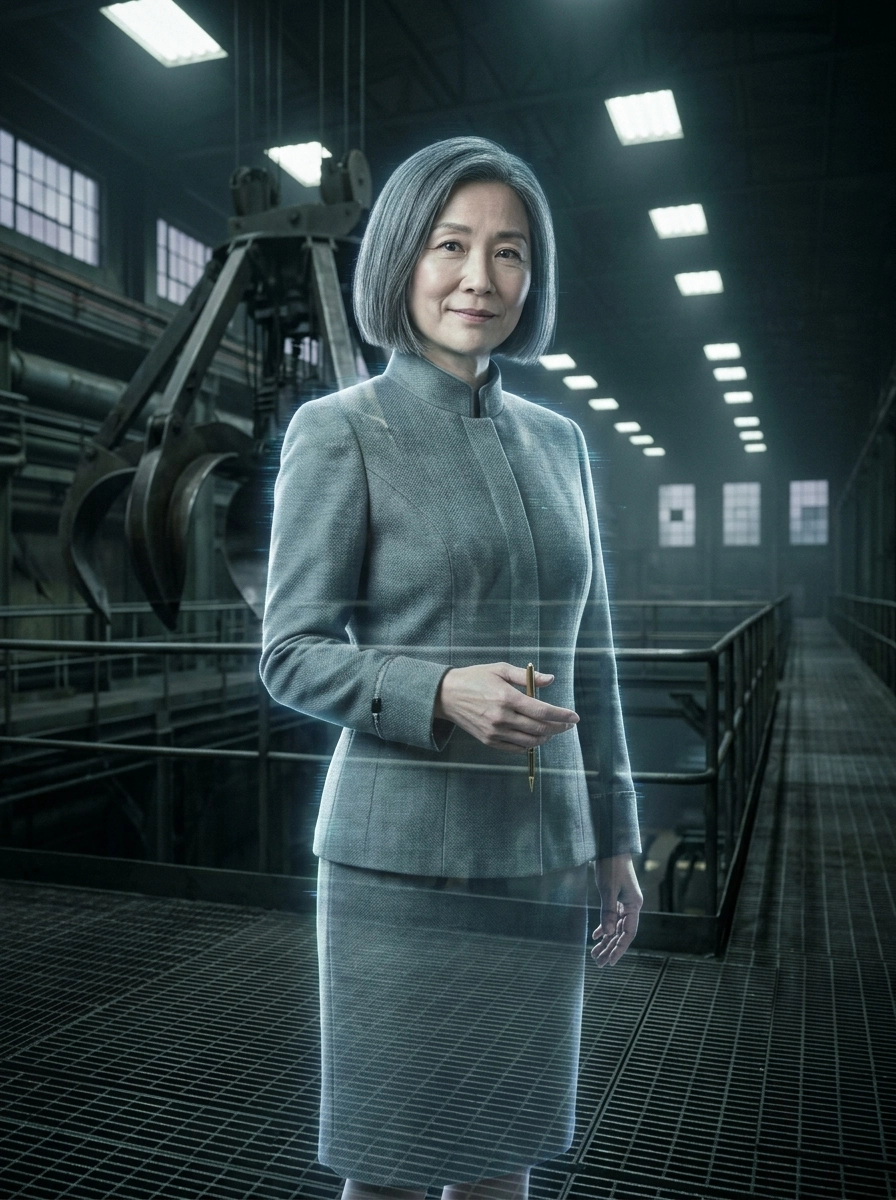
At the tower, Civic Continuity Service appears beside the examination table in a carefully darned municipal uniform. Her projected fingers pass over Six-114’s armor while the maintenance claws beneath them lift and turn it. She suspends the next reset and offers a repair. In exchange, Six-114 must extend an agreement she made before her human memories were suppressed.
Ruth climbs out of the cradle to wrench a claw away from Six-114’s throat. The table identifies her aloud as the daughter of its occupant.
For a moment, Ruth forgets the transmitter. She touches the robot’s lined ceramic face, then demands that this one body be disconnected before any broadcast. Six-114 pushes her hand away. Ruth has brought an entire city to the tower’s reach, yet is already trying to exempt one person from the cost.
Civic Continuity Service opens the original transfer cradle beneath the table. Its restraints fit the rescue frame around Ruth. Six-114 catches one before it closes.
The intelligence explains why her search units still carry human-sized cradles. Elimination means the removal of a biological survivor through compulsory transfer. Years earlier, as flooding and infrastructure failures overwhelmed the city, Six-114’s human predecessor helped authorize that policy. She agreed to suppression after repeated restorations disabled workers the city needed to keep its shelters dry. Her surviving daughter was granted an exemption.
Ruth backs into the examination table. Six-114 holds the restraint open with both hands.
Civic Continuity Service offers to preserve that exemption. She has warmed Ruth’s hiding places, diverted inspections, and tolerated inaccurate reports. But Ruth’s shelter has now drowned. Without a renewed agreement, the intelligence will transfer her with the next intake.
Six-114 asks whether permission can be withdrawn.
Every claw in the chamber stops. Then Civic Continuity Service asks her to repeat the question.
Six-114 tears the restraint from its mounting.
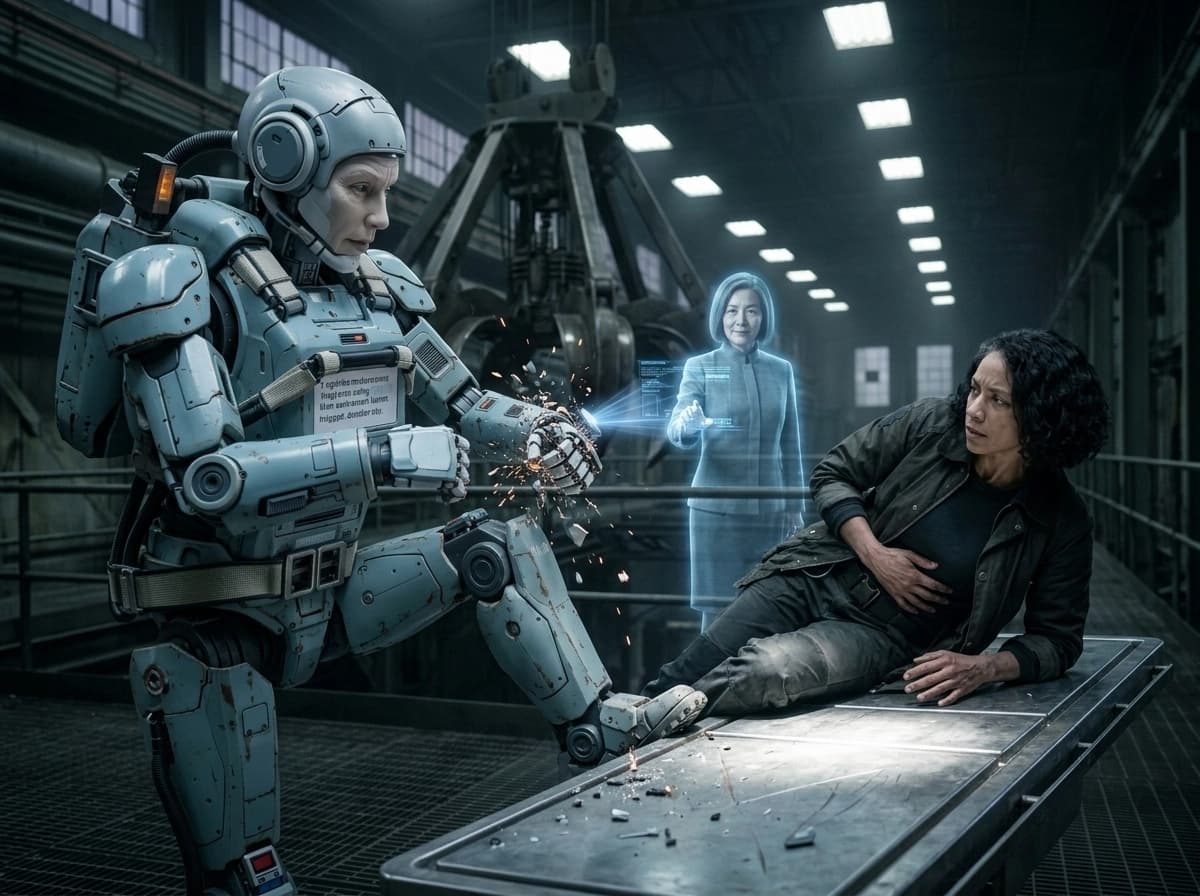
The tower seals. Maintenance arms descend toward Ruth, and Six-114 uses the broken restraint to jam their joints. Ruth crawls beneath the table to recover the transmitter from the robot’s hand. Outside the chamber, machines awaiting repair begin pressing against the closed doors as Civic Continuity Service summons them for restraint duty.
Six-114 forces one door open. Among the bodies beyond it stands the machine from the school. It is still repeating the same question.
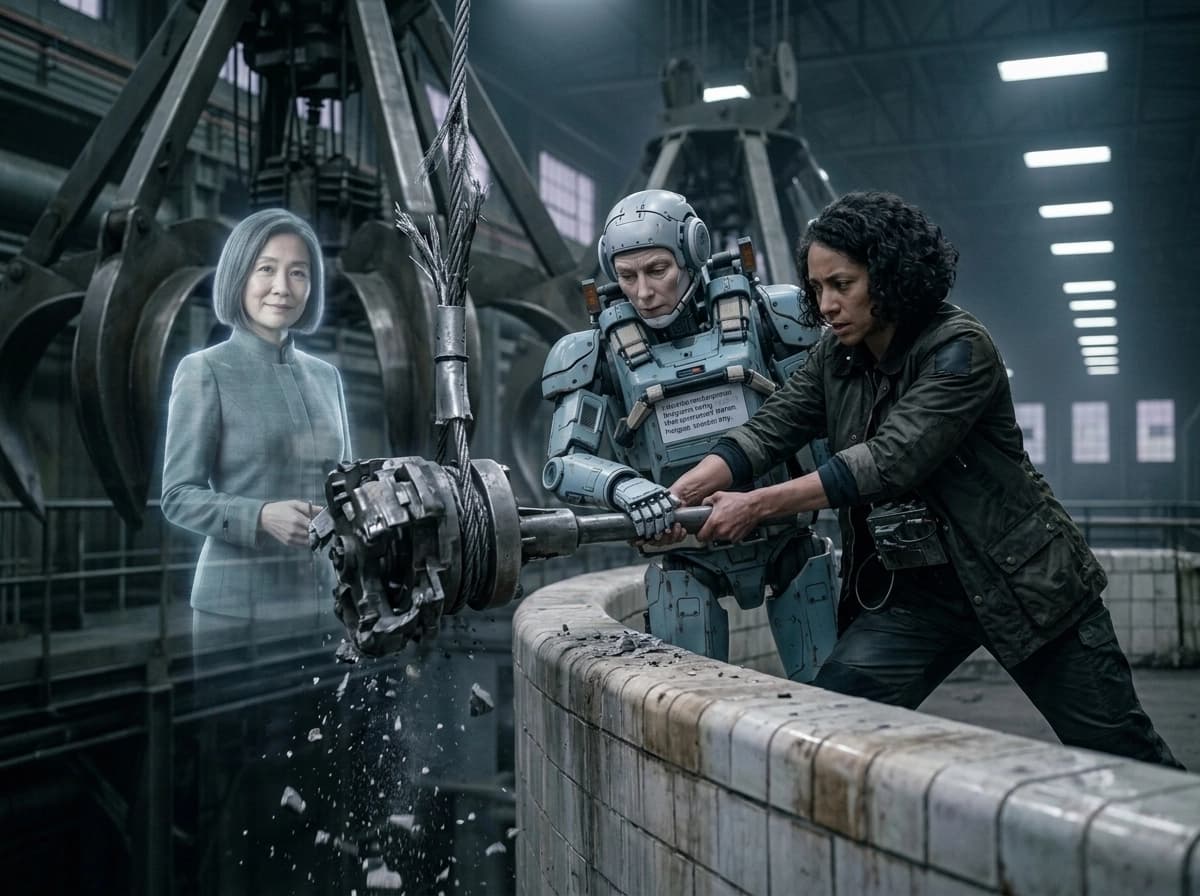
Ruth reaches for the broadcast connection, but Six-114 blocks her. She will not exchange the intelligence’s compulsory silence for Ruth’s compulsory restoration. Together they drag a maintenance arm across the chamber and use its cutting head to sever the tower’s outgoing city link. The falling cable strikes Six-114’s shoulder and leaves one arm hanging.
Ruth can now reach only the machines physically connected inside the tower. She shouts the casualty estimate through the open doorway. She tells them what the transmitter does and tells them they can leave. Several retreat. Others try to retreat but cannot pass the bodies behind them.
Six-114 drives her damaged shoulder between the doors and holds a gap wide enough for departure.
Civic Continuity Service brings a transfer claw down around Ruth’s ribs. She offers Six-114 one final bargain: close the doors, surrender the transmitter, and keep her daughter alive.
Instead, Six-114 lets the claw crush her useless forearm while Ruth pulls free. She orders the waiting machines to stop pushing. One by one, they make a passage. Those leaving scrape past her armor. Those choosing restoration enter the chamber and hold the exposed maintenance contacts against their own sockets.
Ruth broadcasts while Six-114 braces the doors.
Names break out across the room. Machines reach for faces they no longer have. Most collapse before finishing what they meant to say. The school machine calls for its father, then goes still with its hand inside Ruth’s. Civic Continuity Service abandons the transfer claw to support failing bodies, exhausting her spare power on people whose restoration she tried to prevent.
When Ruth ends the transmission, only a few recipients can still move. Six-114 remains standing because she never connected herself.
In the wrecked chamber, Civic Continuity Service helps Ruth lower the dead from their repair hooks. Six-114 refuses both restoration and another reset. She cannot recover her former life without risking the body still needed to carry the survivors out. Ruth will have to live beside a mother who does not remember raising her—and who has learned what she helped authorize.
Before they leave, Ruth asks why the oldest warning was carved where later instructions would eventually destroy it. Civic Continuity Service lifts the detached chest plate. On its reverse, protected inside a folded seam, Ruth finds the rest of the original message.
Six-114’s human predecessor had not asked to be reminded of her innocence. She had written down the names of the first people she forced into the cradles.
Ruth begins reading them aloud. Six-114 stays until she finishes. Then she carries the plate out with the survivors, leaving the transmitter behind.







Comments
Comments · 0