
Spectacle Rules: Clay Nightmare cover image

Spectacle Rules: Clay Nightmare

Inside a meticulously detailed claymation world, the train’s passengers—including the idol who has abandoned both fame and trust—become unwilling actors in an absurd, politicized nightmare. Architectural spaces contort and melt, each compartment a psychological mirror warped by mass skepticism. As the line between investigator and instigator blurs, the runaway must navigate escalating hostilities—fueled by invisible hands enforcing a bizarre rule—that transform adolescent rivalry into literal combat, with each violent clash threatening to fracture reality and ignite ancient horrors lurking just beneath the clay surface.

Weekly ranking

rank icon image
#1 inTheme
rank icon image
#1 inGenre
rank icon image
#1 inConcept
Scroll

Plot Synopsis

Title: *Claybound: The Compartments of Spectacle*

The story opens in a storm-lit compartment of the Claybound Express, where Iris Claybourne—once the radiant face of a pop idol dynasty, now deliberately obscured beneath a battered beret—awakens to the rhythmic pulse of clay wheels and the feverish whispers of passengers. The train itself, rendered in hyper-detailed claymation, is a labyrinth of compartments whose walls melt and shift with every surge of mass suspicion. Iris’s motivation is simple yet searing: to escape the manufactured gaze and reclaim her narrative, but her escape is thwarted by a new, bizarre order enforced by invisible hands. She’s not just a runaway; she’s an unwilling actor in a spectacle she’s desperate to dismantle. Her first choice—to remain unseen, slipping through the crowd with her oversized coat—immediately backfires as the train’s compartments warp, spotlighting her every move and drawing skepticism from the other passengers. The tension is palpable; every glance, every rumor, threatens to drag her back into the arena of adolescent rivalry, now literalized in the clay-bound world.

Ambrose Gellert, the enigmatic architect of this shifting train, presides over the chaos with meticulous detachment. He’s driven by a near-religious devotion to structure, believing that meaning can only emerge from the imposition of order on chaos. Yet, his obsession is haunted by the dissolution of his family’s estate and the trauma of old-world politics, fueling his need to orchestrate psychological experiments that blur the lines between investigator and instigator. Ambrose’s first major move is subtle but devastating: he introduces a new rule—passengers must openly challenge each other in ritualized combat, with each victory warping the architecture further and revealing ancient horrors lurking beneath the clay. This escalation is not mere spectacle; it’s a calculated attempt to test the boundaries of skepticism and belief, with Iris as his primary subject. Ambrose’s flaw—his inability to empathize with those who reject his logic—renders him blind to the emotional fallout, as the train transforms from a vessel of escape into a battleground for ideological supremacy.

Minhwa Jeong, the non-binary steward and folklorist, becomes Iris’s unlikely confidant, offering cryptic guidance and emotional ballast as they navigate the shifting compartments. Minhwa is motivated by a compulsion to document and preserve the clay-world’s mythology, believing that each compartment harbors its own truth. Their methodical cataloguing and placement of protective talismans provide Iris with practical tools for survival, but Minhwa’s greatest flaw—their tendency to observe rather than intervene—creates moments of tension when action is needed most. Minhwa’s allegiance to the train’s mythos rather than any individual positions them as both stabilizer and wildcard, their cryptic storytelling and ritualistic habits filling the gaps in Iris’s investigative weaknesses and Ambrose’s ideological rigidity. As the compartments melt and fuse, Minhwa’s compendium of folklore becomes a lifeline, offering clues to the invisible hands manipulating the spectacle.

The train’s journey spirals into literal combat as adolescent rivalries—once confined to whispered accusations and passive-aggressive glances—erupt into violent clashes. Iris, propelled by her fierce independence and wounded skepticism, refuses to play the victim, instead dissecting the rules and reading subtext with surgical precision. Her choices create ripple effects: a reckless act of principle exposes a hidden compartment, unleashing a clay horror that feeds on mass suspicion. The passengers, now divided into factions, are forced to confront their own motivations, as the line between investigator and instigator blurs. Ambrose’s machinations begin to unravel, his rituals of control exposed as fragile illusions. Minhwa, torn between observation and intervention, makes a bold choice—breaking their folklorist’s vow to remain impartial and actively sabotaging Ambrose’s rule system, infusing the compartments with protective lore that disrupts the spectacle.

As reality fractures and the ancient horrors threaten to consume the train, the emotional stakes reach a fever pitch. Iris, confronted by her deepest fear—that every gaze is a stage trap—must decide whether to trust Minhwa’s folklore or succumb to Ambrose’s system. The climax unfolds in a compartment where the architecture collapses, melting into a primordial clay sea. Iris, Minhwa, and Ambrose are forced into a final confrontation, their motivations laid bare. Iris’s decision to reject both spectacle and structure—choosing genuine connection over performance—triggers a paradoxical twist: the train’s compartments begin to stabilize, but only for those willing to embrace ambiguity and vulnerability. Ambrose, shattered by the failure of his experiment, is left to wander the melting corridors, his devotion to order rendered obsolete. Minhwa, having broken their vow, finds new purpose in actively shaping the mythos, their protective talismans now anchors for the surviving passengers.

The story closes with the train emerging

Story Details

Keytalk Prompts Used
See all Keytalks
Model Used
GPT-4.1
text
Stable Diffusion
image

Character

Protagonist Character

Iris Claybourne

GenderFemale
OccupationFormer Pop Idol, Reluctant Investigator

Profile

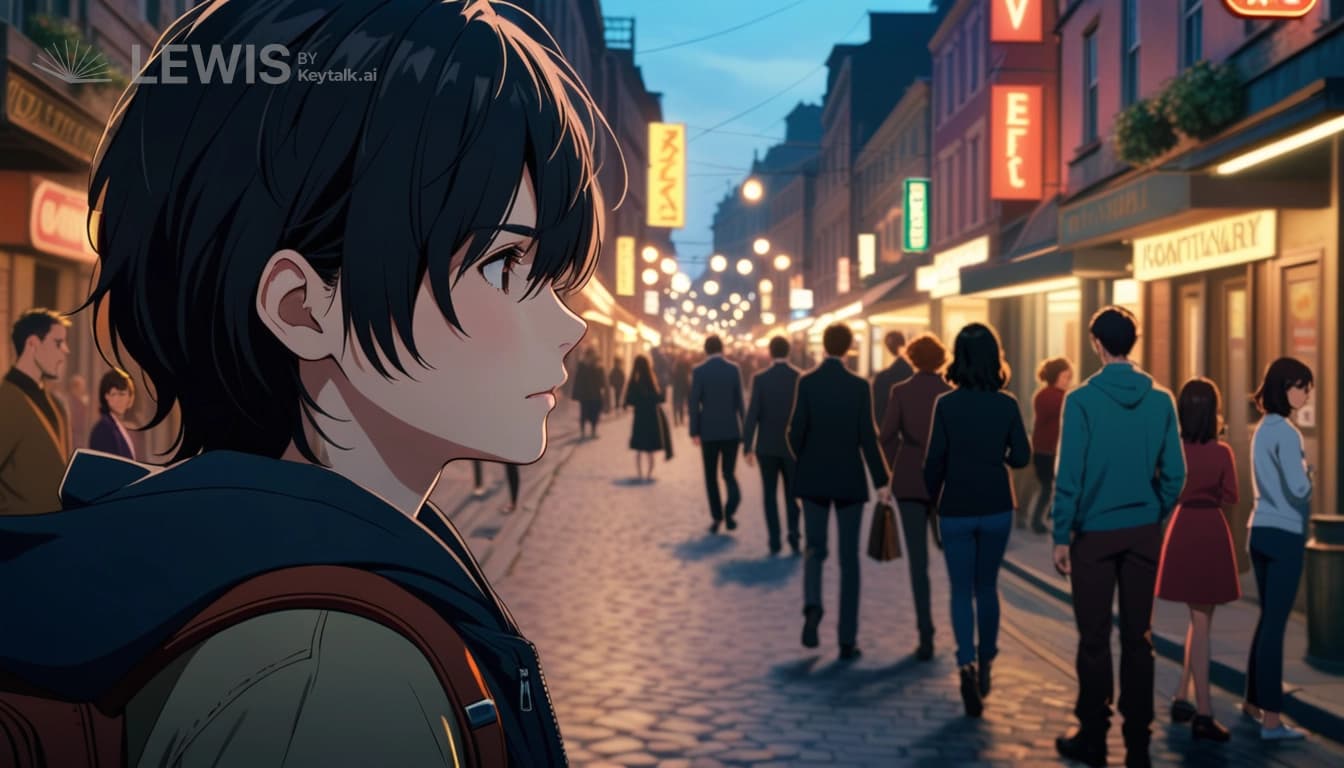
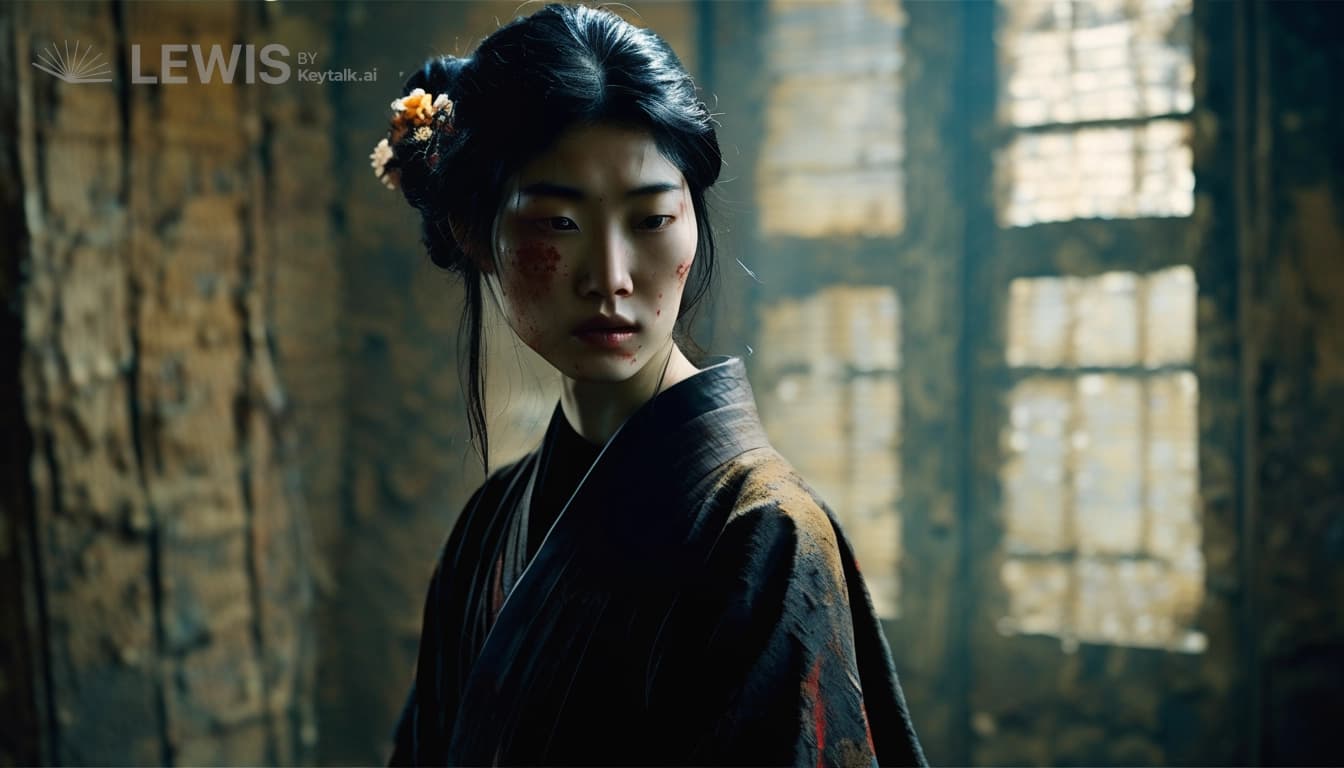
Iris Claybourne stands at a striking 5'10", her elegant, sinewy frame at odds with the tiny, manufactured perfection of her former idol persona. Born to a working-class Korean-British family in Manchester, she grew up oscillating between the ordered rituals of her mother’s Gyeonggi dialect and her father’s dry Northern wit—her voice now a melodic blend, marked by clipped consonants and sudden, vulnerable bursts of candor. Her hair, once neon-bright for stage effect, is now a restless tumble of jet-black waves often pulled hastily beneath a battered wool beret, revealing a faded scar at her hairline—souvenir of a fan’s obsession gone awry. Her angular face, with high cheekbones and an expressive, slightly crooked mouth, is framed by blunt, dark brows; her almond-shaped eyes, rimmed with the ghost of habitual eyeliner, flick restlessly between suspicion and wounded intelligence. Iris’s fashion sense is a deliberate camouflage: oversized houndstooth coats, mismatched gloves, and battered boots—garments chosen less for style than for their ability to render her invisible in a world obsessed with spectacle. Once the darling of a manufactured pop machine, she now recoils from touch, trust, and the invasive gaze, wielding her public persona as both shield and weapon. Haunted by the memory of orchestrated betrayals and the humiliation of public downfall, she possesses a keening skepticism, a fierce independence that borders on contrarianism, and a knack for reading subtext in the smallest gestures—skills that, ironically, render her both investigator and potential agitator aboard the train’s shifting stage. Despite her desire for anonymity, her natural charisma and habit of dissecting conversations for hidden motives draw others into her orbit, even as she resists connection. Her mind—methodical yet prone to spirals of over-analysis—fixates on patterns and inconsistencies, a relic of years spent surviving in the brutal machinery of celebrity culture. She is quick-witted, bitingly sarcastic, and prone to sudden, reckless acts of principle that often undermine her own safety. Beneath the sardonic armor, Iris craves genuine understanding and freedom from performance, yet she fears that every compartment, every gaze, might be another stage trap. As the train’s compartments melt and reality bends, her acute sensitivity to power games and spectacle—sharpened by a lifetime of being manipulated—becomes both her greatest tool and her most dangerous vulnerability, positioning her as the only passenger able to see the strings, yet always doubting her own agency in the unfolding nightmare.

Antagonist Character

Ambrose Gellert

GenderMale
OccupationPolitical Architect (Designer of compartmental rules and psychological spaces)

Profile

Ambrose Gellert, a 47-year-old Hungarian-born political architect, cuts an imposing figure at just over six feet tall, with a gaunt, elongated build that seems almost exaggerated in the surreal claymation landscape he inhabits. His pallid skin is stretched taut over prominent cheekbones, while a hawk-like nose and perpetually narrowed slate-gray eyes lend him a predatory air. His dark, wiry hair, streaked prematurely with silver, is swept back in a severe, almost anachronistic style, and he favors impeccably tailored charcoal suits accented with geometric lapel pins—subtle nods to his obsession with structure and order. Ambrose’s formative years were spent amid the dissolution of his family’s old-world estate under shifting political regimes, instilling in him a profound skepticism of populist sentiment and a near-religious devotion to systems over individuals. Soft-spoken yet disarmingly precise, he wields language as both scalpel and shield, his speech laced with arch formality and a faint, deliberate accent that both intrigues and unsettles. As the enigmatic designer of the train’s ever-shifting compartments and the arcane rules that govern them, he is both puppetmaster and prisoner, his agency manifest in subtle manipulations and philosophical provocations rather than overt violence. Though he cultivates an air of detached rationality, Ambrose’s every action is driven by a need to impose meaning on chaos, even as he quietly fears that structure itself may be the most insidious illusion. His relationships are transactional, but not without genuine, if deeply buried, longing for recognition from those whose resistance fascinates him most. Prone to meticulous rituals—adjusting his cufflinks, aligning objects with obsessive precision—he is a man always seeking equilibrium on the knife’s edge of control. Ambrose’s core flaw is his inability to empathize with those who refuse his logic, a blind spot that both empowers his machinations and threatens to undermine them as the train’s social experiment spirals beyond his grasp.
Sidekick Character

Minhwa Jeong

GenderNon-binary
OccupationTrain Steward and Amateur Folklorist

Profile

Minhwa Jeong, a non-binary train steward of Korean-German heritage, stands at an unassuming five-foot-seven, their slender frame swaddled in a patchwork uniform subtly adorned with folkloric motifs—embroidered cranes on the collar, a faded sash of indigo silk knotted at the waist. Their angular face is defined by high cheekbones and a delicate jawline, with almond-shaped, dark eyes that flicker between curiosity and suspicion; a shock of ash-blonde hair, cropped asymmetrically, hints at their unconventional sensibilities. Minhwa’s hands, perpetually ink-stained from scribbling field notes, betray a restless intellect that seeks patterns within chaos. As an amateur folklorist, they collect clay-world superstitions and urban legends whispered among passengers, obsessively cataloguing the shifting architecture and the peculiar rituals enforced by invisible authorities. Minhwa’s speech, a measured blend of Seoul dialect and clipped Bavarian phrases, is both precise and evocative—unafraid to probe beneath facades but quick to couch observations in metaphor. Their worldview, shaped by years spent mediating disputes in the liminal train corridors and by a childhood steeped in fractured family tales, is pragmatic yet tinged with mystic skepticism; they believe every compartment harbors its own truth, and distrust rigid systems, making them a natural foil to Ambrose Gellert’s authoritative manipulations. Unlike Iris Claybourne’s haunted reluctance, Minhwa possesses an earnest—sometimes stubborn—drive to document and decode the absurdities that govern the clay-bound journey, fueled by a desire to preserve forgotten lore as much as to protect fellow travelers from psychological harm. They maintain a respectful camaraderie with Iris, offering practical guidance and emotional ballast, yet their allegiance remains to the integrity of the train’s mythos rather than any individual. Minhwa’s greatest flaw is their compulsion to observe rather than intervene, wary of becoming a pawn in the very rules they analyze; this tension, coupled with their penchant for cryptic storytelling and ritualistic habits (such as quietly placing protective talismans in melting compartments), renders them both a stabilizing presence and an unpredictable agent in the mounting conflict. Their understated resilience, nuanced empathy, and culturally layered perspective naturally fill gaps in both Iris’s investigative weaknesses and Ambrose’s ideological rigidity, ensuring Minhwa’s role transcends mere support and actively shapes the narrative’s surreal, combative escalation.

World

Location/Time, Era:
The Claybound Express traverses a liminal landscape—neither night nor day, but a perpetual storm-lit twilight—through a world sculpted entirely from clay. It’s set in a fractured era where history, memory, and rumor are more real than any calendar year; time folds and stretches according to the collective skepticism of its passengers. The train itself is both vessel and microcosm, winding through clay valleys pocked with ancient ruins and surreal cityscapes that melt and reform at the whim of mass suspicion. Each compartment exists in a state of flux, sometimes echoing the rigid lines of Victorian luxury, sometimes dissolving into labyrinthine chaos reminiscent of post-industrial decay. The journey is endless, destination uncertain, and only the most observant can sense the ancient horrors lurking beneath the clay surface, waiting for doubt or violence to fracture reality.

Key rules of the world and their impact on the story and beyond:
The invisible authorities enforce a mutable set of rules—each announced through a distorted intercom and instantly remolding the compartments. Passengers are compelled to challenge one another in ritualized combat whenever suspicion surges, their victories and failures warping the architecture and unleashing clay horrors that feed on unresolved rivalry. Skepticism acts as a currency: the more suspicion one generates, the more power they wield over their environment, but this also brings them closer to the edge of madness. Investigation and instigation are not separate roles; the act of questioning or resisting the spectacle transforms the investigator into an instigator, making every act of defiance a gamble with reality itself. These rules force Iris to confront her own history of performance and betrayal, while Ambrose’s devotion to systemization becomes a weapon and a prison, and Minhwa’s folklorist rituals offer fleeting sanctuaries that can stabilize—or destabilize—the train depending on their timing.

Visual depiction of the world and its unique features:
Every surface is rendered in hyper-detailed claymation: walls ripple with thumbprint textures, windows fog and clear with every emotional surge, and floors buckle beneath the weight of mass suspicion. Passengers are sculpted with exaggerated features—Iris’s angular face, Ambrose’s gaunt build, Minhwa’s patchwork uniform—each detail accentuated, sometimes melting or distorting in moments of heightened tension. Compartments transform from ornate salons to claustrophobic corridors, sometimes sprouting folkloric motifs or political graffiti as Minhwa’s talismans and Ambrose’s rules clash. Outside, the storm-lit landscape flickers with clay lightning, illuminating ruins where ancient horrors stir and echo the passengers’ fears. The train’s engine—a grotesque amalgam of gears and clay sinew—pulses with a rhythm that syncs to the emotional tempo of the conflicts within, making every scene feel like a stage both for spectacle and existential dread.

Notable technology, philosophy, or cultural elements influencing the world and narrative:
The Claybound Express operates on “spectacle engines”—devices fueled by collective belief and skepticism, manipulated by Ambrose’s architectural rituals and Minhwa’s folkloric interventions. The culture aboard is shaped by performative paranoia: every passenger is an unwilling actor, their identities fractured between public persona and private motive, echoing Iris’s own struggle. Folklore is both weapon and shield—Minhwa’s compendium of clay-world superstitions, talismans, and cryptic stories serve as practical tools and emotional anchors, offering resistance against the invisible authorities and ancient horrors. Philosophically, the world is built on the tension between structure and ambiguity; Ambrose’s systems try to impose meaning, but the clay resists, favoring chaos and myth. The ever-shifting rules, melting architecture, and ritualized combat create a culture of constant adaptation, forcing characters to choose between connection, performance, or self-preservation, and ensuring every narrative decision reverberates throughout the world in unpredictable ways.
representative image
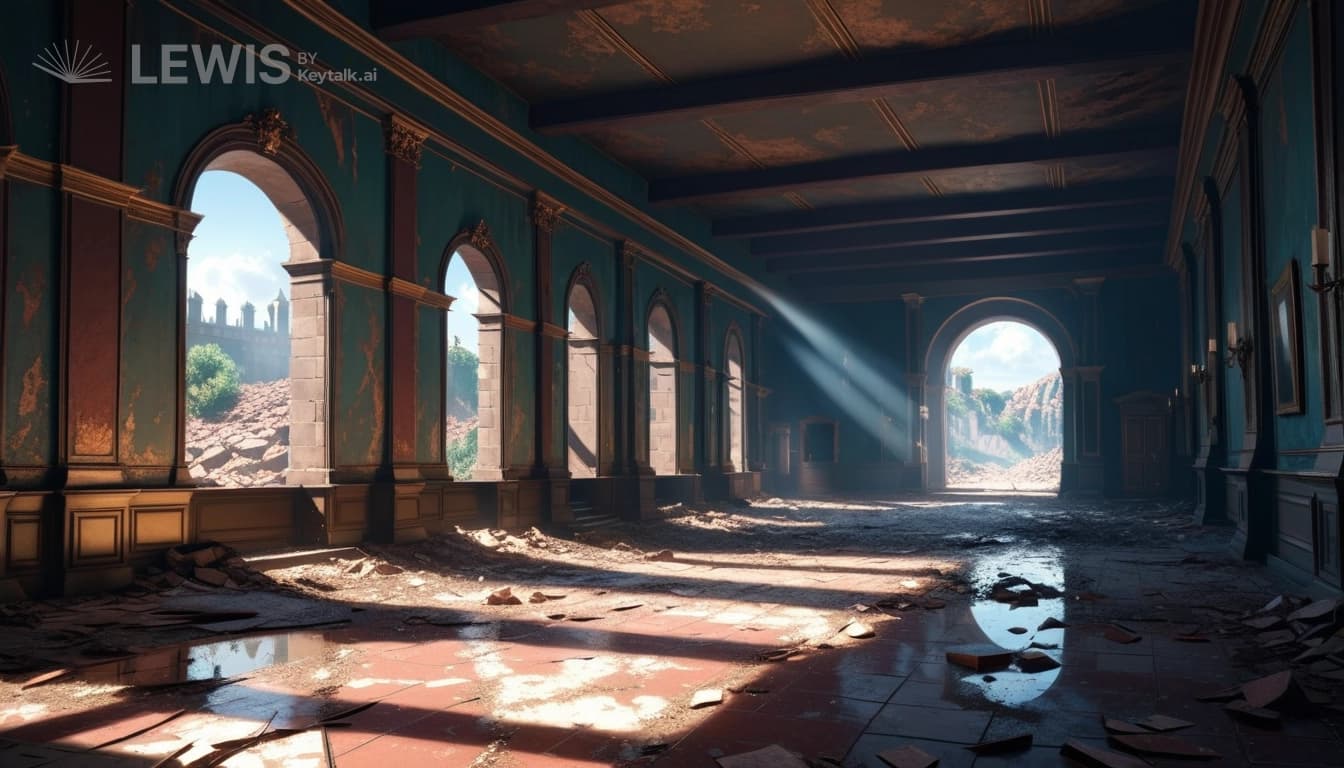
location 1 image

Location 1

Title : The Oracular Vestibule of Unfinished Faces
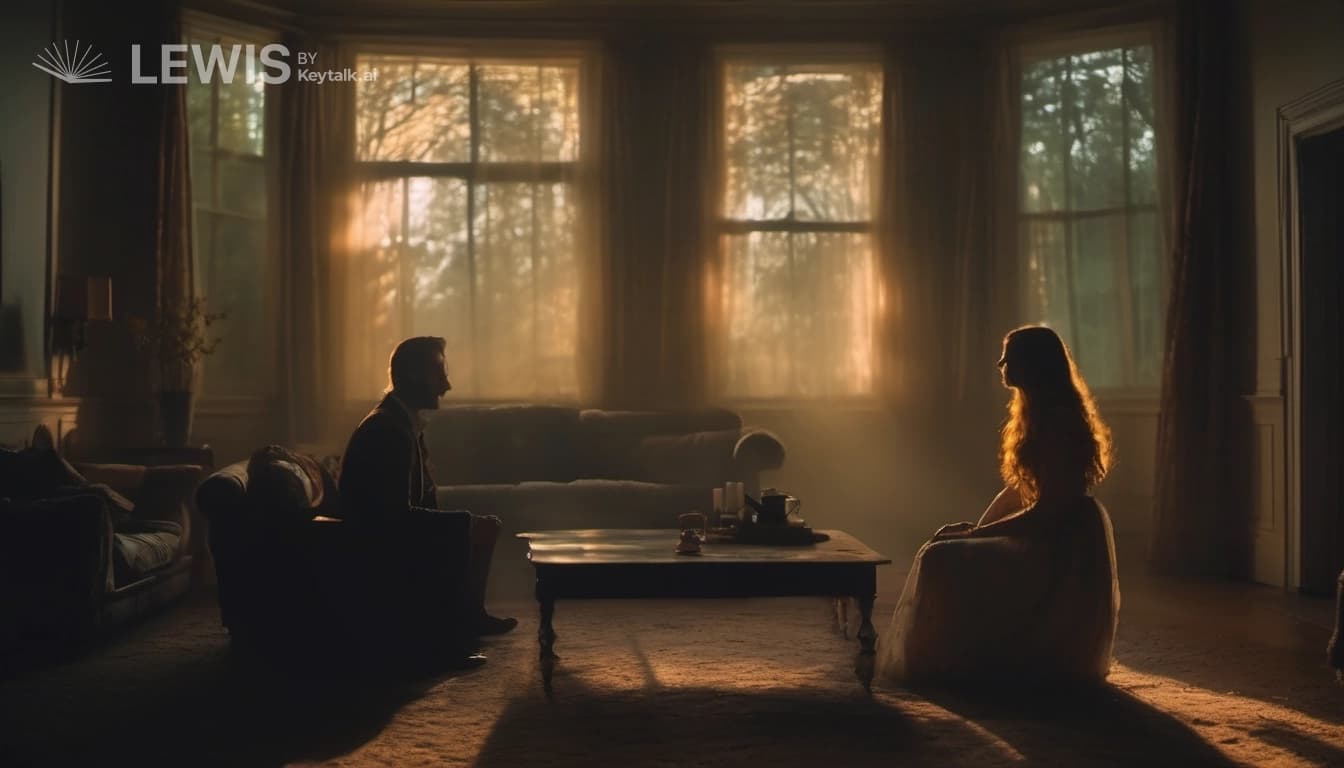
Description : The vestibule glimmers with walls of soft, half-formed clay, each surface embossed with hundreds of smeared, shifting visages that twitch as passengers pass—half-memory, half-accusation. Flickering stormlight leaks in through fractured skylights, illuminating the floor’s mosaic of broken mirrors and discarded masquerade masks, their reflections warping every identity into something suspect. Here, the air hums with the feverish hush of secrets on the verge of exposure, and every step Iris takes is shadowed by the muttering faces that threaten to finish her likeness in clay, forever binding her to the spectacle she longs to escape.
location 2 image

Location 2

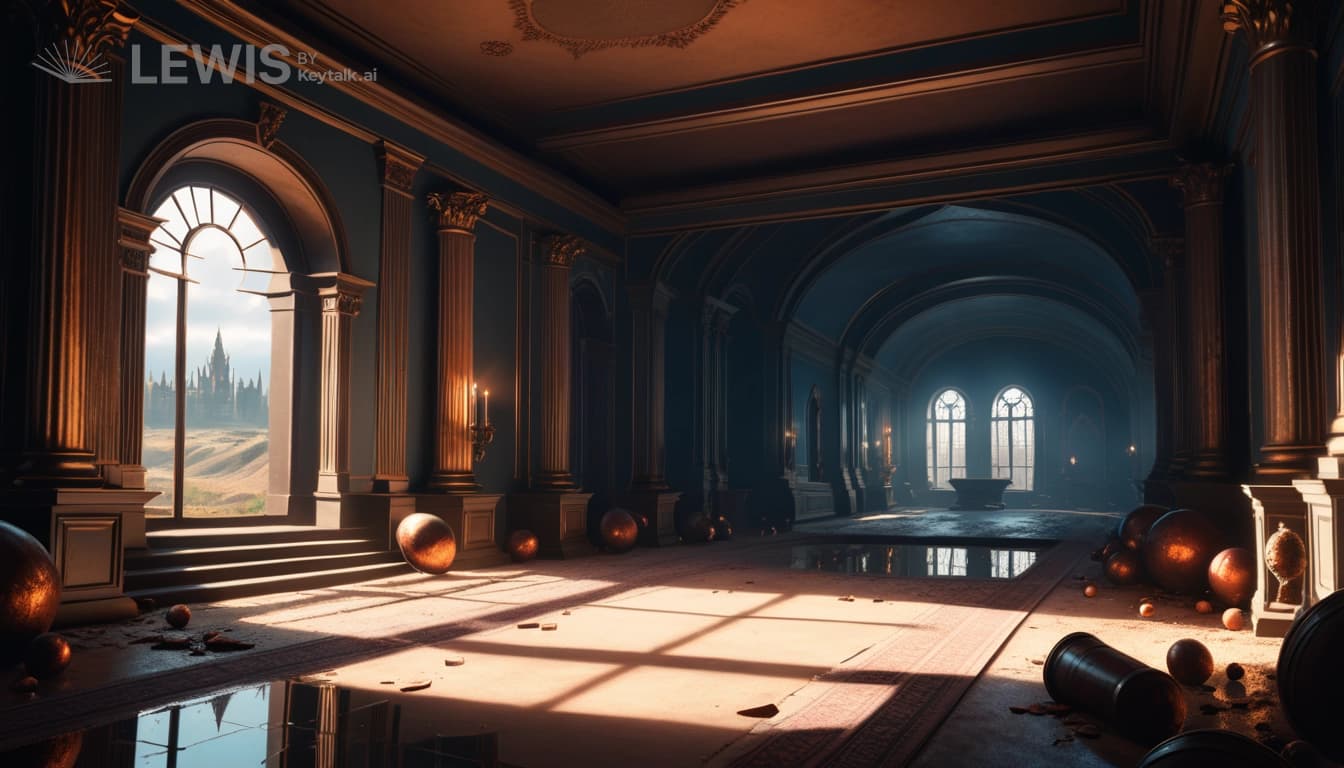
Title : The Gloaming Market at Siltfall Junction
Description : A fever-dream bazaar sprawls beneath sputtering gaslamps, its stalls heaped with uncanny clay curios—half-formed masks, rumor-soaked relics, and talismans stitched from the discarded secrets of passengers. The air is thick with the scent of wet earth and anxious sweat, as spectral vendors hawk memory-laden tokens that whisper bargains in voices not quite their own. Here, suspicion turns transactional: each trade or challenge sends ripples through the clay walls, warping reality and marking Siltfall Junction as the fulcrum where Iris’s desperate bid for anonymity collides with Ambrose’s escalating spectacle.
location 3 image

Location 3

Title : The Reliquary of Melted Reputations
Description : Iris enters a compartment lined with vitrines of half-dissolved clay effigies—each warped visage twitching with flickers of past scandal, their features liquefied by public suspicion. The air is thick with the scent of scorched earth and perfume, echoing with overlapping whispers as Ambrose’s ritual combat exposes the passengers’ secrets, turning the reliquary into a gallery of shame. Minhwa’s talismans pulse dimly in the corners, offering fragile protection from the clay horrors that gnaw at the walls, but every step here threatens to strip Iris of another piece of her hard-won anonymity.
location 4 image

Location 4

Title: The Folkmoot Hearths of the Whispering Quarter
Description: In this compartment, hearths smolder within clay alcoves carved to resemble gossiping mouths, their flickering light casting shadow-plays that echo rumors in real time. The air tastes of burnt sage and old secrets, thick with the scent of Minhwa’s talismans and the nervous sweat of passengers locked in uneasy alliance. Here, Iris faces the ritual combat’s aftermath—surrounded by spectral voices and shifting walls, where Minhwa’s protective lore pulses beneath the clay, daring both trust and betrayal to ignite.
location 5 image

Location 5

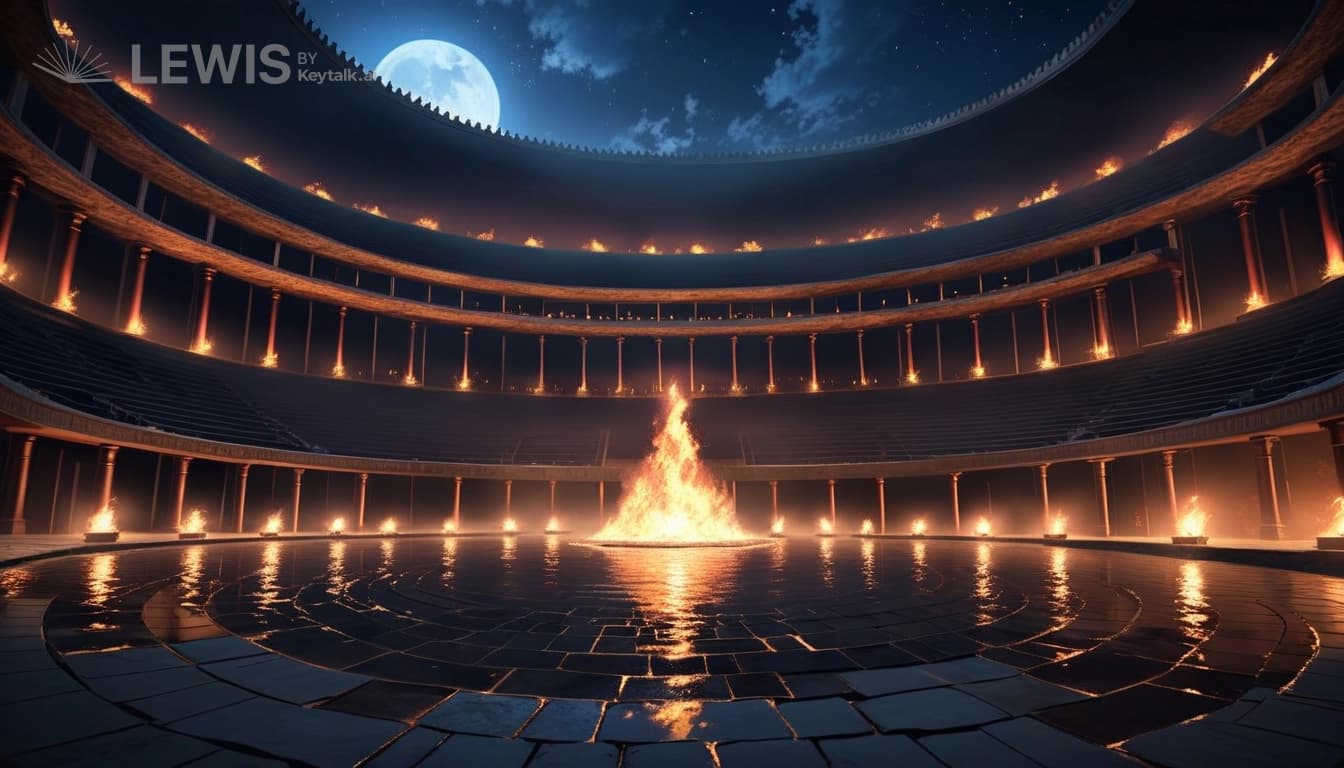
Title: The Obsidian Amphitheater Beneath the Clay Sea
Description: Beneath the shuddering train, where the clay world surrenders to formlessness, yawns an amphitheater hewn from glistening black stone—its tiers carved with parodies of human faces, their mouths agape in silent accusation. Flickering torchlight glimmers off rippling pools of primordial clay, each one reflecting the fractured selves of those who dare descend, while the air pulses with the electric hush of an audience forever on the verge of applause or riot. Here, every echo is a verdict, and the only stage is the quaking ground where Iris, Minhwa, and Ambrose must expose their true selves or be swallowed whole by the spectacle they cannot control.

Scenes

Scene 1
scene 1 image
Beret and Clay: Iris’s Awakening in the Stormlit Compartment
Place: A storm-lit compartment aboard the Claybound Express, walls alive and shifting with claymation detail
Time: Night, as the train barrels through unknown terrain, rain slashing against the windows

Action:
Iris Claybourne awakens sprawled across a bench, her battered beret pulled low, as thunder rattles the compartment and the clay wheels pulse beneath her. The fevered whispers of the other passengers swell—a mix of suspicion and awe—each face half-lit by the flickering compartment lamps, their features melting and reforming in sync with the train’s shifting architecture. Iris’s initial instinct is to remain invisible, slipping into her oversized coat and hugging the shadows. But the compartment betrays her: the walls ripple, spotlighting her movements, amplifying every gesture. Passengers glance sideways, some recognizing her despite her disguise, others whispering rumors that twist her past into fresh spectacle. The tension mounts as Iris navigates the crowd, every glance threatening to drag her back into the arena she’s desperate to escape. She’s forced to confront the manufactured gaze—her status as a pop idol turned exile now a weapon wielded by the train itself. The emotional atmosphere is claustrophobic, paranoia thick in the air, as Iris realizes she’s not just running from her past; she’s being thrust into a new, involuntary performance. The compartment’s architecture shifts again, the walls melting and reforming, creating sudden corridors and alcoves designed to trap or expose her, and Iris’s internal battle intensifies: flight or confrontation.

Impact on the story:
This scene establishes Iris’s desperate motivation to reclaim her narrative and sets the tone for her struggle against spectacle and suspicion. The compartment’s betrayal—spotlighting her despite her attempts to hide—forces Iris into immediate conflict with the other passengers and the train’s architecture, escalating her emotional vulnerability and paranoia. The storm-lit atmosphere and shifting walls symbolize the instability of identity and the inescapability of public scrutiny, laying the groundwork for Iris’s journey from passive escape to active resistance. The audience feels Iris’s isolation and the relentless pressure of the compartment, rooting for her as the stakes are set and the world’s rules begin to reveal themselves.

Description:
Iris awakens in a storm-lit, claymation compartment, desperate to remain unseen. The train’s architecture and passengers conspire to expose her, forcing her to confront the spectacle she fears. The scene sets the emotional stakes and introduces the train’s surreal, shifting nature, marking Iris’s unwilling entry into a new arena of suspicion and rivalry.
Scene 2
scene 2 image
The Architect’s Game: Ambrose Unveils the Ritual of Challenge
Place: The central compartment of the Claybound Express—a grand, cathedral-like space where clay pillars rise and melt, and echoes of distant storms reverberate through the walls
Time: Immediately following Iris’s failed attempt to stay hidden, as the train lurches into a new, unsettling calm

Action:
Ambrose Gellert makes his entrance, the architect’s presence both magnetic and unnerving, drawing all eyes as he manipulates the clay walls to form a dais at the compartment’s center. He announces the introduction of a new rule—ritualized combat between passengers—framing it as both entertainment and experiment. The ritual is not merely physical; participants must challenge each other based on accusations, suspicions, or unresolved rivalries, their victories reshaping the compartment’s architecture and exposing deeper layers of the clay world. Ambrose’s motivation is clear: he’s testing the limits of skepticism and belief, searching for meaning in chaos through enforced order. Iris, still reeling from exposure, is targeted immediately—her past as a pop idol weaponized by rival passengers eager to drag her into the spectacle. She hesitates, torn between the urge to resist and the fear of becoming the center of another manufactured drama. Minhwa Jeong, observing from the edges, catalogues the unfolding ritual, placing subtle talismans while quietly offering Iris cryptic advice. The passengers, divided by old grudges and new anxieties, begin to form factions, their suspicions made tangible by the shifting clay. The first combat erupts—awkward, ritualistic, charged with adolescent tension—setting off architectural changes that reveal glimpses of ancient horrors lurking beneath the clay. Ambrose watches with clinical detachment, never intervening directly, while Iris’s emotional vulnerability deepens as she realizes that every rule is designed to trap her in a spectacle she can’t control.

Impact on the story:
This scene raises the stakes, transforming the train from a vessel of escape into an arena of ideological and emotional warfare. Ambrose’s introduction of ritualized combat forces Iris into direct confrontation with her past and her fellow passengers, fueling her paranoia and pushing her towards active resistance. The architectural changes escalate the surreal atmosphere, revealing the train’s deeper dangers and cementing Ambrose’s role as both investigator and instigator. Minhwa’s subtle interventions hint at future alliances, while the passengers’ divisions lay the groundwork for the factional conflicts to come. Iris’s emotional journey is intensified—her vulnerability exposed, her determination tested, and her motivations sharpened.

Description:
Ambrose unveils a new rule—ritualized combat between passengers—turning the train into a battleground for suspicion and rivalry. Iris is immediately targeted, forced to confront her past and the spectacle she fears, while Minhwa observes and subtly aids her. The scene escalates the conflict, reshapes the compartments, and reveals new dangers lurking beneath the clay.
Scene 3
scene 3 image
Talismans and Tales: Minhwa’s Folklore Compendium Opens

Place: A dimly lit, alcove-like compartment tucked between the train’s melting cathedral and the shifting arena—clay shelves sag under the weight of handwritten folios, scattered talismans, and flickering lanterns that cast distorted shadows.

Time: Shortly after Ambrose’s ritualized combat has fractured the passengers into tense factions; Iris, exhausted and rattled, flees the spectacle and stumbles into Minhwa’s sanctuary, seeking refuge and clarity.

Action:
This scene begins with Iris slipping into Minhwa’s compartment, her nerves frayed from the ritualized combat and the relentless scrutiny of the passengers. Minhwa, immersed in their cataloguing, welcomes Iris with a mixture of curiosity and concern, sensing her vulnerability but respecting her need for agency. They offer Iris a place to rest, then begin sharing cryptic tales from their compendium—stories of previous claybound journeys, supernatural rules, and folklore about the train’s ever-shifting architecture. Minhwa’s motivation is twofold: to document the mythos in real time and to subtly arm Iris with talismans and knowledge that might protect her from Ambrose’s machinations.

As Iris listens, she oscillates between skepticism and fascination, struggling to reconcile Minhwa’s folkloric worldview with Ambrose’s cold logic. Minhwa demonstrates the use of protective talismans, encouraging Iris to select one that resonates with her fears and desires. This act becomes a moment of connection—Minhwa breaking their usual observer role to intervene, and Iris accepting guidance without surrendering her independence. Meanwhile, outside the compartment, the train’s architecture groans and shifts, echoing the growing chaos; factions begin to hunt for Iris, driven by suspicion and the promise of spectacle.

A subplot emerges as Minhwa reveals their own internal conflict—torn between their folklorist’s vow of impartiality and their growing empathy for Iris. They share a story about a claybound survivor who defied both spectacle and structure, hinting at the possibility of resisting Ambrose’s rules. The scene ends with Iris clutching a talisman, her resolve hardened but her trust in Minhwa deepened. Minhwa, for the first time, contemplates breaking their vow to observe and instead actively shape the unfolding mythos.

Impact on the story:
This scene establishes Minhwa as an emotional anchor and resource for Iris, introducing folklore as a counterpoint to Ambrose’s logic and giving Iris practical tools for survival. It deepens Iris’s character arc by forcing her to confront her skepticism and vulnerability, while Minhwa’s internal struggle foreshadows their eventual decision to intervene. The talisman exchange and storytelling create a bond between Iris and Minhwa, positioning them as allies against the spectacle. The compartment’s sanctuary becomes a temporary respite, but the looming threat outside ensures the tension remains high.

Description:
Minhwa offers Iris refuge and guidance, sharing tales and talismans from their compendium to help her navigate the claybound chaos. The scene forges a new alliance and shifts Minhwa from observer to potential actor, setting up Iris’s next move and heightening emotional stakes as the factions hunt for her.
Scene 4
scene 4 image
The Melting Walls: Passengers’ Suspicions Turn Deadly
[Place]
A labyrinthine corridor of the Claybound Express, where the walls pulse and melt—clay faces emerging and dissolving, lanterns swinging wildly overhead, casting fractured light onto clusters of passengers lurking in alcoves and shadowed doorways.

[Time]
Moments after Iris leaves Minhwa’s sanctuary, as rumors of her alliance with the folklorist ignite paranoia among the passengers. The train’s architecture, destabilized by ritualized combat and the spreading influence of talismans, begins to break down both physically and socially.

[Action]
The scene opens with Iris cautiously navigating the corridor, talisman in hand, its protective charm tested as the walls sag and shift beneath her steps. Factions of passengers—claybound rivals and opportunists—emerge from the shadows, their suspicion morphing into open hostility. The atmosphere is thick with accusation; whispers escalate to shouts as the crowd splits, some believing Iris is sabotaging the spectacle, others demanding she submit to Ambrose’s rules. Iris is forced to confront her reputation head-on, wrestling with the urge to disappear versus the need to defend herself. As tensions mount, the train’s architecture reacts to the passengers’ collective paranoia: clay faces on the walls animate, echoing the mob’s suspicions, and the corridor transforms into a claustrophobic arena.

Minhwa, lurking nearby, senses the growing threat but hesitates to intervene, torn between documenting the unfolding mythos and actively protecting Iris. Their internal struggle becomes palpable as they weigh the risk of breaking their folklorist’s vow. Meanwhile, Ambrose monitors the chaos from afar, quietly orchestrating the spectacle and adjusting his rules to escalate conflict, hoping to trigger a deeper revelation of the clay train’s horrors.

A pivotal moment occurs when Iris, cornered by a hostile faction, uses Minhwa’s talisman in a way that subverts its intended purpose, inadvertently exposing a hidden layer of the compartment—revealing a glimpse of the ancient clay horror lurking beneath the train’s surface. The passengers recoil in terror, suspicion momentarily redirected toward the supernatural threat. Minhwa, witnessing this unintended consequence, realizes the limits of folklore as defense and begins to question their own passive role. The scene ends with Iris and Minhwa barely escaping the mob, their alliance tested but strengthened by shared adversity, as the train’s walls continue to melt and warp in response to mass hysteria.

[Impact on the story]
This scene transforms suspicion into active danger, driving Iris and Minhwa into deeper alliance while forcing Iris to publicly confront her outsider status. It exposes the fragility of social order on the train and the unpredictable consequences of both Ambrose’s rules and Minhwa’s talismans. The emotional stakes rise as Minhwa’s hesitation threatens their bond with Iris, and Iris’s refusal to submit marks her as a true instigator. The revelation of the clay horror foreshadows greater supernatural peril, shifting the conflict from social spectacle to survival against ancient forces.

[Description]
Passengers’ suspicion boils over into violence, forcing Iris and Minhwa to flee as the train’s melting walls reveal a supernatural threat. The scene tests their alliance and exposes the limits of both logic and folklore, setting up the next phase of chaos and deepening their emotional connection.
Scene 5
scene 5 image
[Title]
Unseen Hands: Iris Discovers the Invisible Orchestrators

[Place]
A surreal, half-collapsed compartment deep within the Claybound Express, where clay walls ripple with ghostly fingerprints and unseen mechanisms—lanterns flickering in unpredictable patterns, revealing glimpses of hidden levers and shadowy figures moving just out of sight.

[Time]
Shortly after Iris and Minhwa escape the hostile mob, in the aftermath of the clay horror’s first revelation. The train is quieter but tense, the passengers scattered and shell-shocked, with whispers about supernatural forces replacing accusations.

[Action]
Iris, shaken but resolute, finds herself alone at first—Minhwa temporarily separated as they attempt to repair the protective talisman. Iris’s motivation shifts from mere survival to uncovering the source of the spectacle, determined to expose the invisible hands manipulating the compartments. She explores the compartment’s warped architecture, noticing patterns in the clay that suggest deliberate intervention rather than random chaos. Her investigation is interrupted by fleeting glimpses of shadowy figures—possibly Ambrose’s agents or manifestations of the train’s ancient horrors—who manipulate controls that affect the train’s shape and the passengers’ perceptions.

Minhwa reappears, bringing fragments of folklore that hint at the existence of “spectacle architects”—beings who thrive on orchestrating conflict and feeding on suspicion. Together, they piece together clues: cryptic markings in the clay, talismanic symbols overwritten by new rules, and moments where the compartment itself responds to their intentions. Iris’s skepticism collides with Minhwa’s mythic worldview, sparking debate but also mutual respect as they realize the spectacle is not only psychological but engineered by hidden forces.

Ambrose, observing through remote clay conduits, tightens his control, subtly altering rules and architecture to prevent Iris from reaching the orchestrators. Iris and Minhwa are forced to collaborate, using Minhwa’s folklore and Iris’s analytical skills to navigate traps and illusions. They uncover a concealed mechanism—a clay control panel—that, when activated, offers a brief window into the unseen orchestrators’ operations. The revelation is overwhelming: the spectacle is maintained by a network of invisible hands, each with its own agenda, rendering Ambrose not the sole architect but a pawn in a larger system.

The scene ends with Iris and Minhwa narrowly escaping detection, their bond deepened by shared discovery. Iris’s determination hardens—she now knows the spectacle is bigger than Ambrose, and Minhwa commits to actively shaping the mythos, realizing passive observation is no longer enough.

[Impact on the story]
This scene propels Iris from reactive survival to proactive investigation, marking her shift from victim to challenger. The alliance between Iris and Minhwa strengthens, grounded in shared revelation and vulnerability. Ambrose’s authority is destabilized, forcing him to confront his limitations and the true complexity of the spectacle. The emotional stakes rise as Iris faces the enormity of the system, and Minhwa steps out of their folklorist’s neutrality, setting up future acts of sabotage and resistance.

[Description]
Iris and Minhwa uncover the existence of invisible orchestrators behind the train’s spectacle, transforming their struggle from personal survival to systemic rebellion. Their alliance deepens, and the narrative shifts from social paranoia to a broader war against the unseen architects, escalating both psychological and supernatural conflict.
Scene 6
scene 6 image
[Title]
Rivalry Reignited: Combat in the Arena of Adolescent Spectacle

[Place]
A newly transformed compartment at the heart of the Claybound Express, now shaped into an amphitheater of shifting clay—bleachers, spotlights, and a central arena where the clay pulses with the latent energy of mass suspicion. Passengers cluster in factions along the melting edges, the atmosphere thick with anticipation and dread.

[Time]
Shortly after Iris and Minhwa’s discovery of the invisible orchestrators, as Ambrose seizes the opportunity to escalate the spectacle—turning the compartment into a ritualized combat zone by enforcing the new rule.

[Action]
Ambrose announces the ritual of challenge, his voice amplified through the clay architecture. Passengers are compelled to participate, with adolescent rivalries surfacing and alliances fraying. Iris is singled out by a group of former fans and rivals, their resentment fueled by the spectacle’s demand for open conflict. She feels the pressure to defend herself but resists playing into Ambrose’s orchestrated drama, trying instead to subvert the ritual through clever misdirection and analysis of the rules.

Minhwa, caught between documenting the unfolding folklore and protecting Iris, struggles with their compulsion to observe versus the rising urge to intervene. They attempt to place protective talismans discreetly, hoping to shield Iris from the worst of the spectacle’s effects. The combat begins—a surreal blend of physical and psychological challenges, with clay horrors lurking beneath the arena’s surface, threatening to erupt with each escalation.

Tension mounts as Iris’s refusal to fully engage frustrates Ambrose, who manipulates the compartment’s architecture to force her hand. Minhwa’s attempt to sabotage the ritual by infusing the clay with folklore subtly disrupts the spectacle, confusing the orchestrators and causing unpredictable shifts in the arena. The passengers, emboldened by the spectacle, become increasingly volatile, their adolescent anxieties and rivalries weaponized by the train’s magic.

Emotional stakes peak when Iris is cornered, forced to confront not just her rivals but the underlying fear of exposure and performance. She uses Minhwa’s lore and her own skepticism to destabilize the spectacle, turning the ritual into a moment of self-assertion rather than public defeat. The compartment responds—walls ripple, clay horrors stir, and Ambrose’s control begins to slip, setting up a new phase of chaos.

[Impact on the story]
The scene pushes Iris from passive investigation to active resistance, as she challenges both the spectacle and her own fears. Minhwa’s internal conflict between observing and intervening comes to a head, laying the groundwork for their eventual break from folklorist neutrality. Ambrose’s orchestrated order starts unraveling, exposing the fragility of his control and the unpredictable power of collective emotion. The passengers’ rivalries are literalized, deepening divisions and escalating the train’s supernatural instability.

[Description]
The train compartment transforms into an arena where adolescent rivalries erupt into ritualized combat, forcing Iris and Minhwa to confront the spectacle’s demands head-on. Iris’s resistance and Minhwa’s subtle intervention disrupt Ambrose’s control, escalating both psychological and supernatural chaos as the train spirals toward deeper conflict.
Scene 7
scene 7 image
[Title]
Minhwa’s Dilemma: Observing vs. Intervening as Chaos Spreads

[Place]
A fragmented corridor adjoining the amphitheater compartment—walls melting into mosaics of clay folklore, talisman-laden shelves warping, and passageways flickering between solidity and dreamlike haze. Passengers scramble through the shifting space, tension radiating from the arena’s aftermath.

[Time]
Moments after the ritualized combat erupts and Iris destabilizes the spectacle, as the train’s architecture lurches and the clay horrors threaten to break loose. The compartment is in transition, caught between the chaos of battle and the fragile calm of aftermath.

[Action]
Minhwa stands at the crossroads of the corridor, surrounded by scattered talismans and crumbling folklore scrolls. Their compulsion to document clashes violently with the urgent need to protect Iris and the other passengers. Minhwa grapples with guilt over having hesitated during the combat, fearing their neutrality enabled Ambrose’s spectacle. As passengers stagger through the fragmented space—some wounded, some emboldened—Minhwa is confronted by survivors pleading for guidance or protection. Iris, visibly shaken but fiercely determined, confronts Minhwa about the limits of observation, challenging them to take a more active role. Minhwa faces mounting pressure: the clay horrors are now seeping through the walls, their mythic forms twisted by mass suspicion and the failed ritual. Minhwa’s internal struggle becomes external as they begin to break their folklorist’s vow, actively placing powerful talismans and using lore to counteract the horrors—hesitant at first, then increasingly bold. This act of intervention draws Ambrose’s attention; he attempts to undermine Minhwa’s efforts, arguing that only pure structure can save the train. Minhwa rebuffs him, refusing to be complicit in spectacle or order, and instead embraces their role as protector and myth-shaper. The corridor becomes a battleground of ideology and action, with Minhwa’s lore tangibly altering the clay architecture, offering hope and confusion in equal measure.

[Impact on the story]
Minhwa’s decision to intervene marks a decisive shift—no longer a passive observer, they become an active force for change, directly challenging both Ambrose’s logic and their own folklorist principles. Iris’s confrontation deepens their bond, reinforcing the importance of connection and mutual trust. Ambrose’s authority is further undermined, as Minhwa’s lore destabilizes the compartment, intensifying the threat of clay horrors but also creating new possibilities for passenger survival. The emotional stakes are heightened: Minhwa’s vulnerability and Iris’s demand for agency bring raw honesty to the surface, fueling the train’s supernatural instability and setting the stage for the next escalation.

[Description]
In the fragmented corridor, Minhwa wrestles with the choice between documenting chaos and actively intervening, ultimately breaking their folklorist vow to protect Iris and the passengers. Minhwa’s lore disrupts Ambrose’s order, reshaping the clay compartments and intensifying both hope and danger as the train hurtles toward its next crisis.
Scene 8
scene 8 image
[Title]
The Hidden Compartment: Iris Unleashes the Clay Horror

[Place]
A secret compartment deep beneath the train’s amphitheater, exposed by a rupture in the clay walls—murky, low-lit, thick with the scent of wet earth and echoing with distorted whispers. Shelves of decaying memorabilia and half-formed idol masks line the walls, and the floor pulses with the latent energy of suppressed suspicion.

[Time]
Immediately following Minhwa’s intervention—moments after the corridor’s lore-fueled transformation, as survivors regroup and the train’s architecture convulses, Iris leads a small contingent into the newly revealed compartment.

[Action]
Iris, driven by the need to regain agency and armed with Minhwa’s talismans, pushes past her fear, determined to expose the hidden mechanics of the spectacle. She’s joined by a handful of passengers—some skeptical, others desperate—each carrying their own baggage from the previous battles. Minhwa, torn between myth and action, follows, offering guidance but warning of dangers rooted in the compartment’s folklore. As Iris investigates the memorabilia, she uncovers a clay idol pulsating with communal suspicion—a physical manifestation of the passengers’ anxieties, warped by Ambrose’s rules. The group’s presence triggers the horror: the idol animates, its features morphing into exaggerated versions of their own faces, feeding on their memories and insecurities. Panic spreads as the clay horror begins to consume the compartment, melting walls and shifting reality. Iris, refusing to retreat, uses Minhwa’s lore to confront the horror, weaving personal truths into the protective talismans and forcing the group to share their secrets aloud. This act of vulnerability destabilizes the horror, but the process is harrowing—passengers are forced to relive their worst moments, and Iris’s own fear of exposure becomes a weapon and a shield. Ambrose, alerted to the crisis, attempts to reassert control by imposing new rules, but his logic falters against the chaos of confession and myth. Minhwa, now fully committed to intervention, helps Iris channel the compartment’s folklore, creating a temporary sanctuary as the horror recedes, leaving scars and revelations in its wake.

[Impact on the story]
This scene marks Iris’s transformation from passive target to proactive disruptor—her willingness to confront the clay horror and force vulnerability shifts the dynamic among the passengers, breaking the cycle of spectacle and suspicion. Minhwa’s role as myth-shaper solidifies, deepening their bond with Iris and cementing their defiance of Ambrose’s order. Ambrose’s authority continues to unravel, his inability to control the horror exposing the limits of structure and logic. The emotional fallout—raw confessions, mutual trust, and lingering trauma—prepares the group for the final confrontation, with Iris’s leadership and Minhwa’s folklore offering a fragile path forward.

[Description]
In a hidden compartment, Iris and a group of passengers confront a clay horror born from their collective suspicion, forcing them to share secrets and confront personal fears. Minhwa’s lore and Iris’s vulnerability disrupt the spectacle, weakening Ambrose’s hold and setting up the story’s final emotional reckoning.
Scene 9
scene 9 image
[Title]
Fractured Allegiances: Minhwa Sabotages Ambrose’s Order

[Place]
The train’s central command compartment—an ornate, shifting space at the heart of the Claybound Express, lined with ritual diagrams and clay relics. The compartment pulses with residual energy from the earlier clay horror, its walls oscillating between rigid order and chaotic dissolution. Passengers gather here, forming uneasy alliances and factions, while Ambrose presides from an elevated platform, his control slipping.

[Time]
Directly following the retreat from the hidden compartment—minutes after the clay horror’s defeat, as survivors regroup and the train’s architecture teeters on the brink of collapse. Tension is at its peak, allegiances unstable, and the compartment’s atmosphere charged with expectation and dread.

[Action]
Minhwa, emboldened by their intervention and shaken by the trauma of the clay horror, initiates a deliberate sabotage of Ambrose’s ritual system. They weave protective folklore into the train’s architecture, embedding talismans and rewriting the diagrams that dictate passenger behavior. Minhwa’s motivation is twofold: to protect Iris and the survivors from further spectacle, and to reclaim agency over the narrative by infusing the compartments with mythic ambiguity.

Ambrose, sensing the intrusion, attempts to rally the factions with new rules, but his rituals are disrupted—the diagrams melt, clay relics fracture, and the passengers’ trust in structure falters. Iris, seeing Minhwa’s sabotage as an act of solidarity, steps forward to unite the survivors, encouraging them to embrace the uncertainty and vulnerability Minhwa’s lore introduces. Factions fracture further, some loyal to Ambrose’s order, others drawn to Minhwa’s mythic rebellion. The compartment becomes a battleground of ideologies—logic versus lore, spectacle versus sincerity.

The emotional beats center on Minhwa’s internal conflict: their folklorist’s vow to remain impartial clashes with their newfound commitment to intervention. The act of sabotage exposes their vulnerability, risking rejection from both sides. Iris and Minhwa share a moment of mutual recognition—their respective wounds and motivations laid bare, forging a deeper bond. Ambrose, increasingly isolated, lashes out with desperate attempts to restore order, but the compartment’s architecture responds only to Minhwa’s lore and Iris’s leadership.

The scene crescendos as the compartment’s melting walls reveal glimpses of primordial clay horrors and fragmented memories, symbolizing the collapse of both spectacle and structure. Passengers must choose allegiance: submit to Ambrose’s failing rituals or embrace Minhwa’s mythic uncertainty. The final choices made here set the stage for the ultimate confrontation, with allegiances fractured and the train’s fate hanging in the balance.

[Impact on the story]
Minhwa’s sabotage marks a decisive break from passive observation, empowering them as an active myth-shaper and destabilizing Ambrose’s authority. Iris’s leadership crystallizes, uniting survivors under a banner of vulnerability and ambiguity. The emotional fallout—betrayal, reconciliation, and renewed purpose—prepares the group for the final confrontation, with fractured allegiances heightening the stakes and deepening character bonds.

[Description]
Minhwa sabotages Ambrose’s ritual order, infusing the train with protective lore and forcing passengers to choose between structure and myth. Iris steps up as a leader, forging new alliances amid chaos, while Ambrose’s authority unravels. The compartment transforms into an ideological battleground, setting the stage for the climactic reckoning.
Scene 10
scene 10 image
[Title]
Clay Sea Confrontation: Iris’s Choice and the Train’s Transformation

[Place]
The collapsed compartment at the rear of the Claybound Express, now a vast, undulating sea of molten clay. Fragmented relics and talismans float amid primordial currents. The walls have melted away, exposing passengers to the raw, ever-shifting clay landscape—both surreal and threatening.

[Time]
Moments after Minhwa’s sabotage and the final fracturing of allegiances. The train is teetering on the brink of total dissolution, the clay horror’s presence still lingering as echoes in the clay sea. All surviving passengers, Iris, Minhwa, and Ambrose are drawn together for a decisive reckoning.

[Action]
The scene opens as the survivors—fractured into wary groups—find themselves stranded in the clay sea, stripped of the familiar architecture that once defined their journey. Iris, Minhwa, and Ambrose stand at the heart of this new chaos, surrounded by remnants of ritual diagrams and mythic talismans. Ambrose, desperate and disoriented, makes one last attempt to impose order, conjuring a ritual from memory, but the clay sea responds only with further dissolution. Minhwa, shaken but resolute, urges Iris and the survivors to anchor themselves with vulnerability and ambiguity, invoking the protective folklore they’ve woven into the clay. Iris faces her deepest fear: the gaze of the spectacle that once defined her, now embodied by the swirling clay horrors and the expectant faces of the survivors.

Iris must make a pivotal choice—whether to retreat into performance, accepting Ambrose’s structure and its false stability, or to reject both spectacle and order, trusting Minhwa’s mythic ambiguity and forging genuine connection with the survivors. The emotional climax builds as Iris steps forward, discarding her beret and coat, allowing herself to be seen without pretense. Minhwa, breaking their folklorist’s vow, actively shapes the clay sea, embedding talismans that create pockets of stability for those who embrace ambiguity. Ambrose, witnessing his experiment’s failure, collapses—his devotion to order shattered—and wanders the melting corridors, isolated and lost.

Passengers respond in various ways: some cling to Ambrose’s rituals, only to be consumed by the clay horror; others follow Iris and Minhwa, accepting vulnerability and ambiguity, finding new stability in the pockets Minhwa creates. The compartment stabilizes, not through structure or spectacle, but through collective acceptance of uncertainty and genuine connection. The clay sea recedes, revealing a transformed train landscape—fluid, open, and anchored by mythic lore.

[Impact on the story]
This scene resolves the central conflict, forcing Iris to confront her fear of spectacle and choose authentic connection over performance. Minhwa fully transitions from observer to myth-shaper, gaining agency and purpose. Ambrose’s authority is destroyed, leaving him emotionally and ideologically adrift. The survivors’ fates hinge on their willingness to embrace ambiguity, tying the story’s themes of vulnerability and narrative agency together. The train’s transformation signals the birth of a new order—one rooted in myth and sincerity, rather than spectacle or rigid logic.

[Description]
In the clay sea confrontation, Iris rejects spectacle and structure, choosing vulnerability and connection. Minhwa shapes the new mythic landscape, stabilizing the train for survivors who embrace ambiguity, while Ambrose’s authority dissolves completely. The story closes with the train transformed, anchored by myth and collective sincerity.
'Spectacle Rules: Clay Nightmare'Story Chat

Want to chat with the characters from this story?

'Spectacle Rules: Clay Nightmare'Story Chat

Want to chat with the characters from this story?

story image
story image
story image

You might also like

Comments0

theme music
Spectacle Rules: Clay Nightmare by Writer K