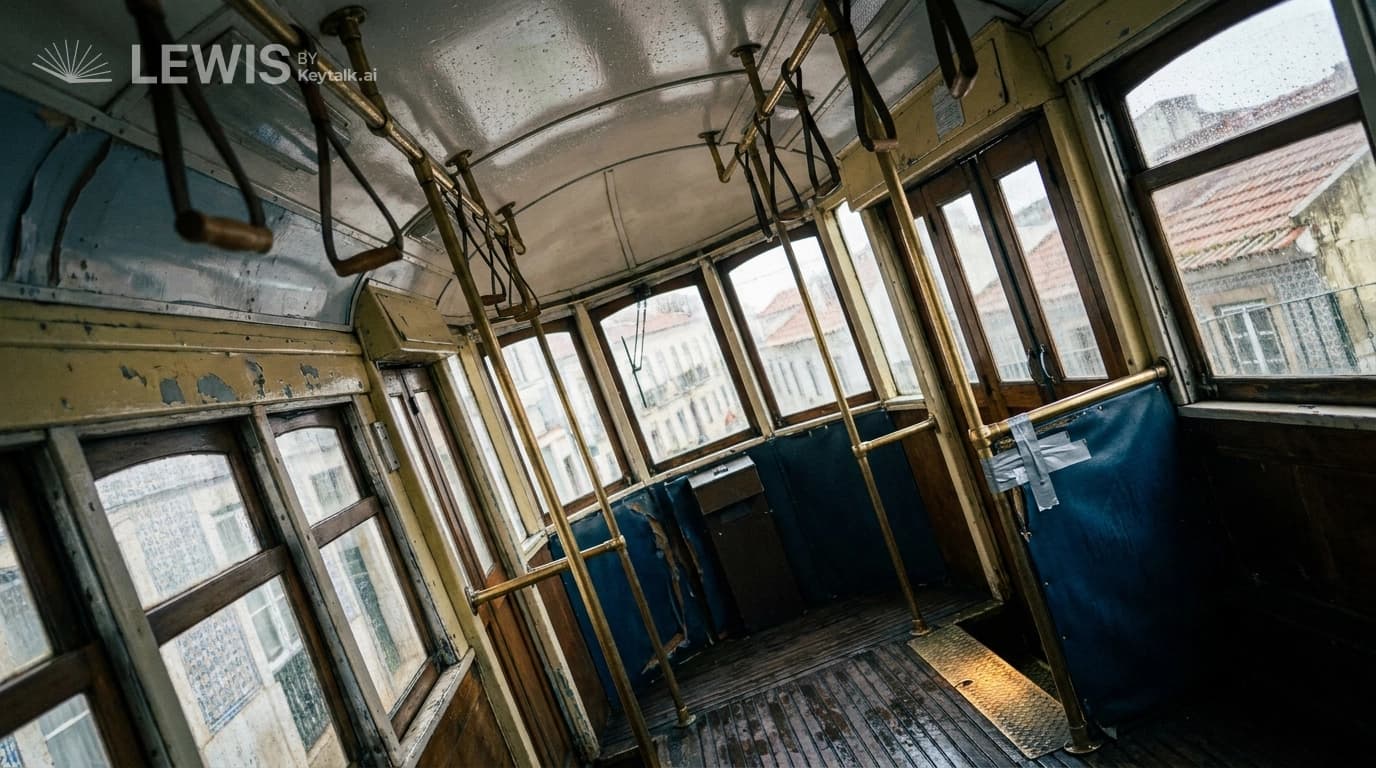
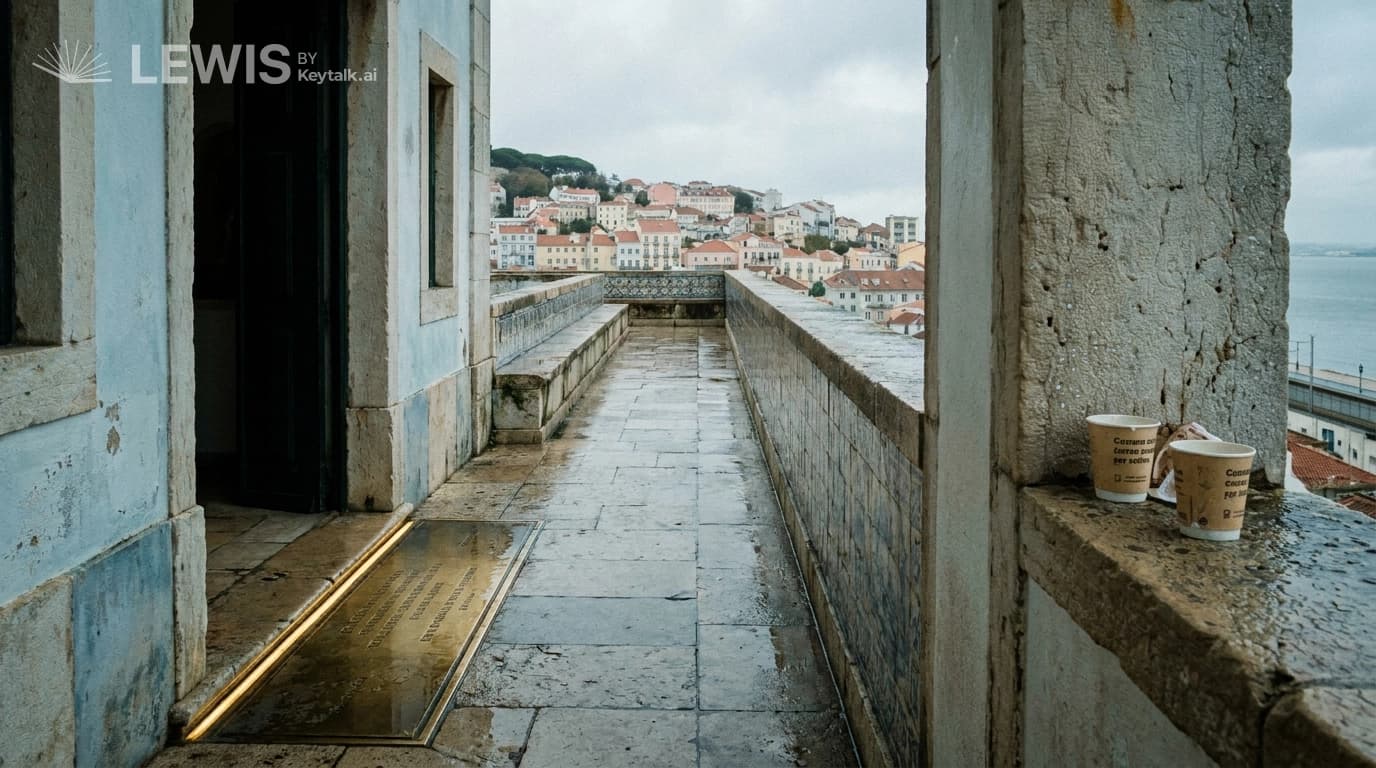
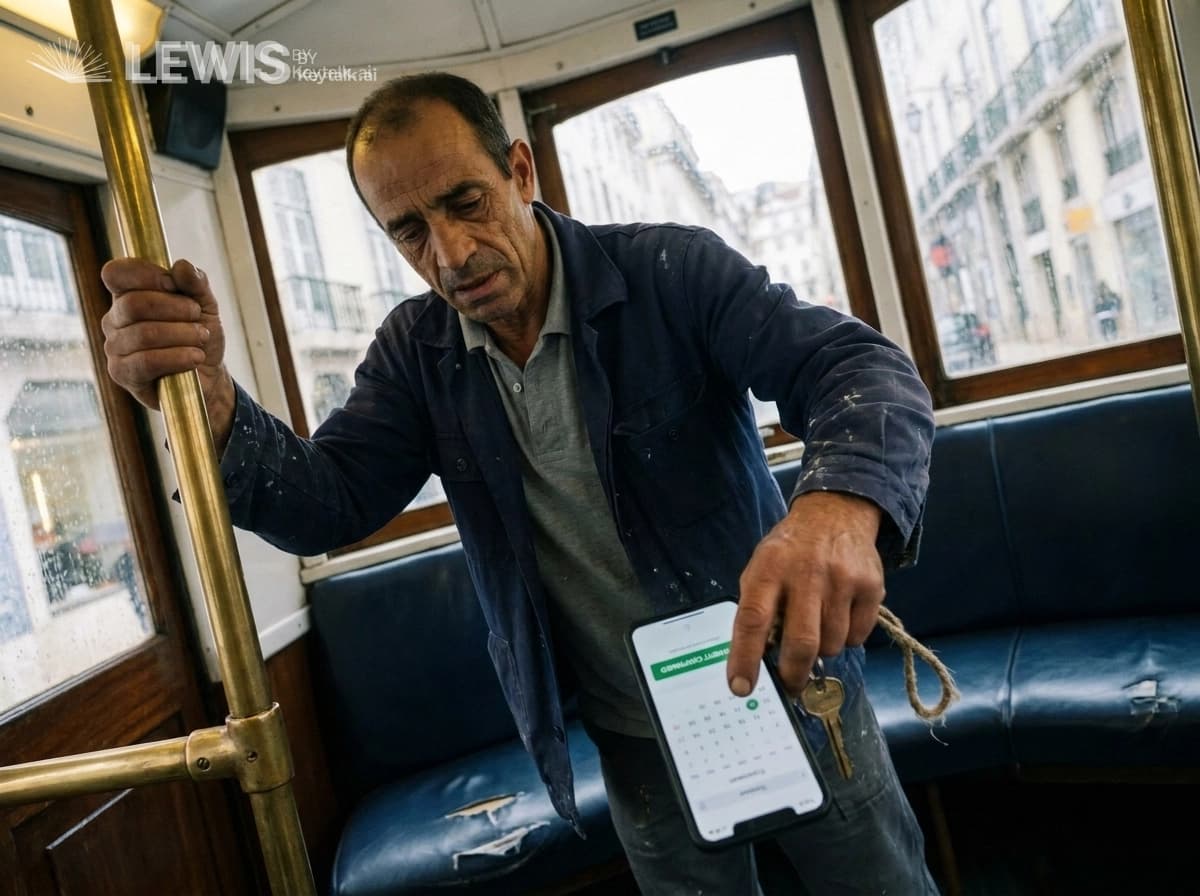
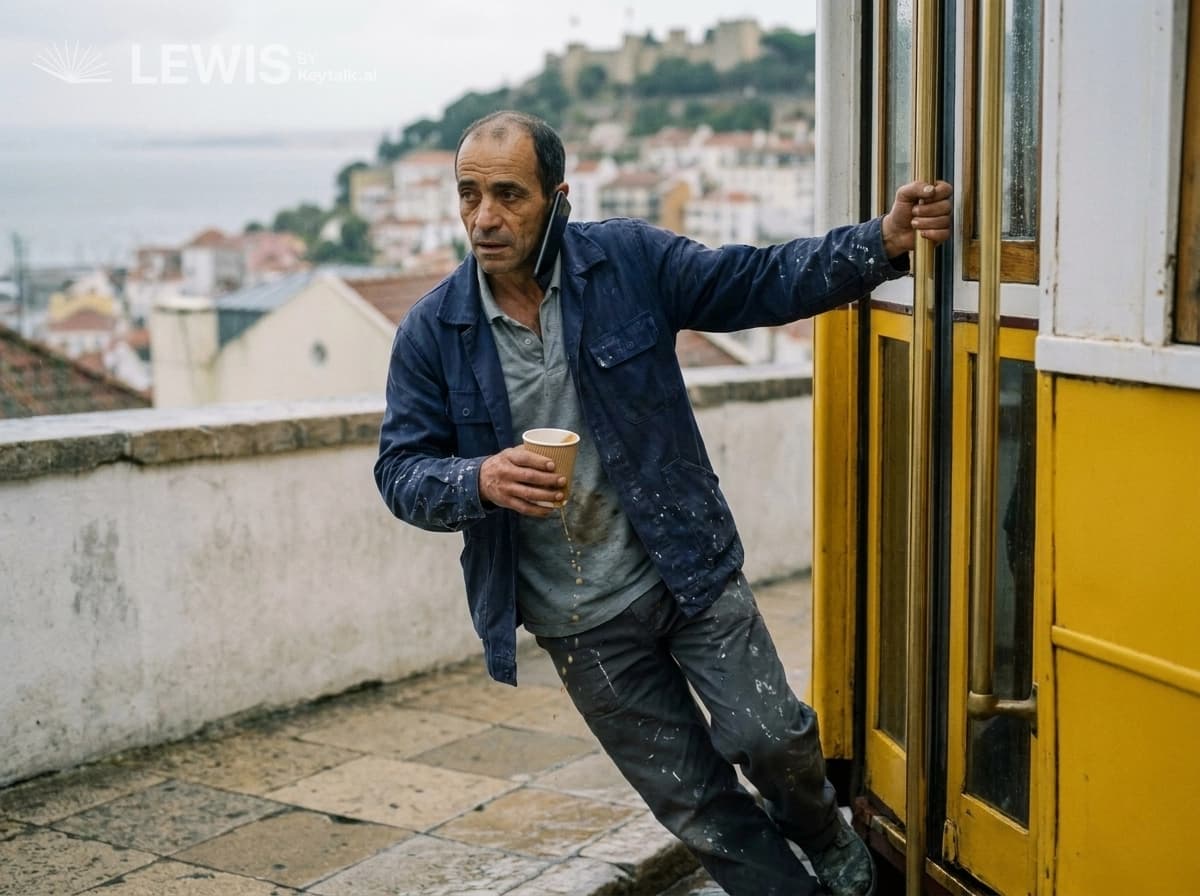
Rui Valente opens the agency schedule before the school run and sees Anselmo Valente’s address beneath a weekly booking paid by Leonor Valente Faria. The money has already landed in his account, enough to restore Inês Valente’s lunch-card balance and cover part of the rent. He boards Tram 28 with the brass key Anselmo once threw into a gutter on its cord around his neck, intending to arrive as “Rui,” the agreeable son the agency has sold. At Miradouro da Senhora do Monte, he steps off for coffee and nearly lets the tram leave without him. Inês calls from her aunt’s bakery, not asking where he is but why he has begun coming home with a voice that does not belong to him. Rui lies that he is fixing a boiler. She hears the lie, says nothing, and he gets back on the tram.
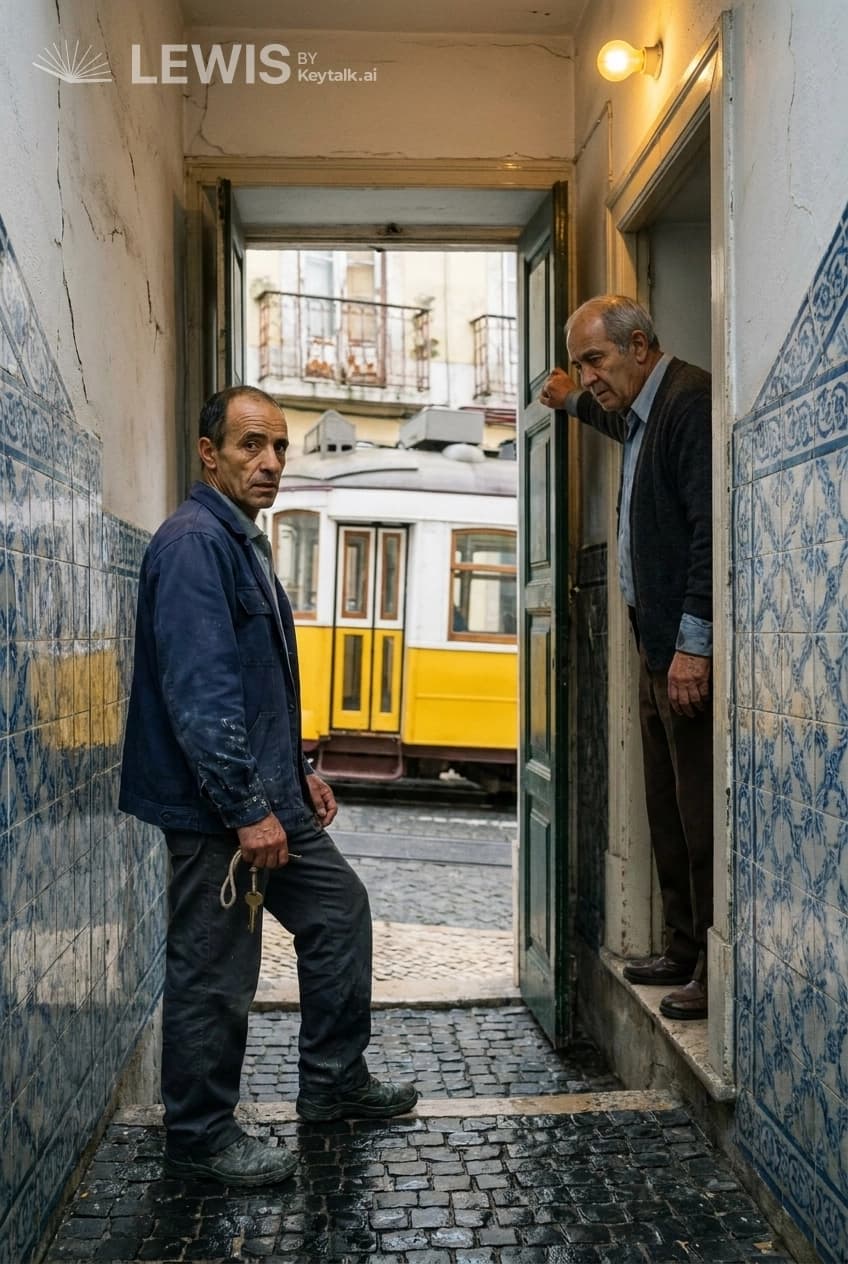
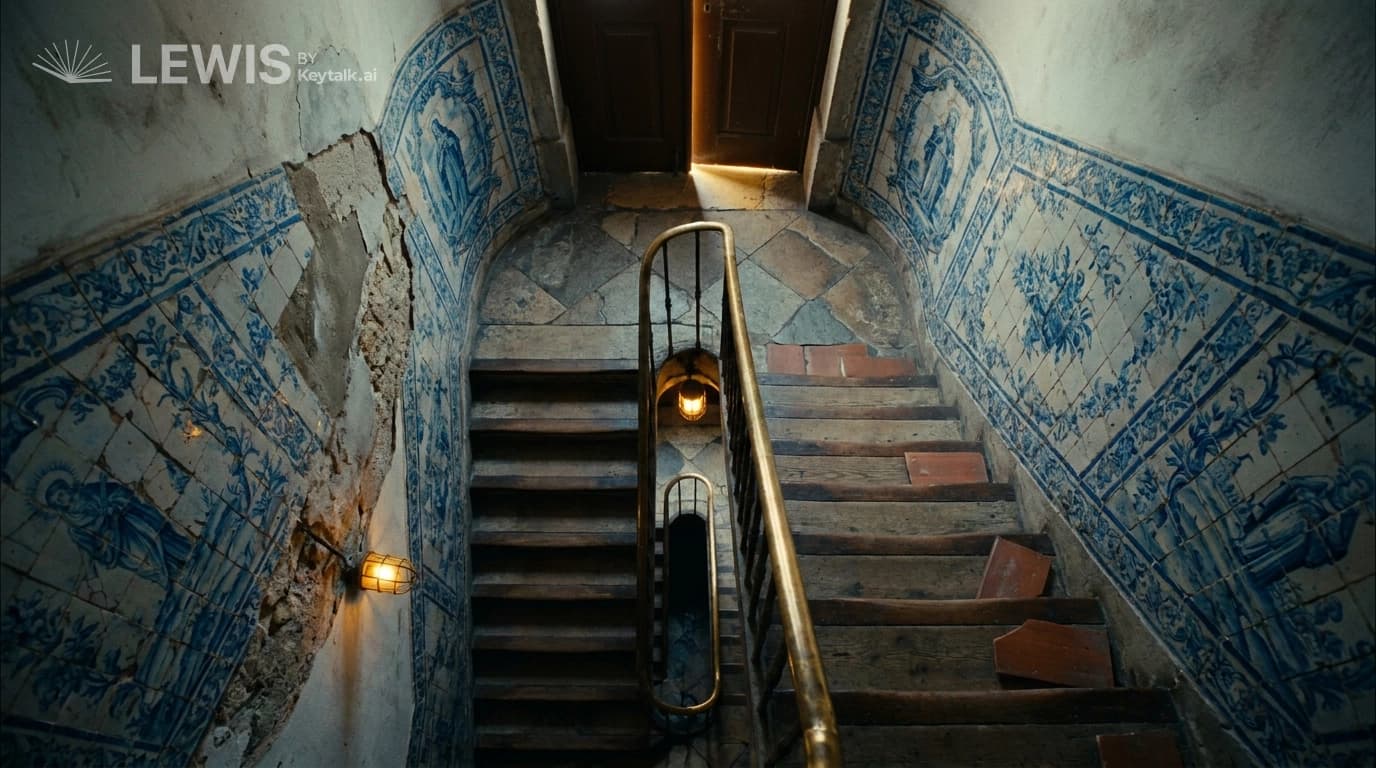
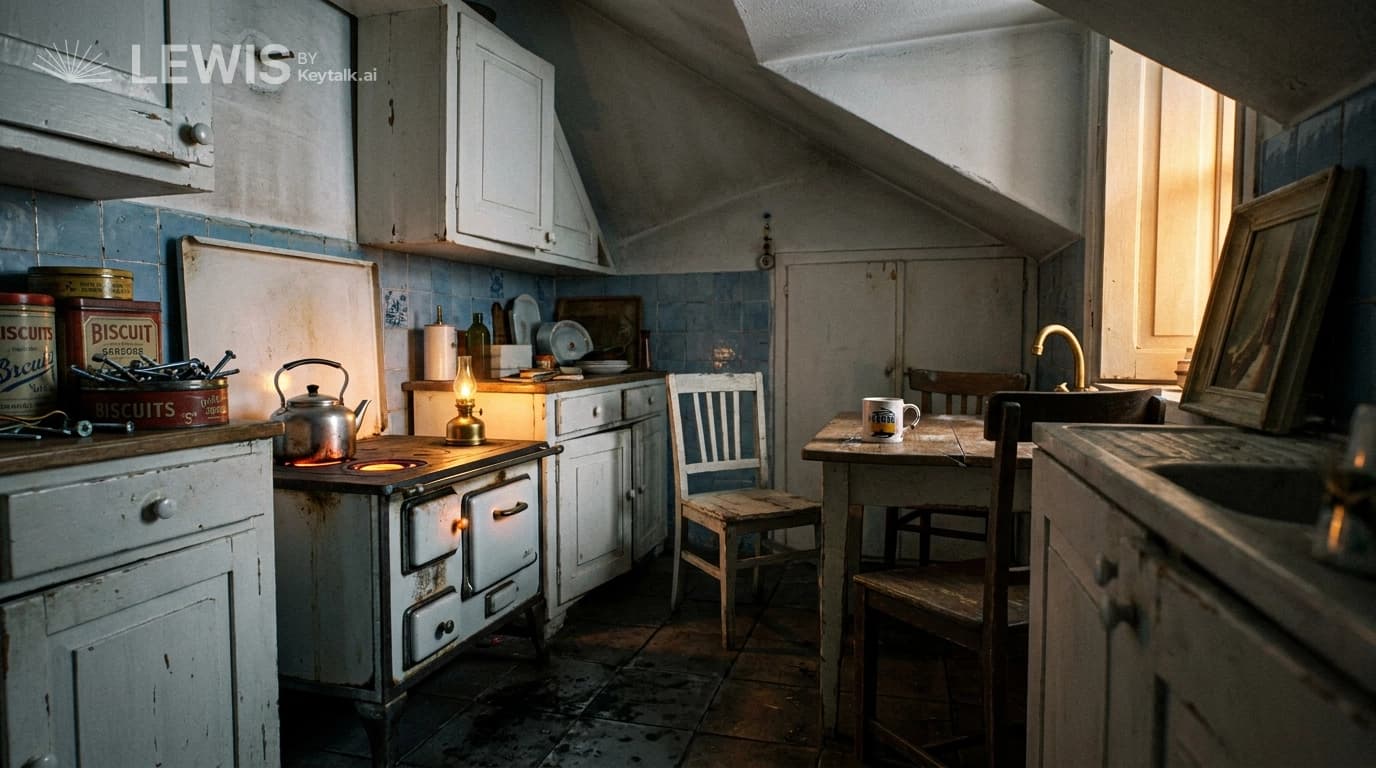
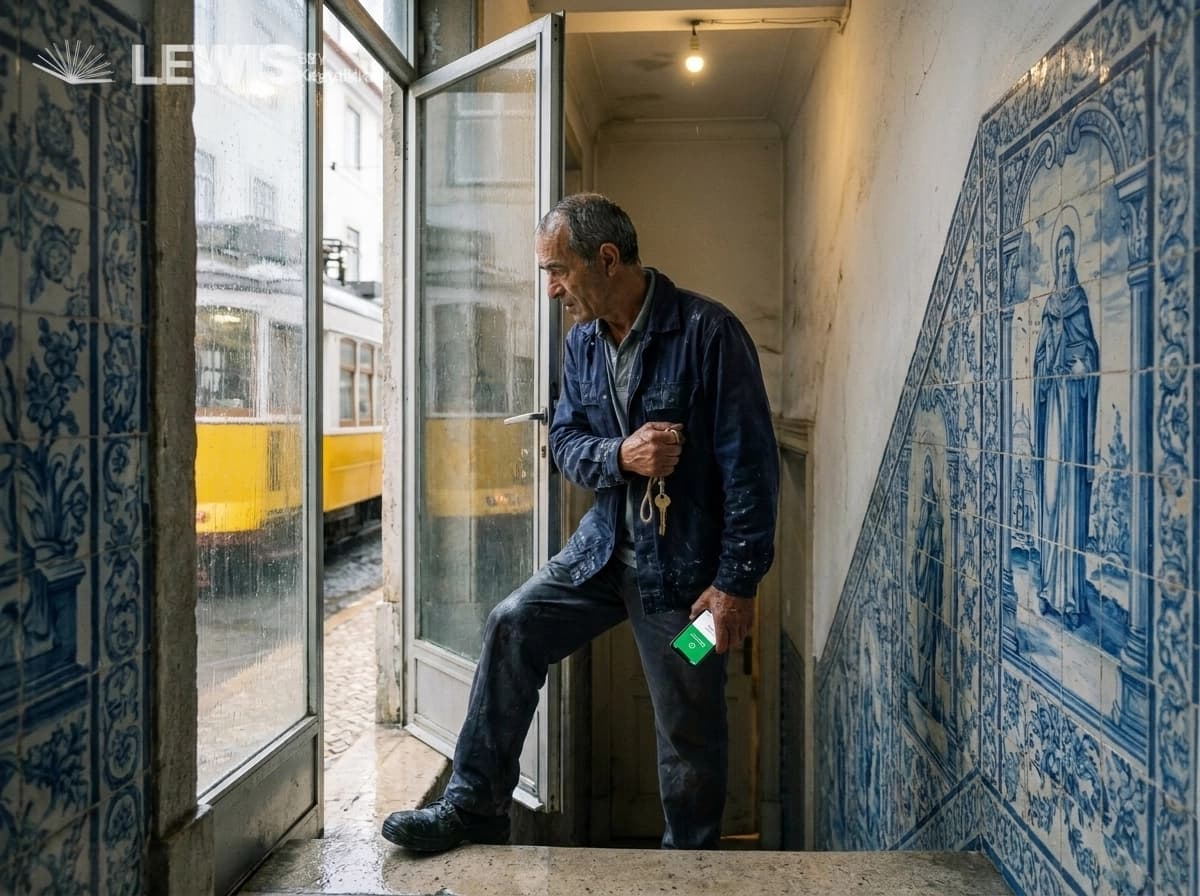
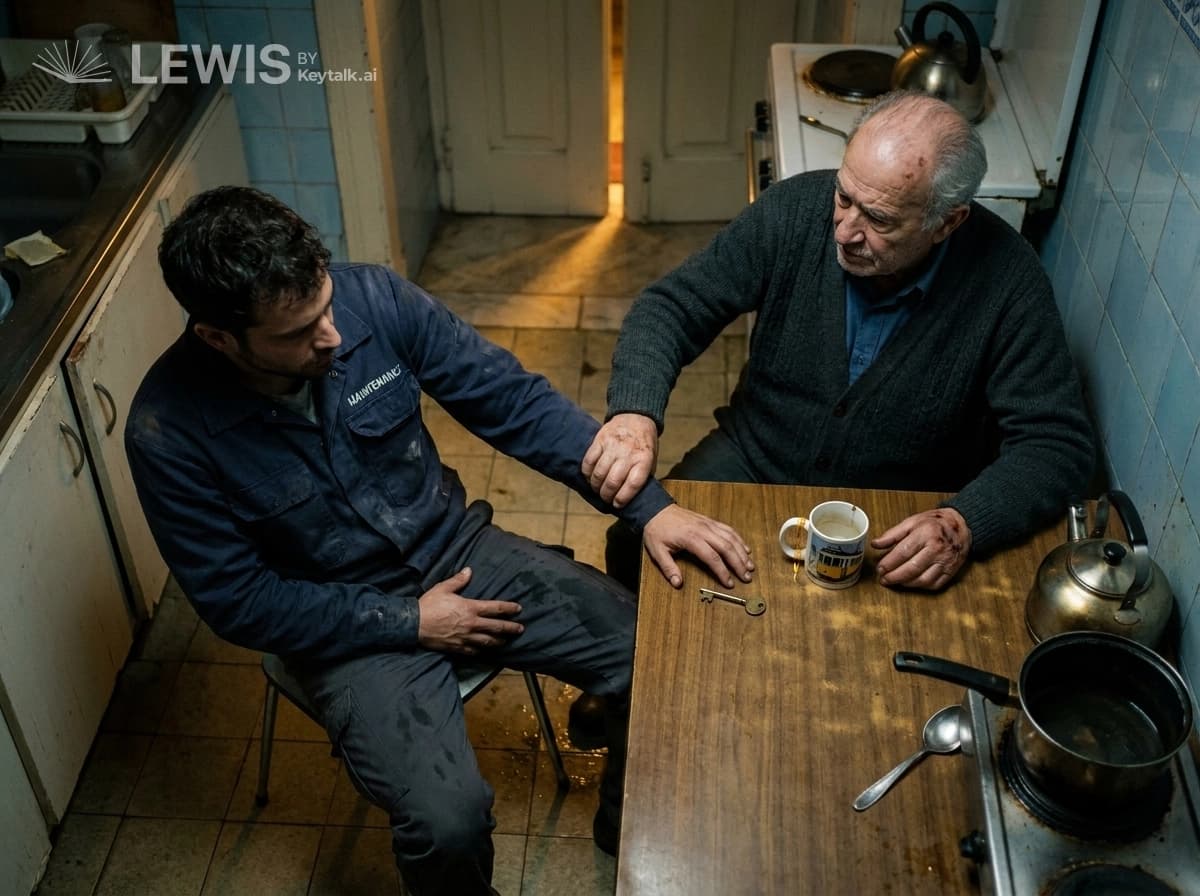
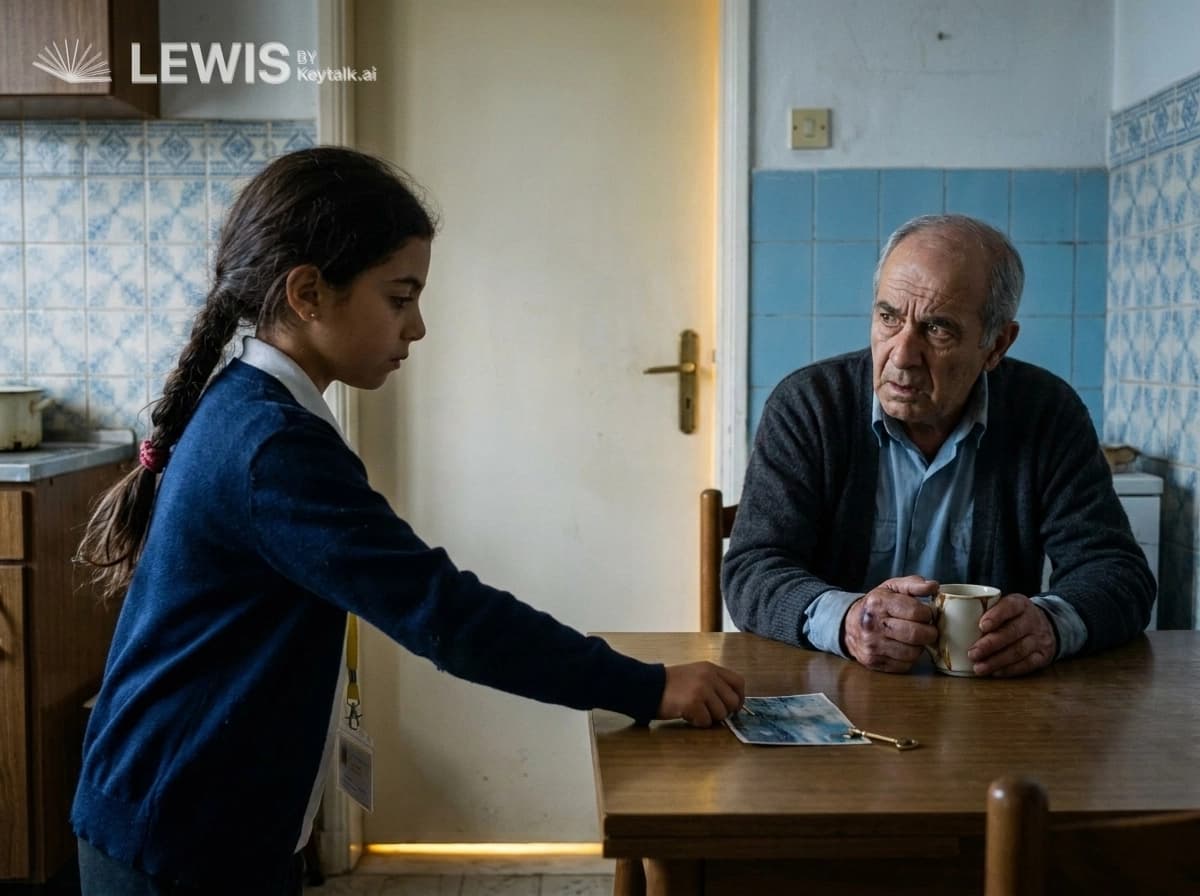
At the blue-and-white tiled stairwell in Alfama, Anselmo’s voice orders him upstairs before Rui has given a name. Inside, the old man studies Rui’s face, then seems relieved by something he cannot place. He calls him son, complains that he is late, and sends him to find the childhood mug behind chipped plates. Rui finds it exactly where Anselmo described: a small white mug with a tram painted on it, its handle repaired with a crude line of glue. Anselmo cannot remember throwing Rui out nineteen years earlier, but he remembers the mug breaking in Rui’s hands when he was eight. He makes Rui sit at the kitchen table and asks why he stopped coming. Rui performs the agency’s gentle answer because the fee is already spent in his mind: work, life, bad timing. The lie gives Anselmo peace, and it makes Rui feel like he has swallowed a coin.
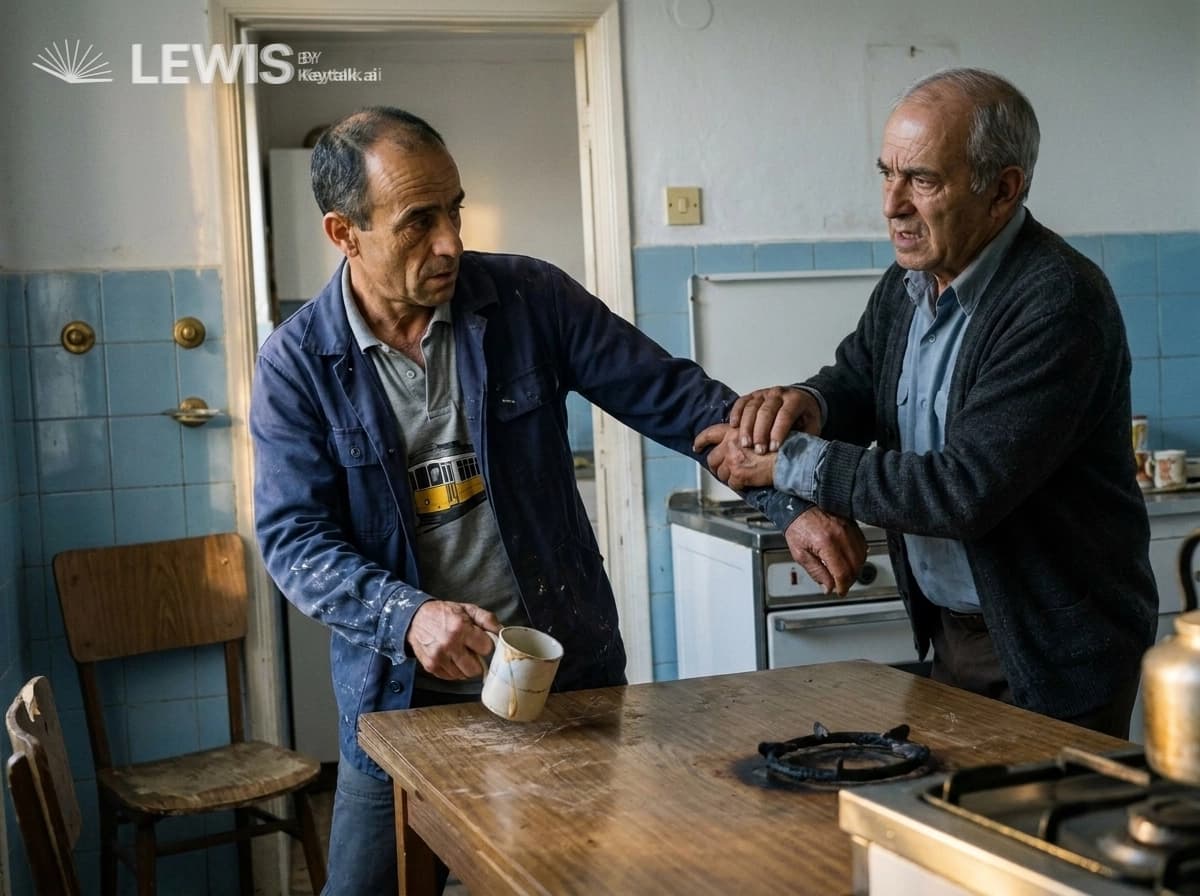
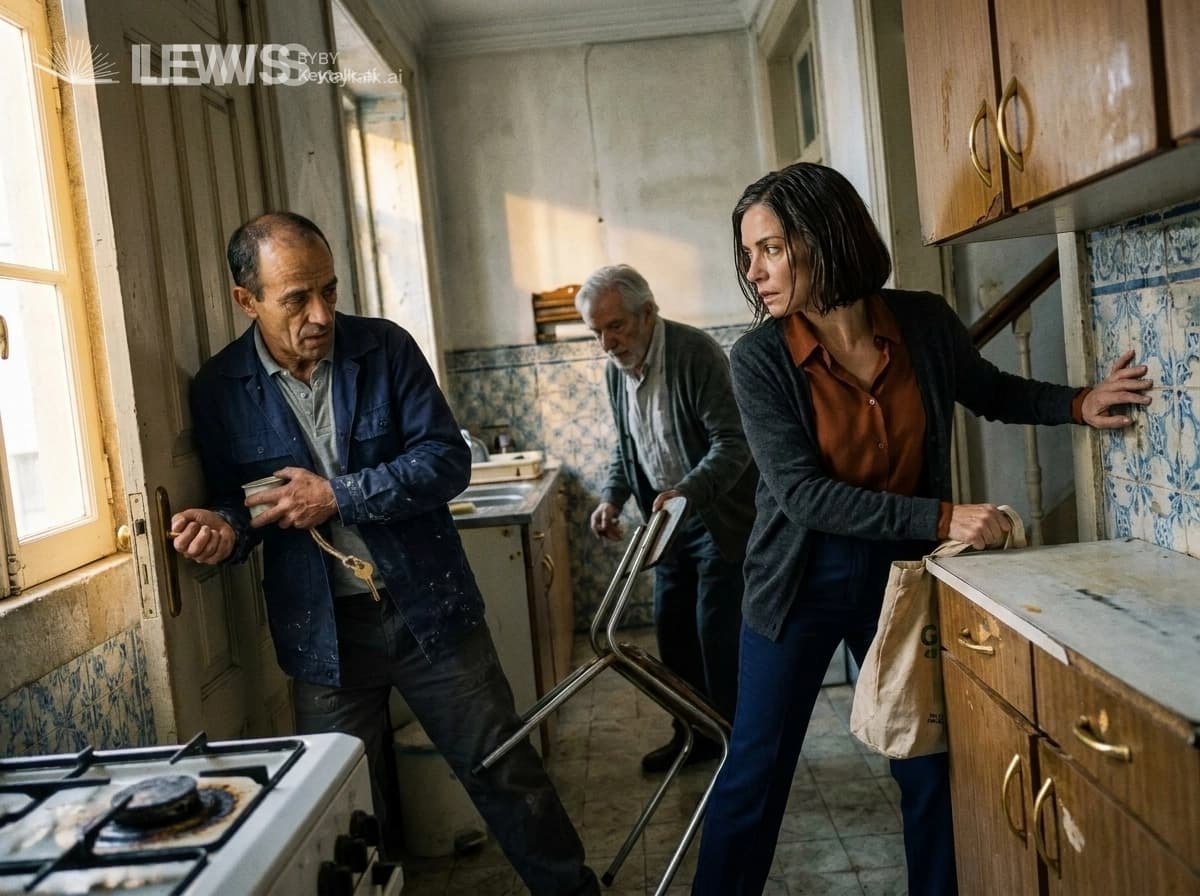
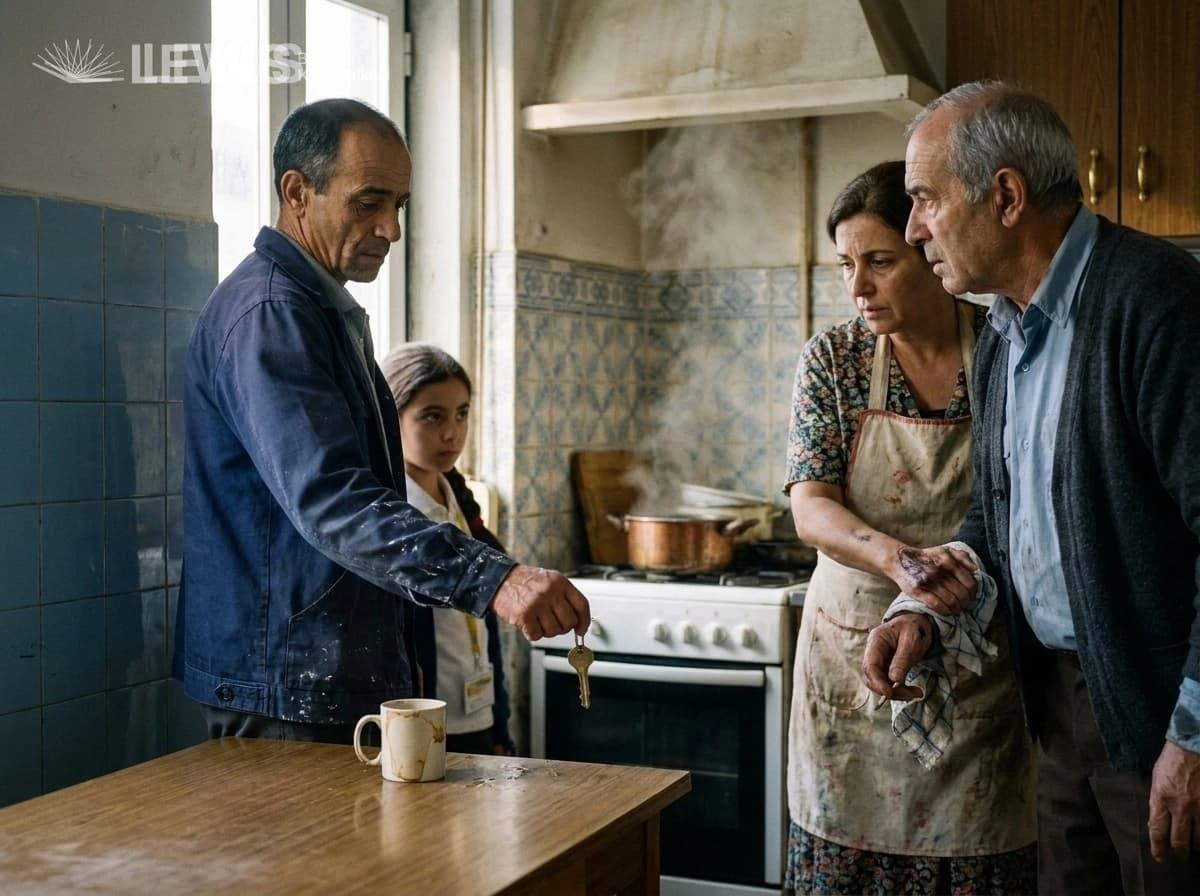
Leonor arrives early with groceries and finds a stranger wearing the expression from an old photograph hidden among her mother’s papers. She recognizes the brass key at Rui’s throat before she recognizes him. In the narrow kitchen, with Anselmo dozing in his chair, she corners Rui beside the burned kettle and demands to know who hired him. Rui says the agency did. Leonor says she paid for company, not for a man to use her father’s name. Rui snaps that she bought a son by the hour, so she does not get to complain about what arrived. Their raised voices wake Anselmo, who grips a cupboard key in his burned hand and insists that neither of them leave until dinner is made.
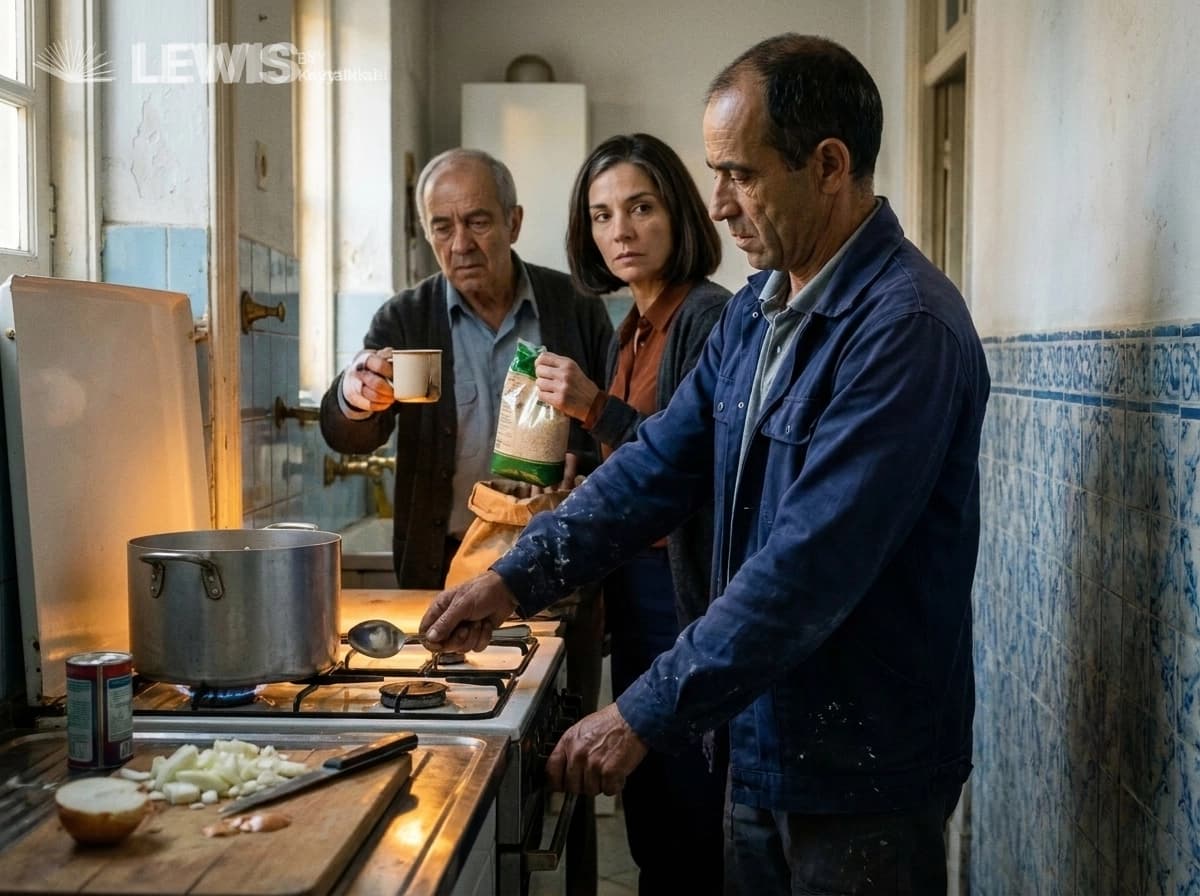
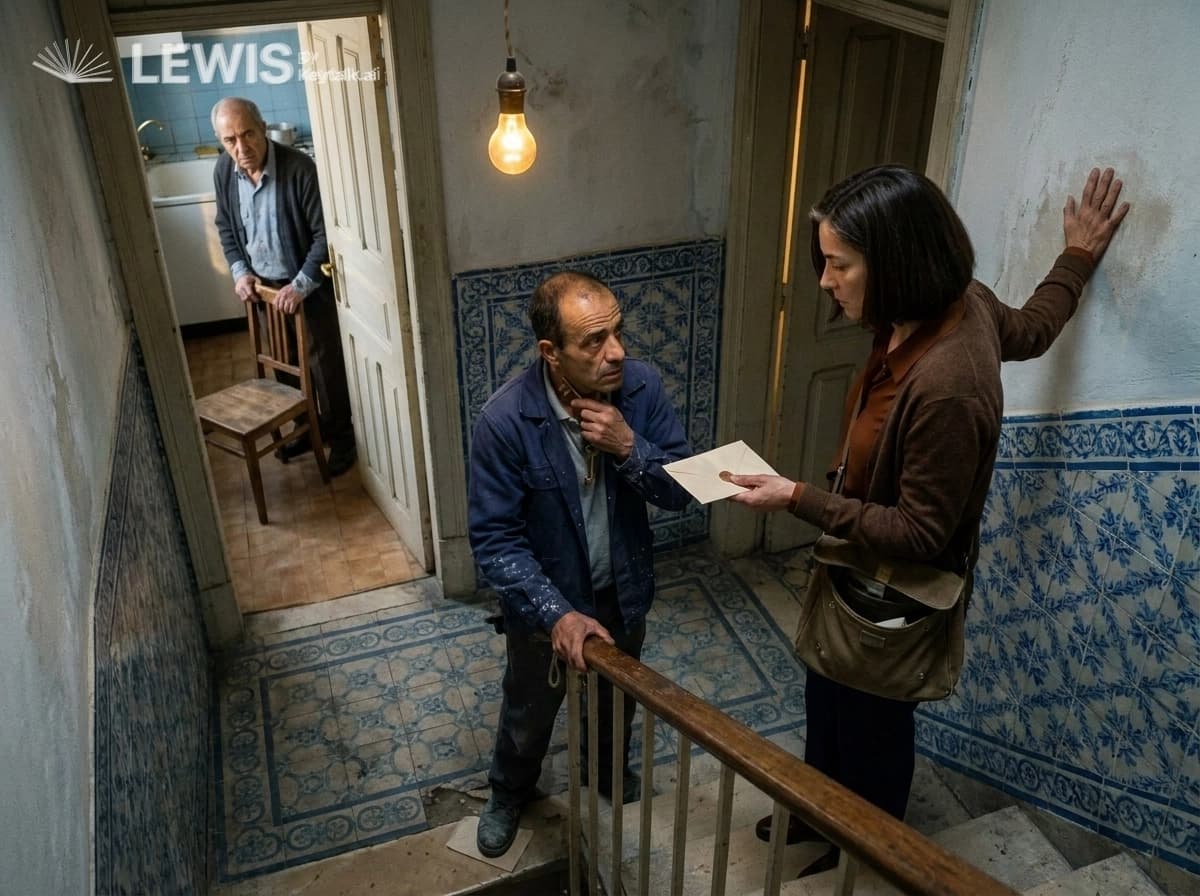
The three of them cook in the cramped kitchen, stepping around each other as rain strikes the window. Leonor watches Rui salt the soup exactly as Anselmo does. Anselmo calls Leonor by her dead mother’s name, then calls Rui by his childhood nickname, and neither correction holds. When Rui leaves, Leonor follows him down the tiled stairs and blocks the exit with her body. She tells him her mother left a sealed letter naming him as Anselmo’s first child, concealed because Anselmo had refused to acknowledge him after Rui’s mother died. Rui refuses the envelope. He says paper cannot make a father out of a man who chose not to be one. Leonor lets him go, but sees him tuck the childhood mug into his jacket instead of leaving it behind.
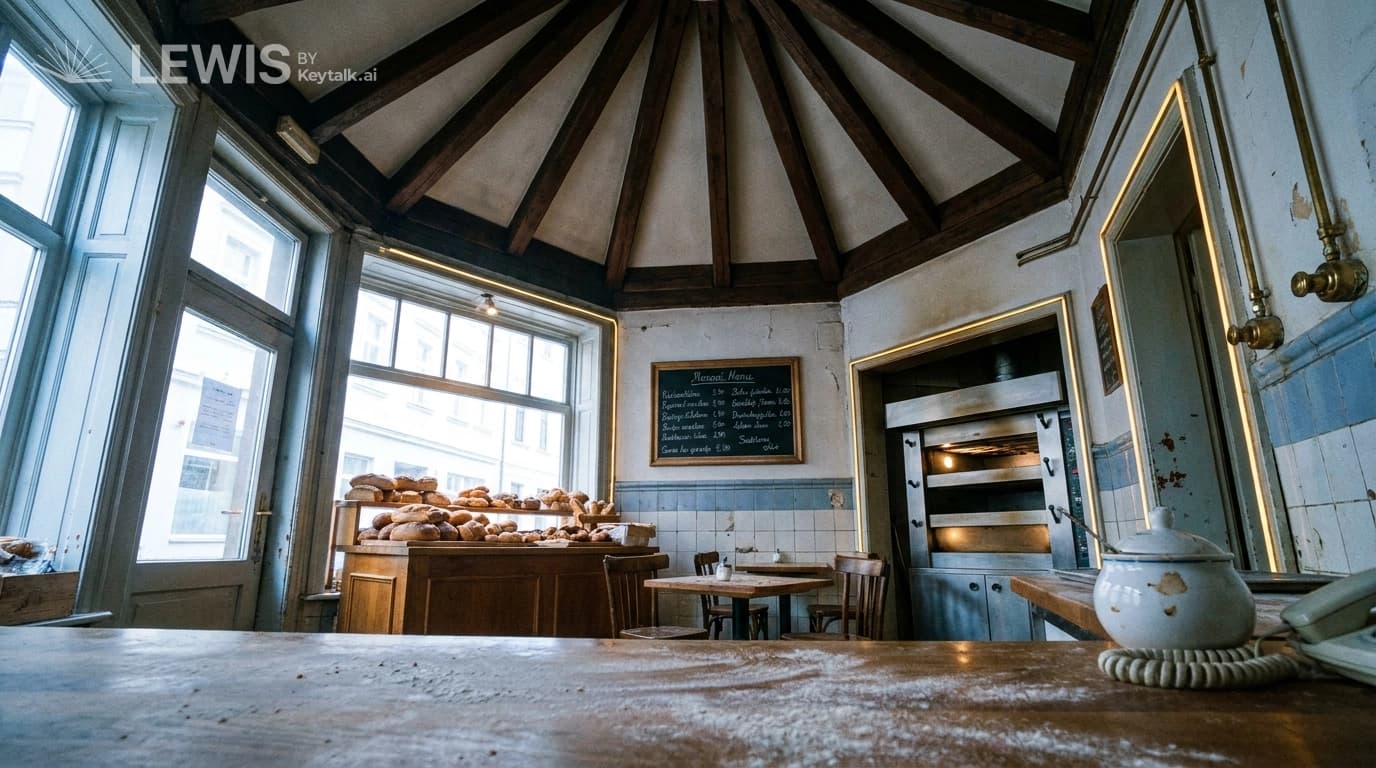
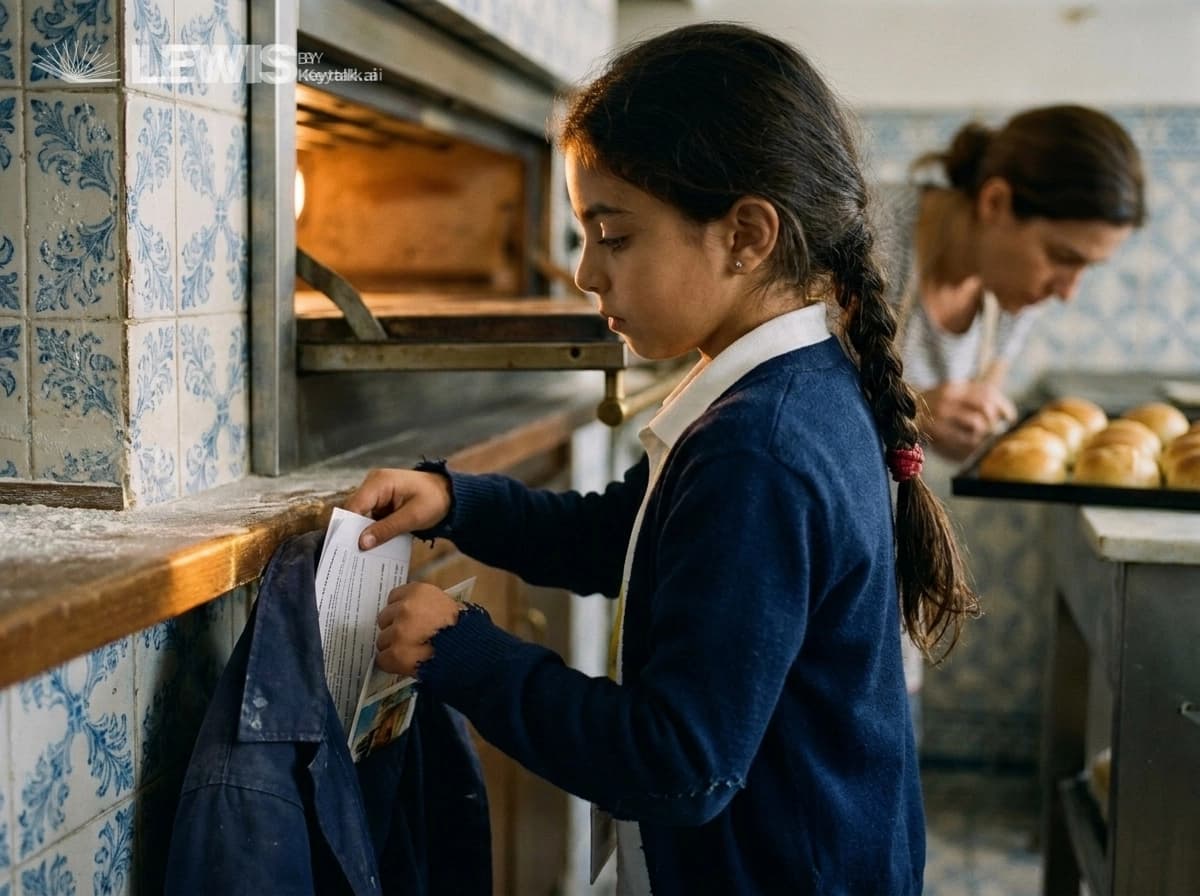
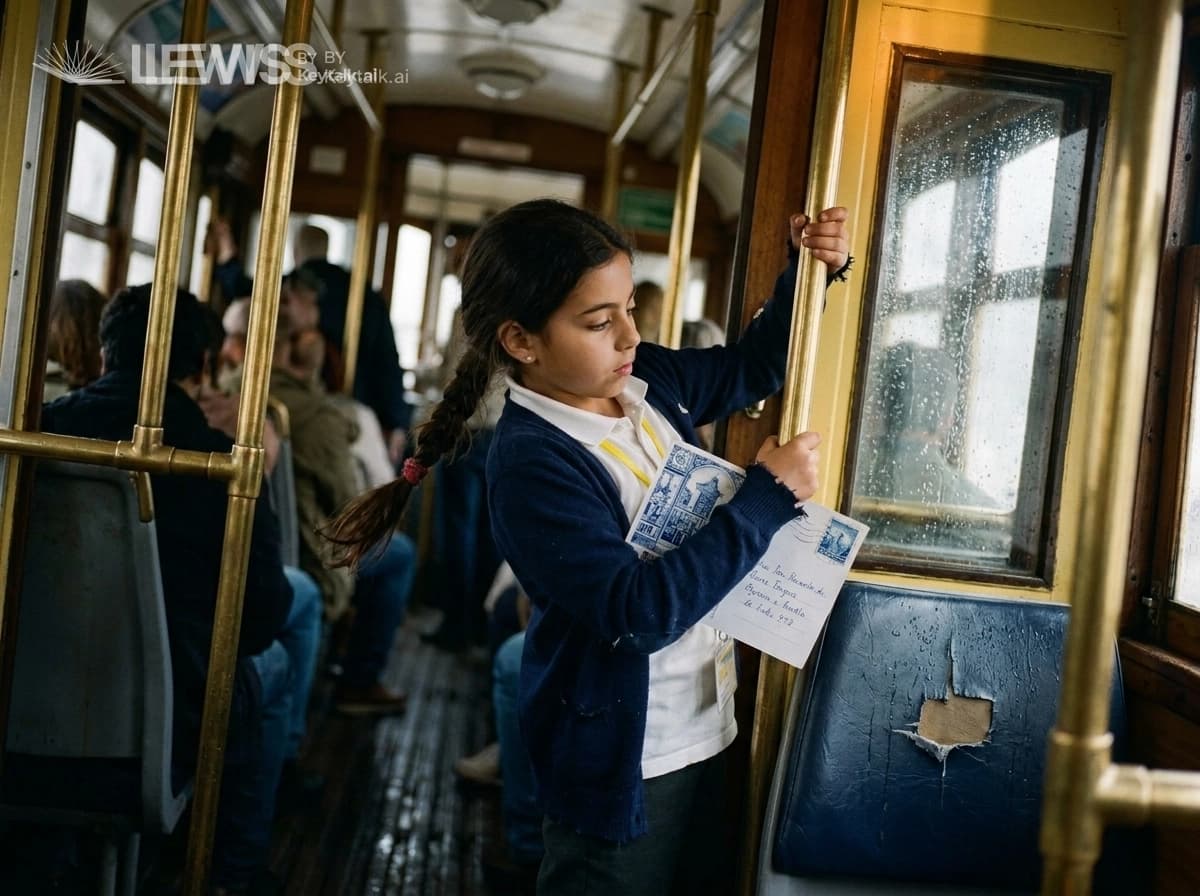
At home, Inês finds the printed schedule in Rui’s coat pocket and recognizes the Alfama address from a postcard he keeps hidden in the kitchen drawer. Rui catches her packing the postcard, her lunch card, and two biscuits into her schoolbag. She says she wants to meet the grandfather who has paid for her lunches without knowing it. Rui forbids it. Inês replies that Anselmo is not paying; Rui is pretending, and she is tired of eating what the pretending buys. The next morning, she skips the bakery after school and takes the tram uphill with the postcard as her map.
Rui learns she is gone when the bakery calls. He races through wet lanes toward Alfama, arriving at Anselmo’s building as Leonor is climbing the stairs with groceries. They hear Inês’s voice above them. In Anselmo’s kitchen, Inês stands rigid beside the table while Anselmo holds the old mug in both hands. He has mistaken her for Rui at ten, asking why she has cut her hair and why she looks frightened of him. Inês asks, plainly, whether he threw his son away. The question breaks through the soft fog of his memory. Anselmo’s face tightens. He remembers the gutter, the brass key, Rui at the bottom of the stairs with a bag against his leg. Then the memory slips again, leaving only panic.
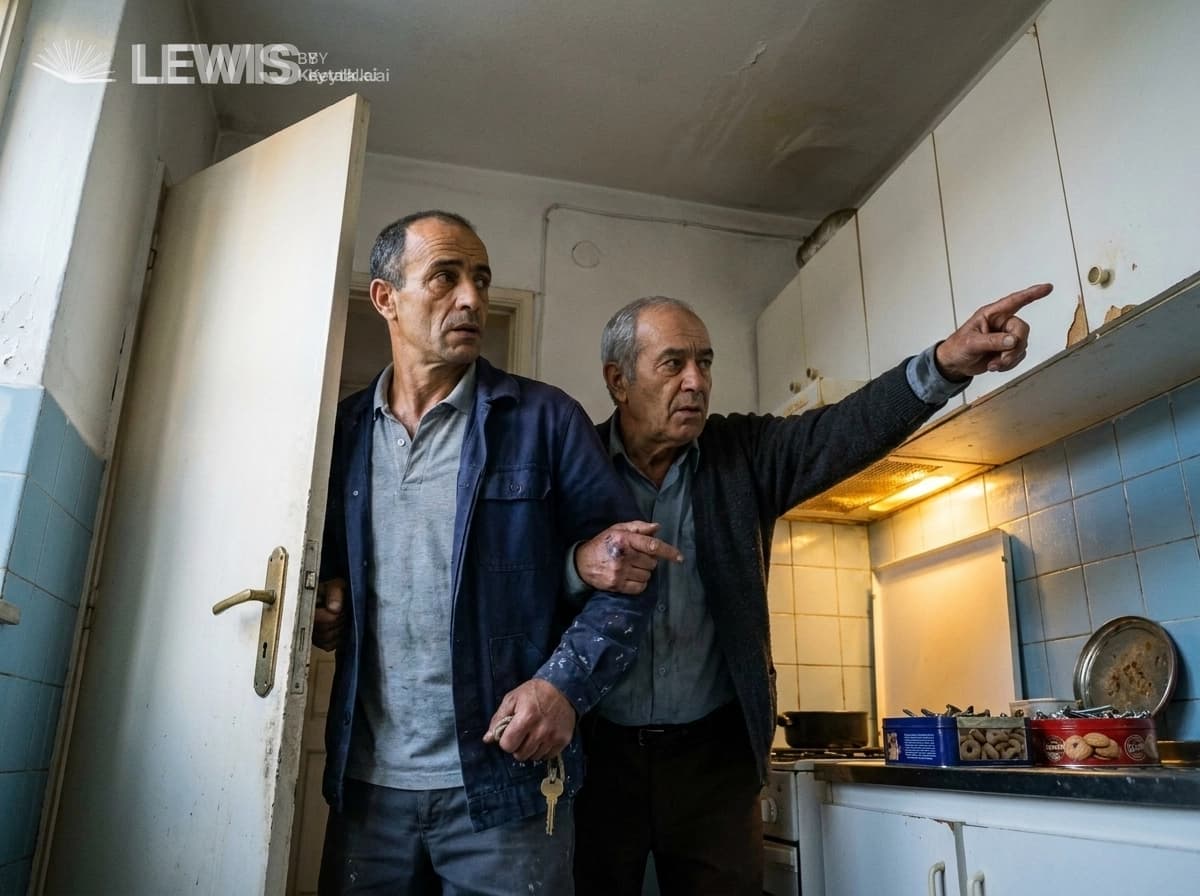
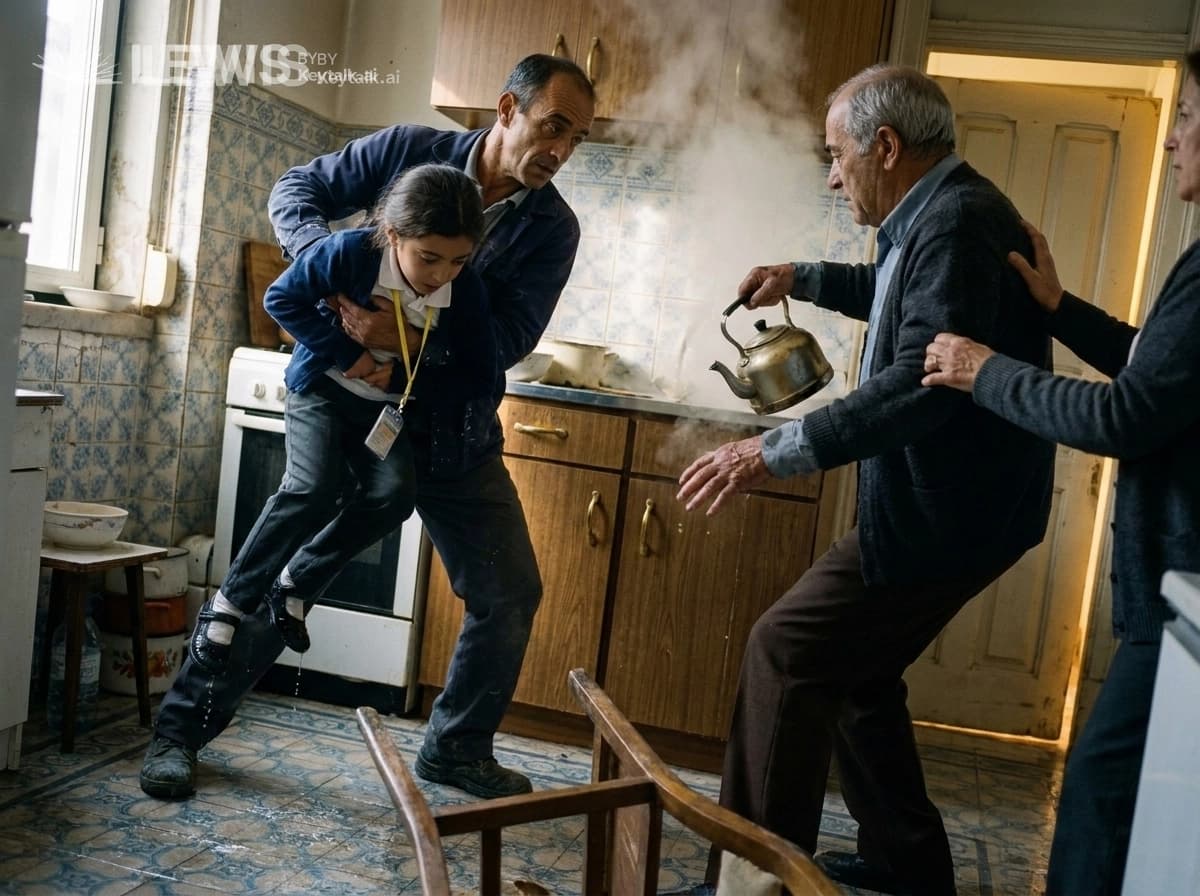
Rui bursts in and tries to pull Inês toward the door. Anselmo rises too quickly, catches Rui’s sleeve, and refuses to let him take “the boy” away again. Rui tears free, knocking the kettle from the stove. Boiling water spreads across the tiles. Leonor drags Anselmo back from the spill while Rui lifts Inês onto the counter, his hands shaking. In the sudden steam and shouting, Anselmo sees the burn scar on his own hand and remembers enough to say what he has never said cleanly: he was angry at Rui’s mother for leaving, ashamed that he could not manage the house, and cruel because cruelty made the door feel like his to control. He does not ask to be forgiven. He asks Rui not to leave Inês alone with him.
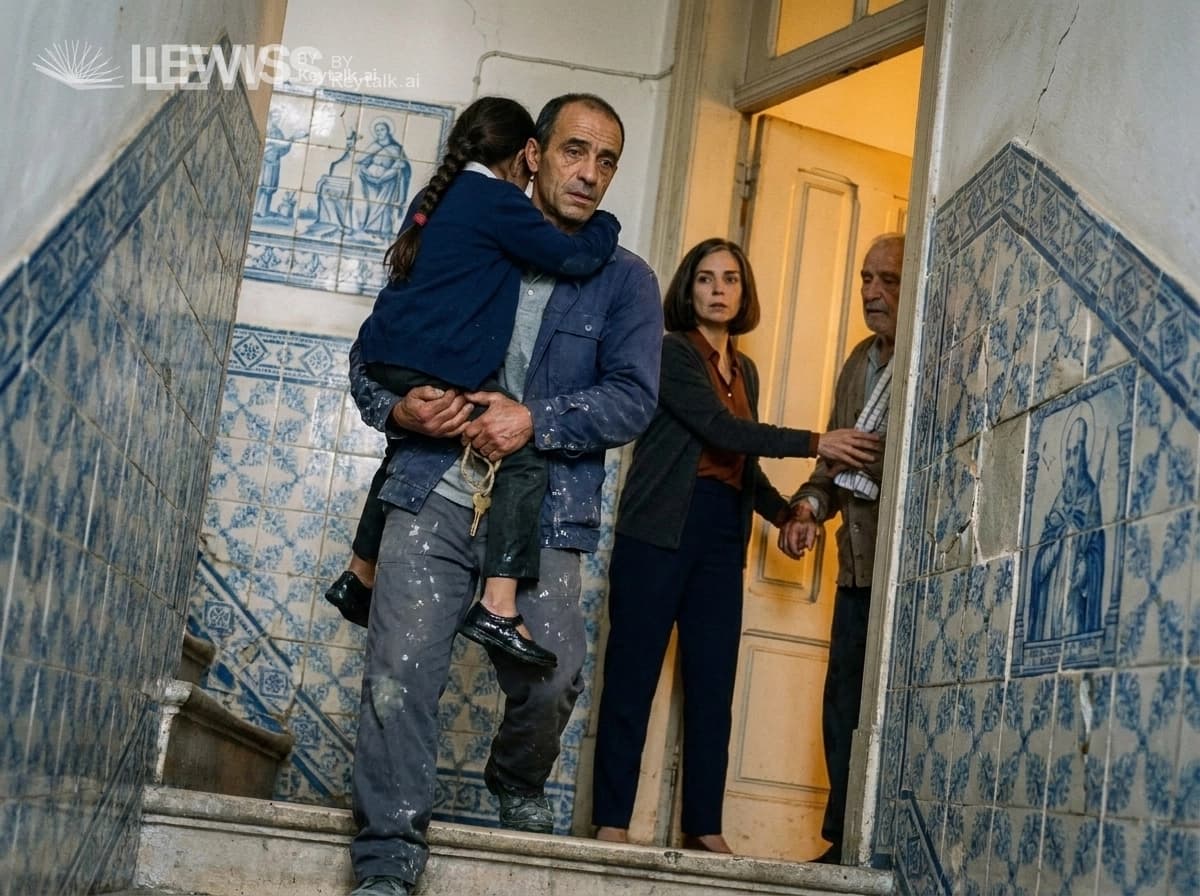
Rui carries Inês downstairs, but stops on the landing when she asks whether running away is the only thing their family knows how to pass on. He returns to the kitchen, not as an agency son and not as a reconciled one. He places the brass key on the table beside the mug and tells Anselmo that he will not visit for money, and he will not bring Inês back until Anselmo can remember the harm without making her carry it. Leonor, holding a towel against Anselmo’s burned hand, tells Rui she will keep arranging care, but no longer under a false name. Anselmo nods without understanding every word; he understands that the visitors are leaving and that he caused it.
Rui repays the agency advance by taking maintenance work at night, losing sleep but ending the hired visits. Leonor begins coming to the flat with practical help and short, difficult conversations, keeping her mother’s envelope unopened until Rui asks for it himself. Weeks later, Rui brings Inês to the Miradouro da Senhora do Monte rather than to Anselmo’s door. They watch Tram 28 crawl below them. Rui gives her the repaired mug, not as a family heirloom but as proof that broken things can be kept without pretending they were never broken. Then he takes the brass key from his pocket and drops it into a public key box outside a locksmith’s shop, leaving the old door without its claim on him.













댓글 · Comments
댓글 · 0