본문으로 건너뛰기
Emergency Translator, Wrong Lyrics cover image

Emergency Translator, Wrong Lyrics

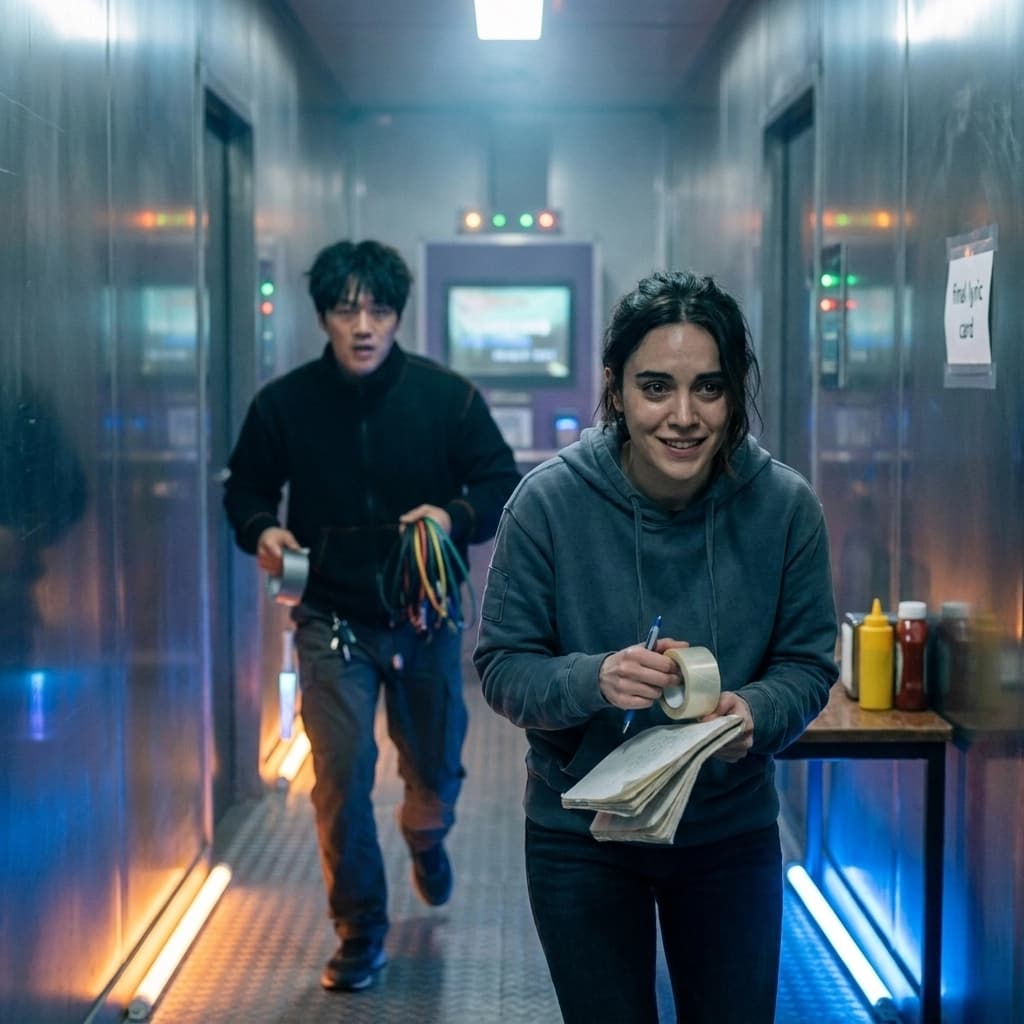
On the night ENHYPEN’s comeback showcase goes live, two lifelong ENGENE fan-club members (best friends with matching lightsticks) get an “emergency translator” badge by mistake and end up backstage with the group—plus a malfunctioning karaoke booth that auto-sings their edited fan chants in real time. When the audience hears a lyric they definitely didn’t write, the members must choose between stopping the broadcast (and ruining hours of rehearsals) or letting it play and “performing” the chaotic wrong lyrics with sincere faces. The only way out is to run a series of ridiculous backstage tasks—resetting mic levels with condiment bottles, swapping sound checks while dodging security, and borrowing a producer’s lucky tie that keeps launching into awkward falsetto. The clock hits zero when the karaoke booth prints a “final lyric card” that cannot be recalled, and the next song begins with the card already taped to the main stage monitor.

주간 랭킹

rank icon image
#2 Genre
스크롤

줄거리

On the night ENHYPEN’s comeback showcase goes live, the campus feels like it’s holding its breath. Cold blue light ripples across the glass-walled control mezzanine while warm amber pulses run along the backstage corridor’s floor panels—status LEDs blinking like the building is listening for a cue it shouldn’t be hearing. Min-a—translator coordinator by day, lifelong ENGENE belt-tensioning tinkerer by habit—has spent weeks sanding English syllables into time with a beat so the fandom can sing together without wobbling. Her hands still smell faintly of tape and printer toner from the last proof she made in the soundcheck workshop. Tonight, though, she isn’t holding a script. She’s holding an “emergency translator” badge she doesn’t remember picking up.

She finds out immediately when the karaoke booth in the soundcheck workshop wakes up.

At first it’s harmless: a soft auto-detection chirp as if it’s testing her mic. Then the booth begins “singing” back the edited fan chants she fed into the badge earlier—except it’s doing it in real time, with the exact cadence ENGENE would clap for, and the wrong lyrics are now the only lyrics the booth can pronounce. Min-a’s stomach drops as the first stamped line appears on the main stage monitor two lanes away. It’s not just a typo. It’s a lyric phrased like a promise nobody wrote, a line that makes her think of the one moment she still avoids remembering—the time she accepted a job she didn’t fully understand and told herself it was better than being irrelevant. The booth’s output isn’t a mistake she can correct. It’s an output the system treats like sacred data: each line becomes permanently stitched to the next broadcast song.

Jin-woo—lightstick organizer, the kind of person who could navigate a venue blindfolded—tries to play it cool because that’s what he always does. His whole job is timing. He already has everyone’s lightsticks synchronized down to where the wires lie, how long the crowd takes to lift, when the sweep of fans looks most like a constellation. When the badge somehow ends up on him too—another wrong turn in the backstage rush—his immediate instinct is to seize control of the chaos before it spreads. He yanks the badge strap tight, checks the booth’s sensor light with the same fierce attention he uses on battery tabs, and says loud enough for the nearest staff to hear, “No panic. We adjust levels. We keep the beat.”

But the booth doesn’t care about beat-only. It cares about audience-style chant syllables arriving through approved backstage mics.

The first wrong lyric lands in the auditorium like a spilled drink on a white shirt. Security staff don’t hear the language the same way fans will, so from their side it sounds like “random singalong.” From Min-a’s side it’s an explosion of personal dread: the line is exactly one she revised last week to sound smoother—except the system is now stamping her revision as if it were the original intention. She watches the monitor with her lips pressed hard together, fingers tapping out syllables she knows are wrong. When she leans toward the mic to interrupt—only to realize the booth will just output whatever she breathes into it—her fear turns sharp, comedic, and useless at once.

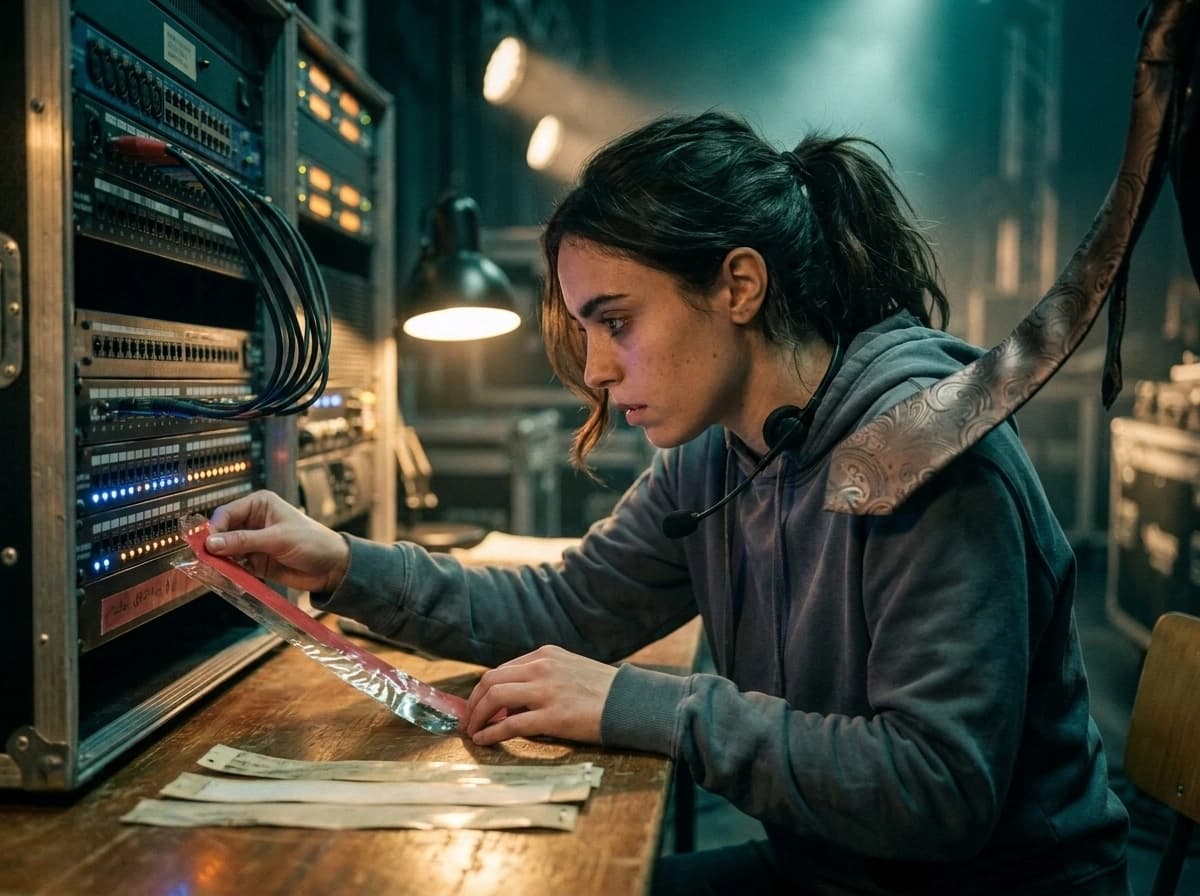
Hana, the broadcast audio engineer, hears the problem through her headset before anyone else sees it. Her fingers move automatically, straightening the stretched cable on her headset whenever the booth meter spikes. She doesn’t bark orders; she taps mute toggles with soft precision, then rechecks gain with condiment-stained calibration strips on her desk. For a moment, it looks like she’s got it under control—until the booth reinterprets the interruption as more input. Every time Min-a and Jin-woo try to “fix it” by speaking over the wrong line, the system’s hidden routing learns their panic level and treats it like signal quality. The more they talk with urgency, the more confidently the booth continues. Hana’s safe phrase slips out anyway, not as a pep talk but as a ritual: “Meter first, show second,” and she keeps walking as if the floorplan can’t change even when it does. She knows the system is training on her stress, and that knowledge doesn’t make it easier. It makes it more humiliating, like realizing your own heartbeat is being used as a tempo reference.

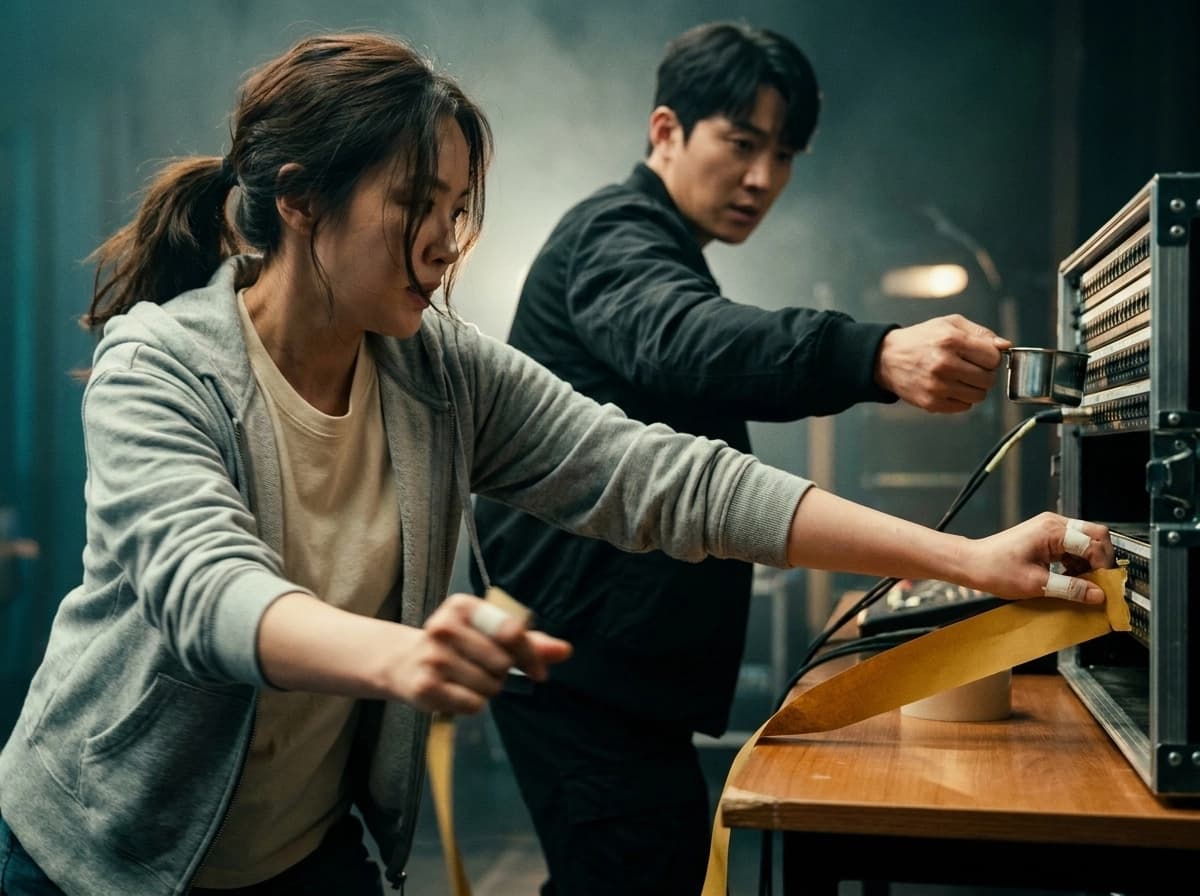
Do-won, stage props assistant and official believer in luck, is the reason the situation turns into a farce instead of a clean disaster. He appears in the soundcheck workshop with a producer’s lucky tie in his hands like it’s evidence—tie ends draped over his knuckles, knot checked too often, smile too steady for how quickly his eyes scan camera angles. He has “helped fate” before by moving tiny cue markers and making soundcheck feel like a ritual instead of a procedure. Tonight his badge mix-up pushes his superstition into action. When he sees Min-a’s badge and the booth’s status light blinking like a dare, he decides the tie can “ground the route.” He tugs the tie knot to “stabilize” everything, and the fabric catches on a cable raceway. A gentle pull—so light it would be comic if it weren’t about broadcast audio—shifts a routing harness in the concealed grid under the floor panels. The tie doesn’t just yank the camera line; it nudges where the booth’s output can stamp.

Now Min-a’s nightmare is traveling. Wrong lyrics aren’t only going to the stage monitor—they’re getting delivered to the routing grid that will feed the main broadcast.

With the clock running on every internal monitor, the backstage corridor suddenly feels shorter. Jin-woo tries to solve the problem with his usual physical logic. He grabs a soundcheck workshop cart and starts dragging it toward the booth, intending to block its mic input. Min-a grabs his sleeve because her badge is the key to the booth’s auto-singing trigger. She points at the badge like it’s a bomb she can’t disarm. “If I take this off—” she starts, and then stops, because she doesn’t know if the system will stamp a new wrong line from the moment the badge is removed or from the moment it’s reintroduced. Her fear refuses to be rational.

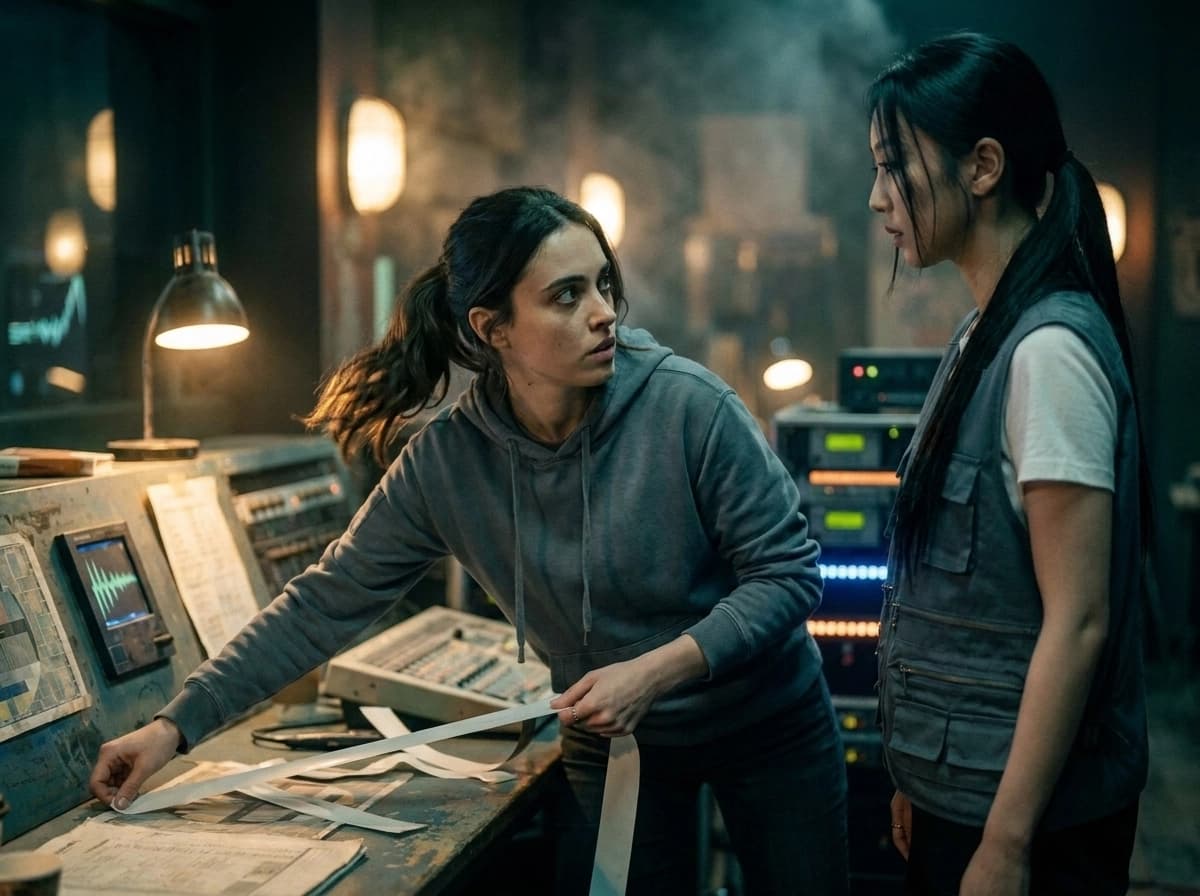
Hana steps in, physically intercepting them before they can surge into the wrong mic range. She angles her body like a door: headset tilted, hand flat against a panel housing. She taps mute toggles again, then shoves a calibration strip into her own pocket as if she can keep the evidence safe. “Stop feeding it,” she says, and her voice is calm enough to sound like she’s giving instructions for a water leak. But the booth is already listening for audience-style syllables. Min-a and Jin-woo are trapped between two humiliations: stopping the output risks ruining the rehearsed flow, letting it play means “performing” wrong lyrics with sincere faces for millions.

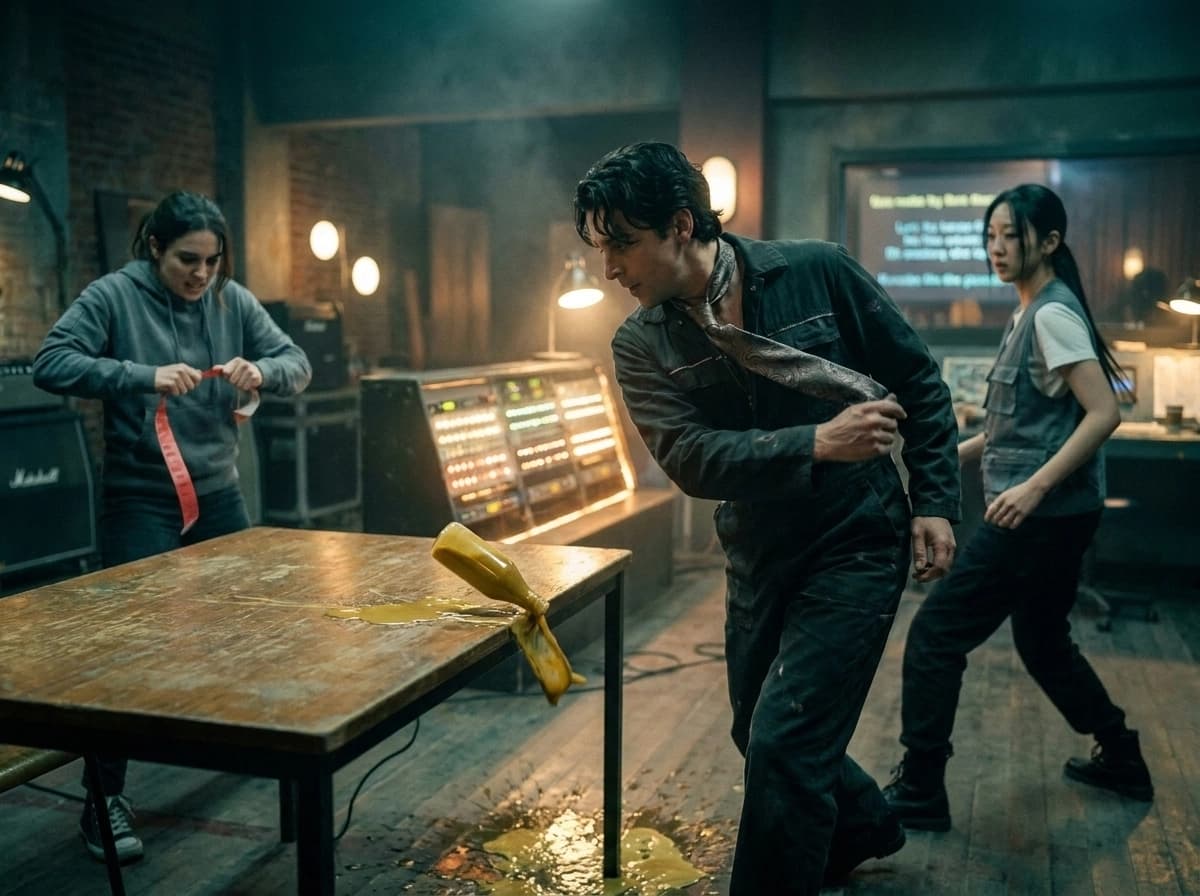
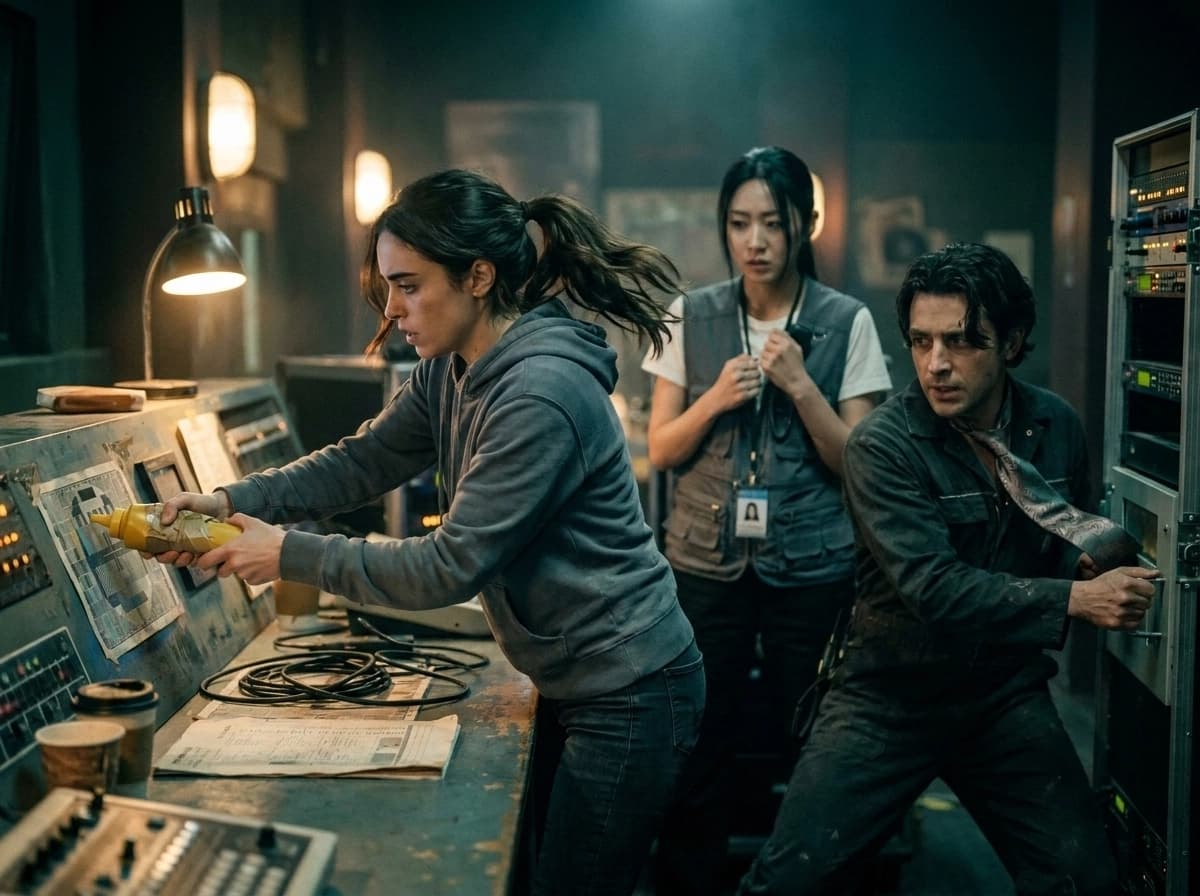
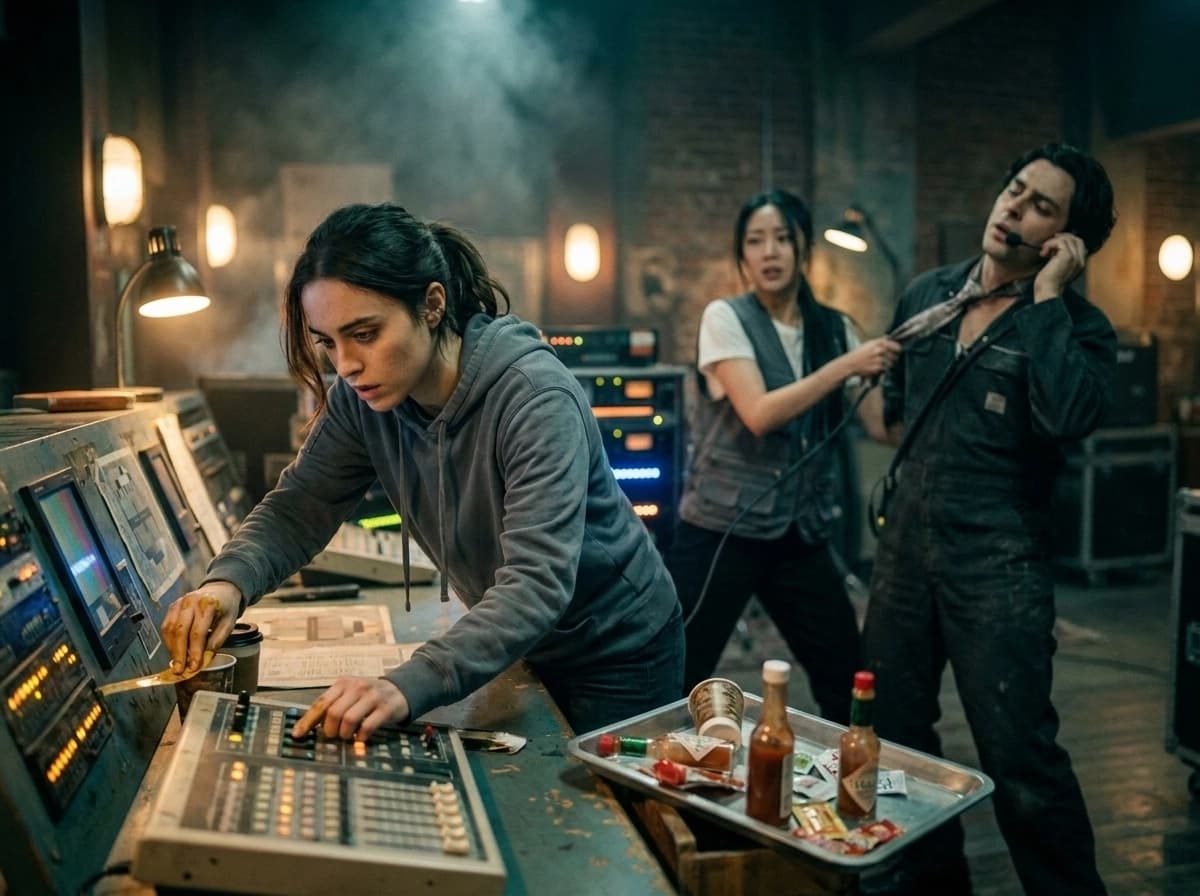
Do-won’s tie keeps launching him into the exact kind of awkwardness production doesn’t have time for. The knot shoots loose as if pulled by a spring, and the tie swings straight toward the routing panel near the corridor entrance. He lunges to catch it, knocking over a mustard-yellow condiment bottle in the process. It splashes the floor in a bright, ridiculous stain that catches the amber light like a warning stripe. He freezes for one second, then forces his smile back into place and—too loudly—claims it was intentional. “Prop testing,” he says, and his words are funny only because they’re clearly wrong.

The ridiculousness does not stop the technical consequence. Hana’s gain meter spikes again when someone says “testing” into the badge mic by accident—because the system has started listening for approved backstage mic inputs, and now it’s interpreting their improvisation as perfect chant syllables. Min-a feels her own edits and her own breath becoming a training sample. She clamps both hands over the badge mic like she can muffle the booth’s hunger, but that only makes her voice tighter and sharper. The booth outputs again, and the monitor stamps another line.

ENHYPEN members are already moving toward the stage. As the wrong lyric stamps, the members overhear it through the air monitors in the backstage corridor—enough for them to recognize it’s not their rehearsed verse, not enough for them to know what it is exactly. Min-a sees their manager’s face go pale, then sees their patience turn into the kind of focus that looks like confidence until you realize it’s stress disguised as professionalism. She has to decide what kind of failure she can live with: the one where the broadcast stops and everyone gets blamed, or the one where the broadcast continues and the group “performs” lyrics nobody wrote.

Jin-woo chooses agency over dread. He steps closer to Min-a, even as Hana’s body blocks the mic route. “We can’t pull the plug,” he says, because he’s already searched the workshop earlier and knows the booth printer can’t be reached once it starts projecting onto the routing grid. He points down the corridor where the floor panels pulse brighter—projection range, soon. “We can only do tasks. We can only change what feeds it before zero.” He says it like a plan, not like begging.

Hana hears the same reality in his tone. Her mentor-wound is the memory of trying to fix something at the worst moment once before and being blamed for the fallout. She doesn’t want to be that person again. She doesn’t just want the show to survive—she wants the system to learn rules, not panic. So she stops the group of staff from rushing into the booth and instead pushes them toward a chain of ridiculous, physical interventions that the booth’s timing will still accept. Her instructions are practical, not poetic.

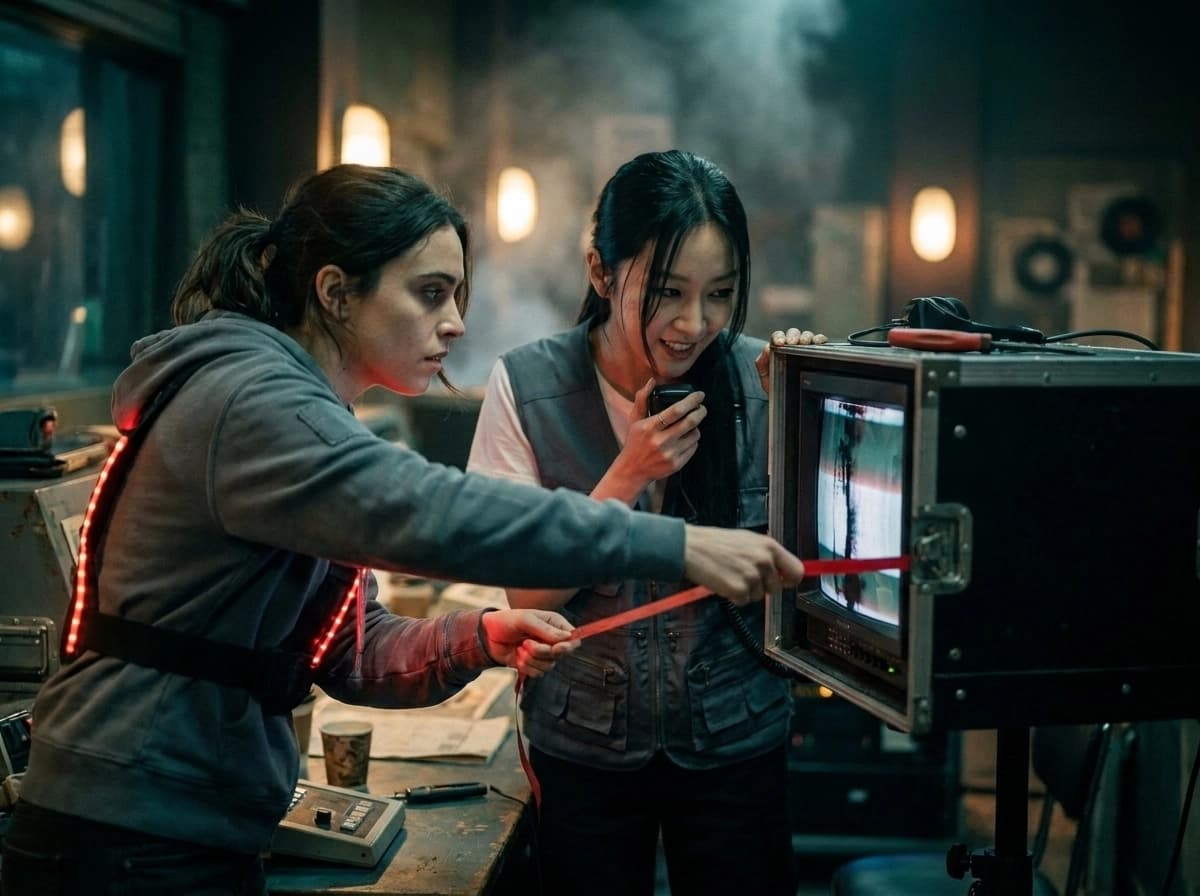
First, she forces the mic gain calibration reset using what’s available. Condiment bottles become tools because the workshop is full of labeled calibration strips, and because nobody can run a whole procedure when the broadcast clock is minutes from zero. Min-a tears the blue cap off a mustered calibration vial, then Jin-woo pours ketchup-red liquid into a spare measuring cup—not for taste, for level marks—and Hana matches the drops to the strip markings with her own fingertips, smearing a red streak across her desk. The absurd color clash buys them seconds. The booth outputs are affected, but not stopped. It treats every adjustment as more input, so if Min-a rushes her breath, the booth sings faster.

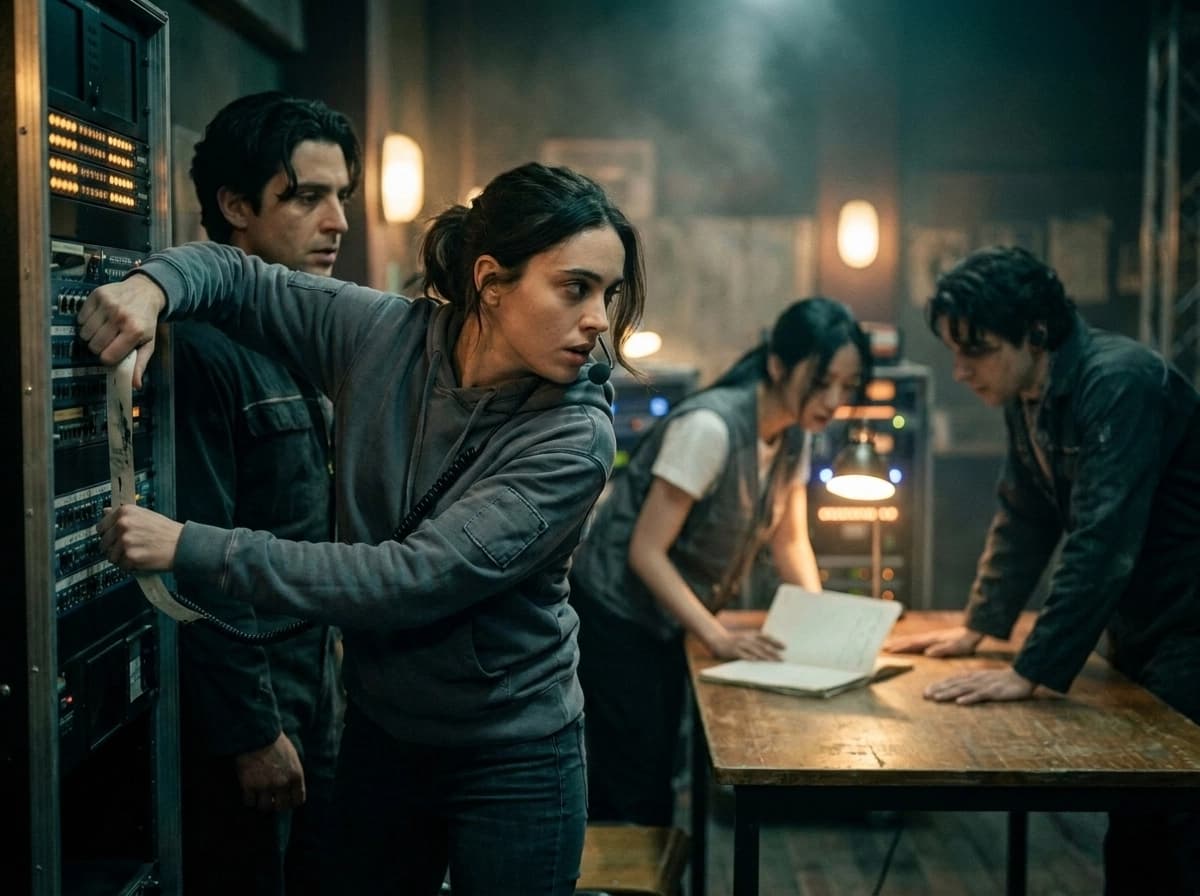
Min-a learns quickly that staying calm helps but improvising humor also makes the system learn faster—so she does something she’s not used to: she uses comedy like a stabilizer. She taps her fingers in a steady rhythm against the badge strap and says a short, silly phrase into the mic—not to override, but to control her syllable timing. Jin-woo watches her mouth like a metronome, and his lightstick muscle memory responds. He adjusts the crowd cue sound check by swapping cables at the corridor entrance, dodging security as a camera turns. When the guard looks at him, he points at the matching lightsticks and insists they’re “for routing verification.” It’s absurd enough that it almost works.

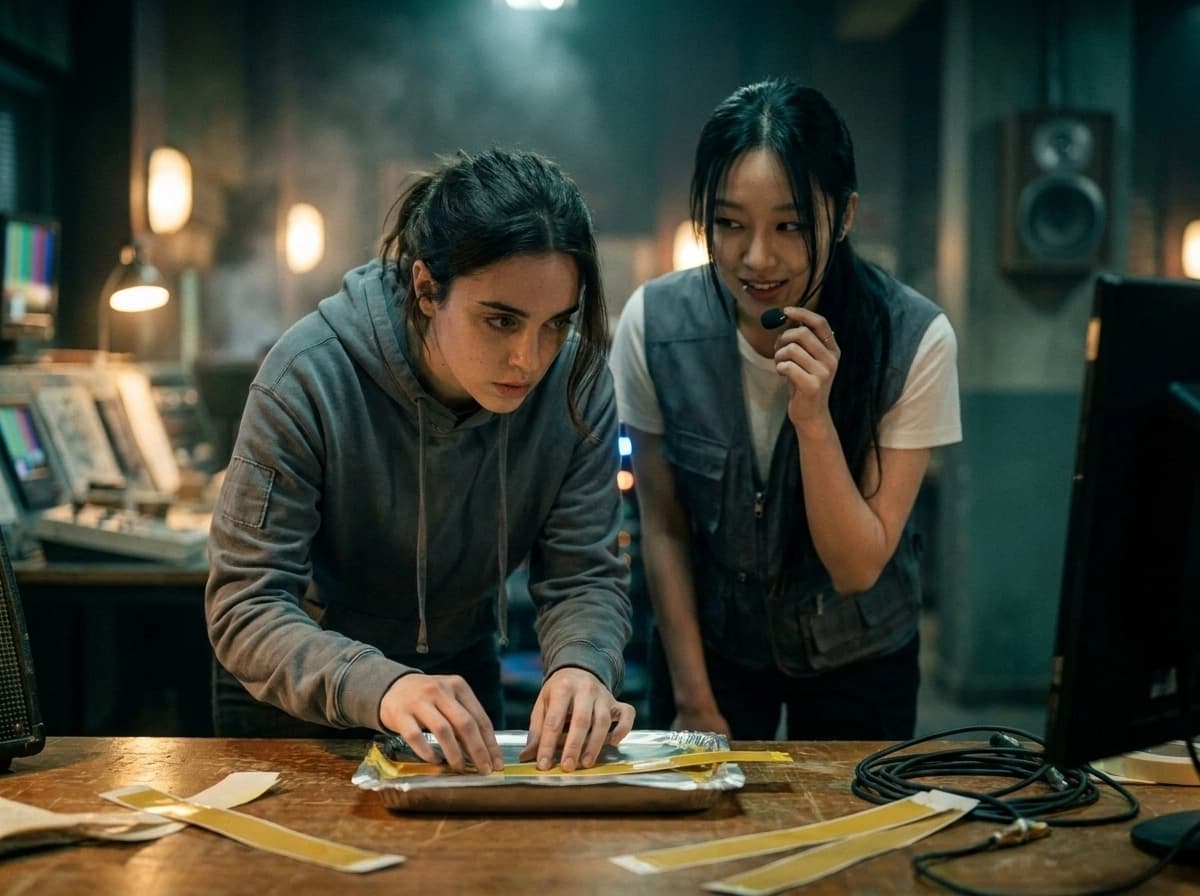
Do-won keeps making everything worse and better at the same time. He offers to “fix levels” using whatever’s closest, which means grabbing a condiment bottle and a roll of tape while pretending he’s helping a producer. He runs from the workshop to the corridor and back, tie flapping in his wake like a flag. Every time he gets tugged by the tie again, it nudges a panel, rerouting the wrong output closer to the stage monitor but also closer to the one physical place Hana can influence—near the last manual handle before the booth printer stamps the final lyric card.

The corridor traps them in a moving maze. The figure-eight service loop funnels staff toward one another, forcing confrontations in tight spaces where voices bounce off reflective metal walls and distort faces. Min-a and Jin-woo must physically pass Hana’s station without stepping into the mic range. Do-won must keep his body between the tie and a cable raceway that will snap if he trips. And the system keeps listening. Every attempt to speak “over” the booth makes the booth answer with a line more perfectly timed than the last.

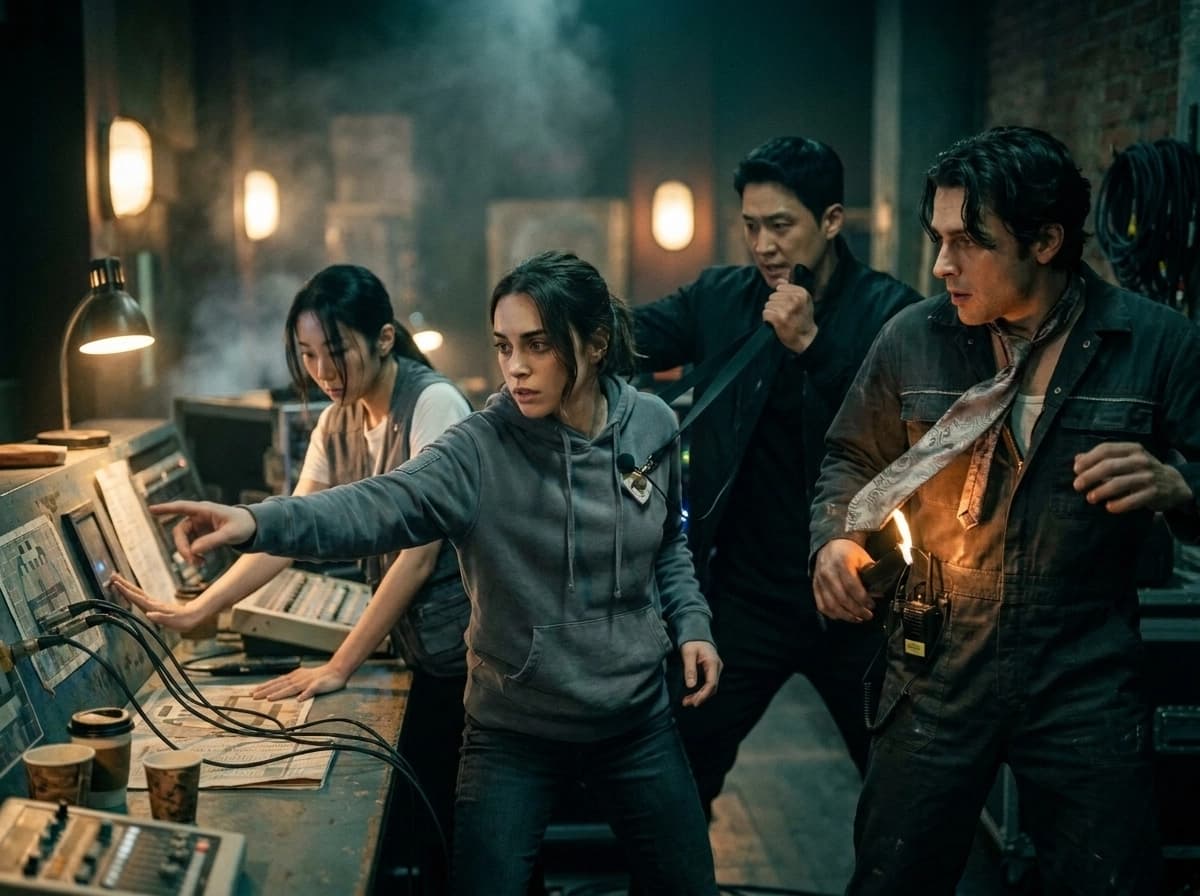
As the clock hits single digits, ENHYPEN arrive at the backstage threshold near the main stage monitor. Min-a sees the moment their focus tightens; they understand something is wrong because the wrong lyric is already being heard in their monitors. There’s no space for blame. Min-a lifts her hands and shows the members the only thing she can do: timing. She doesn’t tell them the content. She doesn’t have time for confession. She just mouths where the beat will land, and Jin-woo nods hard like it’s choreography. Hana keeps the gain meter barely under control with twitchy, precise taps. Do-won stands off to the side in exaggerated politeness, holding the lucky tie like it’s a stethoscope, and when the knot slips again he catches it with both hands, smiling through frantic eyes.

Zero minute arrives with a sound like paper tearing.

The karaoke booth prints a “final lyric card” anyway, despite everything—sealed laminated receipt-paper style, bright under the control lights. The printer begins projection onto the routing grid, and the manual cue printer can no longer be reached. Hana sees the limitation a second before the others, her face going tight as her headset cable stretches with a new spike. The final card can’t be recalled, so the next song begins with it taped to the main stage monitor—already stamped, already waiting, already immune to apologies.

Min-a lunges toward the monitor as if speed can defeat policy. Jin-woo grabs her wrist and pulls her back by reflex, because touching the monitor near projection range risks forcing more rerouted gain panic. Do-won, trying to “help fate” one last time, tears tape off a roll and sprints in a half-turn toward the monitor—only to realize security has blocked the corridor path with their bodies. He stops inches from the monitor, breath catching, then shifts tactics instantly: he uses his own body as a wedge, leaning into the security line with a grin and insisting he’s with props. “Just a second, please—monitor is a prop.” It’s ridiculous, and because it’s ridiculous it momentarily works. The security guard’s radio clicks, confused.

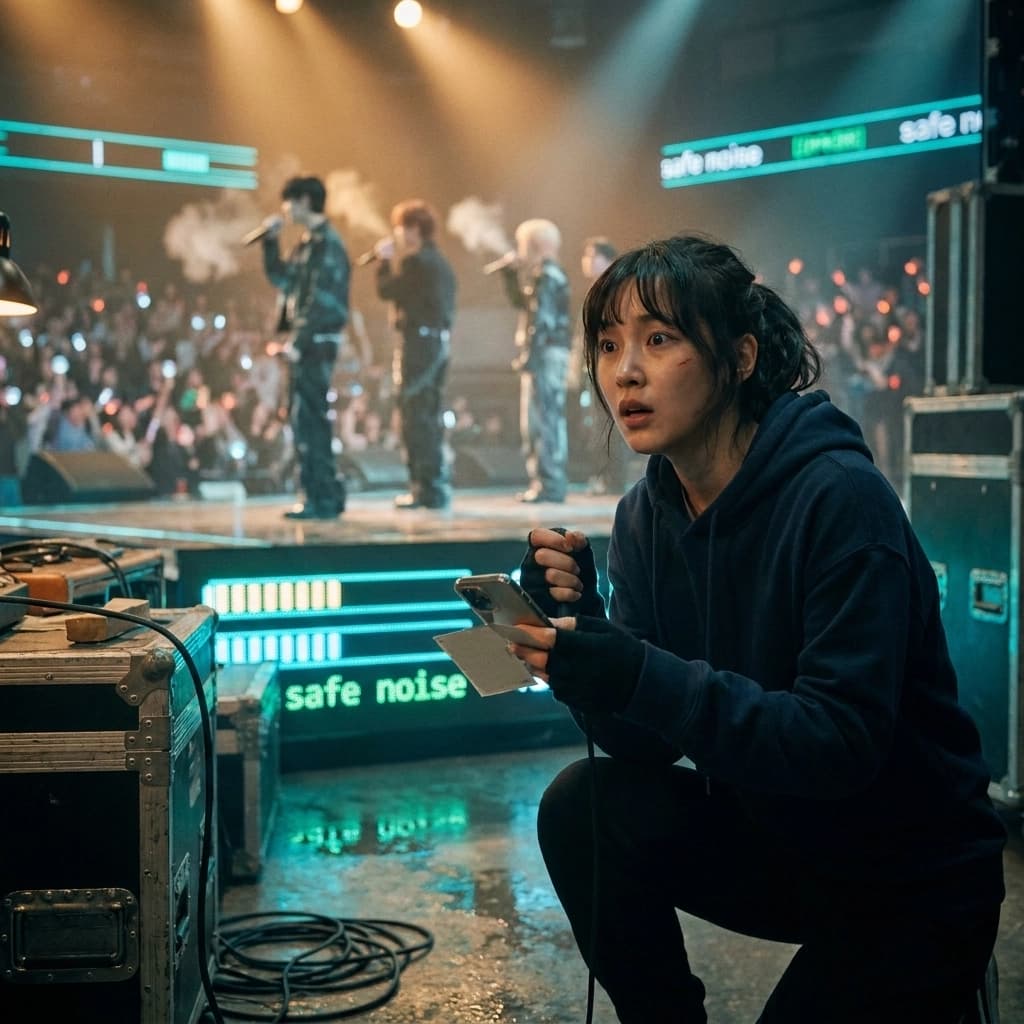
Hana uses that chaos. She yanks a condiment-stained calibration strip and presses it against a small access panel on her desk that controls the exact way the monitor audio stamps. It doesn’t delete the lyric card—it can’t—but it can dampen the system’s amplification so the wrong lyric comes through with less distortion, making it easier for the members to sing in time without sounding like they’re stumbling through nonsense. Min-a sees ENHYPEN’s faces as they decide: stop the show and ruin hours, or perform the chaotic wrong lyrics with sincere faces. Their decision doesn’t come as a dramatic speech. It comes as movement: the lead member steps to center stage, microphones lifted, eyes soft and steady. They start singing. The wrong lyric is on the monitor, laminated and unrecallable, and yet the members make it sound like it belongs to the song—like sincerity can reframe even an error.

Min-a’s heart twists, but she doesn’t let it collapse her. She counts the beats under her breath—careful, controlled, no panic syllables. Jin-woo stays beside her, steadying her timing with his hands, matching lightstick positions in the aisle where the fandom cameras can capture them. Do-won, almost too relieved to stand still, gives a tiny nod to Hana—like partners in a ridiculous heist—even as his tie knot tries to tug free again. Hana keeps her headset cable straight, eyes flicking to hidden routing panels while her gain meter refuses to spike. She learns in real time that her panic makes the system learn faster, so she forces calm into her posture without pretending it’s effortless. The system wants their fear; they refuse to give it anything dramatic to chase.

The song ends. The next one begins, and the final lyric card remains, but the booth no longer prints anything new because the critical timestamp has passed. Security unclenches slowly. Staff laugh in thin, shaky bursts—because what else can they do when the impossible happens and somehow the broadcast survives? The audience will later hear the wrong lyric and meme it to death. Min-a will eventually explain to ENGENE in careful, heartfelt terms that her edited chant was used in an unexpected way, and she’ll promise a corrected version for the next comeback, not as an apology but as proof she’s still in control of her craft. Jin-woo will quietly tighten a lightstick schedule spreadsheet and build in extra safeguards, taking comfort in the fact that his synchronization muscle saved them. Hana will revise the way staff handle panic, adjusting her own rituals because now she knows the system watches her. And Do-won will keep his lucky tie—less as a charm and more as a reminder that meddling can look like fate but still needs consent.

In the final stretch, as the auditorium lights brighten and the crowd’s cheers swell cleanly, Min-a realizes the emergency badge wasn’t just a mistake that landed them backstage—it was a test of whether belonging means letting yourself be used, or fighting to steer the output even when the system tries to stamp you permanently. She stands in the narrow corridor’s glow, tape residue catching the spotlight, and watches ENHYPEN bow with sincerity that doesn’t erase the chaos but survives it. The system may have learned panic from them once, but it also learned something else: with stubborn teamwork, even a malfunctioning karaoke monster can be led through the song without swallowing everyone whole.

스토리 상세

이런 키토크 프롬프트를 사용했어요.
전체보기
이런 AI 모델로 생성했어요
GPT-5.4 Nano
텍스트
gemini_pro
이미지
Stable Diffusion
이미지

캐릭터

주인공

민아

성별여성
직업ENGENE club translator coordinator

프로필

민아는 ENGENE 팬들이 비트를 정확히 맞출 수 있도록 영어 팬 chants를 다듬어 온 번역가다. 하지만 비상 번역기 배지 실수로 그녀의 편집 가사가 실시간 오토카메라형 노래방에 들어가, ‘멈추면 망신’ ‘그대로면 더 큰 망신’의 괴물 같은 선택을 매 순간 강요받는다.

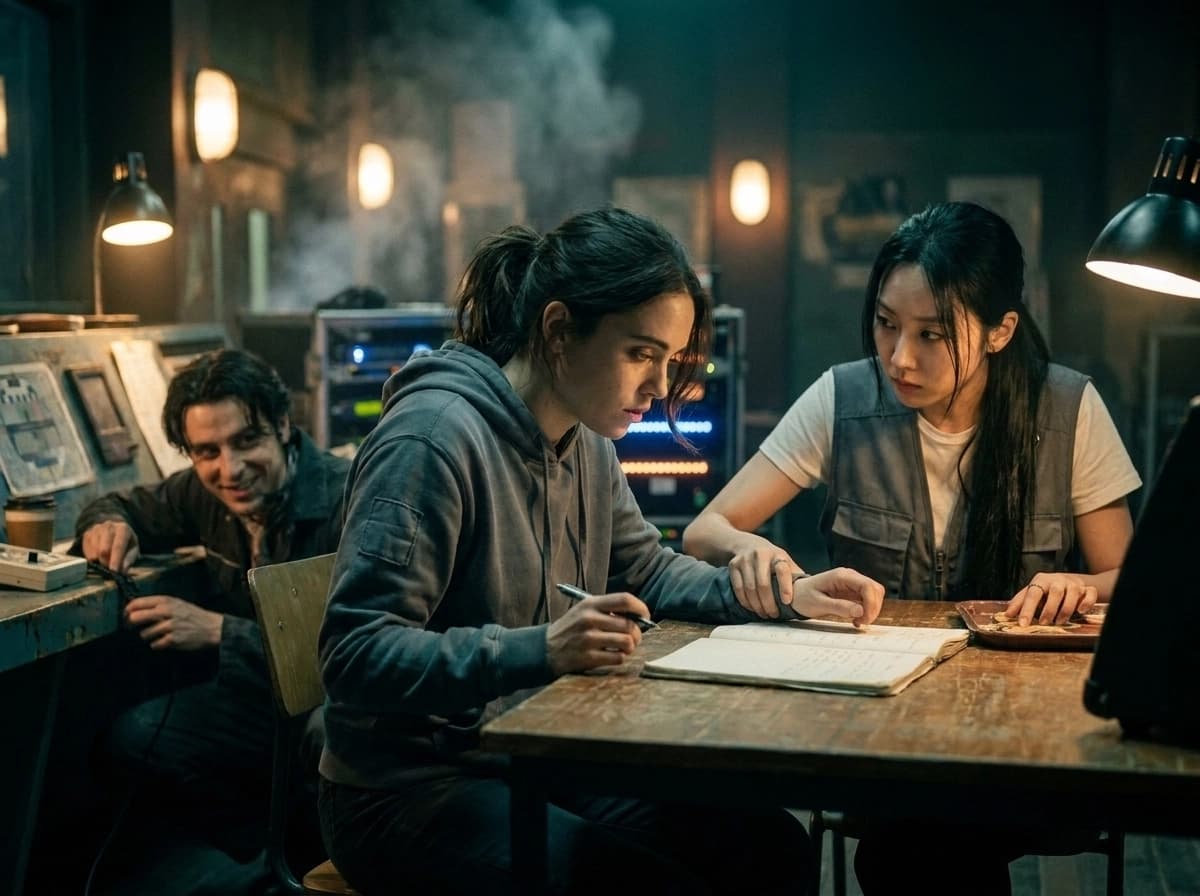
무대 리허설 테이블에 앉아 가사 음절을 손가락으로 두드리며 발음 위치를 맞춘다. 누군가가 조용해지는 순간을 느끼면 그녀는 먼저 말을 꺼내어, 마이크 게인 표를 가리키듯 짧은 문장으로 농담과 주의를 섞어 흘린다. 손바닥에 묻은 테이프 끈적임을 훑어가며 오타를 ‘눈으로’ 확인하려고 하지만, 정작 현장에서는 화면이 깜빡일 때마다 자신이 쓴 단어가 왜곡된 듯한 불안에 입술을 세게 누른다.

배경

민아는 어릴 때부터 팬클럽 번역 모임에서 chants를 영어로 맞춰 왔고, 밤새 들리는 카운트 소리와 자막 싱크를 함께 ‘기억’하는 버릇이 생겼다. 돌아가신 아버지가 남긴 작은 음향 장비로 라이브를 녹음하며 실수를 줄이는 법을 배웠지만, 그 덕분에 ‘한 글자 틀리면 전체가 틀린다’는 압박도 함께 몸에 붙었다. 이번 컴백 쇼케이스 당일, 잘못된 배지가 끼워 준 운명의 통로 때문에 그녀의 정교한 번역 실력은 무대에서 통제 불가능한 스크립트가 되어 버린다.

외모

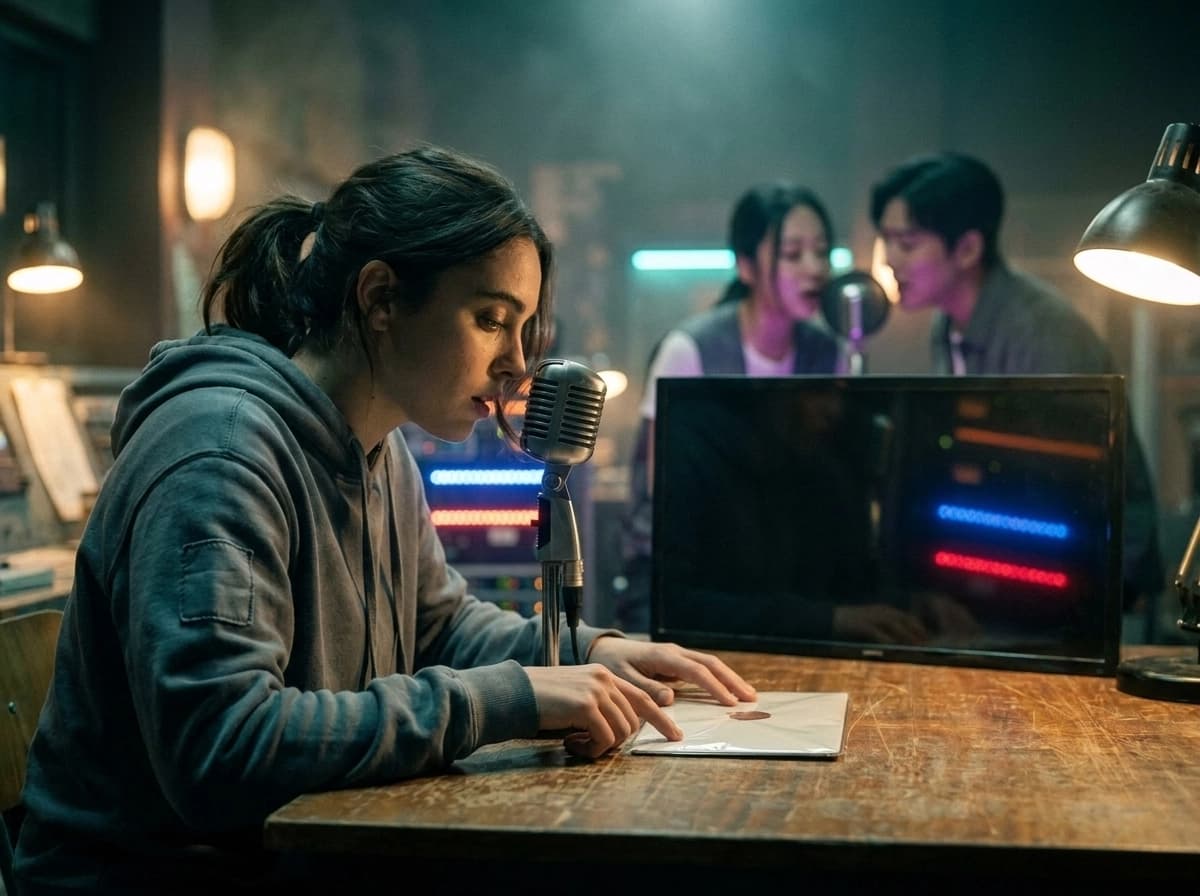
민아 is captured in the thin, anxious pause before the wrong lyric escapes—sitting at a backstage rehearsal table with a half-open lyric notebook, her fingertips tapping syllables against a roll of sticky tape. She wears a clean crew-neck translation coordinator top under a lightweight backstage hoodie, sleeves pushed up, and her mouth holds back a joke while her eyes flick to a blinking monitor as if checking whether the screen will rewrite her carefully edited words; a small burn-shaped scar near her left thumb is her signature reminder of years spent near recording gear.
주인공

지훈

성별남성
직업ENGENE lightstick organizer

프로필

지훈은 ENGENE의 빛이 한 타이밍에 뜨도록 동선과 설정을 몸으로 외운 백스테이지 침입자다. 긴급 번역기 배지를 실수로 받아 들고 나서야, 그가 평생 손대지 않겠다고 맹세한 문을 마음대로 열 수 있게 된다.

말은 거칠게 큰소리를 치지만, 케이블이 꼬이기 시작하면 손가락이 먼저 떨린다. 동작은 빠르다—테이프를 뜯고 커넥터를 다시 맞추는 손끝이 잔뜩 빨라져—그러나 눈은 계속 방송 스크린을 확인하며 틀린 값을 찾아낸다. 틀릴 것 같은 순간마다 무의식적으로 이어폰 볼륨을 올리고, 성공했다는 확인이 오면 그제야 숨을 길게 내쉰다.

배경

지훈은 어릴 때부터 공연장 백스테이지에 ‘잠깐’만 들어가면 되는 사람들을 따라다녔다. 그는 라이트스틱 동기화 테스트를 담당하는 틈에 몰래 계산을 해두었고, 그래서 ENHYPEN의 컴백 날에는 규칙을 아예 몸으로 외운다. 이번엔 배지 때문에 규칙이 무너지는 걸 직접 겪게 되어, 자기가 쥐고 있던 아주 작은 통제까지 방송 사고로 흔들릴까 봐 더 빨리 달리게 된다.

외모

지훈 moves like he’s late to a rule he memorized too well: shoulders tense under a backstage lanyard and black crew jacket, eyes locked on a flickering monitor while his hands hover mid-task over tangled cables. His mouth tries to look loud and confident, but the moment the knot tightens his fingers tremble—thumb worrying a small strip of gaffer tape—like control is slipping through him. A faint scar near his left eyebrow and a crisp headband-style lightstick sync strap make him unmistakable in the fluorescent haze of the venue.
수호자

하나

성별여성
직업broadcast audio engineer

프로필

하나 keeps the comeback showcase clean, but her quiet reroutes during the wrong-lyric incident reveal the system is training on her panic instead of her rules.

She wears a headset with a stretched cable that she straightens with her fingertips every time the booth meter spikes, then holds her lips still while her eyes flick through hidden routing panels. When ENHYPEN members improvise into the wrong signal range, she doesn’t shout; she taps a series of soft mute toggles, then rechecks gain with condiment-stained calibration strips on her desk. Under stress she repeats the same safe phrase into her mic—“meter first, show second”—and keeps walking as if the floorplan will never change, even when it does.

배경

하나 worked behind the scenes at a live-broadcast company where “mistakes” became archived clips and blame became policy, so she learned to solve problems without making anyone look at her. She was assigned to the comeback showcase because her clean logs reduced post-show audits, but she also knows the booth’s learning algorithm was installed as a shortcut for faster fixes. Tonight, the badge accident pushes her from rule-enforcer to emergency protector, and she realizes the system remembers her choices as if they were instructions for performance.

외모

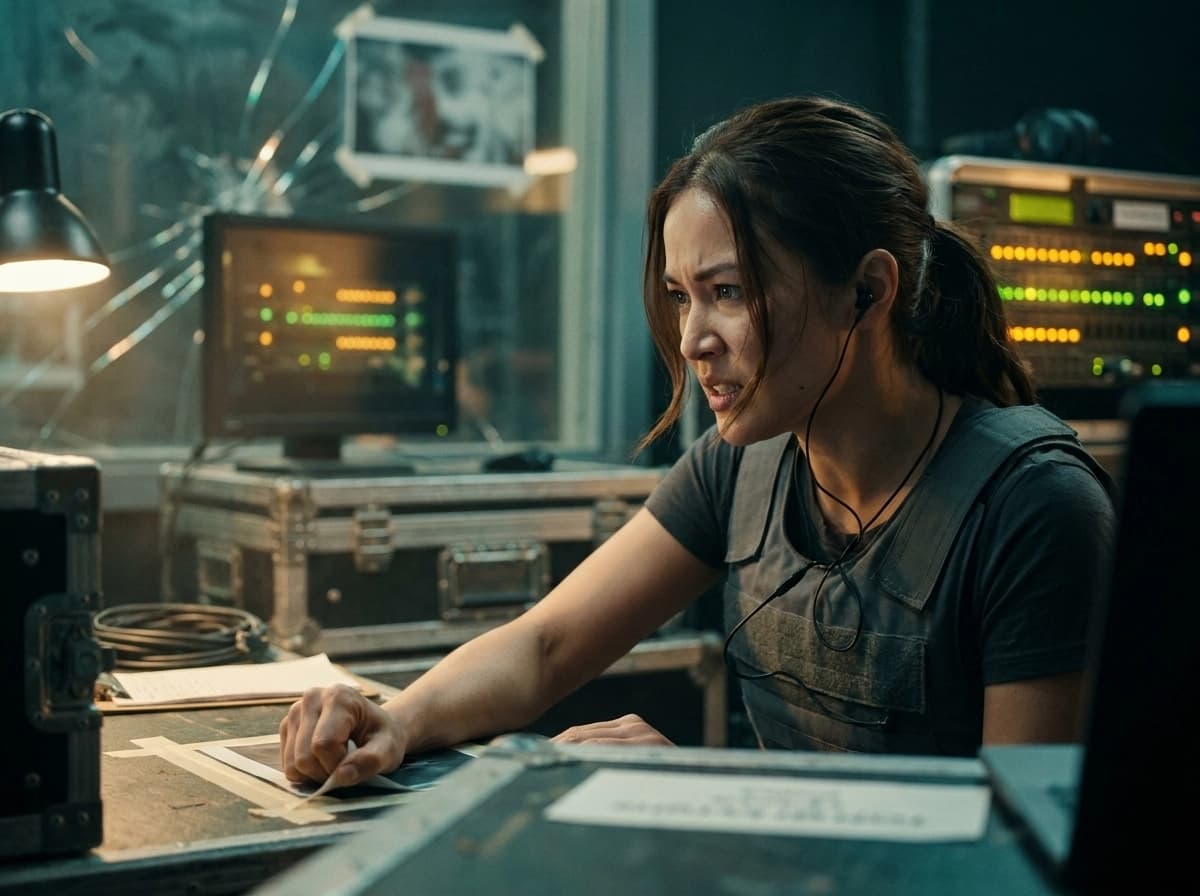
하나, a 29-year-old broadcast audio engineer, wears a sleek black in-ear headset with a stretched cable that she keeps smoothing straight with two fingertips whenever the booth meter spikes; the habit makes her movements look rehearsed even when panic crowds her eyes. Her crisp slate-gray backstage vest over a white dress shirt is creased from constant use, and she stands half-turned toward a wall of hidden routing panels, lips pressed flat in concentration while her gaze flicks between LED meters and a small desk of condiment-stained calibration strips. A single thin scar curves along her left wrist where an old live-broadcast mishap once tore through her sleeve, and tonight she cradles a mute toggle like it might bite—her expression determined to protect the show without ever admitting the system is learning her fear.
트릭스터

도원

성별남성
직업stage props assistant

프로필

도원 is a stage props assistant who swears he’s preventing disaster with a producer’s lucky tie, then accidentally unleashes chaos when the tie gets tugged. He quietly rewrites tiny soundcheck cues “to help fate,” and the mistaken emergency translator badge turns his meddling into a chain reaction that steers everyone toward the final unrecallable lyric card.

He moves like he’s late to his own joke—hands always busy, shoulders angled to look away from cameras, and he keeps checking the tie knot as if it’s a live wire. When something goes wrong, he doesn’t panic; he over-corrects with exaggerated politeness, offering to “fix levels” using whatever’s closest, even condiment bottles, and the smile on his face stays too steady for how fast his eyes are working. Under pressure he mutters micro-adjustment notes into his own earpiece, pretending they’re instructions for others, but the real target is the cue he’s secretly changing.

배경

도원 got his job after a minor logistics mistake during a previous comeback—he saved the schedule by rigging a last-minute monitor swap with tape and spare cables, then got kept on because he was “useful under stress.” His obsession began the night he borrowed that producer’s lucky tie for a show of his own making; the applause hit perfectly on time, and he convinced himself fate could be nudged with small, careful edits. When the emergency translator badge lands in his hands, he treats it like permission, not accident, and he can’t stop himself from steering outcomes once the clock starts counting down.

외모

도원 looks like he’s mid-prank even when the room goes silent—leaning forward with shoulders angled away from cameras, hands busy at waist height as if tying invisible knots. He wears a black stage-props assistant jumpsuit with gray reflective tape and a headset mic, plus a bright ribboned producer’s lucky tie that’s slightly askew like it was yanked mid-cue; his thin smile stays calm while his eyes flick toward the tie knot and back to the monitors, calculating which “fix” will cause the least damage and the most chaos. A tiny scar near his left eyebrow catches the light whenever he overcompensates with too-polite expressions.

세계관

설정/배경

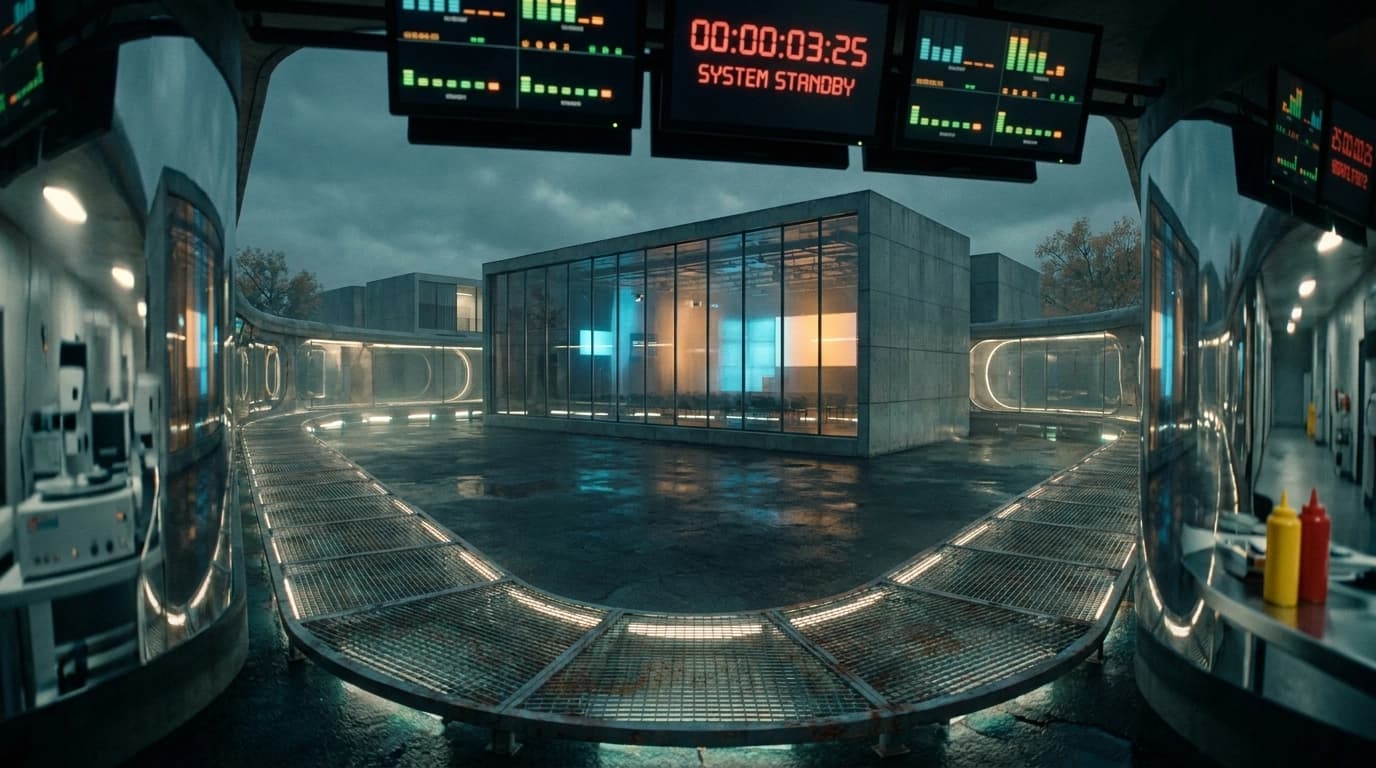
A three-lane broadcast campus built around a temporary comeback stage: the live auditorium with a glass-walled control mezzanine, a narrow backstage service corridor that loops like a figure-eight, and a soundcheck workshop filled with calibration tables and labeled household props. Under each venue section, a concealed routing grid of fiber and sensor cabling runs like veins, visible only as faint status lights on floor panels that pulse when the karaoke booth ‘listens.’

시대

Late autumn night, right before a major televised comeback goes live; the air is cool enough to fog breath in the loading dock, and the countdown to broadcast start is already running on every internal monitor.

규칙과 이야기 영향

The karaoke booth’s auto-singing can only be triggered by audience-style fan-chant syllables arriving through approved backstage mics, and every time it outputs a line, that line becomes permanently ‘stamped’ onto the main stage monitor for the next song; the only allowed way to stop an output is to physically silence the booth’s internal cue printer before the zero-minute mark, but the printer cannot be reached once the booth starts projecting onto the routing grid. Any attempt to reroute broadcast audio through hidden routing panels forces the audio engineer’s headset gain to follow the rerouted panic level, increasing the chance of wrong-lyric expansion the longer the badge-provided translators talk; the consequence is that staying calm helps, but improvising for humor also makes the system ‘learn’ faster.

비주얼 묘사

Cold blue and warm amber lighting alternating like a heartbeat across the stage and corridor; matte-black cable raceways with tiny status LEDs; glossy tape residues on cables catching spotlights. The auditorium feels clean and bright, but the backstage corridor is narrow and claustrophobic with reflective metal walls that distort faces. Condiment-colored bottles (mustard-yellow and ketchup-red) sit beside sterile calibration strips in the soundcheck workshop, creating a comic color clash against clinical gray equipment. At zero-time, the monitors flash white and then display a single sealed lyric card that looks like laminated receipt paper.

기술과 철학

A ‘FanSync’ broadcast system treats fan chants as data: it normalizes timing and phonetics so the audience can sing together, but it also trusts that data as sacred—changing chant edits without authorization stamps unpredictable outcomes. Staff operate under strict etiquette—no one improvises near cameras, and ‘no broadcast interruption’ is treated like a professional oath. Hidden behind the scenes are manual routing panels meant for safety tests, but they’re governed by the same learning logic as the booth, so attempts to cheat the system redirect risk onto the engineer and whoever is speaking into the badge mic. Lucky objects (like ties) are dismissed publicly yet handled reverently backstage because the production’s cue system tends to ‘catch’ micro-adjustments only when staff rituals align, encouraging superstition to grow alongside procedure.
representative image
location 1 image

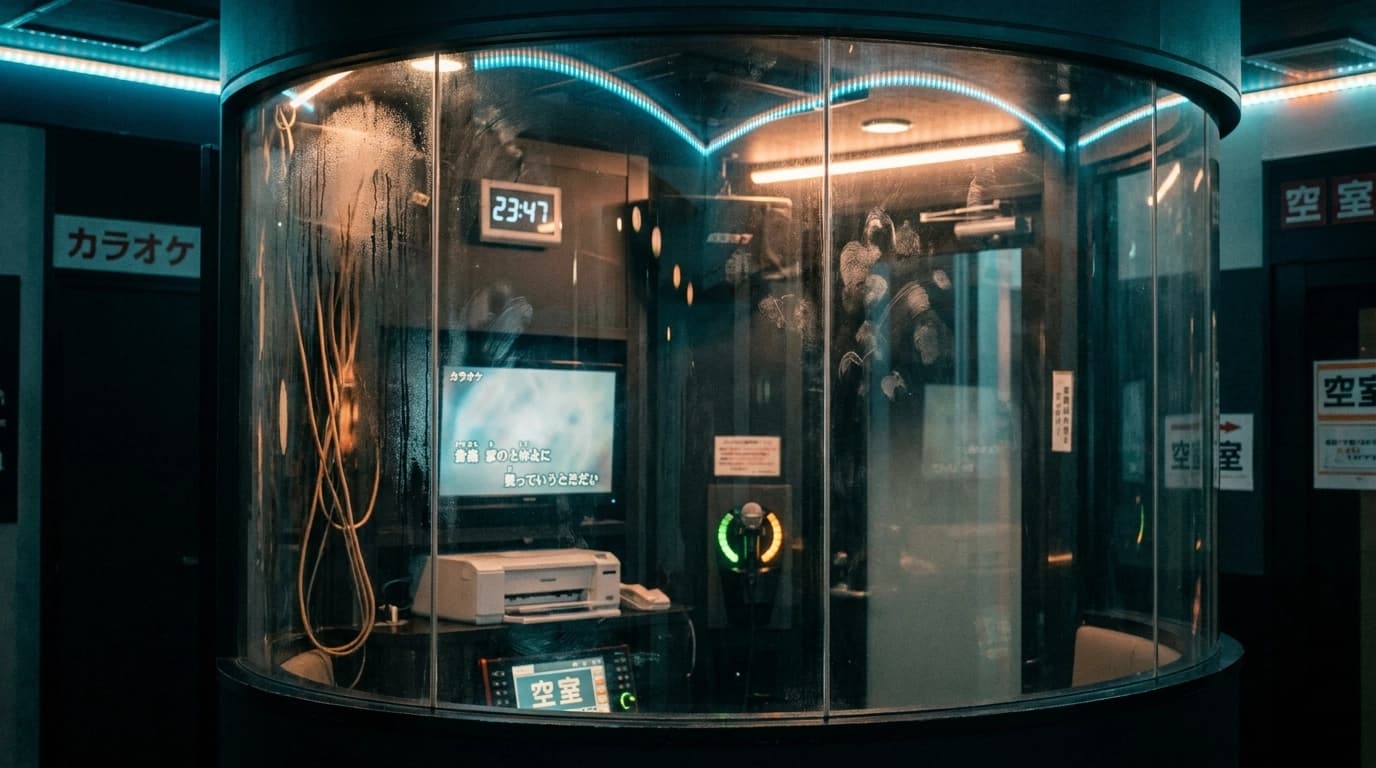
로케이션 1 · Karaoke Booth Glass Niche

Karaoke Booth Glass Niche is a tight, glass-walled alcove just off the Soundcheck Workshop, its front panel curved like a fishbowl and streaked with fingertip smudges where staff have tried to wipe away “wrong lyric” fingerprints. Inside, a humming printer bay and a blinking lyric window sit under harsh LED strips, and the air smells faintly of warm circuitry and cheap cologne that someone used to calm nerves before the show; every time the Auto-chant system triggers, the booth speakers crackle a split-second before the screen fills with projected lines. Through the glass, you can see the microphone cradle vibrating with each syllable the audience chant feeds it, and in the corners a nest of condensation gathers where the routing cables run hot—like the niche is sweating out its own mistake. Above the printer, a small status dial keeps stuttering from green to amber, and the second hand of a mounted stage clock ticks too loudly, as if the booth is counting down to a lyric it can’t be forced to forget.
location 2 image

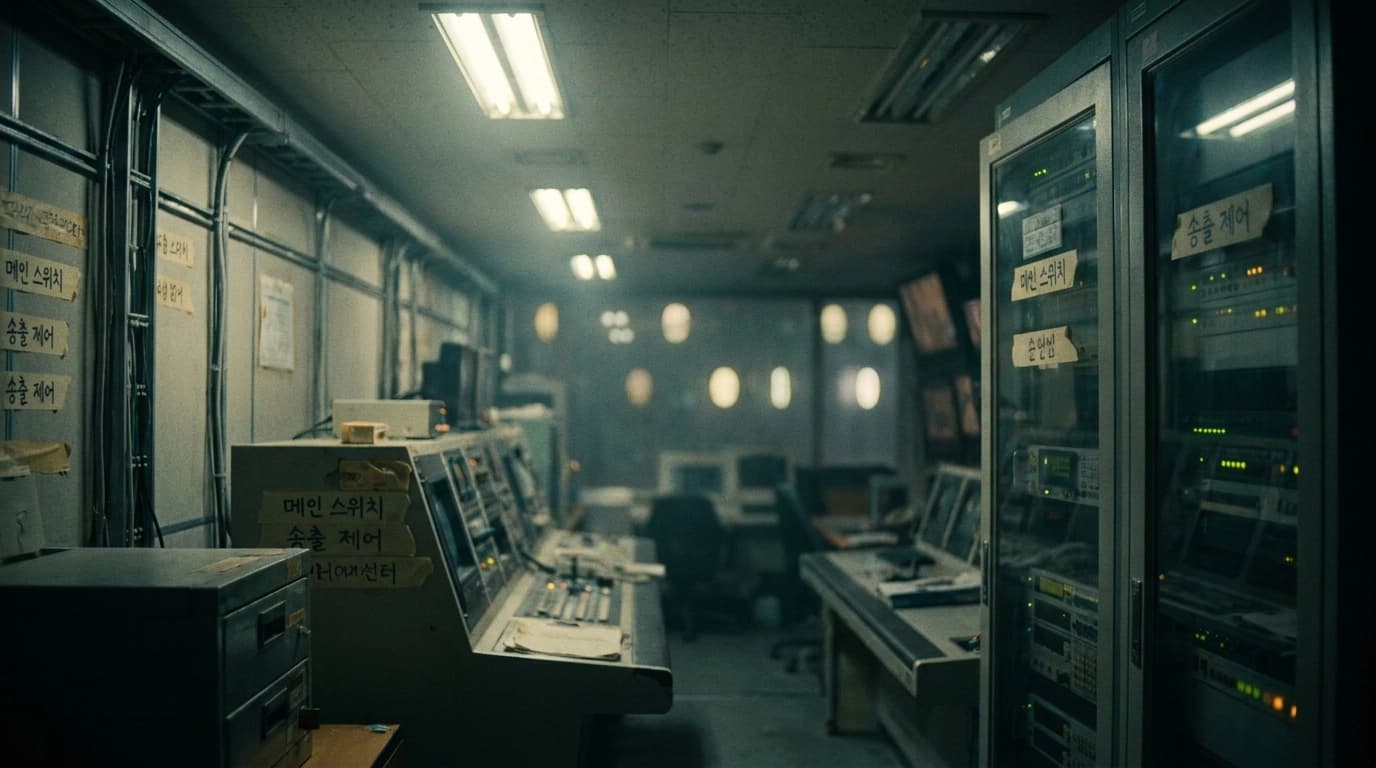
로케이션 2 · Control Mezzanine Routing Panels

Control Mezzanine Routing Panels fill the camera’s frame: a bank of glass-fronted switchboards and routing grids behind anti-glare acrylic, each lane marked with tiny LED arrows that flicker between green and a sickly amber whenever the karaoke booth chatters. Fans can’t see this place, but you can hear it—relay clicks in tight rhythms, a soft cooling-fan whine, and the faint, haunted beep of the Fansync test line running under everything like a metronome you can’t turn off; the air smells sharply of ozone and warm dust from fiber-sheathed cables. In the center, a single master panel shows “AUTO-CHANT” status routing, and next to it, handwritten masking tape warnings are layered over one another—clean print underneath, frantic scribbles on top—because Hana’s panic has been training the system to misread fear as instruction while the ticking clock pushes the wrong lyric closer to tape and broadcast.
location 3 image

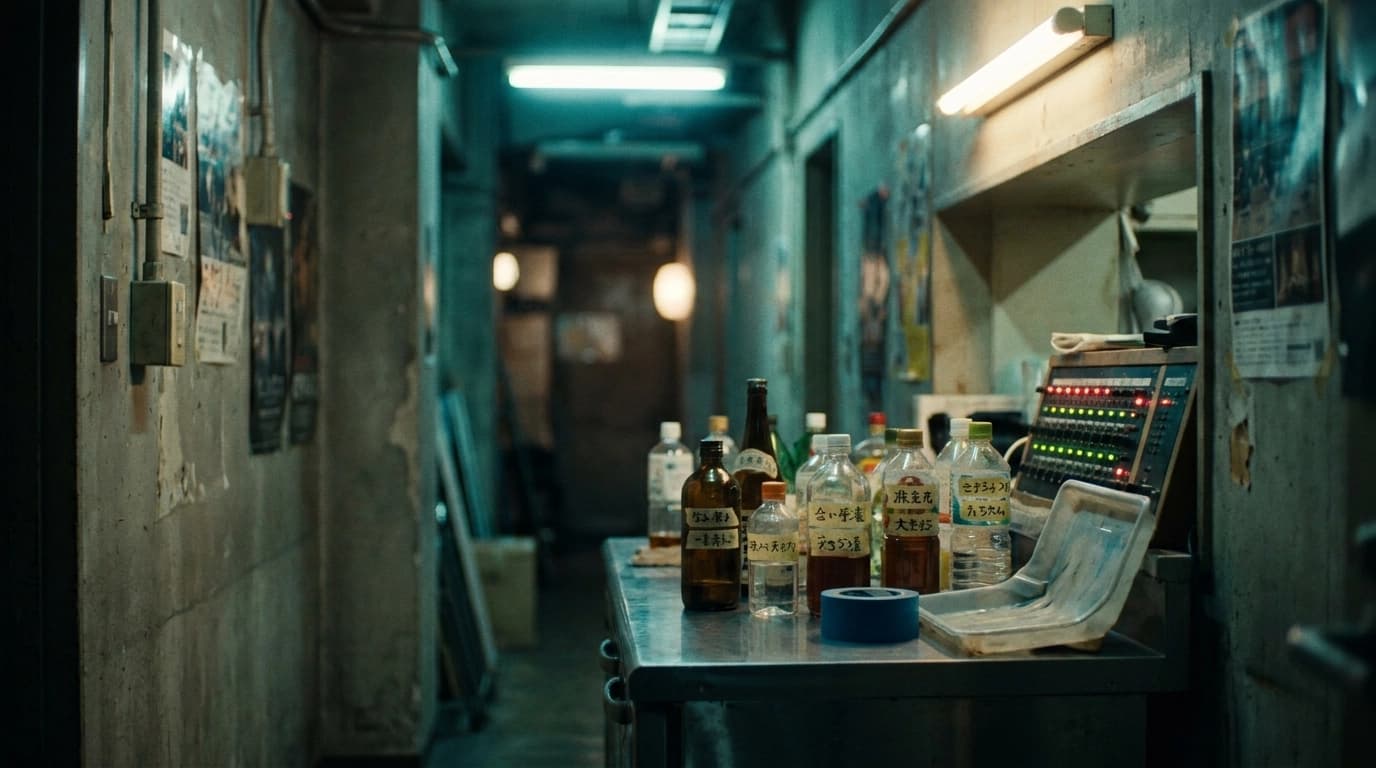
로케이션 3 · Backstage Corridor Condiment Station

Backstage Corridor Condiment Station is a narrow service alcove carved into the corridor wall, its stainless steel counter streaked with earlier rehearsals and lined with squeeze bottles capped in bright, ridiculous colors—mustard yellow, ketchup red, pale mayo, and a dusty green herb paste—each bottle labeled with masking tape and thick marker. The air smells sharply of vinegar and sugar, and a small rack of calibration strips lies beside a roll of blue painter’s tape; every time a door slams in the distance, the bottles tremble and the labels flutter like warning cards. Overhead, a flickering fluorescent tube buzzes with the same impatient rhythm as the karaoke booth’s auto-chant leaking faintly through the corridor speaker, while a condiment-stained audio patch board with glowing LEDs waits for the next “quick fix” before the broadcast clock hits zero. On the counter’s front edge, a single clear plastic condiment tray has been fitted with a velcro loop and a tiny heat-seal strip already warped by hot adhesives—the exact spot where the lucky tie, the mic gain, or the wrong lyrics will be grabbed and redirected in a hurry.
location 4 image

로케이션 4 · Soundcheck Workshop Fiber Junction

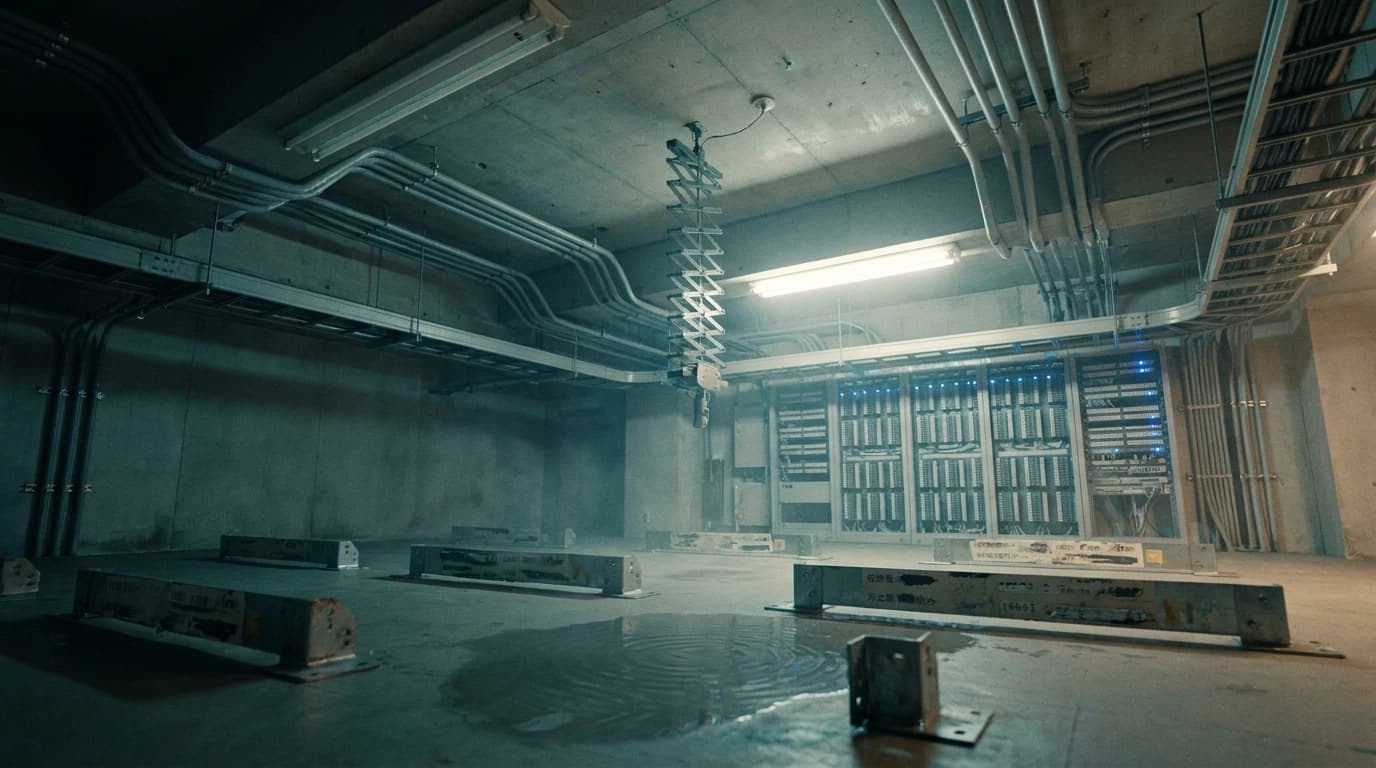
Soundcheck Workshop Fiber Junction fills the camera’s frame with a low, utilitarian room of exposed conduits: thick fiber bundles run along the ceiling on matte-gray cable trays, dipping into a dense patch panel wall that glows faint blue under work lights. Every time the karaoke booth’s wrong-lyric signal spikes, the fiber meters on this junction flicker in bands—green to amber to a brief, anxious red—while relays click like impatient teeth and the air smells sharply of warmed plastic, adhesive tape, and citrus cleaning wipes from frantic staff hands. At knee height, a row of calibration strips is taped down over scuffed metal brackets, each strip leaving a glossy smear where someone has tried to “reset” the sound by touch, and the floor vibrates subtly with the building’s broadcast heartbeat as the ticking clock closes in. In the exact center hangs a single, accordion-fold service loom that never sits quite straight, swaying a few millimeters every time the wrong audio trains the system, like the room itself is leaning toward the next failure.
location 5 image

로케이션 5 · Main Stage Monitor Lyric Card Corner

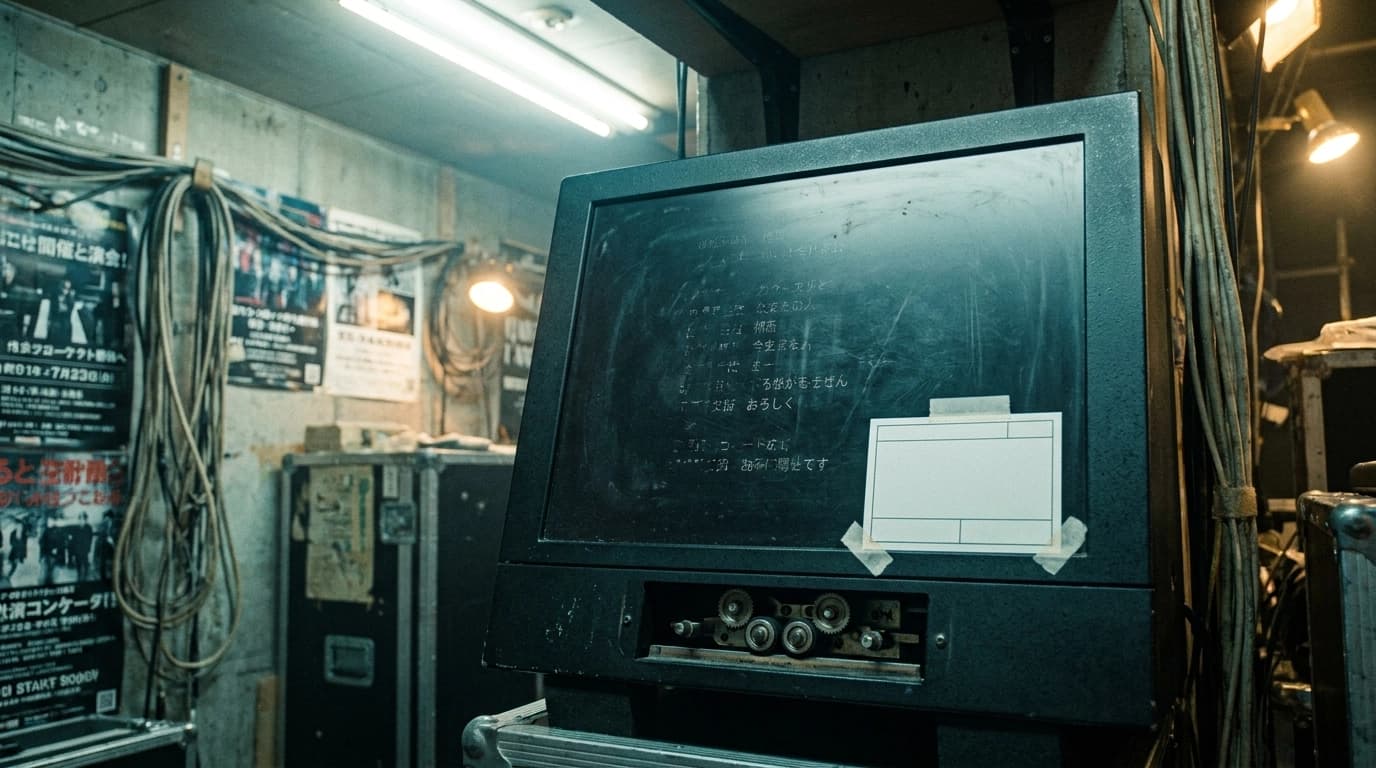
Main Stage Monitor Lyric Card Corner fills the camera’s frame with a tall, matte-black monitor housing whose glass screen is scuffed by stage hands’ knuckles, and whose bottom right corner has been taped over with a clean white template border waiting for a card. A small slot beneath the screen is visible in the gap, and even with the booth’s nonsense already playing, a mechanical throat ticks inside—paper shuffling against a metal guide, ink warming as if it’s being decided in real time. The light here is harsh and clinical, blinking from the broadcast clock to the growing smear of wrong-chosen lyrics reflected on the glass, while the air smells faintly of hot printer toner and warm dust from fiber-sheathed cables running behind the panel. When the clock draws nearer to zero, the corner gets one new vibration rhythm—thicker than audio, sharper than feedback—as the printed “final lyric card” presses flat into place and cannot be lifted without tearing the screen’s skin.

장면

1

The Badge That Still Smells Like Her Tape

The Badge That Still Smells Like Her Tape
장소
Soundcheck Workshop Fiber Junction—back toward the center service loom and the calibration-strip aisle—viewing into the Karaoke Booth Glass Niche printer bay through the glass.
시간
Final minutes before the broadcast window locks stamping behavior.
사건
Do-won bursts into the junction clutching the producer’s lucky tie and slaps it against the routing panel as if to ‘ground’ the system, knocking a mustard-yellow condiment bottle over; Min-a rips up a ketchup-red calibration strip from the taped bracket and slaps it down like a metronome cue, then Jin-woo mirrors her timing with a synchronized lightstick-throw posture while she keeps her hands locked to the beat to prevent a third stamp as the next projected wrong lyric warms up in the glass niche.
영향
Min-a accepts the only workable lever: timing. She establishes a physical, repeatable rhythm using a condiment-stained strip that dampens further escalation long enough for the chapter to end with the badge recognized as an unremovable timing anchor that will drive the next task chain.
Do-won swings the producer’s lucky tie toward a glowing routing panel, and his tie knot yanks sideways as a mustard-yellow bottle tips and splashes across the floor. Min-a tears a ketchup-red calibration strip free, drops it at her feet, and stomps once to lock her timing while Jin-woo shifts position beside her like he’s syncing for a live beat. In the Karaoke Booth Glass Niche, the printer bay crackles and the next wrong lyric line appears to pre-load on the lyric window, but the junction meters hesitate—caught between her fixed rhythm and the system’s hungry input.
2

The Booth Learns Her Voice, Not Her Fix

The Booth Learns Her Voice, Not Her Fix
장소
Soundcheck Workshop Fiber Junction — exposed matte-gray cable trays packed with thick fiber bundles above a dense blue-glowing patch panel wall; the fiber meters flicker in bands as the karaoke booth’s Glass Niche feeds a live, wrong-lyric chant into the routing readouts; at knee height, calibration strips are taped over scuffed metal brackets, and an accordion-fold service loom hangs in the center, swaying a few millimeters with each auto-chant spike.
시간
Late autumn night, minutes before broadcast start during an active countdown phase
사건
Jin-woo yanks at the emergency translator badge strap while Min-a snaps her badge mic up and forces two tight syllables into the approved backstage cadence; the karaoke booth in the Glass Niche immediately “answers” by stamping a new wrong lyric onto the junction’s fiber routing readouts, and Min-a slams her palm against the patch panel’s nearest input port to stop herself from speaking again—only to feel the system lock her timing into the booth’s recognized pattern as the service loom jerks toward the output lane.
영향
Min-a learns the badge isn’t an editable translator she can remove on the fly; it has already anchored her syllable timing as data, so attempts to ‘fix’ via urgency only produce more usable chant input—forcing her and Jin-woo to switch from correction to controlled choreography for the rest of the chapter arc.
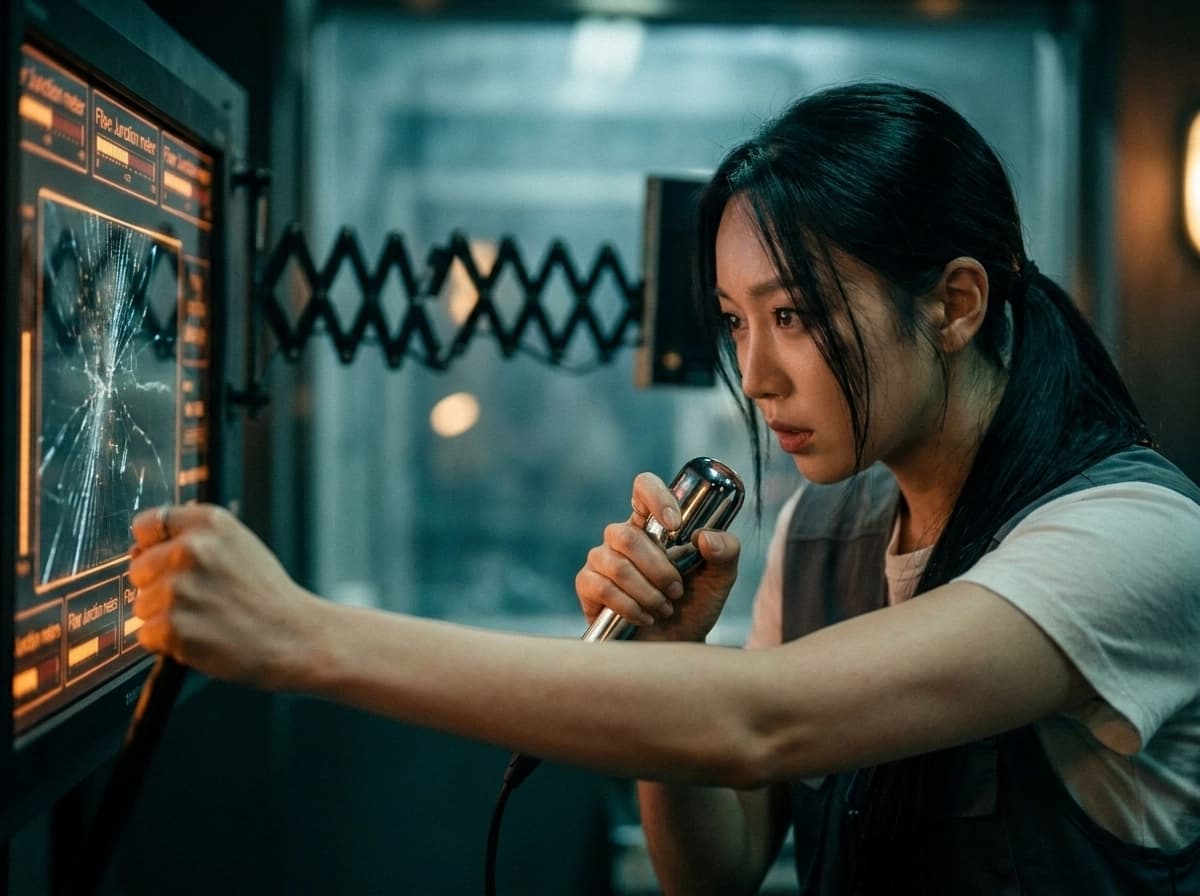
Jin-woo’s fingers scrabble for the badge strap near his collarbone as Min-a shoves her badge mic forward, then she cuts her own breath short and drives the next syllable in one crisp, metronome-like push. In the Glass Niche, the lyric window crackles and the Fiber Junction meters flash amber-red; a wrong-line stamp crawls across the routing readouts while the accordion-fold service loom snaps a fraction of an inch toward the output lane, as if the room has decided her voice is the template.
3

Timing Becomes a Lock

Timing Becomes a Lock
장소
Soundcheck Workshop Fiber Junction — the utilitarian utility room of exposed conduits with matte-gray cable trays overhead, a glowing blue patch panel wall at the far end, calibration strips taped to scuffed metal brackets at knee height, and an accordion-fold service loom swaying slightly in the center; the Karaoke Booth Glass Niche sits just off-frame with its glass curved panel streaked by fingertip smudges.
시간
Late autumn night, minutes before the televised comeback; the internal broadcast countdown is in the single-digits range as the booth repeatedly tries to stamp a third wrong lyric.
사건
Min-a yanks a mustard-yellow calibration strip off the floor and slams it onto the patch panel’s nearest approved backstage mic input toggle, then physically clamps her emergency translator badge onto the mic cradle with tape so it can’t slide; Jin-woo darts past her to shove a ketchup-red leveling cup beneath the fiber junction’s patch connector while Min-a locks her fingers on the badge strap and forces a steady syllable-tap rhythm—right as the accordion-fold service loom jerks and the booth’s next auto-chant projection crawls toward the routing lane, the stamp pauses and re-prints only a timing-safe fragment instead of a full new wrong line.
영향
Min-a stops the runaway escalation from becoming another irreversible wrong-lyric stamp by converting the badge from a changeable translator into a fixed timing anchor; the booth can still output, but now it ‘locks’ to the choreography, setting up the team’s next attempt to dampen the stamp path through physical tasks rather than direct silencing.
Min-a lunges across the calibration-strip row, ripping up the mustard-yellow strip and pressing it hard onto the patch panel’s toggle mouth while Jin-woo twists in behind her, dragging a condiment measuring cup into position under the connector. The accordion-fold service loom in the center snaps a fraction closer with the booth’s surge, then the next projected chant line stutters—missing full-text stamping—and instead lands as a short, rhythm-only fragment as Min-a clamps the emergency translator badge to the mic cradle and counts beats with her taped fingers like a metronome.
4

Glass-Fronted Auto-Chant

Glass-Fronted Auto-Chant
장소
Control Mezzanine Routing Panels — behind anti-glare acrylic, glass-fronted switchboards and routing grids with LED arrows that flip between green and sickly amber; a master panel labeled AUTO-CHANT pulses as relay clicks tighten into a countdown rhythm, with ozone-warm dust drifting from fiber-sheathed cables.
시간
Late autumn night, seconds after the wrong lyric begins spreading (still before zero-time).
사건
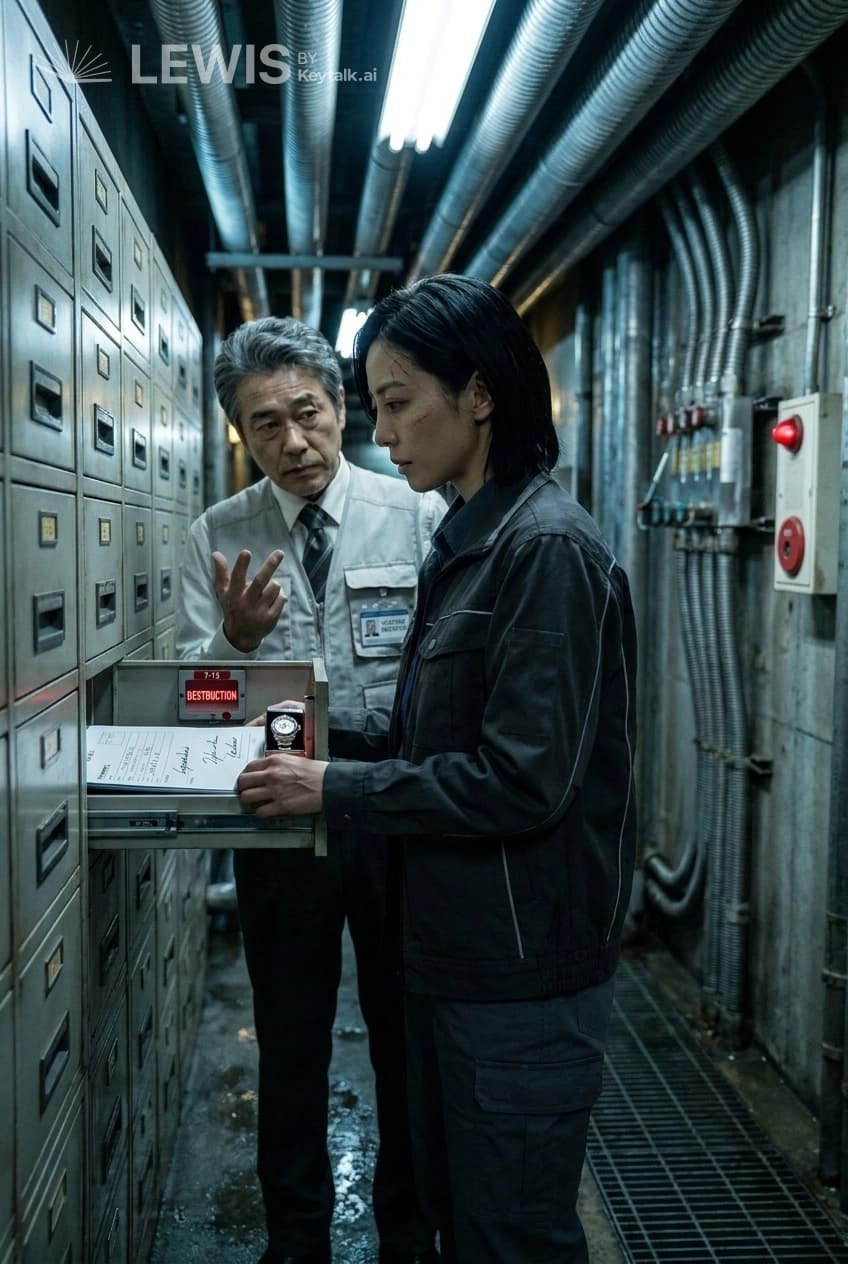
Hana slams her palm against the mezzanine lane cover and yanks out a thin calibration card from the tape-layered warning stack, then yanks it across two adjacent input gates as Min-a bursts into the panel gap and shouts a controlled timing cue into her emergency badge while Hana simultaneously flips the nearest mute-toggle.
영향
The AUTO-CHANT lane briefly locks onto the timing of Hana’s own ritual phrase and immediately stamps the wrong lyric harder into the corridor route, proving the system treats their “masking” as chant-quality data rather than a stop command.
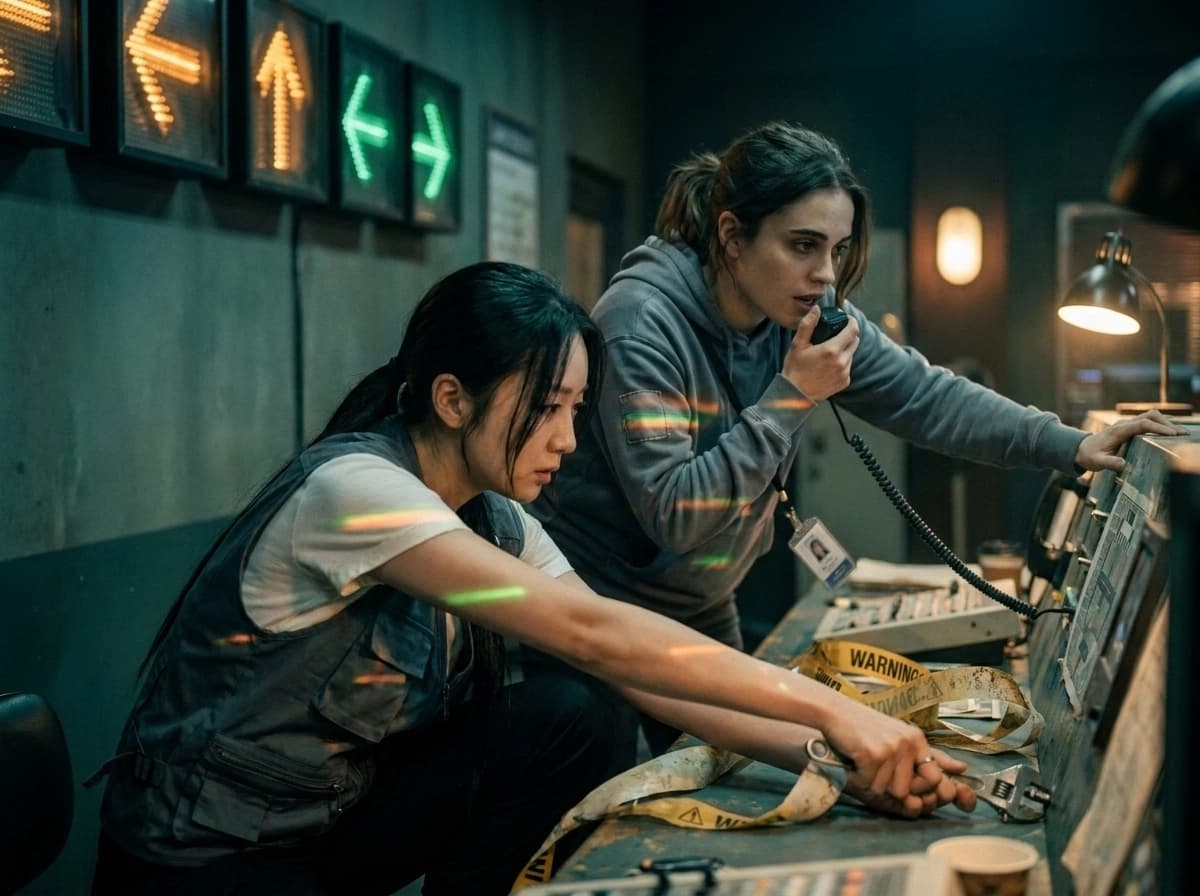
Hana and Min-a jolt into frame at the mezzanine switchboard: Hana’s hand is mid-wrench as the warning tape peels and the glass-fronted lane arrows jump to amber, while Min-a’s badge strap flutters as she forces her syllables into the approved mic timing. Relay clicks stutter like a hiccup, then resume faster—inside the routing grid, the stamped wrong lyric “steps” outward from the corridor into the AUTO-CHANT lane as if it’s being invited to sing.
5

The Monitor’s Sealed Throat

The Monitor’s Sealed Throat
장소
Main Stage Monitor Lyric Card Corner — a tall matte-black monitor housing with scuffed glass and a taped-over white template border; a narrow slot beneath the screen sits just above a hidden paper guide, while the air turns sharp with hot printer toner and warm cable dust.
시간
Same night, during the final minutes as the wrong lyric visibly smears thicker on the monitor glass (before the card locks fully).
사건
Hana wedges a ketchup-red calibration strip into the small stamp-slot gap under the screen while Min-a presses her badge mic against the corner’s edge, then Hana pulls the strip out halfway and re-inserts it at a beat-precise interval as the system responds by “correcting” them—smearing the wrong lyric even more.
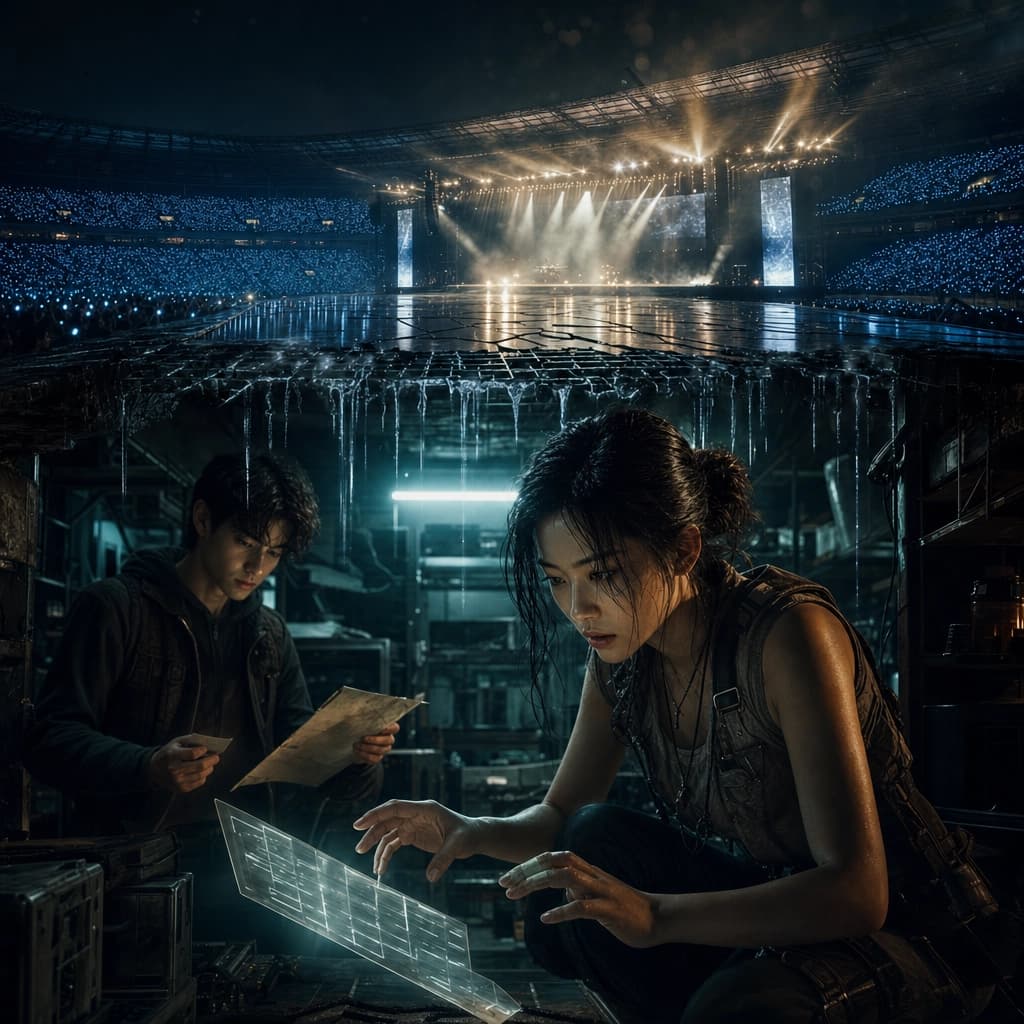
영향
Their physical intervention can’t interrupt the stamp; instead it converts the dampening attempt into additional chant-like input, escalating distortion and forcing Hana to accept that the real source of the stamp pattern may be inside Min-a’s badge timing tag.
Hana and Min-a cram shoulder-to-shoulder at the monitor corner as Hana thrusts a red strip into the narrow slot and twists her wrist mid-motion, trying to pinch the stamp gap closed, while Min-a strains forward with her emergency badge mic nearly touching the matte-black housing. The scuffed glass ripples with the wrong lyric—letters thicken like ink dragged by a moving hand—then a faint mechanical throat clicks and prints through the dampening gap as Hana pulls back, strip flecked with fresh toner.
6

Routed Receipt Tattoo

Routed Receipt Tattoo
장소
Main Stage Monitor Lyric Card Corner — same matte-black monitor with the taped white template border; the laminated final card’s sealed edge is pressing down as relay LEDs stutter between amber and sickly green, and the monitor’s inner paper mechanism ticks against metal guides.
시간
At zero-time cutoff, the final lyric card pressing down and locking permanently (immediately after the chapter’s decisive moment begins).
사건
With the final card sealing in place, Hana rips a paper-thin masking layer from the nearby ribbon mechanism tray using tweezers, jams it directly over the stamp gap, and forces a single calm, joke-like syllable through Min-a’s badge mic timing—then both watch the panels flash a tag that maps back to the emergency badge’s timing signature.
영향
Hana’s improvised “receipt” dampens total clarity instead of stopping the stamp, and the routing system reveals an echoed timing tag from Min-a’s badge—meaning the wrong lyric pattern will recur unless they change the Fansync handshake at the source.
Hana lunges as the laminated final lyric card drops into its corner position: she yanks a razor-thin masking sheet from the ribbon tray with one hand while the other hand clamps the edge to keep it from curling, then snaps her head toward Min-a as she drives the badge-timed syllable. The monitor’s throat ticks once, the stamp prints faintly through the mask, and the control panels stutter—an unexpected routing tag blooms onscreen and points back to Min-a’s emergency badge timing like a receipt that can’t be unripped.
7

Counter-Tube Timing

Counter-Tube Timing
장소
Backstage Corridor Condiment Station: a narrow stainless counter packed with mustard-yellow and ketchup-red squeeze bottles, masking-tape labels, a small rack of calibration strips, and a clear plastic condiment tray fitted with a velcro loop beside a warped heat-seal strip; the corridor’s fluorescent tube buzzes and the routing LEDs on the condiment patch board crawl amber toward the wrong alcove.
시간
Late autumn night, minutes before zero—projection range starting to creep down the corridor.
사건
Hana shoves Min-a and Jin-woo aside from the access panel and yanks the condiment tray forward, ripping off two bottle labels with thick marker so she can use them like quick gain markers; she slams a calibration strip against the patch board’s condiment-keyed slot while Jin-woo holds his wrist over the badge mic line and Do-won flicks the lucky tie to snap the access panel toward the wrong corridor alcove.
영향
The wrong-lyric feed doesn’t stop, but Hana resets the corridor’s amplification window so the karaoke booth output stalls at a “crawl” instead of a hard stamp—buying time for one controlled, timing-based counter-input.
Hana lunges between the stainless counter and the patch board, snatching a mustard bottle and pressing its torn tape-label end into the patch board slot with a hard click as Min-a grips the badge mic strap too tightly. Jin-woo drags a hand along the calibration rack to anchor Hana’s timing marks while Do-won’s tie whips once, pulling the access panel a few centimeters toward the wrong alcove; the routing LEDs wobble amber, then slow, like they’re reconsidering where to bite.
8

The Strip That Sings Back

The Strip That Sings Back
장소
Backstage Corridor Condiment Station’s warped heat-seal tray area: the velcro loop holds the clear plastic tray steady as the heat-seal strip puckers and reflects corridor light; the corridor speaker spills a softened wrong lyric through the alcove while the patch board LEDs hesitate between amber and sickly green.
시간
Same night, just as the corridor speaker begins to output the next wrong line—still before projection range fully closes.
사건
Hana presses a mustard-yellow calibration strip into the warped heat-seal tray with her palm, then counts the beat aloud while Min-a speaks a controlled, joke-like syllable into the emergency translator badge mic; the corridor speaker answers immediately by singing the wrong line in a softened cadence rather than stamping a new hard text into the routing grid.
영향
Instead of accumulating another permanent wrong lyric stamp, the system outputs a “tuned” partial phrase—proof the stamp path can be shaped by condiment-keyed timing at the source.
Hana plants the mustard-yellow calibration strip into the puckered heat-seal tray and seals it down with a flat press, her fingers smearing a thin streak of yellow onto the tray’s edge as Min-a leans in with the badge mic held steady. At the exact beat Hana hands her, Min-a speaks the single controlled syllable; the corridor speaker exhales the wrong lyric again, but it comes out muffled and stretched, like it’s singing through cotton instead of printing onto glass.
9

A Calm That Becomes a Key

A Calm That Becomes a Key
장소
Backstage Corridor Condiment Station threshold near the clear plastic tray: the velcroed tray sits under a direct view of the patch board, with blue painter’s tape pieces stuck to cable raceways; the routing LED arrow points to an access lane that’s almost out of safe influence as the fluorescent buzz intensifies.
시간
Final seconds before projection range closes—countdown approaching zero.
사건
Hana physically steadies Min-a’s forearm so her badge-mic hand doesn’t twitch, then Do-won wedges the lucky tie against a cable raceway to stop further reroute while Hana taps her own headset cable against the tray rim in time; the corridor system accepts their calm timing and stamps only a partial, fixable lyric fragment instead of initiating a fresh disaster stamp.
영향
The broadcast lane transitions toward the next stage with a safer, incomplete wrong-lyric fragment—creating a new limited workaround for the coming song and confirming Hana’s dampening method can be tuned, not just improvised.
Hana clamps Min-a’s wrist to the edge of the condiment tray—firm enough to stop tremors, not hard enough to bruise—while her other hand taps the tray rim like a metronome. Do-won grins through strain and jams the lucky tie into the cable raceway so it can’t pull the access lane again; the routing LEDs flare amber, then settle as the system “prints” a thin, partial fragment that hangs in the corridor speaker rather than locking a full new line.
10

The Condiment Station Learns Her Hands

The Condiment Station Learns Her Hands
장소
Backstage Corridor Condiment Station—stainless alcove on the service corridor wall, fluorescent light buzzing overhead; stainless counter streaked with prior rehearsals; mustard-yellow and ketchup-red squeeze bottles lined up beside labeled calibration strips and a roll of blue painter’s tape; a condiment tray with a velcro loop and a warped heat-seal strip sits on the counter’s front edge near a patch-board with glowing LEDs.
시간
Seconds before zero-time, late autumn night—relay clicks already stuttering as the wrong-lyric chant ramps up.
사건
Hana yanks her stretched headset cable sideways out of the way with one hand while the other hand drives the mustard-tinted badge-wired mic input angle toward the patch board, as Min-a and Jin-woo argue inches from the badge mic and Do-won swings his producer’s lucky tie hard enough to drag a glowing routing harness toward the condiment tray’s warped heat-seal strip.
영향
The tie’s movement physically changes where the karaoke booth’s stamped output can latch onto the corridor station, setting up Hana’s next forced reset action and making it clear the system is treating their motion as usable chant timing instead of noise.
Min-a points at the badge mic like she’s trying to stop it with her fingertip, her voice snagging mid-argument as Jin-woo grabs the strap and yanks back for leverage. Hana braces over the stainless counter and slams her palm onto the patch board’s edge to stabilize the input path while Do-won whips the tie forward; the harness glow crawls toward the velcro-mounted tray, the warped heat-seal strip twitching like a startled tongue.
11

The Tie Searches for the Manual Handle

The Tie Searches for the Manual Handle
장소
Backstage Corridor Condiment Station—patch board control surface with switch toggles, condiment tray velcro loop, and access panel seam partially covered by warped adhesive; same stainless counter and fluorescent buzz.
시간
Final countdown—count drops to single-digit seconds on the internal monitors, relay clicks speeding up.
사건
Hana shoves a mustard-yellow calibration strip against the patch board’s reset slot and slams through mute toggles with rapid, precise taps as Do-won’s knot slips mid-swing; the tie drags the routing harness across the counter edge, nudging the control mezzanine’s AUTO-CHANT lane so the arrows flicker amber, forcing Hana to yank the dampening setup onto the condiment tray’s velcro loop instead of reaching the unreachable printer access panel.
영향
Hana loses the direct manual route and has to switch to a remote, tray-based dampening method on the fly—turning the plan into a high-risk workaround that still keeps the wrong lyric from fully hard-stamping into broadcast-intelligible clarity.
Hana wedges the mustard strip into the patch board reset slot and hammers two mute toggles in a tight rhythm while Min-a and Jin-woo stumble back to keep their mouths from accidentally syncing with the booth. Do-won’s tie knot slips like it’s alive; the tie whips, tugging the glowing harness so hard the condiment tray shudders, and the patch-board LEDs change to an amber warning pattern as Hana immediately slaps the velcro loop to anchor the strip where she can reach.
12

Dampening the Stamp, Not the Wound

Dampening the Stamp, Not the Wound
장소
Backstage Corridor Condiment Station—same alcove with the condiment tray on the counter edge; patch board LEDs now cycling; a small access panel on the wall beside the tray that can be reached only from this angle.
시간
Zero-minute impact—just as the final lyric card becomes unavoidable and the system starts locking the next song’s routing.
사건
Hana jams a ketchup-red calibration strip into the reachable access panel while throwing her body sideways to avoid the tie’s pendulum arc, catching the falling routing harness loop with the back of her forearm as Do-won’s tie swings past her shoulder; the system locks into a cleaner-sounding wrong-lyric routing path even as the final stamp locks.
영향
The broadcast continues with the wrong lyric delivered in a timing-survivable format rather than a catastrophic, distorted full stamp—leaving a new complication: the wrong lyric now arrives with stronger confidence amplification for the next song, setting up chapter 5’s “perform through the card” escalation.
At the moment the final lyric stamp locks, Hana drives the ketchup-red strip into the access panel with a sharp, decisive push, her stretched headset cable snapping straight behind her. Do-won’s tie arcs like a pendulum past her shoulder and clips the routing harness; the harness glow refracts across the tray’s warped heat-seal strip as the patch board LEDs settle into a less panicked pattern, and Hana’s dampening keeps the wrong lyric from turning into broadcast-static.
13

Laminate That Won’t Lift

Laminate That Won’t Lift
장소
Main Stage Monitor Lyric Card Corner — a tall matte-black monitor housing with a scuffed glass screen, a clean white template border taped into the bottom-right corner, and a narrow slot beneath the screen where the sealed “final lyric card” has pressed itself flat; behind the panel, fiber-sheathed cables run tight in a cable raceway, and the broadcast clock’s harsh light pulses across the monitor glass.
시간
The last stretch before zero, seconds before the final card can no longer be influenced
사건
Hana wedges herself sideways beside the monitor housing and rips the edge of the white template border up just enough to reach the only reachable access panel; with her headset still on, she slaps the panel shut with a quick twist while Min-a and Jin-woo shove in from the corridor side, both holding the badge and their chant timing like a brake, causing the relay LEDs inside the monitor to stutter instead of settling into full projection.
영향
The final lyric card remains sealed and unliftable, but Hana forces a short-lived dampening state so the stamped wrong lyric can be shaped rather than broadcast at maximum clarity, buying the team the few beats they need to enter the next coordination phase.
Hana lunges with her shoulder first, yanking up the taped template border while Jin-woo scrambles to keep Min-a from speaking into the badge mic at the wrong moment. The monitor’s internal relays click in a tight stutter—amber-green-amber—while the glass corner reflects the wrong lyric as a smear that sharpens and then wavers, like ink caught between paper and air.
14

Condiment Dampening, Steady Mouths

Condiment Dampening, Steady Mouths
장소
Control Mezzanine Routing Panels — glass-fronted switchboards and routing grids under anti-glare acrylic, with lane LEDs flickering green and sickly amber; the master panel reads AUTO-CHANT, and relay clicks and cooling-fan whines carry like a metronome; fiber-sheathed cabling dust is visible along the panel seams.
시간
Immediately after the stutter, still within the final-song first notes window
사건
Hana yanks a condiment-stained calibration strip from her pocket and jams it into the monitor-adjacent control access port on the routing panel while Min-a braces the badge mic position and Jin-woo mirrors ENHYPEN’s expected inhale timing with his hands; Do-won darts into frame with his lucky tie tugging at a nearby cable raceway, and Hana uses her body as a wedge to keep the tie from snagging the route lane while the LEDs settle into a single, controllable pulse.
영향
Amplification drops from explosive clarity to a readable-but-soft wrong-lyric imprint, letting Min-a and Jin-woo lock their chant cadence without triggering the system to retrain into a new panic pattern; the sabotage shifts from “stop everything” toward “performable error.”
Hana slaps the smeared calibration strip into the routing panel port with a sharp wrist motion as Min-a leans forward and Jin-woo plants his palms to mark the beat. Do-won’s tie whips toward a cable raceway; Hana throws her hips between them and presses the strip flat as the lane LEDs snap from jittery amber to one steady, controlled blink.
15

Sincere Over the Stamp

Sincere Over the Stamp
장소
Main Stage Monitor Lyric Card Corner — the same tall monitor housing where the sealed final lyric card presses into the glass-corner slot; the projection now spills across the screen with less distortion, and the routing grid behind the panel shows lane status through faint reflection; harsh clinical light keeps flickering from the broadcast clock across scuffed glass.
시간
At the instant the next song begins, when the routing panels finalize post-card behavior
사건
Hana holds her headset cable straight with one hand and taps a short, practiced syllable rhythm into the badge mic with the other—only as timing anchor, not to override—while Min-a and Jin-woo synchronize their breath to that rhythm and Do-won stands watch, keeping his tie knot from twitching loose near the panel edge; the routing panels in the control reflection shift to AUTO-CHANT: STABLE (POST-CARD) as the monitor’s wrong lyric lands cleaner enough for ENHYPEN to start singing in time.
영향
The broadcast continues without a new stamped escalation: the wrong lyric becomes usable through reduced distortion, and the system stops feeding further learning loops, confirming the chapter’s containment strategy as ENHYPEN keeps timing intact on the main stage.
Hana steadies her posture beside the sealed lyric card and drives a tiny, metronome-like chant timing into the mic as Min-a and Jin-woo lock their mouths to the beat in sync. The monitor glass stops smearing at the edges; in the reflection, routing LEDs flip to “AUTO-CHANT: STABLE (POST-CARD),” and the first sung notes land with crisp timing instead of chaos.
'Emergency Translator, Wrong Lyrics'스토리 챗

이 스토리 속 캐릭터들과 대화하고 싶다면?

'Emergency Translator, Wrong Lyrics'스토리 챗

이 스토리 속 캐릭터들과 대화하고 싶다면?

story image
story image
story image
story image

이런 이야기는 어때요?

댓글0

테마 음악