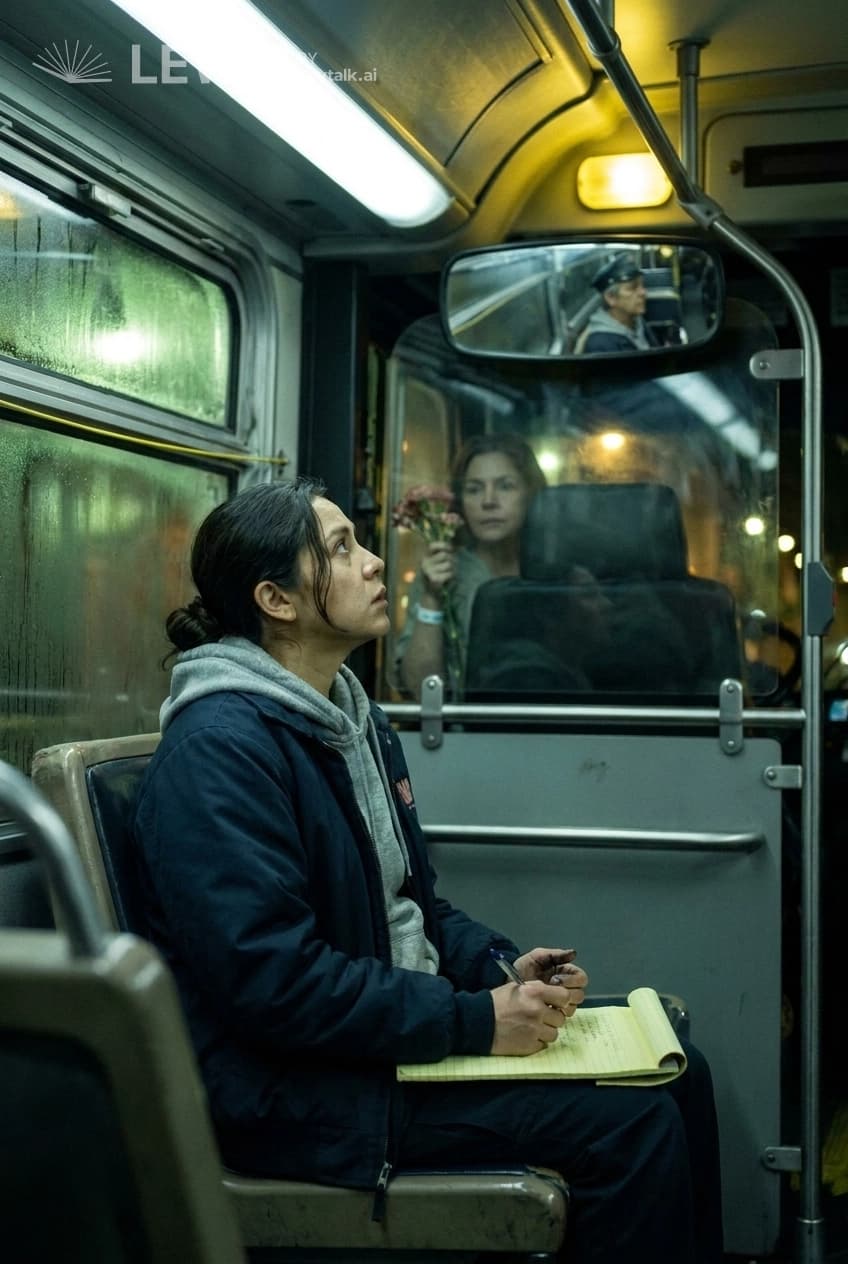
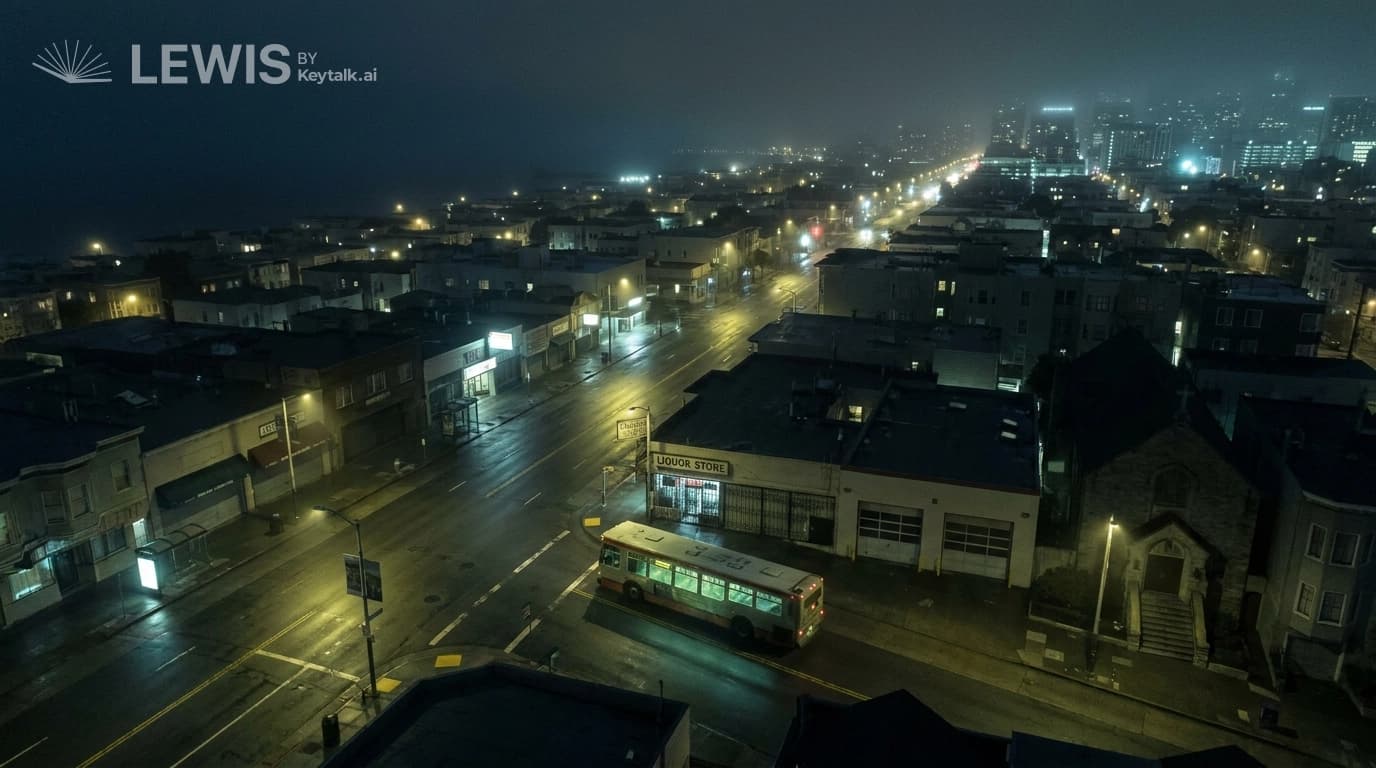
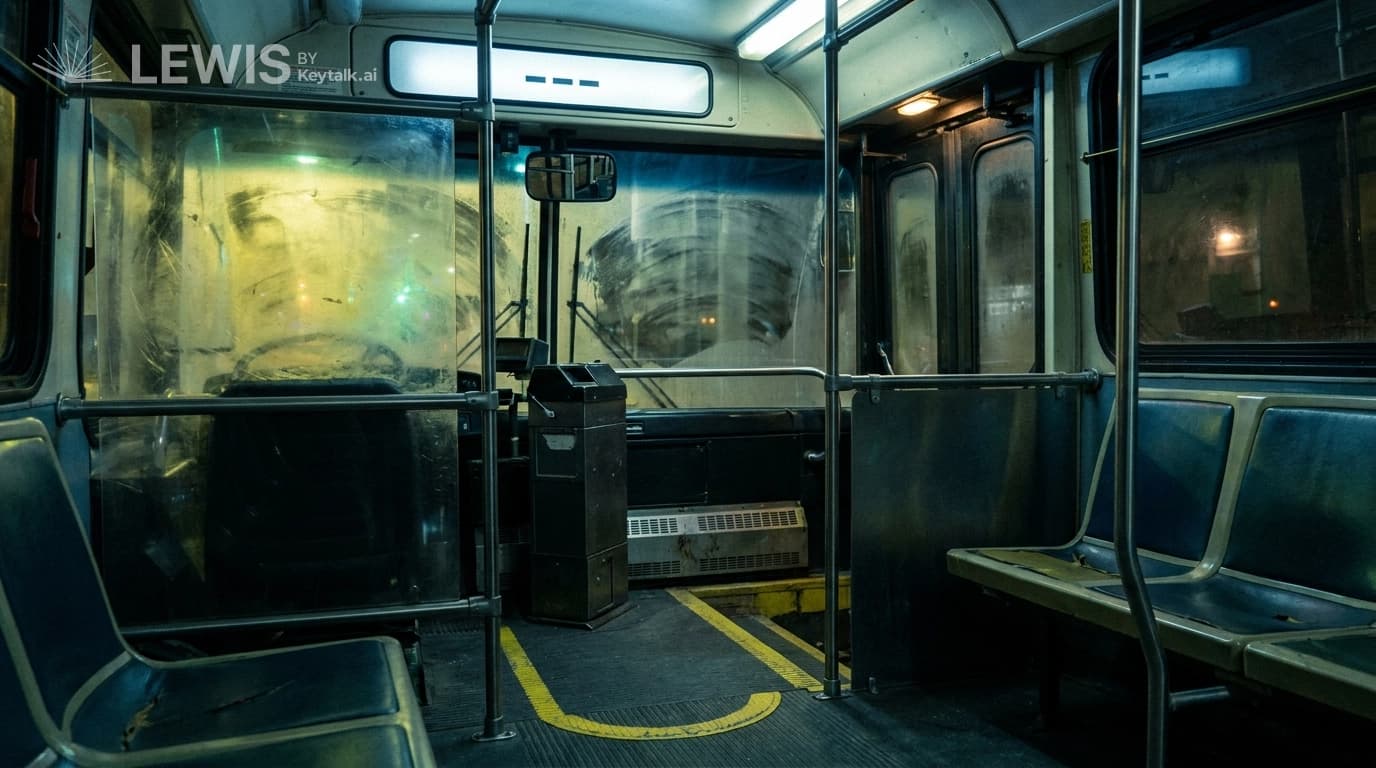
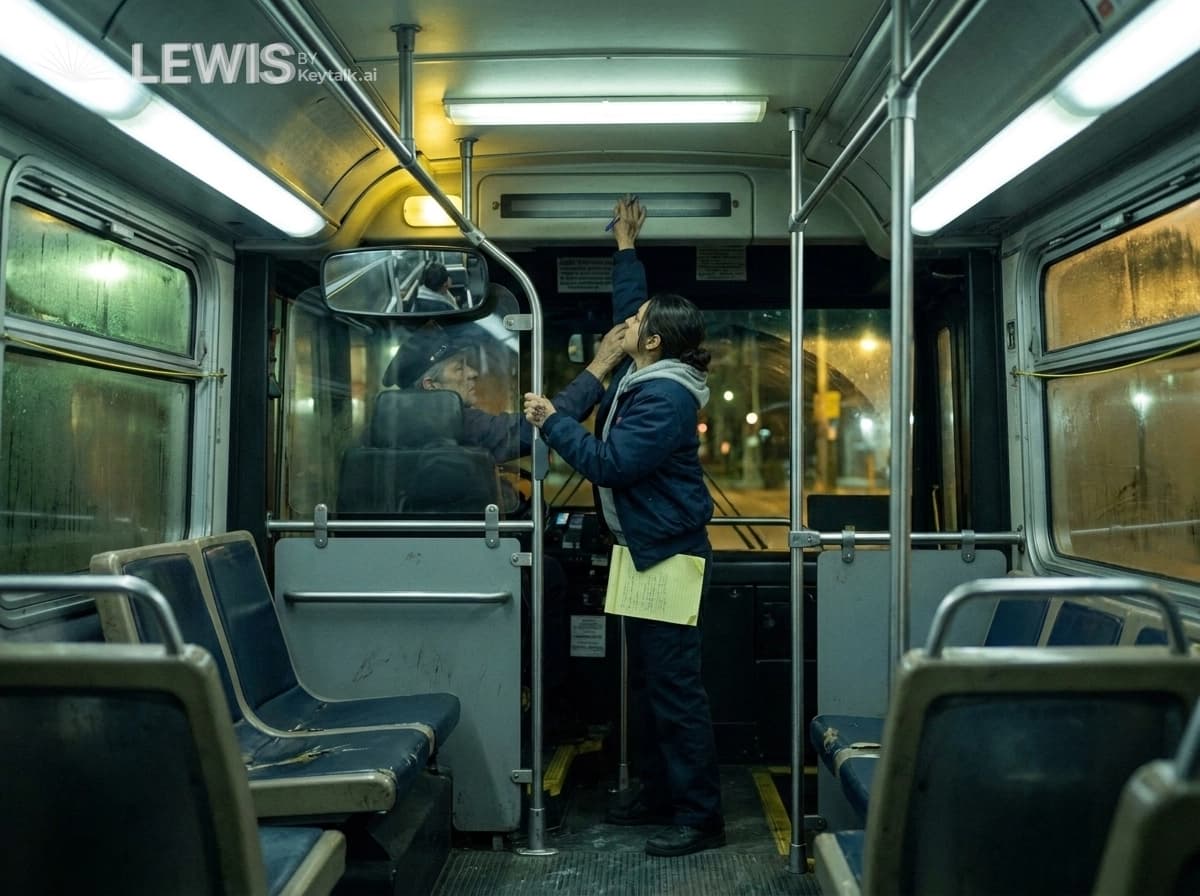
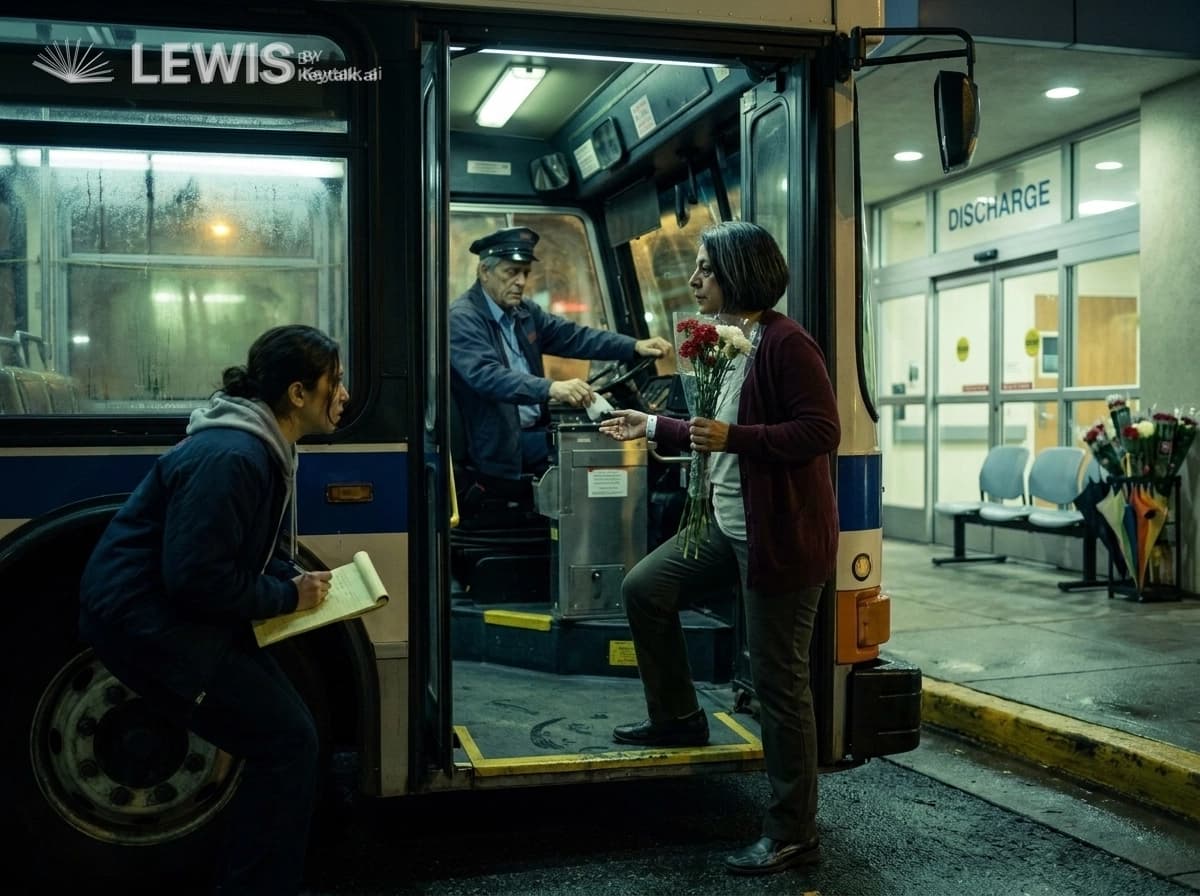
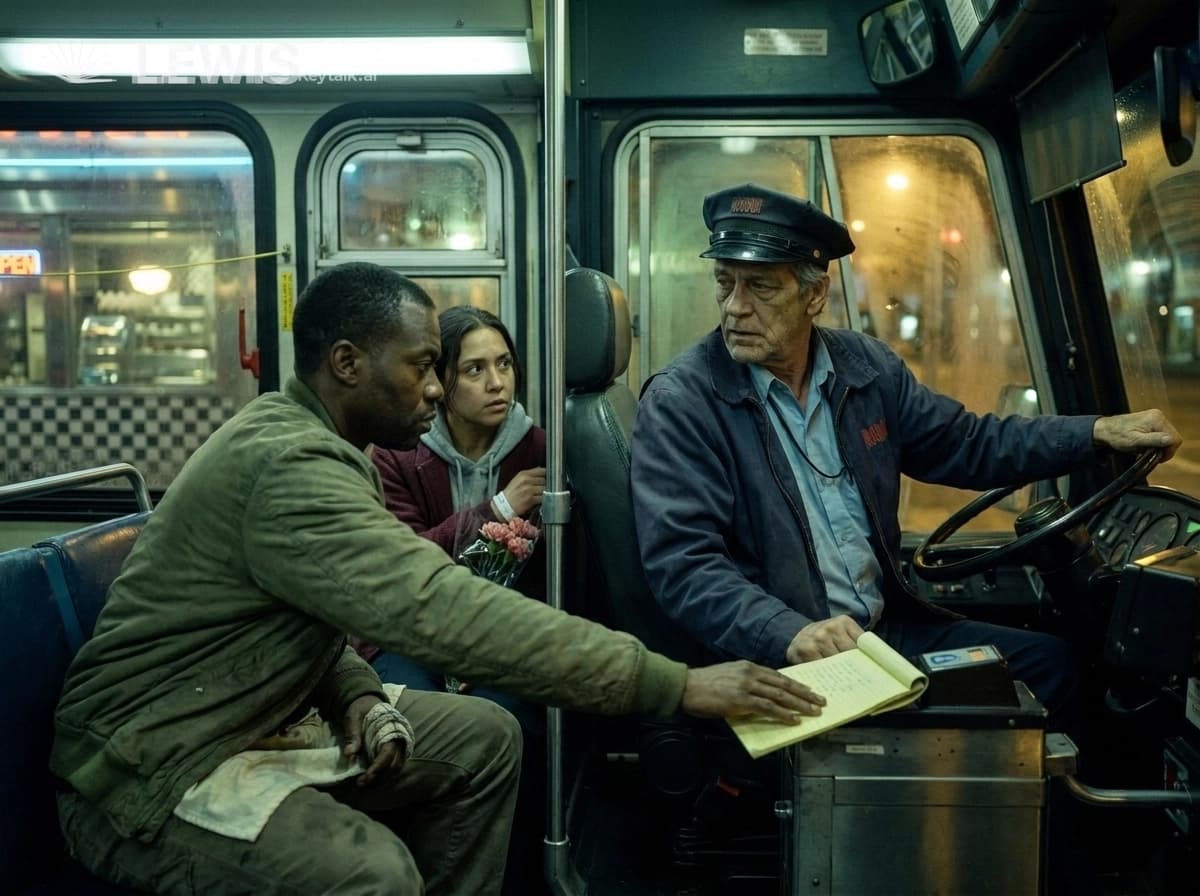
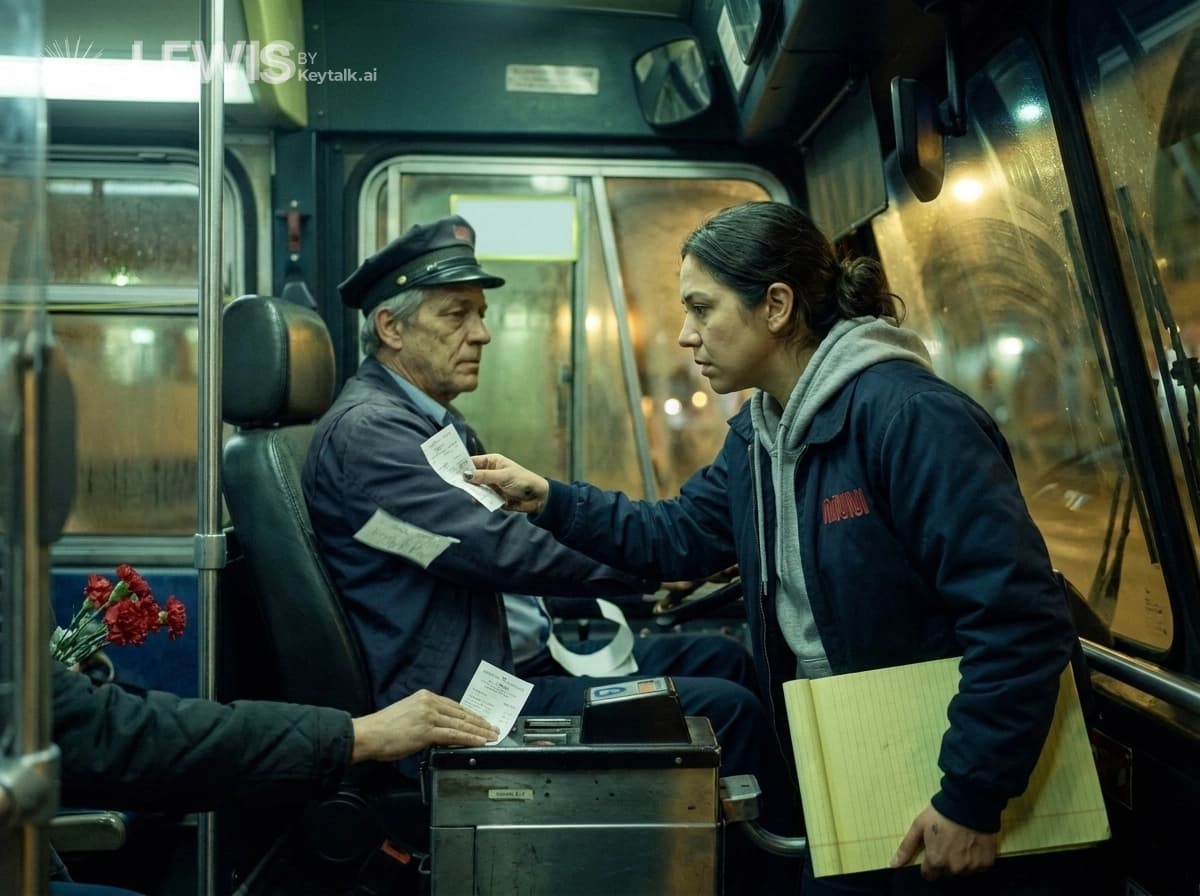
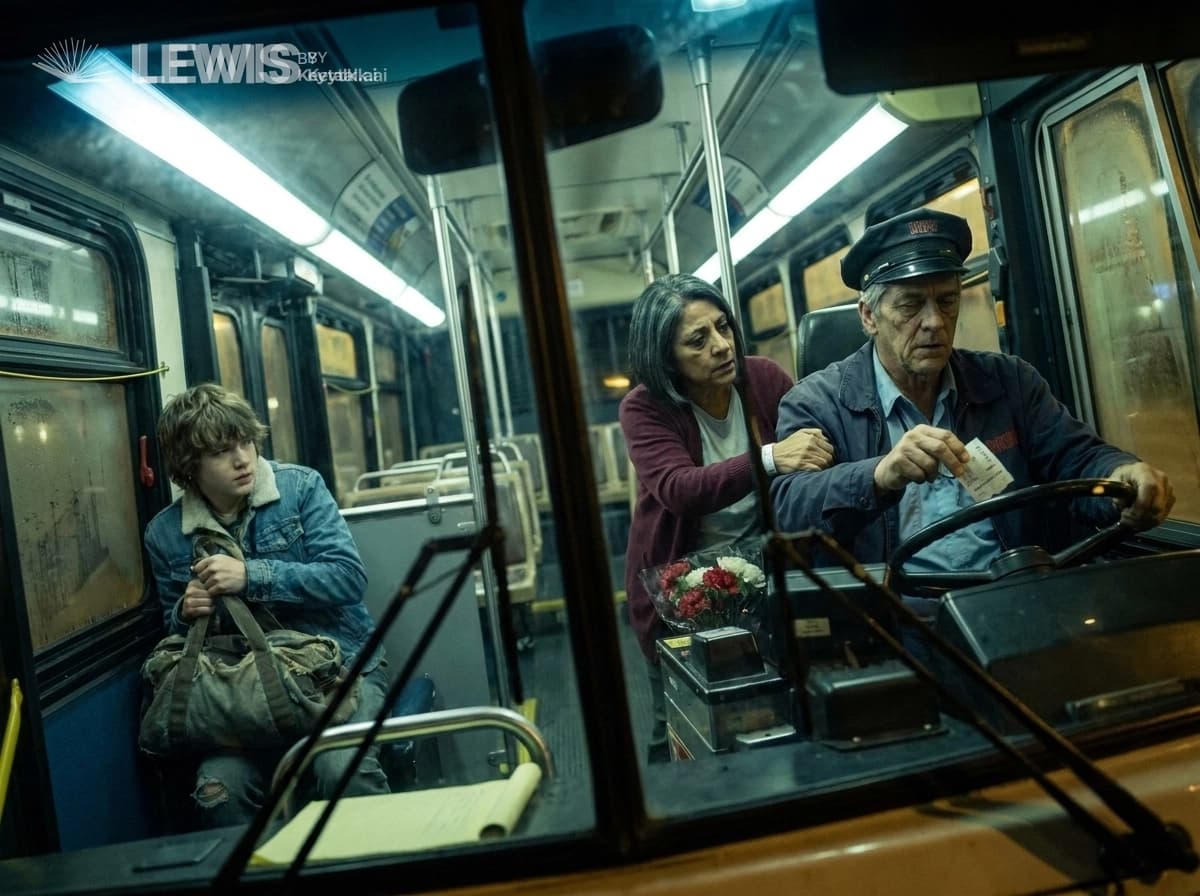
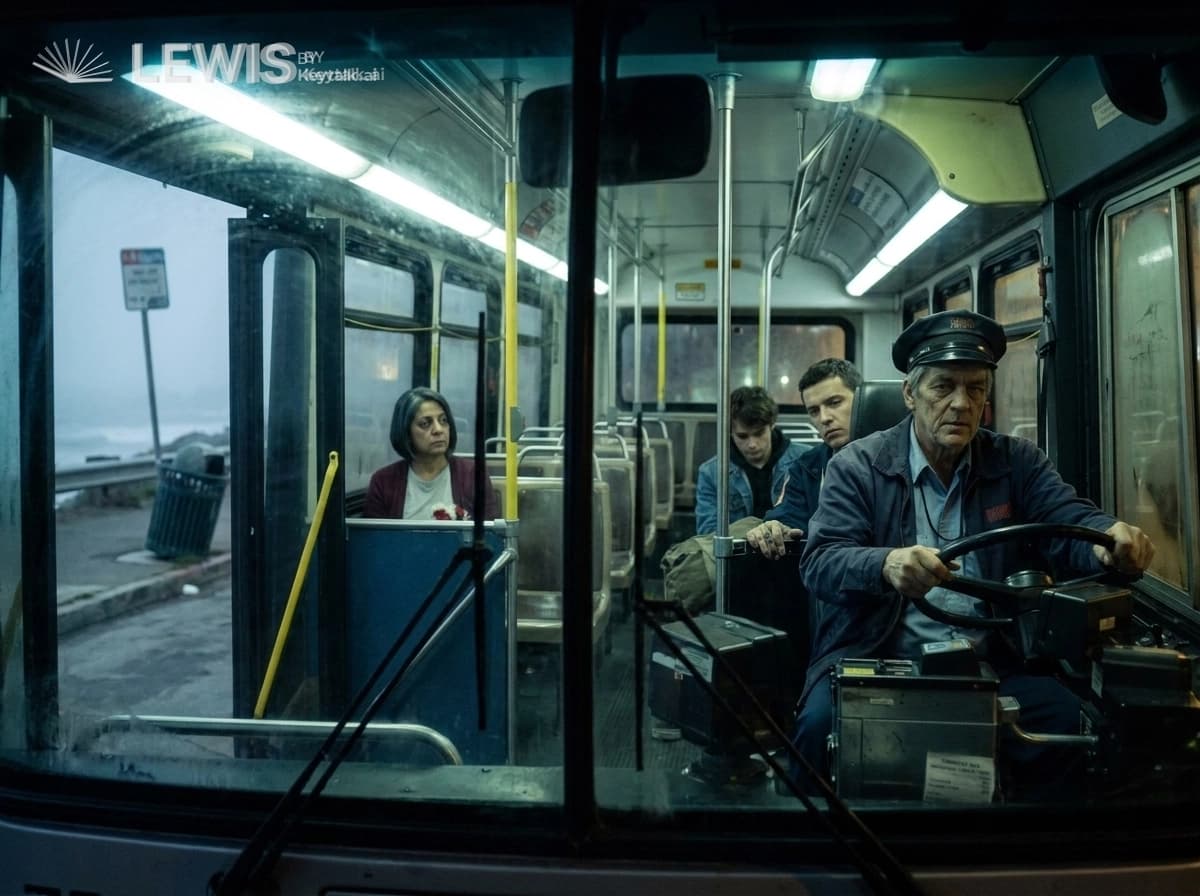
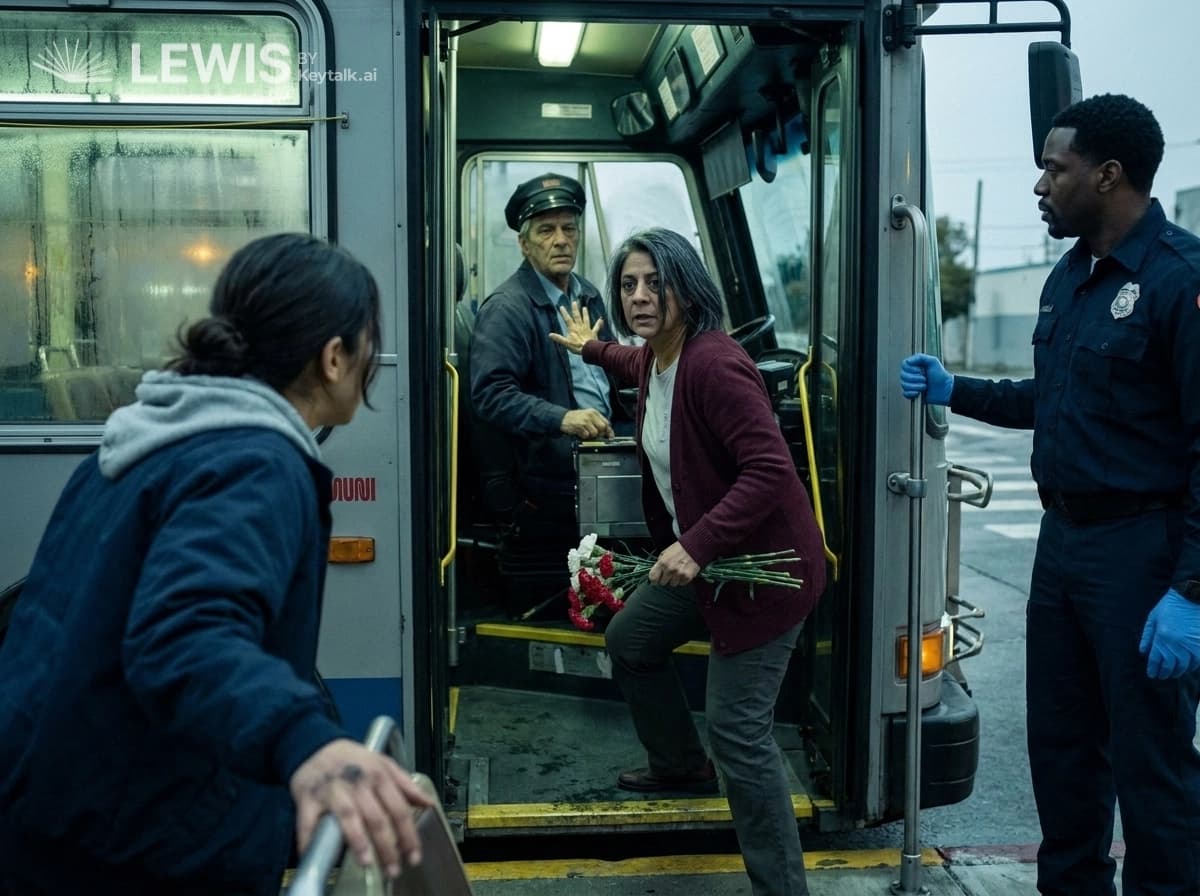
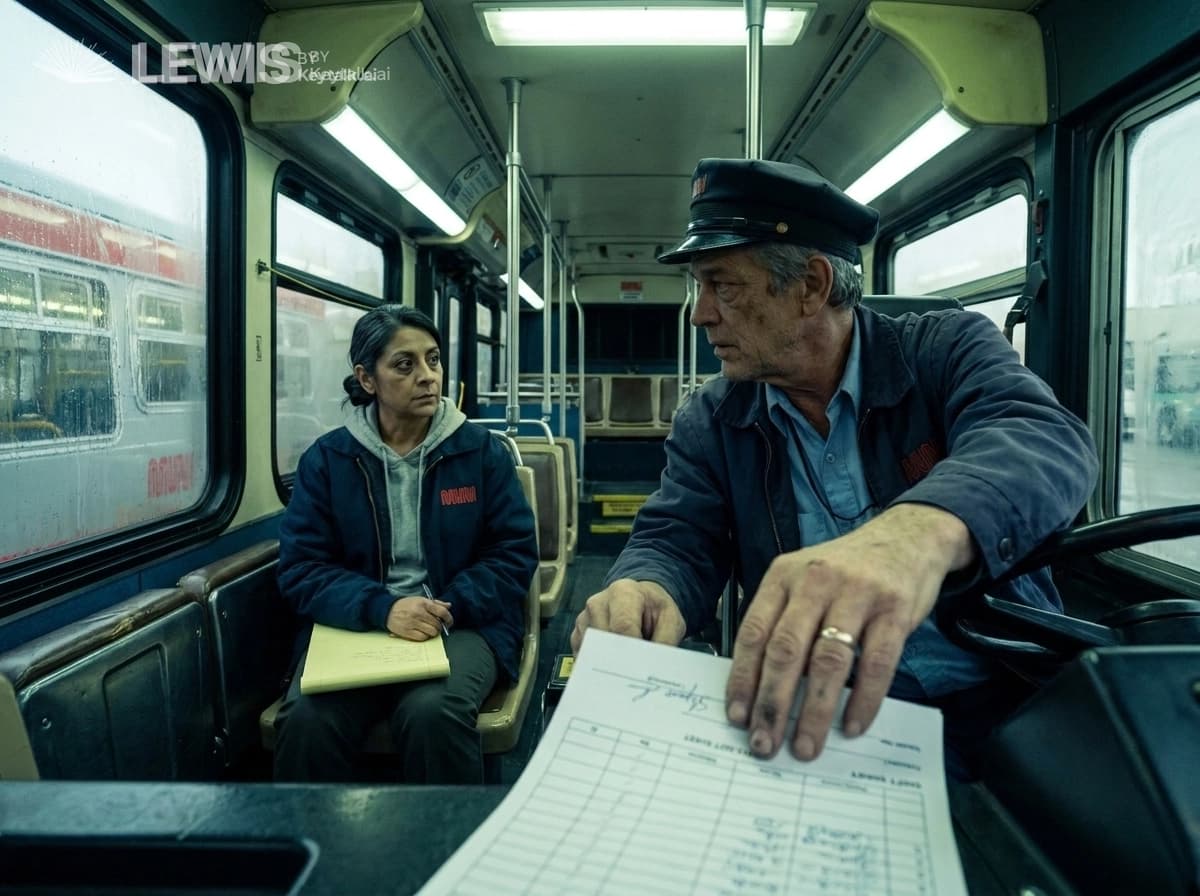
Inez Villareal boards the coach at 3:28 a.m. with a yellow legal pad, a cheap pen, and the kind of posture people mistake for calm. Hollis Vale is already in the driver’s seat, rubbing two fingers over the black cord at his throat where his wedding ring hangs under his shirt. He gives her the practical instructions first—mirror checks, brake lag on wet grades, the heater that cuts out on hills—and leaves out everything that matters. When the bus pulls from the yard and joins the empty Geary corridor, Inez notices the route placard is blank and the radio stays low, as if dispatch has agreed not to hear them. At the first unscheduled stop, the bus kneels without anyone pulling the cord. A woman in a hospital wristband steps aboard holding damp carnations in corner-store plastic and sits directly behind Hollis. Hollis goes white before he says her name. Marisol Quintero answers by asking for a transfer she does not need. Inez writes that down, then tears the paper pressing too hard when Hollis does not collect fare.
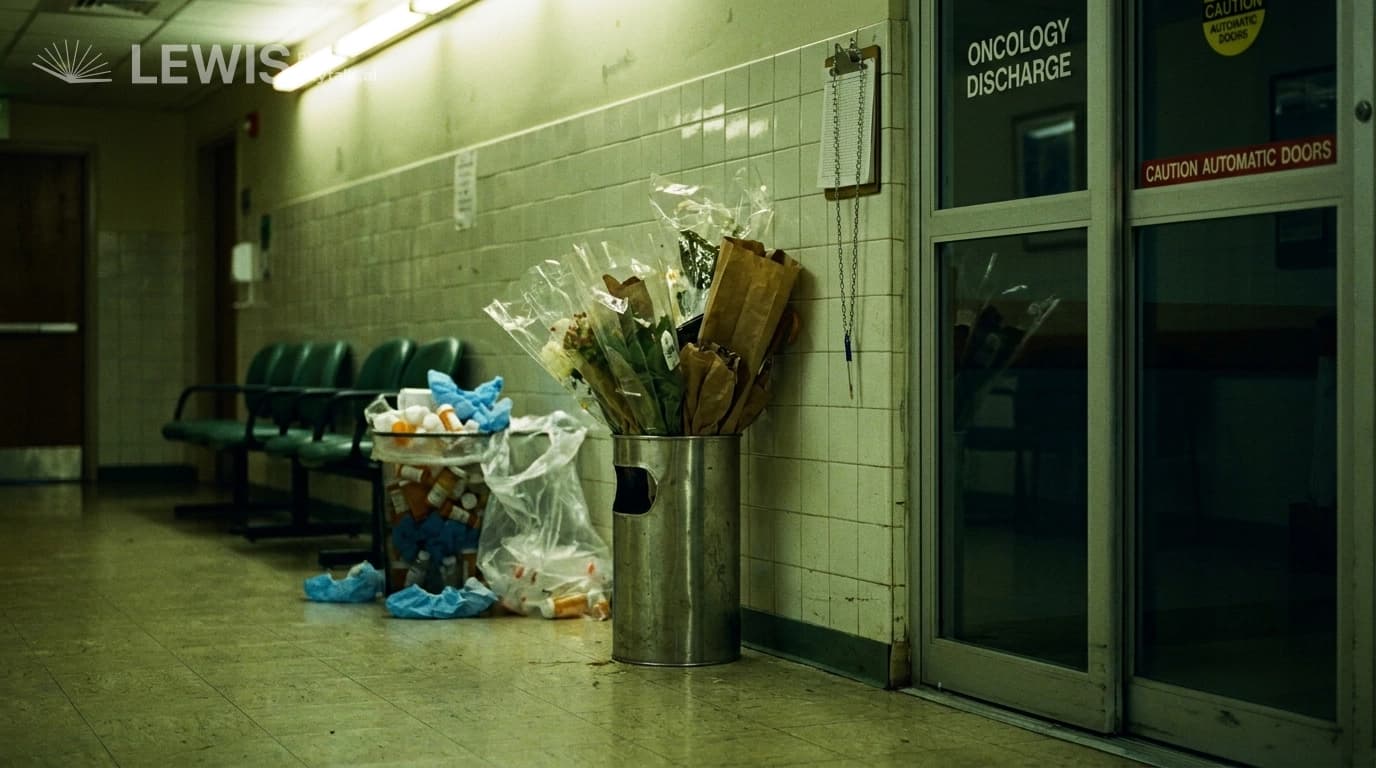
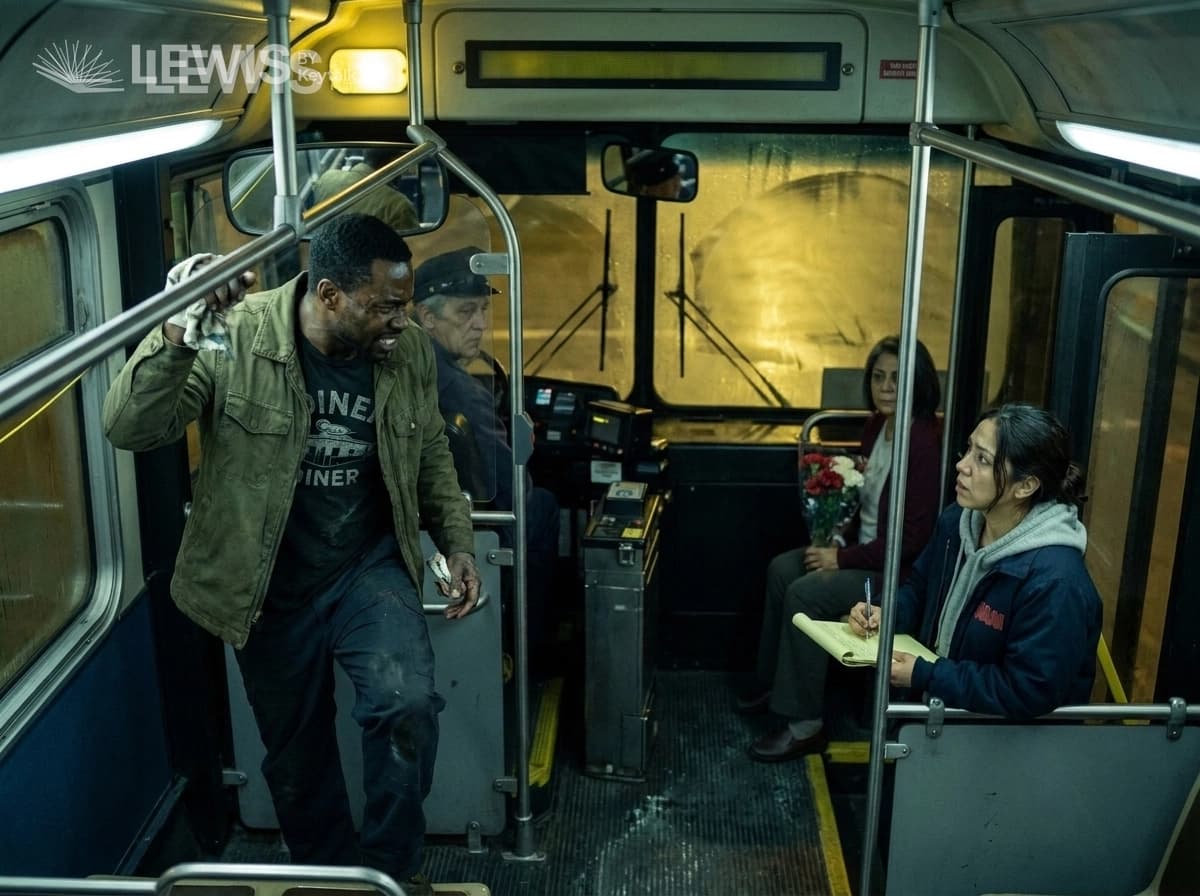
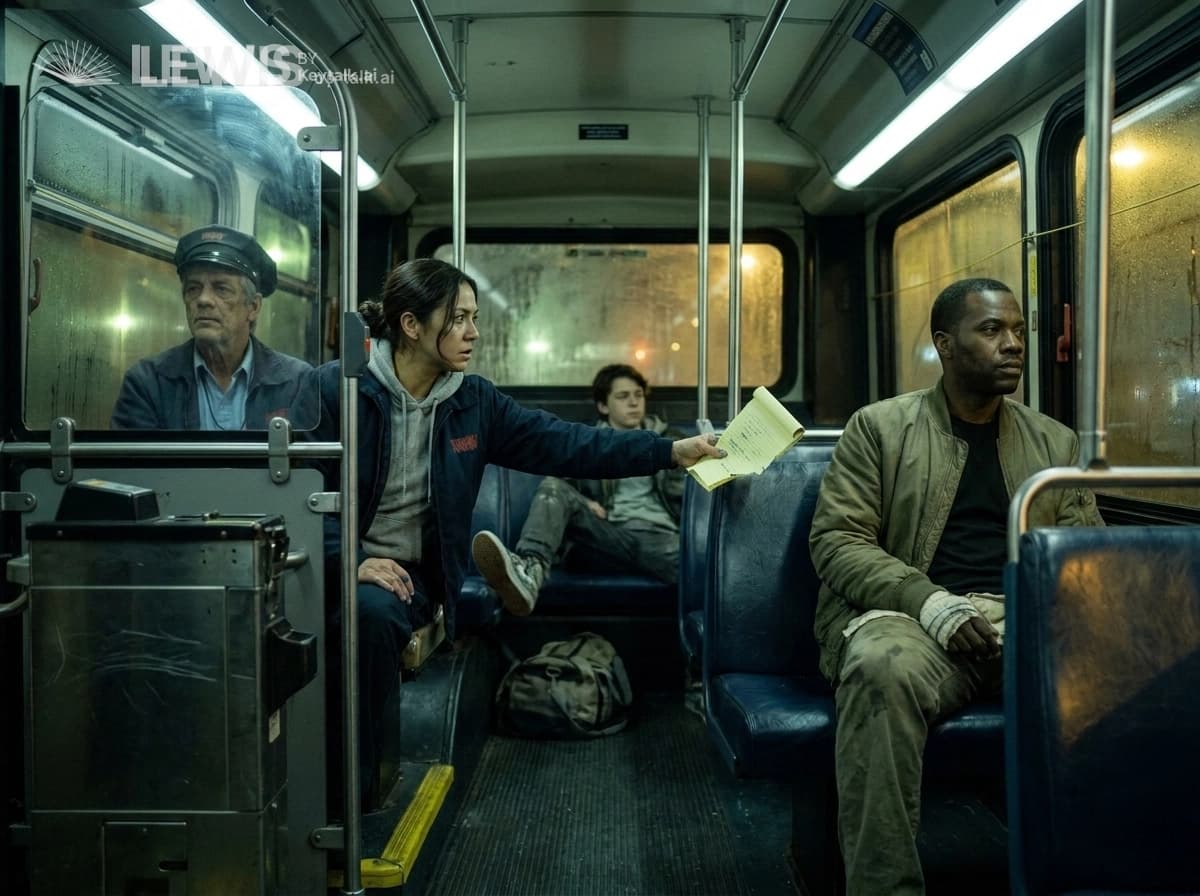
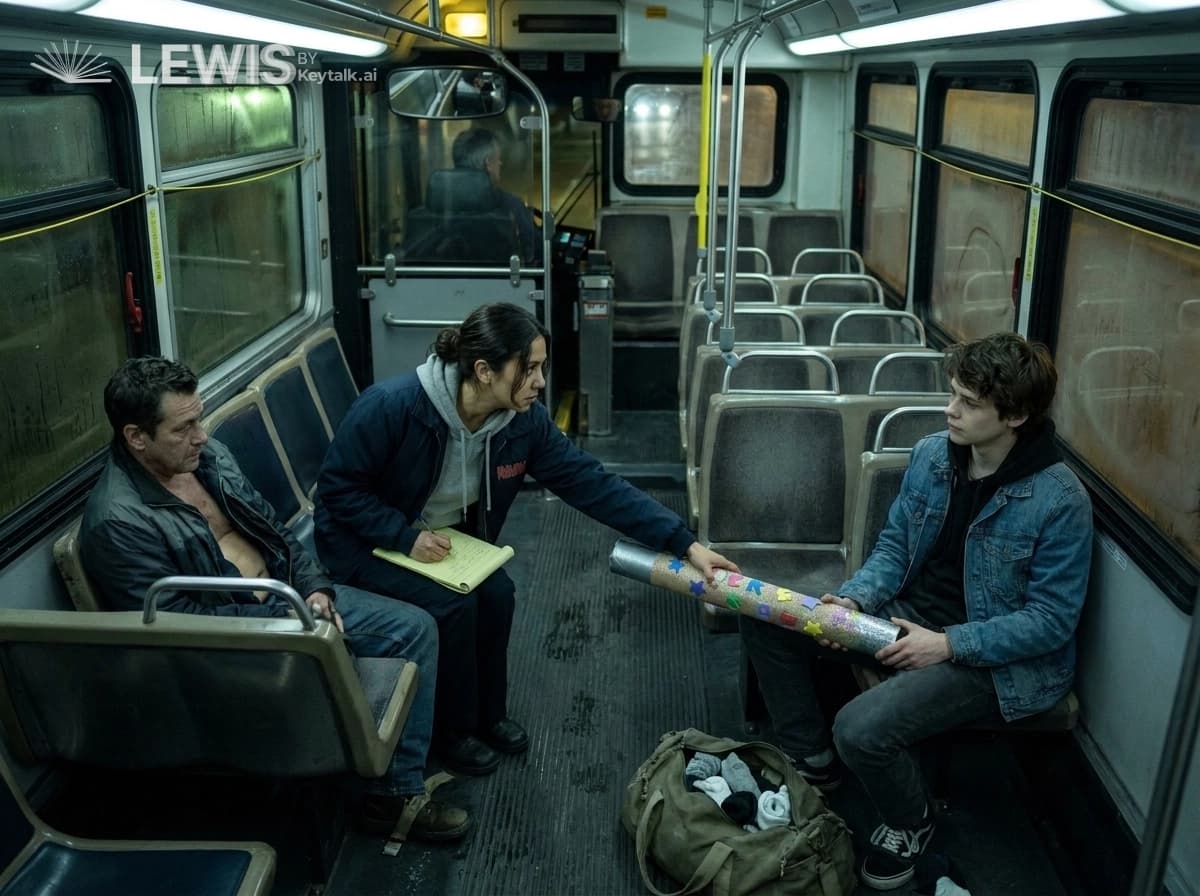
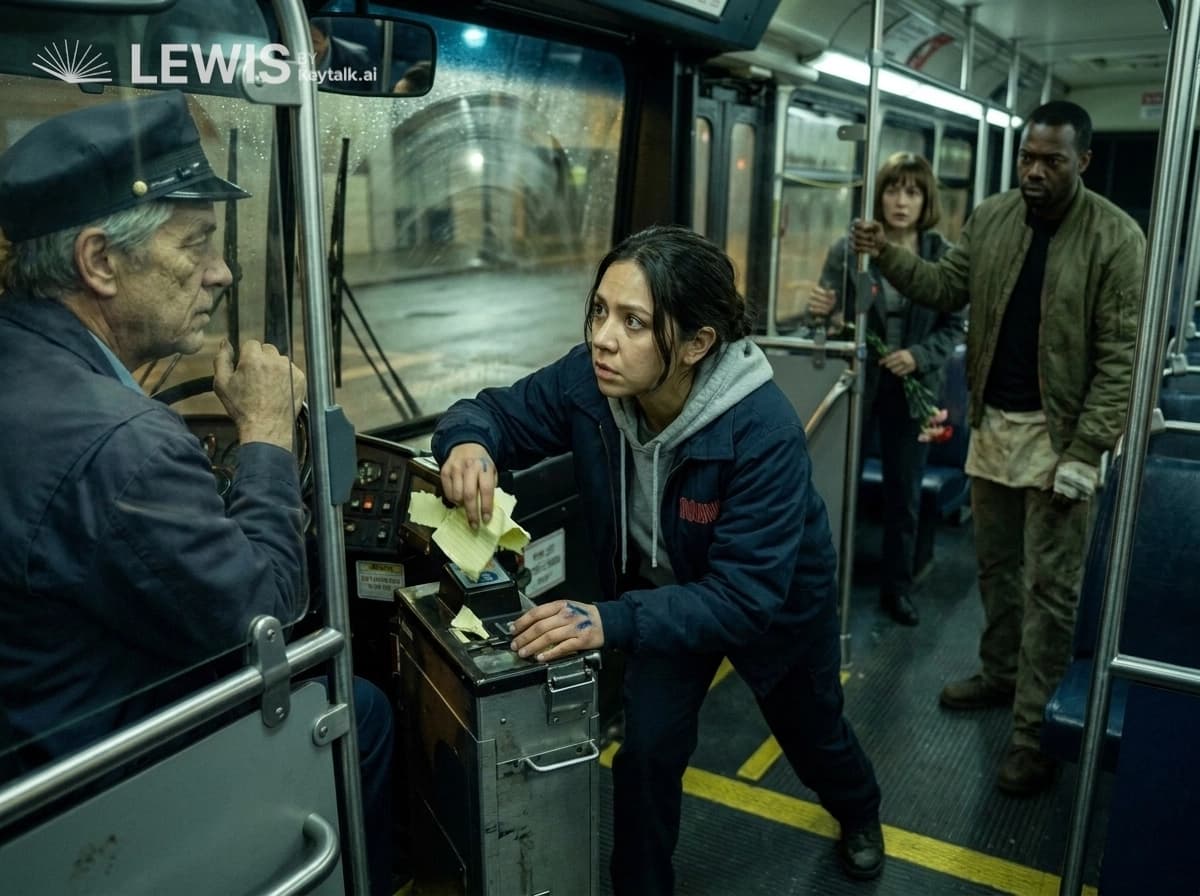
At the next pool of streetlight, Darnell Pike climbs on with a dish towel around his split knuckle and fryer grease still in the seams of his hands. He takes a sideways seat and keeps one arm folded tight over himself. A few blocks later Tavi Mercer hops aboard with a duffel bag and a half-smile too polished for the hour; he clocks Inez’s legal pad at once and starts acting like a boy who wants to be recorded as tougher than he is. Then, outside an ambulance bay, Celia Nwosu boards in her creased paramedic uniform, one blue glove still on, carrying her own wet bouquet like evidence she has no use for. The bus feels less like transit than a waiting room nobody chose, every rider holding the object the night has assigned them. Hollis steers west through fogged glass and keeps them talking by inches. He gets Darnell to admit he left his brother asleep on the couch after flushing pills and then standing over the sink long enough to want to follow them. He needles Tavi until the boy snaps and reveals he packed before his mother woke up, because leaving while she slept felt cleaner than hearing her call him selfish again. He turns one red light into a joke dry enough to make even Marisol’s mouth twitch. Each honest detail seems to buy the bus another block.
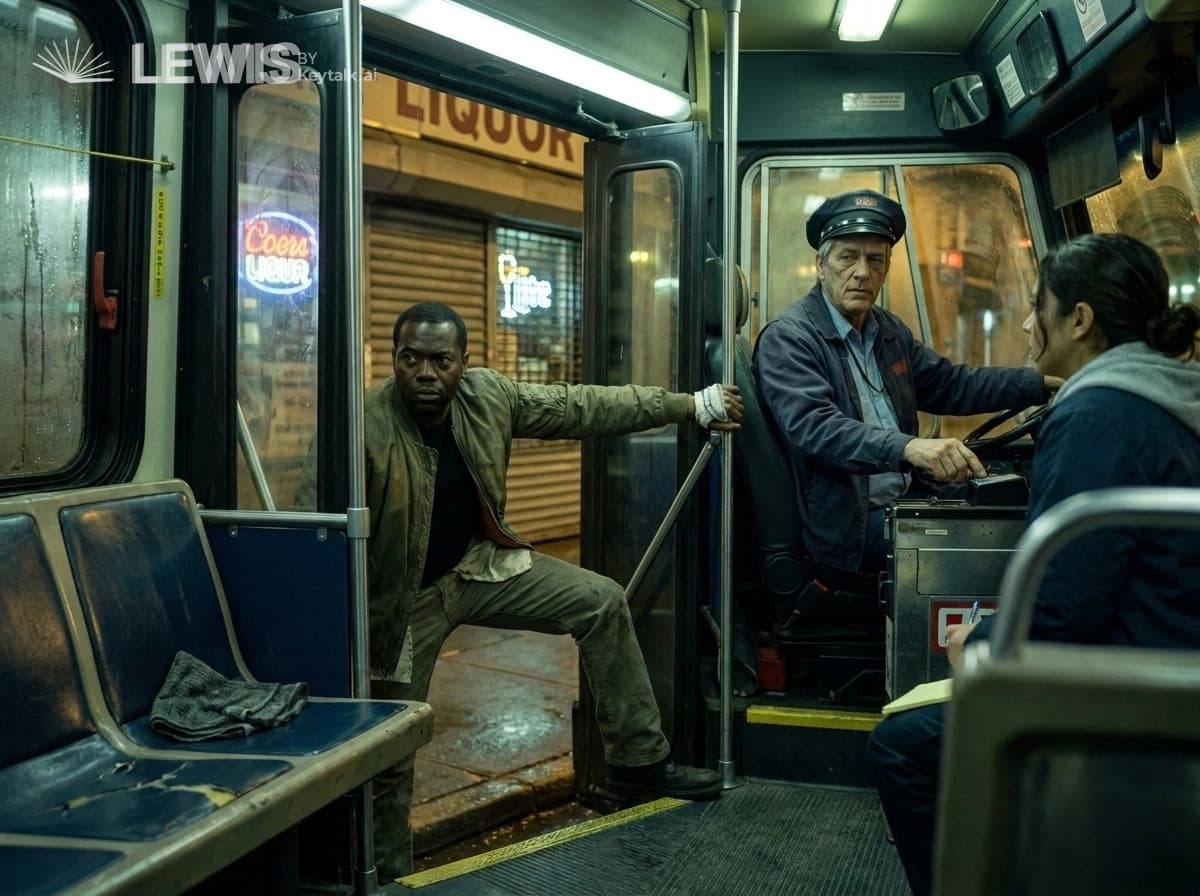
Inez tries to reduce the work to procedure. She notes which questions loosen shoulders, which silences make Hollis drum twice on the farebox, which corners he takes slowly when someone is close to bolting. But the rule breaks through in a physical way she cannot explain away. When Darnell, stung by Marisol’s flat stare, stands and yanks the stop cord to get off near a shuttered liquor store, the bus lowers only halfway. The doors wheeze open six inches and stick. Hollis does not look surprised. He tells Darnell to take the towel with him. Darnell throws it on the seat and tries to step down anyway, catching his shin hard on the half-lowered step. He swears, snatches up the blood-stiff dish towel, and only then do the hydraulics sigh the rest of the way. Inez stares at the door, then at Hollis. He tells her to write this part down if she wants, but says it without humor.
The route grows meaner as the city thins. The heater coughs warm dust, dies on a hill, and everyone’s breath starts to film the windows. Marisol uses each stop to pin Hollis down with another exact question about the night her daughter Alma died: where Alma sat, whether she was crying, whether Hollis saw her cross in front of the bus or behind it, whether he called after her. He answers with details he has spent years refusing to say aloud. Alma had transfer slips folded into stars. Alma got off two stops early after a fight on the phone. Alma turned once in the mirror as if she had forgotten something and then kept walking into fog and headlights. Each answer costs Hollis visibly; his hands tighten on the wheel, and the bus drifts near the curb before he corrects. Marisol does not shout. She makes him repeat what color jacket Alma wore, and that lands harder.
Inez begins to understand that honest speech is not a metaphor here but fuel. When riders retreat into scripts, the bus seems to drag; when they say one ugly, specific thing, it moves easier. She tests it by speaking up to Tavi instead of writing him down. She asks why the duffel is packed with rolled socks around something breakable. He smirks, says she must think she’s a cop, then jerks when the bag tips and a little girl’s glitter-glued poster tube slides partly out. Caught, he admits he stole his sister’s concert sign because she made him promise to hold it from the audience. He thought if he took it, he could pretend missing the concert was an accident. The admission empties the swagger from him. Hollis gives Inez one sideways look in the mirror that is as close to approval as he gets.
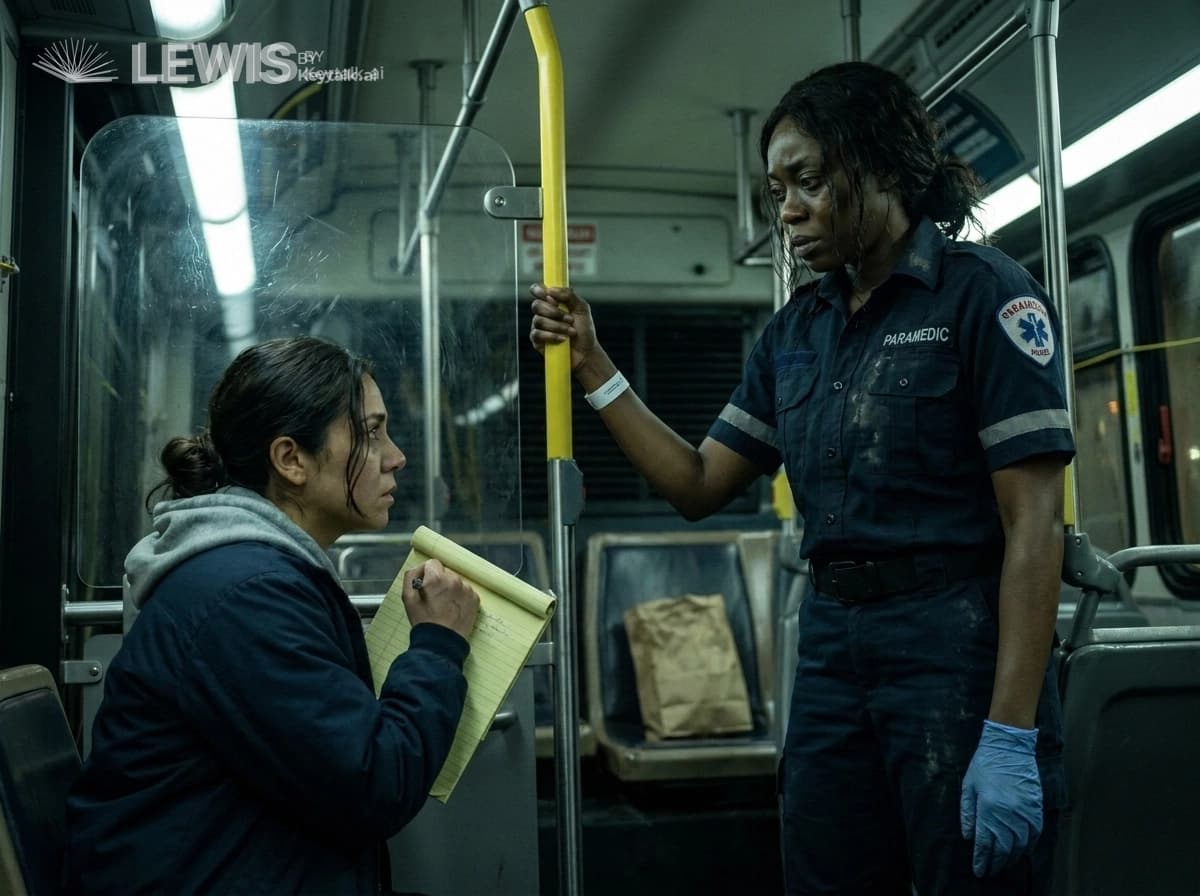
At a long red light near a closed elementary school, Celia finally speaks when Marisol notices the hospital wristband on her bare hand and asks which floor. Celia says the oncology floor, then the apartment on Turk where she lost a man after getting him home, then the part she has not said to anyone: she paused on the landing outside his door because she did not want to climb one more flight of stairs. It was only seconds. She says that like it should convict her. Her gloved hand has already moved to Tavi’s wrist because his breathing has gone thin and fast, two fingers finding his pulse before her face changes. She shoves a paper bag into his hand, orders him to breathe into it, and goes rigid when he mutters thanks. Hollis asks, too casually, whether she still teaches compressions harder than she kisses. The old familiarity between them flashes across the aisle and dies. Later, when Inez corners Celia by the rear door while Hollis helps Darnell rewrap his knuckle, Celia tells her what Hollis never did: if one rider reaches the end still set on disappearing, the driver does not just fail. The seat takes him. Another driver shows up someday because the city always finds one, but the person who drove that last run is gone from ordinary life. Hollis has lasted thirteen years by talking people back, and every year has taken a piece.
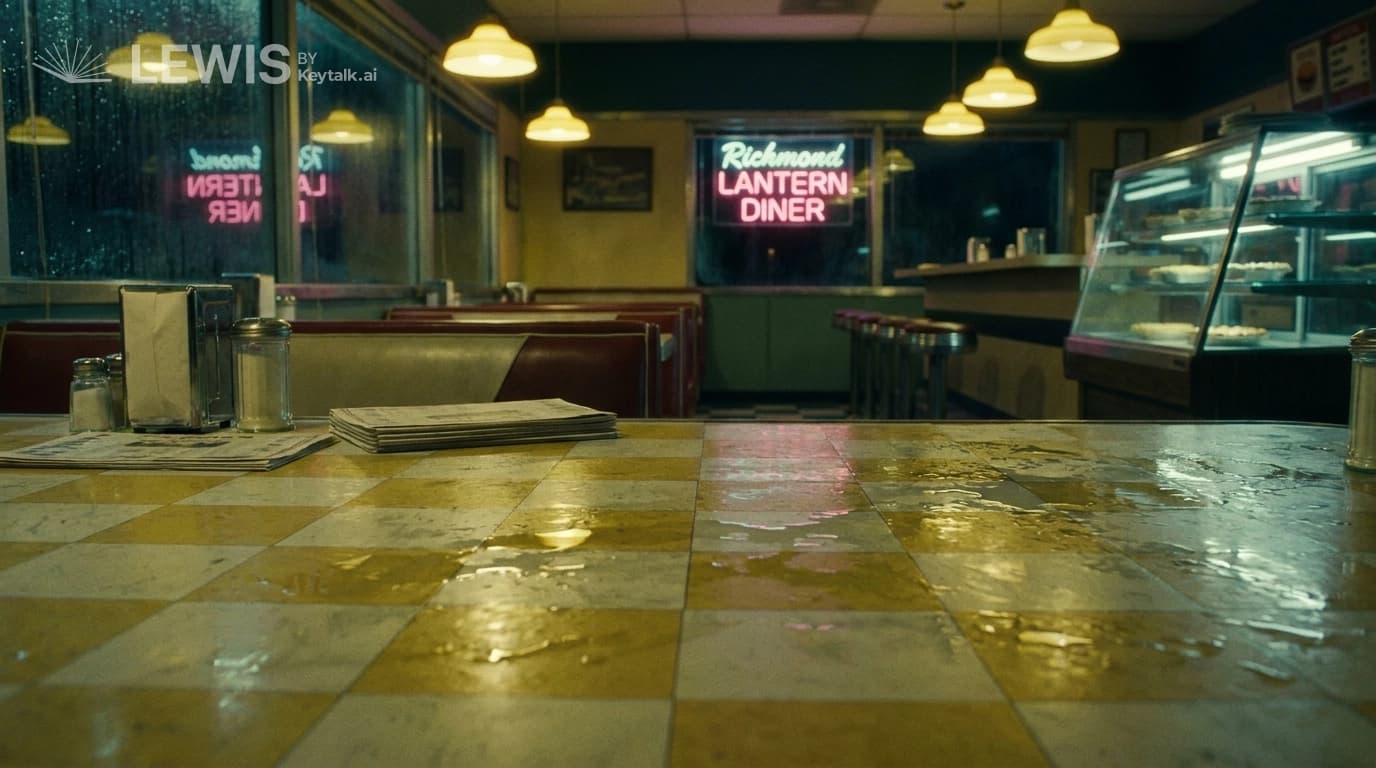
That knowledge curdles Inez’s goal. Getting through training now means helping Hollis spend himself for strangers while the company pretends none of it exists. Her inherited habit—to survive by staying useful and not asking what work costs the worker—starts to feel like cowardice. When the bus pauses outside a diner with bleached floors, Darnell recognizes Marisol from the hospital cafeteria and says he knows she never ate the pie he slipped her; he watched her wrap it and carry it upstairs untouched. Marisol answers that he always overbrowned the crust on purpose so nobody else would ask for the free slices. The two of them, strangers linked only by night labor and fluorescent rooms, begin to speak to each other without Hollis mediating. Darnell admits he is tired of being the last wall between his brother and a grave. Marisol admits she came aboard because going home would mean unlocking a stripped apartment and proving she can survive after erasing Alma’s toothbrush. Their honesty pulls others in. Tavi, unable to bear being the youngest person there and still the least truthful, blurts out that his mother did not hit him tonight; she begged him to stay, and he left anyway because being needed felt like a trap. He has spent the ride making her sound cruel so he would not have to feel cruel himself.
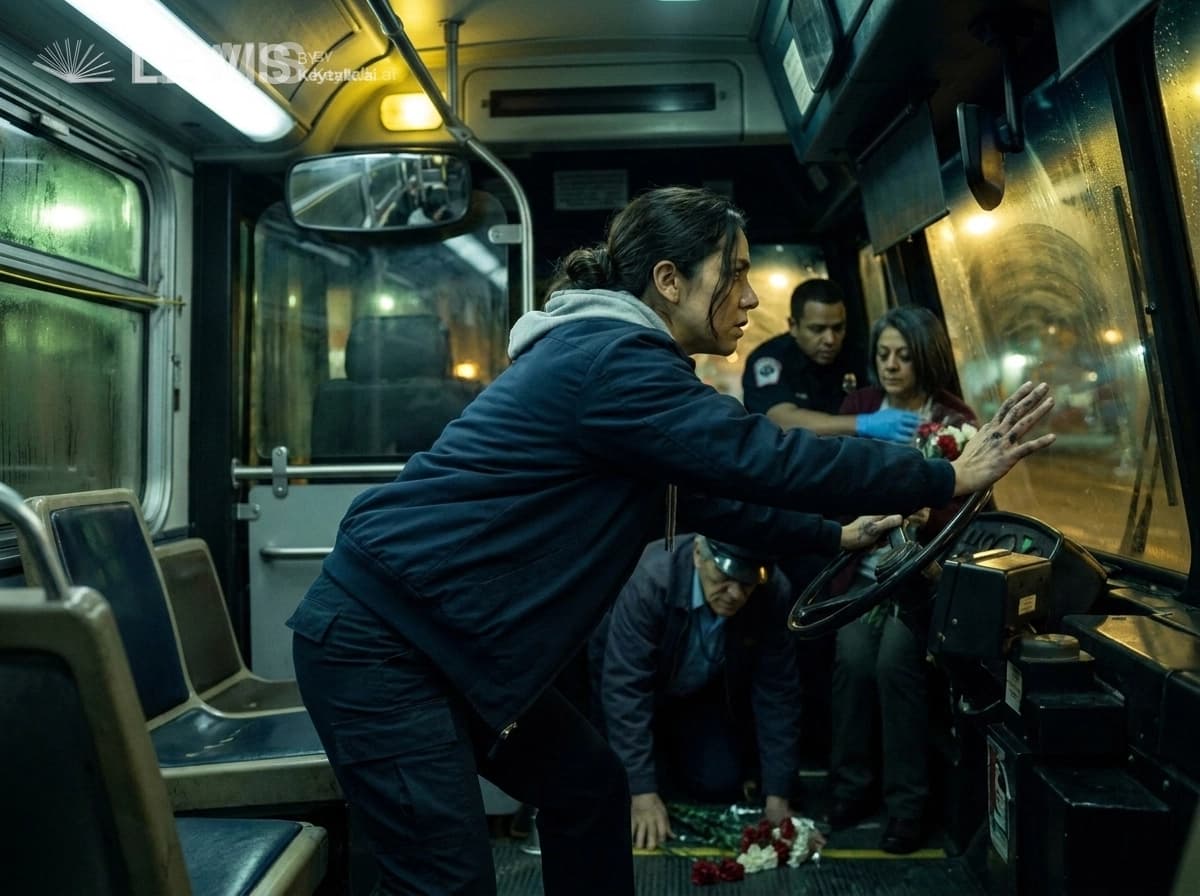
The middle stretch of the route becomes a chamber piece of collisions and small rescues. Tavi tries to get off twice and is physically blocked once by Darnell planting his body in the aisle and once by Marisol pinning the duffel with her sensible shoe until he stops pulling. Celia opens a packet of stale crackers from her pocket and makes Inez eat when her hands start to shake. Hollis misses a turn for the first time in years because Marisol asks whether Alma looked scared of dying or scared of going home. He brakes hard, everyone lurches, carnations hit the floor, and the bouquet plastic crackles underfoot like fire. Inez grabs the wheel instinctively while Hollis hauls the bus straight. For one blind block he orders her to hold lane and speed while he kneels in the aisle gathering Marisol’s flowers with both hands. It is the first time he trusts her with motion while he tends to the living work inside the bus. The block is short, but when he takes the seat again, she has crossed from observer into accomplice.
Near Ocean Beach, where the route grows emptier and the windows turn black with their own reflections, the farebox begins spitting transfer slips without being touched. They flutter into the aisle and stick damply to shoes and seat legs. Most are blank. One bears Alma’s old stop number. Hollis nearly pulls over. Marisol picks it up before he can and asks whether this is how he has been haunted into mercy all these years. He says no. Worse: this is how he has been excused from speaking plainly. He has told himself the city, the bus, the rule, Alma’s ghost—anything but his own choice—kept him driving. Marisol forces the real confession out of him. On the night Alma died, he saw she was in trouble and let her off anyway because he had a bus full of other people and a schedule in his bones. He called after her, but he did not leave his seat. For years he has refused to pick up Marisol because her face made that failure present in the mirror. The admission lands like a physical blow. Marisol slaps the transfer slip against the farebox so hard it sticks there with condensation. Then she starts to cry for the first time, silent and furious, bouquet crushed crooked in her lap.
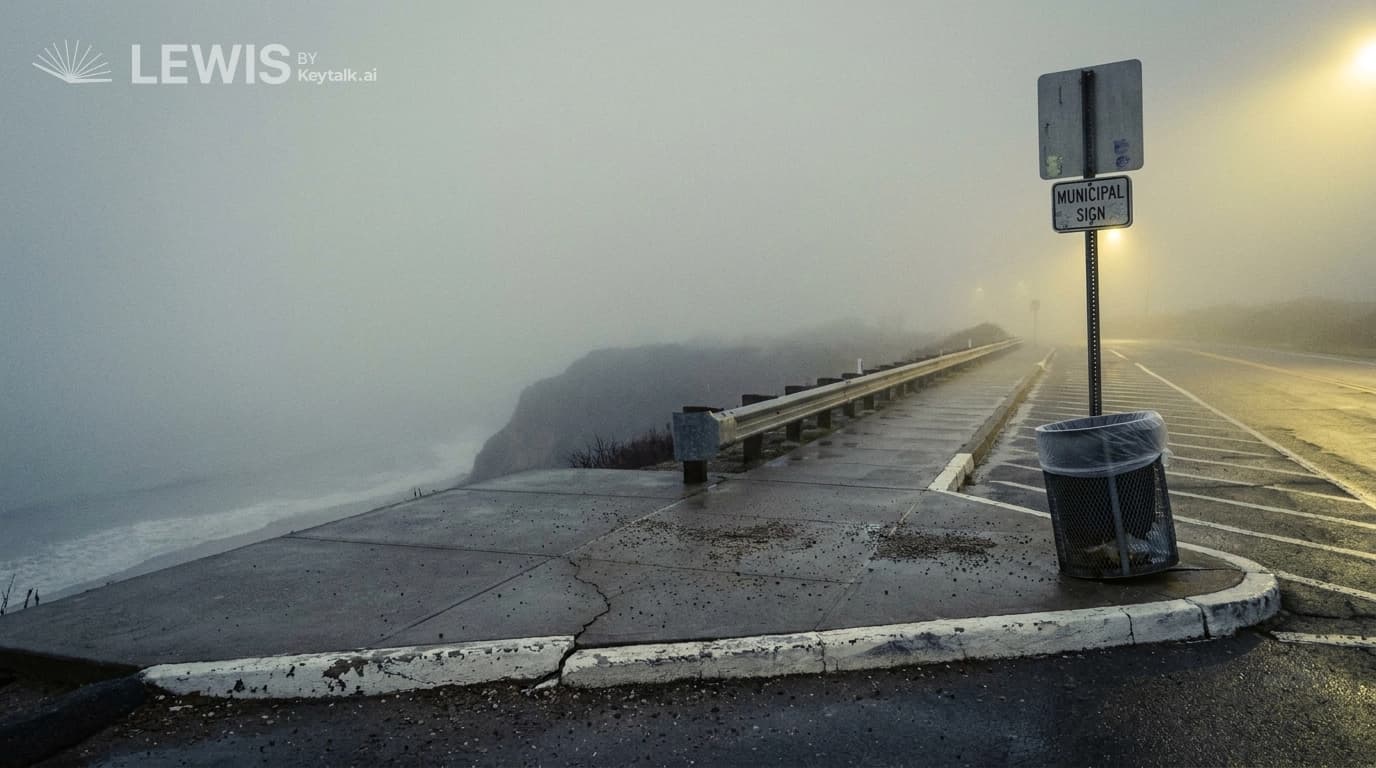
The final approach begins when the bus should by all logic be almost done and instead keeps finding one more block. Dawn has started to thin the fog, but the coach feels sealed against it. Hollis grows slower, his jokes gone. The riders have all yielded something except Marisol. She says she still does not want morning. Not because she wants death in some grand sense, but because morning means forms, keys, dishes in the rack, and a body memory of calling Alma’s name into rooms that stay empty. The bus shudders. The heater dies for good. Hollis pulls to the curb outside the dark, wind-wet overlook above the beach that serves as the route’s last stop, though no sign marks it. The doors open onto gray air. Nobody moves. Hollis takes his hands off the wheel. He says, almost gently, that this is where the route settles its debt.
Inez finally refuses the role of note-taker. She tears the legal pad in half, drops it on the dash, and physically steps between Hollis and the open door when he rises. He tells her to move. She says no, because the whole night he has been teaching her to keep people on the bus long enough to choose again, and she is not letting him make one noble disappearance look like procedure. Hollis tries to shoulder past her. Darnell stands and blocks the aisle from the other side. Celia grabs the stanchion and braces herself, not letting Hollis force through without dragging all of them. Tavi, shaking, picks up the fallen carnations and jams them back into Marisol’s hands because the object has to leave with its owner. The bus becomes a literal barricade of bodies around one exhausted man trying to pay a debt the old way.
Marisol ends it. She stands, steps into Hollis’s path, and makes him look at her instead of the open door. Then she says the thing she came for and did not know until now: Alma was not on that corner only because Hollis failed her. Alma had been disappearing by degrees for months, and Marisol had answered her daughter’s fear with neat bills, packed lunches, and the hard brightness of a mother who could not bear one more emergency. She stripped the apartment tonight not because she was ready to die, but because she wanted to erase the evidence that she had once had a daughter she could not keep. Saying it buckles her. The bouquet trembles; one carnation head drops to the floor. Hollis reaches for her elbow, not to rescue but to steady. She does not pull away. She says she still hates him for staying in the seat. She also says she is not willing to make another person vanish to prove her grief is larger than his. It is the first clean thing she has chosen all night.
The bus reacts at once. The kneeling suspension, which had sunk under Hollis’s weight toward the open doors, lifts level. Morning finally floods the windshield in a thin municipal gray. The route is finished because the last certainty has broken—not into hope, exactly, but into willingness. One by one the riders get off carrying what they brought. Darnell steps onto the curb with his towel and, before leaving, asks Inez for her pen; he writes his brother’s rehab intake address on the torn back page of her notes so he cannot pretend later he forgot where to go. Tavi shoulders his duffel and the poster tube together, then asks what time the first eastbound bus will get him to the school auditorium. Celia pauses on the step, touches Hollis’s shoulder with her gloved hand, and tells him to sleep before he mistakes endurance for service again. Marisol is last. She takes the crushed carnations, the transfer slip stuck wet to the farebox, and Hollis’s full gaze. She does not forgive him. She says, “Tell the next one sooner,” and walks into dawn.
Back at the yard, the coach looks like any other dirty overnight bus except for the torn legal pad on the dash and the coffee rings no report will mention. Hollis offers Inez the easy lie—that she can tell supervision the run was uneventful and ask off graves forever. Instead she hands him the half of the pad she kept. On it she has written no magic rule, no names, nothing the company could use to kill the route. She has written only the stops, the silences, and one line underlined hard enough to dent the paper: Ask before the door opens. Hollis understands that she is not exposing him and not absolving the system either. She is choosing the work with her eyes open, which is more frightening than ignorance and cleaner than martyrdom. When dispatch finally crackles over the radio asking why Coach 721 is late clearing, Inez reaches past him, lifts the handset, and answers in a steady voice that they were delayed with passengers. Then she signs her name to the shift sheet and takes the seat behind him, not yet at the wheel, but no longer a bystander.
















댓글 · Comments
댓글 · 0