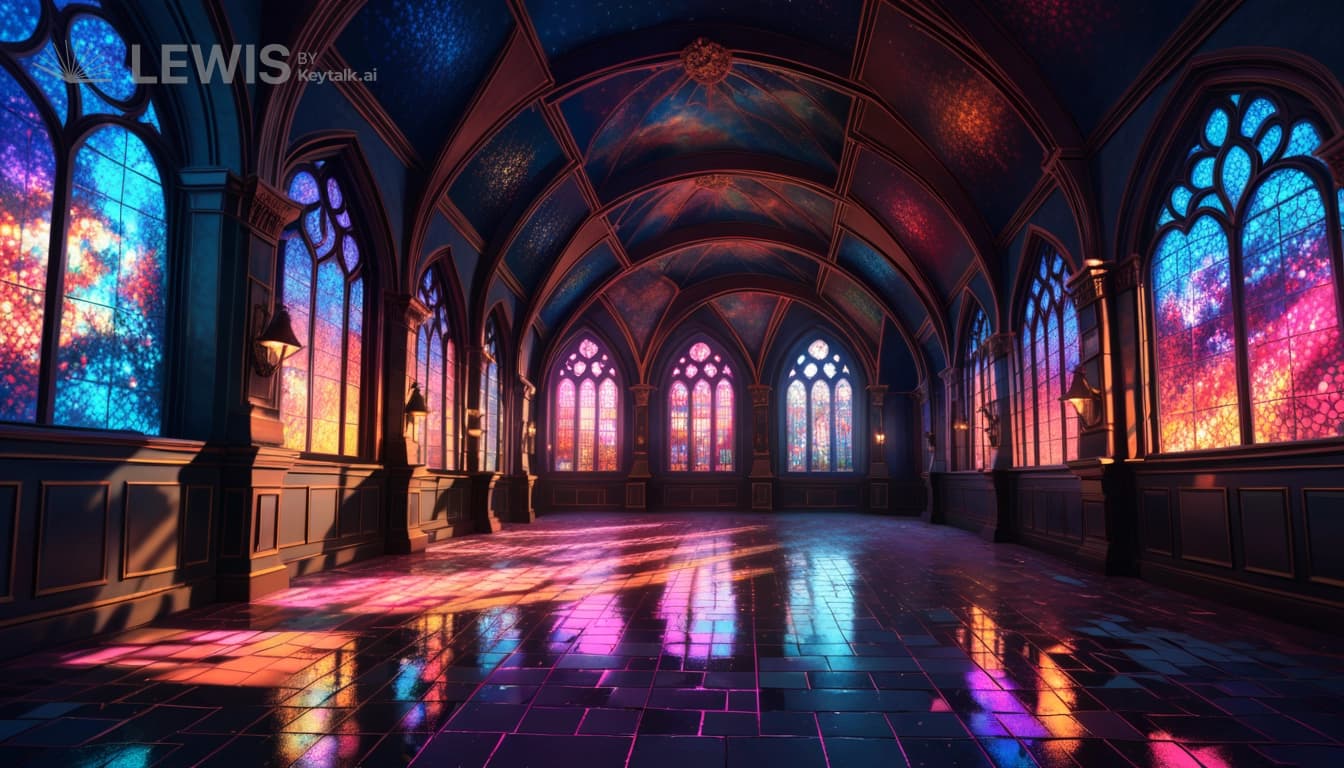
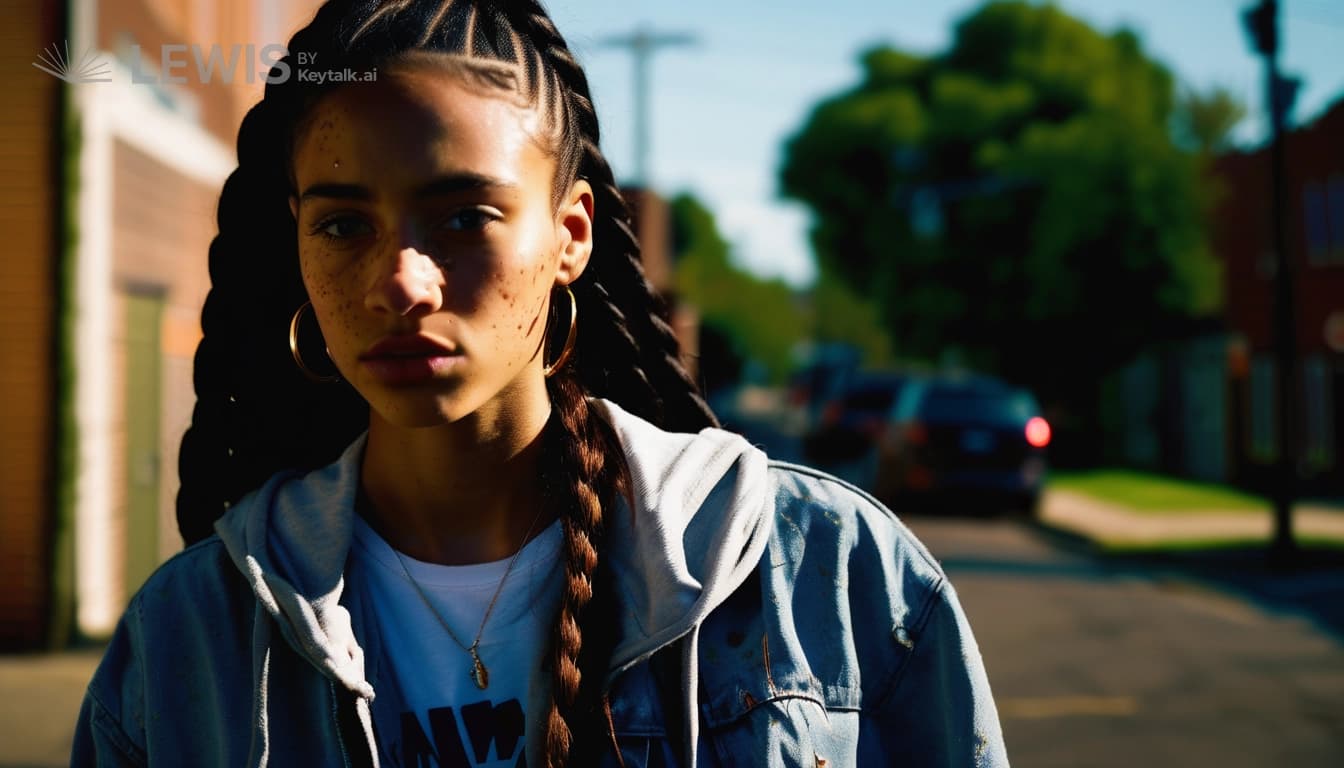
Every city has its seams—hidden places where the everyday world unravels at the edges. Iris Lockwood finds one by accident, on a night too ragged for sleep, when her restless feet and her battered headphones lead her to a forgotten alleyway behind a shuttered jazz bar. She’s fresh from another rejection—a venture capitalist’s sneer about “emotional volatility” still echoing in her head—and her pulse is tuned to static. But the alley is changed at midnight: the walls shimmer with impossible graffiti, and the air hums with a melody that pricks old wounds and half-forgotten hopes. Three figures wait inside a makeshift booth lit by stained glass and neon. They are beautiful, uncanny, and unmistakably wrong—fairies who smell of ozone and wild violets, who beckon her in with voices that slip between languages. Iris, ever the skeptic, wants to laugh it off. But the song they play cuts straight through her armor, dredging up memories of her mother’s voice and the first time she ever soldered a circuit to make a synth scream. She stumbles out changed, a secret compulsion burning in her chest: a need to create a song so honest it might shatter the world—or herself.
The alleyway becomes an obsession. Iris returns night after night, each time bartering a memory or a secret for another glimpse of the fairies’ booth. She’s not alone. A procession of the city’s lost and desperate come to spill their truths: a hedge fund manager confesses the emptiness behind his fortune; a nightclub singer trades her heartbreak for one night of perfect pitch. Each client leaves haunted, driven to choices they can’t explain—some find love, others spiral into ruin. The fairies’ melodies are tailored to each soul’s ache, tuned to the unspeakable. Iris begins to see patterns in the aftermath: viral romances that burn out overnight, acts of sabotage, sudden creative genius, and inexplicable disappearances. The city itself is changing, as if the music in the alleyway is rewriting its emotional DNA.
Desperate for answers and raw with sleeplessness, Iris enlists Mateo Araya, the night custodian whose quiet wisdom and folkloric knowledge have made him an underground legend among the city’s sonic misfits. Mateo, skeptical but unable to ignore the evidence, warns Iris about ancient stories—fae bargains always come with a cost, and music is the oldest sorcery of all. Together they begin to document the transformations, recording testimonies and tracking the ripples from the alley’s midnight melodies. Mateo’s own reasons are deeply personal: he recognizes the fairies’ harmonies as twisted echoes of vanished Mapuche laments, and he fears that the city’s lost songs—his own life’s work—are being consumed and repurposed by these otherworldly beings.
As Iris and Mateo dig deeper, they draw the attention of Lysandra Vexley, a composer-producer whose reputation for sonic alchemy is legendary in circles Iris once aspired to join. Lysandra is fascinated by the alley’s phenomenon—not for the danger, but for its promise. She believes the fairies’ music is a gateway: if harnessed, it could dissolve the boundaries between pain and pleasure, truth and delusion. To Lysandra, this is the culmination of her life’s work—a way to prove that music is the ultimate tool for transcendence. She approaches Iris with an offer: collaborate with her to decode the fairies’ patterns, and together they could craft a composition that would grant anyone who hears it perfect emotional clarity, or blissful oblivion. Iris is tempted, her hunger for belonging and vindication warring with her mistrust of Lysandra’s clinical detachment and history of ethical shortcuts.
Their uneasy alliance sets the stage for a high-stakes experiment. Iris, fueled by her yearning for raw authenticity, and Lysandra, determined to bend the world to her musical will, construct a device capable of capturing and amplifying the fairies’ harmonies. Mateo, horrified, tries to sabotage the project, convinced that such power will only perpetuate exploitation and erasure. As the machine nears completion, the fairies themselves intervene: they reveal that their sanctuary is a prison, the booth a conduit for their own exiled longing. They love humanity’s capacity for pain and beauty, but the music they spin is both gift and curse—a way to survive in a world that has no place for their kind. They warn that unleashing their full song will either set them free or consume the city in a wave of unchecked compulsion.
The climax arrives in a storm of sound—an unsanctioned midnight performance where the machine is activated and the fairies’ harmonies are unleashed. The city becomes a living symphony of unleashed desire and despair: lovers confess forbidden truths, artists create and destroy in a frenzy, and buried traumas surface





















댓글 · Comments
댓글 · 0