本文へスキップ

Keytalk オリジナル · 場面 15 · チャプター 5

You Bought a Son

# Knock, Then Return

On the morning of his third appointment, a laid-off Lisbon father who earns rent as a stand-in son finds a weekly booking for his estranged father’s tiled-stairwell apartment in Alfama, paid for by a half-sister he never knew existed. With the fee already in his account and his own child’s school lunch money short, he rides the 28 tram toward Graça, rehearsing a stranger’s cheerful questions while holding the brass key his father once threw into a gutter. At the Miradouro da Senhora do Monte, he buys a paper cup of coffee and watches the tram doors fold shut on his chance to leave. Forty minutes after opening the schedule, he stands below the blue-and-white tiles as an old man’s voice calls from behind the door, demanding that his son come upstairs now.

  • 人物 4
  • 場所 5
  • 場面 15
  • あらすじ 6,384字
You Bought a Son cover image

人物 · Characters

登場人物たち

Rui Valente

男性

A laid-off hotel maintenance supervisor taking paid visits as a substitute son between school-run shifts

プロフィール

Rui wants enough steady money to keep his daughter Inês fed at school and in their rented flat, but accepting the Alfama booking means performing warmth for Anselmo Valente, the father who drove him away nineteen years earlier.

He carries the brass key Anselmo threw into a gutter, though he tells himself it is only useful for remembering what not to forgive.

描写

Rui Valente is a lean, weathered 43-year-old man who still dresses as if a hotel manager might call him back: a faded navy work jacket over a clean grey polo, dark trousers with old paint dust at one cuff, and practical black shoes polished past their usefulness.

He stands with one shoulder turned toward the exit, jaw held tight beneath tired brown eyes, while his thumb worries the brass key on a frayed cord in his pocket—the key he keeps like evidence, not hope.

Anselmo Valente

男性

A retired tram electrician living alone above a blue-and-white tiled stairwell while his memory loses the order of his own life

プロフィール

Anselmo wants his son upstairs before the afternoon light leaves the kitchen, and his failing memory lets him demand that comfort without facing why Rui stopped coming. He has kept Rui’s childhood mug at the back of a cupboard, while treating the weekly visitor arranged by Leonor Valente as proof that abandonment can be corrected by routine.

描写

Anselmo Valente is a narrow-shouldered man with silver hair combed flat over a scalp that shows through, wearing a faded charcoal cardigan over a work shirt with one cuff permanently darkened by old electrical grease.

He braces one hand on the kitchen doorframe as if the apartment shifts beneath him, chin raised in impatient expectation; a pale burn scar curls across the back of his right hand, the hand that once repaired tram wiring and now grips the cupboard key.

Behind him, late sun catches the blue-and-white tiles and the rim of a small chipped child’s mug waiting at the back of an open cupboard.

Leonor Valente Faria

女性

A municipal archive clerk paying weekly for a hired son after closing the records office

プロフィール

The bank transfer to Rui’s agency was meant to buy Anselmo company, not uncover the brother her father never admitted existed; now Leonor wants the truth without becoming the person who tears apart his remaining peace.

Her mother’s sealed envelope names Rui and gives her a claim on him, but using it could cost her the careful, imperfect bond she has built with Anselmo.

描写

Leonor Valente Faria dresses for the archive’s dust and fluorescent chill in a charcoal wool cardigan over a rust-coloured blouse, with a canvas document satchel held tight beneath one elbow.

At thirty-eight, she has a composed, watchful face that turns guarded when she listens; her thumb worries the wax-sealed edge of a cream envelope tucked into the satchel’s outer pocket.

She stands as if making room for someone else to speak first, though her square-toed shoes are planted firmly enough to suggest she has already decided not to leave.

Inês Valente

女性

A primary-school pupil stretching one lunch-card balance through the week and waiting after class at her aunt’s bakery

プロフィール

Inês wants Rui to stop returning home with the bright, borrowed voice he uses for clients, even if asking why means learning that their lunch money came from visiting a grandfather she has never met. She finds the agency’s printed schedule in Rui’s coat pocket and recognizes Anselmo’s address from the postcard he once hid in a kitchen drawer.

描写

Inês Valente is a small, watchful ten-year-old with dark curls gathered into a loose side braid, the end secured by a faded red elastic.

She wears a navy school cardigan with one cuff rubbed thin, a yellow lunch-card lanyard tucked under it, and keeps the folded agency schedule pressed flat against her thigh as if it might escape; her chin is lifted, but her eyes have already decided not to accept the answer she is given.


あらすじ · Synopsis

あらすじ

Rui Valente opens the agency schedule before the school run and sees Anselmo Valente’s address beneath a weekly booking paid by Leonor Valente Faria. The money has already landed in his account, enough to restore Inês Valente’s lunch-card balance and cover part of the rent. He boards Tram 28 with the brass key Anselmo once threw into a gutter on its cord around his neck, intending to arrive as “Rui,” the agreeable son the agency has sold. At Miradouro da Senhora do Monte, he steps off for coffee and nearly lets the tram leave without him. Inês calls from her aunt’s bakery, not asking where he is but why he has begun coming home with a voice that does not belong to him. Rui lies that he is fixing a boiler. She hears the lie, says nothing, and he gets back on the tram.

At the blue-and-white tiled stairwell in Alfama, Anselmo’s voice orders him upstairs before Rui has given a name. Inside, the old man studies Rui’s face, then seems relieved by something he cannot place. He calls him son, complains that he is late, and sends him to find the childhood mug behind chipped plates. Rui finds it exactly where Anselmo described: a small white mug with a tram painted on it, its handle repaired with a crude line of glue. Anselmo cannot remember throwing Rui out nineteen years earlier, but he remembers the mug breaking in Rui’s hands when he was eight. He makes Rui sit at the kitchen table and asks why he stopped coming. Rui performs the agency’s gentle answer because the fee is already spent in his mind: work, life, bad timing. The lie gives Anselmo peace, and it makes Rui feel like he has swallowed a coin.

Leonor arrives early with groceries and finds a stranger wearing the expression from an old photograph hidden among her mother’s papers. She recognizes the brass key at Rui’s throat before she recognizes him. In the narrow kitchen, with Anselmo dozing in his chair, she corners Rui beside the burned kettle and demands to know who hired him. Rui says the agency did. Leonor says she paid for company, not for a man to use her father’s name. Rui snaps that she bought a son by the hour, so she does not get to complain about what arrived. Their raised voices wake Anselmo, who grips a cupboard key in his burned hand and insists that neither of them leave until dinner is made.

The three of them cook in the cramped kitchen, stepping around each other as rain strikes the window. Leonor watches Rui salt the soup exactly as Anselmo does. Anselmo calls Leonor by her dead mother’s name, then calls Rui by his childhood nickname, and neither correction holds. When Rui leaves, Leonor follows him down the tiled stairs and blocks the exit with her body. She tells him her mother left a sealed letter naming him as Anselmo’s first child, concealed because Anselmo had refused to acknowledge him after Rui’s mother died. Rui refuses the envelope. He says paper cannot make a father out of a man who chose not to be one. Leonor lets him go, but sees him tuck the childhood mug into his jacket instead of leaving it behind.

At home, Inês finds the printed schedule in Rui’s coat pocket and recognizes the Alfama address from a postcard he keeps hidden in the kitchen drawer. Rui catches her packing the postcard, her lunch card, and two biscuits into her schoolbag. She says she wants to meet the grandfather who has paid for her lunches without knowing it. Rui forbids it. Inês replies that Anselmo is not paying; Rui is pretending, and she is tired of eating what the pretending buys. The next morning, she skips the bakery after school and takes the tram uphill with the postcard as her map.

Rui learns she is gone when the bakery calls. He races through wet lanes toward Alfama, arriving at Anselmo’s building as Leonor is climbing the stairs with groceries. They hear Inês’s voice above them. In Anselmo’s kitchen, Inês stands rigid beside the table while Anselmo holds the old mug in both hands. He has mistaken her for Rui at ten, asking why she has cut her hair and why she looks frightened of him. Inês asks, plainly, whether he threw his son away. The question breaks through the soft fog of his memory. Anselmo’s face tightens. He remembers the gutter, the brass key, Rui at the bottom of the stairs with a bag against his leg. Then the memory slips again, leaving only panic.

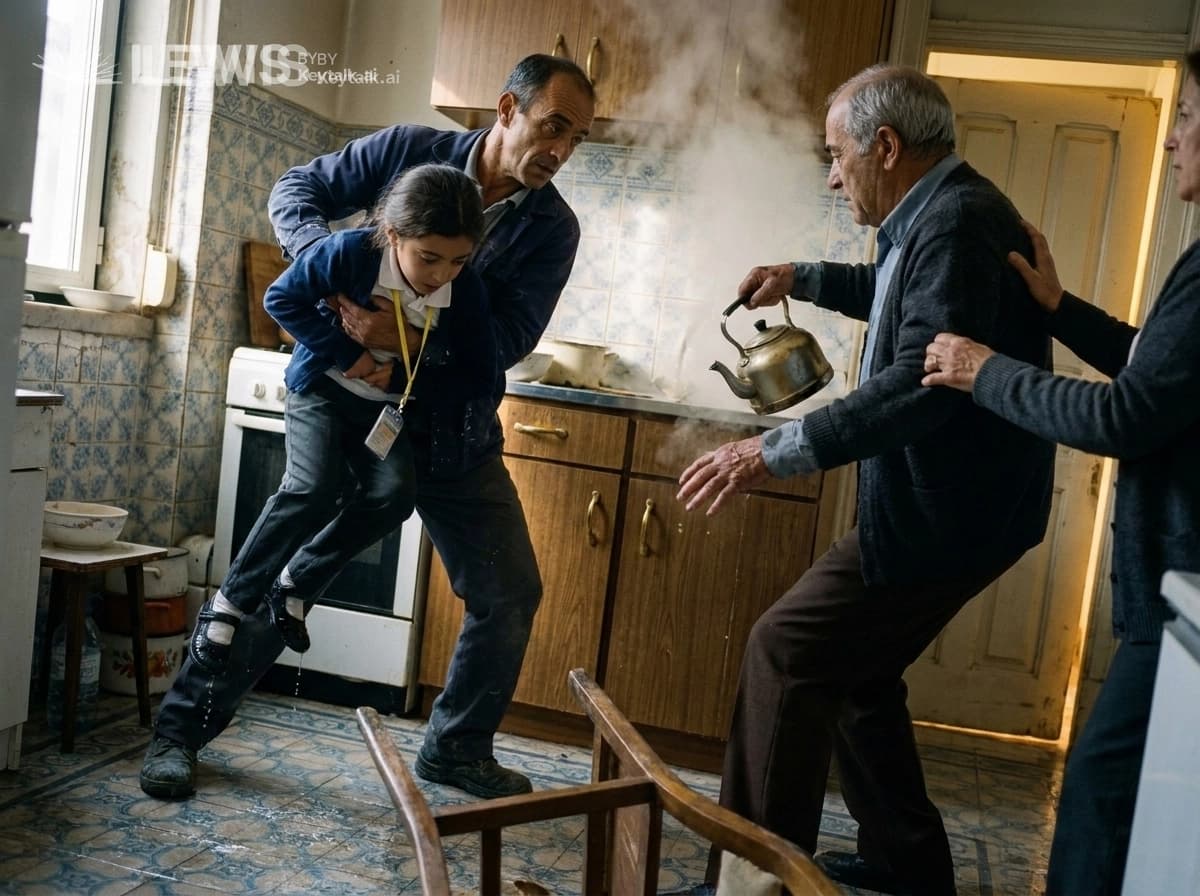
Rui bursts in and tries to pull Inês toward the door. Anselmo rises too quickly, catches Rui’s sleeve, and refuses to let him take “the boy” away again. Rui tears free, knocking the kettle from the stove. Boiling water spreads across the tiles. Leonor drags Anselmo back from the spill while Rui lifts Inês onto the counter, his hands shaking. In the sudden steam and shouting, Anselmo sees the burn scar on his own hand and remembers enough to say what he has never said cleanly: he was angry at Rui’s mother for leaving, ashamed that he could not manage the house, and cruel because cruelty made the door feel like his to control. He does not ask to be forgiven. He asks Rui not to leave Inês alone with him.

Rui carries Inês downstairs, but stops on the landing when she asks whether running away is the only thing their family knows how to pass on. He returns to the kitchen, not as an agency son and not as a reconciled one. He places the brass key on the table beside the mug and tells Anselmo that he will not visit for money, and he will not bring Inês back until Anselmo can remember the harm without making her carry it. Leonor, holding a towel against Anselmo’s burned hand, tells Rui she will keep arranging care, but no longer under a false name. Anselmo nods without understanding every word; he understands that the visitors are leaving and that he caused it.

Rui repays the agency advance by taking maintenance work at night, losing sleep but ending the hired visits. Leonor begins coming to the flat with practical help and short, difficult conversations, keeping her mother’s envelope unopened until Rui asks for it himself. Weeks later, Rui brings Inês to the Miradouro da Senhora do Monte rather than to Anselmo’s door. They watch Tram 28 crawl below them. Rui gives her the repaired mug, not as a family heirloom but as proof that broken things can be kept without pretending they were never broken. Then he takes the brass key from his pocket and drops it into a public key box outside a locksmith’s shop, leaving the old door without its claim on him.
世界観 · World

世界

representative image

設定

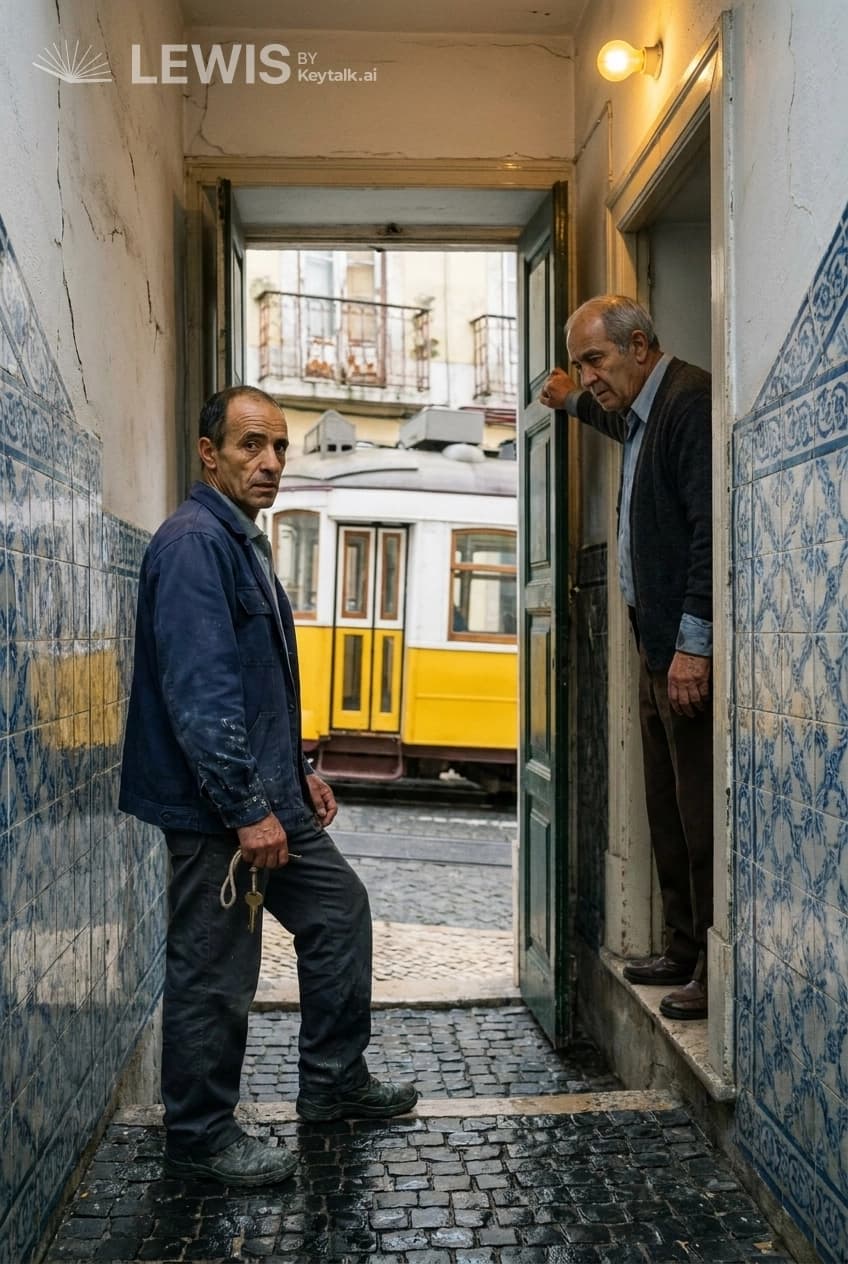
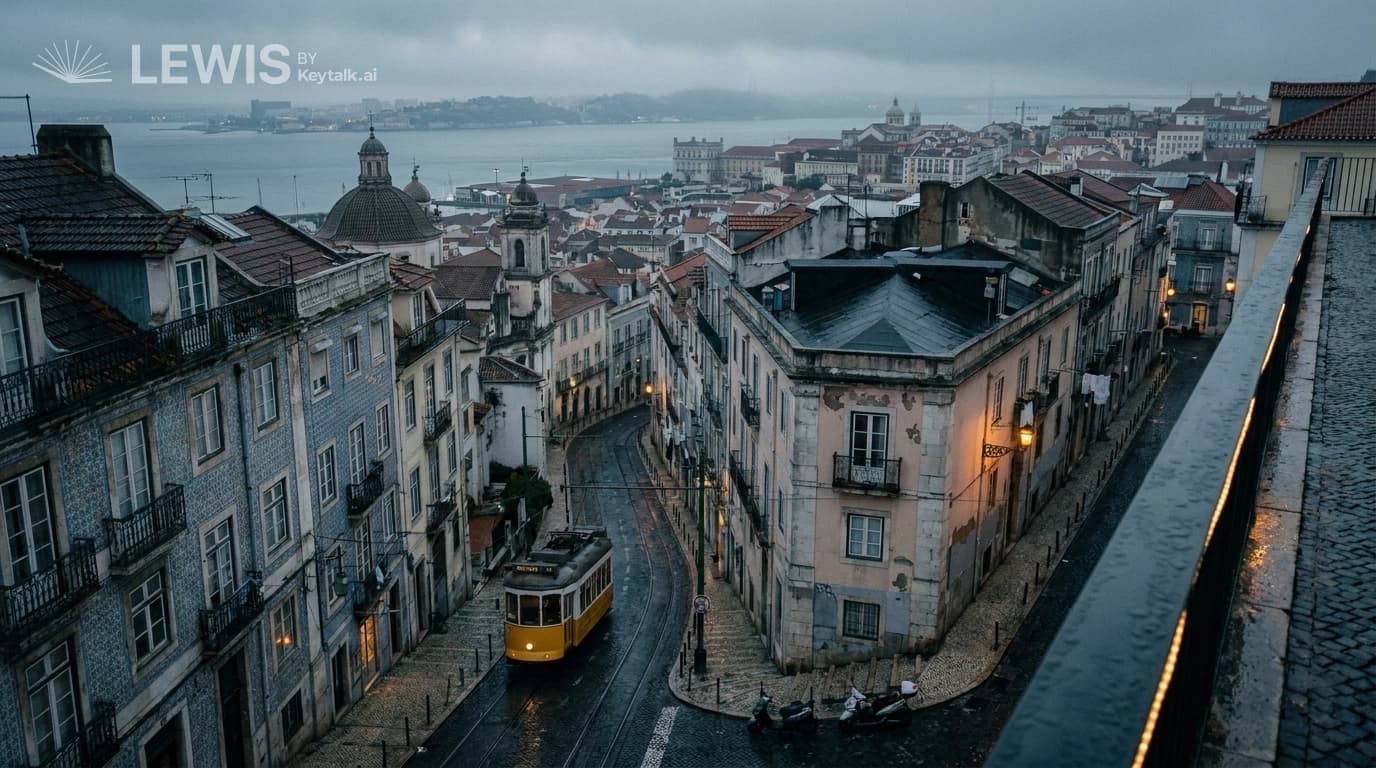
Lisbon’s old eastern hills, moving from the packed carriage of Tram 28 through Graça to the steep lanes of Alfama. The city is beautiful at a punishing angle: polished cobbles slick under thin rain, washing strung between iron balconies, delivery scooters squeezing past steps too narrow for cars.

Rui’s route ends at a worn apartment block behind a blue-and-white tiled stairwell, where each landing smells of damp plaster, frying garlic, and old dust. Above it, Anselmo’s flat holds the residue of a working life—tram parts in biscuit tins, a burned kettle, a childhood mug hidden behind chipped plates.

時代

Contemporary Lisbon, in late autumn, during a week of unstable weather and tightened household budgets. Tourism has returned to the city’s postcard districts, but long-term tenants are being pushed uphill or out.

Rui’s first three agency appointments occur within days of one another, while school lunch balances, rent deadlines, and Anselmo’s weakening memory make each hour count.

ルール

The companion agency requires hired relatives never to reveal that they are paid, because the client’s trust is the service; Rui must either perform a lie for Anselmo or risk losing the income that feeds Inês.

Appointments are paid in advance and cancellations after departure are not refunded; the money in Rui’s account turns the visit into a debt before he reaches the door.

Anselmo’s memory can preserve a feeling while losing its cause; he may recognize Rui as needed family without remembering the cruelty that drove him away, making forgiveness impossible to demand and hard to refuse.

In the Alfama building, private lives travel through walls, stairwells, and open windows; a raised voice, a misplaced envelope, or Rui’s real name can reach neighbors and Leonor before anyone is ready to explain it.

技術と哲学

Daily life runs on ordinary, unforgiving systems: digital bank transfers, agency schedules, prepaid school lunch cards, municipal records, and the public tram network that keeps people connected without making them close.

The companion agency sells a modern form of care—warmth booked by the hour, delivered under a false family name—because many households can pay for presence more easily than they can repair absence.

Leonor’s archive work reflects a competing faith in documents: names, dates, and sealed letters can prove what a family denies, but they cannot tell anyone what to do with the proof. In Rui’s world, dignity is often measured in small transactions, and every kindness risks becoming evidence of need.

視覚的描写

The visual world is built from faded azulejo blue, tram yellow, wet black cobbles, rusted balcony rails, and the warm amber of rooms lit too early against a gray sky. Tram 28 grinds uphill with a metallic shriek, its windows flashing fragments of churches, laundry, and faces pressed into narrow streets.

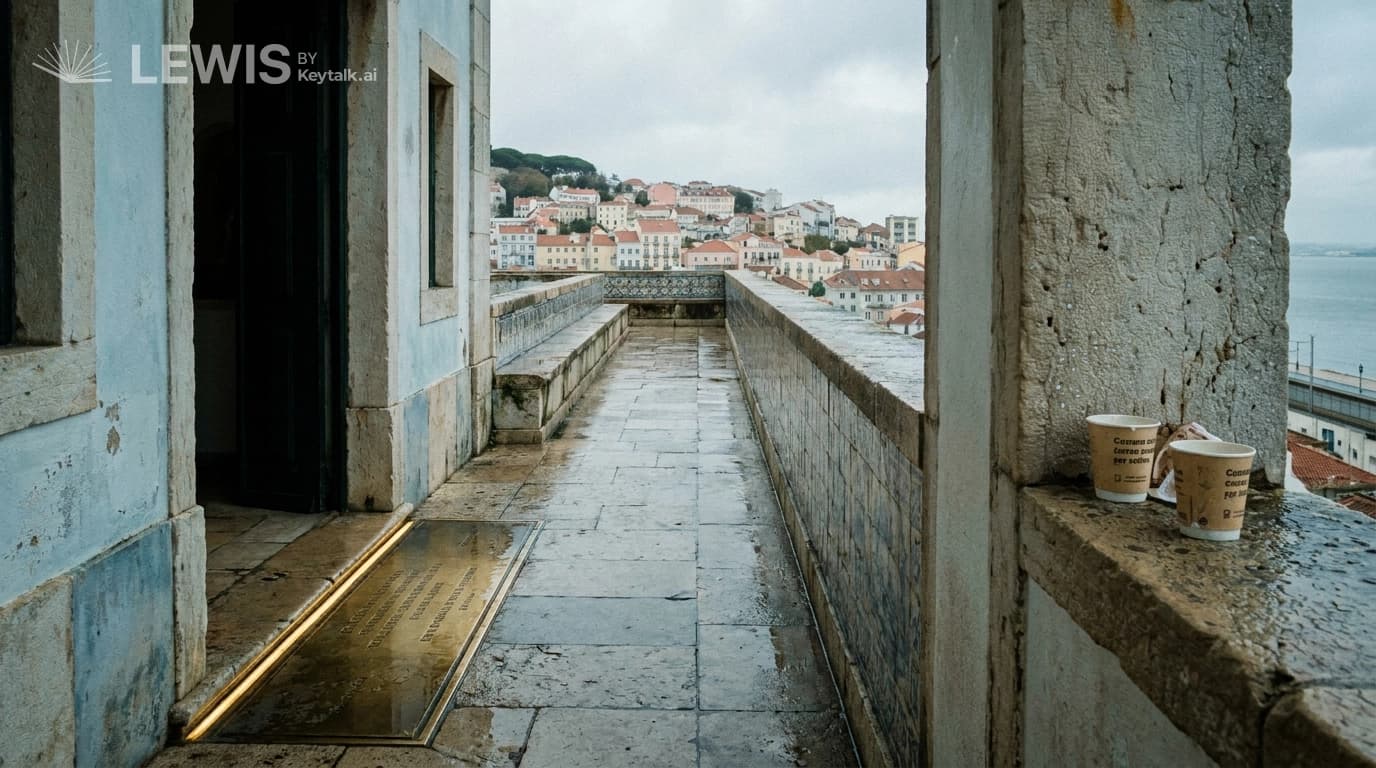
At Miradouro da Senhora do Monte, the city opens in pale terracotta roofs and the silver strip of the Tagus, beautiful enough to make hesitation look like peace. Alfama closes that horizon again: crooked façades, cracked tile saints, stairwells lit by weak bulbs, and Anselmo’s kitchen window casting a small square of yellow light over the landing.

その世界観のテーマ音楽
Lyria
トラック 01 (世界観のテーマ曲)

場所 · Locations

舞台となる場所

location 1 image

Tram 28 Uphill Carriage

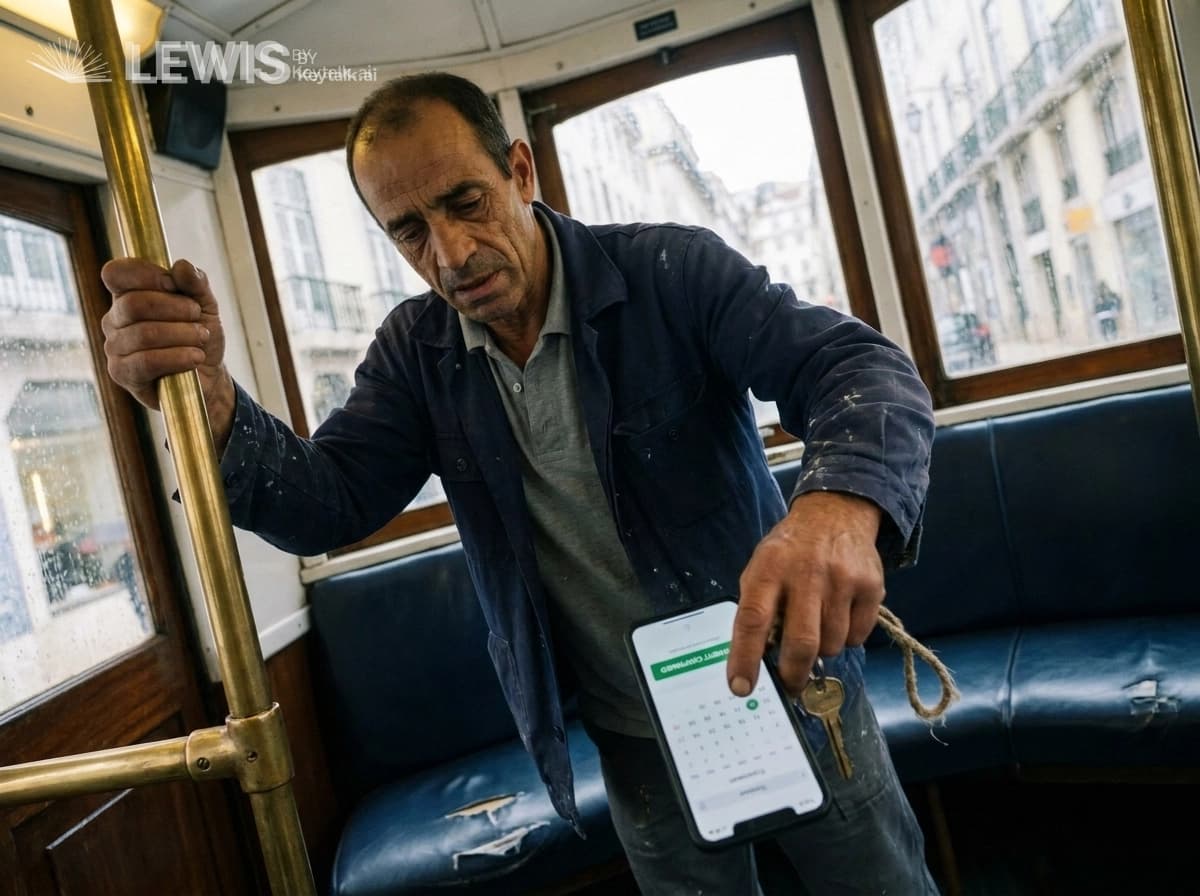
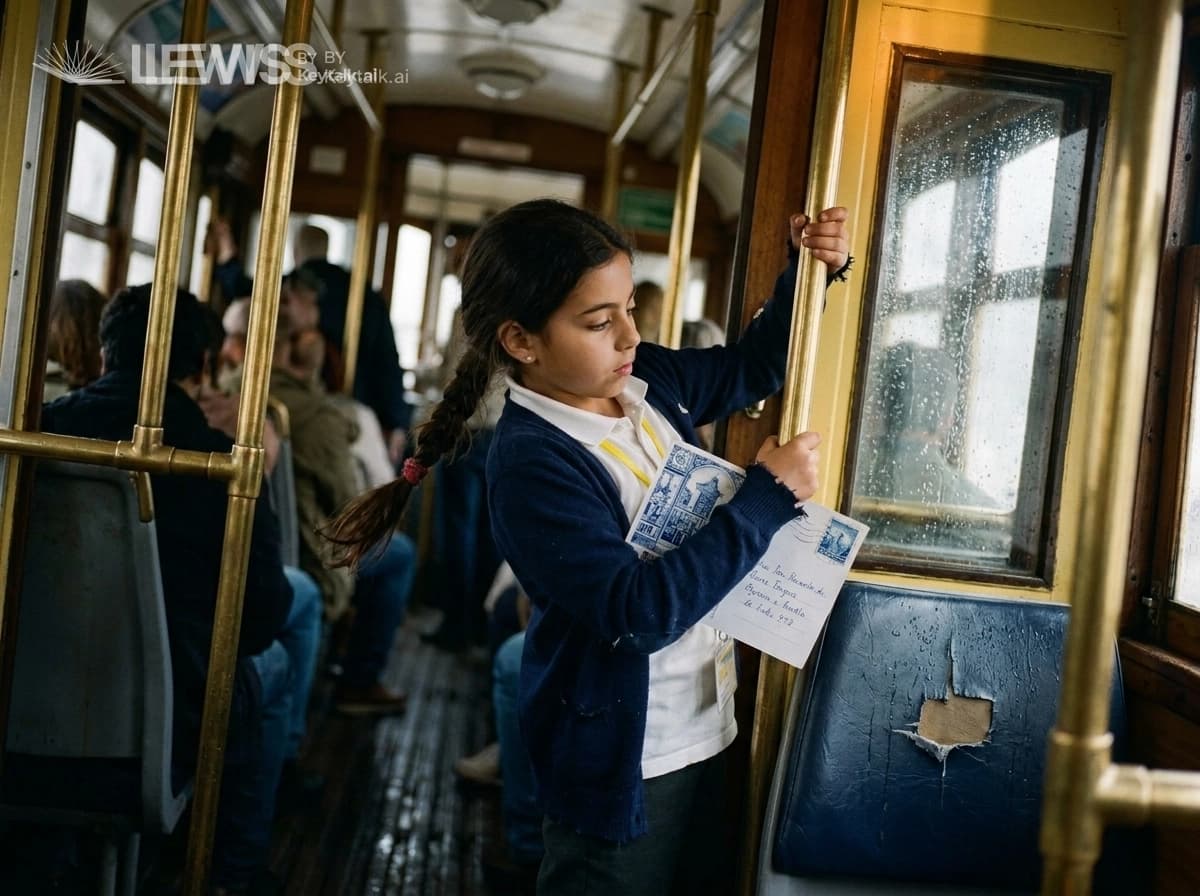
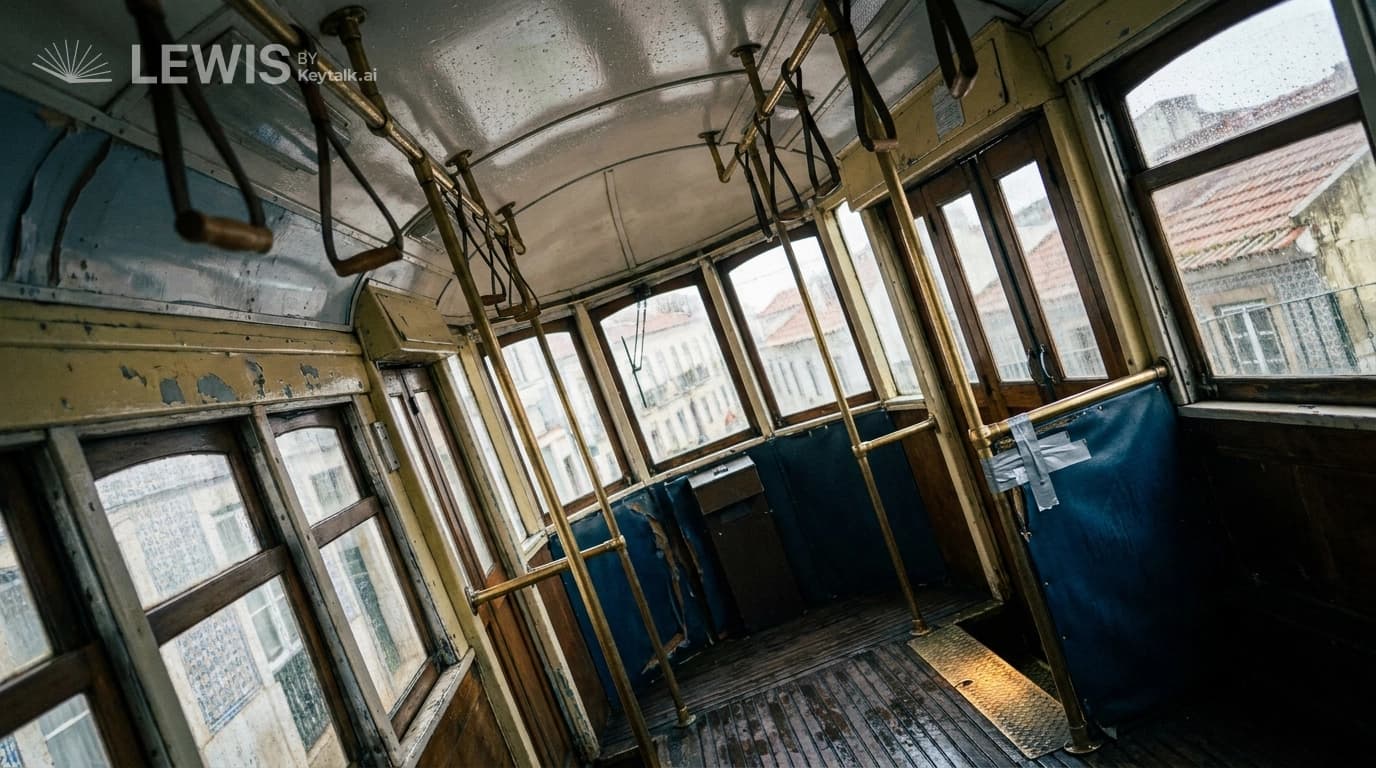
Tram 28 lurches uphill with every seat taken, its yellow walls dulled by rain-muted daylight and shoulders pressed tight along the narrow aisle. The carriage fills with the metallic shriek of wheels on the curve, ticket machines beeping, and conversations forced low beneath the rattle of loose window frames.

Cold brass poles shine with damp handprints; a frayed strip of navy vinyl has been patched with silver tape beside the rear door, trembling each time the tram jerks forward.

location 2 image

Senhora do Monte Viewpoint

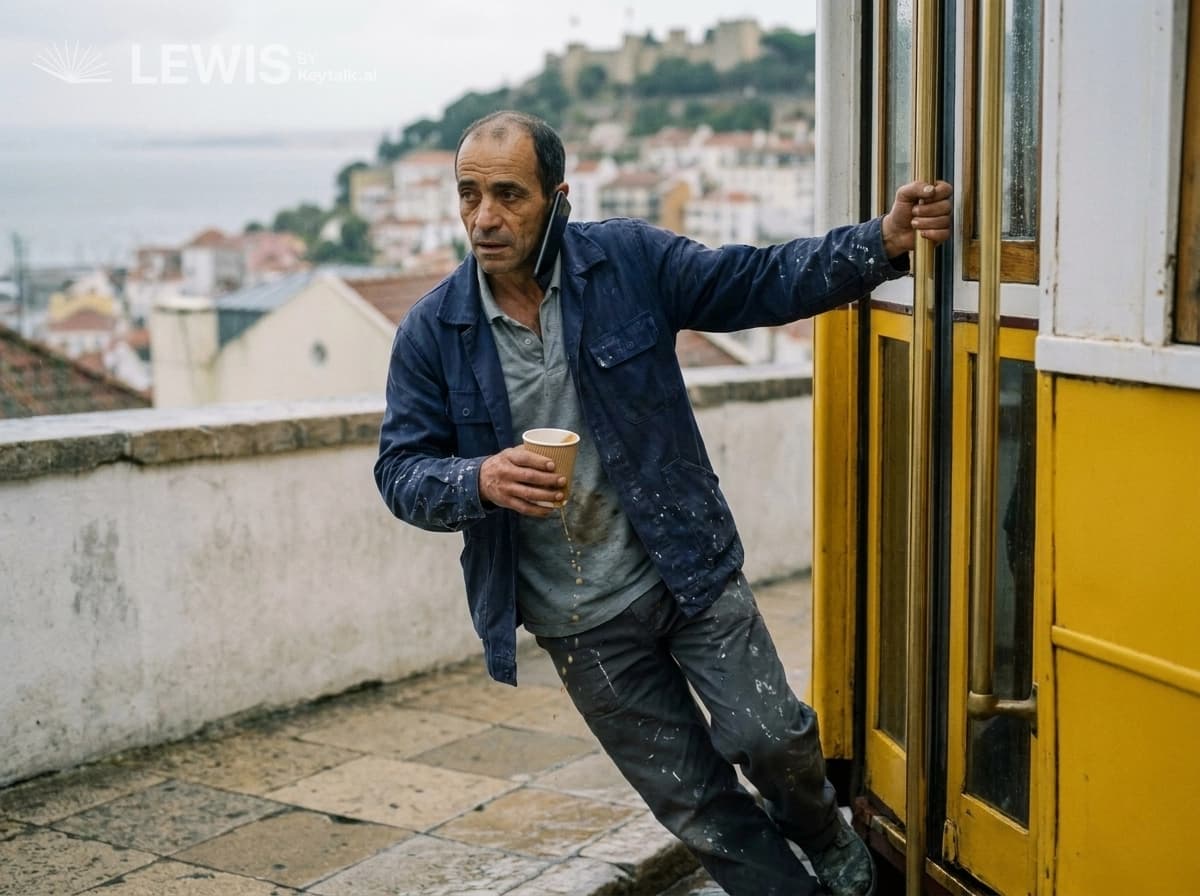
Senhora do Monte Viewpoint spreads along a damp stone terrace above the hills, its low wall beaded with rain and lined with abandoned paper coffee cups. Wind moves over the pale terracotta roofs below, carrying only the softened wash of distant traffic beneath a silver-gray sky.

From here the Tagus lies like a narrow strip of dull metal, and the open space leaves nowhere to hide a person who has stopped walking.

location 3 image

Anselmo’s Tiled Stairwell

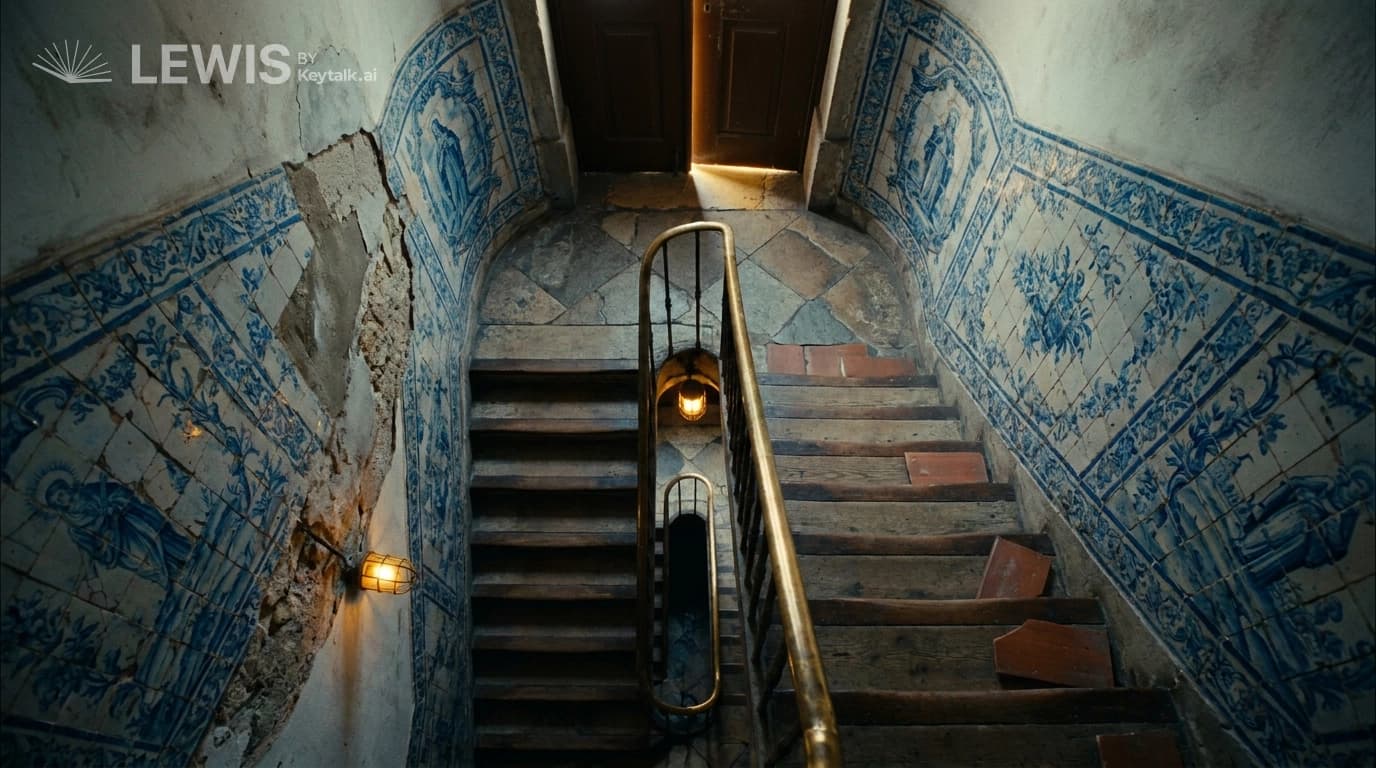
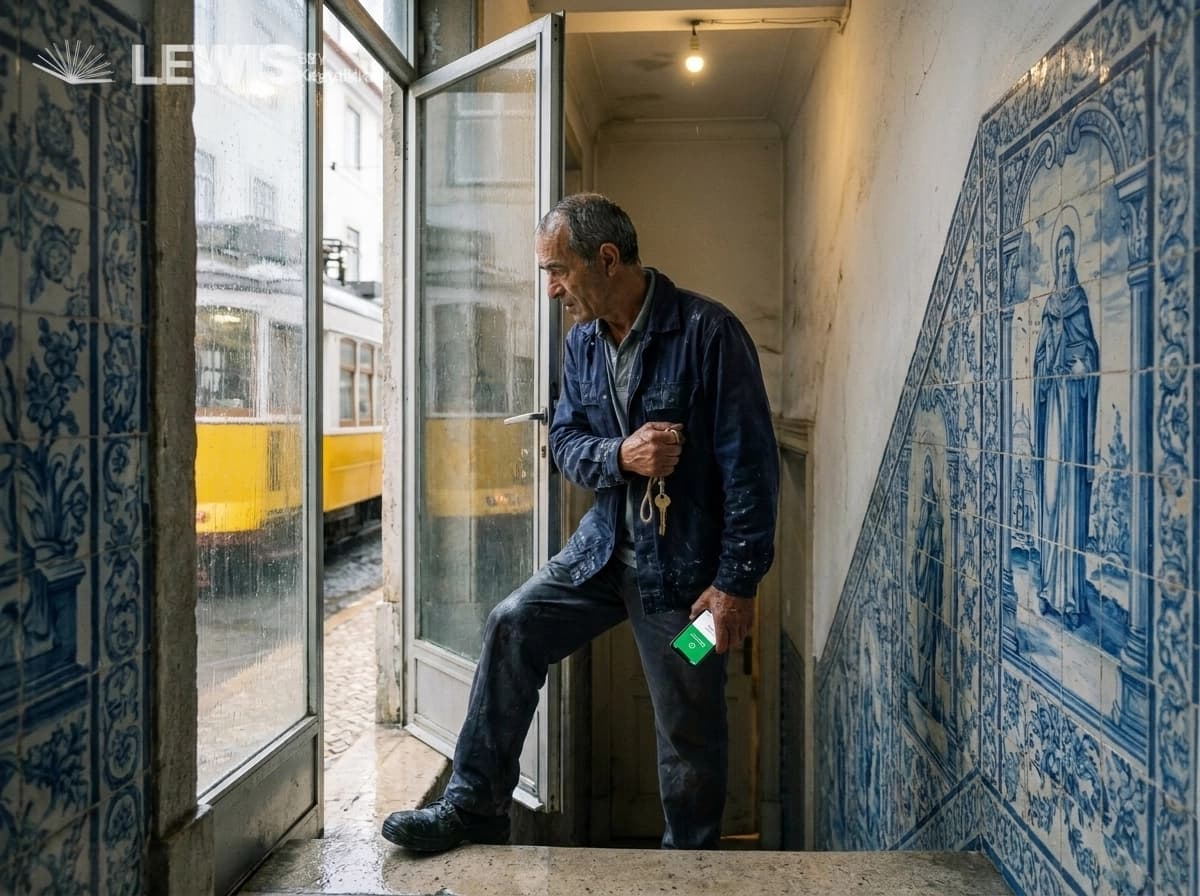
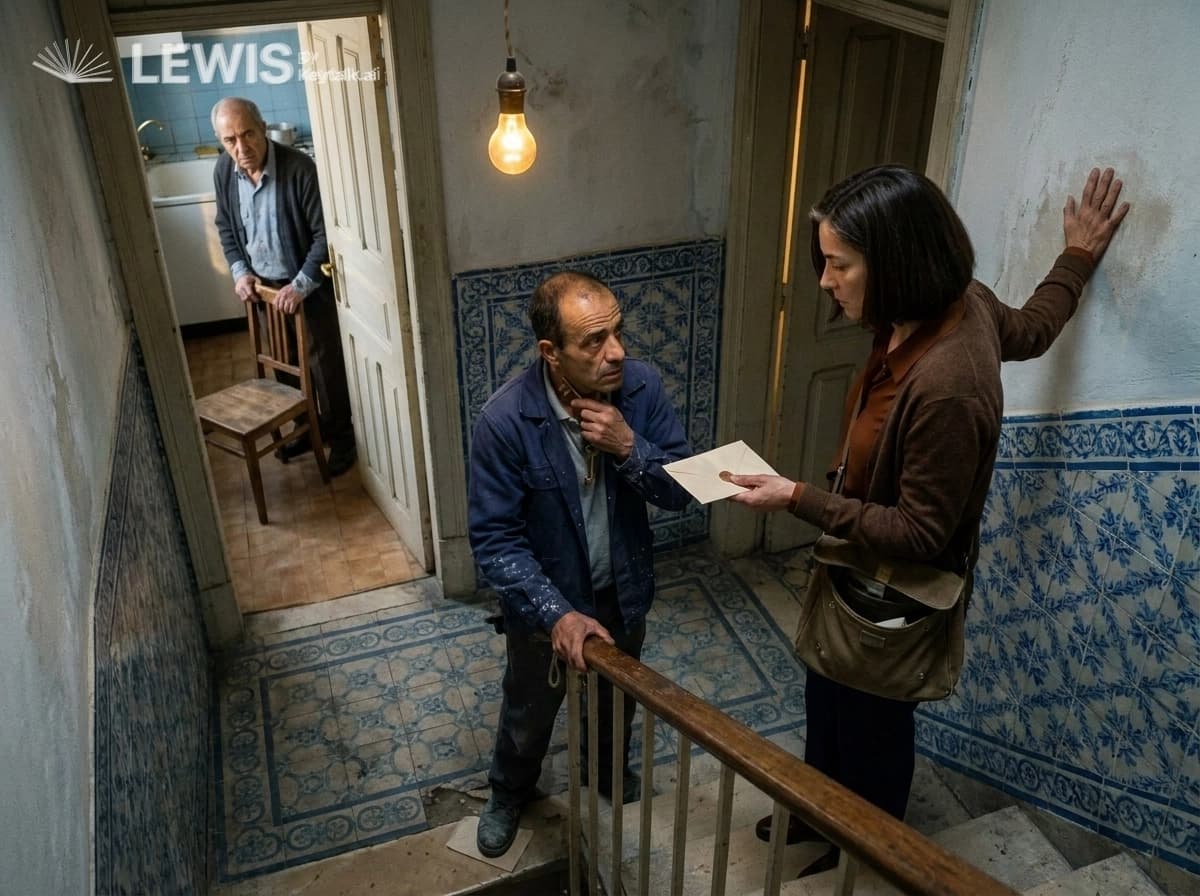
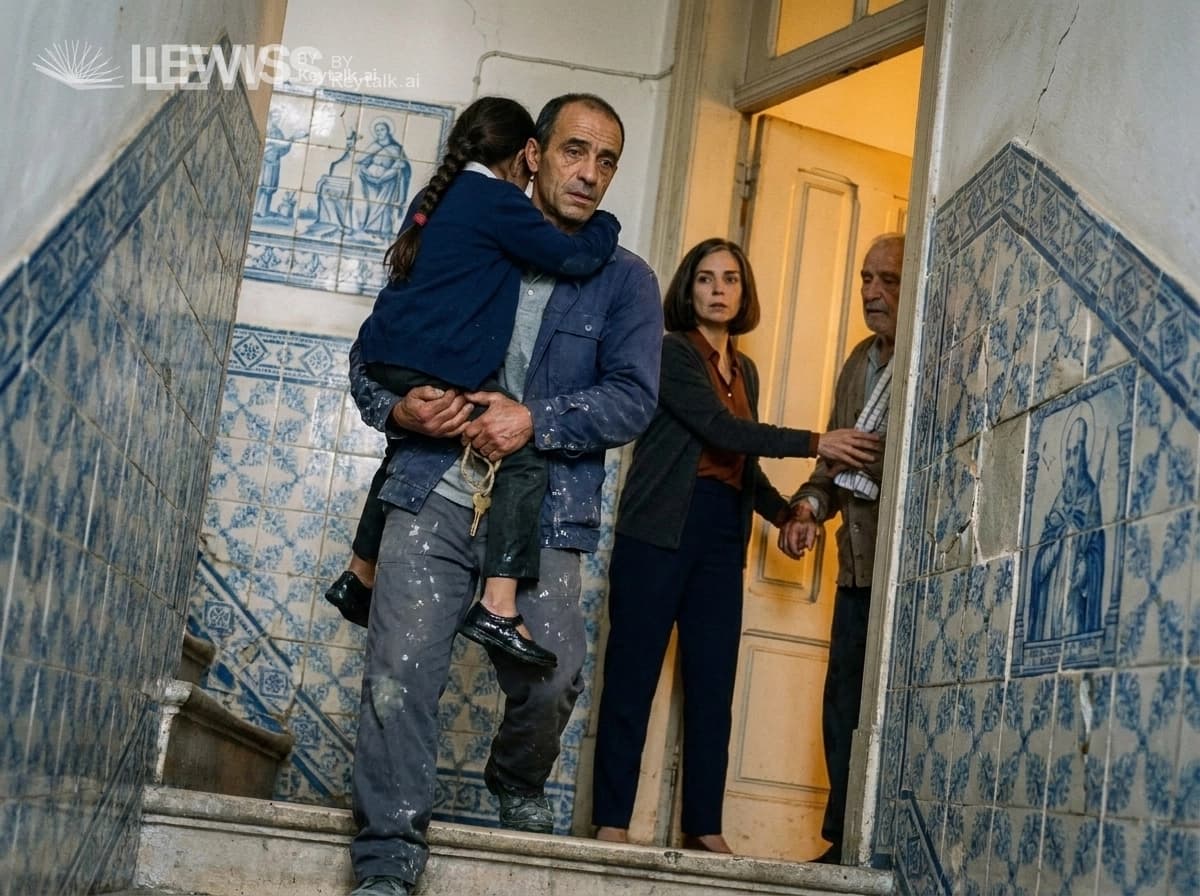
Faded blue-and-white azulejos climb the narrow shaft in broken panels, their cracked saints and floral borders interrupted by damp plaster and a weak amber bulb trembling above each landing.

Footsteps travel through the thin walls with embarrassing clarity—one floor up, a chair scrapes; below, a latch clicks—while the steep stair treads hold darkened edges where generations of hands have steadied themselves.

At the top, a small square of yellow light leaks beneath Anselmo’s door, and one loose tile near the final turn gives a hollow knock under every approaching shoe.

location 4 image

Anselmo’s Kitchen

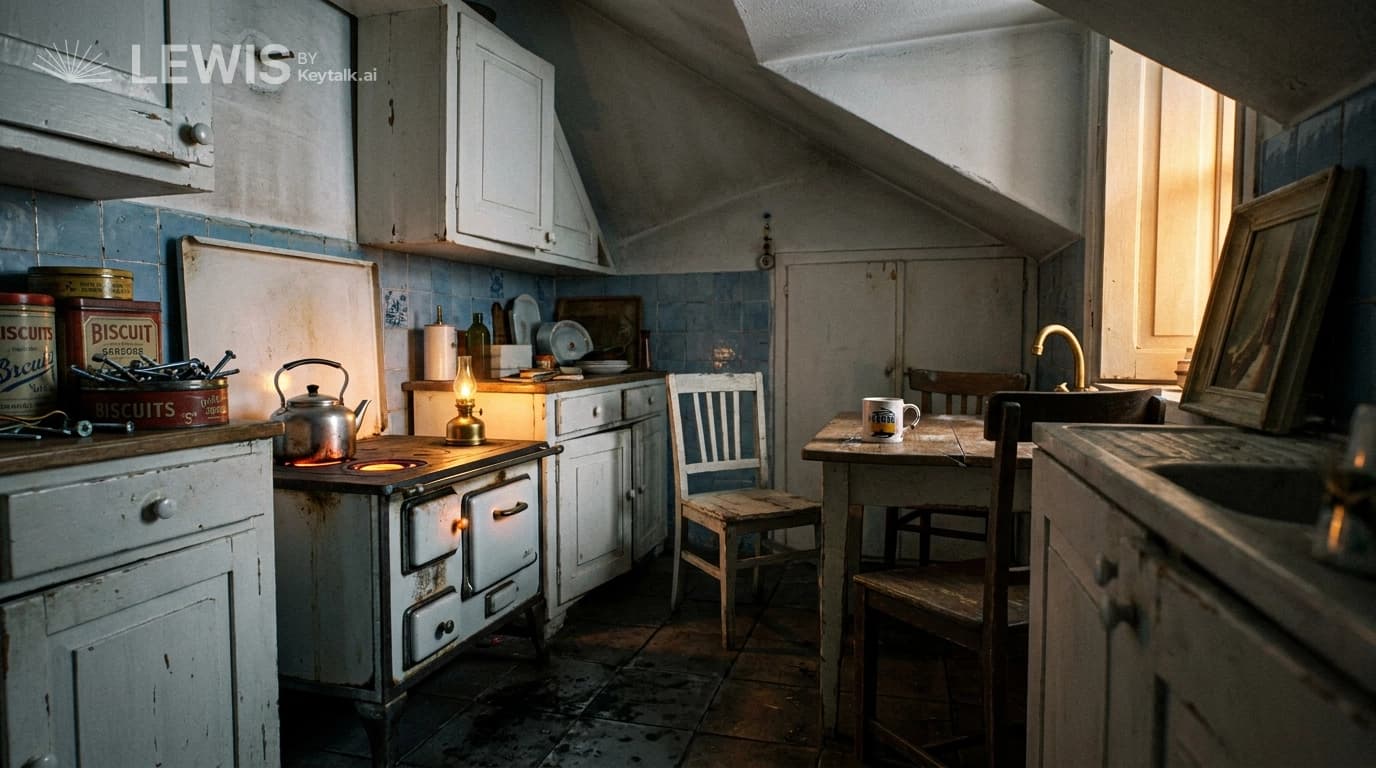
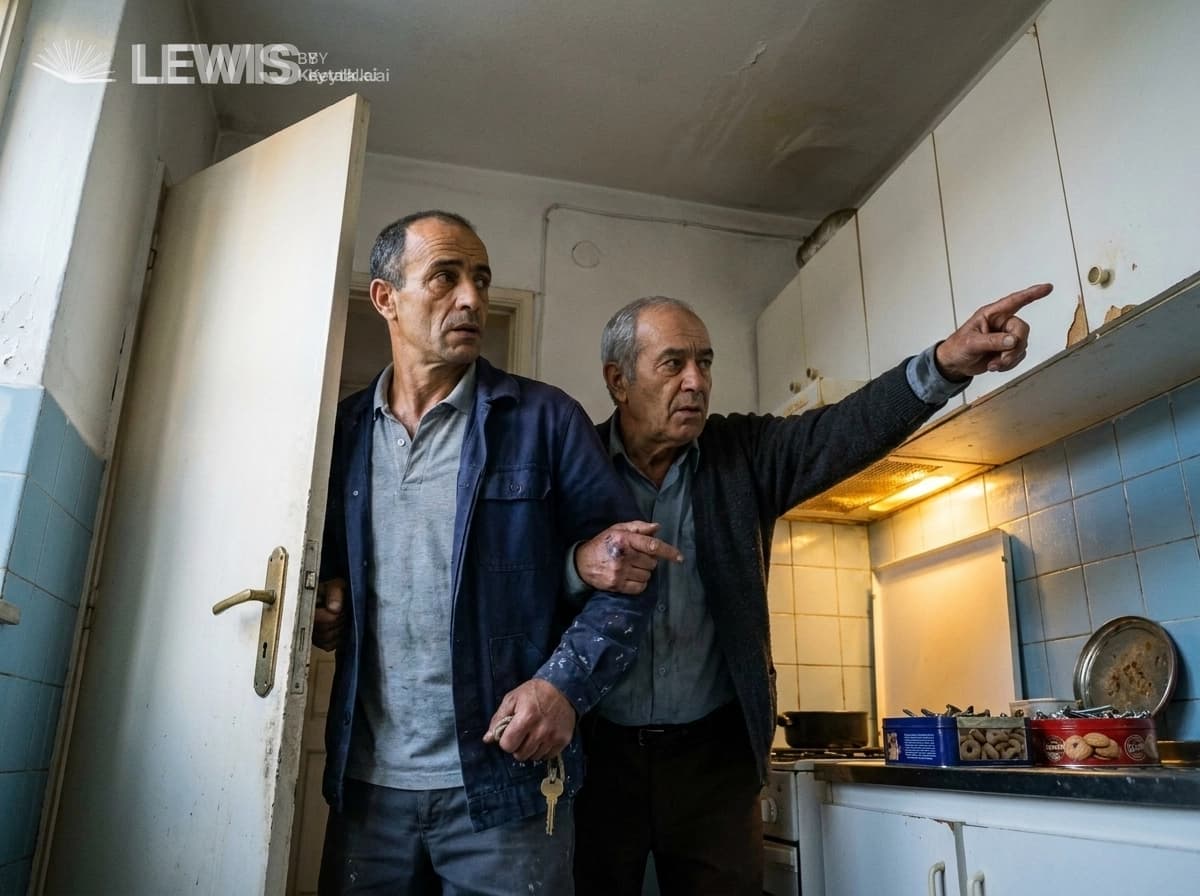
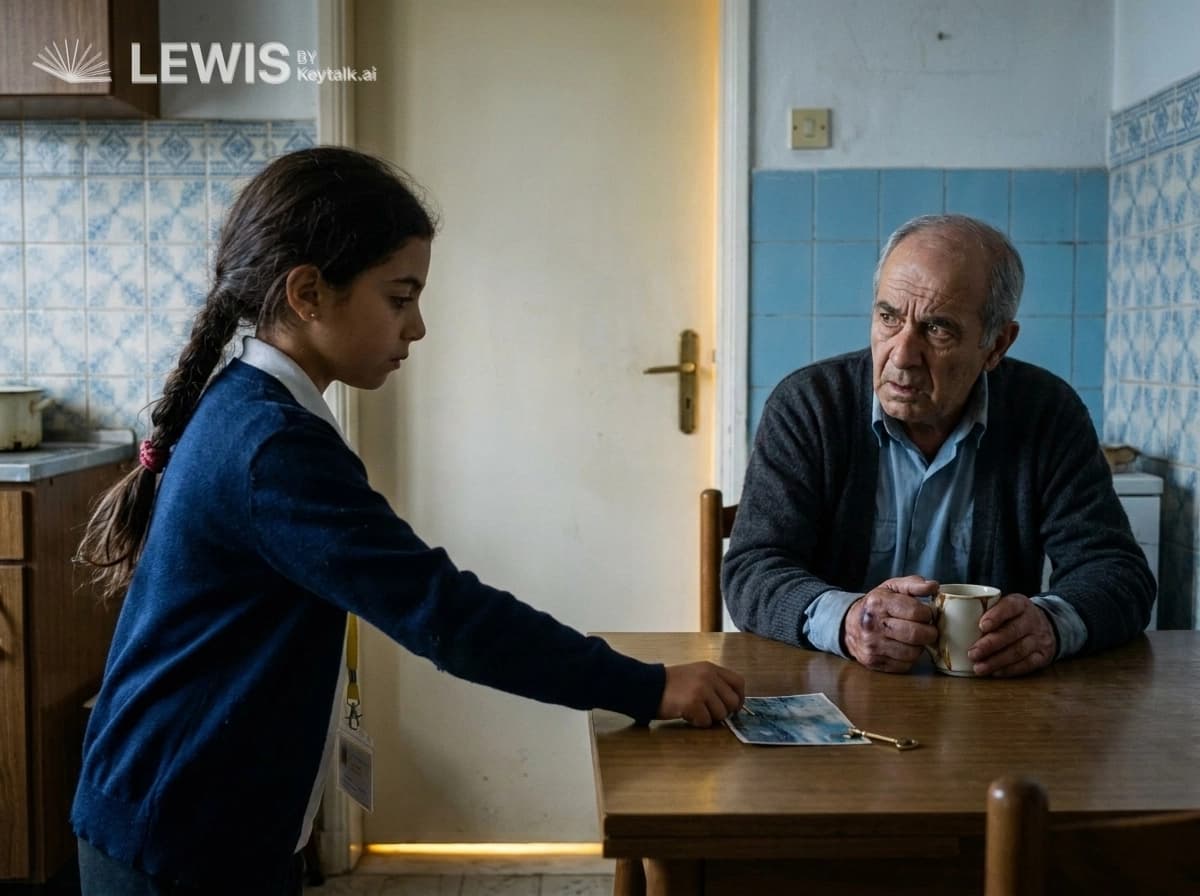
Anselmo’s kitchen presses beneath a low ceiling, its chipped white cupboards crowded over a grease-sheened tile floor and a small stove glowing gold in the early dark.

A kettle hisses beside a burned ring on the enamel, while a spoon clicks steadily against a soup pot; biscuit tins of tram screws and wire line the counter as if no one has been able to clear a space for the present.

At the table, three mismatched chairs crowd a repaired white mug painted with a tiny yellow tram, its glued handle catching the stove light.

location 5 image

The Aunt’s Bakery

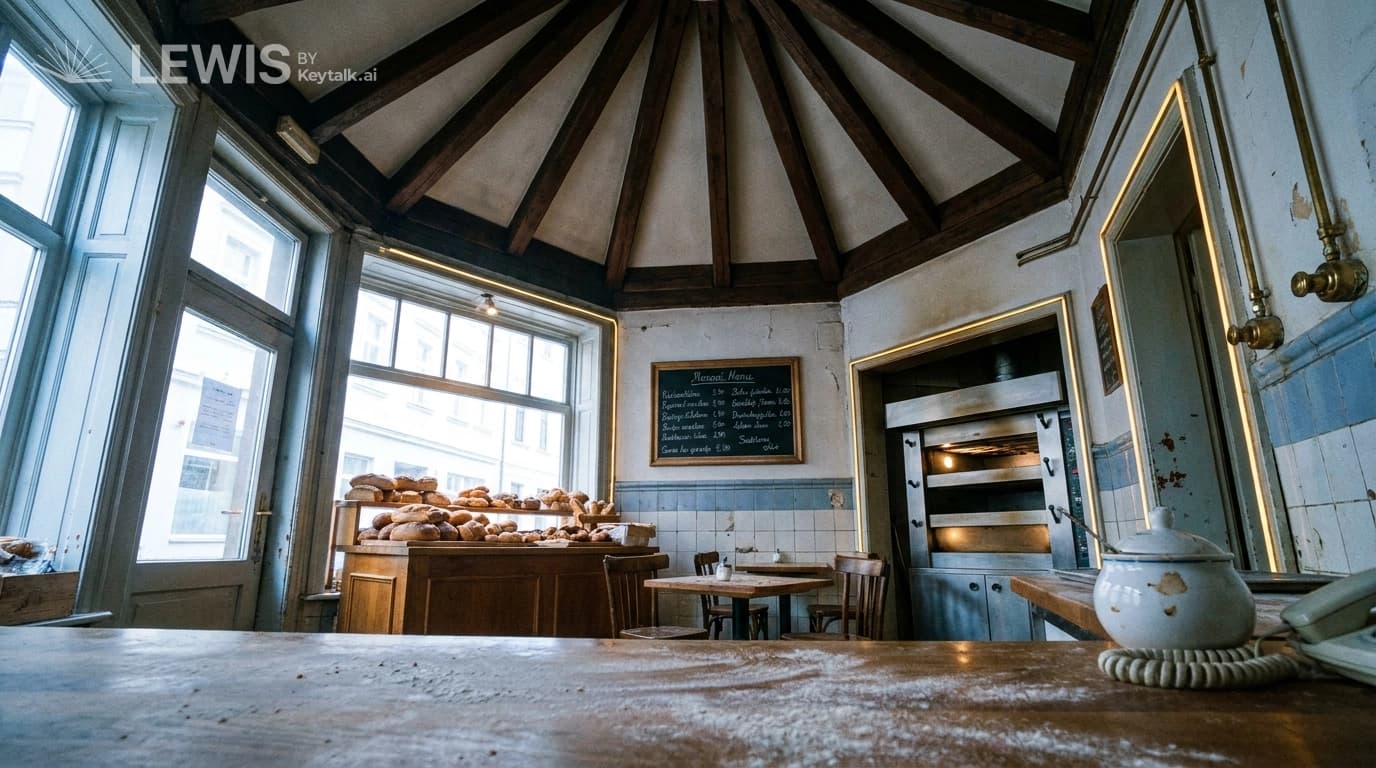
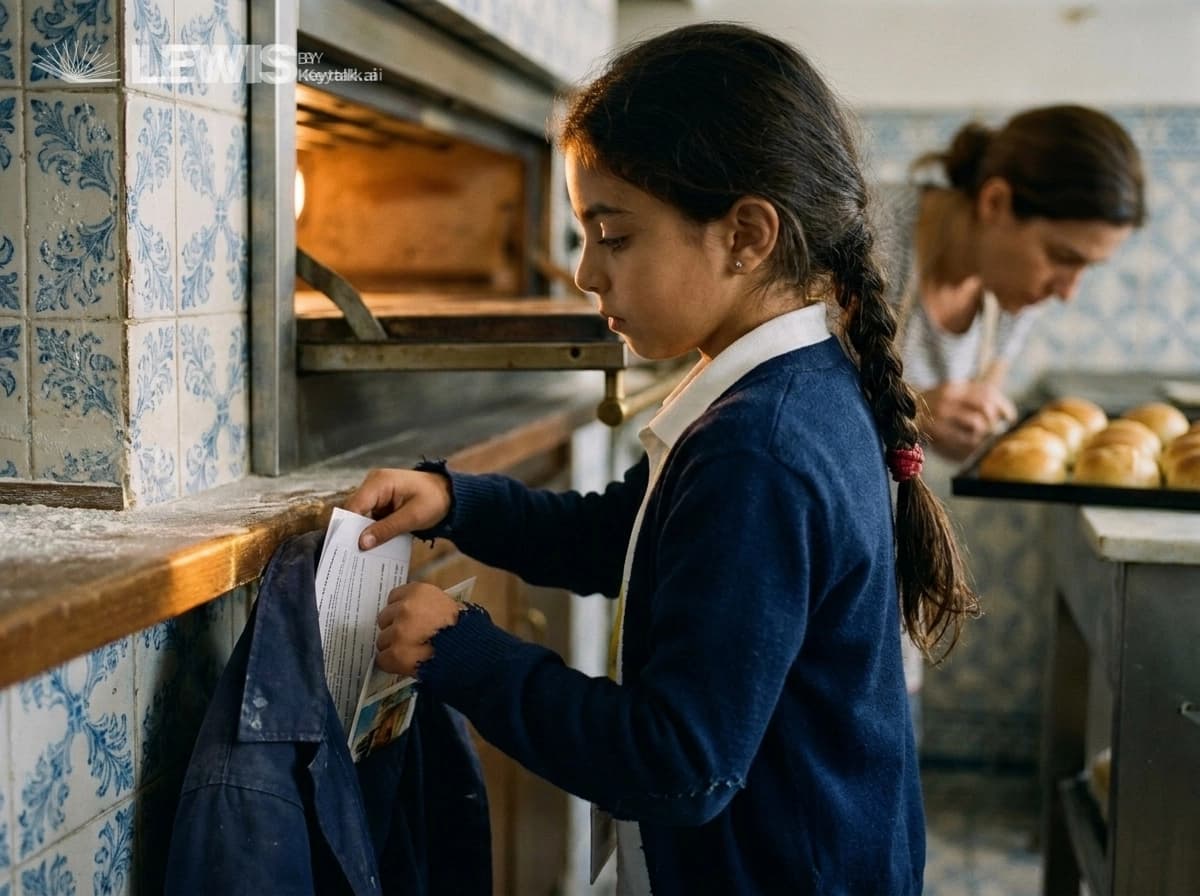
The aunt’s bakery holds a warm square of light behind flour-dusted windows, its wooden counter crowded with honey-brown rolls and loaves whose soft crusts split under a knife.

A coffee grinder rattles behind the till while schoolchildren trade lunch-card complaints and crumbs at two small tables, their voices briefly swallowed whenever the oven door opens. Near the back, a chipped ceramic sugar bowl sits beside the phone, its curled cord stretched toward the counter where bad news can arrive between orders.


場面 · Scenes

場面ごとの物語

チャプター 01

シーン 01· Late autumn morning, during rain

The Name on the Schedule

The Name on the Schedule
場所Tram 28 Uphill Carriage, Lisbon
時間Late autumn morning, during rain
出来事Rui Valente forces his way into the packed Tram 28 and opens the companion agency booking on his phone while the carriage jerks uphill. The client address is Anselmo Valente’s Alfama flat, paid weekly by Leonor Valente Faria, a name Rui does not know. He grips the brass key at his throat, then transfers enough of the cleared payment onto Inês Valente’s lunch-card balance to make walking away cost him money he has already used.
影響The appointment stops being a possibility and becomes a debt Rui has made visible in his daughter’s account. Anselmo’s address and Leonor’s name establish that someone inside Rui’s estranged father’s life has arranged for a son to arrive. Rui remains on the tram, carrying both the payment confirmation and the old key toward Graça.

Rui Valente shoves his shoulder between two rain-dark coats as Tram 28 snaps around a curve, then braces one hand on a cold brass pole and opens the agency schedule with the other. The screen shakes above the patched navy vinyl by the rear door: **Anselmo Valente**, Alfama, weekly visit, payment received. Beneath it sits the payer’s name, Leonor Valente Faria, clean and unfamiliar.

A ticket machine beeps as Rui taps the transfer button with his thumb. He enters Inês Valente’s lunch-card number from memory, sends part of the fee, and watches the green confirmation bar fill while the tram grinds uphill. His fingers close around the tarnished brass key under his shirt. “Not today,” he says, but the words vanish under the wheels.

The booking remains open on the phone, Anselmo’s address fixed above the proof that Inês has lunch money again. Rui pockets the phone before the next jolt can throw it from his hand, and the yellow carriage carries him higher through the rain.

シーン 02· Late morning, in thin autumn rain

Coffee Above the City

Coffee Above the City
場所Senhora do Monte Viewpoint, Lisbon
時間Late morning, in thin autumn rain
出来事Rui steps off Tram 28 at Senhora do Monte and buys a paper cup of coffee while the carriage rattles away toward Alfama. He calls Inês at the aunt’s bakery, using the warm, practiced voice he has learned for agency clients. Inês hears it, asks why he is speaking like that, and Rui tells her he is fixing a boiler. When the next yellow tram reaches the stop, Rui crushes the coffee cup in his hand and boards instead of walking home.
影響Inês does not challenge Rui’s lie, but her silence makes it clear that she knows he has chosen paid performance over honesty. Rui’s decision turns the booking into an action he cannot blame on the agency transfer alone. He resumes the route toward Anselmo’s address carrying the brass key and the knowledge that Inês has heard him become someone else.

Rui steps onto the wet stone terrace at Senhora do Monte and catches the tram-door rail before it folds shut behind him, his phone already pressed to his ear and a paper coffee cup shaking in his other hand. Below the low wall, pale roofs slid down toward the dull strip of the Tagus, while Tram 28 scraped around the bend and disappeared behind rain-softened façades.

At the aunt’s bakery, Inês pushed the curled phone cord tight across the counter, flour dust bright on the dark wood beside her. Rui gave her the smooth voice he used when he had to sound like a grateful nephew. “I’m at a boiler job. It’s nothing.” Inês held the receiver against her cheek, then said, “You only talk like that when you want people to give you something.” Rui tightened his hand around the cup until coffee ran over his knuckles. “I’ll be home after school.”

The coffee grinder rattled at the bakery end of the line, then stopped. Inês did not say goodbye; she set the receiver down beside the chipped sugar bowl. Rui watched the next yellow carriage climb toward the viewpoint, dropped the crushed cup into a rain-dark bin, and climbed aboard before the doors could close.

シーン 03· Late morning, under thin rain

The Voice Upstairs

The Voice Upstairs
場所Anselmo’s tiled stairwell, Alfama
時間Late morning, under thin rain
出来事Rui leaves Tram 28 and cuts through Alfama’s wet lanes toward the address on the agency schedule. He reaches the blue-and-white tiled stairwell, grips the brass key beneath his shirt, and pauses before touching the bell. From above, Anselmo calls through the closed apartment door for his son to come upstairs.
影響Anselmo’s voice removes Rui’s last chance to arrive as an anonymous hired companion. Rui is physically at the threshold of the home he left nineteen years ago, with the prepaid visit and Inês’s lunch money pushing him toward the stairs. The old man has already named the role Rui is trying not to accept.

Rui shoves through the stairwell door hard enough to make its warped glass shudder, bringing rainwater and the yellow flash of Tram 28 in with him before it swings shut on Alfama’s narrow lane. Blue-and-white azulejo tiles climbed the walls in cracked rows, saints and flowers broken by damp stains, while a weak bulb trembled over the first landing. He pulled out his phone, and Anselmo Valente’s address stared back above the green payment confirmation.

Rui hooked two fingers under the brass key at his throat, then started up one step. A chair scraped somewhere overhead. “Rui?” Anselmo’s voice came down the stairwell, thin but commanding. “Come upstairs now. Don’t stand there making me wait.”

Rui stopped with one wet shoe on the next step. His hand closed over the key until its edges pressed into his palm, and the phone screen went dark beside it.

チャプター 02

シーン 04· Late morning, rain-darkened day

The Cupboard Order

The Cupboard Order
場所Anselmo’s Kitchen, Alfama
時間Late morning, rain-darkened day
出来事Rui enters Anselmo’s flat after being called upstairs by name and follows him into the cramped kitchen. Anselmo orders Rui to fetch a particular white mug from behind the chipped plates, refusing to accept any other cup. Rui opens the cupboard and finds the small mug with its yellow tram and crudely repaired handle exactly where Anselmo said it would be.
影響The order forces Rui into a childhood ritual before he can establish the safer distance of a paid stranger. The mug proves that Anselmo has preserved a physical piece of Rui’s childhood even as his memory has lost the harm that ended it. Rui takes the mug down from the cupboard, allowing Anselmo to place him at the kitchen table as a son rather than a visitor.

Rui pushes the kitchen door wider with his wet shoulder, and Anselmo Valente catches his sleeve before he can remain near the hall. Yellow stove light shakes across grease-sheened tiles, biscuit tins of tram screws crowd the counter, and the old man points his burned hand toward the chipped white cupboards. “The tram mug,” Anselmo says. “Behind the plates. Don’t bring me that blue thing.”

Rui crosses the narrow room because Anselmo is still holding his sleeve. He opens the cupboard, shifts two chipped dinner plates, and stops when the white mug appears in the back corner: a tiny yellow tram painted on its side, the handle stitched together by a thick, cloudy seam of glue. Anselmo leans forward over the table. “Careful. You broke it crying.”

Rui takes the mug down and sets it between the three mismatched chairs. Anselmo pulls one chair out with a scrape and taps its seat until Rui sits, while the kettle begins to hiss beside the burned ring on the stove.

シーン 05· Late afternoon, with rain darkening the stairwell outside

A Son at the Table

A Son at the Table
場所Anselmo’s Kitchen, Alfama
時間Late afternoon, with rain darkening the stairwell outside
出来事Anselmo pulls Rui into the chair beside the repaired tram mug and refuses to let him leave the table. He asks why Rui stopped coming, then reaches across the table to turn the mug so its glued handle faces Rui. When Rui tries to move the mug away, Anselmo catches his wrist and recounts the day eight-year-old Rui broke it, while failing to remember the night he drove adult Rui from the flat.
影響Anselmo’s selective memory makes the old mug into an accusation Rui cannot answer safely. Rui is forced to sit inside the role of son before he has chosen whether to accept it, and Anselmo’s question sets up the paid-for lie Rui will give next. The physical history preserved in the mug proves that Anselmo kept something of Rui while losing the harm that separated them.

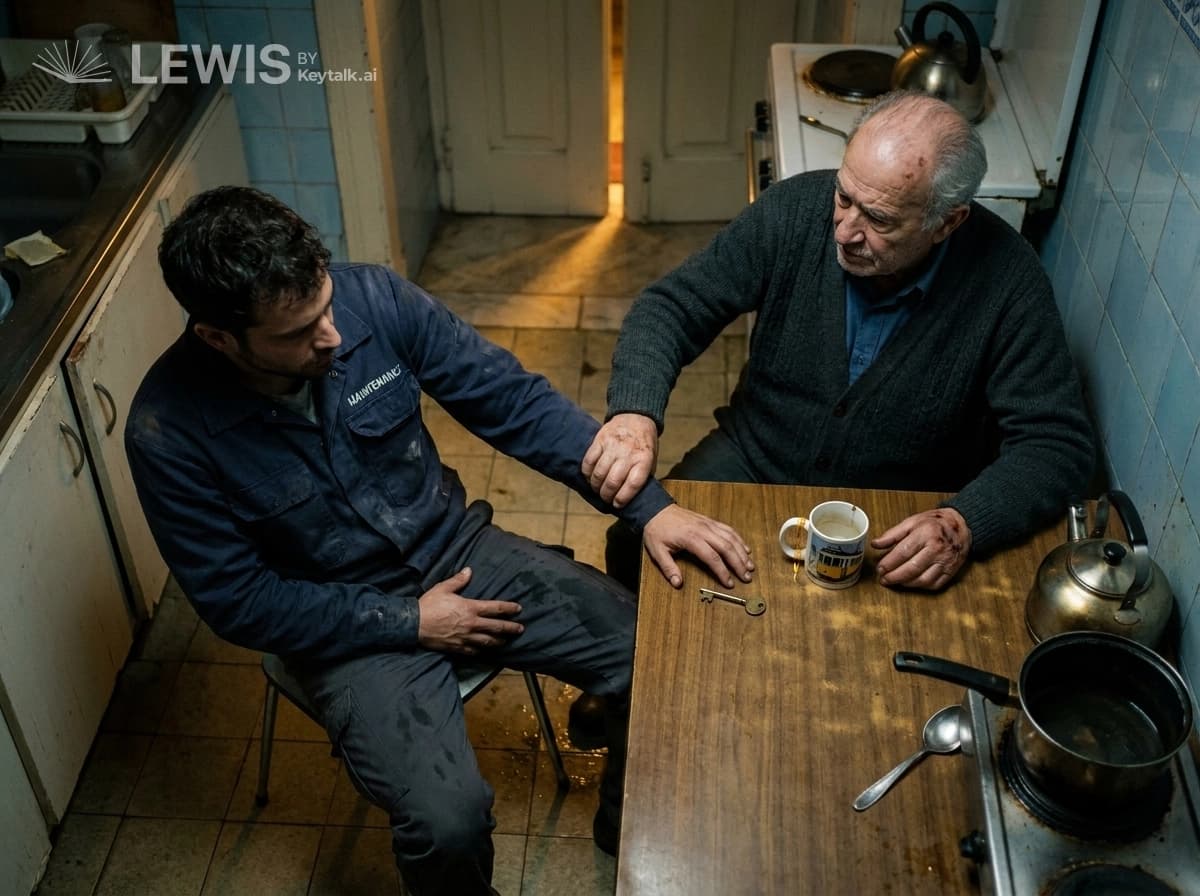
Anselmo drags Rui’s chair closer to the table until its legs shriek over the grease-sheened tiles, then plants the repaired white mug between them beneath the low kitchen light. “Sit properly,” he says, pressing Rui’s shoulder down with his burned hand as the kettle hisses beside the blackened stove ring. Rui keeps one hand flat on his wet trouser leg and the other near the brass key beneath his shirt.

Anselmo turns the mug by its glued handle, careful as a man handling a wound. “You cried like someone had died,” he says. “Over this.” Rui reaches to take it away, but Anselmo closes his fingers around Rui’s wrist, thin and stubborn. “Why did you stop coming?” he asks.

Rui pulls free hard enough to knock a spoon against the soup pot. The mug stays in the center of the table, its little yellow tram facing him, while Anselmo waits across from it with the certainty of someone asking about a missed meal.

シーン 06· Early dark, late autumn afternoon

The Answer for Sale

The Answer for Sale
場所Anselmo’s Kitchen, Alfama
時間Early dark, late autumn afternoon
出来事Rui gives Anselmo the gentle explanation the companion agency trains him to use: work became difficult, life became crowded, and time slipped away. Anselmo accepts the lie as an answer, releasing Rui’s wrist and settling into his chair. When Anselmo dozes beside the stove, Rui takes the repaired tram mug from the table and leaves the kitchen with it hidden under his jacket.
影響Rui keeps the prepaid visit intact and avoids exposing himself as a hired companion. But Anselmo’s relief makes the lie feel more intimate than an argument would have. By taking the mug, Rui carries out proof that his father preserved the accident of his childhood while forgetting the expulsion that ended it.

Rui pulls the mug toward himself before Anselmo can turn it again, and the glued handle scrapes across the table beneath the low yellow kitchen light. Anselmo’s burned hand remains on Rui’s wrist for one hard second, then loosens as Rui says, “Work. Life. I kept thinking I would come next week.” The kettle clicks off beside the blackened ring. “Bad timing,” Rui adds, using the soft, careful voice that had bought him this chair.

Anselmo studies him, then nods as though Rui has handed him a tool he knows how to use. “Yes,” he says. “That happens.” He releases Rui completely and draws the mug back by its unbroken side, his thumb following the cloudy seam in the handle. “You always made things difficult when you were little.”

Rui does not answer. Anselmo leans back in the mismatched chair, his chin lowering toward his chest while the soup spoon ticks once against the pot. Rui waits until the old man’s fingers slide away from the mug, then lifts it from the table and slips it inside his maintenance jacket. The painted yellow tram presses against his ribs as he backs through the kitchen door, leaving the third chair pulled out beneath the trembling stove light.

チャプター 03

シーン 07· Early dark, late autumn rain

The Third Chair

The Third Chair
場所Anselmo’s Kitchen, Alfama
時間Early dark, late autumn rain
出来事Rui reaches the kitchen door with the repaired mug hidden inside his maintenance jacket, but Leonor enters from the stairwell carrying a wet grocery bag and catches sight of the brass key at his throat. Their argument wakes Anselmo. Before Rui can leave or Leonor can force an explanation, Anselmo drags out a third mismatched chair and orders them both to stay for dinner.
影響Rui loses the clean exit he had planned after completing the paid visit. Leonor sees enough—the key, Rui’s face, and Anselmo’s immediate claim on him—to know the agency has sent someone tied to her family. Anselmo turns a paid appointment into a shared meal, trapping all three in the kitchen under a version of family neither Rui nor Leonor accepts.

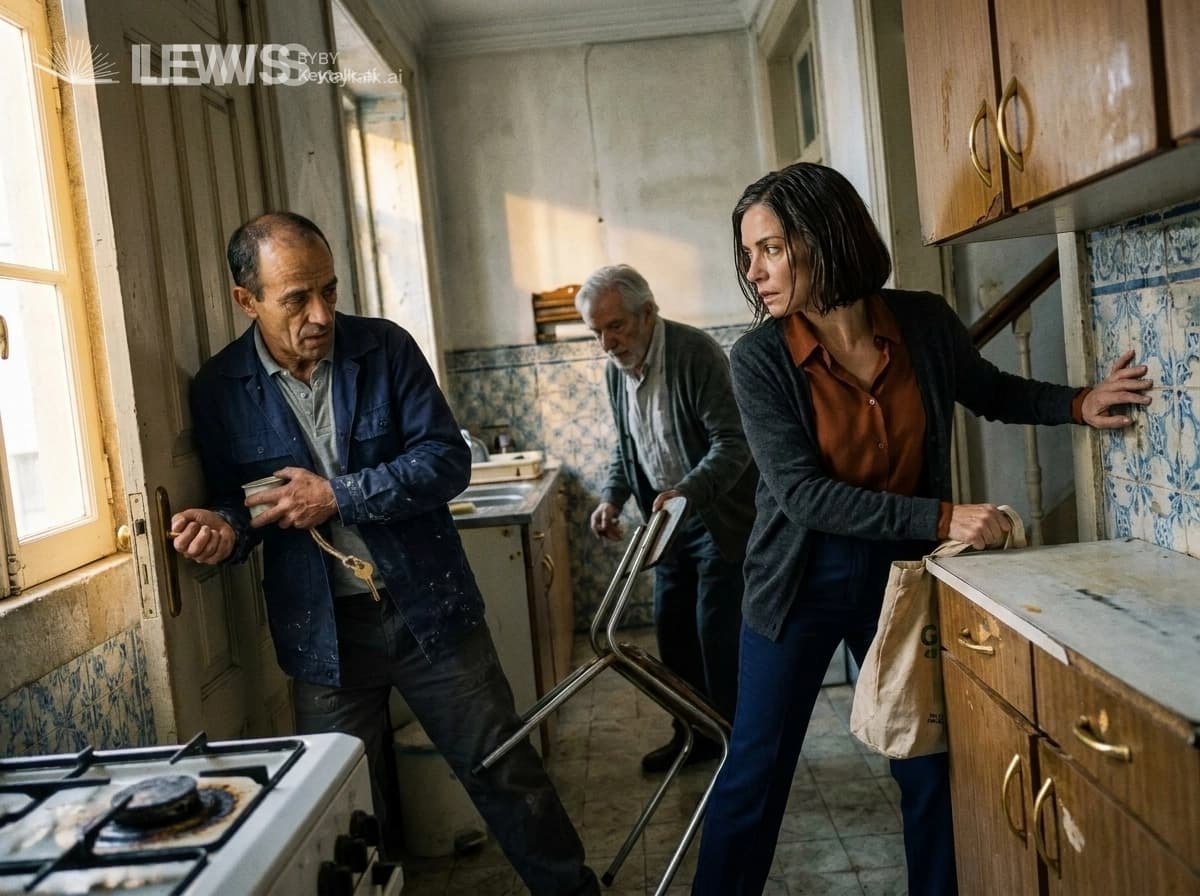
Rui pulls the kitchen door toward him with one hand when Leonor Valente Faria pushes in from the tiled stairwell, rain shining on her blunt dark hair and a grocery bag knocking against her knee. Her eyes drop to the brass key that has slipped free at Rui’s collar, then rise to his face. “Who are you?” she asks, setting the bag on the counter hard enough to rattle the biscuit tins of tram screws.

Rui keeps his jacket closed over the mug. “The agency sent me.” Leonor steps between him and the hall, one hand flat against the chipped cupboard, while the kettle gives a thin click beside the burned ring. “For my father?” she says. “With that key?”

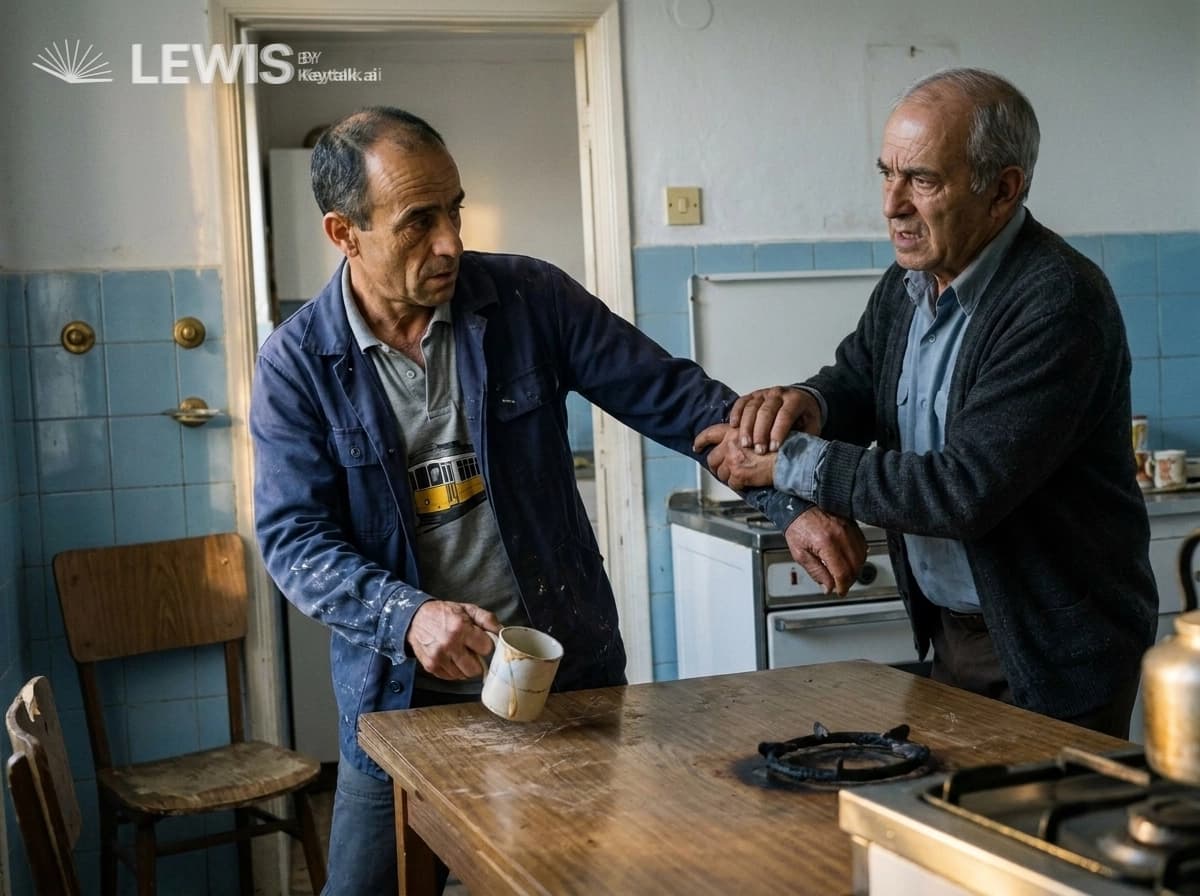
Anselmo jerks awake at the table and sees them facing each other across the narrow kitchen. He hauls the empty chair away from the wall, its legs scraping over the grease-sheened tiles, and wedges it beside the table. “Enough,” he says, pointing at the stove with his burned hand. “Three people. Three chairs. Make dinner.”

Rui reaches for the door again. Anselmo catches the back of the third chair and drags it closer until it touches Rui’s shin, leaving no clear path between the table and the stove.

シーン 08· Early dark, with rain against the kitchen window

Salt in the Soup

Salt in the Soup
場所Anselmo’s Kitchen, Alfama
時間Early dark, with rain against the kitchen window
出来事Rui takes the knife from the counter and begins chopping onions because Anselmo has blocked the doorway with the third chair. Leonor measures rice beside him, watching every movement while Anselmo directs them from the table. Rui salts the soup in the same abrupt motion Anselmo uses, and Leonor catches his wrist before the grains finish falling. Anselmo calls Leonor by her dead mother’s name, then calls Rui by the childhood nickname no agency companion could know.
影響Leonor gains proof that Rui’s connection to Anselmo is personal, not professional. Rui loses the protection of the agency’s lie inside the kitchen, where even his habits belong to the family history he refuses. The meal becomes a forced rehearsal of a household that has never existed cleanly.

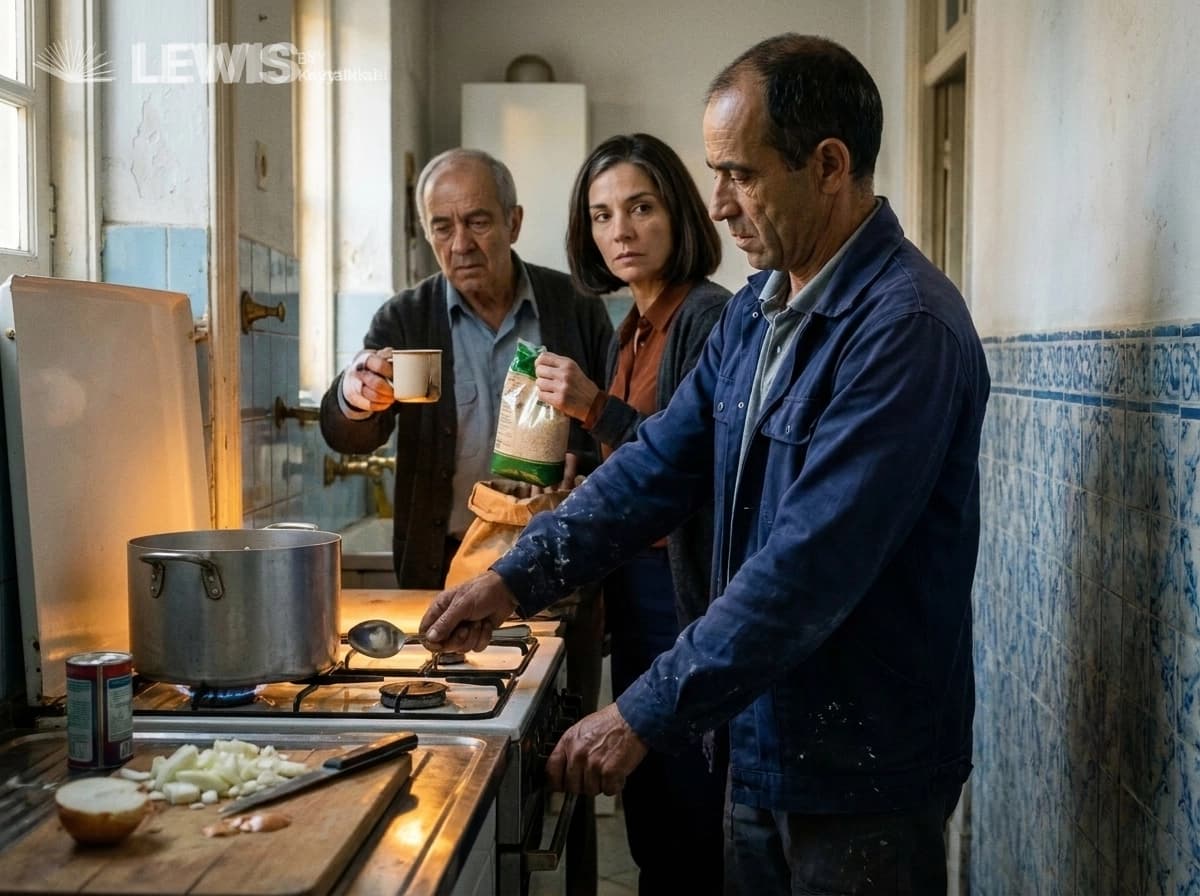
Rui snatches the salt tin from beside the stove and throws a sharp pinch into the soup, his wrist cutting once through the yellow light as the knife waits among chopped onions on the counter. Leonor sets down the rice scoop and catches his forearm before he can reach for the tin again. “That is how he does it,” she says, looking past Rui to Anselmo.

Anselmo leans over the table between the mismatched chairs, his burned hand wrapped around the repaired mug’s glued handle. “Maria, stop staring,” he tells Leonor. “The rice will turn to paste.” Leonor’s face hardens, but she does not correct him. Then Anselmo looks at Rui and says, “Nico, you always over-salt it.”

Rui pulls his arm from Leonor’s hand and turns off the burner too hard; the soup spoon jumps against the pot. Leonor opens the grocery bag and removes a packet of rice without taking her eyes from him. Beneath Rui’s jacket, the little painted tram presses against his ribs while Anselmo lifts the mug toward the stove light, as if checking whether its old crack has opened again.

シーン 09· Early dark, with rain against the windows

The Envelope on the Landing

The Envelope on the Landing
場所Anselmo’s Tiled Stairwell, Alfama
時間Early dark, with rain against the windows
出来事Rui uses the clatter of Anselmo’s spoon and Leonor’s rice tin to slip from the kitchen with the repaired mug inside his jacket. Leonor follows him onto the landing and blocks the final turn down the stairs. She pulls a cream envelope from her document satchel and tells him her mother left it sealed, with his name inside.
影響Rui’s exit becomes impossible to treat as the end of a paid appointment. Leonor confirms that she knows he is tied to Anselmo by more than the brass key, while Rui sees that his father’s hidden family has kept a record of him without ever reaching for him. The unopened letter becomes a new claim neither of them can safely make.

Rui shoves through Anselmo’s kitchen door with the repaired mug hard against his ribs, but Leonor catches the door before it swings shut and follows him onto the blue-and-white tiled landing. The weak amber bulb shakes above them, turning the cracked saints in the azulejos yellow at their edges, while rain taps somewhere beyond the stairwell window. Behind them, Anselmo scrapes a chair across the kitchen floor and calls, “Maria, bring the bowls.”

Rui takes two steps down, and Leonor moves into the final turn, one hand flat on the damp plaster wall. “Take off your jacket,” she says. Rui grips the rail instead. “You paid the agency. You got your hour.” Leonor opens her canvas satchel and draws out a cream envelope sealed with old red wax, then holds it between them without offering it.

“My mother left this,” Leonor says. “It names Anselmo’s first child. Rui Valente.” Rui’s hand goes to the brass key at his throat as the mug’s glued handle presses through his jacket. He does not take the envelope; he stares at the wax seal while Anselmo calls again from the kitchen, louder this time, and the loose tile beneath Rui’s shoe gives its hollow knock.

チャプター 04

シーン 10· Late afternoon, during cold rain

The Empty Apron Hook

The Empty Apron Hook
場所The Aunt’s Bakery, Lisbon
時間Late afternoon, during cold rain
出来事Inês slips the printed schedule and Anselmo’s postcard from Rui’s coat, then leaves the bakery while her aunt is occupied at the oven. Rui arrives moments later to collect her and finds her lunch card hanging from its lanyard on the empty apron hook. He calls the bakery phone, learns she has taken only two biscuits, and recognizes the address she has followed.
影響Inês turns suspicion into action and begins the journey toward Anselmo before Rui can stop her. Leaving her lunch card behind makes her disappearance deliberate rather than accidental. Rui is forced into pursuit, with Anselmo’s old address now leading his daughter into the family wound he tried to keep from her.

Inês yanks Rui’s folded schedule from his coat pocket beneath the bakery counter, then stuffs it behind the postcard already pressed inside her school cardigan. The oven door opens behind her, washing the flour-dusted room in orange light as Rui’s sister bends to pull out a tray of honey-brown rolls. Inês unclips her yellow lunch-card lanyard and hangs it on the empty apron hook beside the back door. She takes two biscuits from the cracked tin, wraps them in a napkin, and slips into the rain before the coffee grinder stops rattling.

Rui pushes through the bakery door minutes later, wet at the shoulders, and reaches automatically for Inês’s braid where she usually waits beside the counter. His hand closes on air. He sees the yellow card swinging from the hook and grabs it hard enough to twist the lanyard around his fist. “Where is she?” he asks, already pulling the postcard from the open drawer where she had searched.

The postcard is gone, but a damp crescent of paper marks the counter beside the sugar bowl. Rui snatches up the phone, its curled cord jerking across the wood, while rain runs in thin lines down the flour-dusted window.

シーン 11· Late afternoon, in cold rain

The Yellow Carriage

The Yellow Carriage
場所Tram 28, climbing through Graça toward Alfama
時間Late afternoon, in cold rain
出来事Inês boards the packed tram with Rui’s postcard clenched inside her damp fist and forces her way toward the rear door before anyone can send her back. Rui reaches the tram stop below moments too late, sees her through the rain-streaked window, and runs alongside the carriage as it lurches uphill. Inês presses the postcard to the glass instead of opening the door at his shouted command.
影響Inês turns her private suspicion into a public refusal to be protected by Rui’s silence. Rui sees that she is following the address alone and is forced to pursue her through the hills rather than control the meeting. The tram carries Inês closer to Anselmo while leaving Rui behind on the wet street.

Inês shoves through the rear doors of the yellow Tram 28 as they fold toward each other, catching the cold brass pole with one hand and clutching the postcard against her cardigan with the other. The carriage jerks uphill at once, shoulders packed along the aisle and wet handprints shining on the poles. She wedges herself beside the frayed navy vinyl seat patched with silver tape, then unfolds the postcard beneath the window: blue-and-white tiles, a crooked address, and the name Valente in Rui’s hard handwriting.

The tram rounds a curve with a metallic shriek, and Rui appears below on the pavement, running past the stop sign with her yellow lunch-card lanyard clenched in his fist. “Inês!” he calls, one hand raised through the rain. A woman near the door reaches for the bell cord, but Inês grabs the postcard back from the glass before Rui can read its address and shakes her head. “I need to ask him,” she says, too softly for Rui to hear through the window.

Rui keeps pace for three steps, then slips on the black cobbles and catches himself against a rusted rail. Inês watches him shrink behind the smeared glass as the carriage climbs toward Graça, the postcard flattened under her palm like a map she has already chosen to follow.

シーン 12· Late afternoon, during cold rain

The Question Upstairs

The Question Upstairs
場所Anselmo’s tiled stairwell and kitchen, Alfama
時間Late afternoon, during cold rain
出来事Inês reaches Anselmo’s flat first and pushes past his uncertain greeting to ask whether he threw Rui away. Downstairs, Rui arrives soaked from the chase just as Leonor enters with groceries. They hear Inês’s question through the door and race up together.
影響Anselmo’s memory catches on the brass key, the gutter, and Rui as a boy at the bottom of the stairs. His recognition turns the private question into a dangerous confrontation before Rui can remove Inês. Rui and Leonor are forced into the flat as Anselmo’s fear begins to spill into action.

Inês plants both hands on Anselmo’s kitchen table and asks, “Did you throw your son away?” while the yellow light under the door cuts across the blue-and-white tiles behind her. Anselmo grips the repaired mug with both hands, his burned right hand whitening around the glued handle. He looks at her school cardigan, then at the rain-dark postcard beside her elbow, as if either one might tell him who she is.

“I did not throw anyone,” Anselmo says, but his chair legs scrape backward and strike the cupboard. Inês does not step aside. “My father says you do not remember. That is not the same as saying you did not do it.” Anselmo’s eyes fix on the brass key drawn on the postcard’s corner, and his mouth opens around a breath that will not become a word.

Below, Rui shoves through the stairwell door with Inês’s yellow lunch-card lanyard wrapped around his fist as Leonor catches the grocery bag before it hits the wet tiles. Inês’s voice carries down the narrow shaft. Rui takes the steps two at a time; Leonor follows, her bag thudding against her knee. At the final turn, the loose tile knocks hollowly beneath Rui’s shoe, and from behind the kitchen door Anselmo says, frightened now, “The gutter. The key. The boy on the stairs.”

チャプター 05

シーン 13· Early dark, moments after Rui and Leonor reach the door

Steam on the Tiles

Steam on the Tiles
場所Anselmo’s Kitchen, Alfama
時間Early dark, moments after Rui and Leonor reach the door
出来事Rui forces open the kitchen door as Anselmo lurches toward Inês and knocks the hissing kettle from the stove. Boiling water floods across the grease-sheened tiles. Rui lifts Inês onto the counter while Leonor drags Anselmo back by his cardigan. Seeing the old burn on his own hand, Anselmo begins to remember the night he drove Rui away and admits what he did.
影響The danger makes Anselmo’s memory break open in front of all three witnesses. Rui sees that his father can name his cruelty, but only in frightened fragments, and Inês sees that the story was real. Leonor takes charge of the immediate hazard, proving she cannot be left alone with Anselmo’s care and its consequences.

Rui slams the kitchen door wide and catches Inês under the arms just as Anselmo jerks backward into the stove, sending the kettle over in a burst of white steam. Water races across the tiled floor in shining sheets, curling around the legs of the mismatched chairs. Rui sets Inês on the counter beside the biscuit tins and pulls her wet shoes clear while Leonor seizes Anselmo’s cardigan and hauls him away from the spill.

Anselmo fights her grip for one startled second, then looks down at the red scar webbed across his burned right hand. “The stairs,” he says, staring at Rui through the steam. “You had your bag.” Rui keeps one arm across Inês’s knees as she grips the counter edge. “You threw the key into the gutter,” he says. “You told me not to come back.”

Leonor kicks a dish towel toward the spreading water and holds Anselmo against the cupboard when his knees fold. His face pinches hard, as if the memory has teeth. “Your mother was gone,” he says. “I could not keep the house. I made it your fault.” Steam beads on the repaired mug at the table while Inês watches Anselmo lower his burned hand and turn his face away.

シーン 14· Early dark, moments after the kettle spills

The Landing Question

The Landing Question
場所Anselmo’s Tiled Stairwell, Alfama
時間Early dark, moments after the kettle spills
出来事Rui carries Inês out of Anselmo’s kitchen and down to the landing, refusing to let her remain beside the scalding water and Anselmo’s fractured confession. Inês twists in his arms and makes Rui stop at the loose tile near the final turn. She asks whether leaving is the only thing their family knows how to pass on. Leonor follows with a towel wrapped around Anselmo’s burned hand, and Anselmo calls weakly from the open kitchen door.
影響Inês refuses to let Rui turn protection into another silent escape. Her question forces him to choose a boundary that is visible and spoken, rather than simply taking her away. Rui turns back toward the kitchen, prepared to end the paid arrangement and face Leonor and Anselmo on terms he sets himself.

Rui carries Inês down the blue-and-white stairwell with her wet shoes knocking against his thigh, while amber light trembles across the cracked saints in the tiles. Behind them, Leonor drags the kitchen door nearly shut with one hand and keeps the other pressed around Anselmo’s burned hand beneath a dish towel. “Dad,” Inês says, pushing against Rui’s shoulder, “put me down.”

He sets her on the narrow landing beside the loose tile, and it gives its hollow knock when she shifts her weight. Water glitters at the threshold upstairs; Anselmo’s cardigan sleeve hangs dark and wet as Leonor steadies him in the doorway. Inês looks from Rui to the yellow light above them. “Is leaving the only thing this family passes down?”

Rui’s fist closes around the brass key beneath his shirt. Anselmo makes a small sound from the kitchen, then says, “Do not leave her here with me.” Rui steps around Inês and climbs back toward the open door, his shoe striking the loose tile hard enough to make it answer.

シーン 15· Early dark, minutes after the kettle spill

No Door Owed

No Door Owed
場所Anselmo’s kitchen, Alfama
時間Early dark, minutes after the kettle spill
出来事Rui steps back into the kitchen and puts the brass key on the table beside the repaired mug. He tells Anselmo that he will not return as a paid son and will not bring Inês back while Anselmo can remember the harm only long enough to frighten everyone else. Leonor agrees to arrange practical care openly, without hiring strangers to perform family. Weeks later, Rui gives Inês the mug at Senhora do Monte and drops the key into a locksmith’s public key box.
影響Rui makes a boundary visible in front of Anselmo, Leonor, and Inês instead of escaping without a word. Leonor is left with responsibility for Anselmo’s care, but not with the burden of maintaining the agency lie. The mug becomes something Rui can pass to Inês without passing on access to Anselmo, while the discarded key ends the old door’s claim on him.

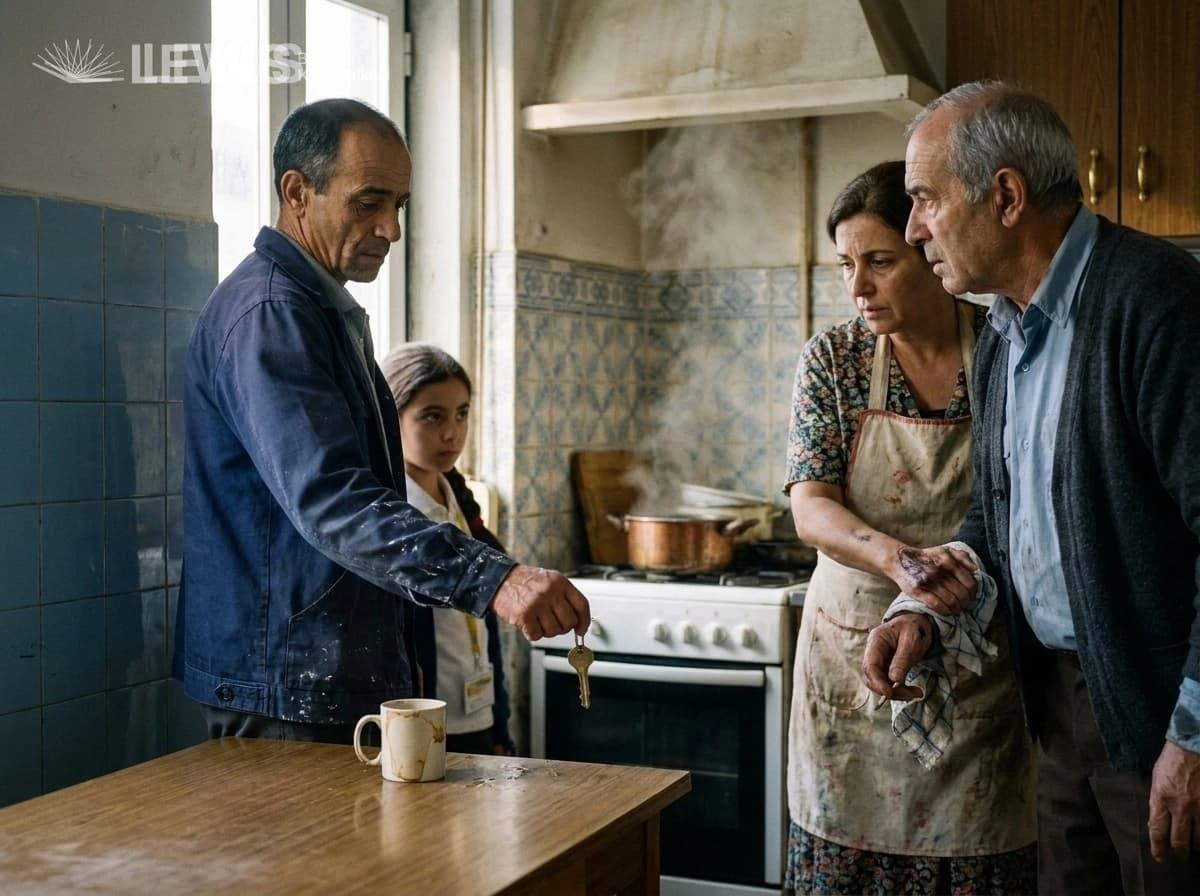
Rui crosses the wet kitchen tiles and lays the brass key beside the glued-handled mug, the metal striking the table hard enough to turn Anselmo’s head. Steam still clings to the low ceiling, and Leonor keeps one hand wrapped around Anselmo’s burned hand beneath the damp dish towel. Inês stands in the doorway behind Rui, her school cardigan dark at the cuffs. “I will not come here for money again,” Rui says. “And she does not come back until you can remember what you did without making her hold it for you.”

Anselmo reaches for the key, but Leonor catches his wrist before his fingers close around it. “No more agency,” she says, looking at Rui rather than her father. “I will arrange care. Under his real name. Under mine.” Anselmo’s hand drops onto the table beside the mug, stopping short of both objects. Rui takes Inês’s hand and leads her through the kitchen door, leaving the key where it fell.

Weeks later, wind pushes rain across Senhora do Monte as Rui gives Inês the repaired mug wrapped in his old maintenance jacket. She holds it with both hands, tracing the crude glue along the handle while Tram 28 groans below the terrace. At a locksmith’s shop downhill, Rui opens the public key box and drops the brass key through its narrow slot. It lands among other unwanted keys with a small, final clatter.

'You Bought a Son'ストーリーチャット

このストーリーの登場人物と話したいなら?

'You Bought a Son'ストーリーチャット

このストーリーの登場人物と話したいなら?

story image
story image
story image
story image

情報 · Story details

制作情報

モデル

  • GPT-5.6 Terraテキスト
  • Stable Diffusionイメージ
  • Gemini Proイメージ

キートーク

コメント · Comments

コメント · 0

生成者LostChapterpro作家プロフィール →
のテーマ音楽