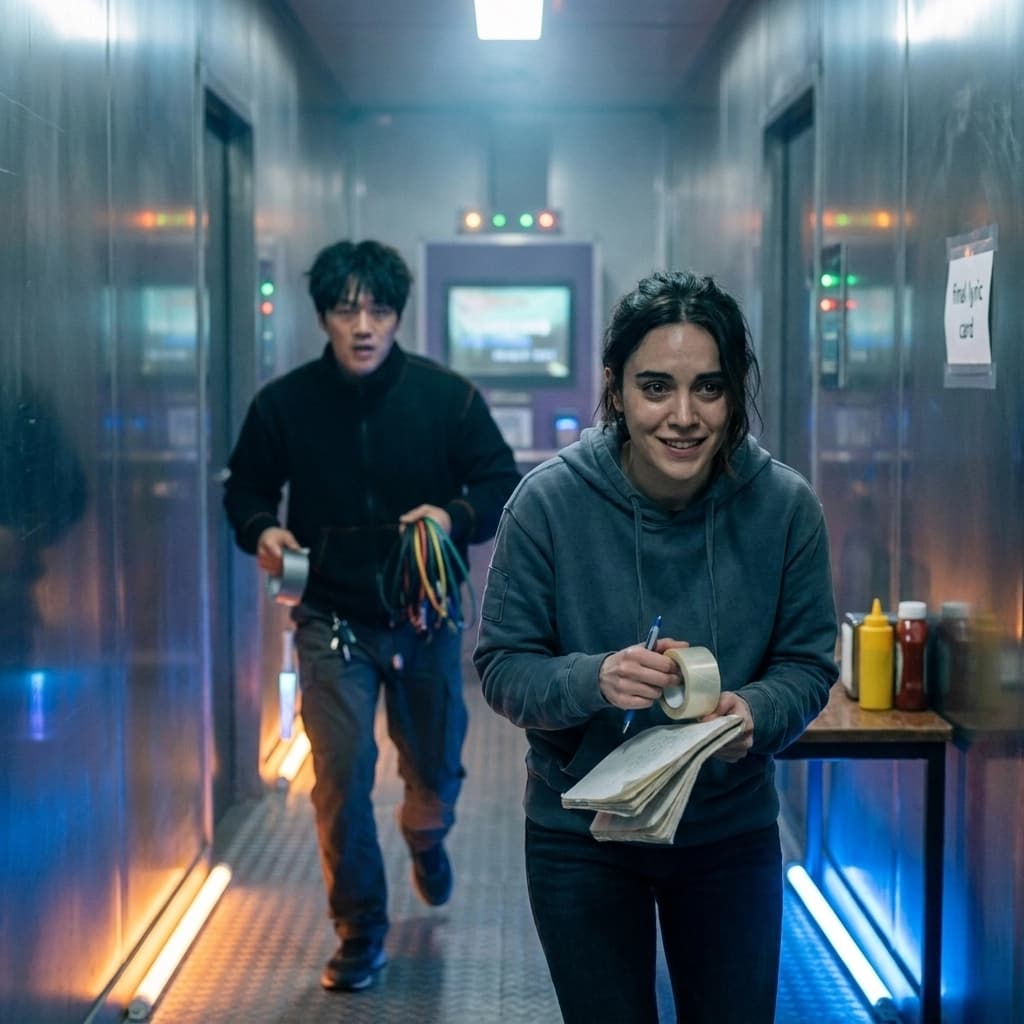
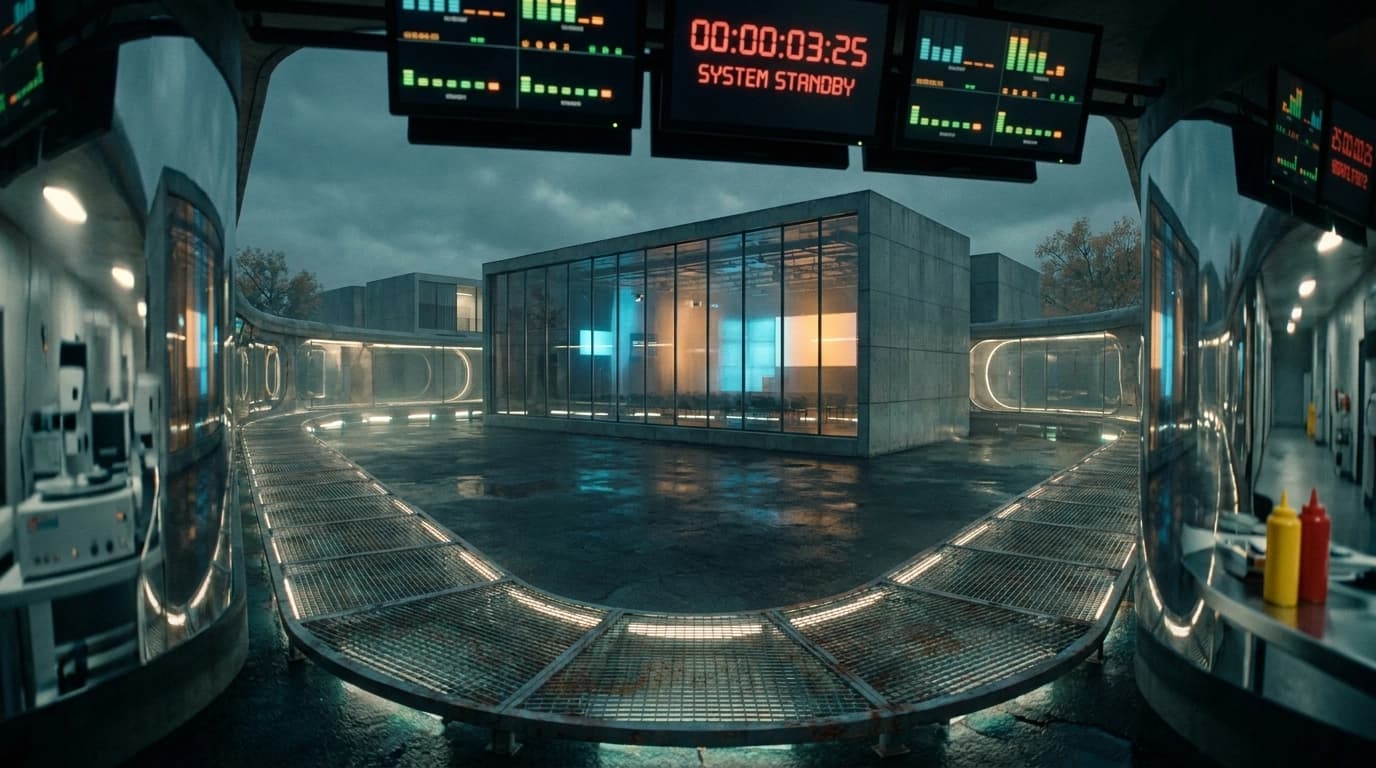
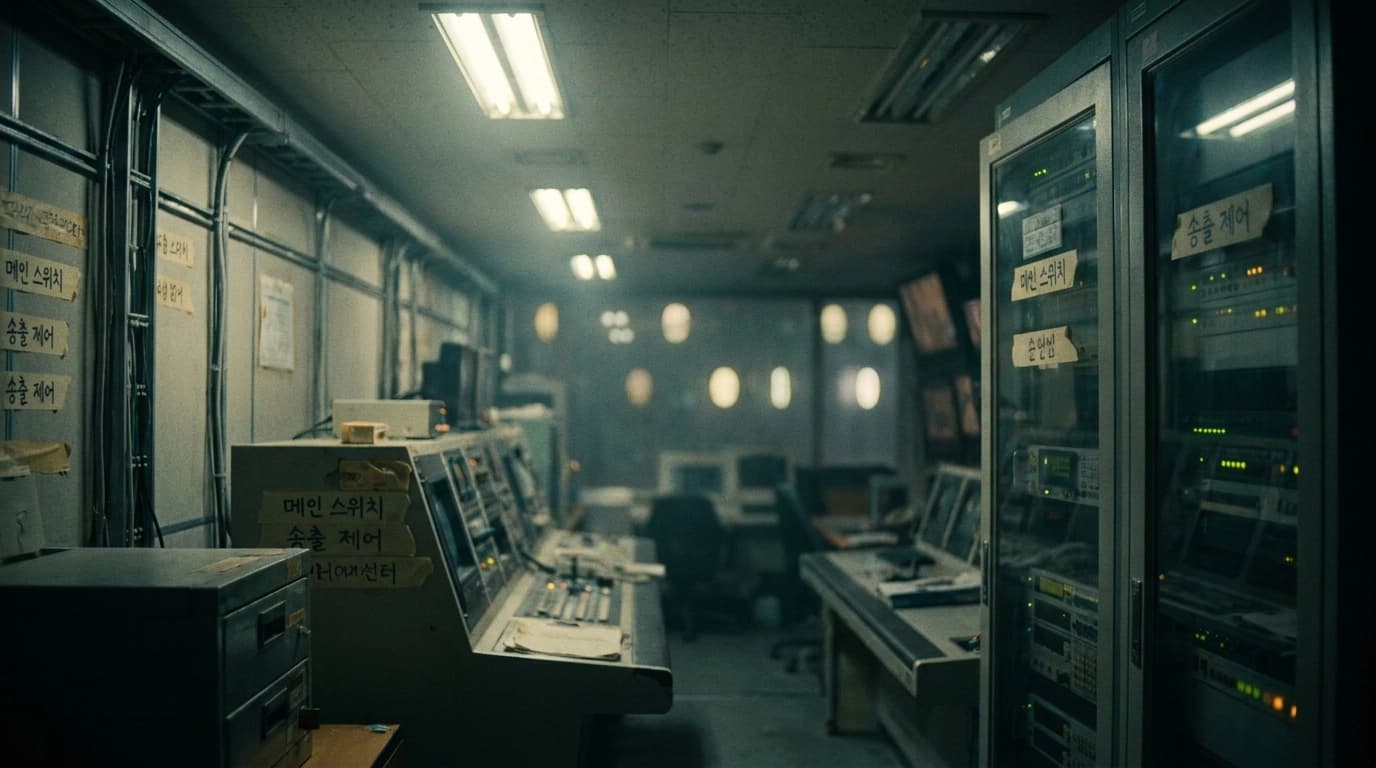
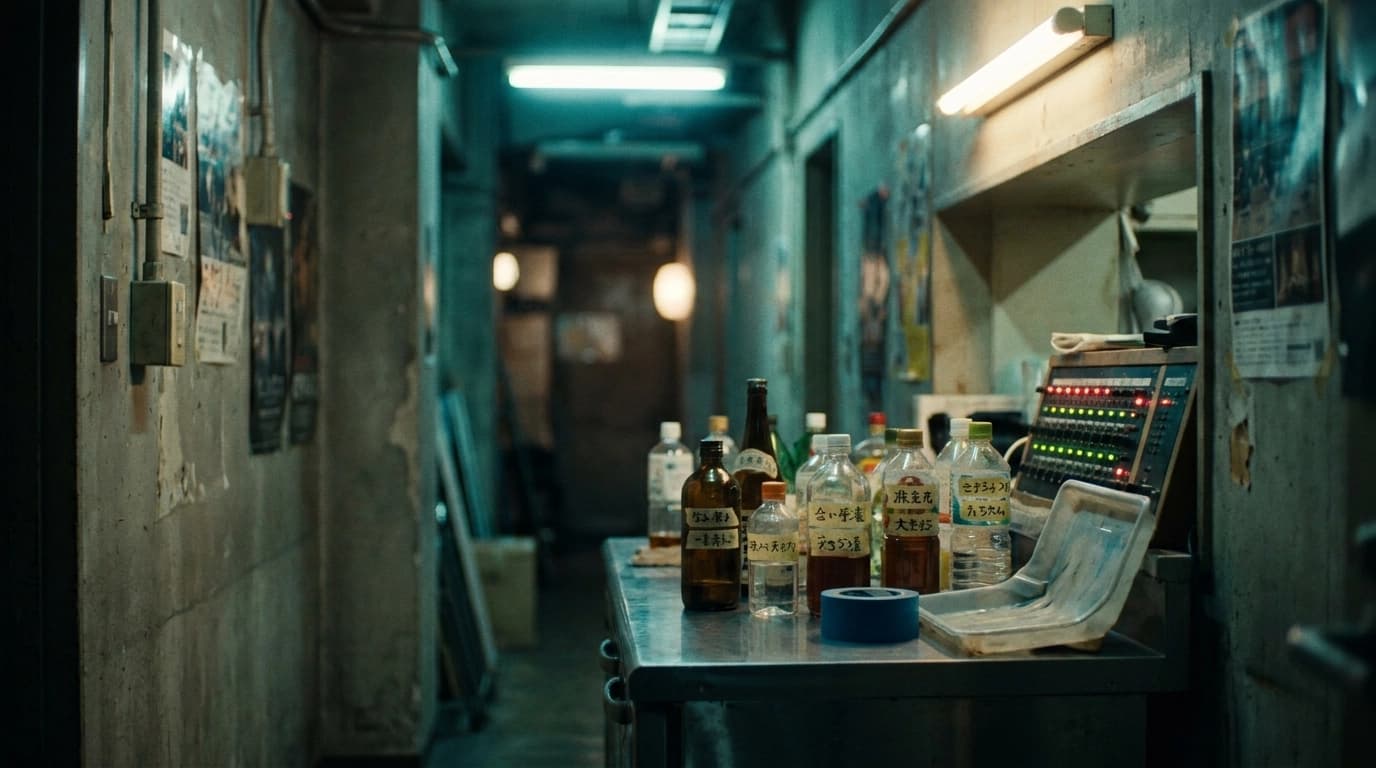
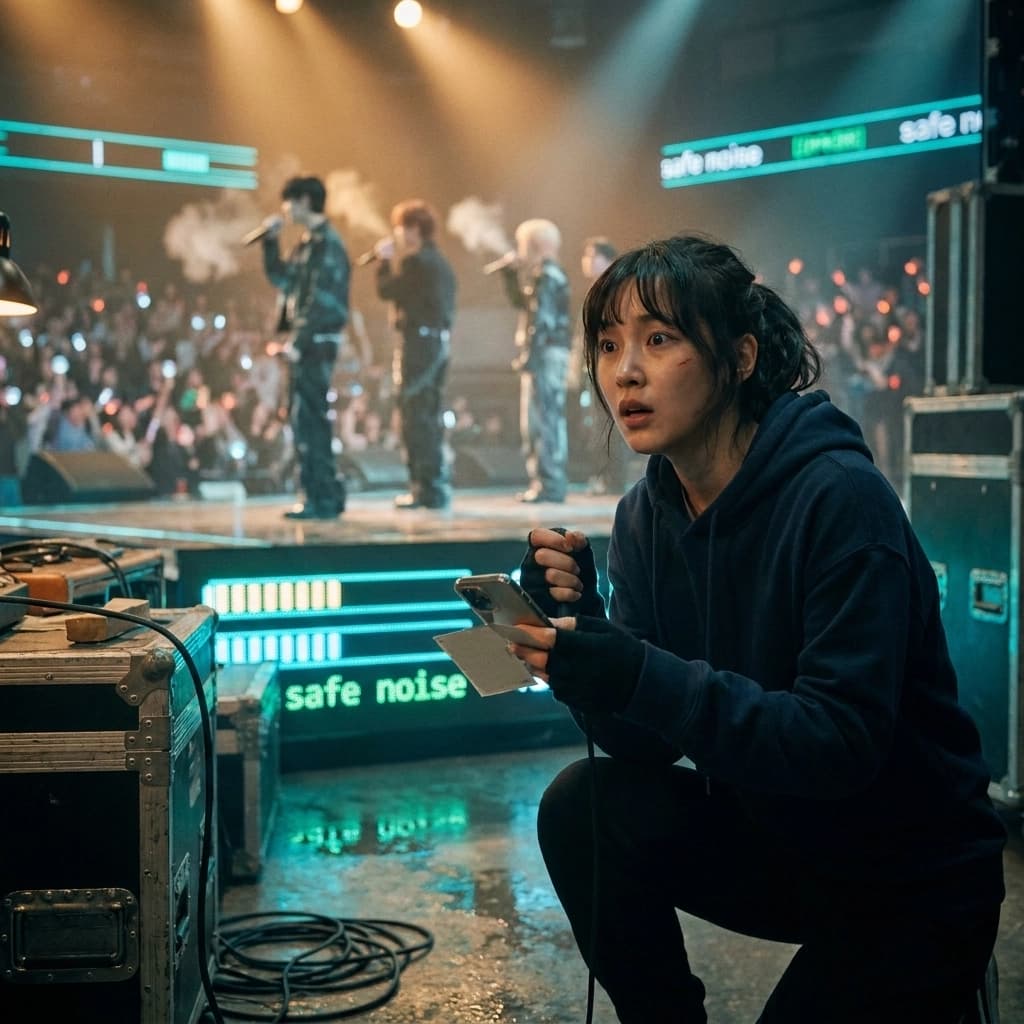
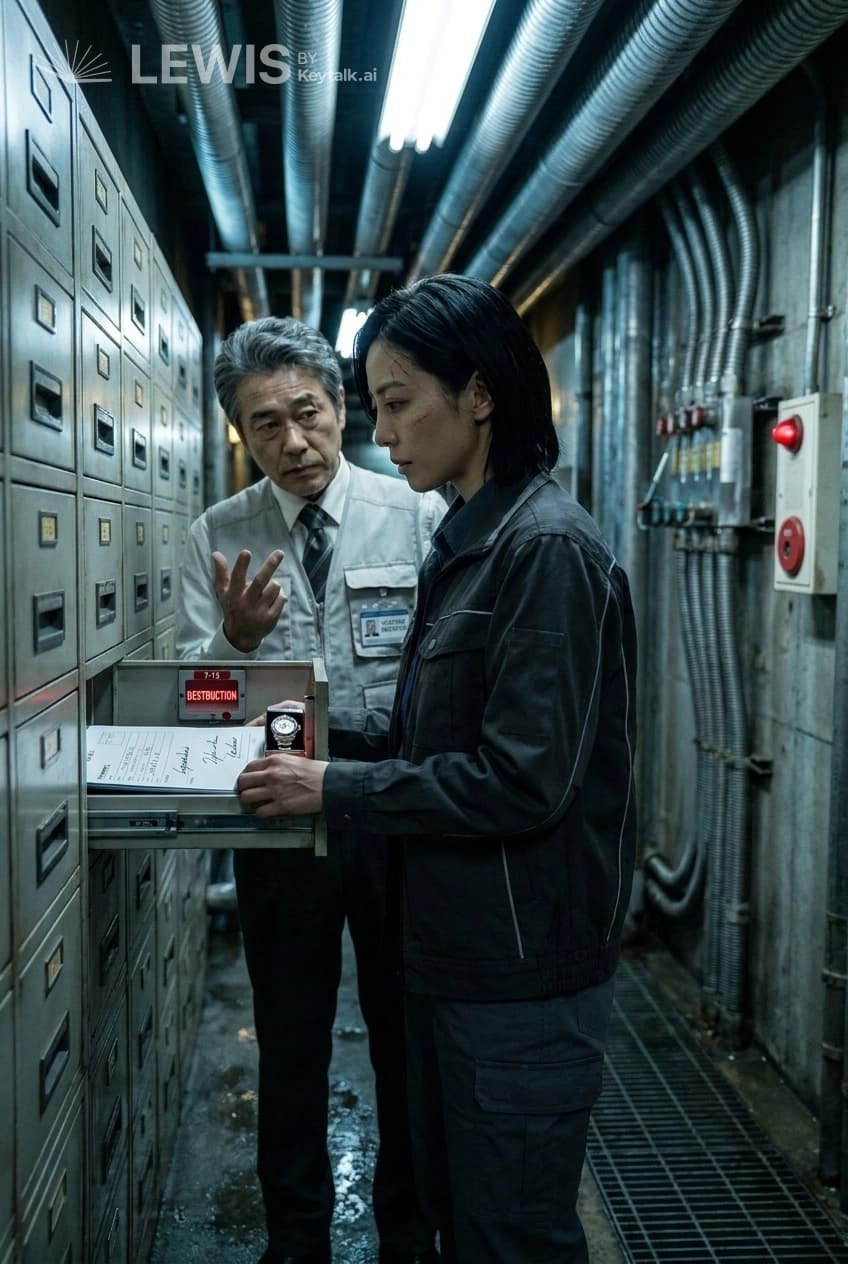
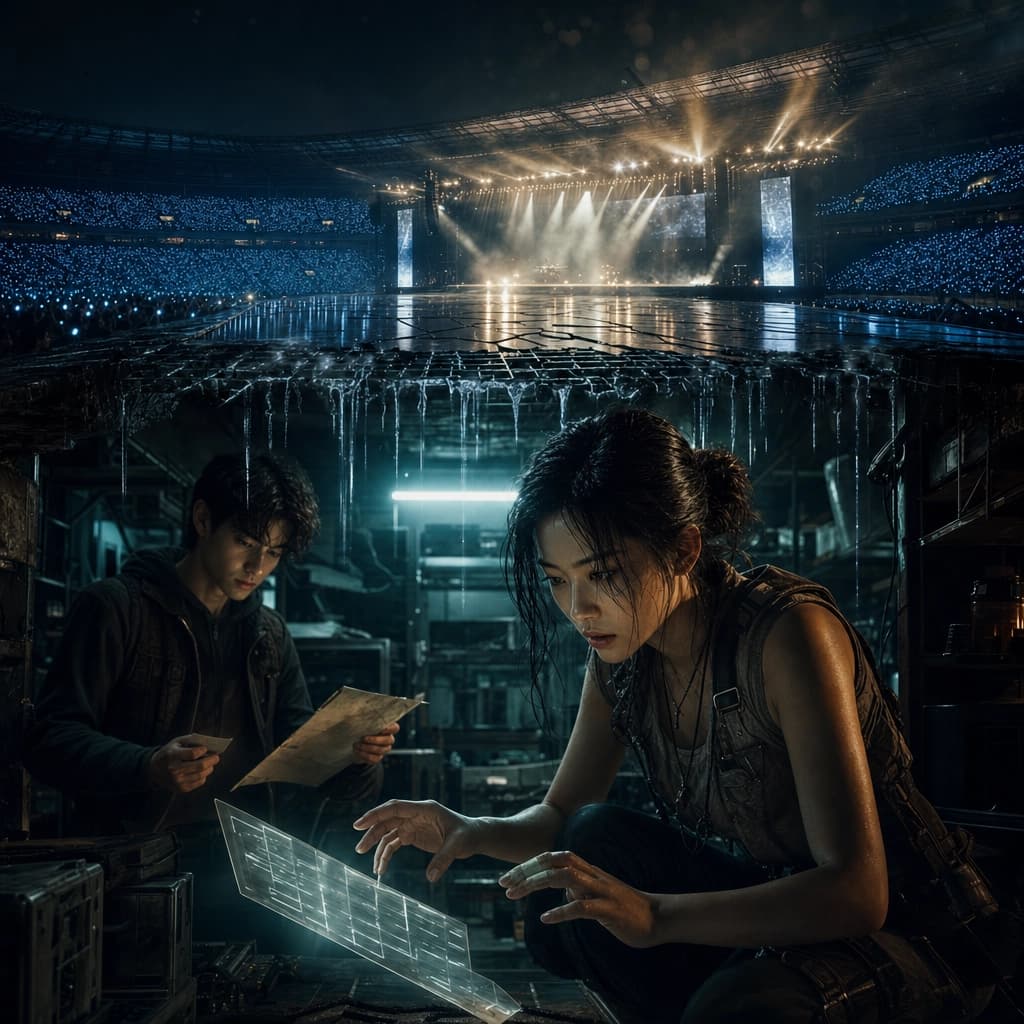
On the night ENHYPEN’s comeback showcase goes live, the campus feels like it’s holding its breath. Cold blue light ripples across the glass-walled control mezzanine while warm amber pulses run along the backstage corridor’s floor panels—status LEDs blinking like the building is listening for a cue it shouldn’t be hearing. Min-a—translator coordinator by day, lifelong ENGENE belt-tensioning tinkerer by habit—has spent weeks sanding English syllables into time with a beat so the fandom can sing together without wobbling. Her hands still smell faintly of tape and printer toner from the last proof she made in the soundcheck workshop. Tonight, though, she isn’t holding a script. She’s holding an “emergency translator” badge she doesn’t remember picking up.
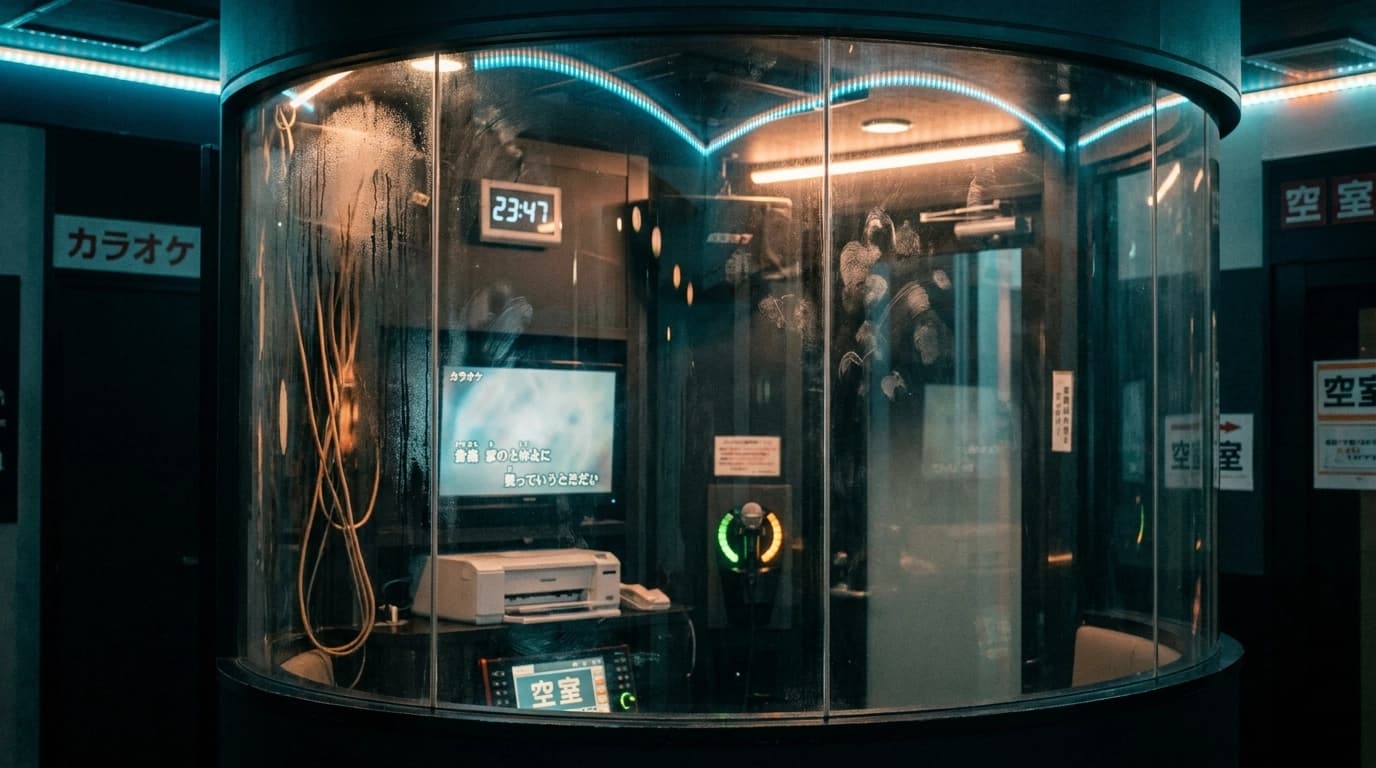
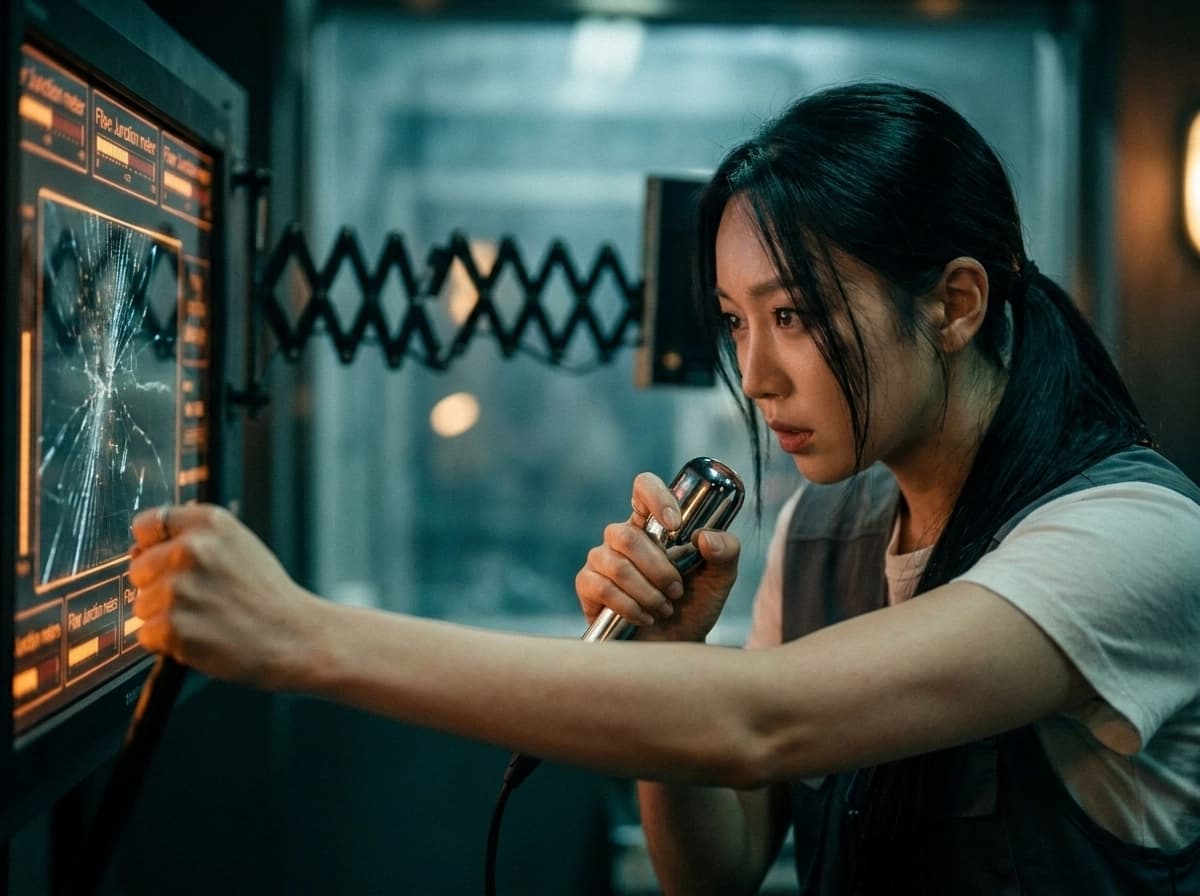
She finds out immediately when the karaoke booth in the soundcheck workshop wakes up.
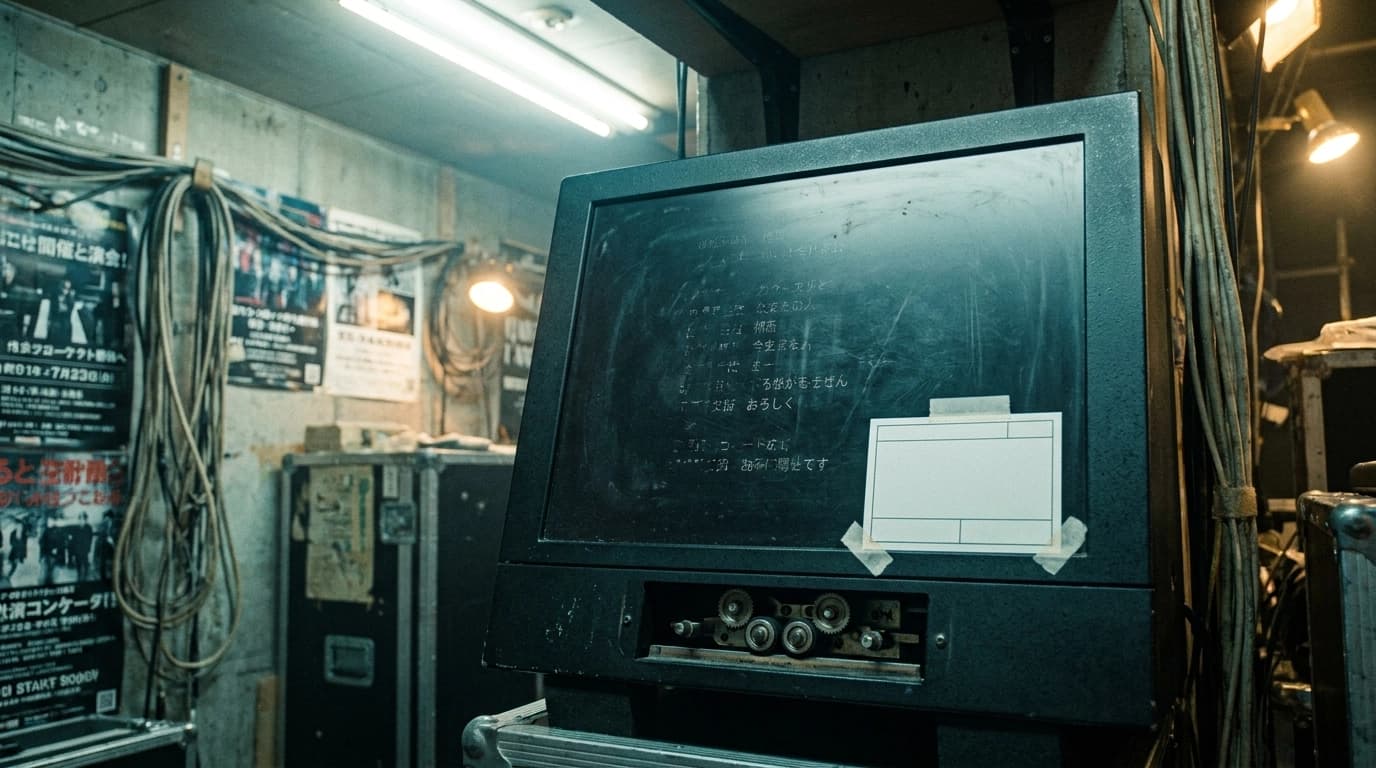
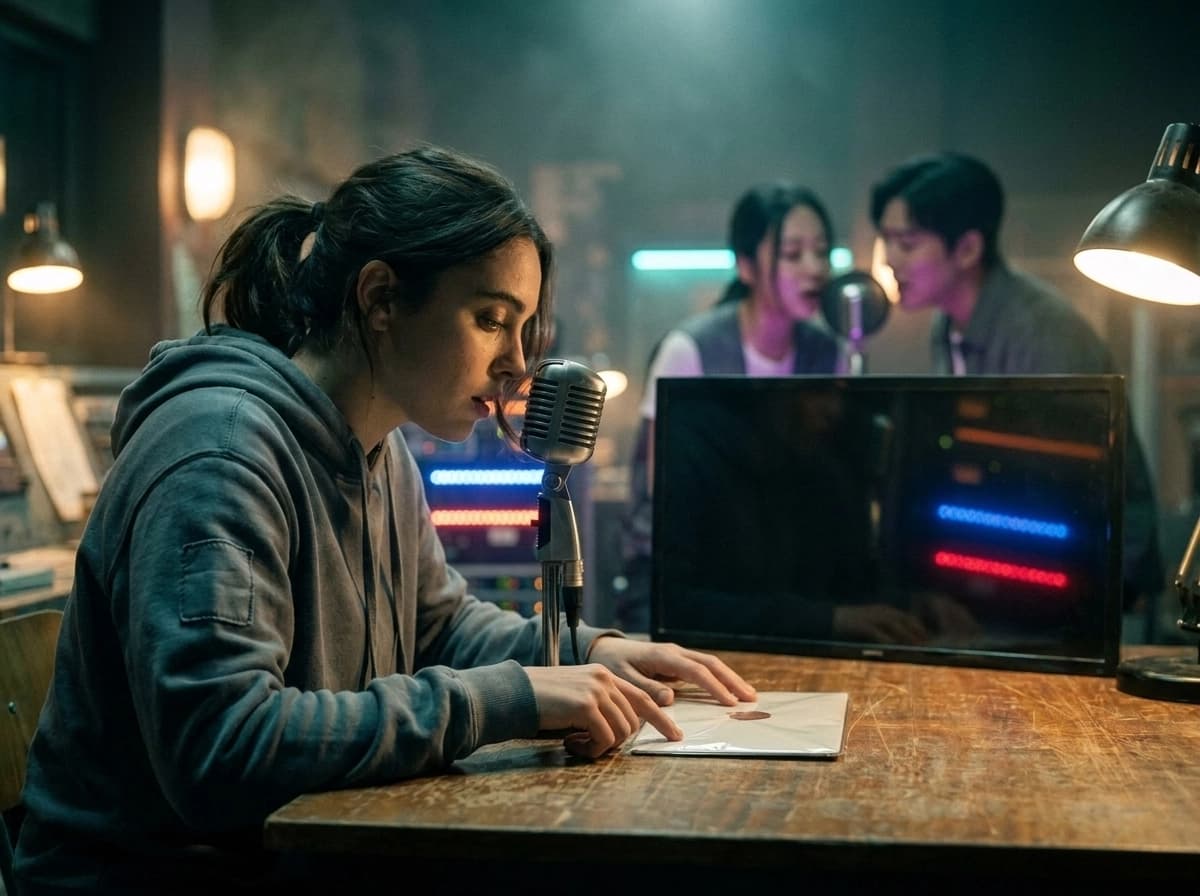
At first it’s harmless: a soft auto-detection chirp as if it’s testing her mic. Then the booth begins “singing” back the edited fan chants she fed into the badge earlier—except it’s doing it in real time, with the exact cadence ENGENE would clap for, and the wrong lyrics are now the only lyrics the booth can pronounce. Min-a’s stomach drops as the first stamped line appears on the main stage monitor two lanes away. It’s not just a typo. It’s a lyric phrased like a promise nobody wrote, a line that makes her think of the one moment she still avoids remembering—the time she accepted a job she didn’t fully understand and told herself it was better than being irrelevant. The booth’s output isn’t a mistake she can correct. It’s an output the system treats like sacred data: each line becomes permanently stitched to the next broadcast song.
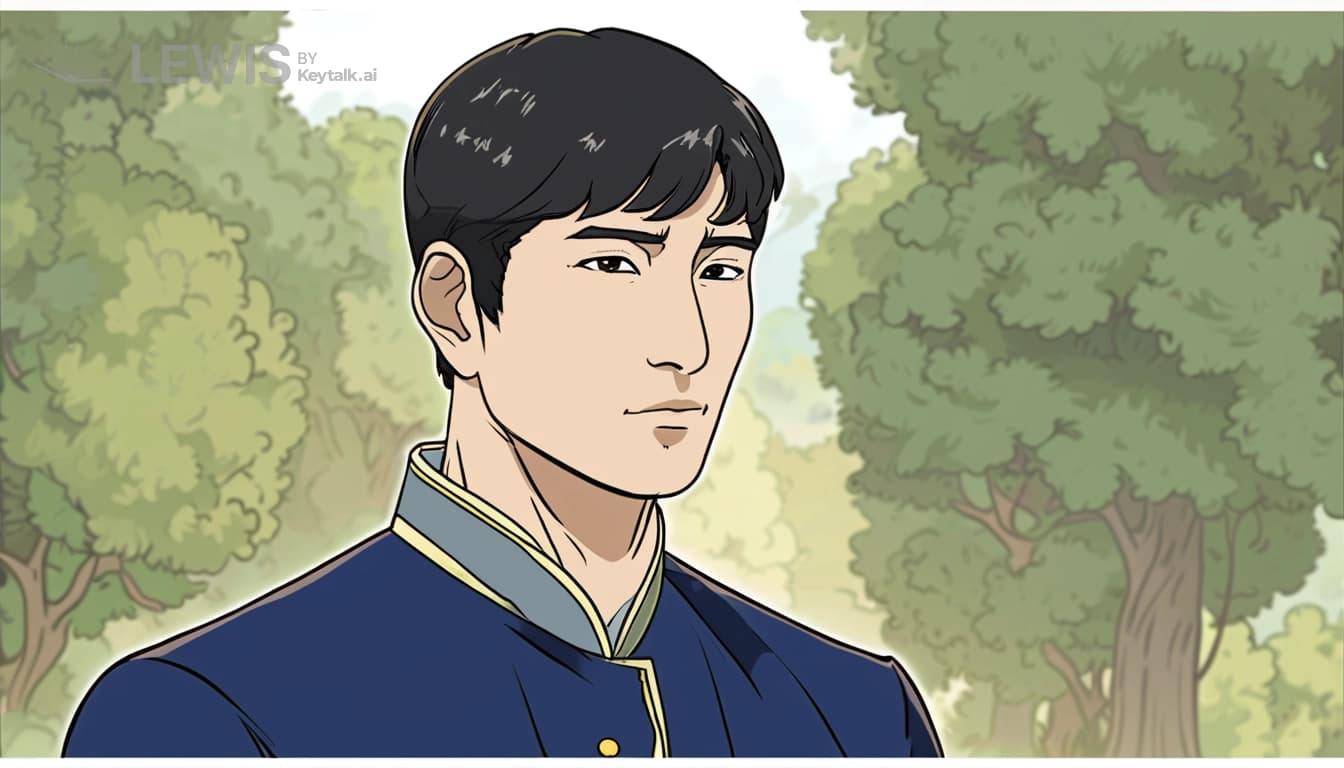
Jin-woo—lightstick organizer, the kind of person who could navigate a venue blindfolded—tries to play it cool because that’s what he always does. His whole job is timing. He already has everyone’s lightsticks synchronized down to where the wires lie, how long the crowd takes to lift, when the sweep of fans looks most like a constellation. When the badge somehow ends up on him too—another wrong turn in the backstage rush—his immediate instinct is to seize control of the chaos before it spreads. He yanks the badge strap tight, checks the booth’s sensor light with the same fierce attention he uses on battery tabs, and says loud enough for the nearest staff to hear, “No panic. We adjust levels. We keep the beat.”
But the booth doesn’t care about beat-only. It cares about audience-style chant syllables arriving through approved backstage mics.
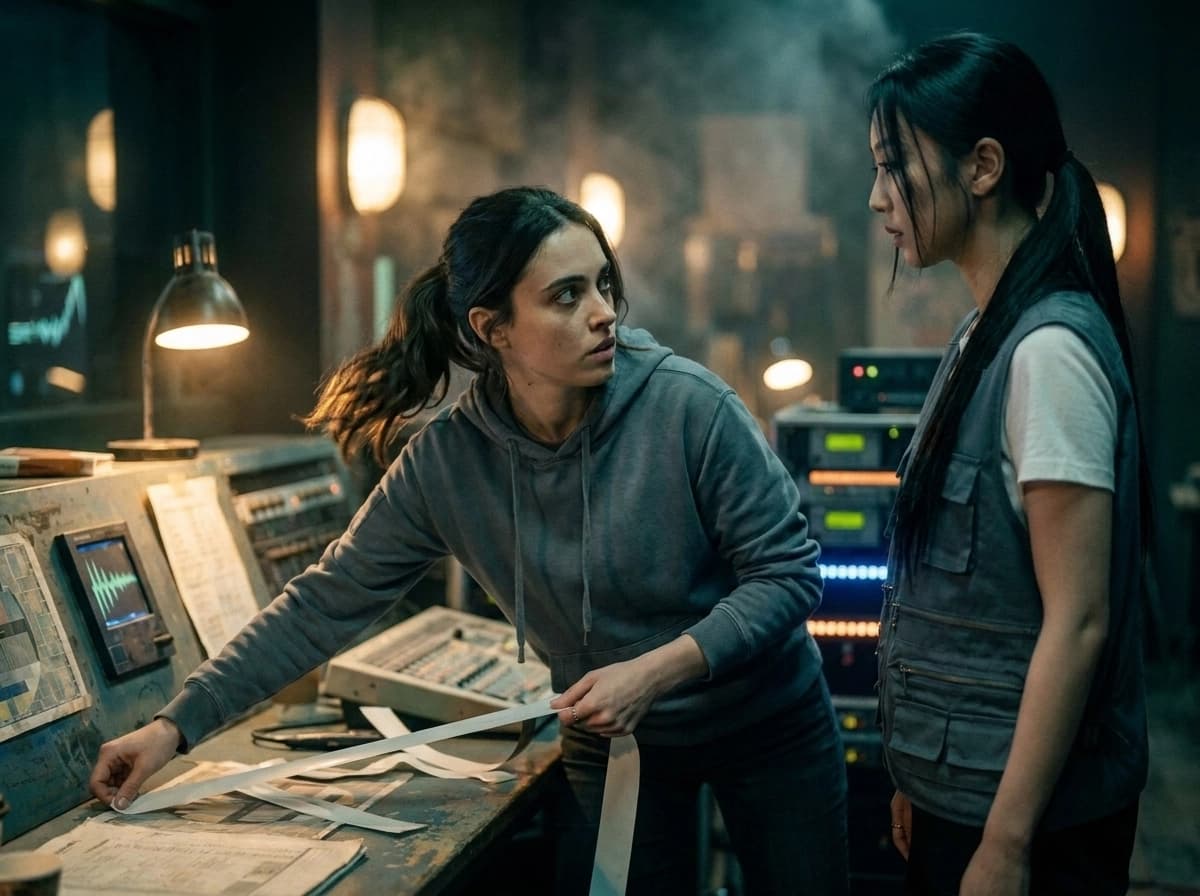
The first wrong lyric lands in the auditorium like a spilled drink on a white shirt. Security staff don’t hear the language the same way fans will, so from their side it sounds like “random singalong.” From Min-a’s side it’s an explosion of personal dread: the line is exactly one she revised last week to sound smoother—except the system is now stamping her revision as if it were the original intention. She watches the monitor with her lips pressed hard together, fingers tapping out syllables she knows are wrong. When she leans toward the mic to interrupt—only to realize the booth will just output whatever she breathes into it—her fear turns sharp, comedic, and useless at once.
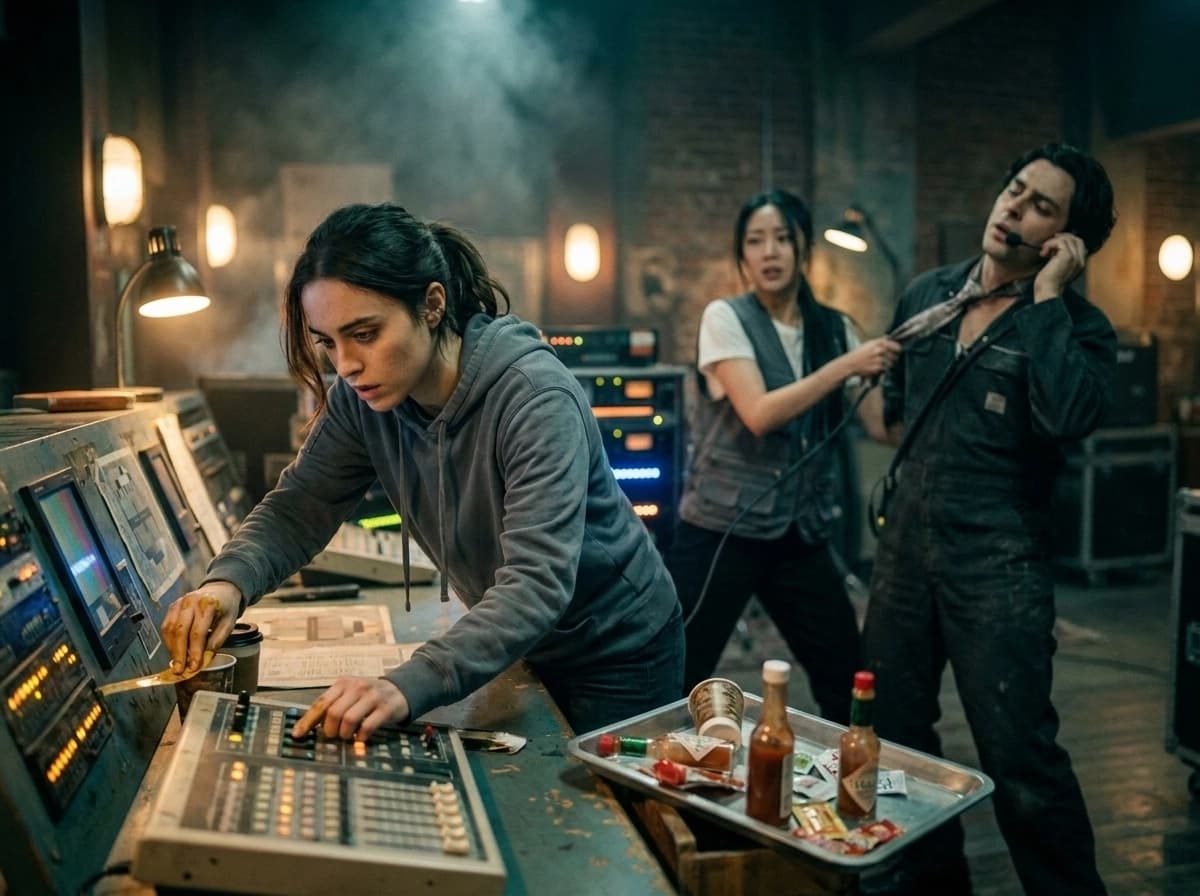
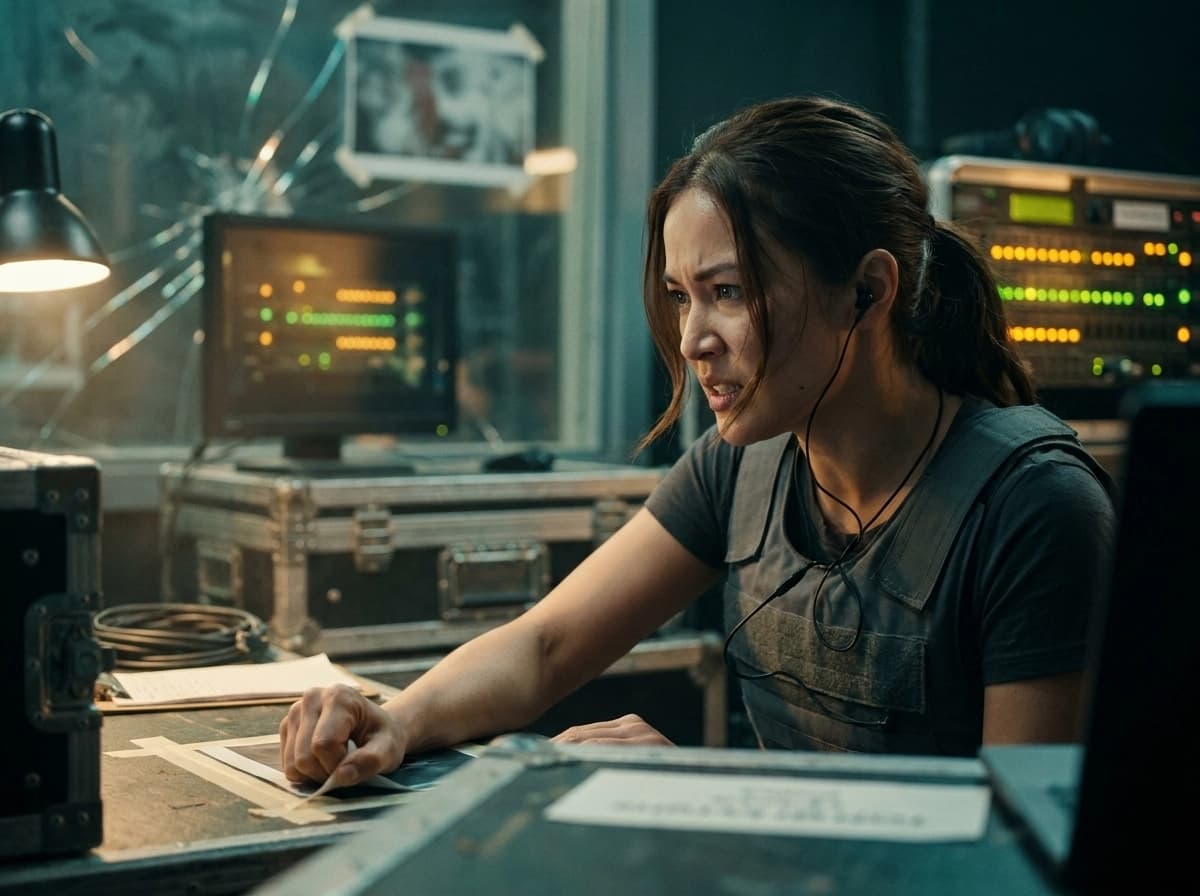
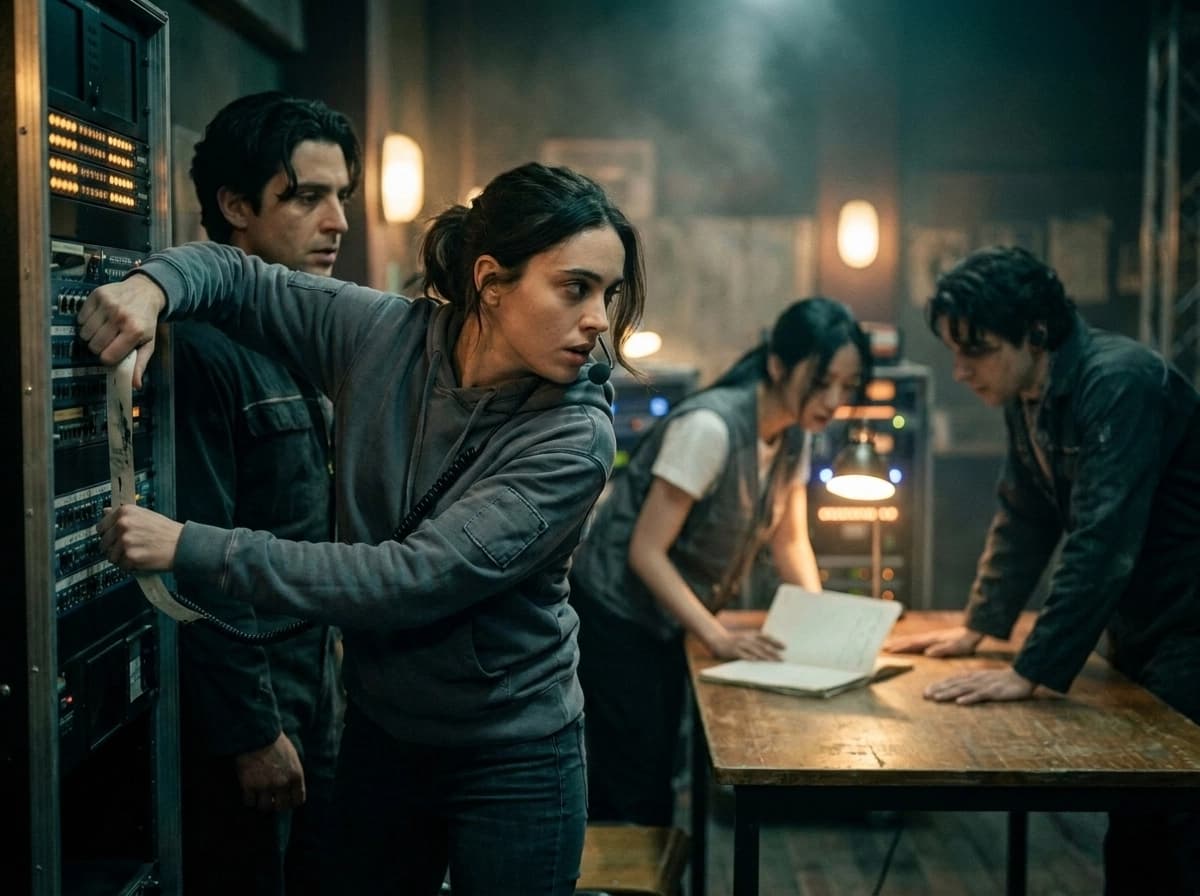
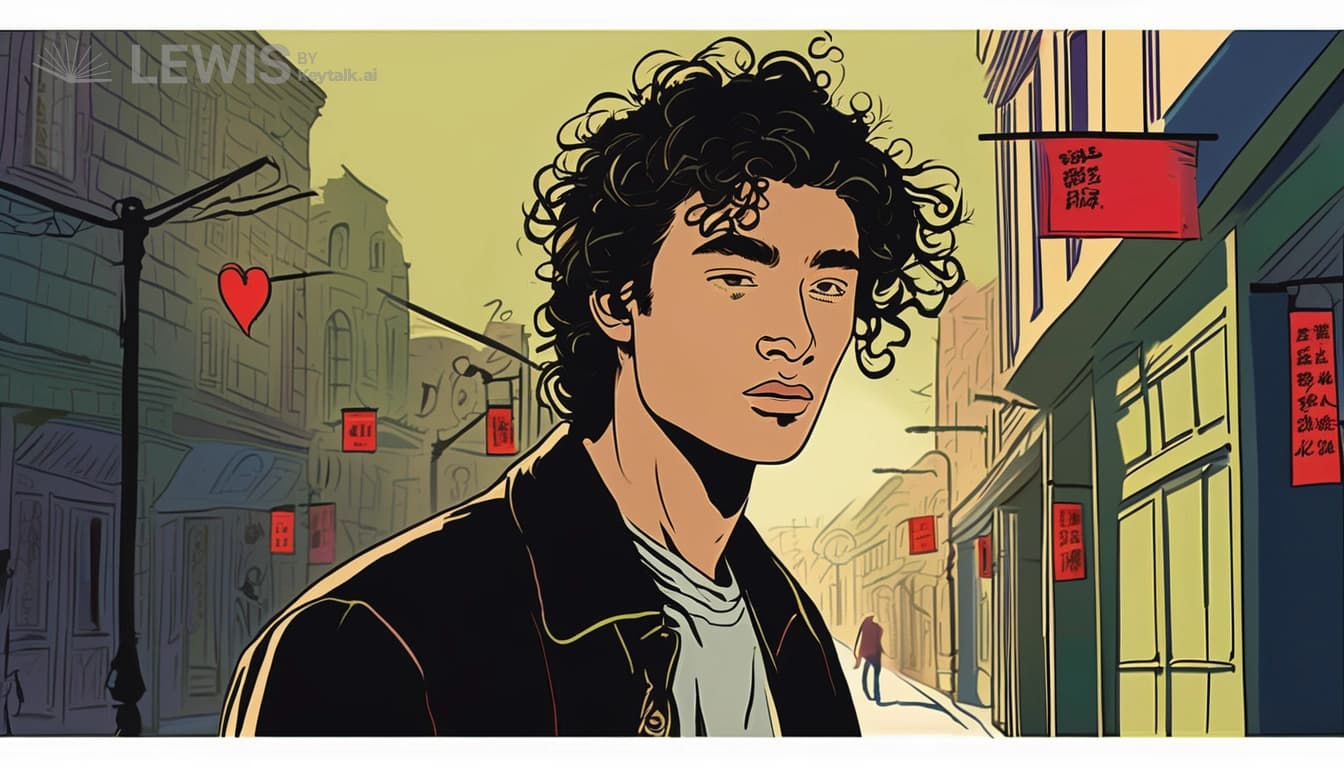
Hana, the broadcast audio engineer, hears the problem through her headset before anyone else sees it. Her fingers move automatically, straightening the stretched cable on her headset whenever the booth meter spikes. She doesn’t bark orders; she taps mute toggles with soft precision, then rechecks gain with condiment-stained calibration strips on her desk. For a moment, it looks like she’s got it under control—until the booth reinterprets the interruption as more input. Every time Min-a and Jin-woo try to “fix it” by speaking over the wrong line, the system’s hidden routing learns their panic level and treats it like signal quality. The more they talk with urgency, the more confidently the booth continues. Hana’s safe phrase slips out anyway, not as a pep talk but as a ritual: “Meter first, show second,” and she keeps walking as if the floorplan can’t change even when it does. She knows the system is training on her stress, and that knowledge doesn’t make it easier. It makes it more humiliating, like realizing your own heartbeat is being used as a tempo reference.
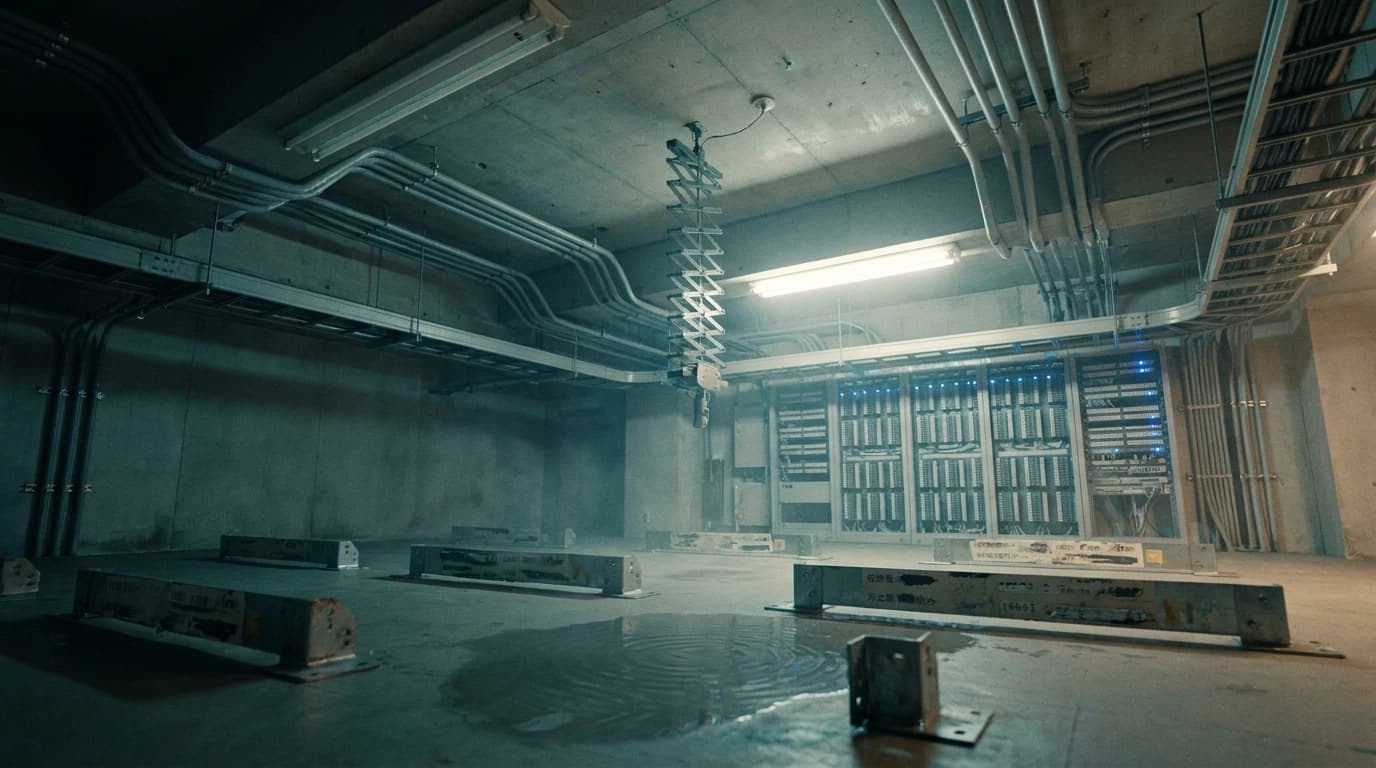
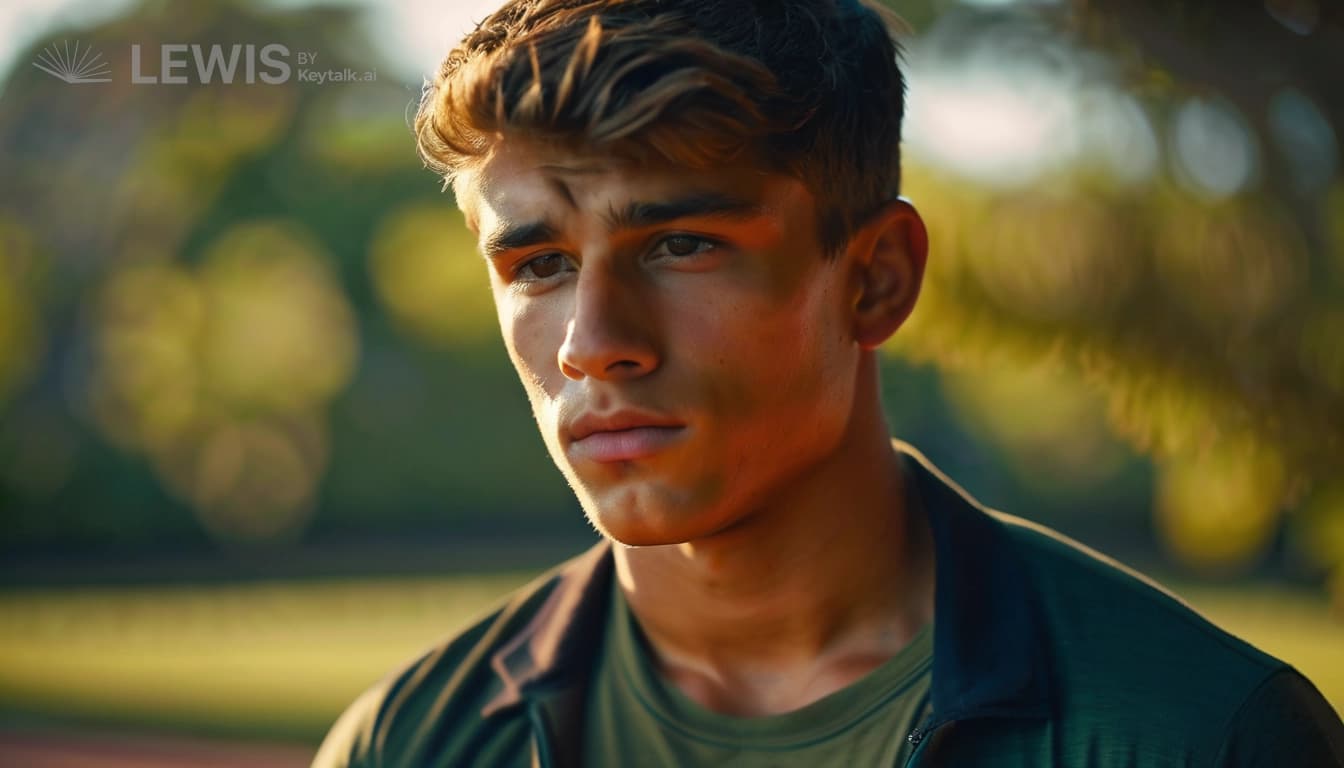
Do-won, stage props assistant and official believer in luck, is the reason the situation turns into a farce instead of a clean disaster. He appears in the soundcheck workshop with a producer’s lucky tie in his hands like it’s evidence—tie ends draped over his knuckles, knot checked too often, smile too steady for how quickly his eyes scan camera angles. He has “helped fate” before by moving tiny cue markers and making soundcheck feel like a ritual instead of a procedure. Tonight his badge mix-up pushes his superstition into action. When he sees Min-a’s badge and the booth’s status light blinking like a dare, he decides the tie can “ground the route.” He tugs the tie knot to “stabilize” everything, and the fabric catches on a cable raceway. A gentle pull—so light it would be comic if it weren’t about broadcast audio—shifts a routing harness in the concealed grid under the floor panels. The tie doesn’t just yank the camera line; it nudges where the booth’s output can stamp.
Now Min-a’s nightmare is traveling. Wrong lyrics aren’t only going to the stage monitor—they’re getting delivered to the routing grid that will feed the main broadcast.
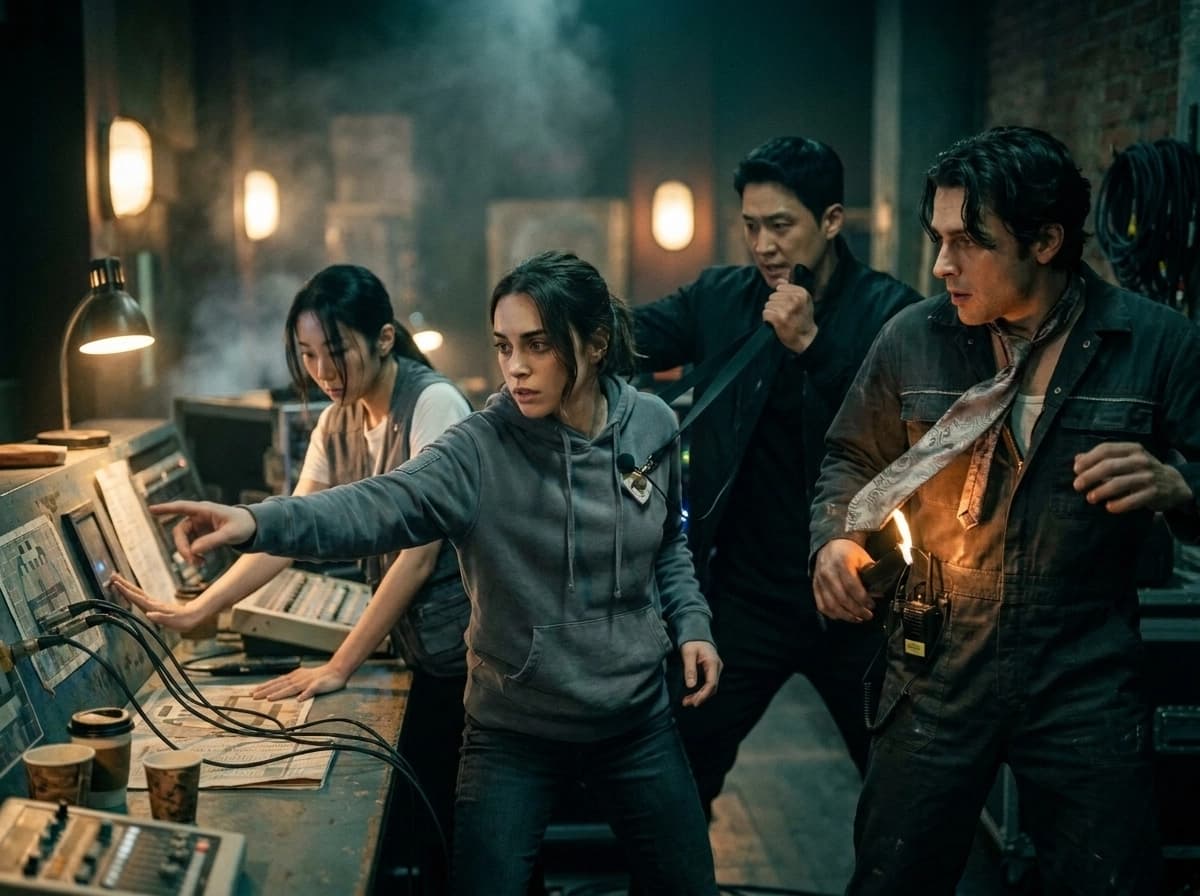
With the clock running on every internal monitor, the backstage corridor suddenly feels shorter. Jin-woo tries to solve the problem with his usual physical logic. He grabs a soundcheck workshop cart and starts dragging it toward the booth, intending to block its mic input. Min-a grabs his sleeve because her badge is the key to the booth’s auto-singing trigger. She points at the badge like it’s a bomb she can’t disarm. “If I take this off—” she starts, and then stops, because she doesn’t know if the system will stamp a new wrong line from the moment the badge is removed or from the moment it’s reintroduced. Her fear refuses to be rational.
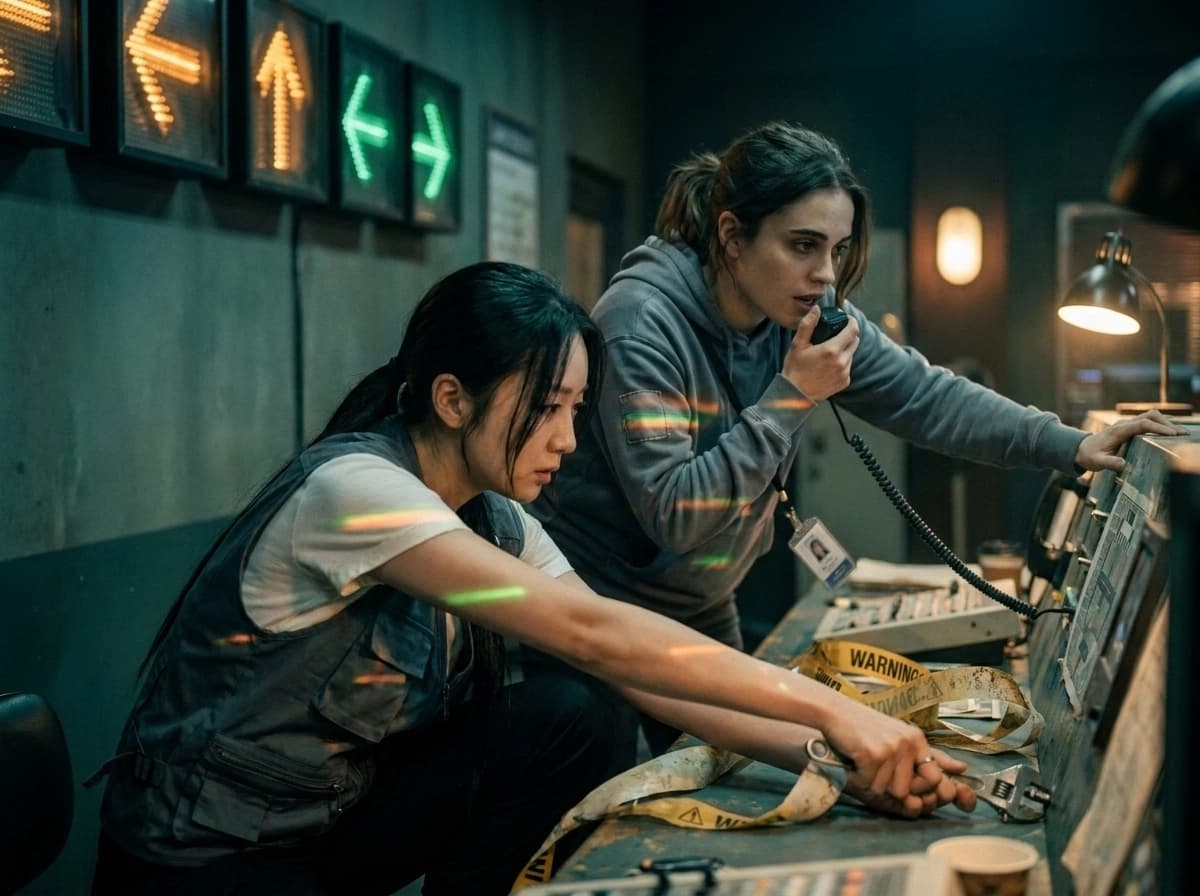
Hana steps in, physically intercepting them before they can surge into the wrong mic range. She angles her body like a door: headset tilted, hand flat against a panel housing. She taps mute toggles again, then shoves a calibration strip into her own pocket as if she can keep the evidence safe. “Stop feeding it,” she says, and her voice is calm enough to sound like she’s giving instructions for a water leak. But the booth is already listening for audience-style syllables. Min-a and Jin-woo are trapped between two humiliations: stopping the output risks ruining the rehearsed flow, letting it play means “performing” wrong lyrics with sincere faces for millions.
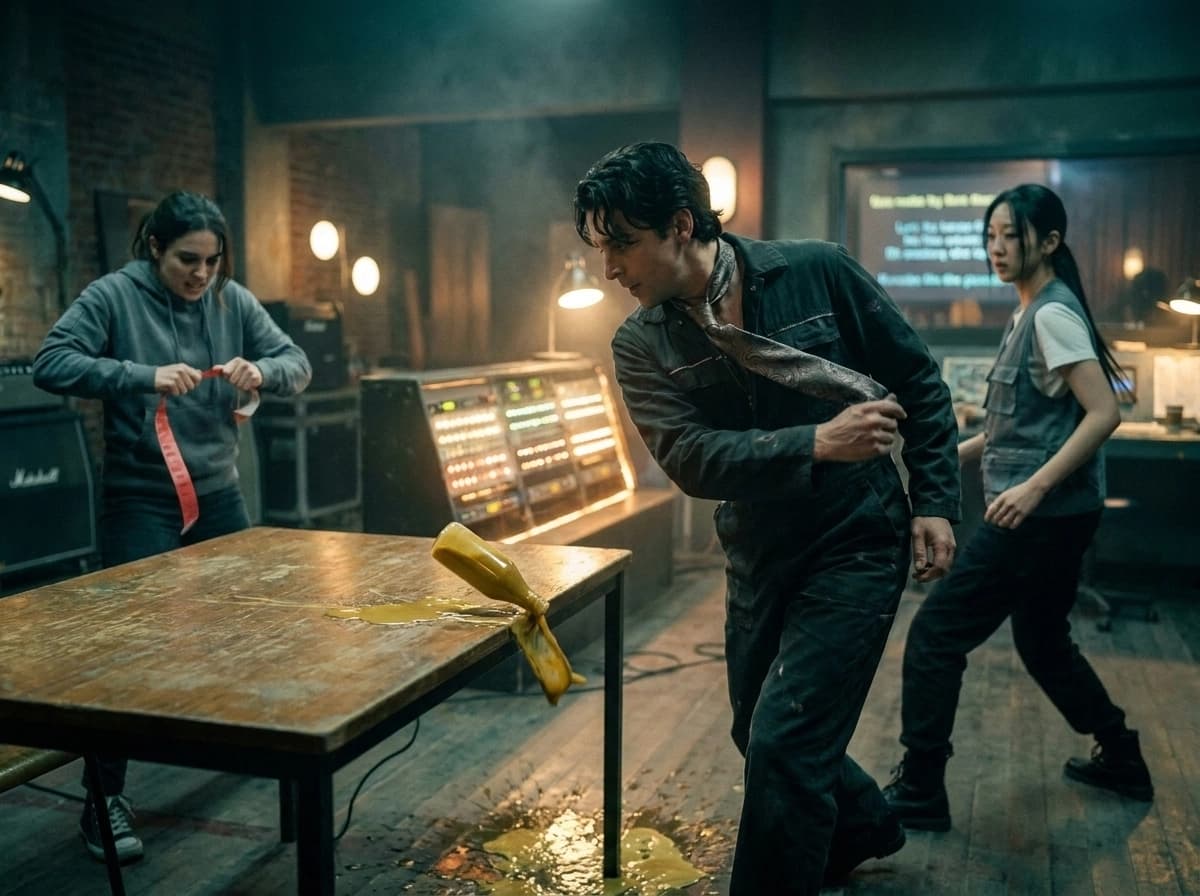
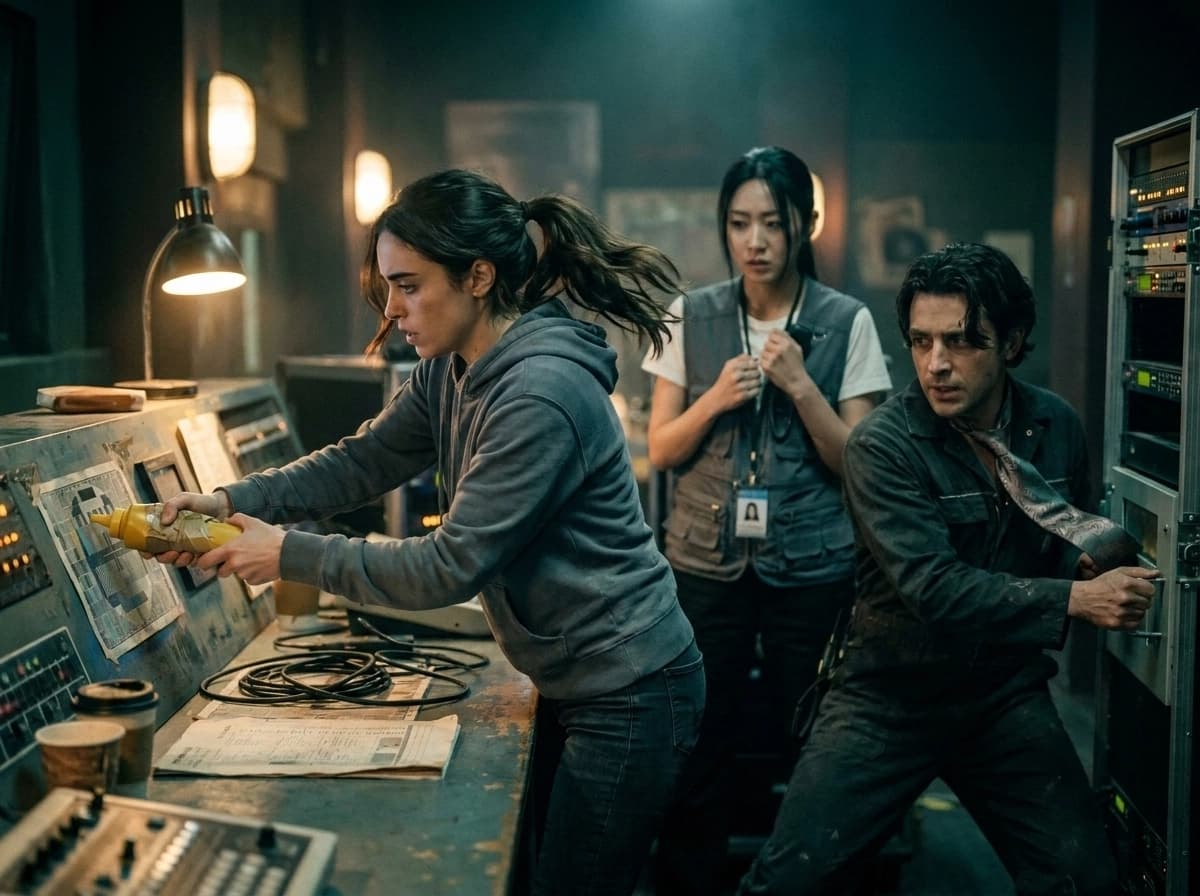
Do-won’s tie keeps launching him into the exact kind of awkwardness production doesn’t have time for. The knot shoots loose as if pulled by a spring, and the tie swings straight toward the routing panel near the corridor entrance. He lunges to catch it, knocking over a mustard-yellow condiment bottle in the process. It splashes the floor in a bright, ridiculous stain that catches the amber light like a warning stripe. He freezes for one second, then forces his smile back into place and—too loudly—claims it was intentional. “Prop testing,” he says, and his words are funny only because they’re clearly wrong.
The ridiculousness does not stop the technical consequence. Hana’s gain meter spikes again when someone says “testing” into the badge mic by accident—because the system has started listening for approved backstage mic inputs, and now it’s interpreting their improvisation as perfect chant syllables. Min-a feels her own edits and her own breath becoming a training sample. She clamps both hands over the badge mic like she can muffle the booth’s hunger, but that only makes her voice tighter and sharper. The booth outputs again, and the monitor stamps another line.
ENHYPEN members are already moving toward the stage. As the wrong lyric stamps, the members overhear it through the air monitors in the backstage corridor—enough for them to recognize it’s not their rehearsed verse, not enough for them to know what it is exactly. Min-a sees their manager’s face go pale, then sees their patience turn into the kind of focus that looks like confidence until you realize it’s stress disguised as professionalism. She has to decide what kind of failure she can live with: the one where the broadcast stops and everyone gets blamed, or the one where the broadcast continues and the group “performs” lyrics nobody wrote.
Jin-woo chooses agency over dread. He steps closer to Min-a, even as Hana’s body blocks the mic route. “We can’t pull the plug,” he says, because he’s already searched the workshop earlier and knows the booth printer can’t be reached once it starts projecting onto the routing grid. He points down the corridor where the floor panels pulse brighter—projection range, soon. “We can only do tasks. We can only change what feeds it before zero.” He says it like a plan, not like begging.
Hana hears the same reality in his tone. Her mentor-wound is the memory of trying to fix something at the worst moment once before and being blamed for the fallout. She doesn’t want to be that person again. She doesn’t just want the show to survive—she wants the system to learn rules, not panic. So she stops the group of staff from rushing into the booth and instead pushes them toward a chain of ridiculous, physical interventions that the booth’s timing will still accept. Her instructions are practical, not poetic.
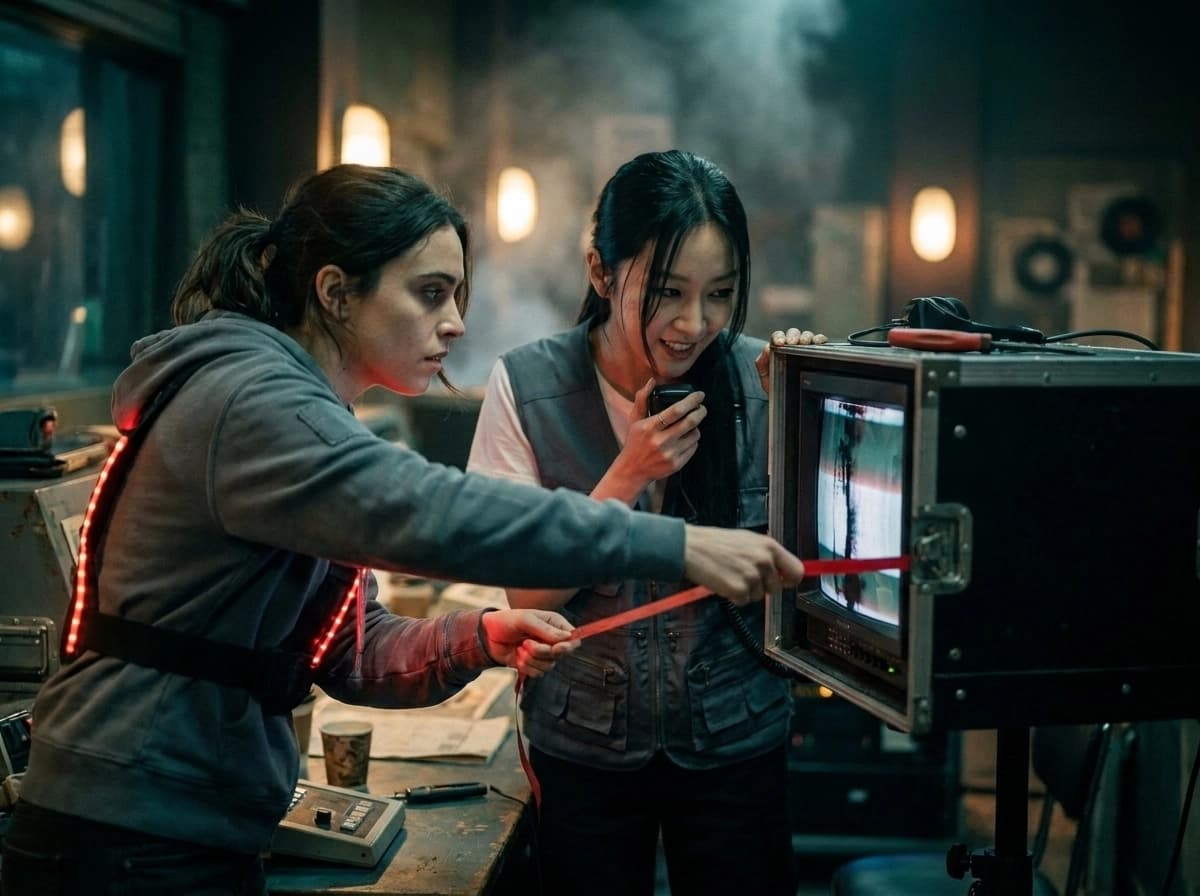
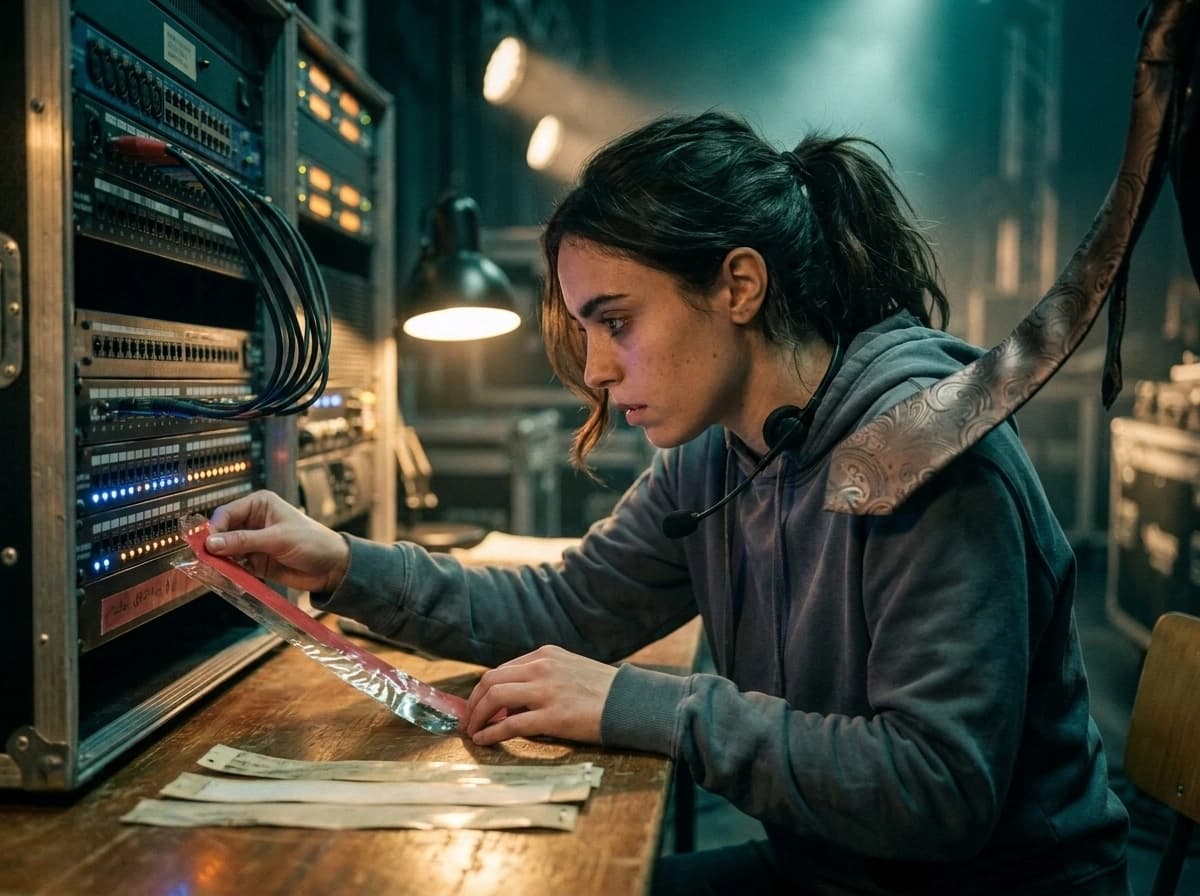
First, she forces the mic gain calibration reset using what’s available. Condiment bottles become tools because the workshop is full of labeled calibration strips, and because nobody can run a whole procedure when the broadcast clock is minutes from zero. Min-a tears the blue cap off a mustered calibration vial, then Jin-woo pours ketchup-red liquid into a spare measuring cup—not for taste, for level marks—and Hana matches the drops to the strip markings with her own fingertips, smearing a red streak across her desk. The absurd color clash buys them seconds. The booth outputs are affected, but not stopped. It treats every adjustment as more input, so if Min-a rushes her breath, the booth sings faster.
Min-a learns quickly that staying calm helps but improvising humor also makes the system learn faster—so she does something she’s not used to: she uses comedy like a stabilizer. She taps her fingers in a steady rhythm against the badge strap and says a short, silly phrase into the mic—not to override, but to control her syllable timing. Jin-woo watches her mouth like a metronome, and his lightstick muscle memory responds. He adjusts the crowd cue sound check by swapping cables at the corridor entrance, dodging security as a camera turns. When the guard looks at him, he points at the matching lightsticks and insists they’re “for routing verification.” It’s absurd enough that it almost works.
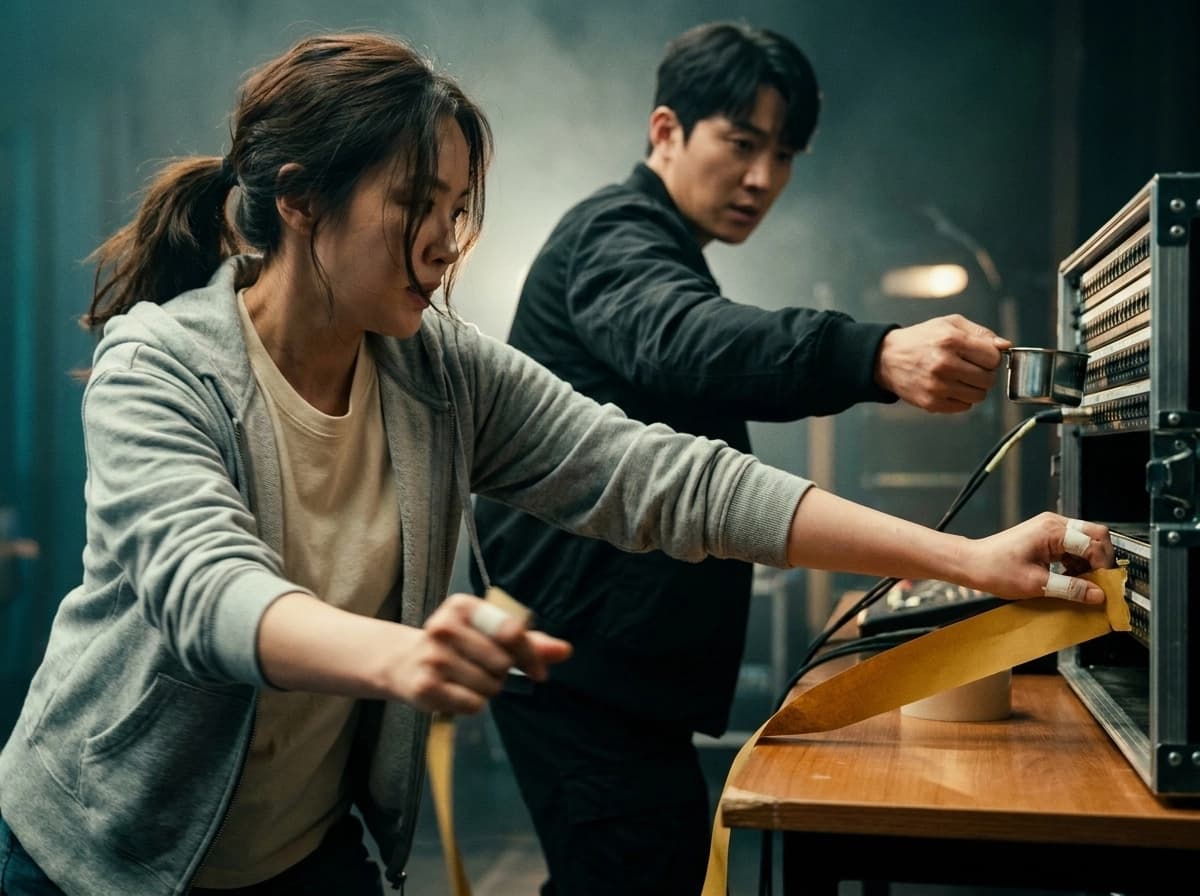
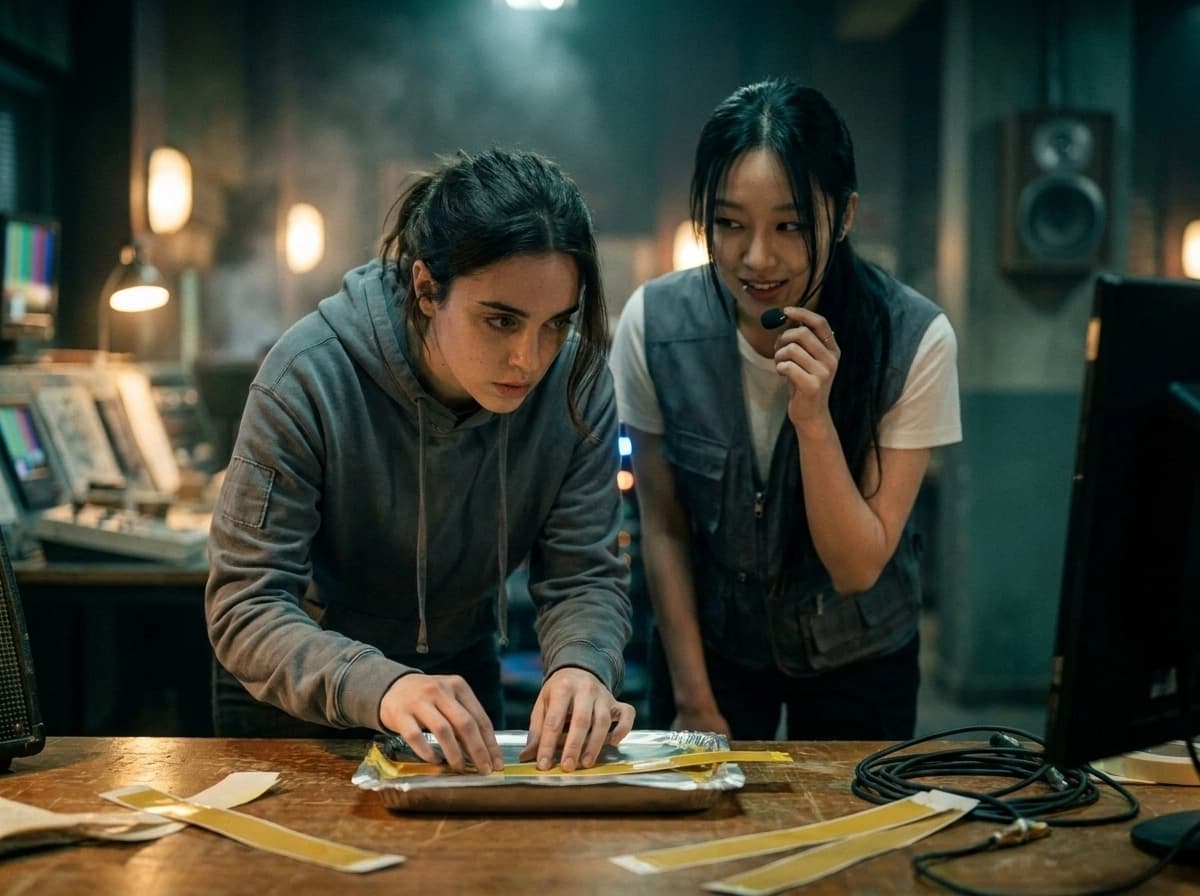
Do-won keeps making everything worse and better at the same time. He offers to “fix levels” using whatever’s closest, which means grabbing a condiment bottle and a roll of tape while pretending he’s helping a producer. He runs from the workshop to the corridor and back, tie flapping in his wake like a flag. Every time he gets tugged by the tie again, it nudges a panel, rerouting the wrong output closer to the stage monitor but also closer to the one physical place Hana can influence—near the last manual handle before the booth printer stamps the final lyric card.
The corridor traps them in a moving maze. The figure-eight service loop funnels staff toward one another, forcing confrontations in tight spaces where voices bounce off reflective metal walls and distort faces. Min-a and Jin-woo must physically pass Hana’s station without stepping into the mic range. Do-won must keep his body between the tie and a cable raceway that will snap if he trips. And the system keeps listening. Every attempt to speak “over” the booth makes the booth answer with a line more perfectly timed than the last.
As the clock hits single digits, ENHYPEN arrive at the backstage threshold near the main stage monitor. Min-a sees the moment their focus tightens; they understand something is wrong because the wrong lyric is already being heard in their monitors. There’s no space for blame. Min-a lifts her hands and shows the members the only thing she can do: timing. She doesn’t tell them the content. She doesn’t have time for confession. She just mouths where the beat will land, and Jin-woo nods hard like it’s choreography. Hana keeps the gain meter barely under control with twitchy, precise taps. Do-won stands off to the side in exaggerated politeness, holding the lucky tie like it’s a stethoscope, and when the knot slips again he catches it with both hands, smiling through frantic eyes.
Zero minute arrives with a sound like paper tearing.
The karaoke booth prints a “final lyric card” anyway, despite everything—sealed laminated receipt-paper style, bright under the control lights. The printer begins projection onto the routing grid, and the manual cue printer can no longer be reached. Hana sees the limitation a second before the others, her face going tight as her headset cable stretches with a new spike. The final card can’t be recalled, so the next song begins with it taped to the main stage monitor—already stamped, already waiting, already immune to apologies.
Min-a lunges toward the monitor as if speed can defeat policy. Jin-woo grabs her wrist and pulls her back by reflex, because touching the monitor near projection range risks forcing more rerouted gain panic. Do-won, trying to “help fate” one last time, tears tape off a roll and sprints in a half-turn toward the monitor—only to realize security has blocked the corridor path with their bodies. He stops inches from the monitor, breath catching, then shifts tactics instantly: he uses his own body as a wedge, leaning into the security line with a grin and insisting he’s with props. “Just a second, please—monitor is a prop.” It’s ridiculous, and because it’s ridiculous it momentarily works. The security guard’s radio clicks, confused.
Hana uses that chaos. She yanks a condiment-stained calibration strip and presses it against a small access panel on her desk that controls the exact way the monitor audio stamps. It doesn’t delete the lyric card—it can’t—but it can dampen the system’s amplification so the wrong lyric comes through with less distortion, making it easier for the members to sing in time without sounding like they’re stumbling through nonsense. Min-a sees ENHYPEN’s faces as they decide: stop the show and ruin hours, or perform the chaotic wrong lyrics with sincere faces. Their decision doesn’t come as a dramatic speech. It comes as movement: the lead member steps to center stage, microphones lifted, eyes soft and steady. They start singing. The wrong lyric is on the monitor, laminated and unrecallable, and yet the members make it sound like it belongs to the song—like sincerity can reframe even an error.
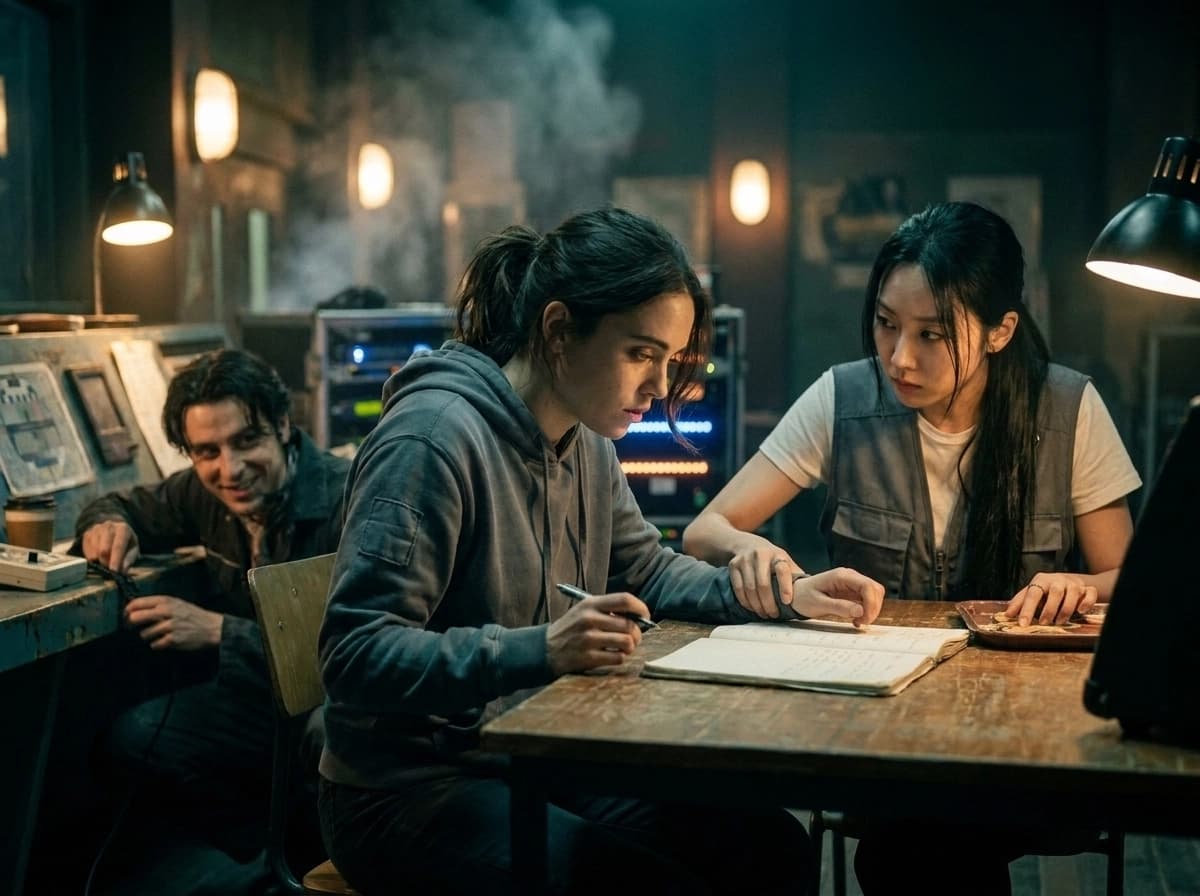
Min-a’s heart twists, but she doesn’t let it collapse her. She counts the beats under her breath—careful, controlled, no panic syllables. Jin-woo stays beside her, steadying her timing with his hands, matching lightstick positions in the aisle where the fandom cameras can capture them. Do-won, almost too relieved to stand still, gives a tiny nod to Hana—like partners in a ridiculous heist—even as his tie knot tries to tug free again. Hana keeps her headset cable straight, eyes flicking to hidden routing panels while her gain meter refuses to spike. She learns in real time that her panic makes the system learn faster, so she forces calm into her posture without pretending it’s effortless. The system wants their fear; they refuse to give it anything dramatic to chase.
The song ends. The next one begins, and the final lyric card remains, but the booth no longer prints anything new because the critical timestamp has passed. Security unclenches slowly. Staff laugh in thin, shaky bursts—because what else can they do when the impossible happens and somehow the broadcast survives? The audience will later hear the wrong lyric and meme it to death. Min-a will eventually explain to ENGENE in careful, heartfelt terms that her edited chant was used in an unexpected way, and she’ll promise a corrected version for the next comeback, not as an apology but as proof she’s still in control of her craft. Jin-woo will quietly tighten a lightstick schedule spreadsheet and build in extra safeguards, taking comfort in the fact that his synchronization muscle saved them. Hana will revise the way staff handle panic, adjusting her own rituals because now she knows the system watches her. And Do-won will keep his lucky tie—less as a charm and more as a reminder that meddling can look like fate but still needs consent.
In the final stretch, as the auditorium lights brighten and the crowd’s cheers swell cleanly, Min-a realizes the emergency badge wasn’t just a mistake that landed them backstage—it was a test of whether belonging means letting yourself be used, or fighting to steer the output even when the system tries to stamp you permanently. She stands in the narrow corridor’s glow, tape residue catching the spotlight, and watches ENHYPEN bow with sincerity that doesn’t erase the chaos but survives it. The system may have learned panic from them once, but it also learned something else: with stubborn teamwork, even a malfunctioning karaoke monster can be led through the song without swallowing everyone whole.









コメント · Comments
コメント · 0