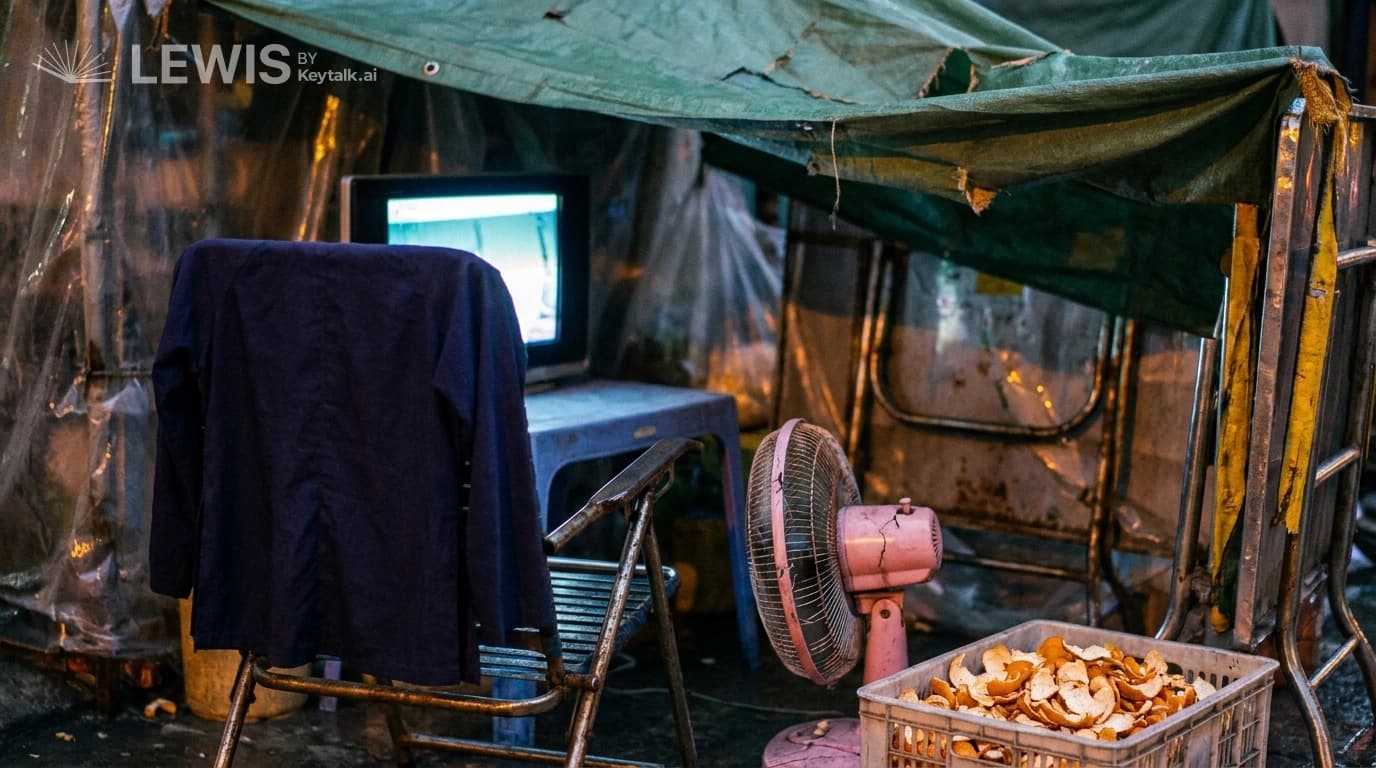
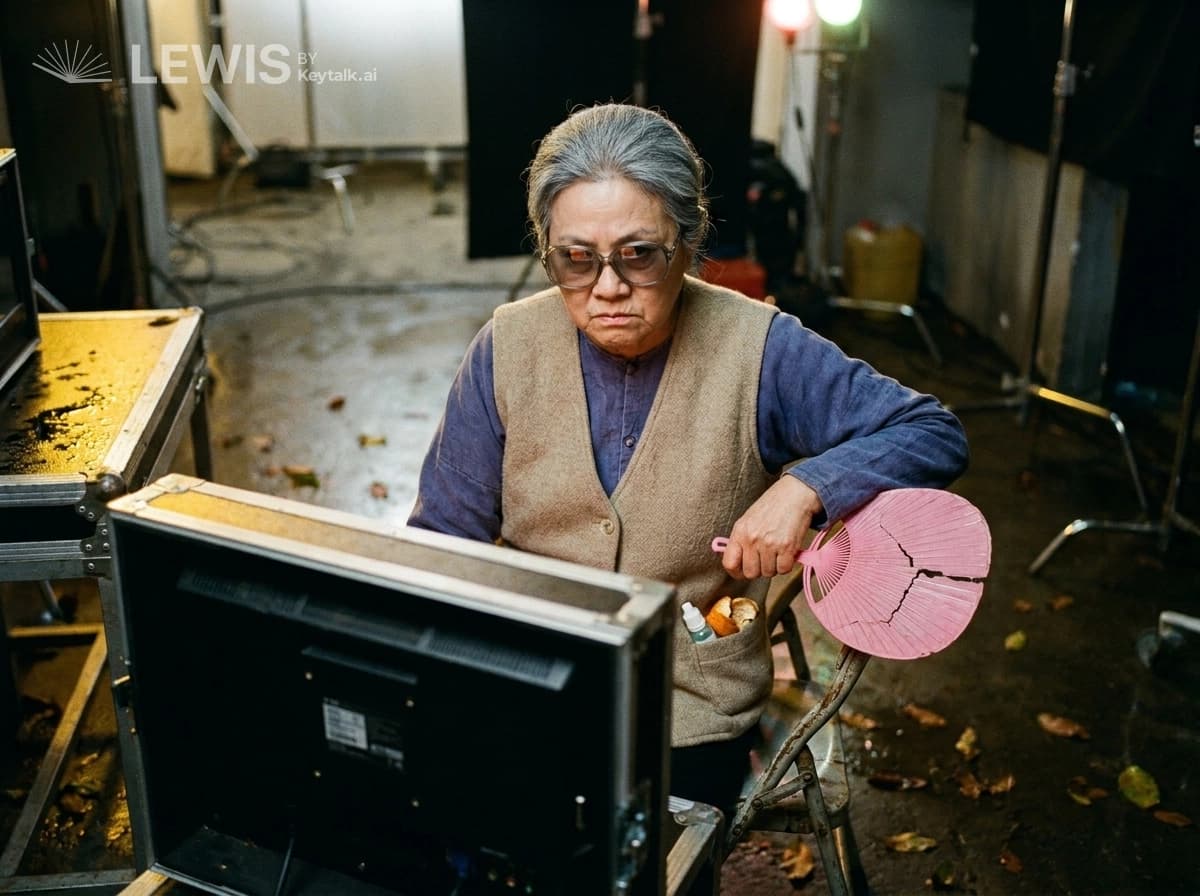
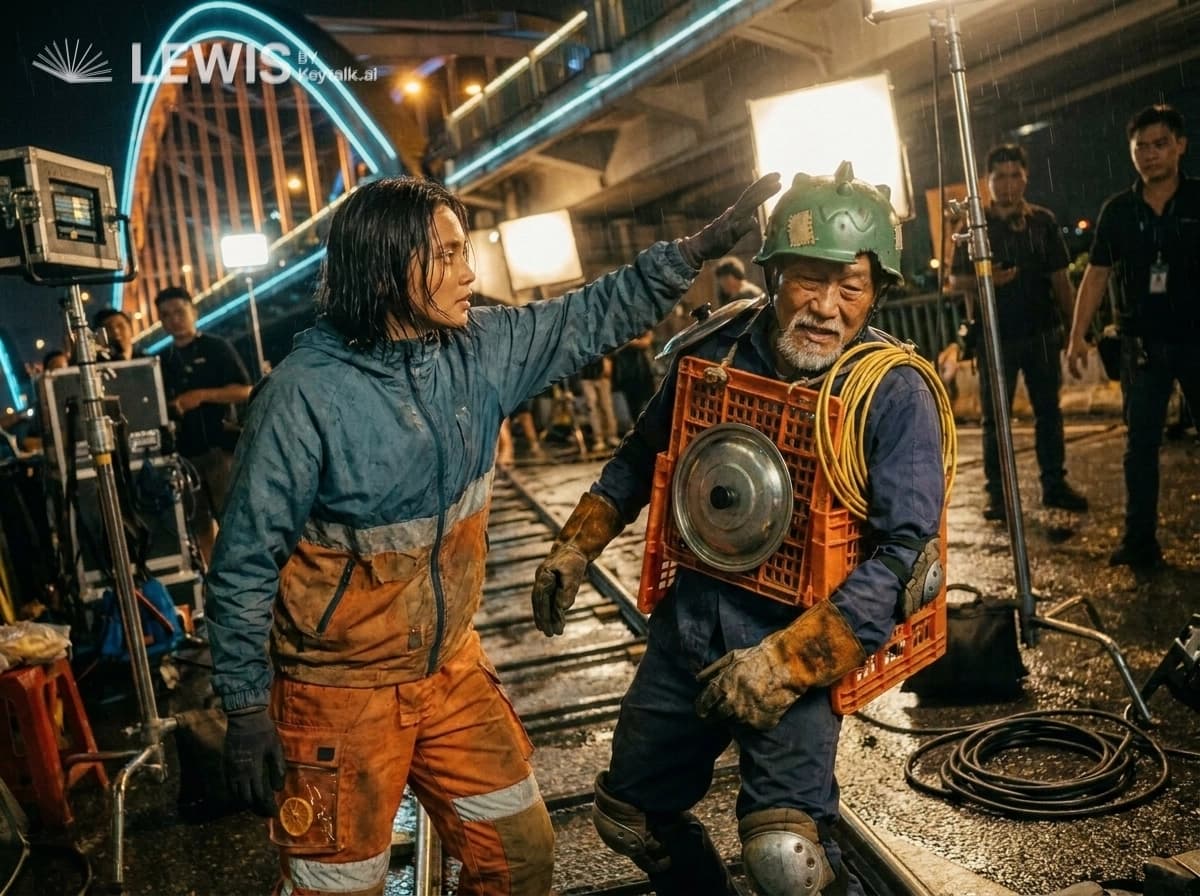
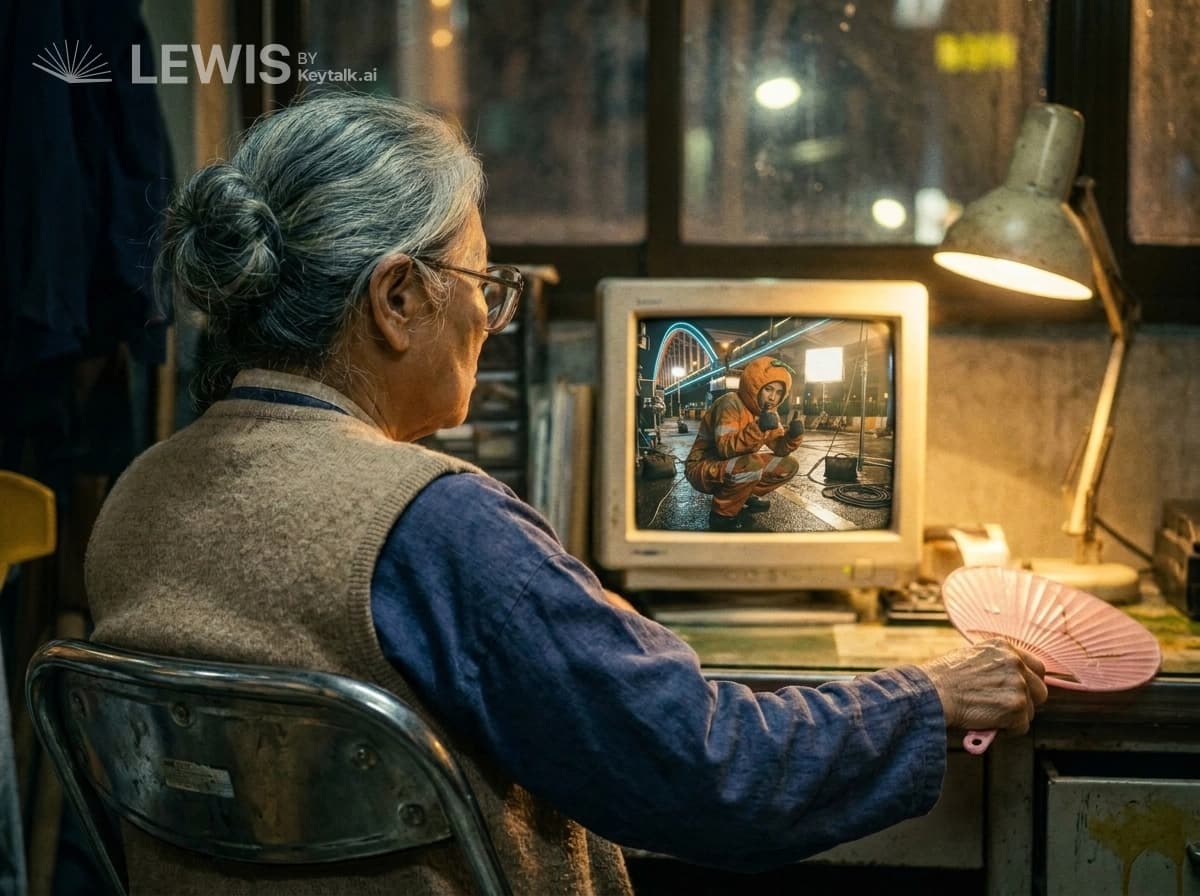
Trần Jibi arrives under cầu Rồng before sunrise with a stunt pad under one arm, three knots in each shoe, and a strip of dried tangerine peel zipped inside her chest pocket. She expects to fall, roll, and vanish behind a prettier actress as usual. Instead, Lê Nhật Tảo shoves a damp script into her hands and tells her the lead has quit after seeing the “quái vật quýt” costume. The monster’s head is a rubber helmet patched with orange crate wood, the claws are kitchen ladles, and the tail is a bundle of yellow electrical wire that sparks if someone drags it too close to the rented lights. Jibi laughs once, short and sharp, until she sees Ko Ae-sun sitting behind the monitor in a faded indigo bà ba, her smoky glasses turned toward the empty frame as if the whole city has gone quiet for her.
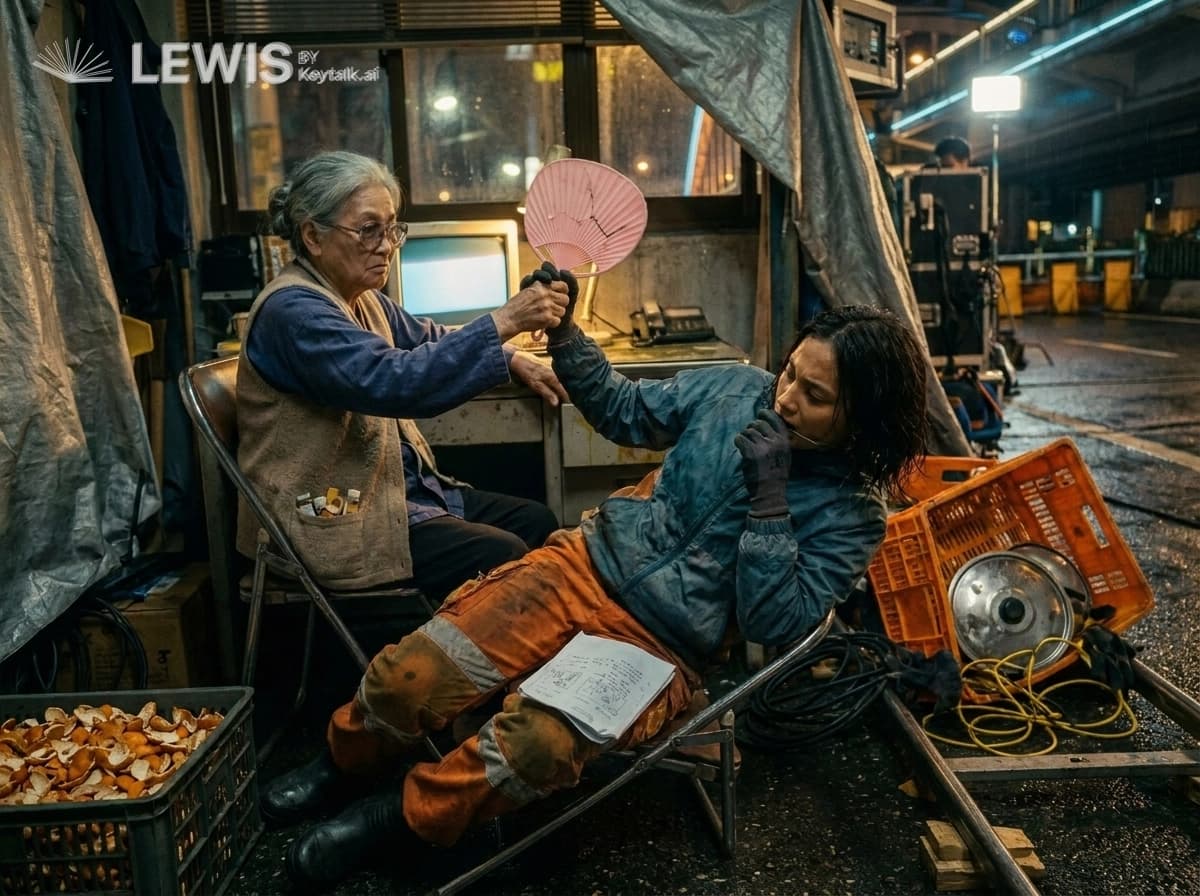
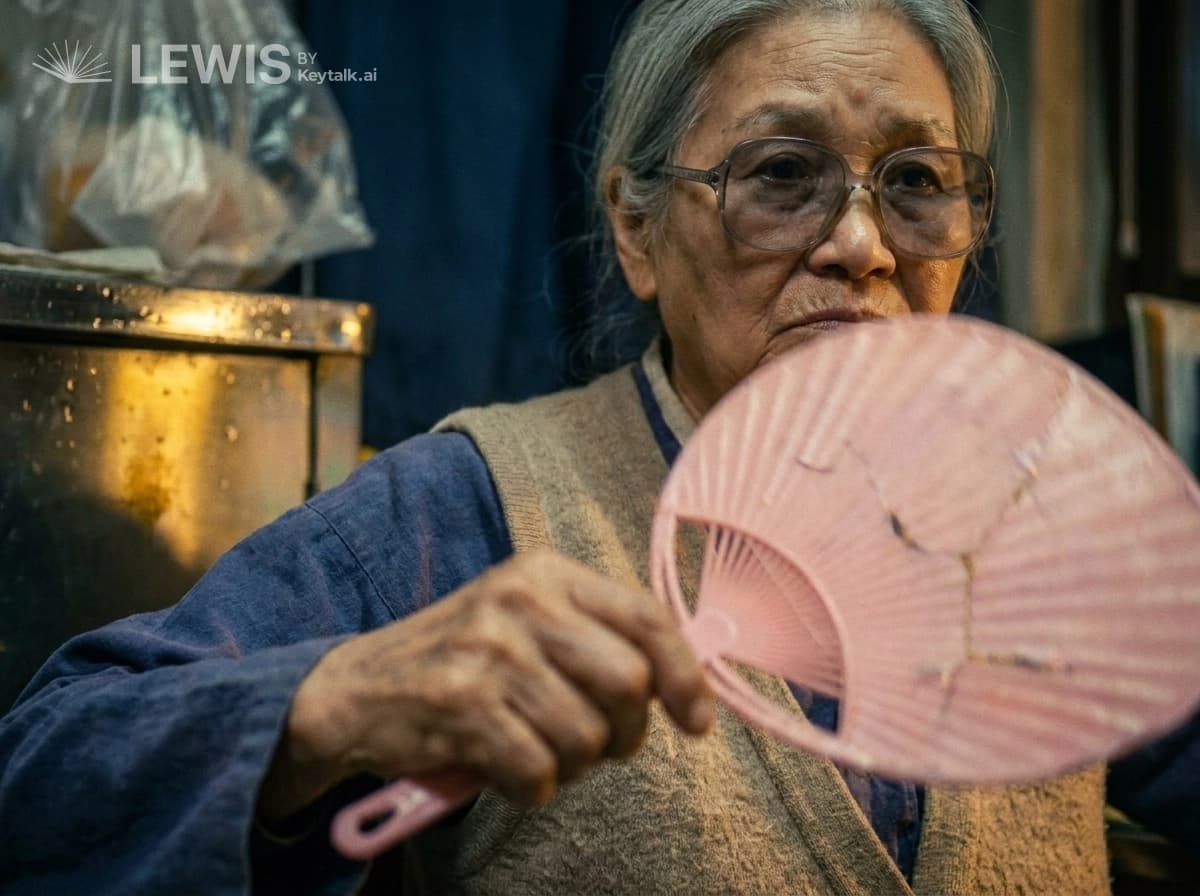
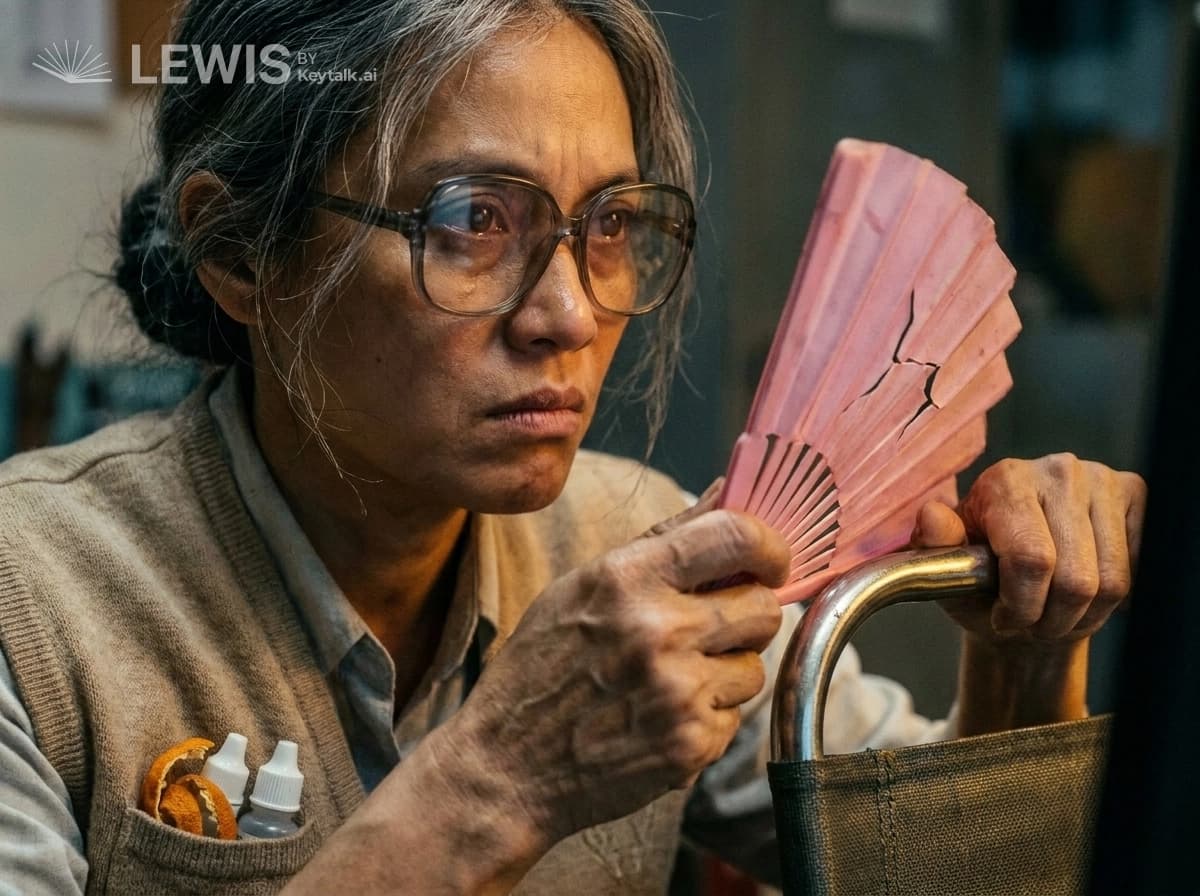
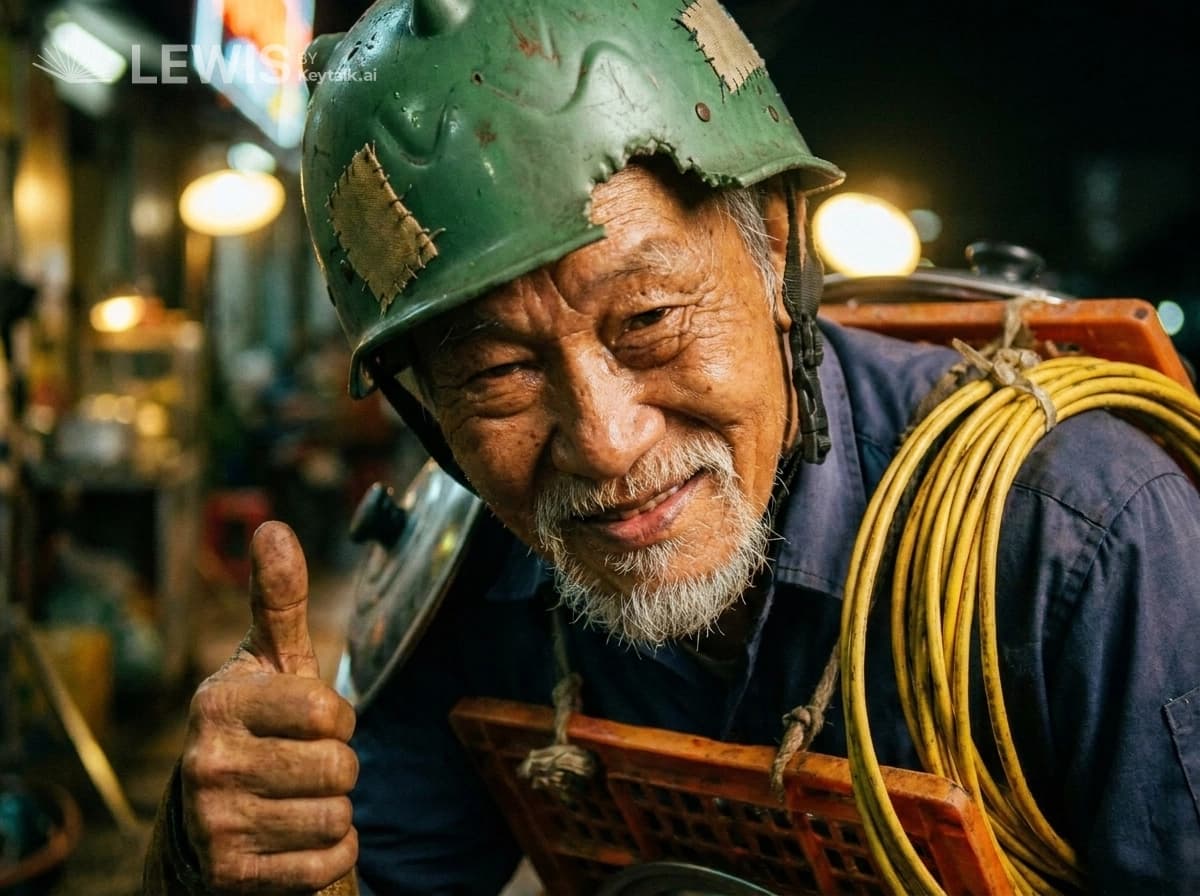
Ko Ae-sun does not ask whether Jibi wants the role. She taps her cracked pink fan three times on the metal chair and makes Jibi repeat “pokssak sogassuda” until the syllables scrape the roof of her mouth. Jibi can do motorcycle flips on wet asphalt, but she cannot make her Đà Nẵng tongue bend into Jeju without sounding like she is stealing someone else’s childhood. Each wrong ending makes Ae-sun’s mouth tremble. Phạm Gwan-sik, silent beside them with a thermos of hot cháo quýt, wipes the fog from Ae-sun’s glasses and gives Jibi a thumbs-up so small it looks like an apology. Jibi takes the role because she wants her grandmother to hear that old thanks in a crowded theater before her sight fades into shadows, and because, for once, the camera will not cut away from her face.
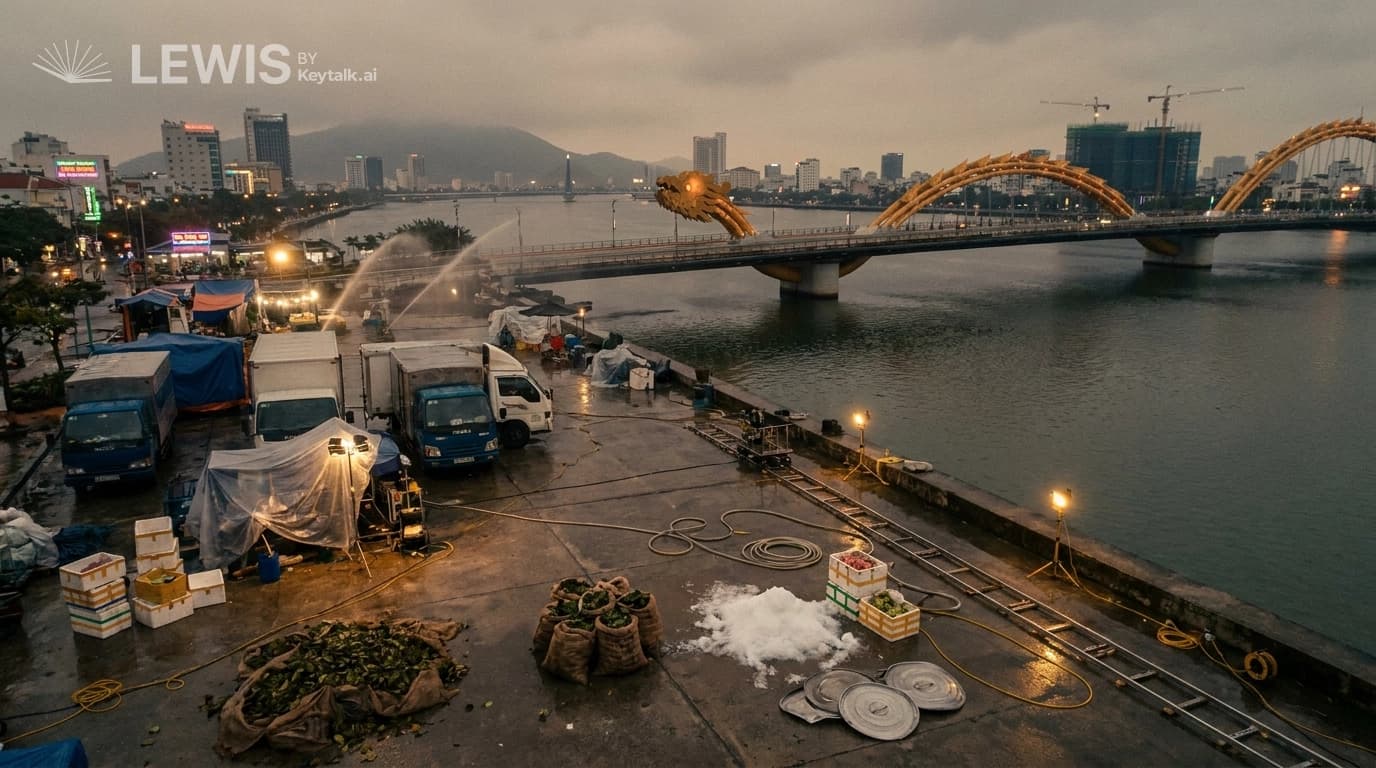
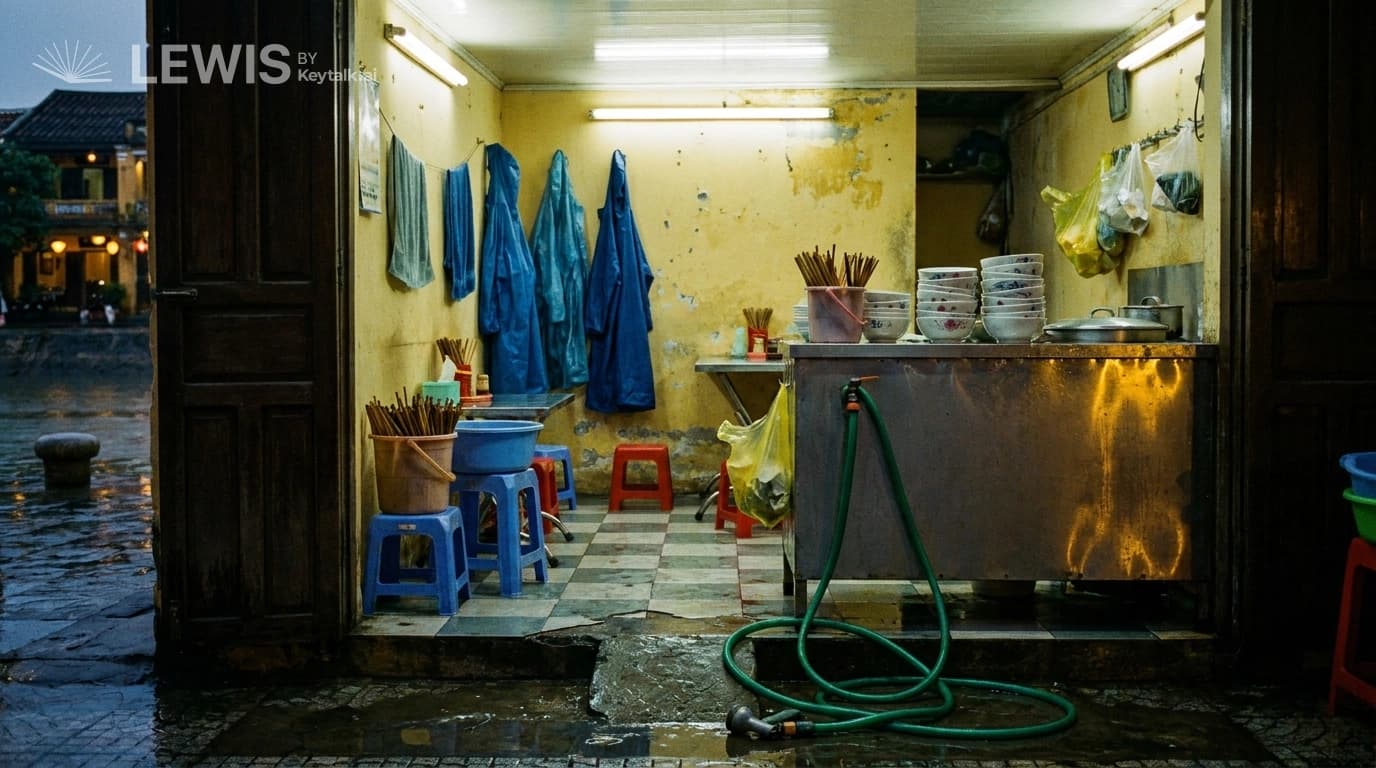
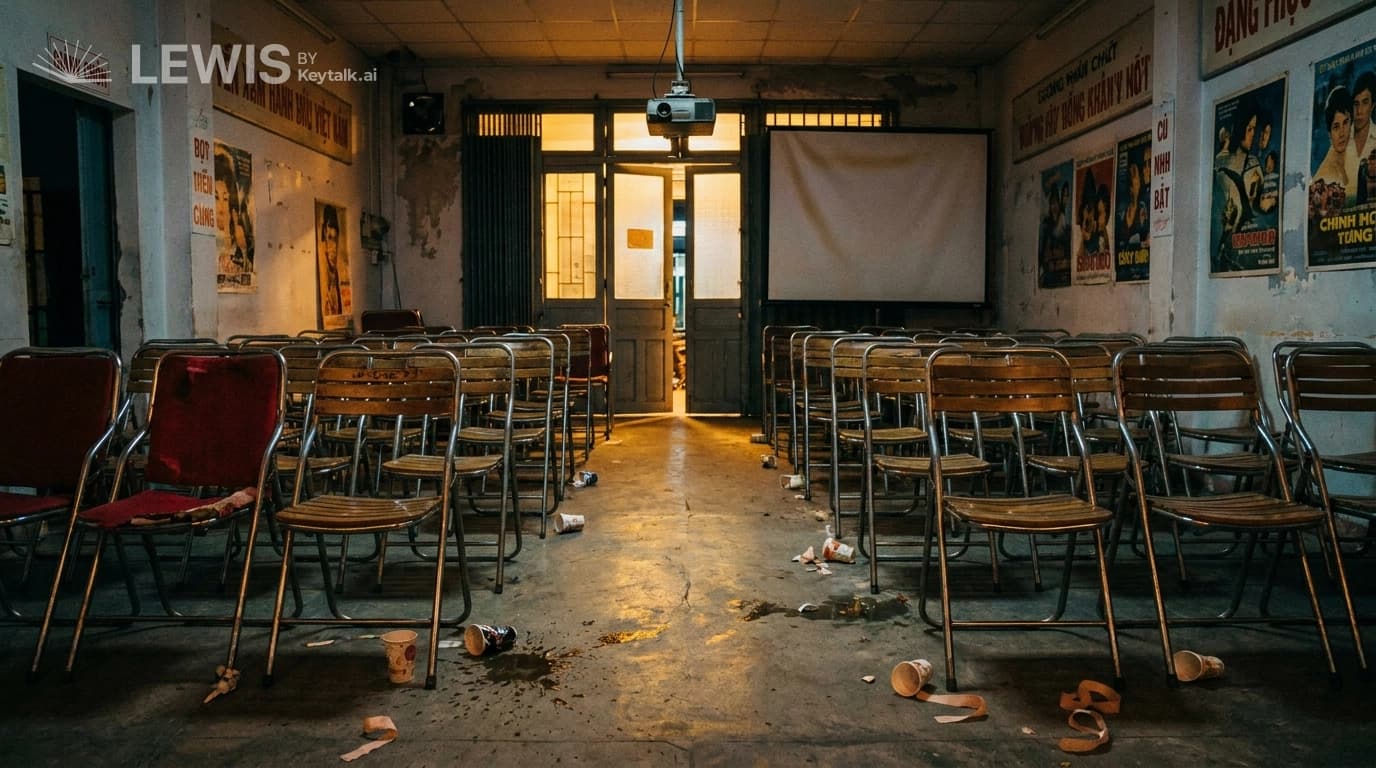
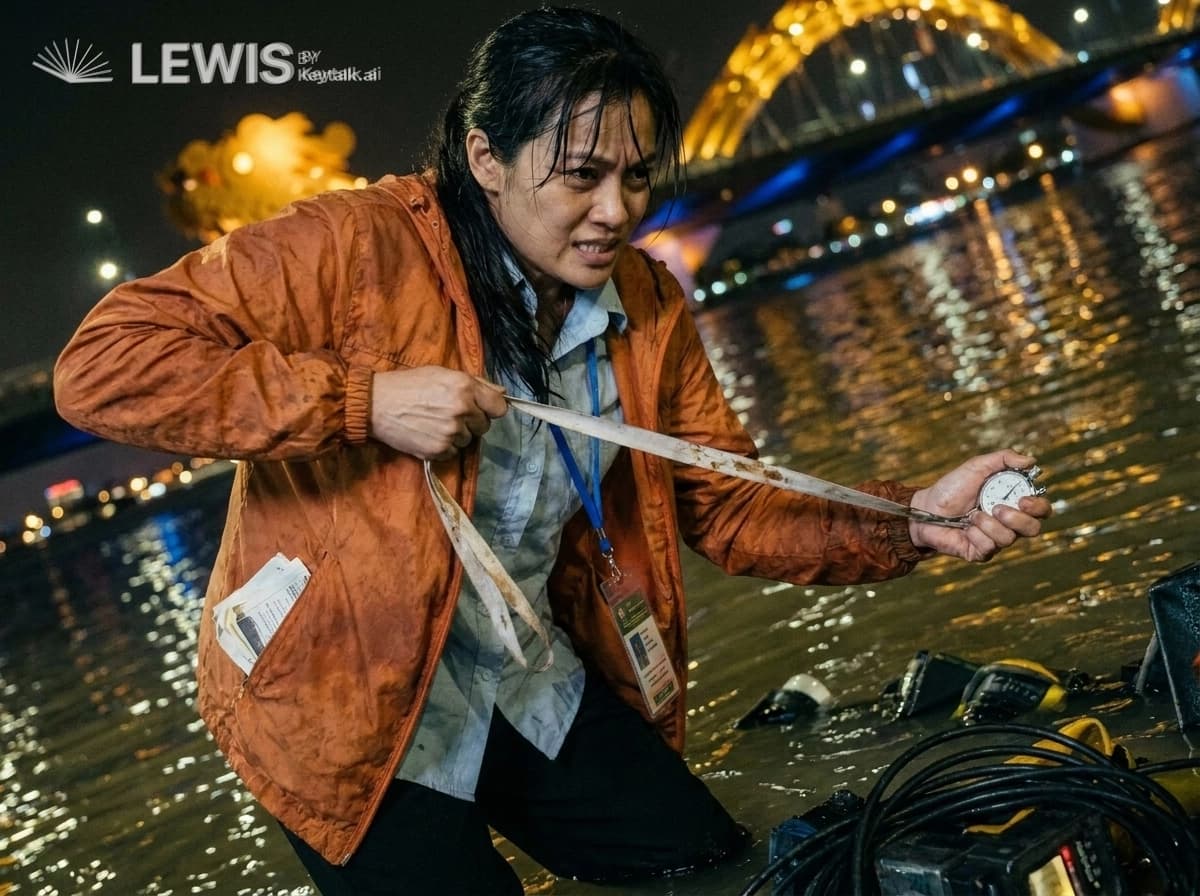
The crew’s whole movie must be born and buried in one winter day. Lê Nhật Tảo has hired the camera, dolly rail, lights, and a tiny cinema for one impossible stretch; if he misses midnight, his monster film becomes a folder of unpaid files. Võ Thùy Miên marches through the set with a stopwatch tied to a stained bridal ribbon, collecting receipts from a mì Quảng sponsor, a fish sauce auntie, and a wedding dress shop that demands its banner appear beside the monster attack. She tells Ae-sun the theater is “almost full,” hiding that it is only held for one night and only because she promised a viral premiere. Bùi An Khê drags a green garden hose from a riverside rice shop and clips a brass valve to his belt like a medal. He watches Jibi more than he watches the ground, eager to make her hair shine in fake summer rain.
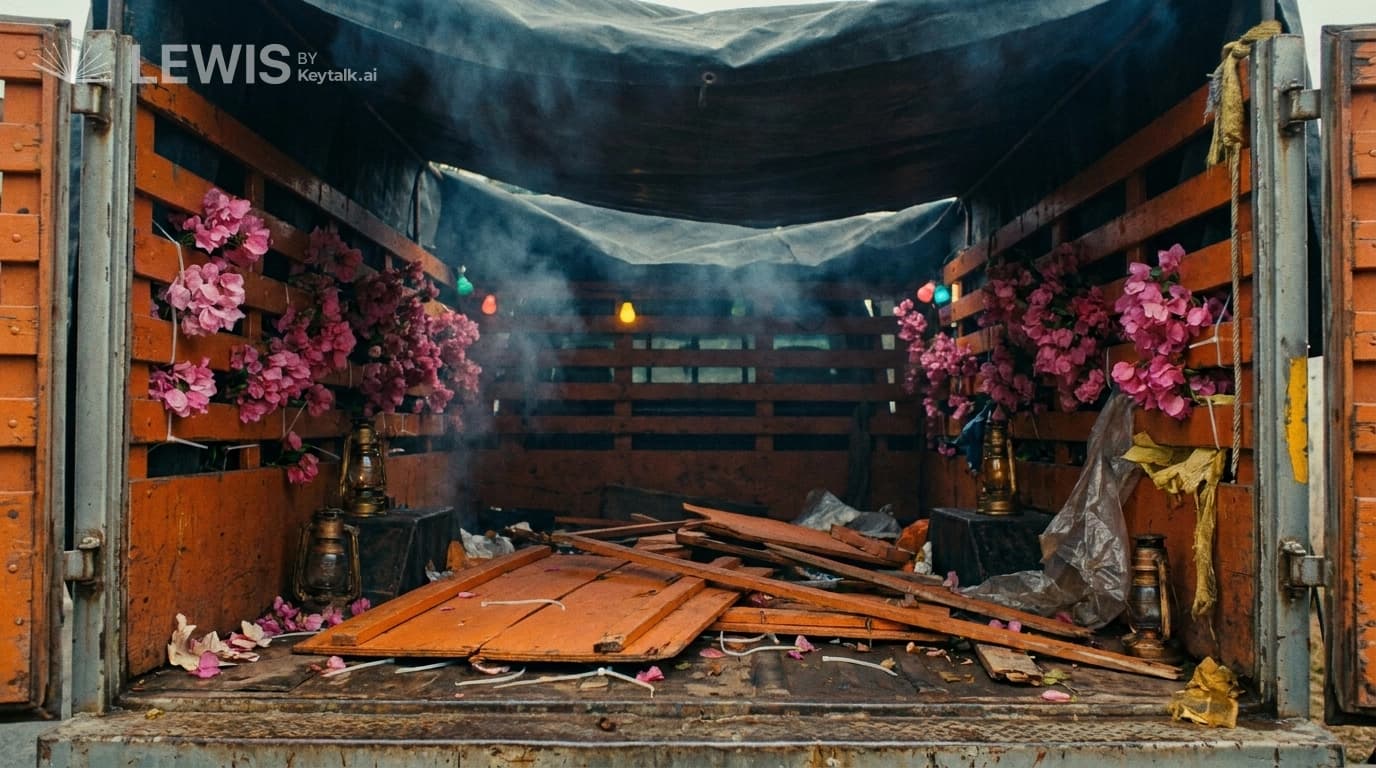
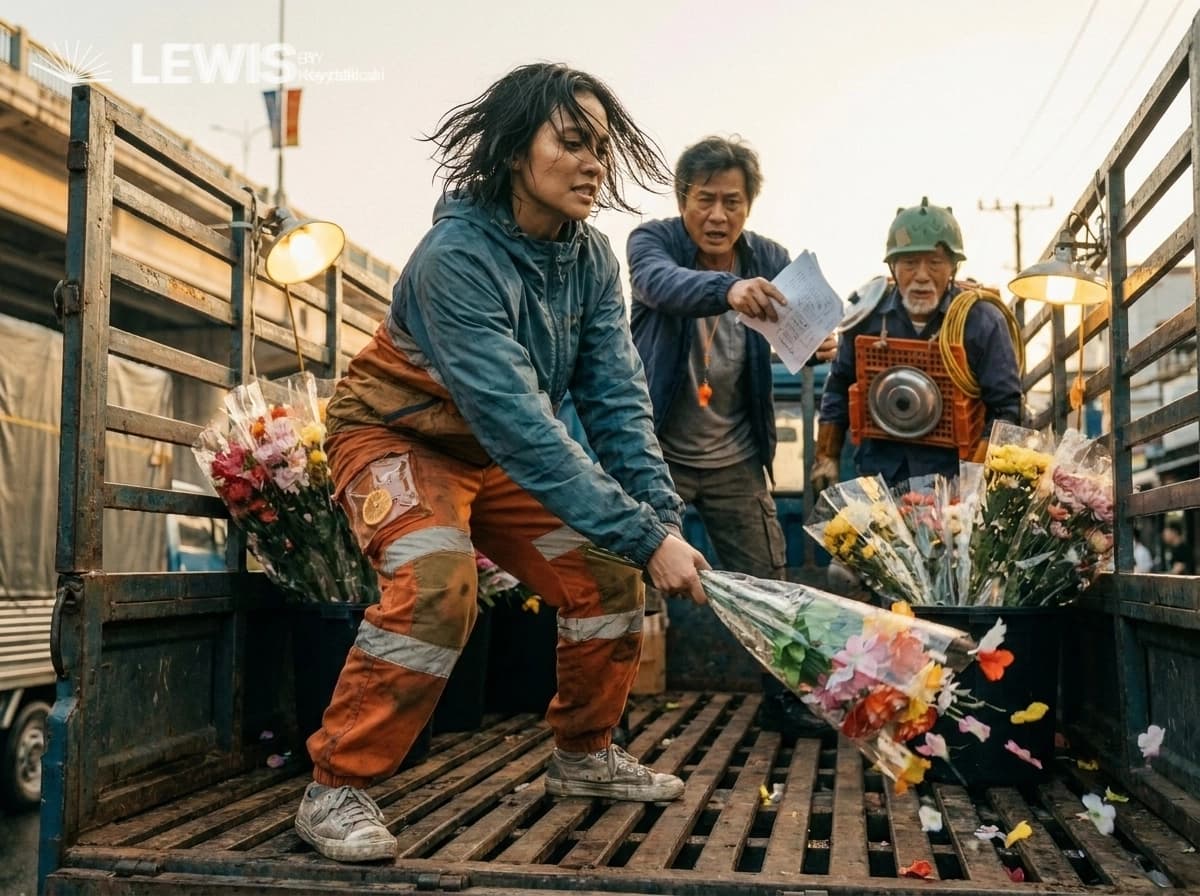
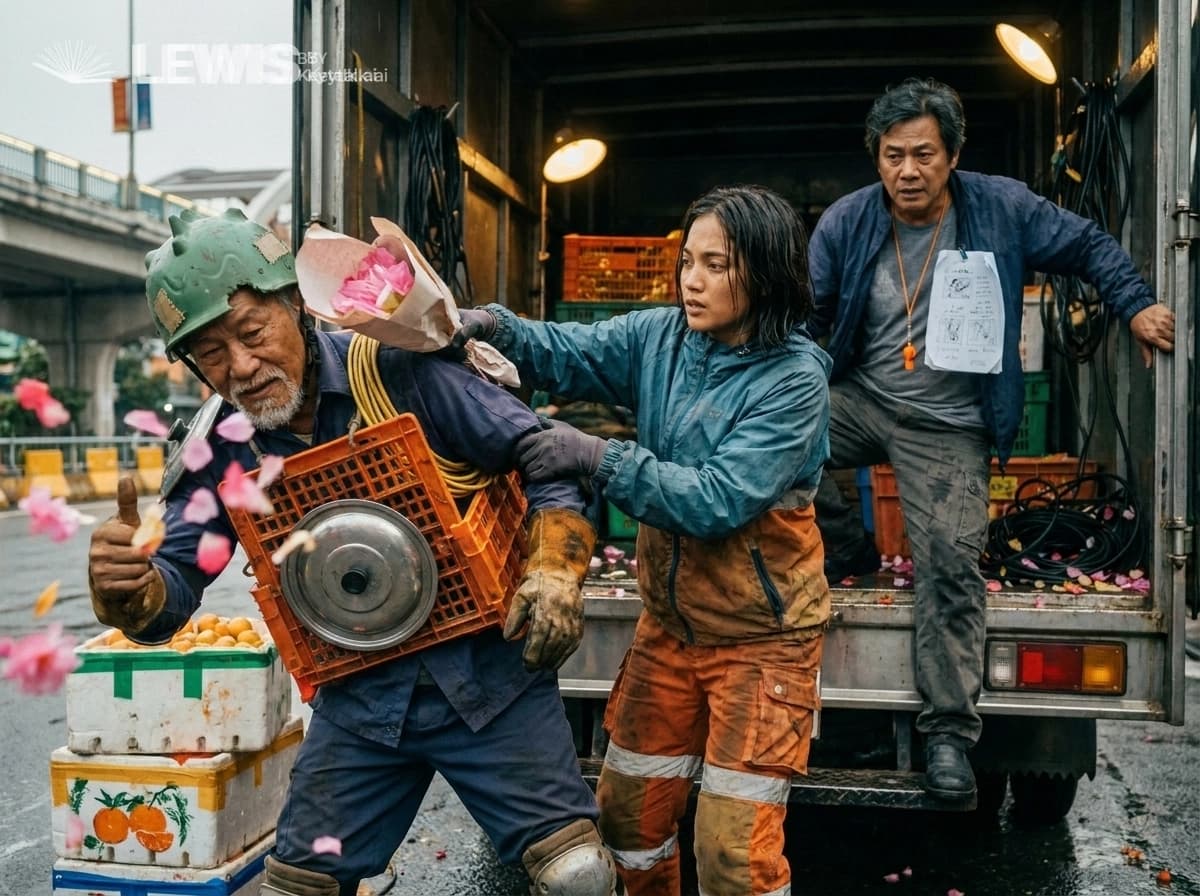
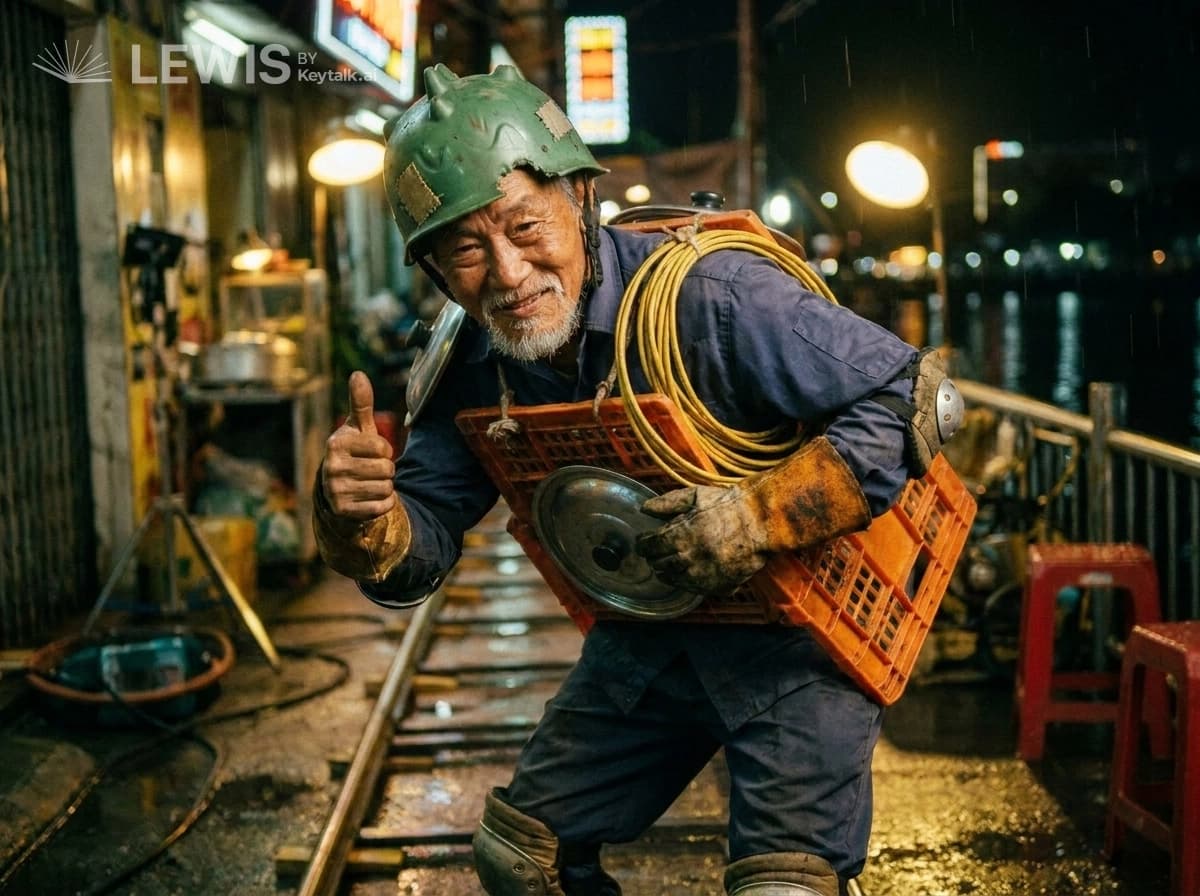
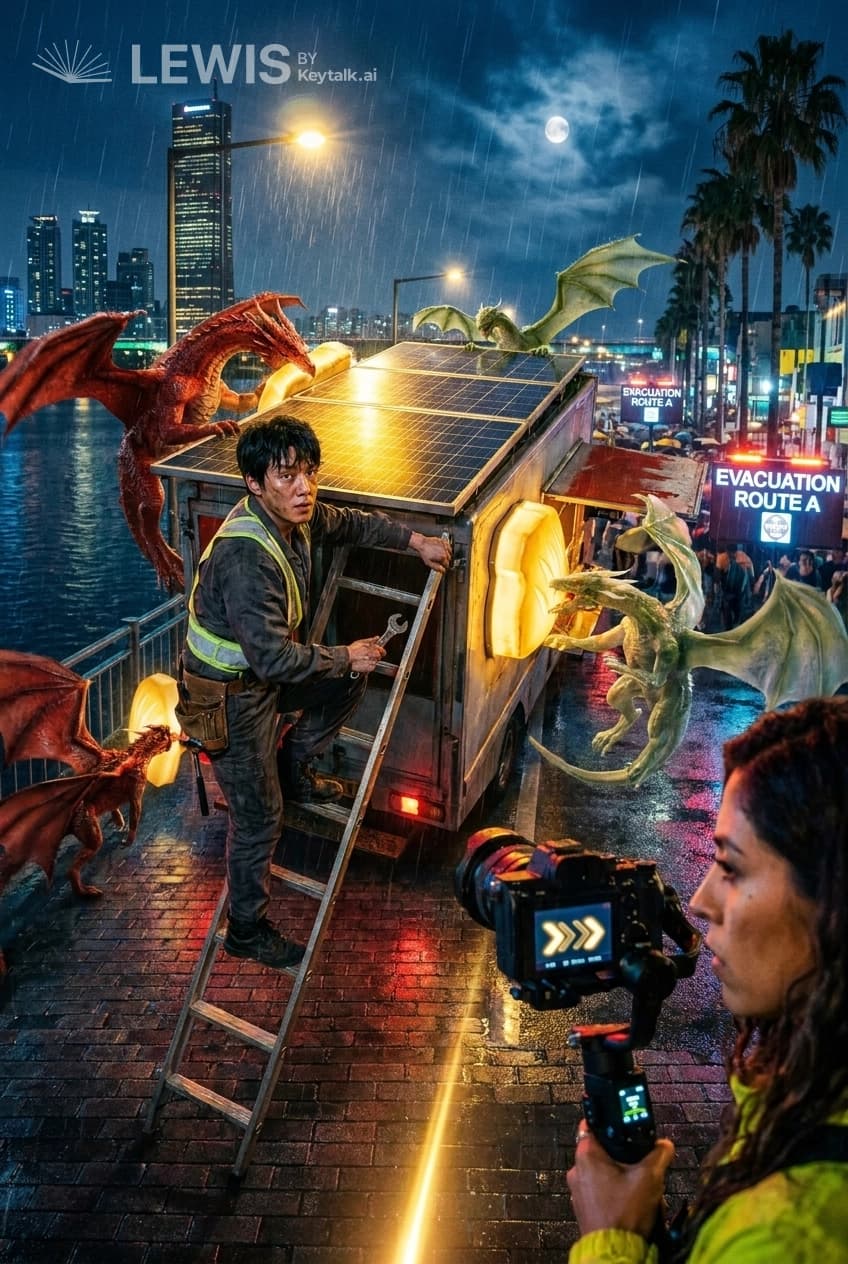
Spring is shot on the back of a coughing truck at the edge of the river. Paper flowers are zip-tied to the rails, trembling in the exhaust. Jibi must run from the monster while smiling as if Sơn Trà itself has bloomed. The monster lurches after her, orange panels clacking, and catches her before she hits the concrete too hard. She thinks the performer inside is a hired extra with good instincts. Only when she cuts a bruise from the take to hide an old man’s stiff gait does she notice the monster’s welding gloves: Gwan-sik’s gloves, burned black at the thumbs. He has climbed into the suit himself so he can soften her falls without Ae-sun seeing. Jibi storms toward him, but Ae-sun calls her back to repeat the Jeju line, and Gwan-sik turns away before anyone can read his face through the crooked helmet.
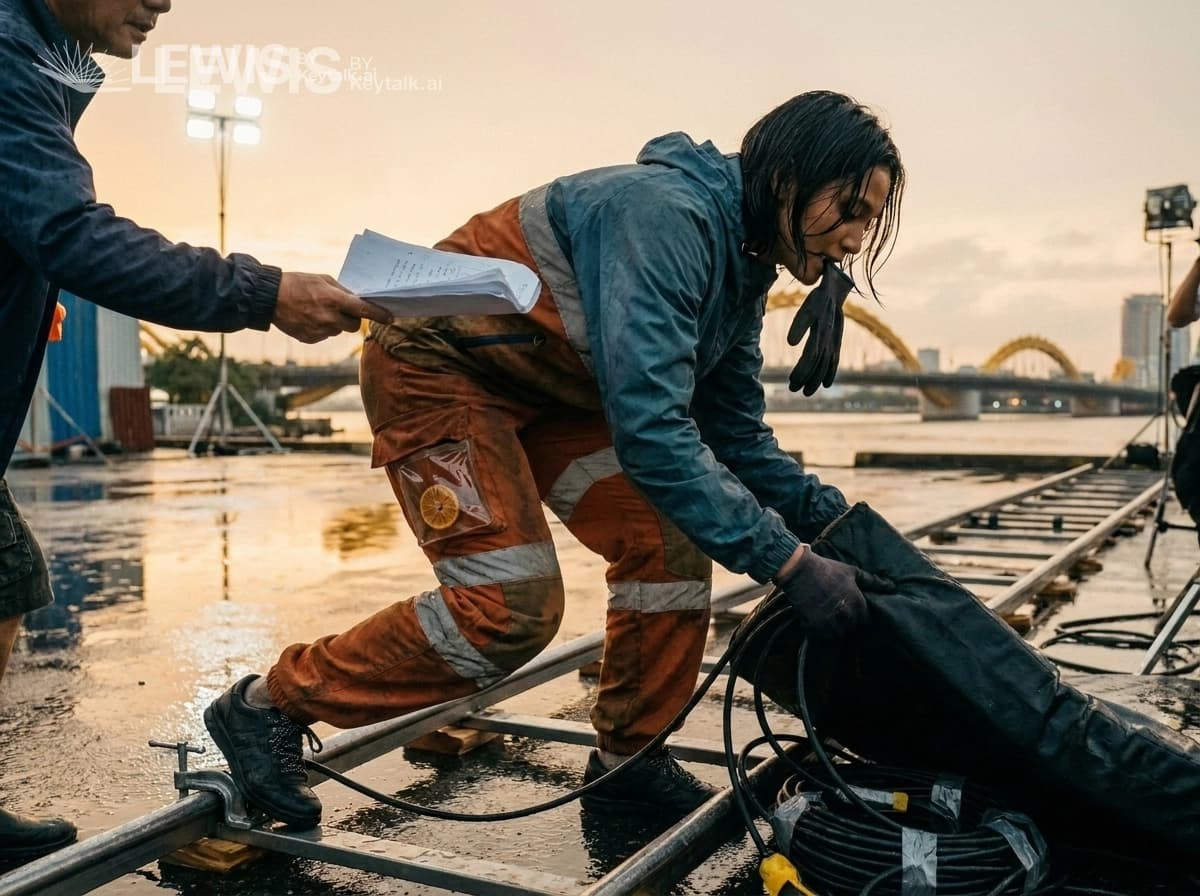
Summer begins with Bùi An Khê’s rain. He opens the hose a half-beat early, sending fat drops across the lens and over the dolly rail. The shot looks ridiculous and beautiful: Jibi, drenched in petrol-blue, raising a plastic spear against a monster made of fruit crates while tourists cheer from behind a rope. Nhật Tảo refuses to cut, intoxicated by the crowd’s laughter. Gwan-sik steps between Jibi and a slipping light stand, taking the blow on his shoulder. The nắp nồi armor rings like a gong. Everyone laughs, thinking it is part of the gag, except Jibi, who hears the small sound he makes inside the helmet.
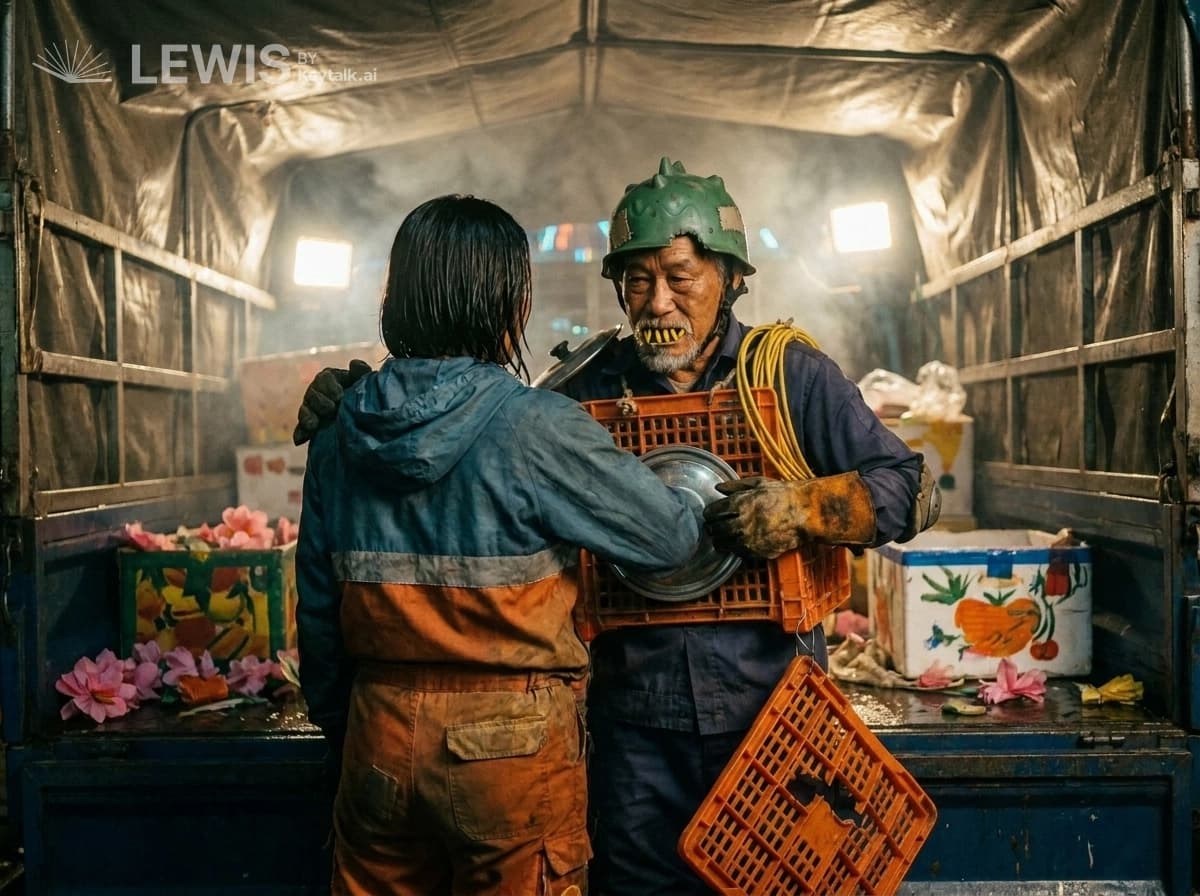
She rips the monster head off between takes and finds Gwan-sik pale, sweat shining under his sparse white hair. He asks her, with almost no voice, not to tell Ae-sun. He says Ae-sun should remember the day as the day Jibi became the star, not the day he became too old to hold anything steady. Jibi wants to throw the whole costume into the river. Instead, she tightens the loose wire on his shoulder with her own stunt tape and tells him that if he steps in front of one more real danger without warning her, she will break character in every take and ruin the film on purpose. He gives the same trembling thumbs-up. It is not agreement. It is the only language he has.
By afternoon, autumn is dumped from bao tải. Wet bàng leaves fall in clumps, sticking to Jibi’s face and the monster’s orange chest. Ko Ae-sun insists the final line must be spoken exactly as she remembers it, with the Jeju breath held low and rough. Jibi tries again and again in front of the whole crew until her lips dry white. The crew grows quiet, no longer sure whether they are watching rehearsal or a family argument. Ae-sun, ashamed of needing so much, snaps that a copied voice is better than a lost one. Jibi answers by walking into the leaf-strewn frame and saying the line in her own accent, soft but clear. Ae-sun’s fan stops midair. The take is unusable because Jibi is crying, but Nhật Tảo keeps the camera rolling until Võ Thùy Miên physically steps in front of the lens and whispers “cắt” like a threat.
That confrontation splits the set. Nhật Tảo argues that the cracked, crying take is the first honest thing the movie has captured all day. Miên slaps her stopwatch against his storyboard and says honesty will not pay the rental men waiting at midnight. Jibi stands between them, still dripping, and demands the truth. Miên finally admits the theater is not guaranteed beyond tonight, the sponsors are already circling, and if the final reel is late, Ae-sun’s “crowded room” becomes twenty folding chairs and a dead projector. Ae-sun hears enough. She tries to stand, furious at being managed like a prop, but her weak eyes misjudge the step. Gwan-sik catches her before Jibi can, and for the first time all day Ae-sun feels the swollen tremor in his knee through his hand.
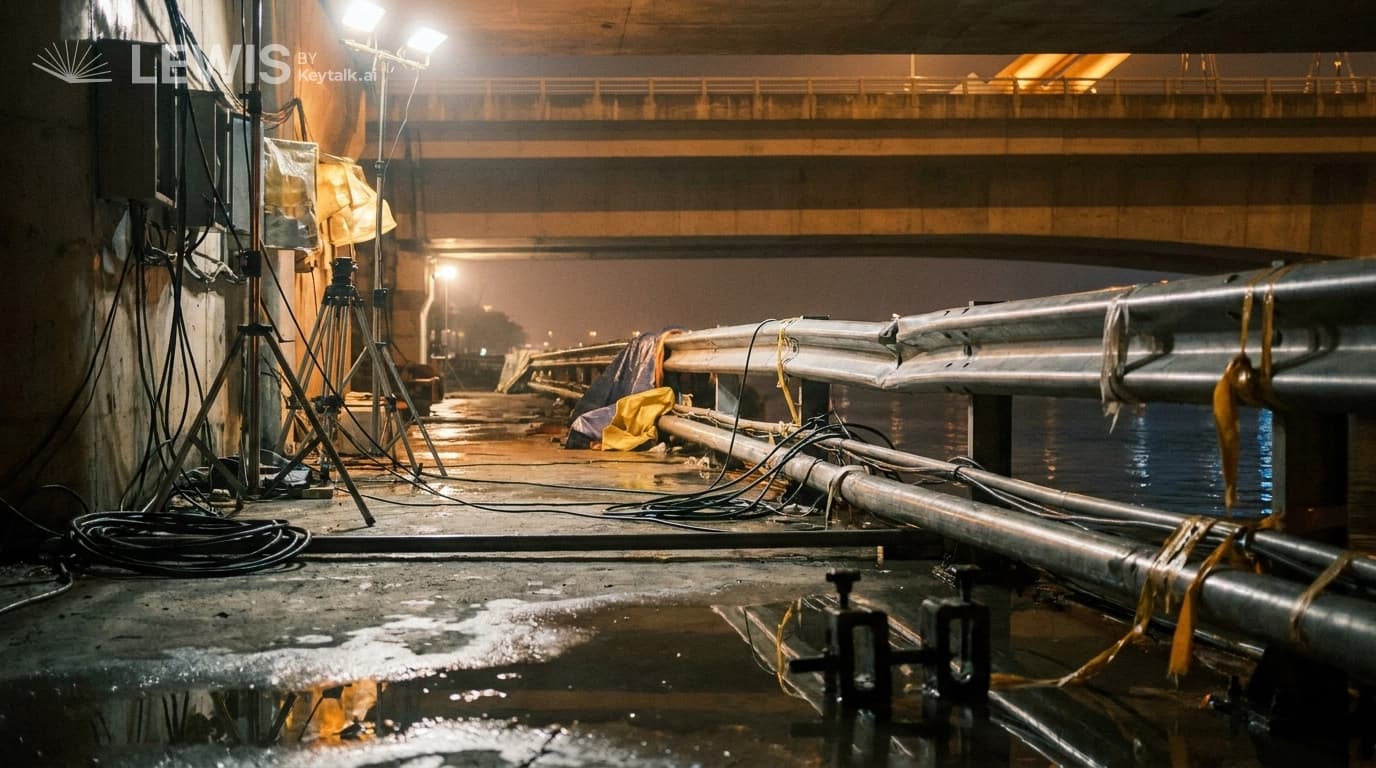
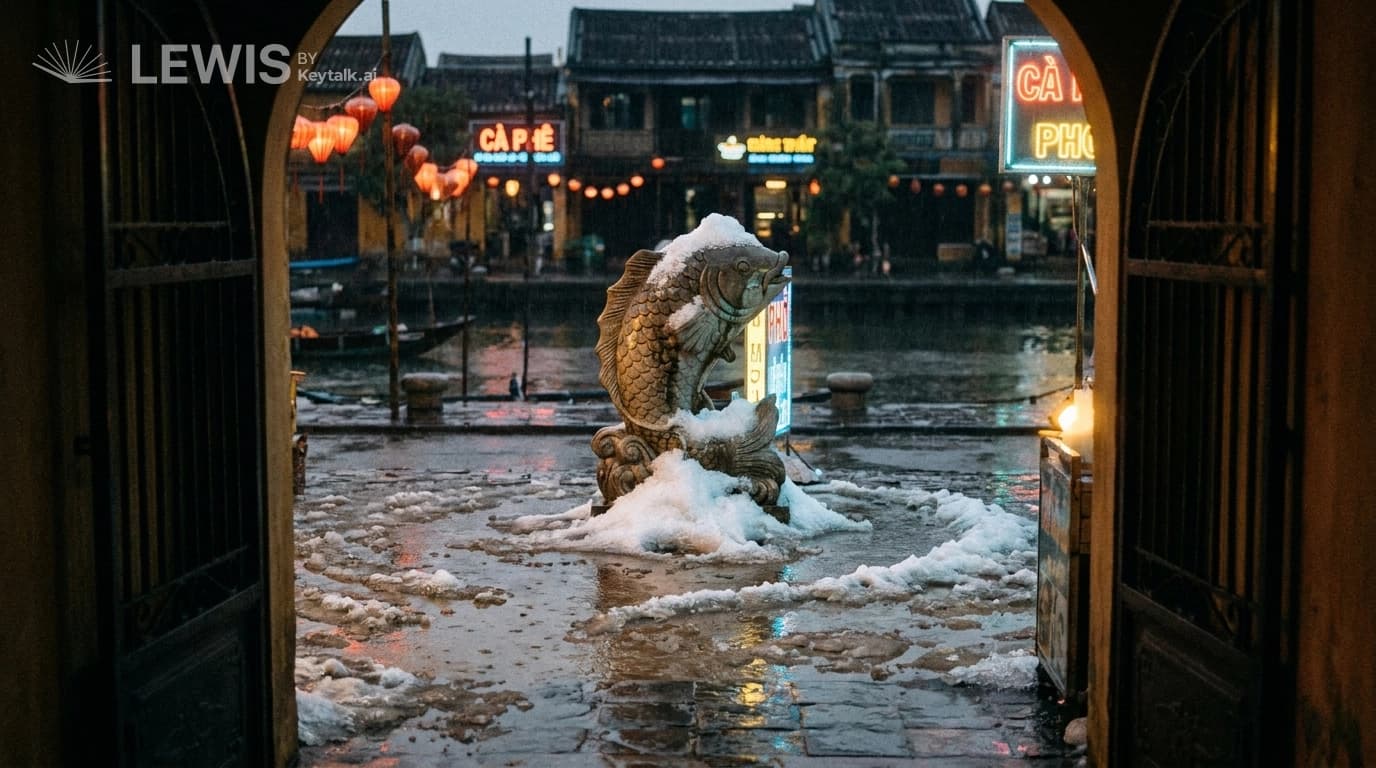
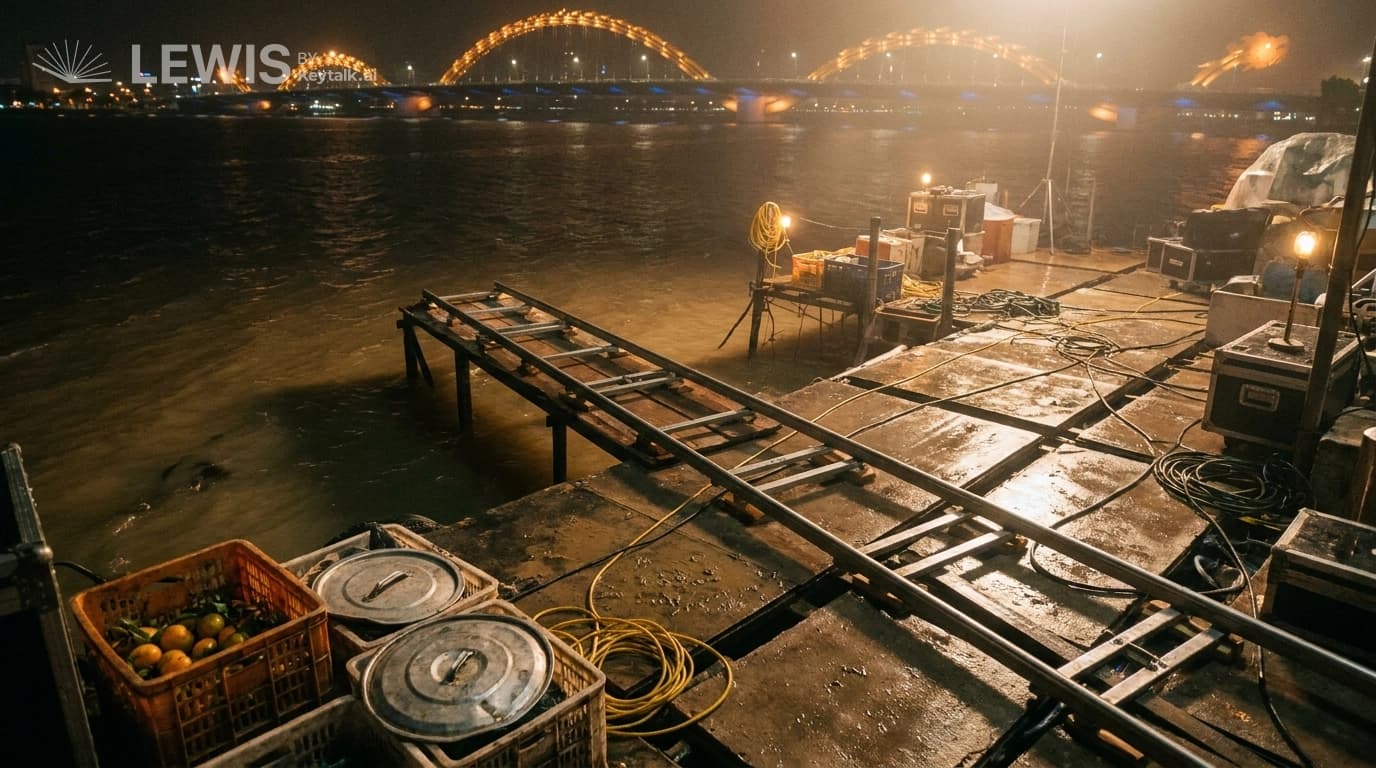
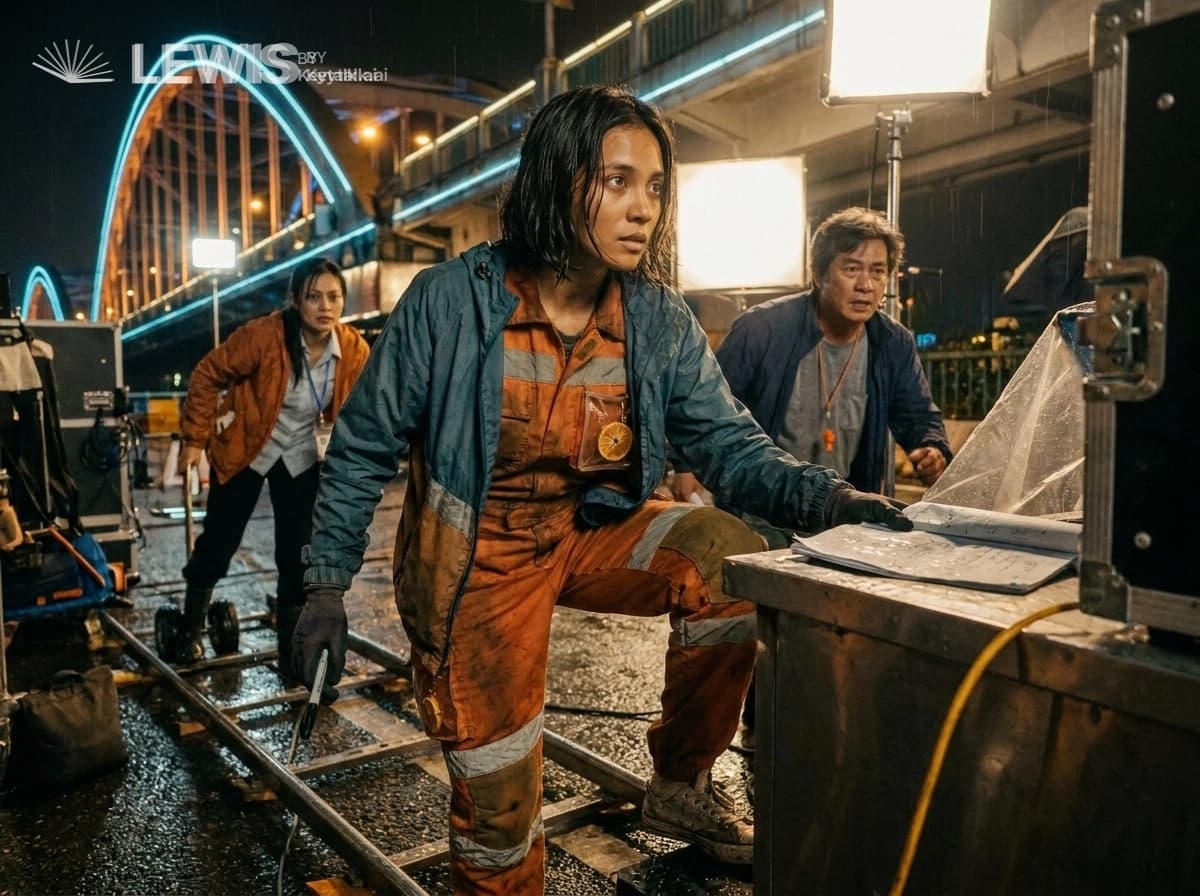
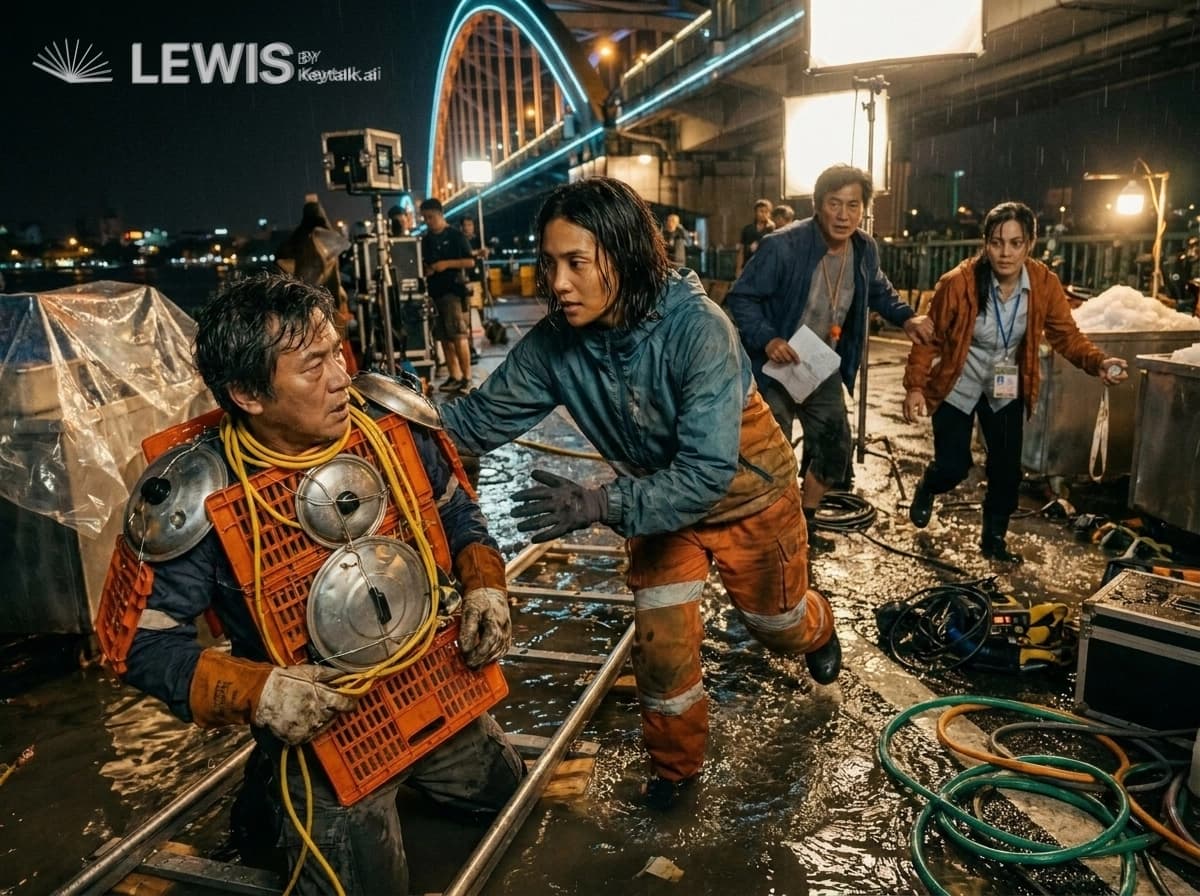
Winter is prepared under harsh neon. Shaved ice is shoveled around the tượng cá chép hóa rồng, turning gray as it melts into the river muck. The Dragon Bridge glows above them like a rich monster watching a poor one die. The final scene is simple on paper: Jibi faces the quái vật quýt, thanks it, and frees it back to Sơn Trà as the tide rises. In practice, the water has already begun to creep over the lowest dolly rail. Bùi An Khê, rattled by guilt, tries to coil his hose away, but Nhật Tảo orders one last mist for texture. An Khê refuses, then sees Jibi nod once—not for beauty, but to keep the ground visible. He opens the valve just enough to wash the mud from the rail, and that thin sheet of water reveals how fast the tide is moving.
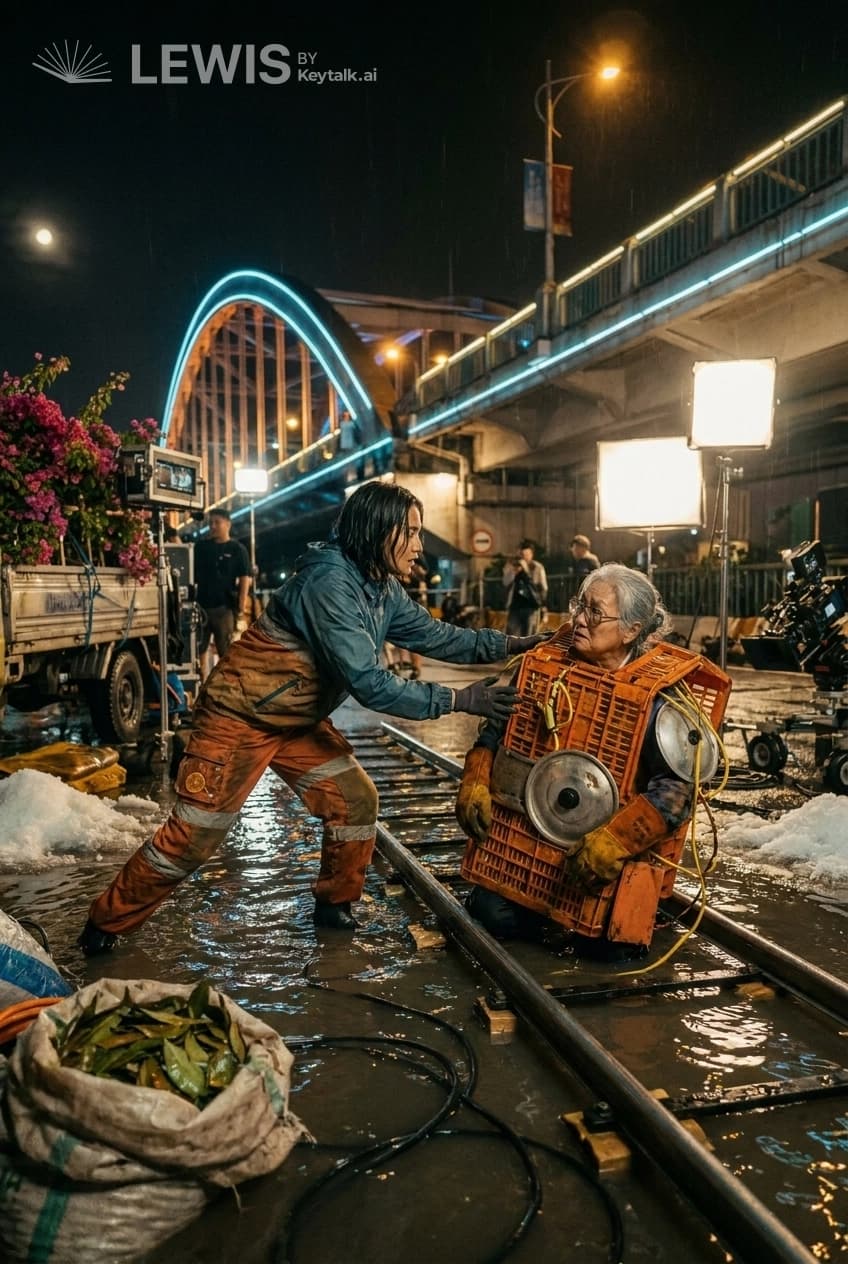
At 11:11, everything goes wrong exactly where everyone can see it. Gwan-sik, back inside the monster suit against Jibi’s orders, steps onto the rail to block her staged fall. The yellow wire tail snags under the dolly wheel. The rail shifts with the incoming water. The monster drops to one knee, then both, armor wedged between metal and current. Nhật Tảo keeps shouting for ten more seconds because the image is astonishing: Jibi reaching toward a sinking monster, shaved ice swirling around her ankles, the bridge burning gold above them. Miên grabs the camera tripod to save the rented body. Jibi grabs the tripod too, not to steady it but to shove it aside. The frame lurches away from the perfect shot.
Jibi runs into the water. Nhật Tảo blocks her with both arms, screaming that the movie dies if she breaks the scene. She drives her shoulder into his chest and knocks him backward into a pile of fake snow. Miên catches Jibi by the sleeve, stopwatch swinging, and for one ugly second tries to hold her there because every debt she has hidden is pulling through her hand. Then Ae-sun, half-blind and shaking, steps off her chair and wades in after them, tapping her fan against the water three times as if calling a child home. Miên lets go. An Khê throws himself belly-down beside the rail and twists his brass valve handle between the wheel and the wire, using it as a wedge until his palm tears. Nhật Tảo, stunned and soaked, stops shouting “action” and starts shouting instructions.
They work with their bodies because there is no time for anything else. Jibi dives under the dolly bar and cuts the yellow wire with the small stunt knife taped inside her glove. An Khê holds the wheel up with both hands. Miên braces the tripod legs against the current, not for the camera now but as a lever. Nhật Tảo wraps his arms around Gwan-sik’s chest plate and pulls until the orange crate panels crack. Ae-sun reaches the monster helmet and presses her forehead to its rubber brow, telling Gwan-sik in a mix of Jeju, Korean, and Vietnamese that he has worked hard enough. The wire snaps free. The river takes the tail, two pot-lid scales, and the perfect ending. Jibi and Nhật Tảo drag Gwan-sik out as the dolly rail rolls sideways and the camera drops into the water with a soft, expensive splash.
The premiere happens anyway, but not as promised. There is no polished monster climax, no clean final shot, and no illusion that a cheap film can hide the hands that made it. Miên sells the sponsors on a “one-night only river rescue cut” by standing in the cinema lobby with wet shoes and refusing to move until they let the audience in. Nhật Tảo edits with what survived from a backup phone, security angles from a nearby café, and the ruined camera’s last warped seconds before the river swallowed it. He leaves in the moment when Jibi shoves him aside. He leaves in Miên letting go. He leaves in An Khê’s hands under the wheel and Ae-sun walking into the water.
The theater is not full, but it is not empty. Vendors from chợ Hàn sit beside stunt workers, tourists, sponsors, and a few children who cheer whenever the quái vật quýt appears. Ko Ae-sun sits in the front row with Gwan-sik’s bandaged hand folded under hers. When the broken climax flickers across the screen, the audience first laughs at the wobbling monster suit, then quiets as they realize no one is pretending anymore. Jibi stands below the screen instead of hiding in the dark. She says “pokssak sogassuda” once in the Jeju shape Ae-sun taught her, then again in her own Đà Nẵng breath, rough and warm and alive. Ae-sun does not correct her. She taps the fan three times, not as a warning this time, but as applause. Gwan-sik lifts his thumb. The crowd follows, clapping for a monster film that lost its monster to the river and found, in the wreckage, the people who had been holding one another up all along.









コメント · Comments
コメント · 0