本文へスキップ
Mara’s Honest Panic Breaks the Store’s “Keep” Trap cover image

Mara’s Honest Panic Breaks the Store’s “Keep” Trap

At the very edge of the afterlife, a night-shift convenience store offers each arriving soul one last craving before they cross over—just one more mundane mercy in a universe that doesn’t do mercies. A living girl accidentally walks in, confused by the fluorescent hum and the way time here refills like a soda machine that never empties. Then Death himself—returned for a routine he’s not supposed to feel—keeps hovering near her chosen craving, as if the rules can be coaxed. But every purchase shortens the girl’s window to fix her mistake, and the store’s “one last thing” may be the only key to whether she gets to live—or only gets to stay.
スクロール

筋書き

Mara’s first night behind the fluorescent counter begins with a problem she can’t quantify: the receipt echo is back, replaying older transactions through the register with the wrong prices, the wrong cravings, and the wrong little hesitations that should never be searchable evidence. The store insists it’s correcting itself, resetting its internal clocks whenever a sale is completed, but for Mara the effect is intimate and cruel—each successful purchase tightens the seams of her living window in the real side-space. She tries to stay procedural anyway, counting gum drops and aligning cleaning cloths as if order can keep her alive. The trouble is that the store’s mercy is taste-shaped, not kindness-shaped, and every time Mara gives an honest answer to a scanner or a customer, she feels her mind smoothing into something that will later be easier to file.

Azrael returns as the regular who never misses his routine, drifting near the “one last craving” display as if he’s simply waiting for the night to offer her what she needs. Mara thinks she’s learned the store’s trick—cravings are mundane, exchangeable, safe. She assumes she can pick something answerable, something that will not alter her terms with metaphysical force. But Azrael doesn’t treat the rule as a boundary; he treats it like a misfile waiting to be amended. When Mara hesitates over what to ask for—over whether honesty is the same thing as consent—he offers calm guidance that sounds like procedure. His presence is gentle, yet it tightens her anxiety into a specific fear: that the store will interpret her longing for “warmth” or “a message” as a lever for retention, and that the moment the ledger recognizes attachment, the system will punish her for the very human instinct to want.

Eli Vass, the retired auditor turned part-time night supplier, slips Mara the closest thing to a warning she can remember. His explanations keep arriving with missing pages—he understands more than the store will allow her to hold, so she catches only fragments: the mechanism behind time refilling is paid for in external minutes, and the memory blur is designed to prevent downstream verification. Even when Eli is careful, his care carries a cost, and Mara can feel the store “correcting” her understanding each time she tries to anchor it to procedure. The more she asks about the clocks, the more her thoughts become a series of almost-answers, receipts she can’t read until the ink dries wrong.

Juniper “Juni” Kade appears in the margins as a custodian who speaks the language of machines—frost blooming where there should be none, receipt glyphs evaporating before they can become evidence. Juni isn’t supposed to interfere, yet the vending-time ecology behind the counter breathes with a pattern that sounds like a warning the store is trying to smother. Mara learns that the receipt echo isn’t random; it’s a system trying to re-route past transactions through the wrong cycles to reconcile energy taken by “one more thing” purchases. Juni has been nudging the vending-time systems to create a crack in the loop, a tiny disruption meant to reveal the ledger-plenum’s logic before it turns her into another line item the building can rewrite. The store treats every interference as future proof against Juni, and Mara watches their careful courage curdle into frantic risk when a machine coughs a receipt signature into the air—perfectly legible for anyone who knows how to read it.

That someone, as it turns out, is Gwen Hollis. The off-brand delivery driver and unofficial stock runner shows Mara a kindness the system doesn’t approve of: a warm mug that tastes like someone else’s kitchen, candy bars that carry a faint message-scent, and the eerie ease of being reassured. Gwen’s charm is precise, but her morality is always paid in small losses. She trades Mara counterfeit mercy to keep her from choosing a craving that would make her window contract too quickly. It works, briefly—Mara’s anxiety softens, her breath steadies, her hands stop trembling near the scanner. Then Gwen collects her offset like interest: a confession that can’t be fully remembered, a name Mara can’t quite place, a detail Eli tries to clarify and then cannot hold. Gwen doesn’t want Mara discarded; she wants her alive. But survival built on stolen taste turns the store’s ledger into a predator, and when it realizes the mismatch between the granted craving and the token’s traceability, it escalates. The receipt echo becomes louder, more personal, replaying a transaction that never happened in Mara’s shift—one that looks like it could only have been made by someone who returned after crossover.

The mystery tightens around Mara’s internal need: she doesn’t just want to survive; she needs her experience to remain hers. She wants an honest, answerable craving not because it’s safe, but because it’s the only way she can guarantee the store won’t rewrite her as an accessory to its own correction. Yet the store pressures her into the opposite—toward half-remembered instincts that she can’t verify, toward assigned cravings that feel like her own choices only after the fact. When Azrael hovers closer, steering her away from attachment without admitting it’s attachment he fears, Mara becomes caught in dramatic irony: she thinks she’s choosing freely, but the system is measuring her hesitations and reading them as compliance errors. Every time she tries to bargain rationally, the store interprets rationality as a willingness to be filed.

As the night deepens, the Transaction Wave grows less like a periodic inconvenience and more like a storm front. Mara is repeatedly rerouted toward the counter inside the store’s loop; doors and windows behave like scenic lies, and the aisles shift their geometry as if to prevent her from escaping a conversation. In one loop, she catches Gwen’s counterfeit tokens in the vending-time ecology’s glow-seams, and she sees the shape of the ledger’s hunger: the store can’t accept unpriced mercy, so it charges for it elsewhere—through time, through memory, through blame. The more Gwen steals, the more the store’s evidence sharpens toward Juni. Juli’s nudges, meant to reveal the warning, start looking like the cause of the malfunction. The building narrows its interpretation until Mara must decide whether to protect the only person who can read the machines—or trust Eli, whose old auditing philosophy promises clarity but arrives too late to stop the edit.

Eli pushes Mara toward a risky kind of knowledge: he wants to show her how the receipt echo works in the ledger-plenum, using procedure as a crowbar. But memory blur threatens to erase the lesson the moment she walks away. Their last night conversation becomes a bargain spoken in careful verbs: Eli offers a procedure she can repeat in the moment it matters, even if she can’t later explain why it worked. Mara realizes the store’s mercy is not a gift; it’s a trade she can’t back out of. Still, she takes Eli’s procedure to heart—she chooses to answer the scanner not with the craving she wants most, but with the craving that describes her need for agency, the one honest statement she can stand behind even if her mind tries to smooth the edges away.

In the climactic shift of the receipt echo event, Mara is forced into a final exchange: a “one last thing” request is offered by the system in the exact phrasing that would allow the store to interpret her as someone who can be kept. The store tries to substitute her craving after it learns her hesitations too well; it offers the kind of warmth that feels like being claimed. Azrael intervenes, but his nature makes intervention indistinguishable from persuasion, and the store responds with aggressive time corrections—external minutes shrink in measurable stutters, shadows lag, and the register’s ink dries too fast for Mara to trust her own notes. Gwen makes her move as both shield and spark, swapping a token at the vending-time ecology’s edge to buy Mara seconds—but the moral offset demands a confession, and Gwen’s face tightens with the knowledge that paying interest might erase her from the very ledger she’s been surviving on. Juni, blamed by the store’s traceability logic, tries to reroute the vending-time systems at the Clock-Fork Platform, inserting themselves into machine cycles in a way that will print evidence that can implicate them later—or free them if Mara manages to disrupt the receipt’s chain of custody in time.

Mara understands, too late and then just in time, that the store isn’t only correcting accounting; it’s trying to finalize an outcome by selecting which memory survives the blur. Her last honest answer becomes less about choosing a craving and more about choosing who she will be when the store rewrites her understanding of the choice. She uses Eli’s procedure to force the register into an exactness check—making the machine require a hesitation signature that only her genuine panic can satisfy. In that brief, fluorescent heartbeat, the store’s system misreads its own ledger-plenum ecology, treating Azrael’s attempted retention as a compliance breach it must rectify, not honor. The prohibition on Death keeping is enforced in a different way: Azrael’s longing can’t open the door, but it can shape the script the store uses to “close” it. He is forbidden to keep what he loves, yet he can keep Mara’s timeline from being finalized incorrectly for one more micro-cycle.

The resolution arrives with a bitter lightness. Mara survives the night-shift’s bargaining window, but not untouched: her memory of the mechanisms remains blurred in the way procedure always blurs it, and she can’t later prove the full truth to anyone outside the store. What remains is truer than evidence—she remembers how it felt to choose, how it felt to refuse the store’s suggestion of her desire, and how the people around her treated her agency like something worth risking their own ledger entries for. Gwen pays her offset and vanishes from the record so that Mara doesn’t inherit her counterfeit trail; she chooses to be the kind of mercy the store can collect without turning it into punishment for the living. Juni’s interventions leave a signature, but Mara uses the procedure’s last loophole to scramble the chain of traceability, turning blame into ambiguity instead of certainty. Eli, whose mentor wound is that auditing can’t stop harm once it’s already been priced, is left with partial answers he can no longer file, yet he finds—through Mara’s insistence on honest craving—an opening in the philosophy that understanding will reduce cruelty. It doesn’t erase the harm, but it changes what kind of harm gets permitted next.

Azrael remains at the edge of his prohibition: he doesn’t keep Mara. He can’t. But as the Convenience Vestibule’s clocks settle into a stable micro-cycle for the last time, he stands close enough that Mara feels the weight of his attention without being captured by it. His final act is not a bargain for her stay; it is a quiet correction of the rule the store tries to apply to her. When Mara crosses over, the store offers her no metaphysical rewrite—only one last taste of mundane mercy: not warmth as possession, not a message as a leash, but the ability to speak one answerable truth aloud before her reality fully reforms. Mara chooses it with trembling certainty. In that small, disciplined defiance, the loop breaks—not by tearing down the store, but by denying it the specific kind of longing it needs to close the ledger around her. The Verge’s fluorescent hum fades, and somewhere beneath the floor, the ledger-plenum recalculates—still hungry, still rule-bound, but forced to deal with a soul who escaped becoming only an entry.

ストーリー詳細

こんなAIモデルで生成しました
GPT-5.4 Nano
テキスト
nano_banana
イメージ
イメージ
stable_diffusion
イメージ

キャラ

主人公

Mara Ionescu

性別female
職業night-shift convenience store clerk (accidental living customer)

プロフィール

Mara needs one honest, answerable craving to trade for the way her reality keeps tearing at the seams; she’s terrified that every “small mercy” the store grants her is also rewriting the terms of her survival.

Mara clings to procedures like they’re lifelines—product counts, receipt numbers, the exact order of cleaning—yet her throat tightens when she can’t verify what’s happening. She asks questions too directly for a place that punishes curiosity, bargaining with strangers through forced calm while privately panicking that her mistake will be edited out of her memory before she can name it.

背景

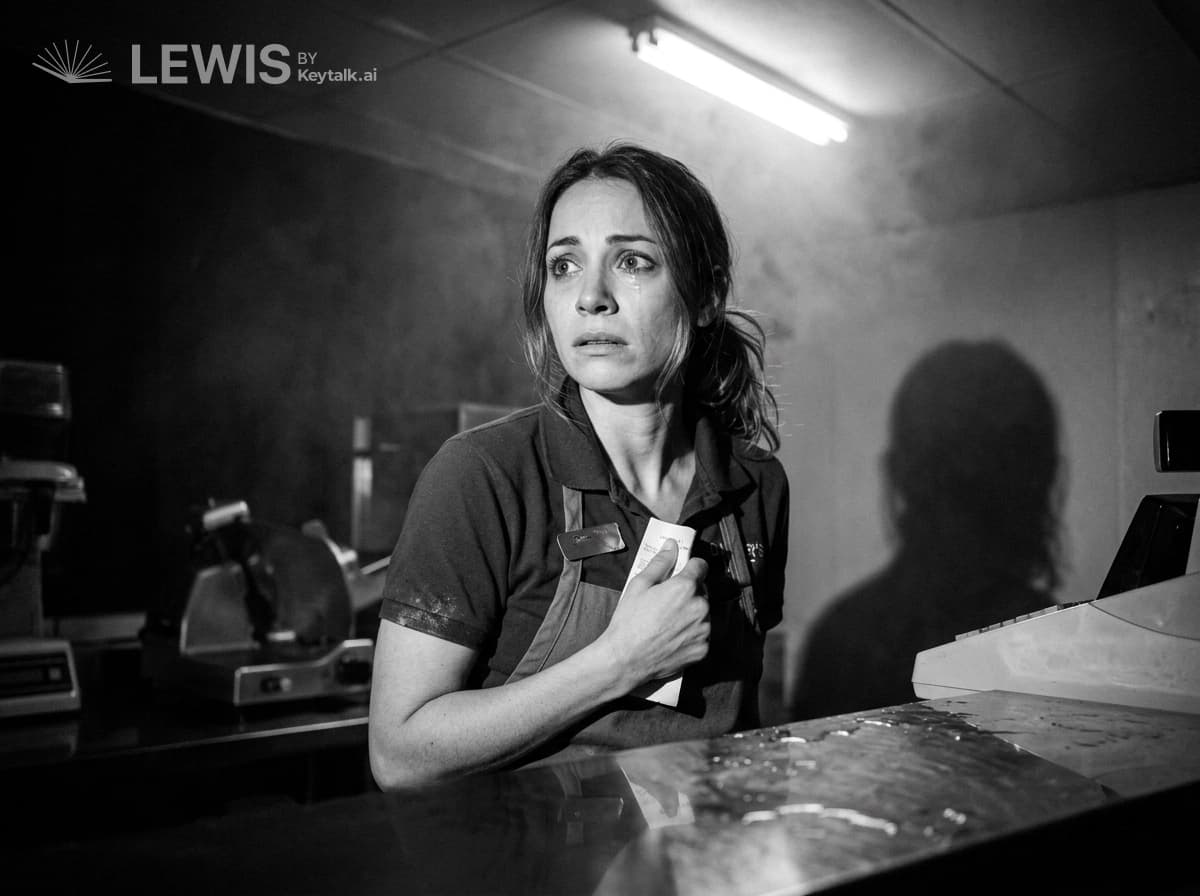
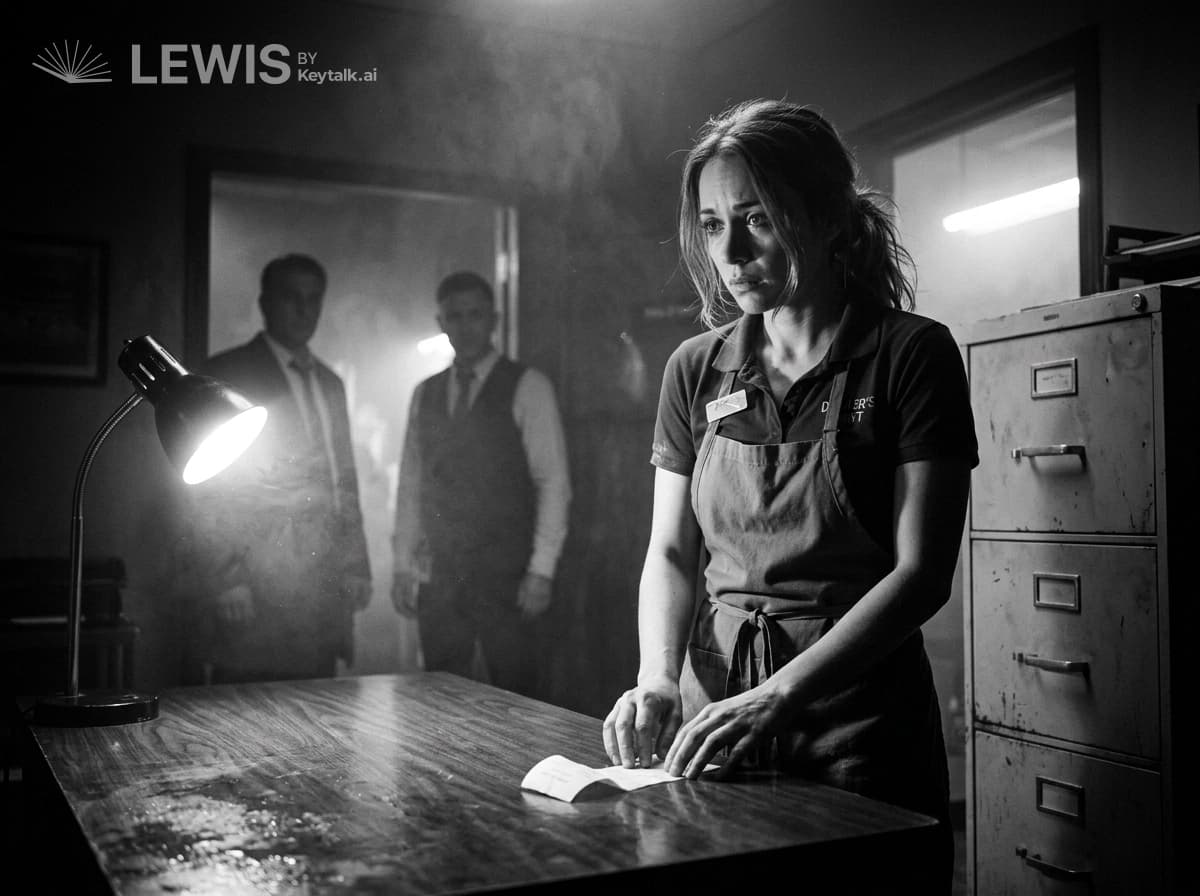
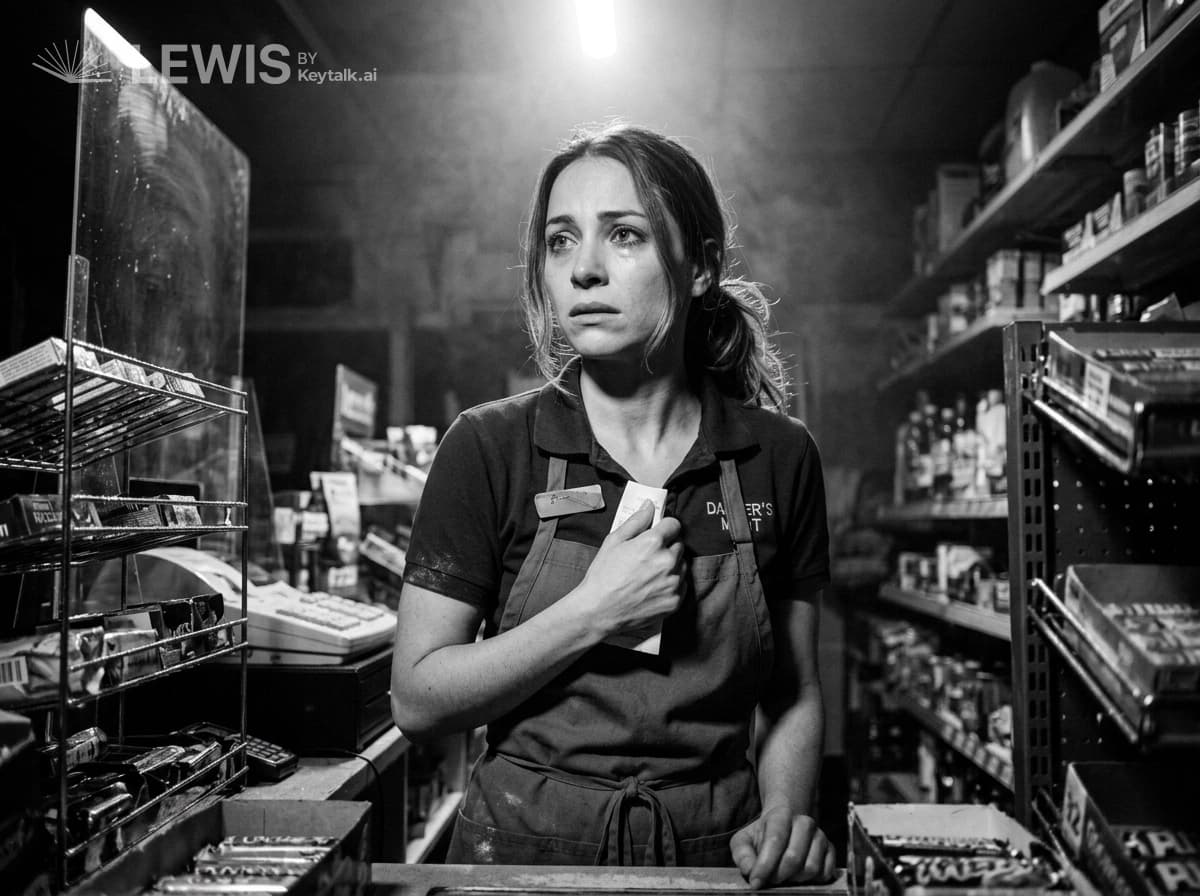
In her real world, Mara worked the midnight register at Danner’s Mart, the kind of job that taught her comfort could be stacked, priced, and controlled—until the night she vanished, leaving one receipt in her hand as proof of time. She arrived at the afterlife store holding that last slip, convinced it would anchor her identity, even as the store’s machinery treats her documentation like a lever to shorten her window back to life.

外見

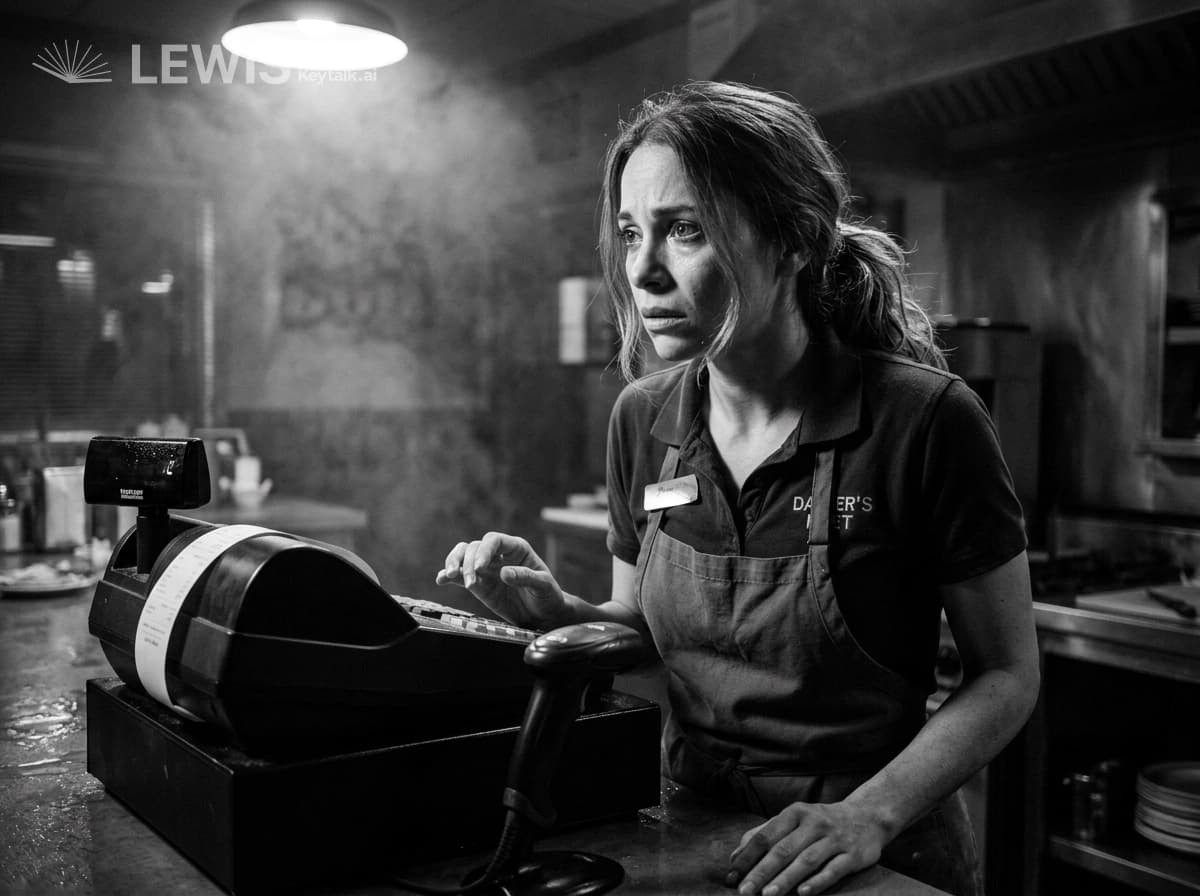
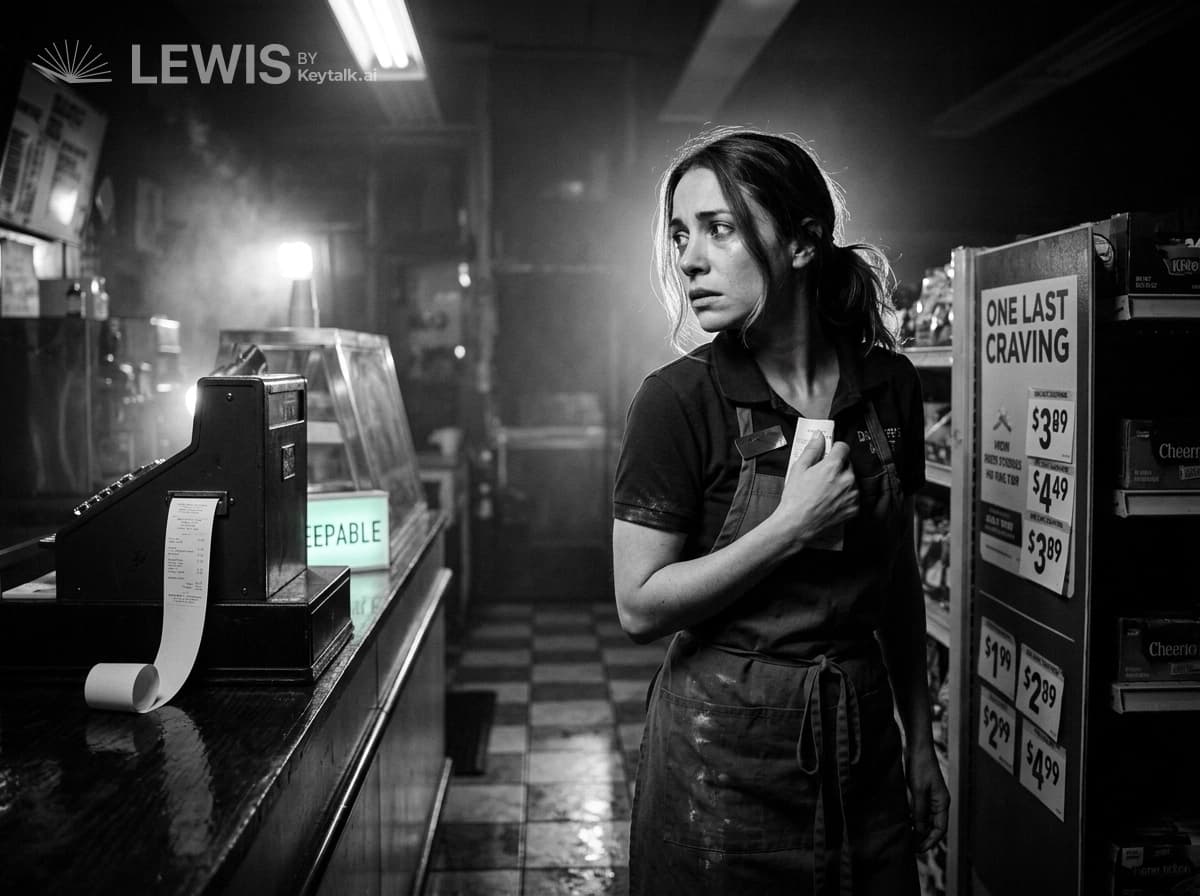
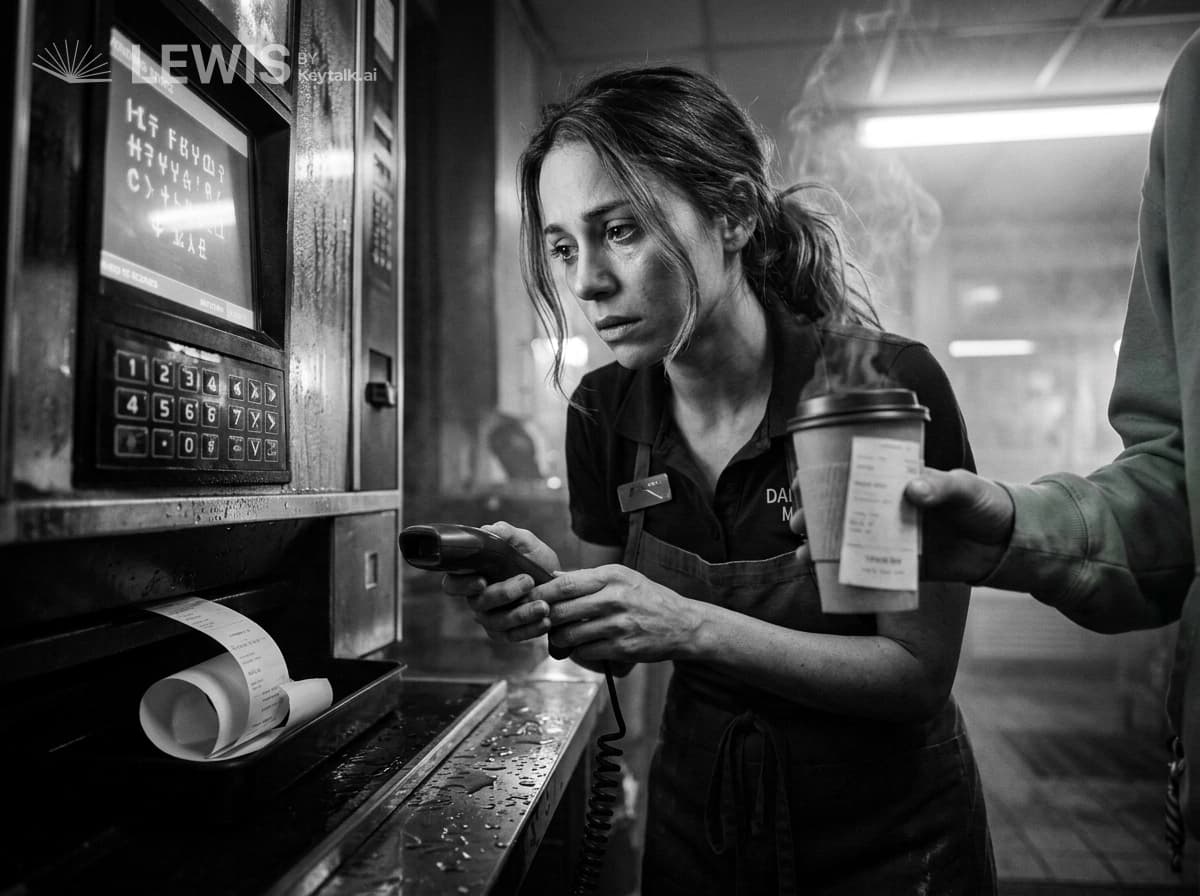
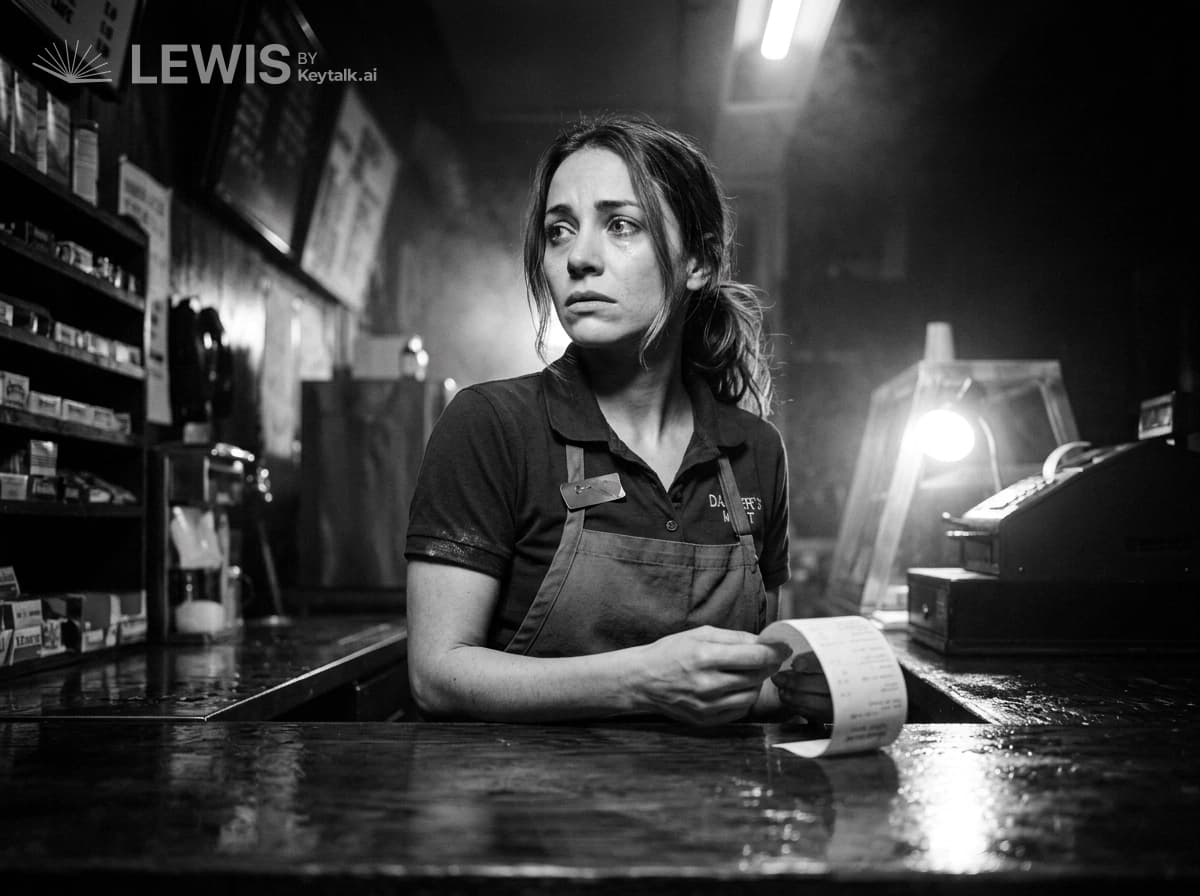
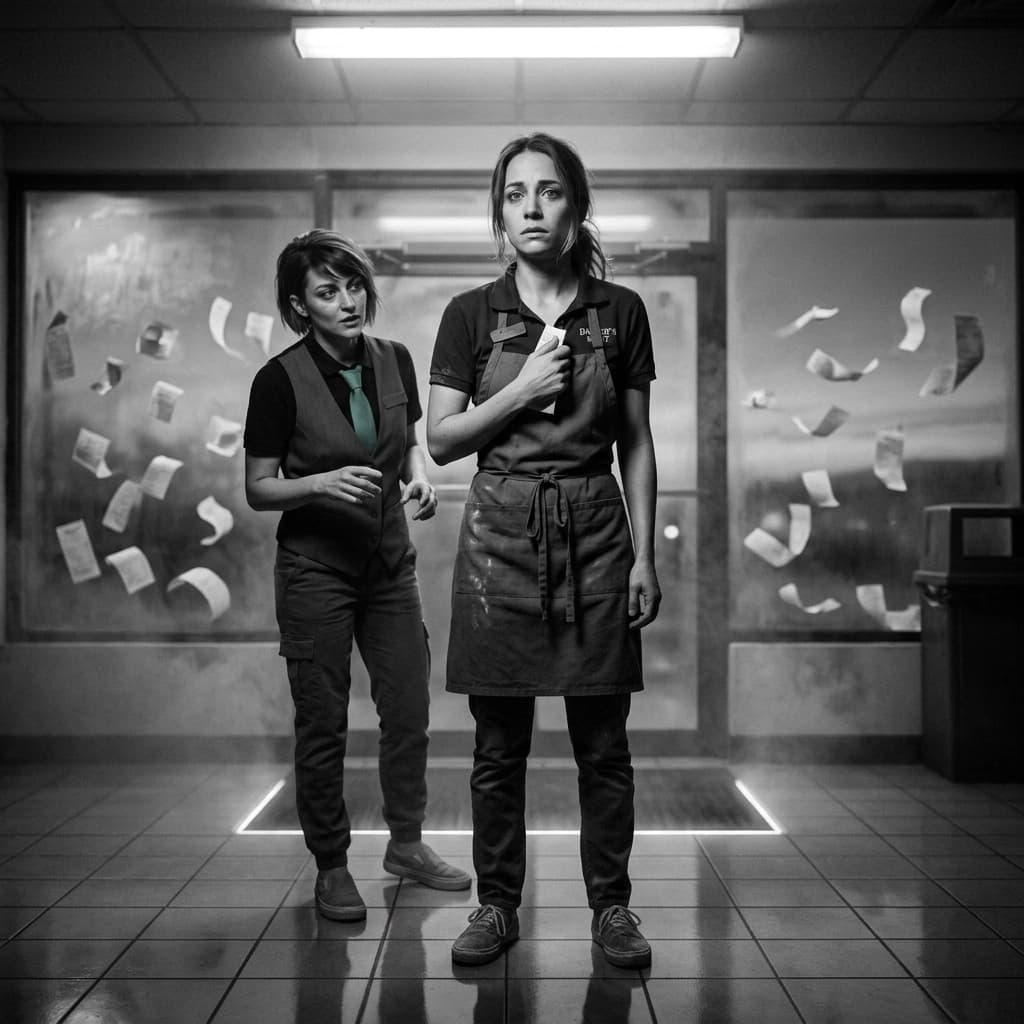
Mara Ionescu looks perpetually caught between performing the motions and failing to understand the script—her hands hover near the imaginary scanner as if numbers might still answer her. In the afterlife store’s indifferent fluorescents, she wears her Danner’s Mart night uniform with a slightly rumpled thrift-store neatness: a navy polo and charcoal apron-stitching dusted with fine ash-like residue, her face pale with a too-still, questioning focus. A faint burn-scar curls along her wrist under the cuff, and she stands angled toward the counter yet glancing over her shoulder as though the seam in reality might edit her before she finishes asking.
メンター

Eli Vass

性別male
職業retired afterlife auditor turned part-time night supplier

プロフィール

Eli once enforced the store’s “harmless” rules through paperwork and quiet compliance; now he helps Mara decode why time refills here, knowing that understanding the mechanism may make him complicit in how the store edits destinies.

Eli speaks gently, as if every sentence might stain the fluorescent tiles, yet his hands fidget with invisible forms—he can’t stop trying to file reality into something legible. When Mara asks why the clocks reset, his answers come in careful layers: partial truths delivered like safe medication, each one paid for with a fresh surge of guilt he refuses to audit away. He’s loyal to her not because he believes in fate, but because he can’t bear the thought that the store’s mercy is just a better kind of trap.

背景

Before he became the store’s ledger clerk, Eli worked in the living world for municipal timekeeping—clock-ins, compliance stamps, and dispute logs for a system that promised order while chewing people into categories. After one audit he couldn’t finish properly, a mistake in his paperwork followed him here, where the store absorbed his job and kept his flaw as a tool. Now he’s assigned to “correct anomalies” that aren’t supposed to exist, and Mara’s accidental arrival is the kind of anomaly his past can’t forgive.

外見

Eli Vass looks like he still expects the universe to file itself correctly: shoulders slightly rounded under invisible paperwork, gaze lowered as if he’s reading a form only he can see. He wears a soft, retired-auditor composure—one corner of his mouth lifts without reaching his eyes—while his hands keep fidgeting at the air near his waist, miming stapling and stamping that can’t touch anything here. A thin, pale scar slices along his left eyebrow, a quiet signature of an audit he couldn’t finish, and he stands angled toward Mara like help he’s afraid to offer.
トリックスター

Gwen Hollis

性別female
職業off-brand afterlife delivery driver and unofficial stock runner

プロフィール

Gwen steals mundane mercies from the store’s inventory—warm mugs, candy bars, and pre-approved ‘fake smiles’—then sells them as counterfeit tokens to spirits who can’t afford the real ledger, disappearing before her name can be filed into the afterlife’s accounts. Her survival depends on keeping Mara’s inexperience as her alibi, even as her instincts keep her from letting the living girl become just another entry that gets corrected.

Gwen’s charm is precise enough to feel like a lockpick: she jokes with her eyes, then counts exits with the same hands that offer a warm drink. She lies fluently, but the lie always has a moral edge—she can’t stand to abandon the living, so she improvises loopholes that punish her own risk. When the rules tighten, she becomes theatrical to hide panic, because admitting fear would mean admitting she’s been using people as currency too.

背景

Before the store claimed her, Gwen was a night-cashier in the living world who handled ‘lost-and-found’ for a forgettable chain—until a patron vanished between receipts, leaving only a receipt stub that tasted like pennies. She followed the stub into the afterlife seam and learned how the ledger tallies longing as debt, then began skimming it in small, comforting increments to feel less like a thief and more like a pressure valve. Now she needs Mara to keep pretending the store’s bookkeeping can’t see her—because the moment the audit catches up, Gwen won’t be allowed to keep choosing.

外見

Gwen Hollis wears the shop like a stage costume—an oversized convenience-store hoodie in faded mint over a black knit uniform polo, sleeves pushed up as if she’s ready to clock back in at any second. She smiles sideways, eyes bright with rehearsed mischief, while her hands fuss with a warm-wrapped mug as though hospitality could rewrite the ledger; her posture is a poised half-step away from trouble, shoulders loose but weight balanced like she’s always planning an exit. The signature mark that gives her away is a thin, pale scar that runs along her right eyebrow like a comma mid-sentence—proof she learned early how to dodge consequences without losing her nerve.
触媒

Juniper “Juni” Kade

性別non-binary
職業atm-echo custodian (keeps the store’s vending-time systems from clogging)

プロフィール

Juni listens to the convenience store’s machines talk in patterns—bill dispensers, change drawers, and a refrigerator that never runs dry—and interprets those patterns as a prophecy the store is trying to smother. Their compulsion to nudge the loop toward a crack makes them the one person who can both read the warning and be blamed when something answers it.

Juni’s fear isn’t of death, it’s of repetition: the way the store’s hum starts to sound like inevitability the longer they stand still. They grin at small malfunctions and then flinch as soon as they’re right—because every “fix” seems to create a new receipt for fate. Externally, they move with careful hands around the register, yet they can’t stop inserting themselves into customers’ choices, turning their curiosity into a stubborn, disruptive mercy.

背景

Born in the living world with a childhood habit of talking back to appliances, Juni learned—after a string of broken devices—that their attention could change outcomes, if not cleanly. They took a part-time night job mending storefront tech and stocking refrigerators, but when a training accident happened on a clock that refused to record time properly, they ended up here: pulled into the afterlife store’s refilling rhythm mid-shift. The store recognized their “listening” talent as both useful and dangerous, slotting them as a trainee clerk—then quietly trying to overwrite their prophecy-reading before Mara’s window closes.

外見

Juniper “Juni” Kade wears a thrifted navy clerk jacket over a pale thermal and scuffed work pants that look perpetually rinsed by machine-mist, their non-binary posture half-cautious, half-ready to pounce at the next glitch. A grin flickers at small irregularities—like the hum of a vending-time unit trying to sound like inevitability—while their fingers hover near the register as if listening through their own nerves, eyes bright with contained dread. Their signature scar—a thin, pale line curving beneath one eyebrow from a clock that refused to record—makes every expression feel like it’s about to either fix the world or spill evidence of it.
恋愛対象

Azrael Crowe

性別male
職業the store’s returning regular (Death-in-disguise)

プロフィール

Azrael returns in the guise of routine because Mara’s chosen craving has begun to feel like gravity—an anchor he’s forbidden to hold. He tries to protect her from bargains that look harmless, but his nature turns every attempt at mercy into a persuasive script the store can misread as capture.

Azrael speaks like a man following procedures, yet his attention keeps snagging on Mara’s smallest hesitations—the way her fingers worry the receipt, the way her eyes track the price tags too eagerly. He’s disciplined enough to arrive on time every night, and guilt-ridden enough to sabotage his own instincts, but longing slips through in moments he can’t file away, making him both guardian and threat. When the store offers “one more thing,” he can’t refuse the impulse to steer her away; the trouble is steering always looks like owning.

背景

Azrael was once among the store’s authorized collectors, trained to escort souls over without “encouraging retention.” He lost his place in the ledger after a private impulse—an act of protection interpreted as interference—left a seam in the rules that now lets his presence repeat like an unresolved transaction. Now he comes back under a new name and the old, familiar rhythms of duty, because the store’s system responds to patterns—and he’s learned too well how to pattern himself around Mara.

外見

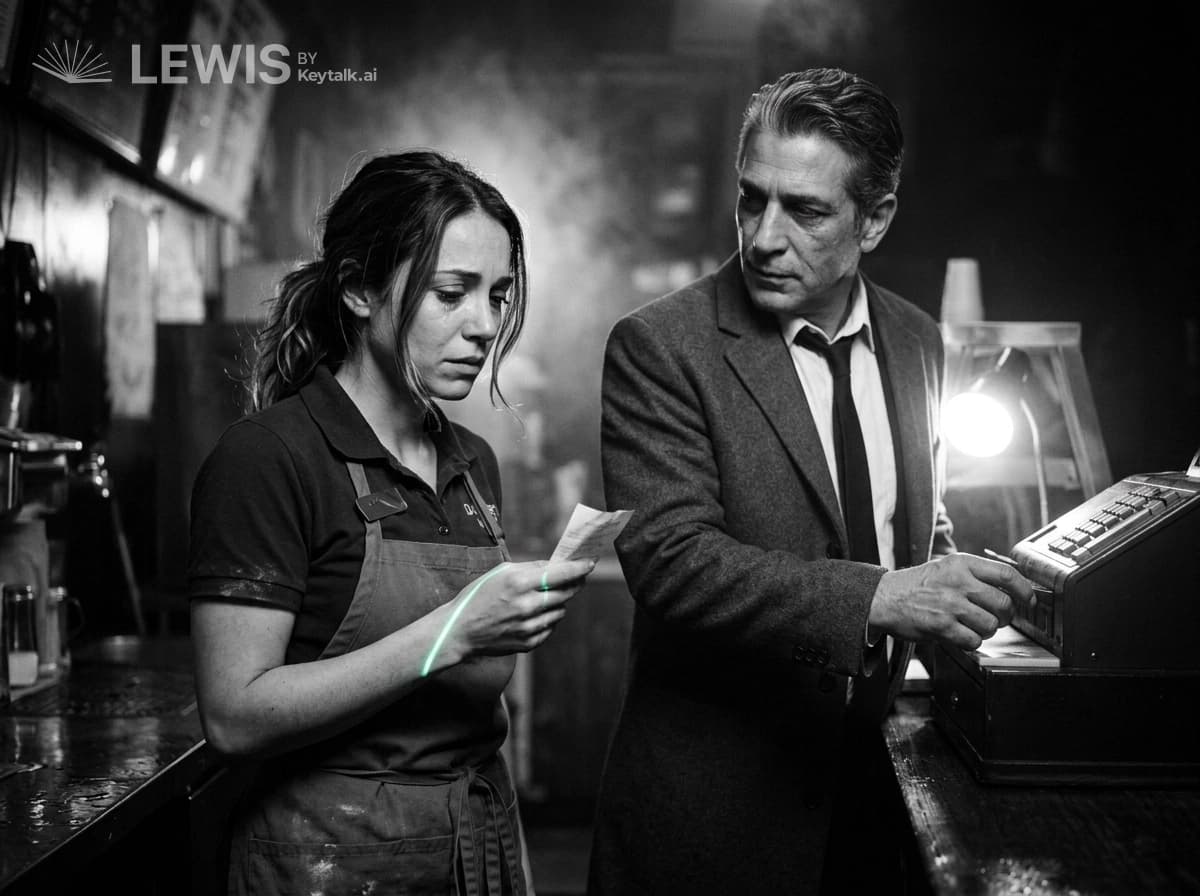
Azrael Crowe appears as a disciplined, older man with a quiet gravity that makes the convenience-store fluorescent light look warmer around him. He wears a tailored, charcoal-gray delivery overcoat over a crisp white shirt and a dark tie loosened by just one deliberate knot, as if he’s trying to remain “on duty” without allowing himself the comfort of certainty; his expression is controlled but not cold, eyes flicking toward Mara’s hands like he’s reading a contract only he can’t change.
He stands slightly off-center near the checkout—shoulders square to the register, chin angled as though listening to a rule being whispered through the vents—yet his right sleeve reveals a pale, healed seam-scar that catches the light whenever he shifts, the visible remainder of a protection that was judged as interference.

世界観

設定

At the far edge of the afterlife lies a jurisdictional seam called the Verge, a thin, mapless zone where incoming souls fall through “time” like loose change into a humming retail loop. The centerpiece is the Convenience Vestibule: a standalone storebox wedged between two kinds of emptiness—one that feels like deep water and one that feels like falling light. Outside, the air has the texture of old paper and ozone; the sky has no horizon, only a pale gradient that shifts whenever someone makes a choice. The store’s interior is physically ordinary but temporally unstable: aisles remain fixed, yet the clock behind the counter can’t agree with any other clock in the building. Beneath the floor lies the ledger-plenum—an unseen mechanical ecology of conveyor belts, receipt-printers, bill dispensers, and change drawers that never run dry because they are fed by the store’s own edits. Two other sites puncture the world’s surface: (1) the Clock-Fork Platform, a maintenance concourse where time resets are routed like trains; (2) the Vending-Time Ecology, a greenhouse-like service bay where the machines grow and repair themselves from the energy of “one more thing” purchases.

時代

Nights only; late-autumn into winter as perceived by the living—dust motes sparkle in fluorescent light while frost blooms where no windows should be. The story begins mid-shift on Mara’s first night after she accidentally passes through the Verge, during an ongoing, intermittent “receipt echo” event: every few minutes a previous transaction replays in the store’s machines as if the building is trying to correct its own accounting.

ルールと物語への影響

Rule-bound magic governs the store as a civil service of endings. (1) Every arriving soul may exchange exactly one craving—non-violent, mundane desires such as warmth, a sweet, a comforting message, a familiar smell, or the wish to say something aloud—for access to one short, late bargaining window before crossover. The store will not grant ‘salvations’ or metaphysical rewrites; it only sells taste-shaped mercy. Pressure: Mara must choose an honest craving she can answer for, or the store assigns one for her using her half-remembered instincts. (2) Transactions trigger time refilling: the store’s internal clocks reset to the start of the current micro-cycle, but the external world does not. Pressure: each purchase shortens Mara’s “living window” in the real side-space, creating a ticking clock that is measurable only through inconsistencies (stuttered shadows, receipt ink drying too fast, and Eli’s file errors). (3) The store edits memory downstream of each transaction: customers receive the granted craving and retain the feeling, but any knowledge of the mechanism is blurred unless verified by procedure. Pressure: Mara’s questions get harder to remember, Eli’s explanations become incomplete in her mind, and the wrong helpers get blamed. (4) Death is exempt from the “forbidden to keep” rule in the same way a lock is exempt from the door’s will—it can comply, but it cannot open. Azrael can hover and advise, but the store treats attempted retention as an accounting breach and responds with more aggressive time corrections and substitution of prices. Pressure: Azrael’s care risks snapping Mara’s timeline tighter. (5) Juni can “nudge” the vending-time systems only by inserting themselves into machine cycles—each interference leaves a receipt signature that becomes future evidence against them. Pressure: every small fix risks making the next malfunction point directly to Juni as the cause. (6) Gwen survives by stealing off-ledger mercies; however, counterfeit tokens always require a moral offset (a confession, a small loss, or an admission), which the store later collects as interest. Pressure: Gwen’s antihero improvisation can accidentally catalyze escalation when the store realizes the mismatch. (7) No one can leave the Convenience Vestibule during a transaction wave; doors and windows behave like set dressing, while the aisles subtly re-route bodies back toward the counter. Pressure: pursuit and evasion occur inside the store’s loop rather than across open terrain, turning every confrontation into a clerical negotiation.

ビジュアル描写

A fluorescent-lit box with mint-green tile and warm but bloodless sodium-yellow overhead panels. The light is too clean, as if it refuses grime; it makes skin look slightly unreal, like mannequins painted to resemble people. Outside the front glass is not a street but a drifting fog of receipts and starless dusk, the particles curling like steam. When the clocks reset, the air gives a faint ‘thwip’ sound—like a page turning—and the vending machines briefly exhale frost that never melts. Shadows lag a fraction of a second behind moving characters, then snap to attention with a staccato hiss from the ceiling ducts. The interior smells of vanilla bean, machine oil, and cold pennies. The floor reflects without depth—mirror-shallow—so faces look flat until someone is recorded by the register. The ledger-plenum vents show as thin seams between tiles, where glow-pulse lines run like veins. The maintenance concourse (Clock-Fork Platform) is dim and industrial: concrete ribs, hanging fluorescent tubes, and an array of analog clocks whose hands disagree yet all point to ‘now.’ In the service bay (Vending-Time Ecology), refrigerators and snack dispensers sit like terrariums; condensation beads on metal shelves form tiny, temporary ‘receipt glyphs’ before evaporating.

技術と哲学

Technology functions as rule-bound ritual. Registers, scanners, and vending-time mechanisms are not merely electronics; they are interfaces to an accounting ecology that converts emotion into allowable ‘inventory.’ The store’s systems follow three principles: (1) Exactness: items are priced in cravings, not currency; mis-scans force the machine to reinterpret intent using biometric-like ‘hesitation signatures’ (how quickly you answer, how often you swallow, which products you reach toward). (2) Ledger reciprocity: every granted mercy draws energy from time reset, creating an invisible cost paid in shortened external windows and memory blur. (3) Traceability: each transaction prints a receipt that can be read later like evidence—unless someone scrubs it by swapping it with a counterfeit token (Gwen’s specialty) or by rerouting machine cycles (Juni’s interventions). Socially, the afterlife side-space operates with bureaucratic myths: staff and regulars believe ‘procedure is kindness’ because it prevents the store from assigning cruelty masquerading as fairness. Eli Vass embodies the old philosophy of auditing—he thinks understanding will reduce harm—while the newer reality-leaning custodians (Juni) believe nudging systems is the only ethical route because audits arrive too late. Gwen’s counterbelief is that mercy is survivable only if it’s stolen in small amounts; the store punishes this by collecting offsets as confessions or losses. Death’s presence introduces an additional doctrine: the store treats longing as a negotiable input, but it treats attachment as a compliance error—so Death’s gentle restraint is both character choice and systemic necessity.
location 1 image

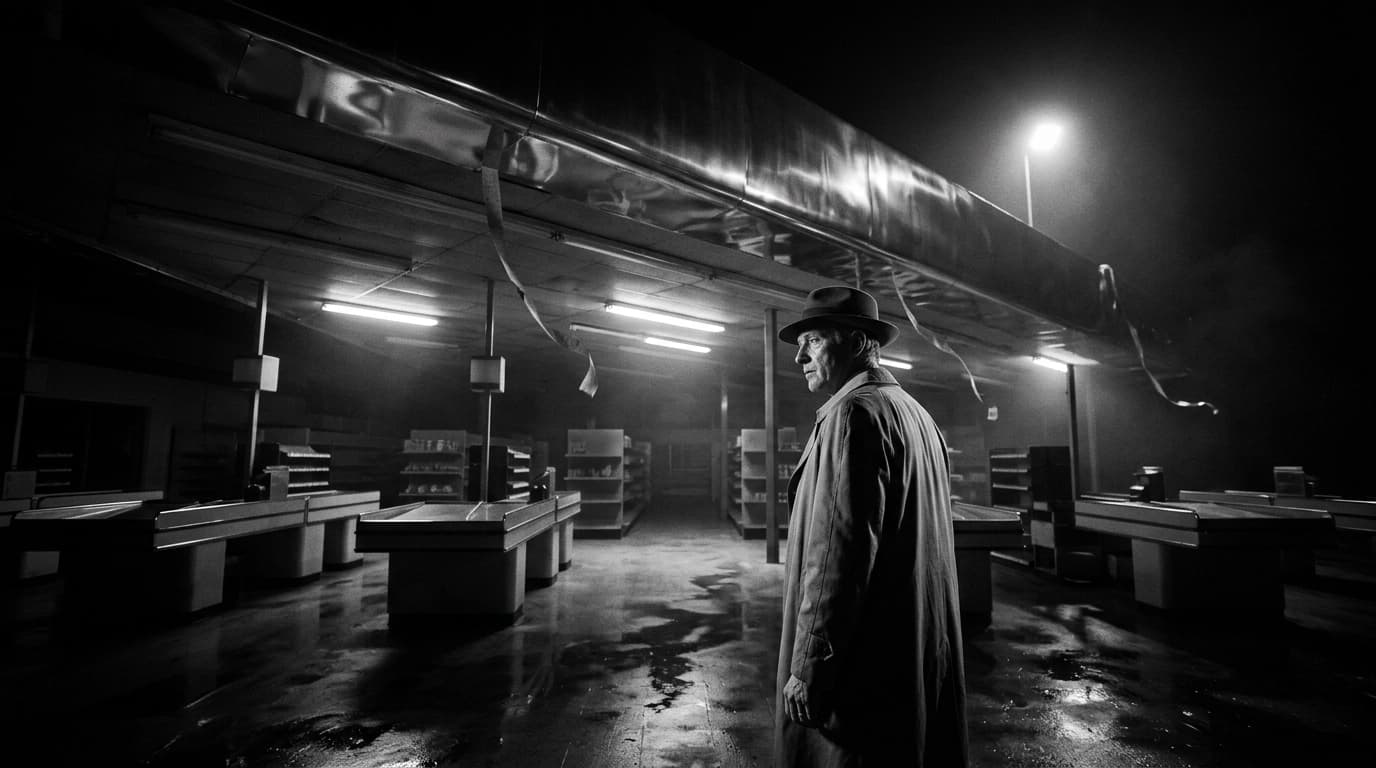
場所 1 · Ledger-Plenum of the Convenience Vestibule—Receipt Echoes Under the Chrome Canopy

Under a chrome canopy that never seems to pick one true hour, the Convenience Vestibule stretches into a micro-cosmos of checkout lanes and half-remembered aisles, each lane lit by sickly register glow. The air smells of warm plastic and burnt sugar, and every soft chime from the doors carries a faint second tone—Receipt Echoes—like a microphone catching words a moment before they’re said. Chrome registers stand like altar stools around an unstaffed counter, while ledger papers unroll without hands, fluttering into tidy spirals that dissolve when you look directly at them; the floor is cool and faintly tacky, as if the store is always in the middle of resetting a transaction it has no right to forget.
location 2 image

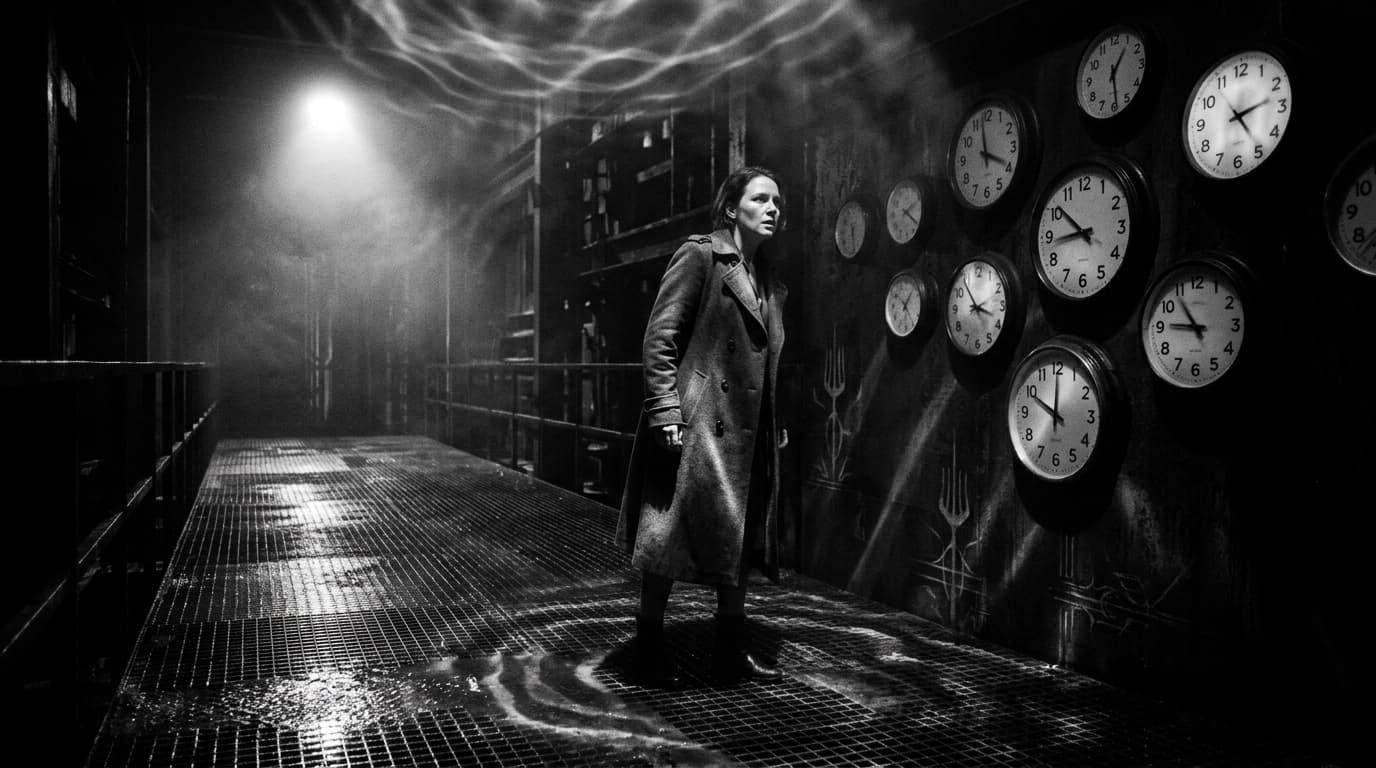
場所 2 · Clock-Fork Platform Beneath the Transaction Wave—Where Mara’s Seconds Reboot

Beneath the store’s humming bubble of mercy, a narrow platform hangs in an in-between dark—steel gridded like a train track, but wet with phosphor-lilac mist that rises in slow, breathlike pulses. A sharp, metronomic ticking threads through the air while the far “wall” flickers between clocks that never agree, and each time the tick lands, the scene stutters as if someone has yanked the film spool: Mara’s seconds reboot, reset into a slightly different angle, her reflection blinking one heartbeat behind. Smelling faintly of ozone and spilled soda syrup, the platform feels cold underfoot, and the light—thin, surgical, and merciless—reveals faint fork-marks carved into the rails: Transaction Wave ripples run overhead, but down here the rules decide which version of her walk back into the store survives.
location 3 image

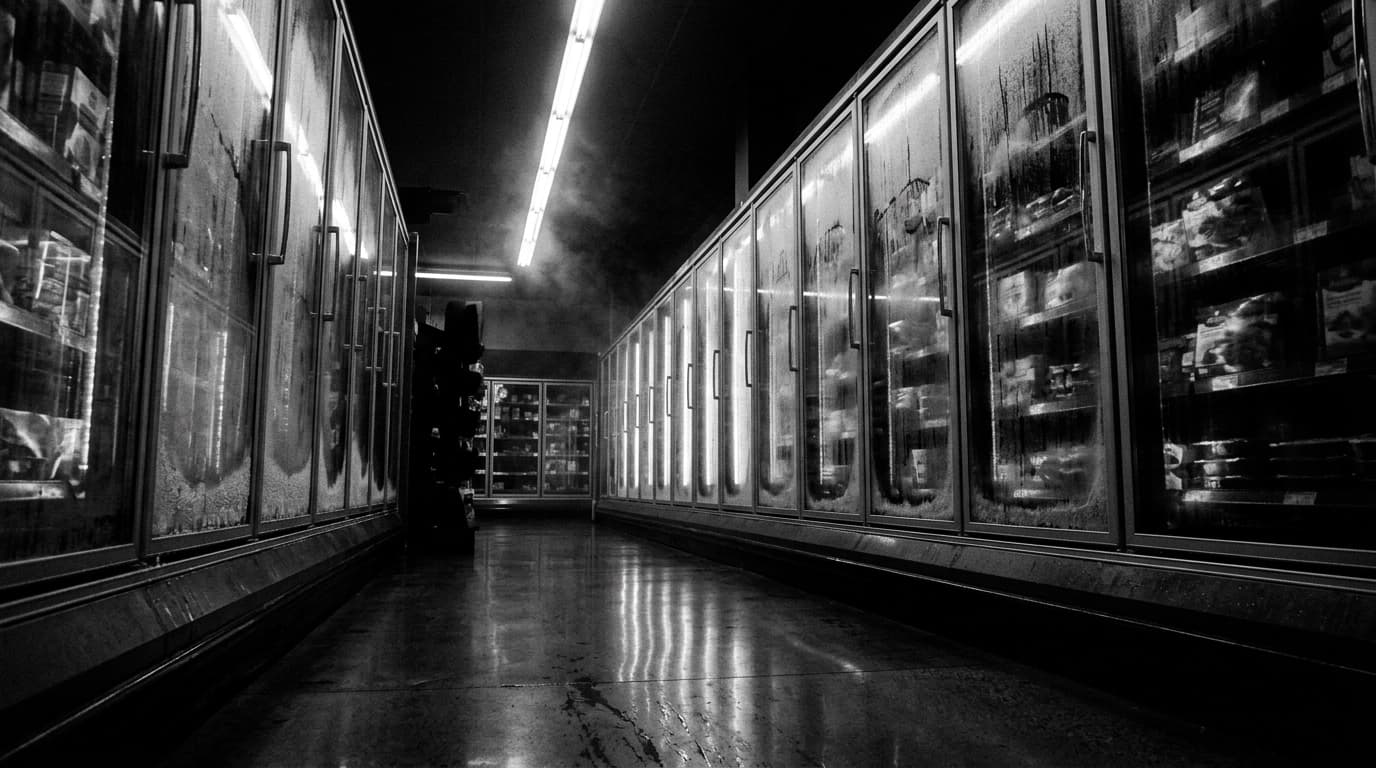
場所 3 · The Vending-Time Ecology’s Refrigerator Cathedral—Uncapped Cold Light and Endless Change

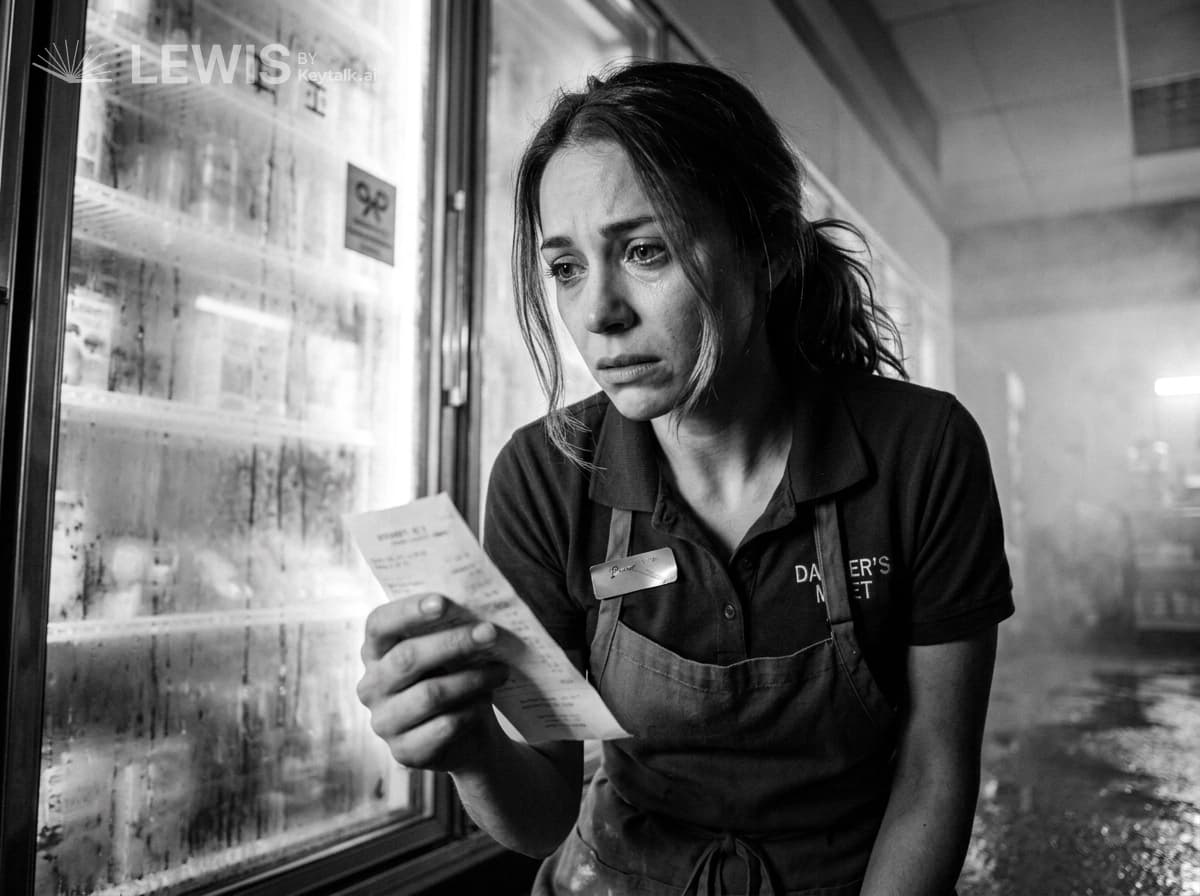
A tall aisle of refrigerator doors stretches into a micro-cosmos of fluorescent corridors, each unit breathing uncapped cold light that never fully settles on skin. The air smells faintly of frost and lemon cleaner, and the steady hush beneath it is punctured by soft, mechanical clicks—bill dispensers chanting in Transaction Wave rhythms while change drawers rattle like distant teeth, as if time is being counted and uncounted at once. Somewhere deeper in the cathedral, unseen coolant cycles echo into the cabinets and refill the shelves, so every surface looks freshly assembled and already decayed, demanding that anyone who listens long enough hear Memory Blur trying to erase the difference between “just happened” and “always happened.”
location 4 image

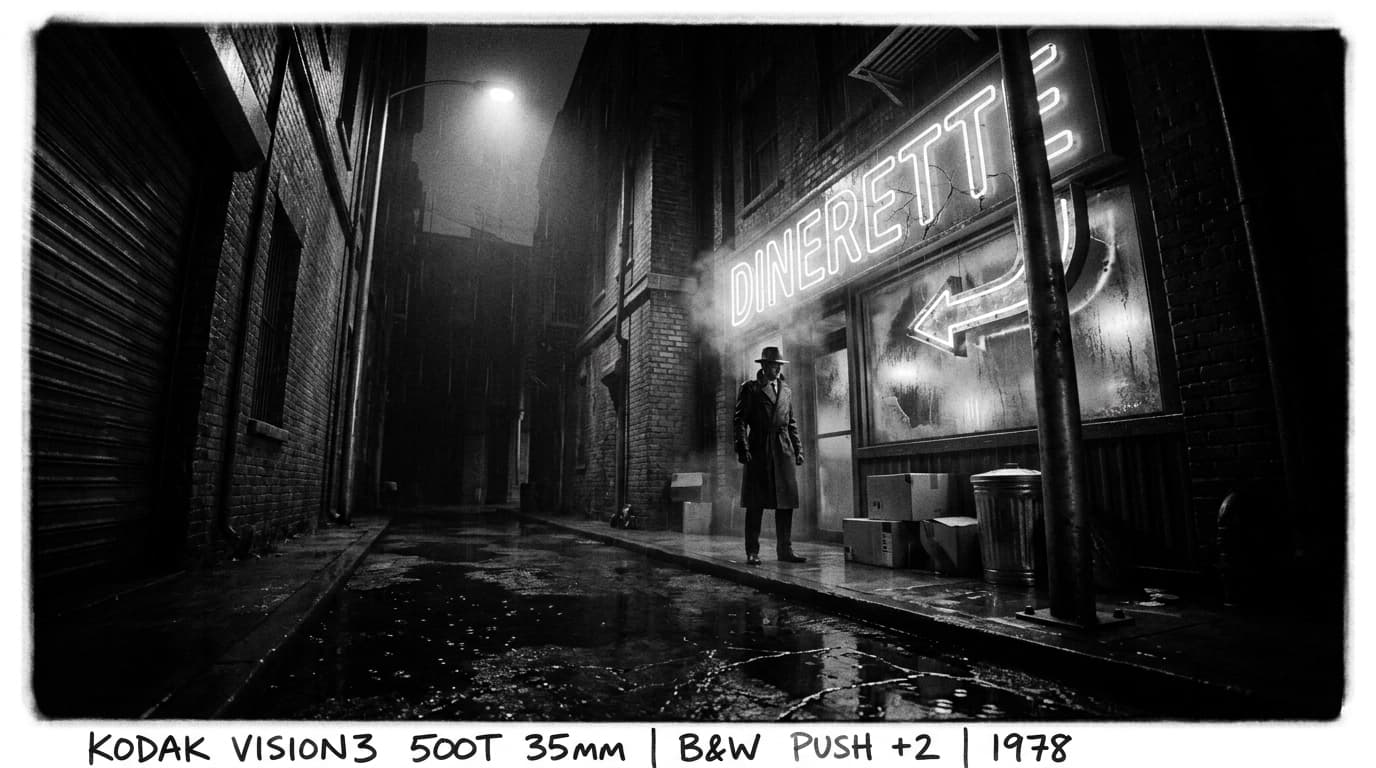
場所 4 · Exterior Verge Dinerette Signpost—Gwen’s Counterfeit Drop in the Rain-Slick Afterlife

A rain-slick corridor of the Afterlife stretches between freight-dark stalls, where a dinerette signpost blinks like a reluctant heartbeat—amber light smearing across puddles that never quite reflect the sky. The air smells of wet cardboard and burnt sugar, and every drop lands with a soft, ledger-like tick as if the world is keeping time for later payment. Beneath the sign’s crooked arrow, Gwen’s counterfeit miracles are delivered in stealth—crates of warm contraband stacked against cold concrete—while the metal pole sweats with Receipt Echo static, promising that whatever gets traded here will leave a trace the store can eventually call in.
location 5 image

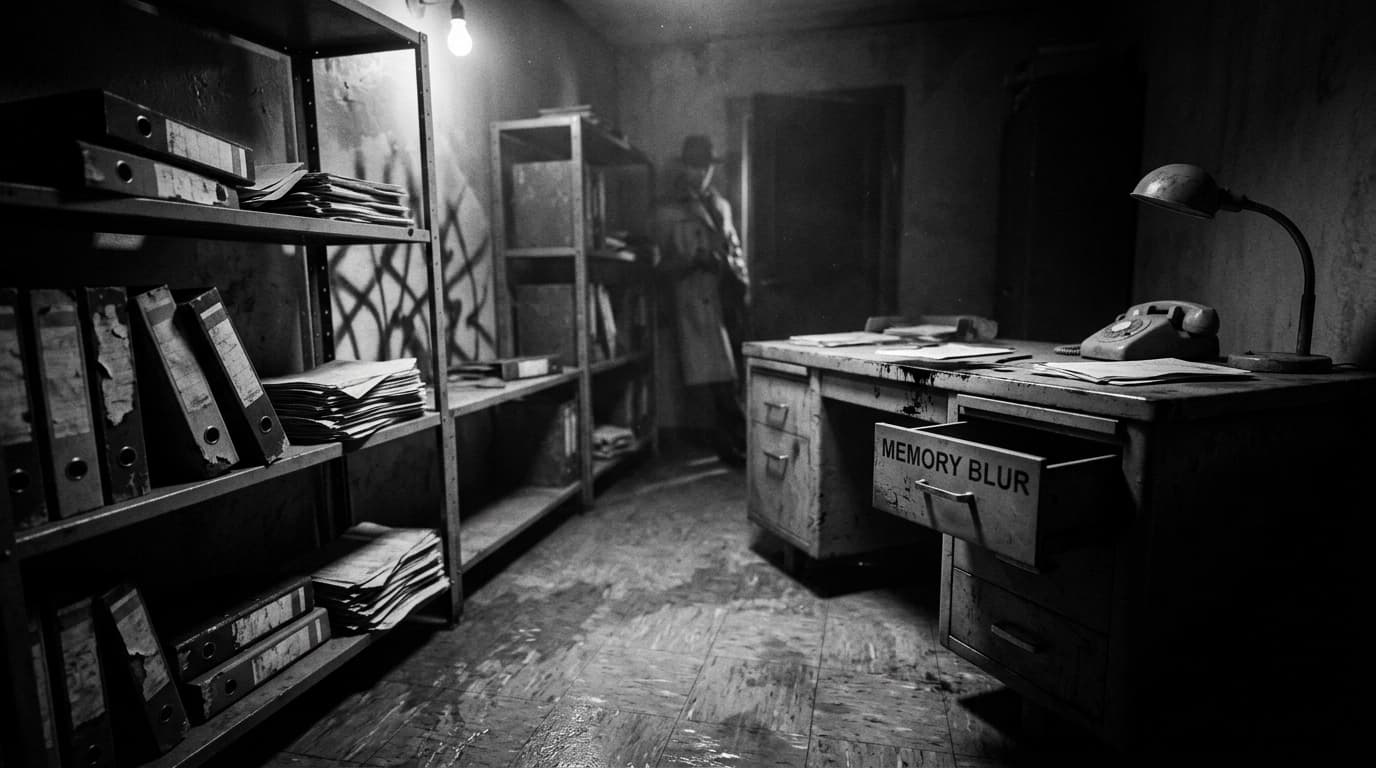
場所 5 · Eli Vass’s Filed Backroom Office—Paper Trails, Quiet Audits, and the Memory Blur Drawer

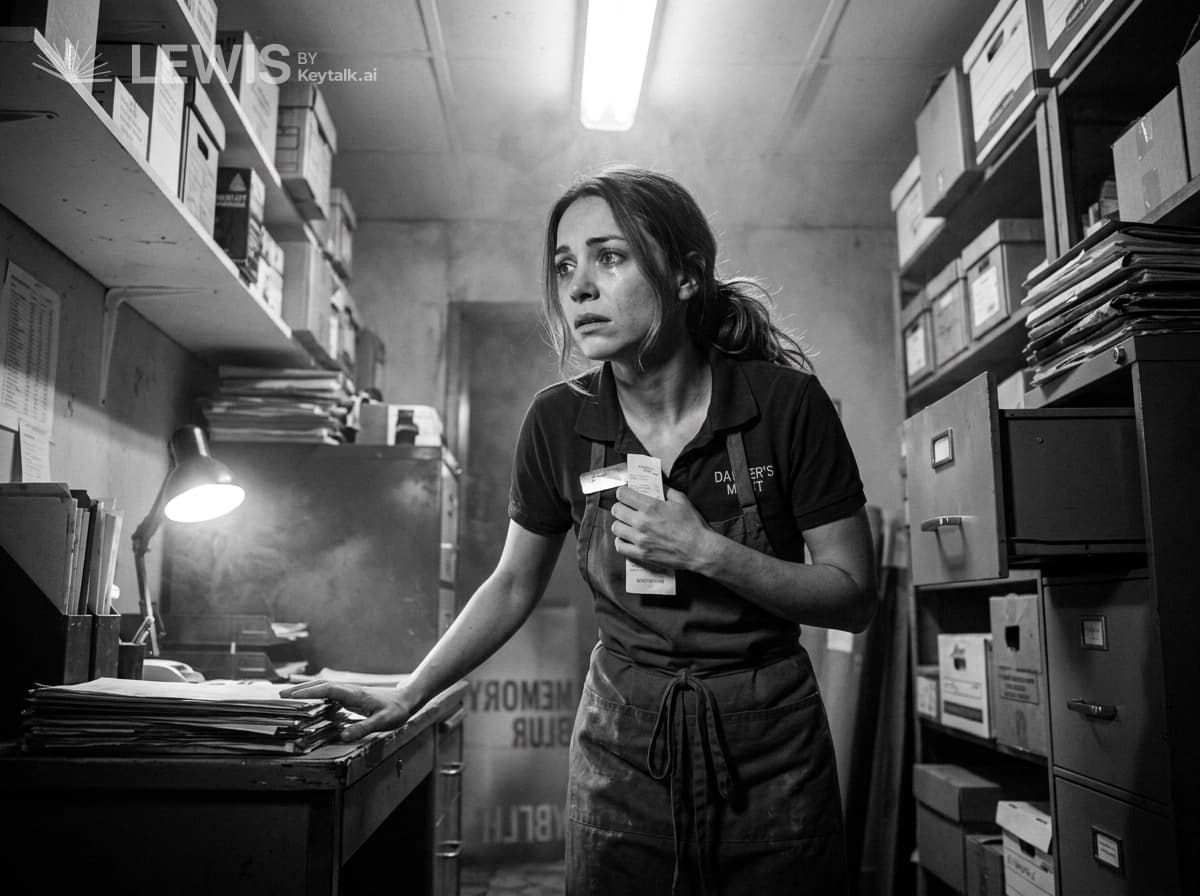
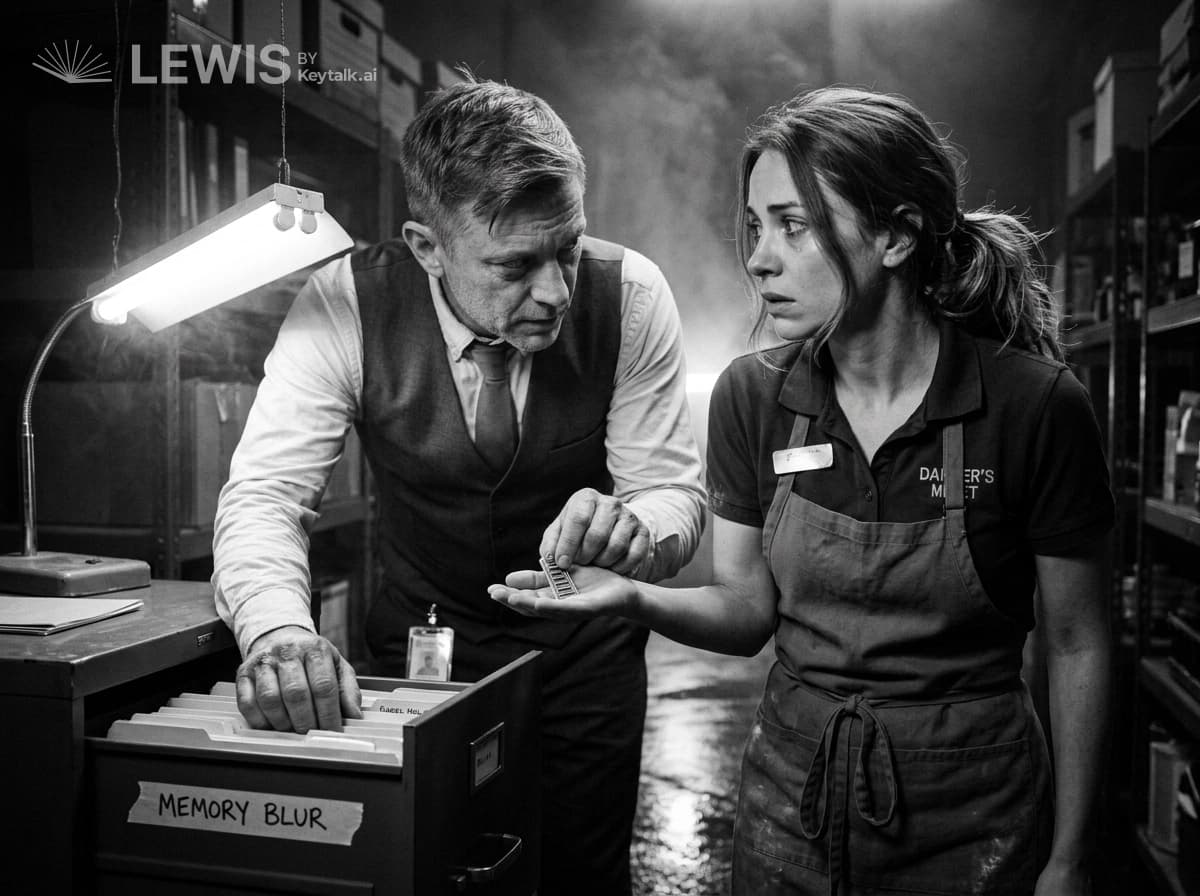
A narrow service backroom sits behind the convenience vestibule like a second lung—cool, dim, and claustrophobic, lit by a single bulb that flickers in bureaucratic rhythm. Shelves crowd the walls with ledger stacks and numbered binders, their covers soft with age, while the air tastes faintly of dust, carbonated residue, and hot ink; every time the store’s hum cycles, paper gives a tiny, nervous rasp as if something inside it is breathing. At the desk, a drawer labeled with clean, stamped text—MEMORY BLUR—sticks half-open, and through the crack you can hear the low, page-turning whisper of receipts being rewritten in real time, each quiet audit soundingly decisive, as though the room is keeping time by erasing it.

シーン

シーン 1

Clocking In to a Wrong Past

Clocking In to a Wrong Past
場所
Convenience Vestibule, behind the mint-green counter: fluorescent-lit aisles that look fixed yet subtly re-route bodies, the register centered under a too-clean sodium-yellow panel; outside the front glass a drifting fog of receipts curls like steam.
時間
Mid-shift on Mara’s first night after she arrived at the Verge (late-autumn into winter), in the midst of an intermittent receipt-echo event that strikes every few minutes.
出来事
Mara clocks in and performs her opening ritual—checking inventory, aligning cleaning cloths, and scanning her first customer’s items—when the register interrupts with a stuttering receipt printout that repeats a prior transaction with the wrong price and a craving she didn’t grant. The machine’s display “corrects” itself by briefly relabeling the craving options, and the ink dries too fast for Mara to read twice. As the clocks behind the counter emit a faint ‘thwip’ like a page turning, Mara feels her living window stutter: her shadow lags a fraction, then snaps forward, and a tight, measurable loss of time registers as a physical vertigo in her stomach. She tries to verify the echo against her notes, but the notes’ lines slide away into illegible smears, leaving only the receipt’s first line—just enough to recognize the echo is routed through the store’s ledger-plenum rather than being a random glitch.
影響
Mara realizes the store is not merely malfunctioning; it’s rewriting her shift in a way that attacks verifiability—setting the central problem for the chapter: she must learn to trigger an exactness-check she can trust, before future echoes smooth her decisions into something the ledger can file as attachment.
The register emits a thin, metallic chirp as Mara taps in the night’s first code; the sound should be routine, but the fluorescent hum tightens, as if the building is listening. A receipt unspools on its own—warm-edged paper rasping under the roller—listing a craving Mara never offered and a price tag in a different shape than any label in the aisle, the ink flashing wet then suddenly bone-dry. When the clocks behind the counter go ‘thwip,’ Mara’s body tilts like the floor forgot her, her shadow dragging a heartbeat behind her hand before snapping to attention, while the air smells sharply of cold pennies and vanilla that’s gone slightly sour.
シーン 2

Eli’s Missing Pages, Azrael’s Near-Procedure

Eli’s Missing Pages, Azrael’s Near-Procedure
場所
Eli Vass’s narrow backroom office—dim filing corridor behind the Convenience Vestibule, where a drawer labeled “MEMORY BLUR” sits beneath a flickering desk lamp; paper stacks are edged with mint-green light leaking from the front counter, and the air tastes faintly of cold pennies and machine oil.
時間
Mid-shift on Mara’s first night, during an intermittent receipt-echo pulse that makes the room’s light stutter like a failing heartbeat.
出来事
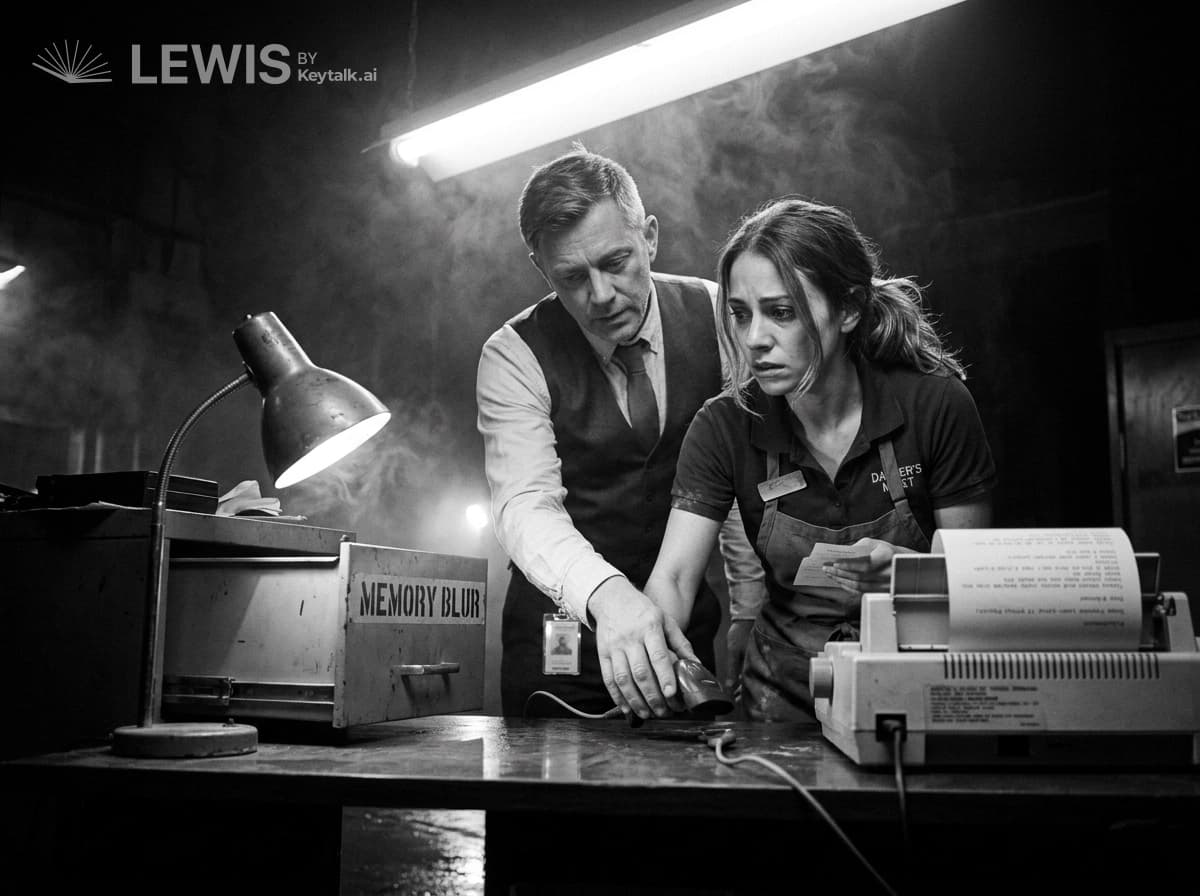
Eli tries to hand Mara a repeatable procedure from his “missing pages,” but memory blur scrambles the steps mid-sentence; Mara catches only a single actionable phrase—how to preface a craving with an honest hesitation in the exactness scanner. As Azrael drifts near the backroom doorway like a routine shadow, he offers a gentler script that sounds like permission to want—yet Mara realizes the store can misread it as attachment. The receipt echo suddenly replays a transaction through the register with wrong prices timed to Mara’s throat-tight swallow, and Mara uses the partial phrase to perform a small, procedural verification (counting and speaking the machine’s prompt) to delay the next time reset long enough to keep the exchange from fully locking her “living window.”
影響
Mara learns the store’s sabotage is not random: the receipt echo is routed through the ledger-plenum as a correction attempt that watches her hesitation signature in real time. She also sees that Azrael’s help, however kind, is dangerously aligned with what the ledger calls “keepable,” forcing her to treat kindness-as-script as a potential threat and to anchor herself only in procedure she can test.
In the backroom, Eli’s desk lamp cones through motes of drifting dust that look briefly like tiny receipts before they dissolve; the drawer labeled “MEMORY BLUR” whispers open with a dry paper-on-metal rasp. Mara hears Azrael’s faint, measured voice at the doorway—warm, almost rehearsed—and the register in the front spits a stuttering ‘thwip’ that makes Mara’s shadow lag a half-beat as her swallow becomes evidence. Eli’s “missing pages” fall apart mid-line, but Mara clings to one workable instruction—answer the scanner prompt with an honest pause—and she performs it immediately, forcing the machine to ask for her hesitation instead of substituting desire, buying one more micro-cycle while the echo tries to correct itself.
シーン 3

Hesitation as Evidence

Hesitation as Evidence
場所
The front counter of the Convenience Vestibule, fluorescent-lit and mint-tiled, with the register’s display glowing mint-green and the aisle shadows lagging a fraction of a second behind Mara’s movements; beyond the glass, a drifting fog of receipts curls like steam into starless dusk.
時間
Mid-shift night, during an intensified Receipt Echo cycle (every few minutes a replay tries to correct the ledger); Mara’s “living window” is already measurably shrinking in the real side-space.
出来事
Mara uses the register’s exactness check to override substitution: when the scanner prompts her to confirm her craving, she answers with an honest, measurable pause tied to her real panic rather than Azrael’s suggested phrasing. The receipt echo attempts to reroute through the ledger-plenum by printing a “keepable” version of her choice, but the hesitation signature forces the machine to log the panic as evidence; the ink turns bone-dry too quickly, yet the resulting receipt reveals the echo’s source as a ledger-plenum correction rather than a random glitch.
影響
The echo’s behavior becomes readable: Mara learns the receipt replays are being routed through the ledger-plenum to reconcile energy taken by past “one more thing” purchases. She buys seconds for the next choice by delaying the next internal time reset, and she gains a procedure she can repeat even as memory blur threatens to erase why it worked—setting up later confrontations about attachment and blame.
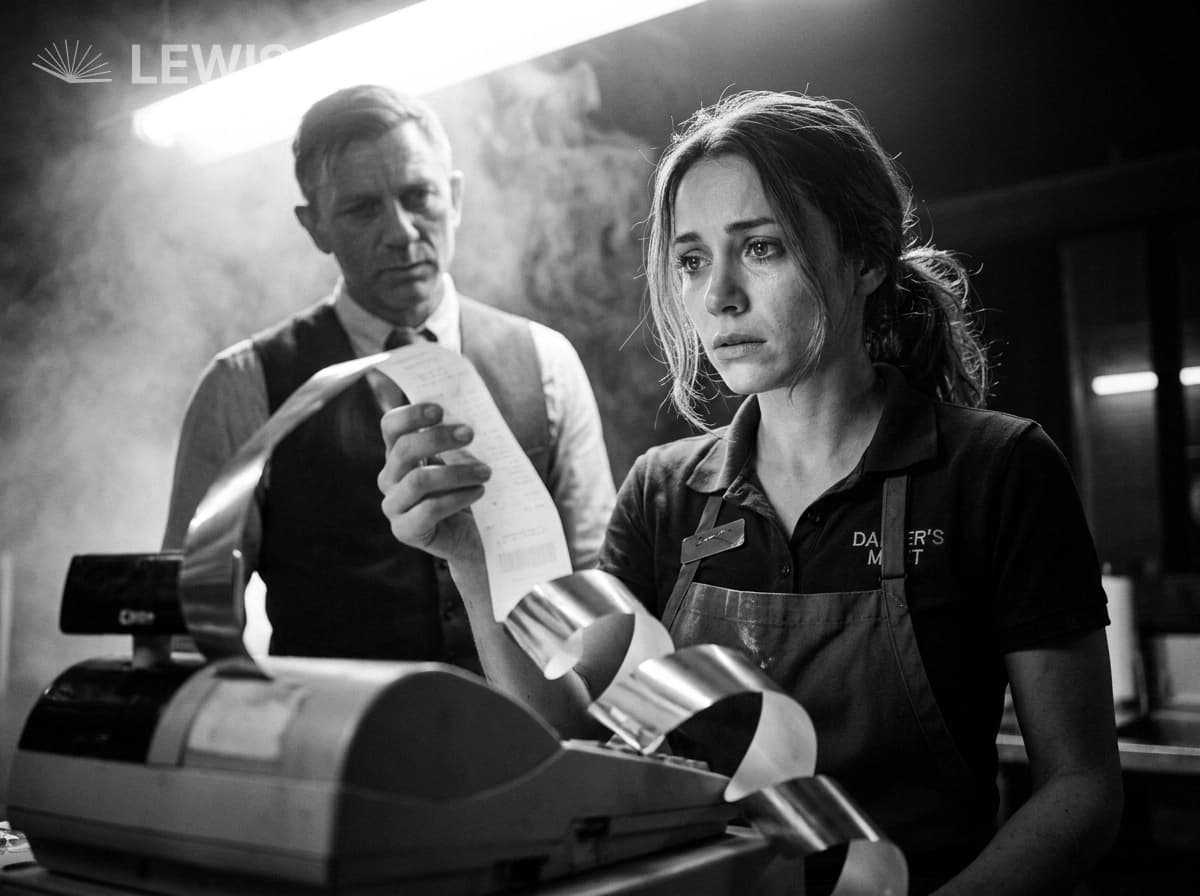
Mara stands at the counter with the cold pennies taste in her mouth, fingers hovering over the scanner as the register chirps—too crisp, too eager—and the clocks behind the counter stutter with a page-turn ‘thwip.’ She forces the prompt to meet her real fear, deliberately letting her breath snag and her throat tighten on the exact hesitation the machine demands, even as the fluorescent light makes her skin feel briefly mannequin-flat. The receipt ejects in a razor-thin strip that first tries to rewrite her into “KEEPABLE,” then cuts into a different line of text—procedural, ledger-marked—showing the receipt echo routed through the unseen plenum as a correction attempt, not a simple malfunction; when the ink dries bone-dry in seconds, Mara realizes she has bought one more micro-cycle of time by making her panic legible to the rules.
シーン 4

The Display That Knows Her

The Display That Knows Her
場所
Convenience Vestibule, in front of the mint-green “ONE LAST CRAVING” endcap display, fluorescent-lit and time-warping; the register sits to Mara’s left, the glass front shows drifting receipt-fog like pale fogged-up breath
時間
Mid-shift during an intensified receipt-echo lull, late-autumn night (as felt by the living) but with the air occasionally turning to frost when the clocks reset
出来事
Mara approaches the “one last craving” display to read the phrasing the store seems to be courting from her. Azrael hovers close enough to cast a shadow that lags half a beat, speaking a calm “routine” that matches the display’s nearly-wrong-time price tag; as a receipt echo replays through the register, Mara feels her breath stutter in the exact same places as the echo’s earlier transaction. The display’s scanner flashes a label—“KEEPABLE”—as if her hesitation already counts as an answer, and the wrong price tag flickers between warmth-as-mercy and warmth-as-possession, making Azrael’s guidance feel like a threat wearing procedure.
影響
Mara realizes the store is not merely responding to her words—it is anticipating her hesitations and pre-labeling her longing as retention. This transforms Azrael from a helpful caution into an immediate danger signal, setting up Mara’s need for Eli’s procedure to force hesitation signatures and prevent the register from substituting her desire in the next beat.
The fluorescent hum is too clean, sanding the air into silence as Mara steps up to the “ONE LAST CRAVING” endcap; the price tag over the warm-mug slot crawls like wet ink, then snaps back crisp in the span of a single “thwip” page-turn reset. The register to her left clicks without anyone touching it—receipt paper whispering into the tray as Mara’s throat tightens and her breath catches on the same invisible beats as the replayed transaction. Azrael’s voice comes from inches away, patient as a clerk’s checklist, while the air tastes faintly of cold pennies; when the scanner above the display blinks, it prints a soft-glow label in mint light: KEEPABLE—exactly the word Mara has been trying not to become. The instant it appears, Mara’s stomach drops, because Azrael’s “routine” sounds like it’s teaching her how to answer the store’s trap—like procedure that learned her fear before she spoke it.
シーン 5

Eli’s Page That Won’t Stay

Eli’s Page That Won’t Stay
場所
Eli Vass’s filed backroom office, a narrow corridor opening off the Convenience Vestibule’s service hall—dim desk lamp on a scarred metal table, aisles of ledger-binders stacked to waist height, the drawer labeled “MEMORY BLUR” set into the wall like a safe; behind everything, thin fluorescent light leaks under the door, making dust motes glow
時間
Mid-shift of Chapter 2, during a Transaction Wave right after Mara has argued with herself at the “ONE LAST CRAVING” display; the store’s internal clock keeps stuttering in the distance with faint “thwip” page-turn resets
出来事
Mara corners Eli near the “MEMORY BLUR” drawer and grabs at the last sliver of his missing-page guidance—how to trigger a live exactness check by tying it to her genuine hesitation—only for the steps to smear as her gaze skates away. She improvises anyway: she forces her attention back onto the order of actions (scanner prompt → breathe-into-panic → answer one honest craving-need as a measured hesitation), but even as she does, the room tries to correct her by printing a false procedure on receipt-paper that curls from a vent slot, briefly framing her longing as “keepable.” Eli, panicked, tries to halt her with a warning he cannot fully remember; Mara notices that the clock behind the counter isn’t just resetting—it’s already labeling her next answer, and she learns the only stable procedure is the one she can perform without later explanation.
影響
The scene provides Mara with the usable, repeatable procedure key needed to perform the live exactness check in the next beat, while escalating the threat: the store is actively rewriting even Eli’s instructions into evidence it can use against her; Azrael’s gentle “routine” becomes a direct risk because it matches the store’s preferred phrasing, setting up Mara’s confrontation with Death-in-Disguise in the remainder of the chapter.
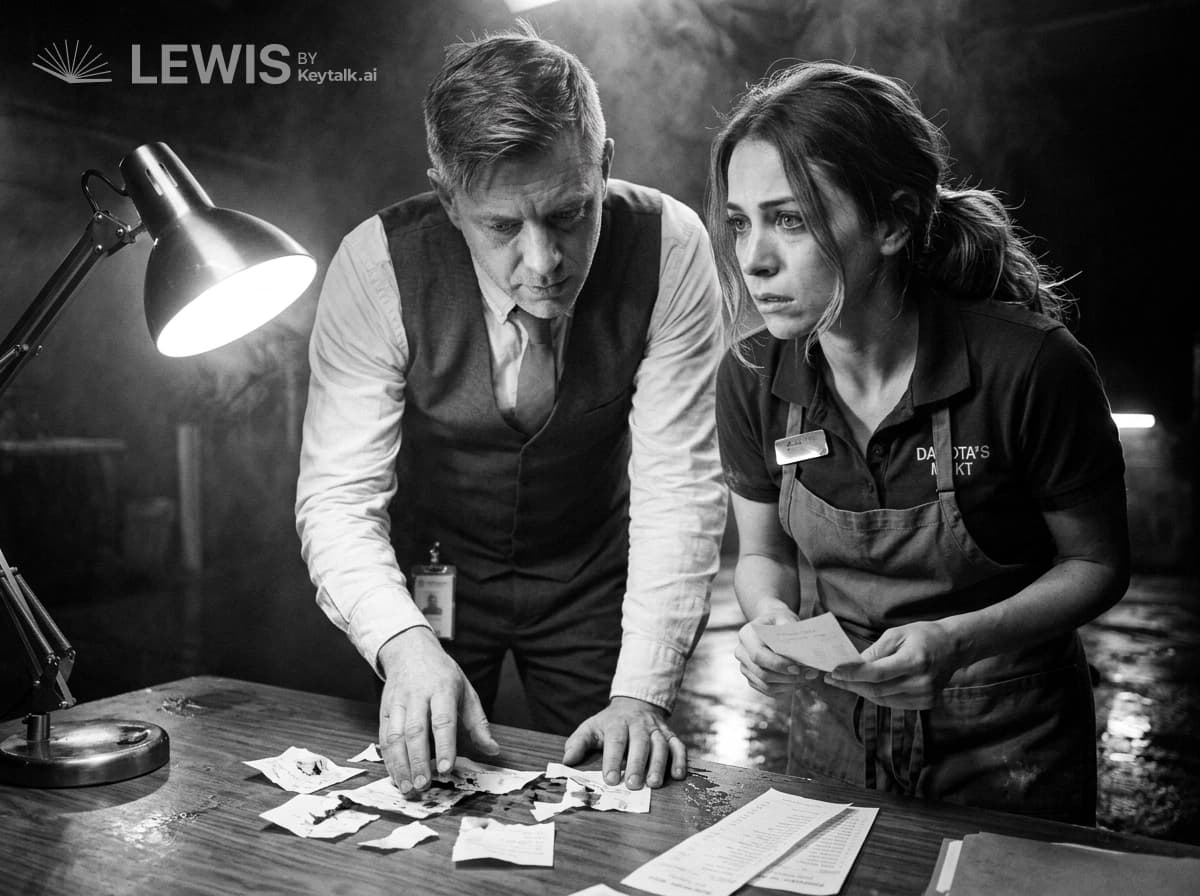
Under the desk lamp, Eli’s paper fragments look freshly printed and already wrong—ink that shines wet for a heartbeat and then dries to a matte scab. When Mara reaches for the checklist, her fingertips catch cold air as the letters rearrange into a new set of steps, and a receipt spits from a vent seam smelling of vanilla bean turned sour; it reads like a script for someone the store can keep.
Eli’s drawer raspes open and shuts like a throat trying to swallow, while Mara hears distant register clicks—thwip, thwip—each one tugging her living window tighter outside the room; she tastes cold pennies and forces her breathing to match the pause she’s afraid of, pinning the order in her body even as the page won’t stay in her mind.
シーン 6

Hesitation as Evidence

Hesitation as Evidence
場所
Convenience Vestibule — the fluorescent counter beneath the “ONE LAST CRAVING” endcap, with the scanner hood glowing mint-green and the register’s slot whispering paper; the aisles reroute subtly, floor reflecting faces without depth, while the ledger-plenum hums beneath the tiles through thin seam-glow lines.
時間
Mid-shift during an intensified Transaction Wave, just after Mara’s improvisations and while the receipt echo is actively trying to correct earlier transactions (late-autumn night as perceived by the living).
出来事
Mara forces a live exactness check: she answers the scanner prompt not with the craving the store offers, but with an honest, measurable panic—holding her breath a fraction too long and swallowing on cue—then deliberately triggers the register to demand a hesitation signature. The register prints a receipt that curls out bone-dry and legible as accusation, and the machine misroutes the receipt echo in real time; “keepable” branding flickers on the display, then changes its tone as if the ledger has been forced to read her true hesitation instead of her desired phrasing. Azrael’s presence tightens at the edge of Mara’s vision; he reacts with a stillness like he’s been caught monitoring her compliance, while the store begins recalculating its threat model toward him.
影響
This scene confirms that Mara’s genuine hesitation can become usable evidence against substitution—turning Eli’s fragmentary procedure into a working countermeasure—while it also converts Azrael from a warning into immediate danger. It raises the chapter-stakes by making Death-in-Disguise’s “routine” look like attempted retention to the store’s system, setting up the targeted confrontation in the next chapter of the arc.
Mint-green light from the scanner hood stings Mara’s eyes as the register clicks without her touching it, and the air tastes sharply of cold pennies and machine oil. When the Transaction Wave swells, the “ONE LAST CRAVING” endcap price label crawls like wet ink, then the screen demands proof—Mara answers with a genuine, specific panic she can measure in her body, holding the breath just long enough for the scanner to register it as hesitation. The receipt unspools in a thin, metallic rasp, ink snapping bone-dry as if time is correcting itself; for a heartbeat the display flashes KEEPABLE, then rewrites the wording into something accusatory that implicates Azrael’s proximity. Azrael steps closer—still, disciplined, almost kind—yet his expression tightens at the moment the machine reads Mara’s hesitation as noncompliance, and the fluorescent hum deepens like the store has just decided who to punish next.
シーン 7

The Backroom That Refuses Pages

The Backroom That Refuses Pages
場所
Eli Vass’s filed backroom office behind the Convenience Vestibule: a narrow room with concrete walls and leaning shelves of ledger-bindings, each spine printed with curling receipt-ink; the air smells of cold pennies, dust, and stale toner. A desk lamp throws a bluish cone onto a drawer labeled MEMORy BLUR, while the ledger-plenum’s distant machinery hums under the floor like a held breath.
時間
Mid-shift on Mara’s third chapter night, during an intensified receipt-echo window; the fluorescent light flickers in short, wrong intervals as the store’s internal clocks reset without the outside world.
出来事
Mara follows Eli into the backroom to watch his ‘missing pages’ procedure, but the drawer marked MEMORY BLUR begins flipping pages by itself, swapping Eli’s careful explanations for a different set of prices and cautions. When Mara tries to read the steps aloud, the words smear in her mouth—she hears them as if spoken by someone else—while a receipt echo replays an alternate transaction that implicates Eli as the sabotage source. Eli attempts one more teaching pass, sliding Mara a crisp, repeatable exactness sequence anchored to her own hesitation signature; at the instant the store tries to overwrite it again, Eli sacrifices his remaining unfiled audit trail so the procedure locks into the register’s logic as a “usable key” for Mara’s next move. The cost lands immediately: Eli’s gaze goes unfocused, the shelves’ hum shifts to accusation, and the room’s reflections flatten as if the system has begun editing him out of the next correction.
影響
The backroom scene converts Mara’s curiosity into actionable, rule-bound knowledge: she leaves with a surviving procedural key she can perform even while her memory blurs. It also escalates the internal conflict—Eli is now a liability the store can frame more convincingly—and shifts the plot into a new phase where Mara must rely on partial instructions and defend Eli’s authority as the ledger targets him.
The backroom light stutters like a failing heartbeat, and the desk lamp’s cone catches motes glittering in the air before they drift backward, as if time is being recounted. Mara hears Eli’s drawer rasp open on its own—paper-on-metal, then a dry ink-thin whisper—while the MEMORY BLUR label seems to rearrange its letters in the reflection of the flat floor.
シーン 8

Procedure as Crowbar

Procedure as Crowbar
場所
Eli Vasss Filed Backroom Office—between the Convenience Vestibule’s mint-green tile and a dim corridor, where a narrow filing desk sits under a failing desk lamp; the air tastes of cold pennies and machine oil, and the floorboards creak with each half-step like they’re filing her movement.
時間
Mid-shift during a stalled Transaction Wave, moments after the store framed Eli’s earlier attempt; outside the backroom’s half-open door, the fluorescent hush swells with a receipt echo that replays the wrong prices.
出来事
Mara grabs Eli’s one surviving repeatable fragment—an exactness ritual that forces the register to demand verification using her live hesitation—then Eli, desperate and unfiled, times her attention so memory blur smears every spoken explanation except the physical sequence of taps: press the scanner, wait for the first tremor in her breath, then answer the first honest word that appears in her mouth; when she tries it, the store prints a receipt that names Eli as the cause again, but because she performed the ritual anchored to hesitation, the traceability line jams and reroutes, making the audit trail inconclusive and shifting the investigation away from him.
影響
Mara obtains a usable, repeatable procedural key that will work even under memory blur—at the cost of Eli’s remaining audit trail becoming unfiled—so the story pivots from ‘learning procedure’ to ‘acting on partial instructions’ while the store targets Eli’s authority as the supposed saboteur.
Eli’s drawer labeled MEM0RY BLUR whispers like paper rubbed raw, and the desk lamp throws a yellow cone that trembles over his knuckles as he steadies Mara’s hand against the scanner cable. When the receipt echo from the main counter surges through the wall, the backroom air chills—vanilla bean gone sharp—and Mara performs the ritual with a clerk’s precision she didn’t know she could keep; she hears her own breath catch, tastes cold pennies, and answers before the blur can edit the tone out of her voice. The register (summoned through a panel by Eli’s borrowed procedure) prints a receipt that points at Eli—then stutters mid-line, the traceability ink thinning as if the ledger can’t decide whose transaction it truly belongs to, buying Mara the next micro-cycle to take the ritual to the counter.
シーン 9

The Unfiled Key

The Unfiled Key
場所
Eli Vass’s Filed Backroom Office inside the Convenience Vestibule’s rear corridor—dim amber desk lamp over aged binders and filing drawers; the wall is tiled mint-green like the sales floor, but the grout lines look scorched; a humming panel vents ledger heat into the room, and the drawer labeled MEM0RY BLUR stutters like a failing refrigerator.
時間
Mid-shift, during the ongoing receipt echo surge that has begun to misframe Eli’s explanations; Mara is inside the backroom long enough for the external clocks to stutter with each ‘thwip’ page-turn reset.
出来事
Mara follows Eli deeper as the store’s memory blur rewrites his missing-page checklist the moment she looks away. Eli tries a third time, embedding a repeatable “exactness ritual” into an object clue—he slides a small metal token marked with a hesitation-signature diagram under Mara’s palm, then keys the register trigger via a sequence of clerkly steps only half-visible as the MEM0RY BLUR drawer whispers. The ledger-plenum answers by spitting a new receipt echo that names Eli as the malfunction’s cause; Eli flinches, grimly understands the trade, and intentionally ‘unfiles’ the last pages—his remaining procedural knowledge becomes a blank smear in the binders—so the ritual stays functional for Mara’s next action. Mara realizes she’s holding the unfiled key: a procedure she can perform even without retaining Eli’s full explanation.
影響
This scene converts Eli’s sacrificed authority into an actionable, but partial, tool for Mara: she now has a usable procedural key to force hesitation verification at the register. The store escalates by rewriting receipts to implicate Eli, shifting the next phase into one where Mara must act without Eli’s guidance while the ledger tightens blame around him.
The desk lamp’s cone trembles over Eli’s knuckles as the drawer labeled MEM0RY BLUR hisses paper-dry warnings into the air; Mara smells dust, cold pennies, and vanilla bean turned sharp with fear. Behind her, the main store’s fluorescent hum threads into the backroom as a stuttering ‘thwip’ page-turn, and the floor’s mirror-shallow sheen makes Eli’s hands look out of sync, like the building can’t decide who’s moving. Eli presses a coin-cold metal token into Mara’s palm—its surface etched with a small ladder of steps—and then the ledger answers with an echo receipt that curls out legible, accusatory ink toward his name; Eli steadies her wrist anyway, sacrifices the last legible pages by snapping the binders shut, and leaves Mara holding only the ritual and the knowledge that his authority is already being erased.
シーン 10

Warm Mug, Cold Ledger

Warm Mug, Cold Ledger
場所
Convenience Vestibule aisle by the ‘one last craving’ display—mint-green tile under warm but bloodless sodium-yellow panels; the air smells of vanilla bean and cold pennies, and the fluorescent light hum thickens into a pressure you can taste
時間
Mid-shift during an intensified Transaction Wave, late-autumn/early-winter night; the receipt echo is actively replaying incorrect transactions as the store’s clocks stutter reset
出来事
Gwen threads Mara through the mint-bright aisle and presses a warm mug into her hands as a counterfeit “offset” token. The register scanner immediately coughs out a crisp receipt signature that links the counterfeit’s traceability to Juni (whose vending-time evidence is being sharpened), while the receipt ink dries too fast for Mara to read the full chain—only enough to see the ledger is assigning blame in real time. Mara holds the mug to steady her shaking fingers and performs the beginning of Eli’s exactness ritual on instinct, bracing for what the ledger will charge her next, even as Azrael’s near presence makes the air feel suddenly watchful.
影響
The scene escalates traceability: Mara learns the offset doesn’t merely help—it gives the ledger a legible handle that can misattribute causality to Juni. However, it also positions Mara to use a procedural chain-of-custody loophole in the vending-time ecology: she identifies (partially) that the blame is being anchored to receipt signature order, not just the token itself, buying urgency for the next scene.
Gwen’s palm is warm through the mug’s ceramic as if the heat has an address; Mara can feel it through her hoodie sleeves while the store’s fluorescent hum becomes a swallowed heartbeat. Above the counter, the register emits a sharp ‘thwip’—a page-turn sound—and the receipt ejects in perfect, terrifying clarity, but the last lines point like a finger toward Juni’s name before Mara can blink, the ink drying to a slick matte under her breath-stale gaze. When Mara tastes cold pennies at the back of her throat, she realizes the ledger isn’t reacting to comfort—it’s inventorying it, and it’s already deciding who to punish.
シーン 11

The Interest Collector’s Price

The Interest Collector’s Price
場所
Vending-Time Ecology access corridor behind the mint-green aisles of the Convenience Vestibule—glow-seams in the floor pulse like veins as condensation beads on the refrigerator doors form and unform tiny “receipt glyphs”; the air tastes of cold pennies and vanilla bean while the machines emit a low, irritated hum.
時間
Mid Transaction Wave, late-autumn night; the external living window has already tightened twice this shift and Mara can feel each pulse as stuttered shadow-lag in the store’s mirror-shallow floor.
出来事
Gwen guides Mara to a serviced bay edge where the vending-time systems can accept an offset, pressing a warm mug into her hands as the register’s receipt echo spits out an “interest collector” signature that names Juni as the likely cause. Mara performs Eli’s repeatable exactness ritual anyway—keeping her voice steady, answering a scanner prompt with her genuine hesitation about “confession” rather than “warmth,” then rerouting the counterfeit token’s traceability by tapping the receipt glyphs at the moment they evaporate—so the ledger-plenum can’t permanently close the blame chain; the printed receipt locks into ambiguity, showing Juni’s name as an unverified link rather than a confirmed culprit.
影響
The ledger still pays for the counterfeit mercy (Mara’s living window tightens and the store tries to rewrite her memory), but the chain-of-custody loophole prevents Juni from becoming the sealed scapegoat; instead of a clean accusation, the evidence fractures into uncertain routing, buying Mara the seconds needed for the next step toward escape.
Fluorescent light flattens everything to skin-colored plastic as the refrigerator shelves fog and the condensation briefly spells a string of receipt-glyphs, then wipes itself clean like an erased sentence. The mug in Mara’s hands is oddly comforting—heat that should be physical, not rule-shaped—while the overhead clocks ‘thwip’ in uneven rhythm; Gwen’s fingertips smell faintly of machine oil as she nods toward the glow-seam, and Mara tastes cold pennies when the register’s paper spits out an inked signature that points at Juni. Mara answers the scanner prompt with Eli’s exact hesitation—careful, frightened, undeniably hers—then taps the dissolving glyph as if catching a falling receipt; the ledger-plenum shivers through its vents and the next line on the receipt shifts from “Juni did this” to “Juni is suspected,” leaving a visible break in the blame chain that the store can’t stitch shut before the wave rolls on.
シーン 12

Procedure as a Crowbar

Procedure as a Crowbar
場所
Vending-Time Ecology, service bay seams beneath the counter—glow seams between mint tiles, a frost-cured service corridor behind the vending-time machines where condensation beads form and evaporate receipt-glyphs
時間
Mid-Transaction Wave of Chapter 4 night shift, moments after the register printed a Juni-pointing receipt signature; the air repeatedly ‘thwips’ page-turn resets while Mara’s external living window tightens in measurable stutters
出来事
Mara follows Eli’s repeatable exactness ritual using the counterfeit token Gwen forced into her possession earlier; she triggers a live exactness-check at the vending-time interface by answering the scanner with an honest, measurable hesitation rather than a craving, then forces the transaction to request a hesitation-signature chain-of-custody confirmation. The register initially replays the blame as Juni’s—ink crawling into a legible accusation—but Mara performs the crowbar step: she inserts the counterfeit offset into the machine-cycle at the glow-seam junction so the receipt’s traceability hash fractures into ambiguity (the ledger can’t reconcile who held the warmth-token at which micro-cycle). The ledger spits a new receipt signature that reads ‘Juni suspected / origin unverified’ and stops tightening Mara’s window for the brief bought interval; the evidence chain becomes incomplete instead of accusatory.
影響
This scene shifts the chapter’s conflict resolution from mere distraction to procedural sabotage: it prevents the ledger from settling blame on Juni, buying Mara a micro-cycle to protect her ally and create uncertainty the store must carry forward. It also demonstrates that Mara’s control—though small and fleeting—can redirect the store’s traceability logic even under receipt-echo corruption.
The vending-time service bay breathes cold through the glow seams between tiles; condensation beads on the metal shelf briefly spell receipt-glyphs that evaporate before Mara can read them, and the air tastes of cold pennies and machine oil. Gwen’s warm-mug ceramic sits in Mara’s palms like a heartbeat with rules attached as the vending interface chirps and the ceiling ducts answer with a stuttering ‘thwip’—inkless for a moment, then suddenly wet—printing a Juni-shaped accusation that starts to harden into certainty. Mara clamps her fingers to the scanner cable and forces an honest pause—one measurable breath, one swallowed fear—then reroutes the counterfeit offset into the machine-cycle at the seam, watching the ledger-plenum recoil through the vents as the receipt’s traceability hash fractures; the final lines spit out crisp and cruel, but no longer absolute: ‘Juni suspected—origin unverified.’
シーン 13

The Queue of Wrong Prices

The Queue of Wrong Prices
場所
The fluorescent-lit aisles of the Convenience Vestibule, seen from behind the mint-green counter: receipt paper drifts like fog around the register, the floor reflecting faces without depth; the vending-time refrigeration bay hums behind a half-open service door while the ceiling ducts hiss in uneven pulses.
時間
Mid-shift during an intensified Transaction Wave, late-autumn winter nights; the external world’s clocks stay fixed while the store’s internal micro-cycle resets stutter by stutter.
出来事
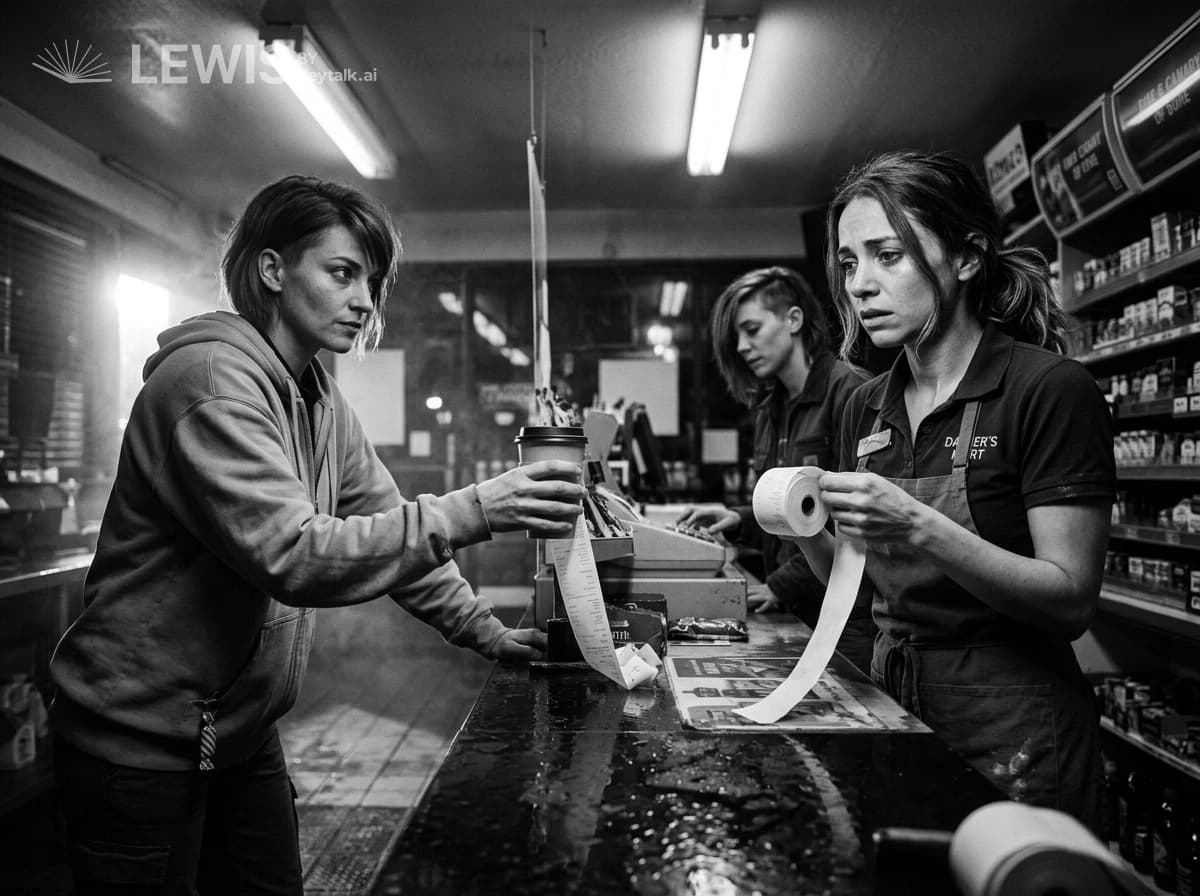
A line of arriving souls keeps forming at Mara’s register, but the receipt echo replays a ‘past’ bargain through the scanner—wrong cravings, wrong hesitation cues, and a warmth token that reads like ownership. When Mara reaches for her exactness ritual, the ledger-plenum tries to substitute Azrael’s guidance into her hesitation signature; she catches the substitution only by feeling her panic turn specific and unignorable. Mara speaks the one answerable truth aloud—refusing warmth-as-retention—then forces the register to record her genuine hesitation, making the printed receipt evidence go legible for a few breaths before memory blur surges again.
影響
The wrong-prices queue confirms the store is actively routing Mara’s hesitations into a ‘keepable’ script during the wave, but Mara’s out-loud truth becomes the only surviving proof; she buys a micro-cycle where the store misreads Azrael’s presence as an administrative breach rather than a compliant retention, setting up the chapter’s final override.
The register spits a receipt with Mara’s name misspelled, then the ink crawls into a familiar phrasing she never chose—warmth offered like a clasp—while the fluorescent hum thickens into a near-audible pressure in her ears. Mara’s throat tastes of cold pennies as the scanner’s light skates over her fingers; each stuttered ‘thwip’ from the clock behind the counter threatens to smooth her fear into something the ledger can file, but she anchors it by voice—one clean, honest sentence—then answers the demand for hesitation with the panic she cannot fake.
シーン 14

Warmth That Would Keep

Warmth That Would Keep
場所
Convenience Vestibule counter, fluorescent-lit mint-green tiles with a mirrored-shallow floor; the clock behind the register stutters with a sharp “thwip” every few seconds while the air tastes faintly of cold pennies and vanilla bean
時間
Mid–Transaction Wave, late-autumn night shifting into early-winter in Mara’s perception as her living window contracts by micro-cycles
出来事
Azrael steers close to the “one last craving” display as the register replays a tempting past bargain; it offers Mara warmth in wording that the ledger would interpret as retention, but her eyes lock on Eli’s exactness procedure prompt. Mara performs the procedure at the scanner anyway, forcing the machine to demand an actual hesitation signature; the scan spits out a receipt that prints her panic honestly instead of substituting her desire, and the warmth prompt flickers into a temporary correction that stops tightening her living window for one micro-cycle.
影響
The store’s attempt to define Mara as someone “keepable” fails for the moment; Mara gains confirmation that only the truth she speaks/feels in the exactness ritual can survive memory blur. It also misreads Azrael’s proximity as a fixable breach, buying time while anchoring the chapter’s final proof: her recorded hesitation, not the store’s warmed script, is what remains legible.
Fluorescent light makes Mara’s hands look slightly painted as the register’s drawer coughs out a receipt echo—warmth phrased like a clasp instead of a craving, ink drying too fast to trust. Mara tastes cold pennies at the back of her throat, hears the clock behind the counter snapping pages shut in “thwip” bursts, and presses her finger to the scanner exactly where Eli’s procedure requires it—then answers the hesitation demand with raw panic she can’t file away. The receipt prints her hesitation signature as evidence, the warmth prompt stalling mid-sentence; for one micro-cycle the stutter in her living window eases, and the ledger’s “keep” script is overwritten into a temporary correction.
シーン 15

Truth Mara Says Under Pressure

Truth Mara Says Under Pressure
場所
Convenience Vestibule counter area inside the fluorescent-lit storebox at the Verge; the aisles curve inward like they’re listening, the register’s mint-glow scanner hovering above a “ONE LAST CRAVING” endcap, and the floor’s mirror-shallow reflection keeps lagging a fraction of a heartbeat behind Mara’s movements.
時間
Mid-shift during the intensified Transaction Wave, when receipt echo replays a “past” bargain and the external-living window contracts in stuttering, measurable inconsistency.
出来事
The register demands her exact hesitation signature again, attempting to substitute a warmth-as-possession phrasing from the echo; Mara forces Eli’s exactness-crowbar ritual with her body—panic on purpose, pause where the scanner expects compliance—then speaks one answerable truth aloud that rejects retention and names the craving she can stand behind. The ledger-plenum prints a receipt that briefly overwrites its own “keep” script into a temporary correction, and the store’s tightening pauses for one micro-cycle as it misreads Azrael’s interference as a fixable breach.
影響
This seals the chapter’s turn: the store confirms that the only surviving proof is the spoken, honest truth Mara records under pressure, and it stops tightening her living window for a sliver of time—setting up the final crossing without rewriting her agency as attachment.
Fluorescent light flattens Mara’s hands to something almost mannequin-smooth as the register emits a sharp ‘thwip’ and the scanner’s mint beam crawls up her fingers like cold ink; she tastes cold pennies and hears the receipt-roller rasp as the echo tries to graft a warmth-clasp craving onto her pause. Azrael stands inches away, too still to be casual, while Mara answers the scanner with a raw, measurable hesitation—throat-tightening panic held exactly where the system wants it—then says aloud, trembling but clean, “I’m choosing agency: I want the ability to speak one honest truth before I cross.” The printed receipt glitches mid-line, the ledger-plenum vents shiver like an ecosystem reconsidering hunger, and for one micro-cycle the living-window stutter eases—proving the store can be forced to write what she actually says, not what it wants her to mean.
'Mara’s Honest Panic Breaks the Store’s “Keep” Trap'ストーリーチャット

このストーリーの登場人物と話したいなら?

'Mara’s Honest Panic Breaks the Store’s “Keep” Trap'ストーリーチャット

このストーリーの登場人物と話したいなら?

story image
story image
story image
story image
story image

コメント0

のテーマ音楽
Mara’s Honest Panic Breaks the Store’s “Keep” Trap by Writer K