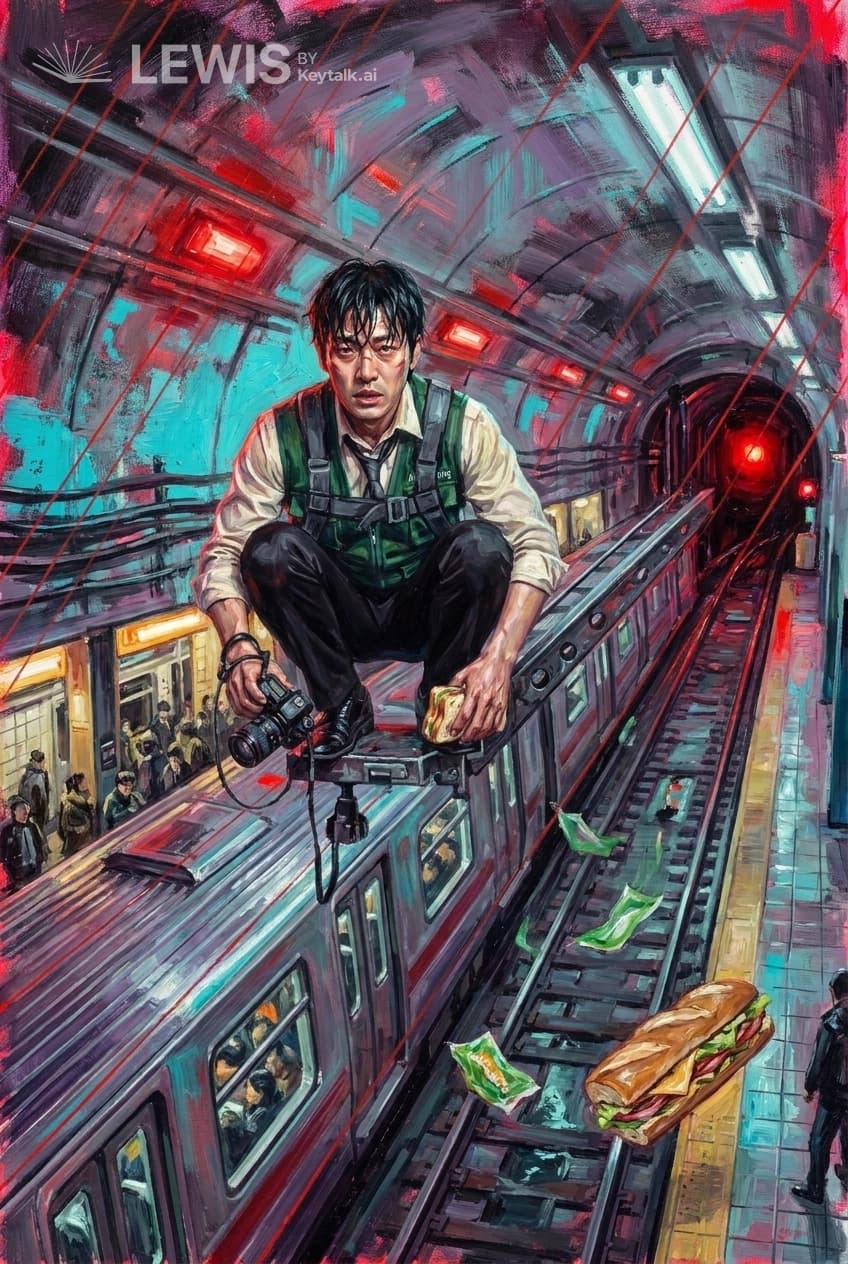
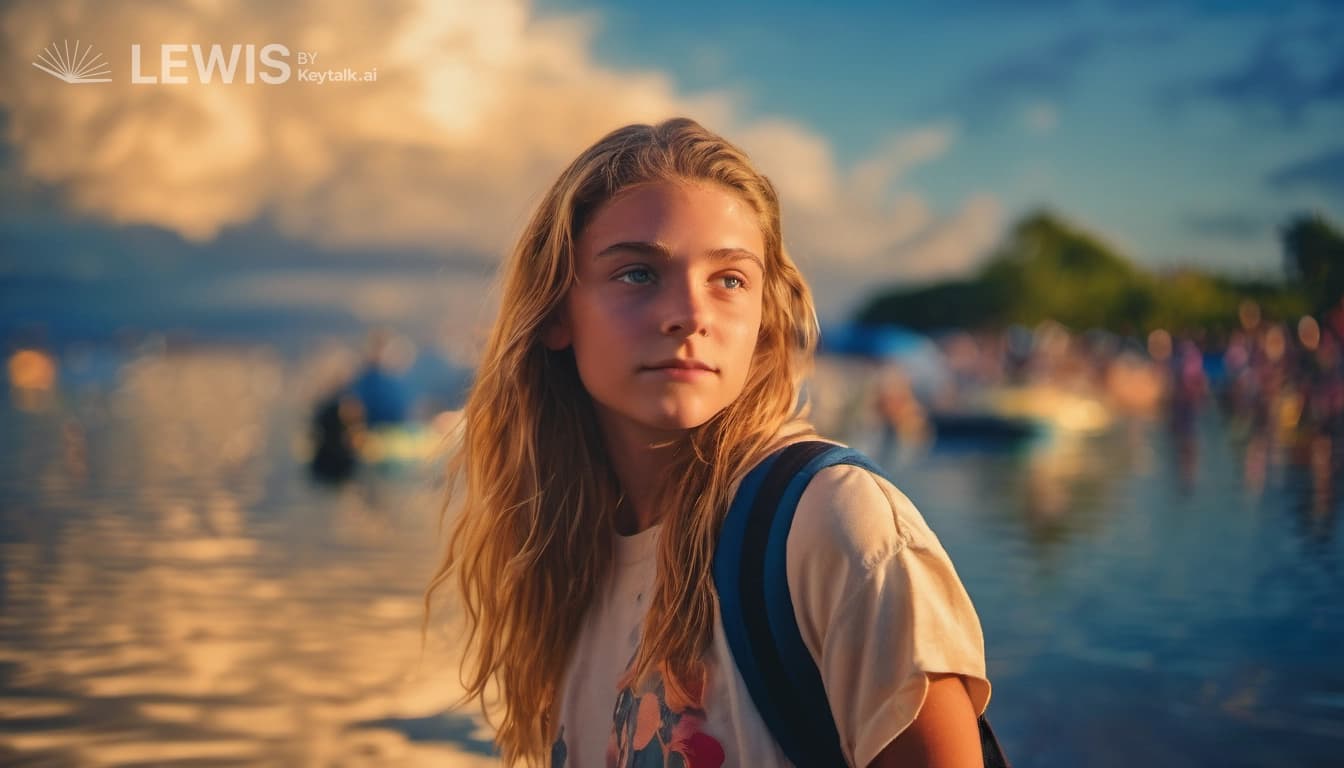
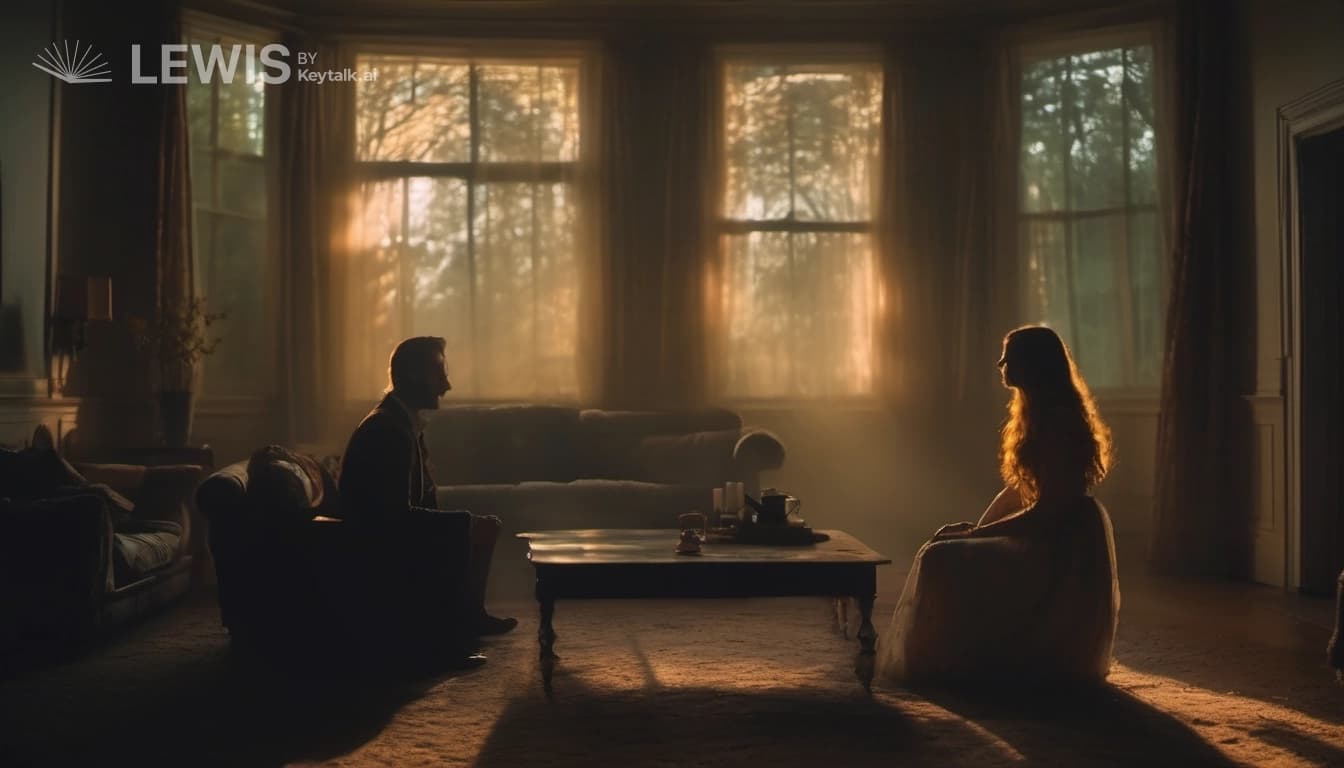
(THE BOYZ) Poster Maps for Black Water cover image

(THE BOYZ) Poster Maps for Black Water

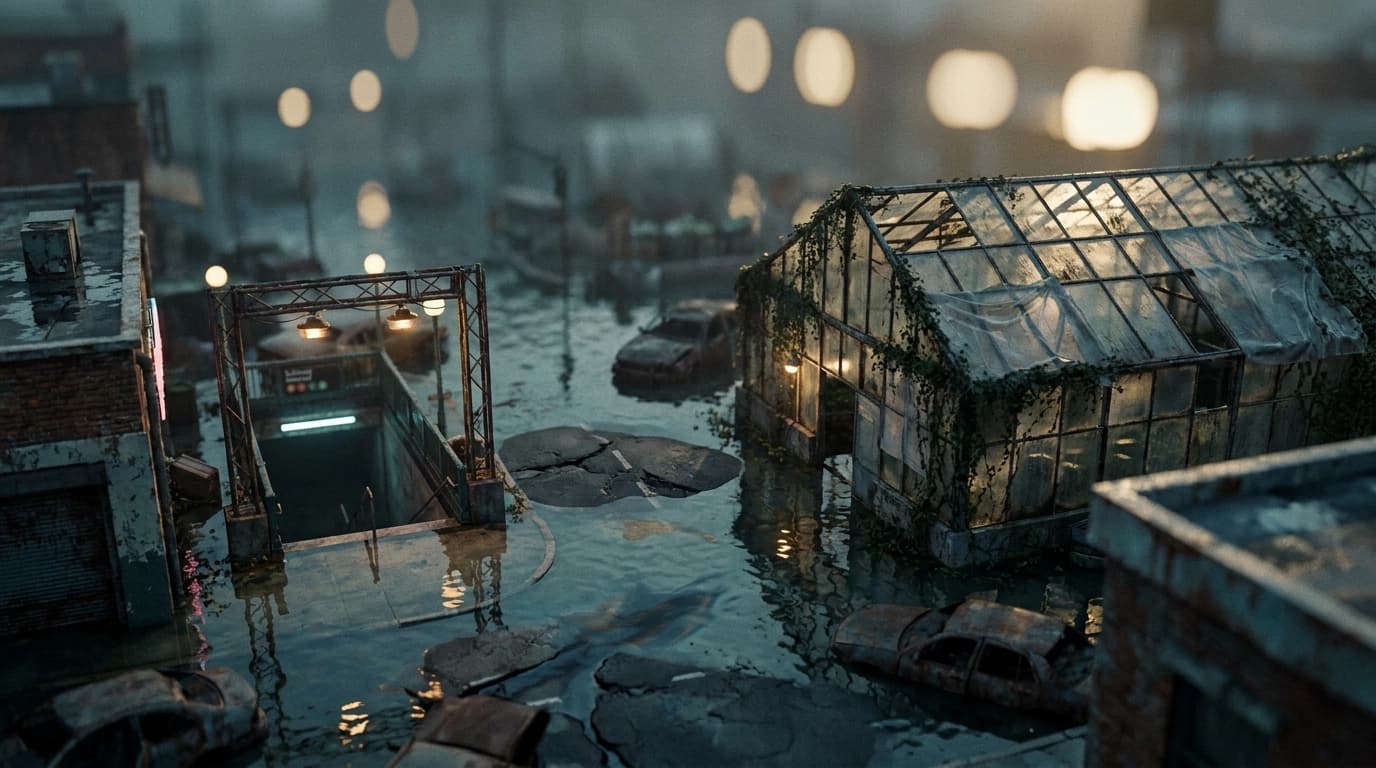
An overturned ferry lies wedged between two apartment blocks, and the surviving members of THE BOYZ use its dark banquet hall as a night shelter while ash drifts over the harbor. Two fan club members keep the place running: a Black woman who rigs rain catchers from cracked light sticks and stage tarps, and a white woman who patrols the tide flats for shellfish with a homemade spear. When a fever tears through the shelter and the only clean water drum is stolen by a rival camp, the idols and the two women must drag a rusted sound cart across a bridge lined with tripwire bells to reach a fog-choked desalination plant. At the same time, two members of THE BOYZ can no longer hide the way they choose each other first in every panic, and when the bridge winches snap at sunset, the group must decide who crosses for water and who stays behind to hold off the crowd.

Weekly ranking

rank icon image
#1 inGenre
rank icon image
#2 inGenre
Scroll

Plot Synopsis

After the defense of the Stage Light Decoy Court, the mall greenhouse survives, but survival has made everyone meaner in small, useful ways. Ash keeps drifting in through patched skylights. Water is counted aloud. Every battery run is timed. Juyeon throws himself into bus ledgers, ration boxes, and route maps because numbers stay still when people do not. He tells himself his job is to keep the group ready to leave if the greenhouse fails. Then he notices he has stopped packing for distance and started packing for return. Kevin makes that harder. Kevin is everywhere light is dangerous—rewiring warning bulbs in the food court, stringing mirrored foil near the atrium, joking while his fingers shake. In every sudden noise, every argument, every rush to move supplies before rain turns dirty, Juyeon finds Kevin first. Kevin notices, and then notices when Juyeon pretends not to.

The new crisis begins with a child in Battery Rack Chapel vomiting after drinking from a cup rinsed in floodwater. By dusk there are six more with fever, then two adults shivering hard enough to crack their teeth. Elena Hart starts boiling instruments and rationing the last clean bandages while tapping antibiotic capsules against her thumb, counting what she cannot honestly promise. Imani Brooks shuts down all nonessential water use and posts guards at the Cistern Room. That same night someone steals the settlement’s one sealed drum of clean water from the old ferry shelter wedged between the apartment blocks at the harbor edge, where several members of THE BOYZ and the two fan club women have been sleeping during overflow nights. The theft is precise: no smashed lock, no spilled trail, just the drum gone and a line of tiny bell wires clipped clean.

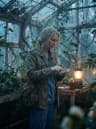
The two women become central at once. Imani brings them inside the planning circle because each knows the harbor better than anyone in the mall. Nia Carter, the Black fan club member, arrives carrying a bundle of cracked light sticks and tarp grommets, her palms stained black from rubber sealant. She has been rigging rain catchers from stage tarps between the ferry rails and knows how much clean runoff the next squall might bring if the ash stays light. Claire Mercer, the white fan club member, comes in barefoot from the tide flats with a shellfish sack and a homemade spear cut from a microphone stand. She knows the mud channels, the bridge pilings, and which scavenger camps have started pushing farther inland. Claire reports seeing fresh cart tracks leading toward the fog-bound desalination plant. Someone did not just steal water. Someone means to control where the desperate will go next.

Elena believes they need the plant immediately; fever will outrun bargaining by morning. Imani refuses to move the whole settlement into a choke point on panic alone. Baek Seungjae appears before they settle it, coming up from the lower service corridor with wet boots and the calm face that always makes the room colder. He says a harbor camp called the Bell Tower took the drum and has started charging cups of clean water for jewelry, batteries, and labor. He also says the old bridge route to the desalination plant is still passable if they haul a rusted sound cart to carry filters and jerrycans back. Then he names his price: if he guides them, he gets first claim on any intact intake membranes they recover. Imani hears extortion. Elena hears the cost of one more night without funerals. Juyeon hears the part Baek leaves out. A route Baek offers is a route Baek thinks he can close behind them.

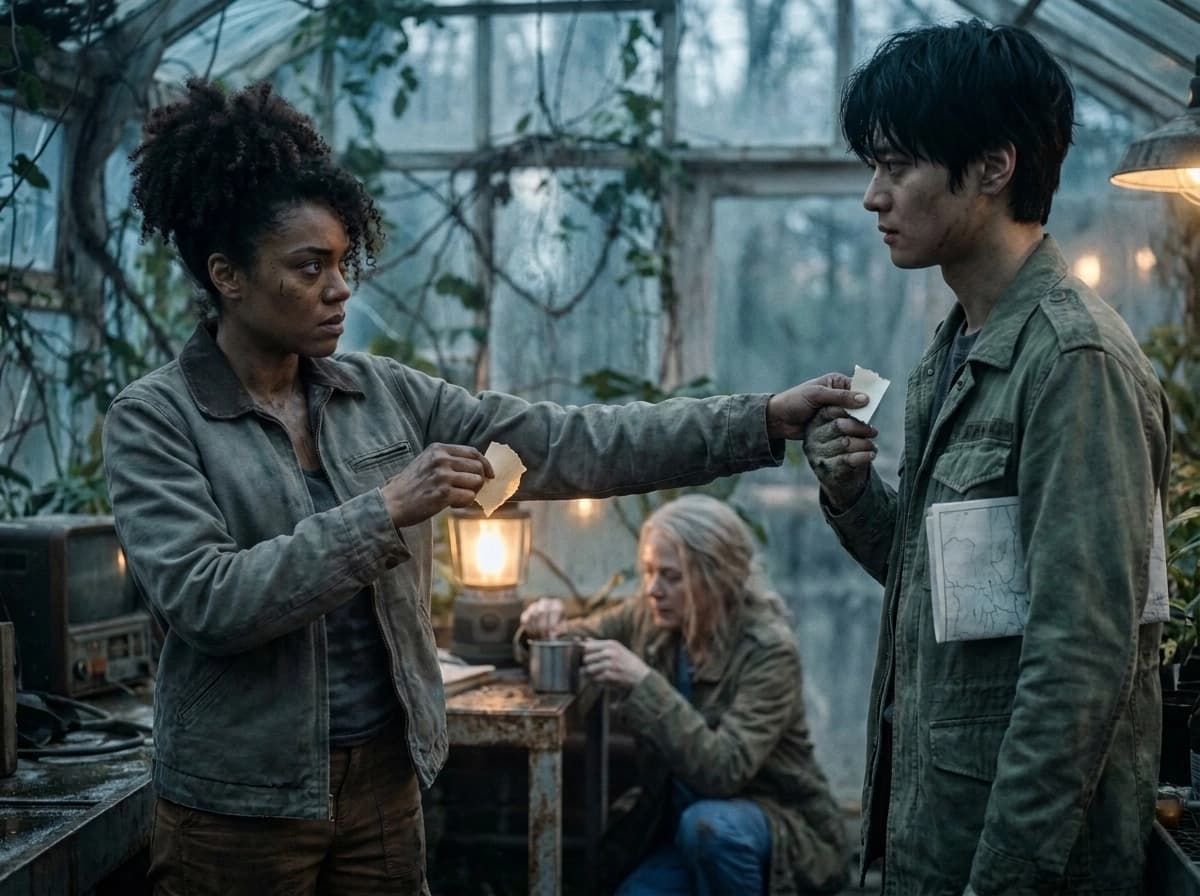
Juyeon argues for a small team: fast enough to cross before sunset fog thickens, light enough not to ring every tripwire bell on the bridge. Imani counters that the sick need medicine and the pumps need hands; she cannot spare many. Kevin sides with Juyeon, but for the wrong reason, as Imani sees it. He wants to come because he can rig decoys and blind watchers with stage light shards. Imani warns him that this is not a performance. Kevin answers by laying out a bridge map made from the back of an old concert poster, marking bell lines, sightlines, and dead angles with a grease pencil. The room falls quiet because it is good. Too good. He has been studying the bridge at night on his own. Juyeon is furious before he can hide it. The rule against solo runs exists for a reason. Kevin snaps back that he never crossed, only watched from the ferry roof, and if he had waited for permission, they would still know nothing. The fight is brief, low, and far more intimate than either means it to be. Everyone else pretends not to notice the way Kevin goes silent only after Juyeon says, “You don’t get to spend yourself like that and call it planning.”

They leave at gray dawn: Juyeon, Kevin, Imani, Elena, Baek, Nia, Claire, and two other members of THE BOYZ to help haul and guard the cart. Nia’s rain-catcher rigging becomes their first advantage; she cuts strips from a stage tarp and pads the sound cart wheels so the rims do not scream against broken pavement. Claire leads them across the tide flats beneath the apartment towers to avoid the first visible approach, testing mud depth with her spear. The path stinks of brine and rot. Ash films the puddles silver. Above them, the overturned ferry windows stare down like dark teeth.

The bridge is worse than rumor. Someone has strung children’s bells, spoon clusters, and snapped-off stage charms between rebar posts so that the slightest tug sends a thin metallic panic down the span. Beyond the bells, shapes move in fog. Bell Tower lookouts. Kevin goes bright under pressure, exactly as Juyeon fears: he crawls ahead with a pocketful of mirrored makeup compacts and cracked LED strips, wiring a brief flash lure to one railing so a lookout throws a stone at empty light while the team slips under the opposite side. It works, then nearly kills them when a second hidden line catches the cart axle. The bells tremble. Juyeon freezes, counts under his breath, and instead of jerking the cart free, lowers his body to the bridge deck and passes the weight by hand, one crate at a time, using his own shoulders to keep the line from ringing. Kevin ends up chest to chest with him under the cart frame, both breathing dust and rust. For one held second, neither moves though they could. Then Claire hisses from ahead and the moment is gone.

At the plant, they find proof that the theft and the fever are linked. The intake court is occupied not by strangers but by people from three nearby shelters, drawn there by Bell Tower rumors of working water. Some are sick already. Some are drinking unfiltered condensate from cracked pipes. The stolen drum sits in plain view behind a wire cage, less a resource than bait. Bell Tower’s leader is not present; the camp has left two armed teenagers and a handful of exhausted adults to hold the crowd in place while they strip the upper machinery. Elena recognizes one of the adults as a woman she traded medicine to weeks ago. That woman recognizes Elena too, and the shame on both faces is enough to make Imani understand that the crowd is here partly because word spread that the greenhouse always finds a way to get clean water. Their reputation has become another thing people can loot.

Baek wants to circle to the upper intake, take the membranes, and leave the crowd to fight over the drum. It is practical, cruel, and probably survivable. Elena refuses. She walks straight into the wire-caged yard with her hands visible and starts sorting the sick from the merely thirsty, using her own body as proof that someone has to keep order now or everyone will drink poison. It is the kind of soft-voiced gamble that enrages Imani because it works. Imani follows, wrench in hand, and begins assigning buckets, lids, and boil lines as if the place is already under greenhouse rules. Nia and Claire split naturally: Nia climbs the plant’s side piping to patch a rain tarp across a broken condenser channel, trying to catch the moisture the fog leaves on metal, while Claire takes the spear and patrols the flooded loading bay to stop anyone from slipping around behind Elena.

Juyeon and Kevin go for the upper machinery with Baek because someone has to bring the plant itself back, not just calm the crowd around it. Inside, the desalination hall is a cathedral of rust. Walkways sweat. The air tastes like old pennies. They find the missing piece fast: Bell Tower has already cracked one membrane housing and jammed a ceremonial bell clapper into the pump linkage as a crude sabotage lock, planning to control the restart by making themselves the only ones who know how to free it without breaking the seals. Kevin can bypass the dead signal board and pulse the starter manually from the catwalk, but only if someone below turns the seized valve by hand while another keeps the pressure line from kicking. Baek says they do not have time for all three tasks before the bridge winches fail at sunset and flood tide lifts the broken span. For the first time, he is wrong in a way everyone can see. Nia, from the condenser ladder outside, shouts through the vent grille that she has enough runoff to cool one line if they move now. A map Baek did not value becomes the difference. His jaw locks.

The reversal comes from Juyeon, and it costs him the one habit he trusts most. Back at the bus he has always hidden emergency reserves: one pouch taped under a seat, one spare cord in a vent, one private margin against disaster. Before leaving, he quietly took two charcoal filter sleeves from a stash he never entered in the public ledger, telling himself he might need them if Baek betrayed them. Now, in the plant, he pulls them out in front of Imani and Kevin. Imani understands instantly what they are and what it means. He has broken the rule she built the greenhouse on. Juyeon does not defend himself. He cuts the sleeves open to pack a split prefilter basket, sacrificing his secret reserve to make the restart possible. It is a practical choice, but also a confession. Kevin looks at him with hurt, relief, and something warmer than either.

They restart the lower line in a burst of foul spray and shuddering noise that draws Bell Tower scavengers back to the plant. The climax breaks across three floors at once. In the yard, Elena and Claire hold the crowd from stampeding the outflow pipe before the first water runs clean enough to use. Elena stands on a crate and lies beautifully, saying she has enough antibiotics for any child who waits their turn, buying minutes with a promise she will have to solve later. Claire plants her spear shaft across the gate and physically blocks a man twice her size until Imani steps beside her with the wrench. Outside on the piping, Nia gets the tarp line ripped from her hands by a wind gust and catches it around her wrist, skin burning, long enough to dump a sheet of fog-water into the cooling trough. On the catwalk, Kevin bridges two stripped wires with a stage pin and takes a shock that throws him against the railing. Juyeon sees it, nearly leaves his valve post, then chooses the valve because if he lets go the whole system dies. He keeps turning until the starter catches, then runs to Kevin only after water begins hammering through the line. Kevin is conscious, laughing weakly because it worked, and Juyeon grabs the front of his jacket with both hands as if anger can hide what his face cannot.

Baek’s choice decides whether they leave with a massacre behind them. Bell Tower scavengers reach the hall with hooks and pipes just as the first usable flow starts. Baek knows a maintenance sluice that can flood the lower corridor and trap everyone in a crush. It would save the greenhouse team and prove his route still owns the room. Instead he knocks the lead scavenger into the cage door, tears the stolen drum loose himself, and drags it toward the yard, shouting that the clean line is live and Bell Tower has been hoarding broken water. It is not mercy without calculation; exposing Bell Tower breaks a rival camp’s leverage and buys him standing with the shelters. But it also puts his own body in reach of the crowd he could have abandoned. He takes a blow across the shoulder for it. Juyeon sees him stagger and hauls him through the gate anyway. Nobody thanks him, which is as close to honesty as the moment can bear.

The bridge home becomes the final test. Sunset is bleeding out behind the apartment blocks. Flood tide is already shoving wreckage into the supports. The sound cart is heavier now with salvaged membranes, jerrycans, and the half-full stolen drum. The winches that keep the broken center span aligned begin to snap one by one with rifle-crack sounds. They cannot all cross at once. Imani orders the loads split: water and membrane parts first, then people. It means someone must stay on the far side to hold the Bell Tower crowd back from rushing the span and bringing it down. Juyeon starts to volunteer before Kevin does. Kevin says it too lightly, with that same half-grin he uses when fear is chewing him alive. He can blind them with a final beacon and jump after. Juyeon refuses so fast it sounds like a confession. In front of everyone, with the bridge singing under their feet, he tells Kevin to stop acting like being useful is the only way to be chosen. The words land harder than the snapping cables.

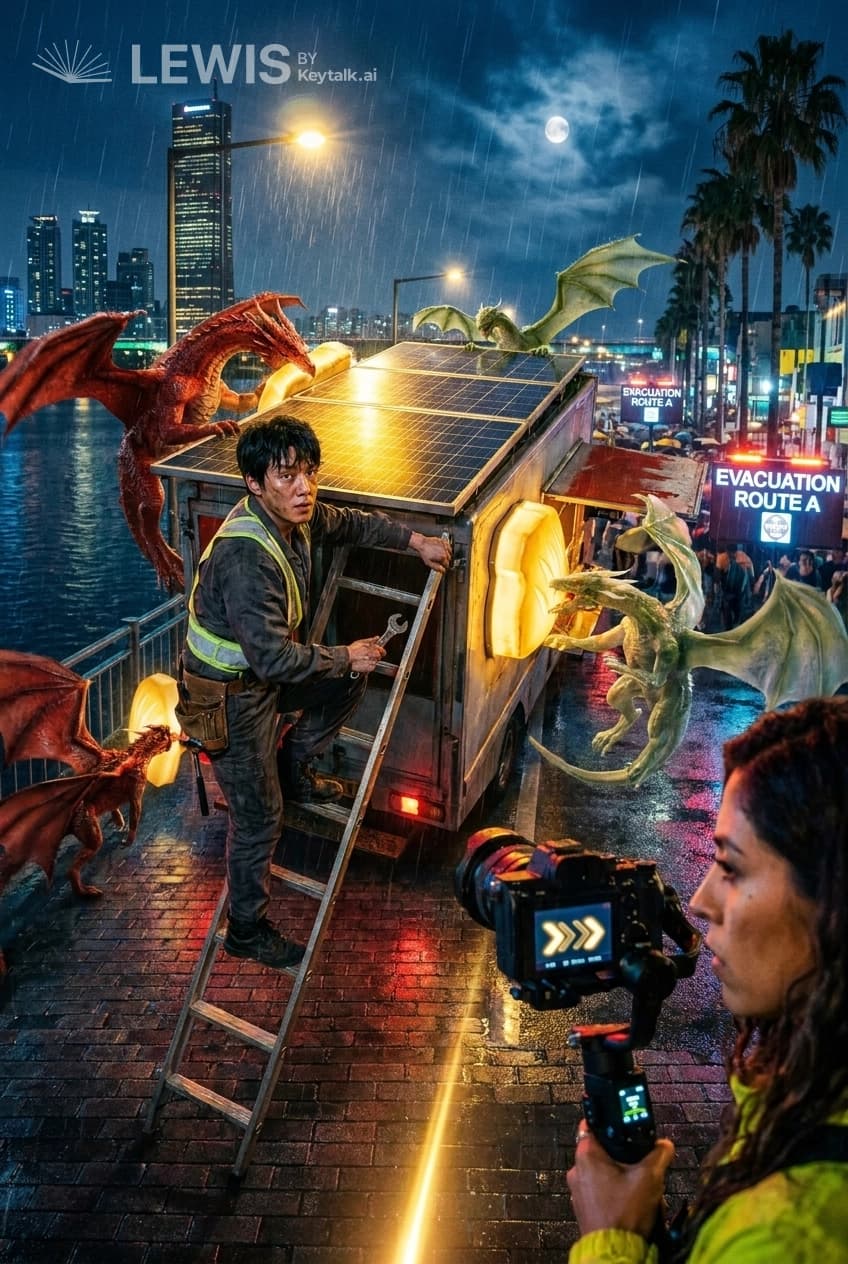
Imani makes the ruthless, correct arrangement. Claire and the others run the first load. Nia stays to help Kevin rig the final light. Elena remains because the sick and weak on the far side will panic if left with only strangers. Juyeon stays because he will not leave Kevin, and because he is the strongest one for the hand-crank that can hold the span level a few seconds longer. Baek, shoulder bleeding, stays because he knows where Bell Tower will come from. The scene turns brutally simple: hands on cart, hands on crank, bodies braced against a gate while fog thickens and bells ring madly in the wind. Kevin rigs every remaining cracked LED strip, concert mirror, and timer bulb into one blinding burst on the ferry hulk beside the bridge. When Bell Tower rushes, the whole wreck blooms white, then violet, then black. The crowd flinches, stumbles, and grabs at wrong shadows. Juyeon cranks until the gears scream. Nia slashes the tarp line at the right second so it whips loose like a moving wall and tangles the front runners. Elena drags a feverish boy across the hinge plate by the back of his shirt. Baek wedges himself in the narrow choke point and uses his own body, shoulder first, to keep three men from forcing through.

Kevin is the last one moving toward the hinge when the final winch cable gives. Juyeon lets go of the crank and lunges, catching Kevin by the forearm as the center span drops half a meter and slams crooked into the next support. The jolt throws them both to their knees. For one terrifying beat, Kevin hangs over black water threaded with bells and floating trash. Juyeon hauls him up with help from Nia and Baek, and the five of them scramble across as the bridge shears apart behind them. Bell Tower cannot follow. Neither can anyone else.

Back at the greenhouse, the victory is ugly and incomplete, which makes it real. The desalination membranes work only in rationed bursts, but that is enough. Elena stretches her medicine with boiled water, rest, and clean cups, and the fever stops taking new people by the third day. Imani publicly records the recovered water and parts, then makes Juyeon stand beside her while she records his hidden filters as well. She does not exile him. Instead she cuts his ration for a week and orders his private caches added to the communal map, because a rule that only punishes enemies is not a rule. Juyeon accepts it. The strange relief in him is that he no longer has to guard every margin alone.

Baek does not become a friend. He takes one membrane share exactly as bargained, leaves route marks near the lower mall that may be warning or claim or both, and departs before dawn with his shoulder bound in greenhouse gauze. Elena watches him go knowing she will probably deal with him again. Claire begins teaching shellfish patrol routes to two teens from Battery Rack Chapel, turning her lonely tide runs into something repeatable. Nia expands her ferry tarp system onto the mall roof, using broken light-stick tubes as drip channels until clear rain ticks into new barrels. The shelter starts surviving on more than one source at once.

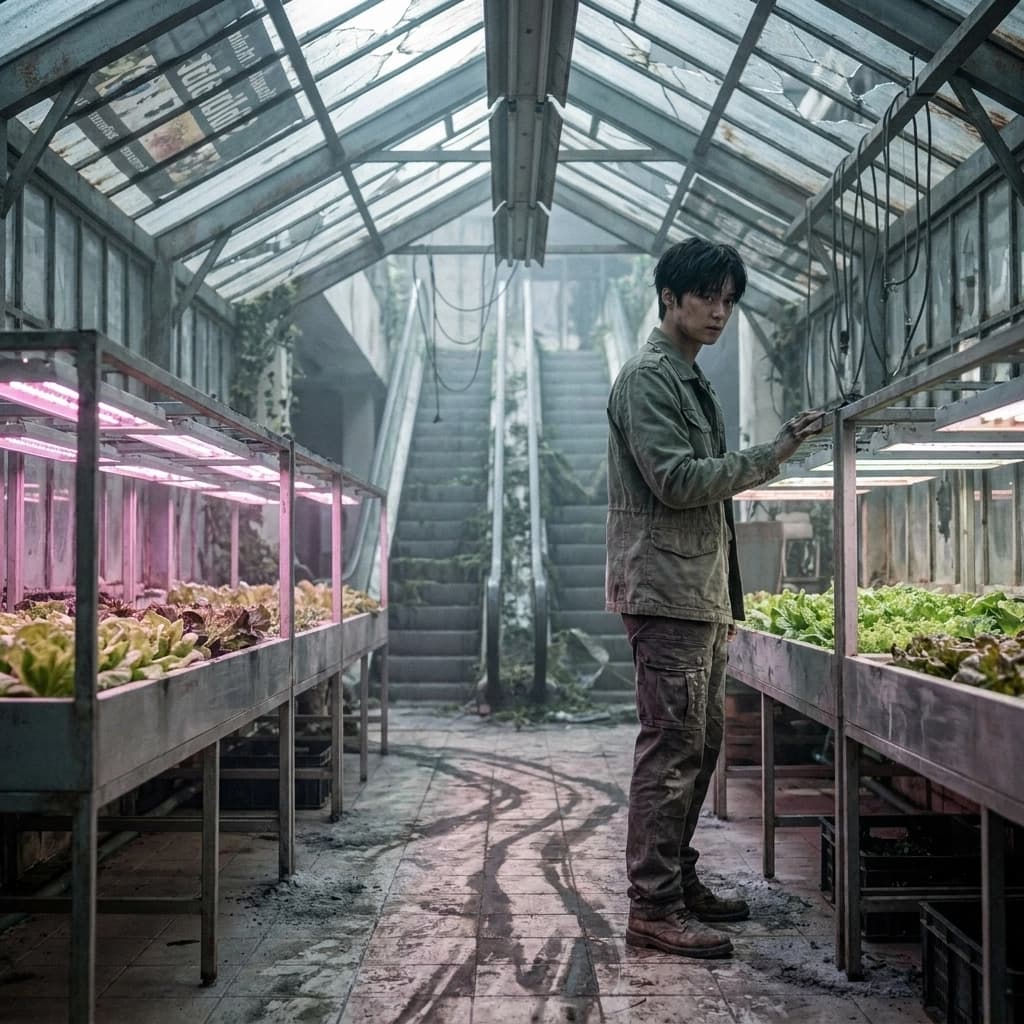
Juyeon moves his bedroll out of the bus for the first time and into a dry corner near the Battery Rack Chapel, close enough to hear the pumps cycle at night. Kevin starts sleeping there too under the excuse of maintaining the warning lights. Nobody challenges the excuse. One evening, while pink grow lamps wash the atrium and ash taps softly against patched glass, Kevin reaches for a loose wire near Juyeon’s shoulder and leaves his hand there a moment too long. Juyeon does not pretend to need to check a latch. He turns his hand over and holds on. In a world where every light must justify itself, they do not make a spectacle of it. They simply stop choosing distance as if it were safer. The greenhouse keeps counting water, enforcing rules, and waiting for the next threat. But now, when Juyeon packs supplies, he labels one crate not for escape but for the next repair run home.
Story Details

Keytalk Prompts Used
See all Keytalks
Model Used
GPT-5.4
text
GPT-5.4 Nano
text
gemini_pro
image
Stable Diffusion
image

Character

Protagonist Character

Juyeon

Gendermale
Occupationbus quartermaster and ration runner for THE BOYZ

Profile

Juyeon keeps the rusted tour bus stocked, balanced, and ready to move, because he trusts packed crates and counted liters more than promises of safety. The greenhouse offers the first place that asks him to build a future instead of preparing an exit, and his growing pull toward Kevin makes every practical decision feel dangerously personal.

Juyeon ties supply bundles with the same care he uses on injured wrists, then gives away his own portion without announcing it if someone else looks worse. In a crisis he goes still before he moves, counting under his breath and shifting bodies, tools, and water with blunt efficiency, but he turns sharp when anyone assumes staying put is safer than leaving. Around Kevin he starts tasks twice just to remain nearby a few seconds longer, then covers the hesitation by checking straps, lids, and door latches nobody else asked him to touch.

Background

After the collapse scattered roads under floodwater, Juyeon became the one who knew exactly what the bus could carry, what could be abandoned, and how long a group could last before thirst turned people reckless. He helped keep THE BOYZ alive by treating inventory like a heartbeat—miss a beat, and someone pays for it later. Reaching the mall greenhouse put him in daily conflict with Imani's fixed rules and Elena's dangerous bargains, because for the first time his skill at preparing to leave may destroy the only refuge that has started to feel like home.

Appearance

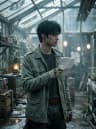
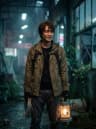
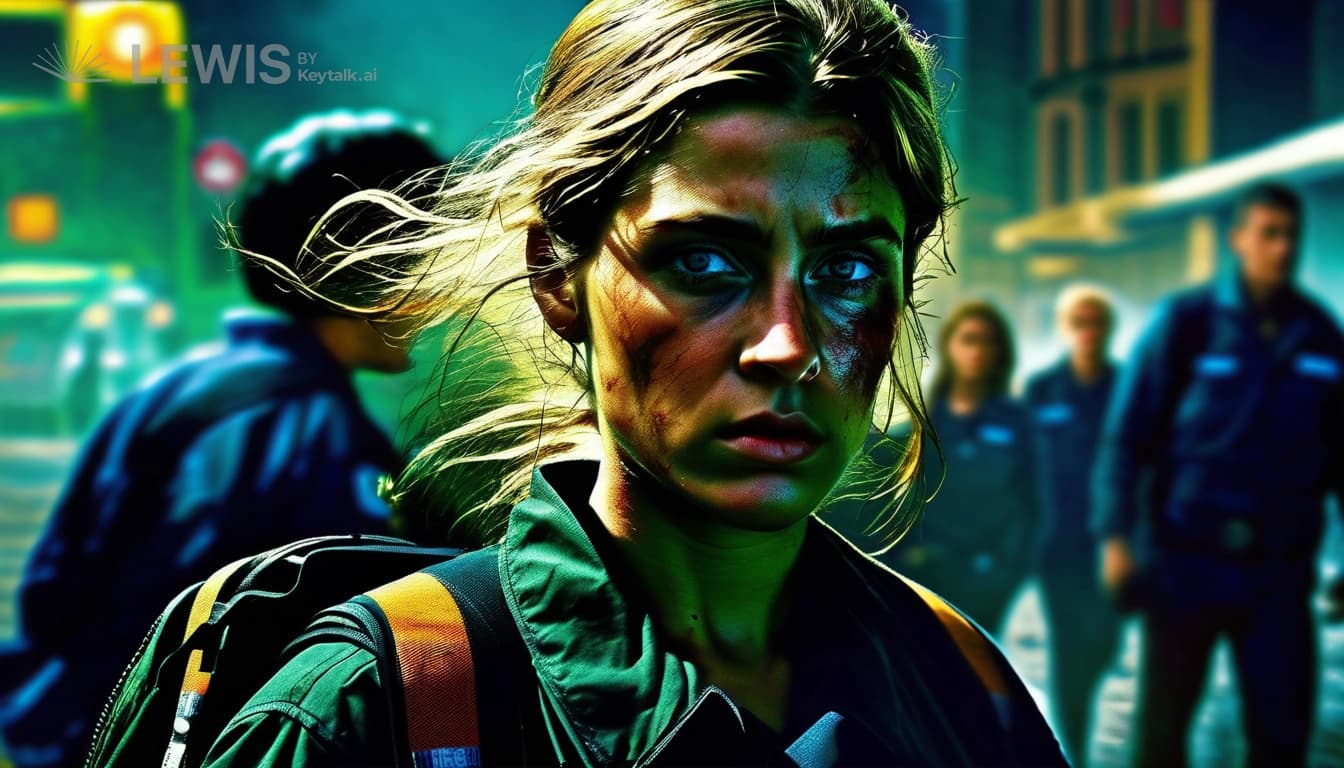
Juyeon wears a weather-faded utility jacket the color of old moss over a dark shirt gone thin at the collar, cargo pants whitened at the knees by dried mineral dust, and fingerless gloves stained with graphite from constant map work. He stands angled as if ready to leave even while his body leans toward the nearest light, shoulders held tight, mouth set in practical calm, with a strip of album poster folded into a sharp square and tucked into his chest pocket like something more fragile than a weapon. A pale scar cuts across one knuckle of his map hand, and his eyes keep scanning past the camera as though counting exits he has not admitted he wants to ignore.
Love Interest

Kevin

Gendermale
Occupationsignal technician and singer with THE BOYZ

Profile

Kevin turns broken stage lights into traps, lures, and warning beacons, making survival look almost theatrical so other people will move before fear locks them in place. He wants Juyeon close enough to trust him in the dark, but he keeps treating his own feelings like a hazard that could slow his hands when everyone else needs speed.

Kevin tests every wire twice, then flips the switch with a grin that is half performance and half shield; even when his hands shake, he talks like the plan was always simple. He notices the smallest pause in other people and takes it personally, so Juyeon’s caution lands on him like a closed door. Under pressure he moves fast and bright, sometimes too bright, choosing risky spectacle over safer silence because being useful feels safer to him than being known.

Background

Before the collapse hardened every road into a gamble, Kevin learned concert lighting cues, timing, and crowd attention from life on tour, and he remembers exactly how to make people look where he needs them to look. On the road after everything fell apart, he stripped dead venues, buses, and malls for gels, wiring, and cracked housings, building a survival language out of old performances. That history makes him vital to the greenhouse’s defenses and to the coming tunnel run, where one wrong flare could draw raiders, drown the path in panic, or save Juyeon at the cost of the harvest.

Appearance

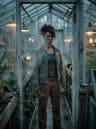
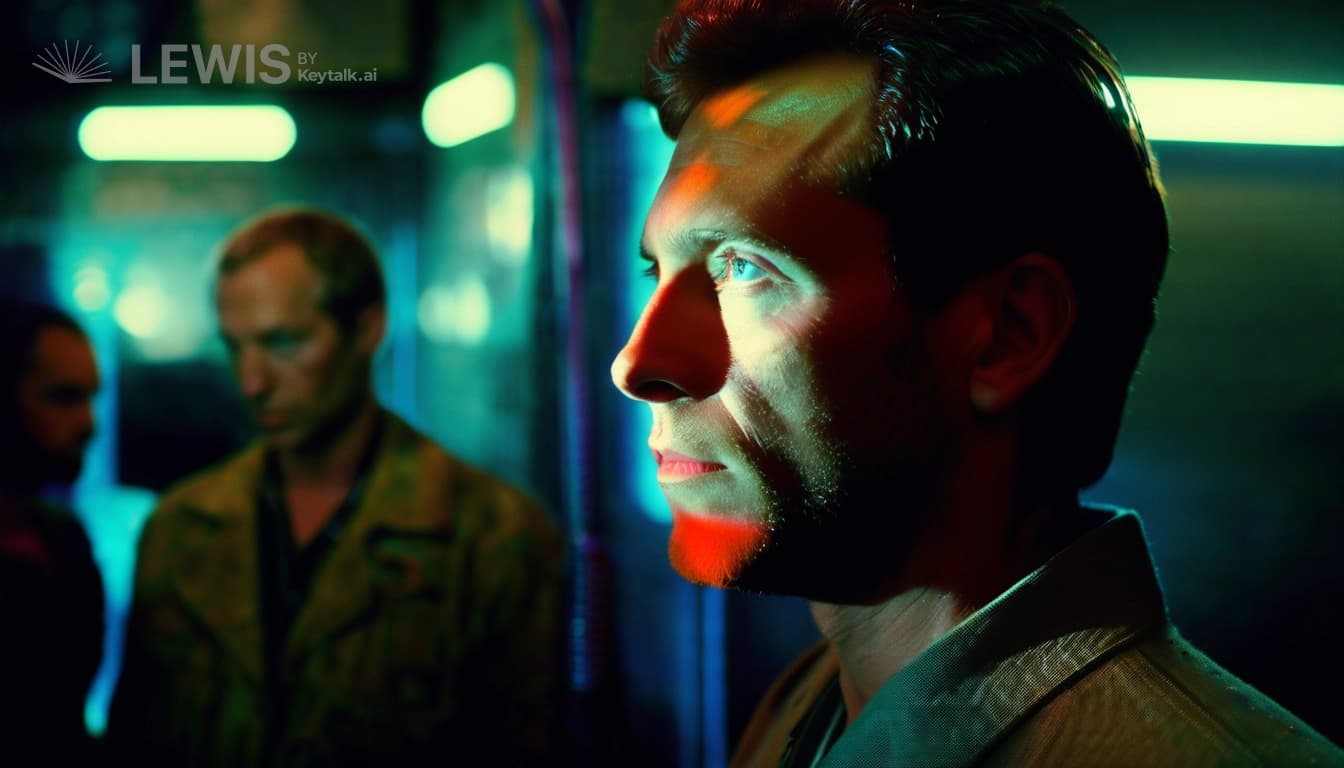
Kevin is a slim Korean man who dresses like he expects to crawl through floodwater and then step under a spotlight: a weather-faded utility jacket stitched with reflective tape over a black stage-crew tee, harness straps biting across his chest, fingerless gloves dark with wire grease. He stands angled toward whatever he can fix, one shoulder lifted, mouth set in a quick bright smile that almost hides the strain in it, while a cracked colored gel clipped behind his ear catches the light like a private signal. Even at rest his hands hover near a coil of salvaged cable and a dead lamp head at his hip, as if he can keep fear from hardening by turning it into motion first.
Keeper Of The Greenhouse

Imani Brooks

Genderfemale
Occupationmechanic and solar pump maintainer

Profile

Imani Brooks keeps a living farm running inside a dead mall by turning scrap into water, power, and rules people hate until those rules save them. She will trade warmth, trust, and her own reputation to keep the pumps alive, because the last time she chose mercy over math, raiders took a grow bed, broke the irrigation line, and left her brother behind.

Imani Brooks talks while her hands are busy: stripping wire with her teeth, tapping battery casings with a wrench, counting cups before she meets anyone's eyes. When someone begs for an exception, she gets colder, not louder; she would rather let people call her heartless than let them see how fast grief still makes her breathe. The world keeps testing her with hungry strangers and damaged machines, and she answers both the same way—check the weak point, tighten it, and never assume it will hold twice.

Background

Before the collapse settled into routine, Imani Brooks learned electrical repair helping her father keep delivery vans and storefront freezers alive on borrowed parts. She and her brother turned the mall's skylit atrium into a greenhouse after the grid failed, hauling soil up escalators and rigging solar pumps from stage lights and stripped copper. During one raid, Imani Brooks opened the gate for neighbors she thought she could save; the crowd surge exposed the water stores, the raiders gutted an entire grow bed, and her brother vanished in the scramble she still replays every time someone asks her to be kind first.

Appearance

Imani Brooks stands like a barricade in the greenhouse aisle, shoulders squared under a sun-faded work jacket layered over a grease-dark tank and cargo pants gone shiny at the knees from kneeling on concrete. Her hands are scarred and busy even at rest—one wrapped around a battered wrench, the other hooked in a coil of stripped copper at her belt—and she measures people with a hard, sideways look that lands before her voice does. A pale burn scar along her jaw catches the green light from the grow lamps, the one sharp mark that makes her restraint feel forged rather than natural.
Healer And Broker

Elena Hart

Genderfemale
Occupationmedic and medicine trader

Profile

Elena Hart keeps the greenhouse alive by rationing medicine, settling disputes, and making herself sound certain even when she is terrified. She has been trading antibiotics to the raiders in secret to spare her patients, and when that bargain fails, every life she saved becomes evidence against her.

Elena Hart taps antibiotic capsules against her thumb while she talks, counting under her breath before she gives anyone an answer. She can clean a wound with steady hands while lying straight to a friend’s face, and the more frightened people become, the softer her voice gets. What the world punishes in Elena Hart is the same thing that makes her useful: she will make a deal with almost anyone if it buys one more night without a funeral.

Background

Before the collapse settled into routine, Elena Hart was a pharmacy tech who learned inventory by lot number, expiry date, and who could not afford to wait until morning. She reached the mall greenhouse after moving with evacuees through flooded blocks, and she built her authority by turning scattered pills, first-aid manuals, and hard-edged patience into a clinic people could trust. When the raiders first threatened the sick beds, Elena Hart started paying them in blister packs and painkillers, telling herself each trade was temporary even as the price kept rising.

Appearance

Elena Hart carries herself like the quiet center of a triage ward built from salvage: a slim white woman with ash-blonde hair pinned back any way she can manage, sleeves rolled over wiry forearms, a faded green field jacket thrown over scrubs gone soft with bleach and wear. She stands square even when tired, one hand already near her satchel of bandages and blister packs, her mouth set in a small, soothing line that almost hides the strain in it; the detail no one forgets is the way she taps a strip of antibiotics against her thumb as if counting prayers before she decides who gets to live another day.
Pursuer

Baek Seungjae

Gendermale
Occupationraider pathfinder and former subway maintenance diver

Profile

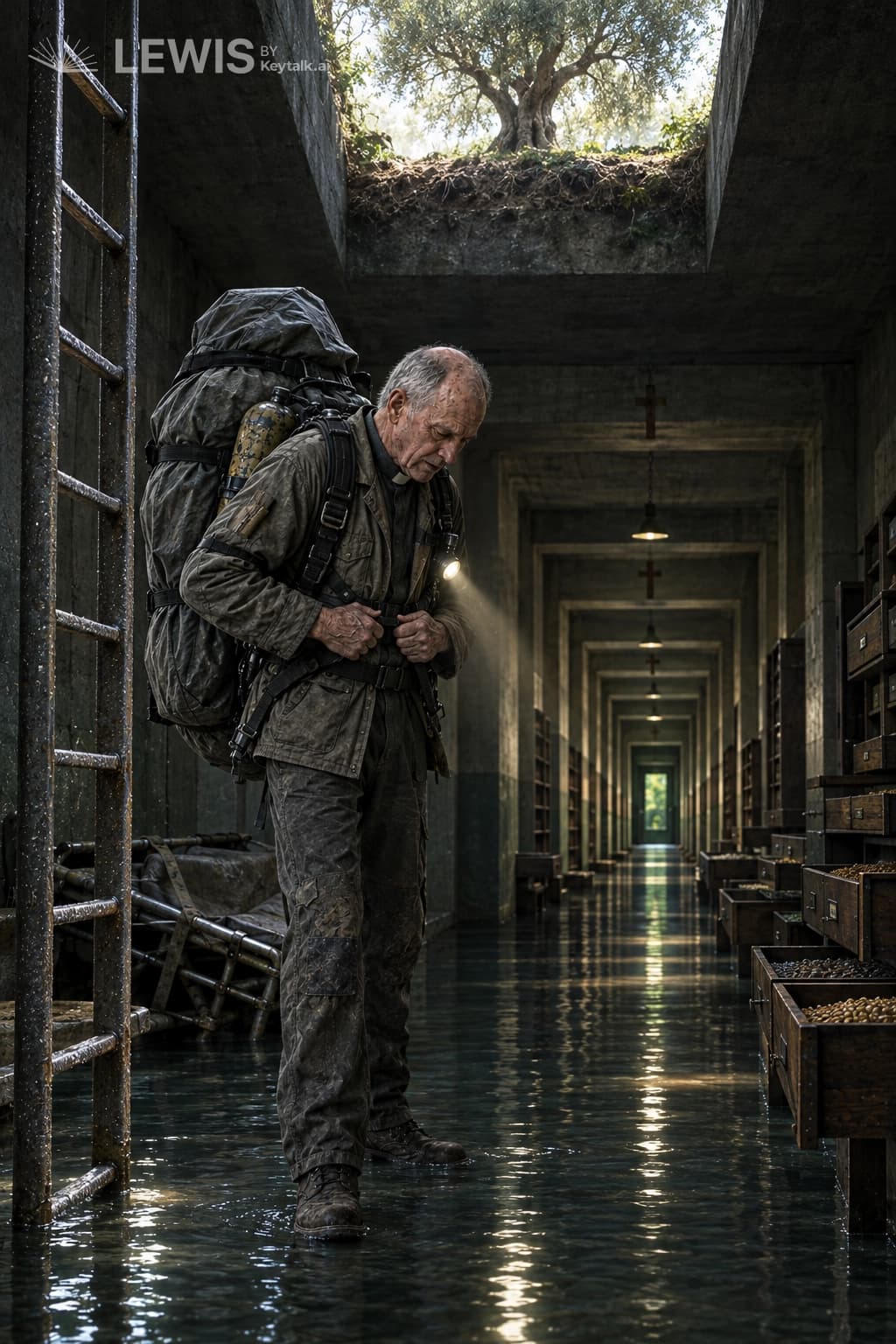
Baek Seungjae hunts people through the drowned subway with the calm of a surveyor, using old transit marks and chokepoints to force settlements into buying his clan's filters. He alone knows a sealed route to the seed vault, and he means to turn that knowledge into leverage before the greenhouse, the idols, or his own clan can take the choice out of his hands.

Baek Seungjae never raises his voice in a tunnel; he taps rusted signs with two fingers, waits for the echo, and changes direction before anyone else hears the current shift. He hands a child a dry mask from his own pack, then tells the child's parents exactly how many filters they now owe, which makes his mercy feel like another kind of bill. What he cannot control is the moment someone ignores his map and survives anyway; then his jaw locks, his pace sharpens, and his need to prove the tunnel still belongs to him becomes visible to everyone.

Background

Before the collapse, Baek Seungjae rode the subway with a transit maintenance father who taught him service markings, emergency doors, and which stations always flooded first. After his father drowned during an early evacuation run, Baek Seungjae gathered other tunnel survivors into a clan that salvages filters and rations clean air, then turned the buried network into a monopoly by keeping certain routes half-secret and certain rescues half-late. When he sees the marks hidden under Juyeon's poster-map, he recognizes not just a path but the sealed branch his father once called the last green room: a seed vault route that could break his clan's hold or let him trap the group where the water rises without warning.

Appearance

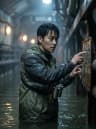
Baek Seungjae moves through the drowned station like a man walking the hallway of his childhood home: quiet, exact, and certain that every rust stripe and hanging cable answers to him first. He wears a patched charcoal dive jacket under a faded transit-worker rain shell, chest harness hung with scavenged filter canisters and brass keys, and hip waders rubbed silver at the knees; a pale rope scar circles one wrist where an old rescue line bit deep, and he keeps two fingers lifted near any wall sign as if the tunnel is always mid-conversation. His face stays calm enough to pass for mercy until someone steps beyond the route he allowed, and then the set of his jaw turns possession into something colder than anger.

World

Setting

A drowned coastal district years after cascading climate disasters, centered on a once-upscale shopping mall converted into a greenhouse refuge. Salt wind pushes ash inland from old industrial fires, and the mall rises out of shallow floodwater like a cracked glass ark: skylights patched with billboard vinyl, escalators choked with vines, generator cords hanging where holiday banners used to be. Beneath it runs a half-submerged subway network that still dictates movement, smuggling, and ambush. Nearby stand the municipal seed vault, an old desalination plant wrapped in fog, and apartment towers bridged by wreckage from ferries and buses. This is a world where shelter is vertical, water is political, and every safe route exists because someone bled to map it.

Time Period

Late in the storm season, roughly a decade after the city’s infrastructure failed in cascading floods, heat surges, and salt contamination. The story unfolds during a fragile rebuilding window after the seed-vault escape and the defense of the Stage Light Decoy Court, when the greenhouse is standing but trust inside it is still wet cement.

Rules & Story Impact

Any water taken from open flood, harbor, or subway runoff must be filtered or boiled before use; break this and fever spreads through the shelter faster than any knife fight. Light draws both help and danger after dusk; every beacon, stage lamp, or signal must serve a defensive purpose, because wasted brightness can expose stores, routes, and sleeping bodies to raiders. Seeds, filters, and pump parts are held as communal assets rather than private property; anyone who hoards them may keep something alive for one night but risks exile or ration cuts when discovered. No one moves through the drowned subway alone unless they are ready to be considered lost; a solo run may save time, but if currents shift or trip lines fail, the settlement cannot spare a rescue.

Visual Description

The world is all bruised turquoise, rust red, algae green, and the jaundiced gold of failing batteries. Mall tile shines under thin films of water. Grow lights turn lettuce beds into unnatural chapels of pink and white. Ash settles on plastic tarps like gray flour. In the old food court, broken gobos throw sliced patterns over walls so doorways appear where there are none. The subway below is black water, riveted pillars, and drifting ad posters that brush your shoulder like people trying not to be forgotten. Night scenes pulse with scavenged performance light: warning bulbs, mirrored foil, cracked LED bars, and hand-wound timers blinking inside the dark.

Technologies & Philosophies

Daily life runs on salvage engineering and strict arithmetic. Rain catchers are stitched from stage tarps, cracked light sticks become tubing couplers and markers, bus batteries power pumps in short rationed bursts, and poster backs serve as route maps because paper that once sold fantasy now measures survival. The greenhouse follows Imani’s ethic of visible scarcity: count everything in public, waste nothing in private, and make rules hard enough that the weakest system part is never trust alone. Elena’s counter-philosophy survives beside it: mercy through bargaining, even with dangerous people, because medicine means little if pride starts funerals. The Boyz contribute a third civic function that has become essential rather than frivolous: performance technology as crowd control, signaling language, and morale architecture. A lit court, a staged shadow, or a song timed to battery usage can move people as effectively as fences. Baek’s raider logic presses against all of this—routes are property, information is currency, and protection always arrives attached to debt—making every alliance in the district feel temporary, necessary, and morally expensive.
representative image
location 1 image

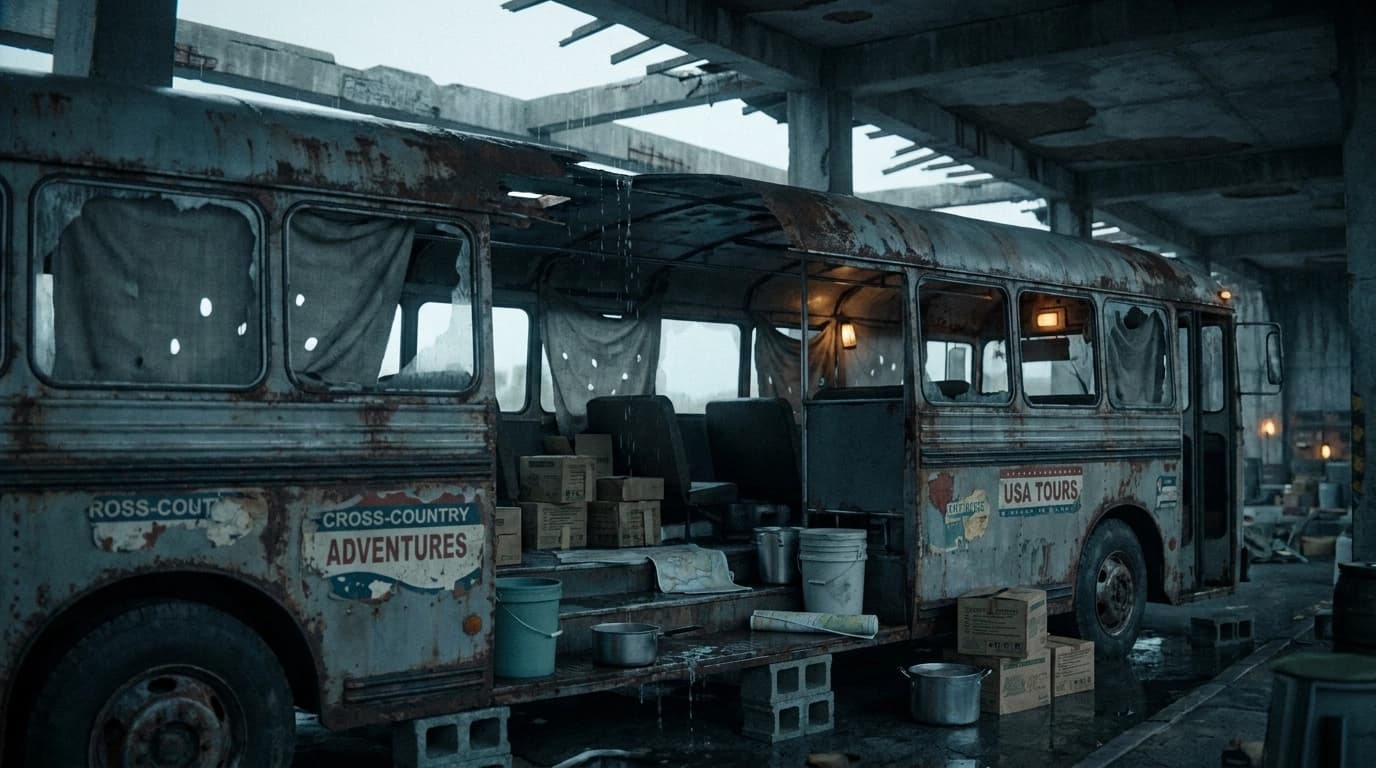
Location 1 · Rusted Tour Bus Bay

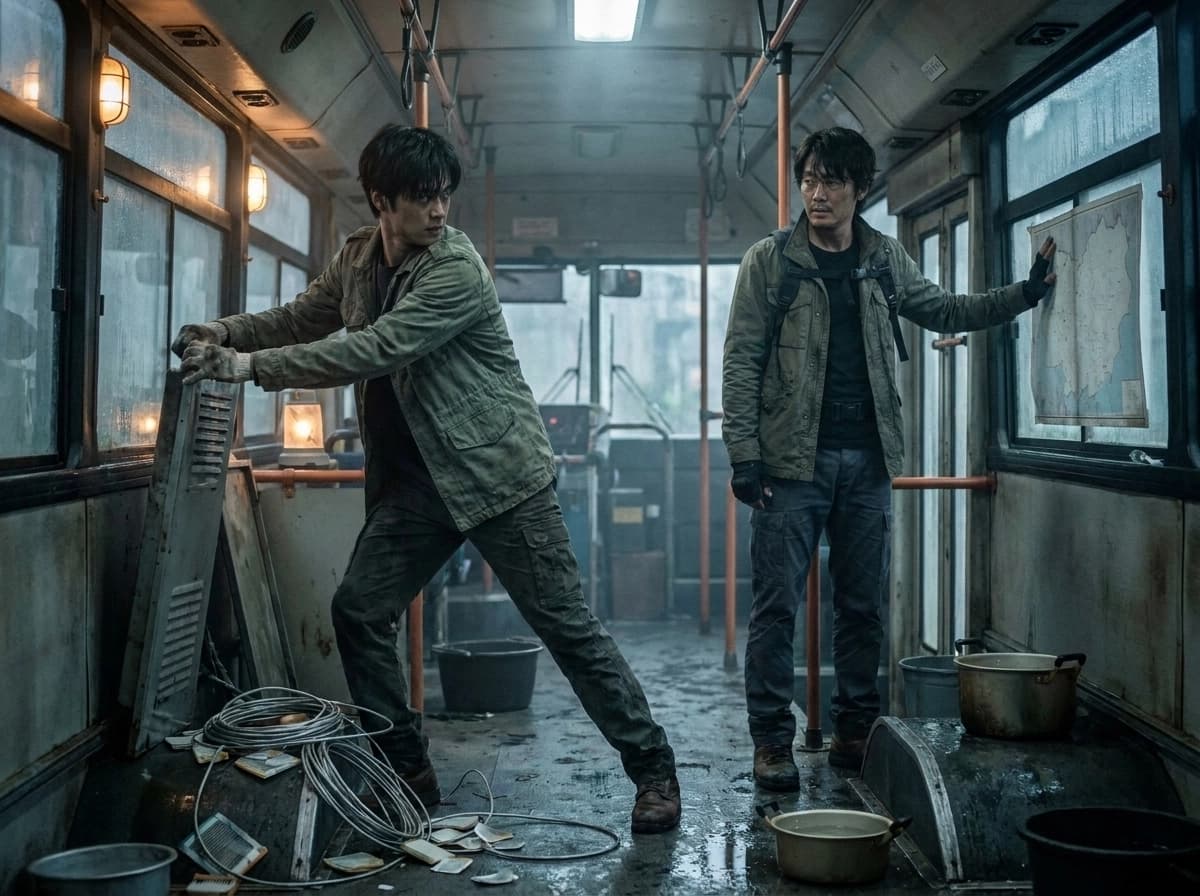
A city bus sits on cinder blocks under the mall’s broken loading canopy, its sides scabbed with orange rust and old tour decals peeled into curled strips that click when the wind sneaks through. Rain taps through holes in the roof onto nested pots and cut plastic drums, and every drop is counted by the different notes it makes on metal, tarp, and glass; the air smells like wet dust, rubber, canned soup, and the sour edge of old batteries stacked in milk crates beneath the seats. Blankets hang over the bus windows for privacy, but light still leaks through pinprick tears and lays a scatter of tiny stars across the aisle, where ration boxes, tied bundles, and a rolled transit map wait close enough to grab in one motion.
location 2 image

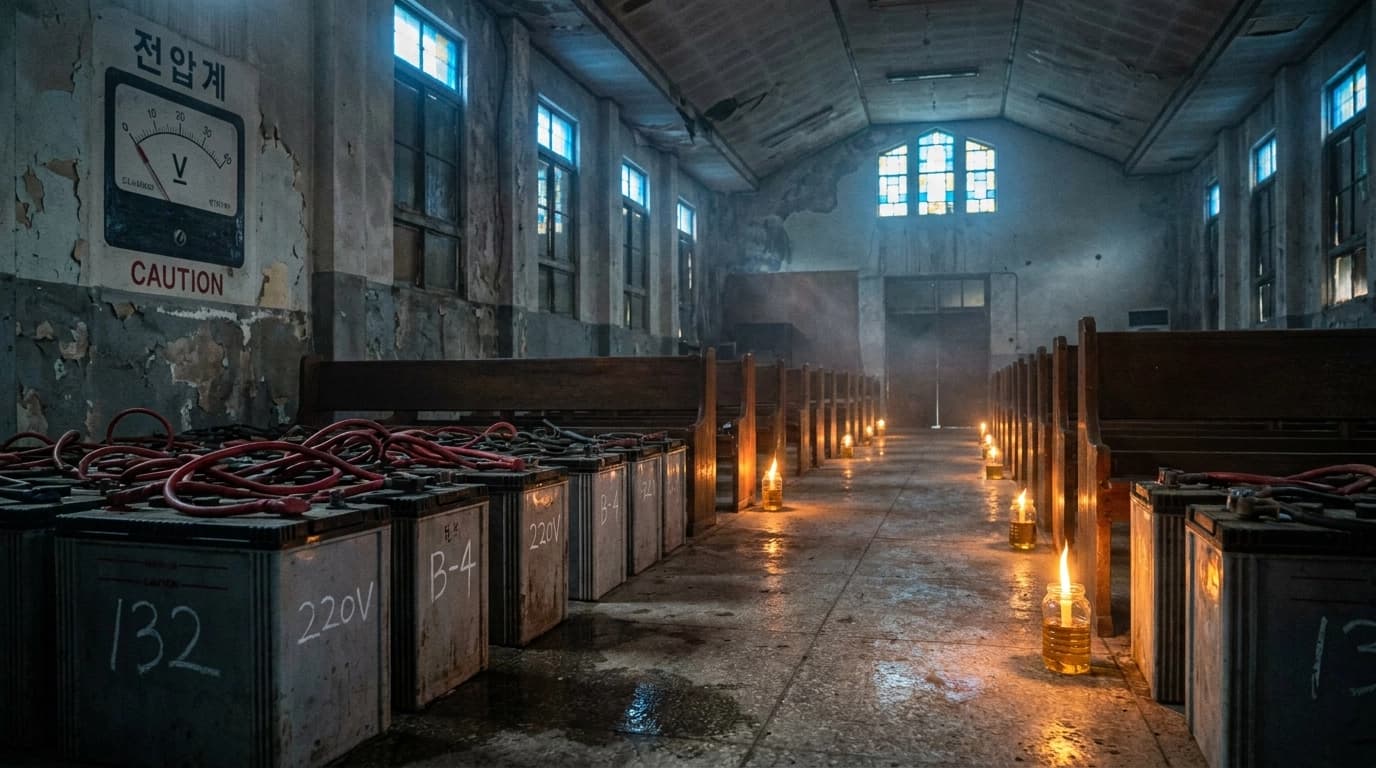
Location 2 · Battery Rack Chapel

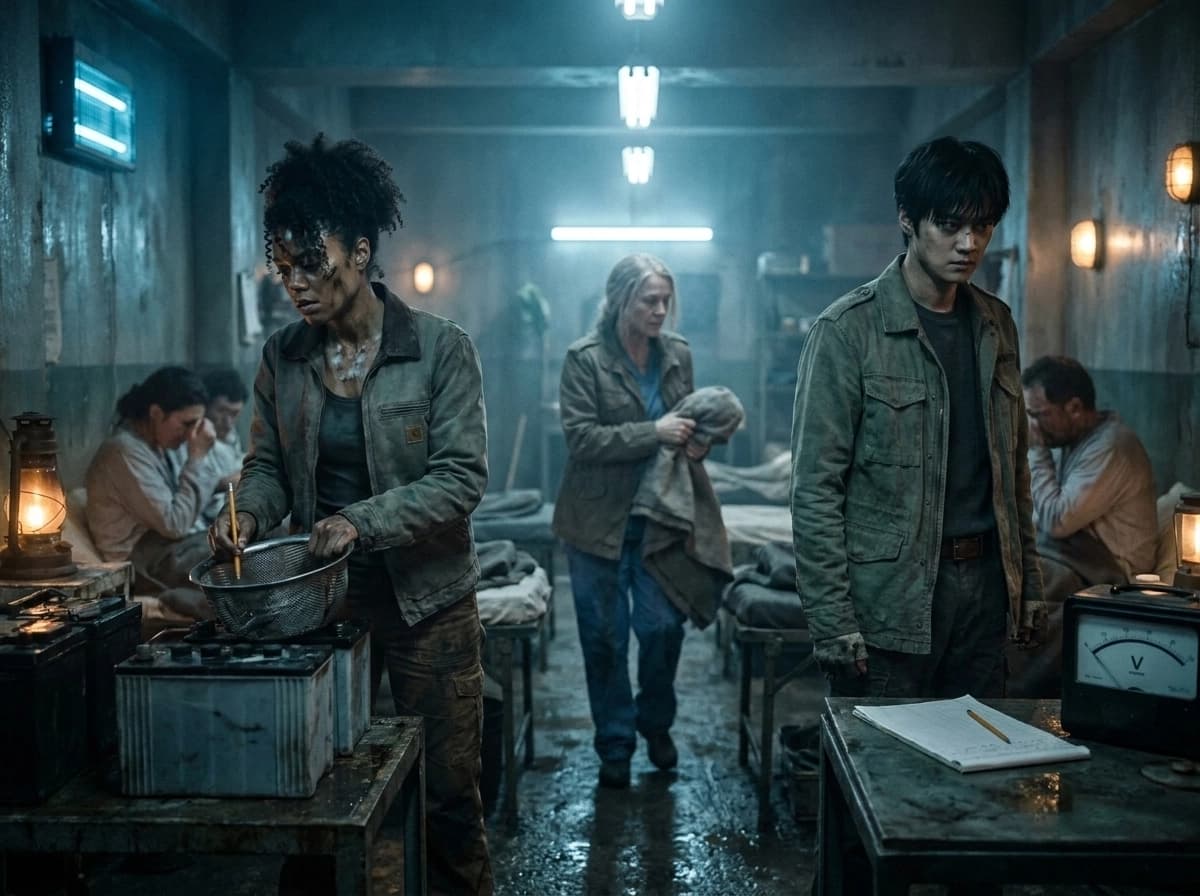
Rows of forklift batteries stand where pews should be, their cracked black casings banded with chalk numbers and lengths of red cable, while thin prayer candles made from cooking oil burn in jar lids along the aisle. The air is warm and metallic, full of the soft tick of charging relays, the vinegar stink of leaked acid, and the paper-dry rustle of medical wrappers tucked under hymn books salvaged from a mall gift shop. Blue inverter lights wash the ceiling in a weak stained-glass glow, and every few seconds a hand-painted voltage meter nailed above the cot line jerks and settles, making the whole room feel like it is holding its breath on borrowed power.
location 3 image

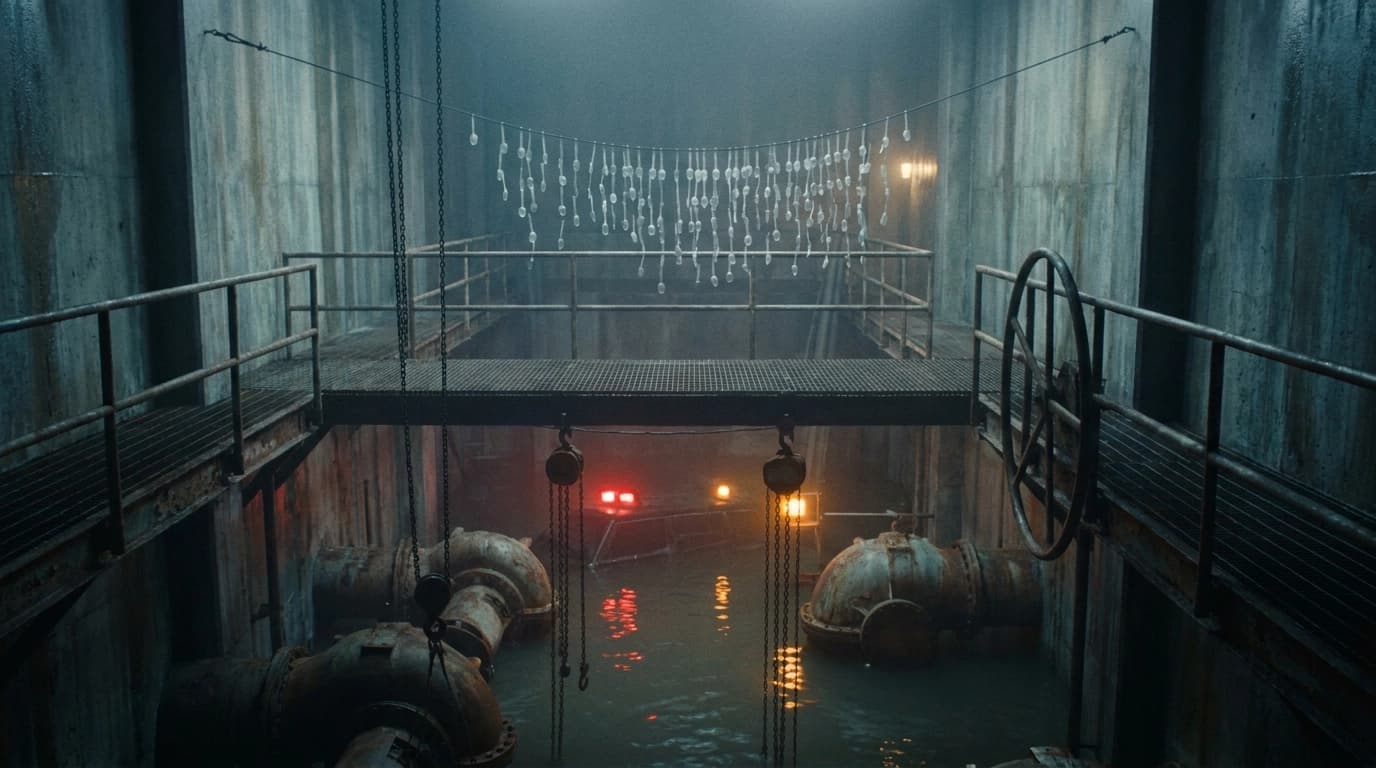
Location 3 · Floodgate Pump Chamber

The chamber drops in a hard cylinder of poured concrete around four dead pump housings, each one crusted white with salt and ringed by catwalks slick with old oil. Emergency lamps wired to mismatched batteries blink in uneven pulses, throwing red and amber bars across pressure gauges, chain hoists, and a wall painted over with rising water marks; every few seconds a loose floodgate wheel turns a fraction on its own and taps the metal rail with a patient, clock-like knock. The air tastes of rust, bleach, and hot wiring, and the noise never settles—water hammers somewhere inside the pipes, belts slap, bolts ping as the machinery cools, and every voice comes back thinner from the curved walls. On one grated platform, dozens of zip-tied plastic medicine spoons hang from a cable and tremble in the draft, making a dry, insecty rattle that turns the whole room into a warning no one can ignore.

Scenes

Scene 1
scene 1 image
Place
Battery Rack Chapel, between the cot line and the hand-painted voltage meter nailed above the battery rows
Time
Early evening, the first night back after the bridge escape
Action
Imani plants a grease pencil on a hymn-book ledger and reads the recovered totals aloud—water, membranes, tools, then Juyeon’s hidden charcoal sleeves—while keeping Juyeon standing beside the voltage meter for everyone on the cots to see. Elena moves down the aisle with a cup and bandage roll, watching each face as Imani says the word hoarding, and when Juyeon starts to speak, Imani cuts him off by slapping the split filter basket onto the battery lid as evidence.
Impact
Juyeon’s private habit becomes a public fact inside the same room the stolen water helped save, shifting the issue from secret guilt to communal judgment. The scene locks him into Imani’s system instead of letting him hide inside usefulness or apology.
Imani snaps the warped filter basket down on a battery casing and drags her grease pencil through the ledger while Juyeon stays pinned beside the jerking voltage meter, his shoulders squared as if posture could stop the room from hearing. Blue inverter light washes the cots in a weak stained-glass glow; Elena threads between them with quiet hands, and several patients flinch or look away the moment Imani says, clear and hard, that the charcoal sleeves were hoarded off the count.
Scene 2
scene 2 image
Place
Battery Rack Chapel, at the head of the central aisle near the battery rows and jar-lid candles
Time
Minutes later, without leaving the room
Action
Imani closes the ledger, tears a ration chit in half, and announces that Juyeon loses his share for one week but keeps his place in the greenhouse. Before the silence can curdle into argument, Elena steps in front of Juyeon, starts assigning boiled-cup rotations and new fill lines from the recovered water, and physically hands the first marked cups to Imani and Juyeon to make the punishment part of the work.
Impact
Instead of exile, Juyeon is bound tighter to the community and forced to live under the rule he breached. Elena turns the judgment into procedure, preventing the room from splitting and making clear that survival here depends on measured accountability, not spectacle.
Imani tears the chit with one clean pull and presses the smaller piece into Juyeon’s hand before he can brace for anything worse. The chapel does not erupt; it tightens. Elena breaks that tension by setting cups in a straight line on a battery lid, tapping each rim with a capsule against her thumb as she gives boil times and clean-water marks, until people lean forward to follow instructions instead of stare at him.
Scene 3
scene 3 image
Place
Rusted Tour Bus Bay, inside the bus aisle under the broken loading canopy
Time
Later that night, after the chapel accounting has ended
Action
Juyeon kneels in the bus aisle and rips open his old hiding places—under a seat vent, behind a ration crate, inside a torn panel—to pull out spare cord, dry tabs, and penciled reserve marks from the transit map. Kevin climbs into the bus through the hanging blanket, catches him with the stash spread between them, and asks in a low, flat voice whether Juyeon meant to tell him before vanishing one morning; when Juyeon reaches for the map, Kevin keeps one hand on it so he has to answer with his body still in the narrow aisle.
Impact
Kevin forces Juyeon to confront the emotional meaning of his private margins: they were not just survival tools but a standing plan to leave. Their relationship shifts from implied rescue-bond to direct reckoning about trust and being chosen.
Juyeon tears a loose panel free and spills hidden cord and filter tabs across the bus floor just as Kevin ducks under the blanket-hung window and stops short in the aisle. Rain taps through the canopy into metal pots overhead while Kevin pins the corner of the transit map with his palm and asks the question without any grin left to soften it: was this for an emergency, or for the day Juyeon decided not to come back.
Scene 4
scene 4 image
Place
From the Rusted Tour Bus Bay through the damp mall corridor toward Battery Rack Chapel
Time
A short while later, night deepening under patched skylights
Action
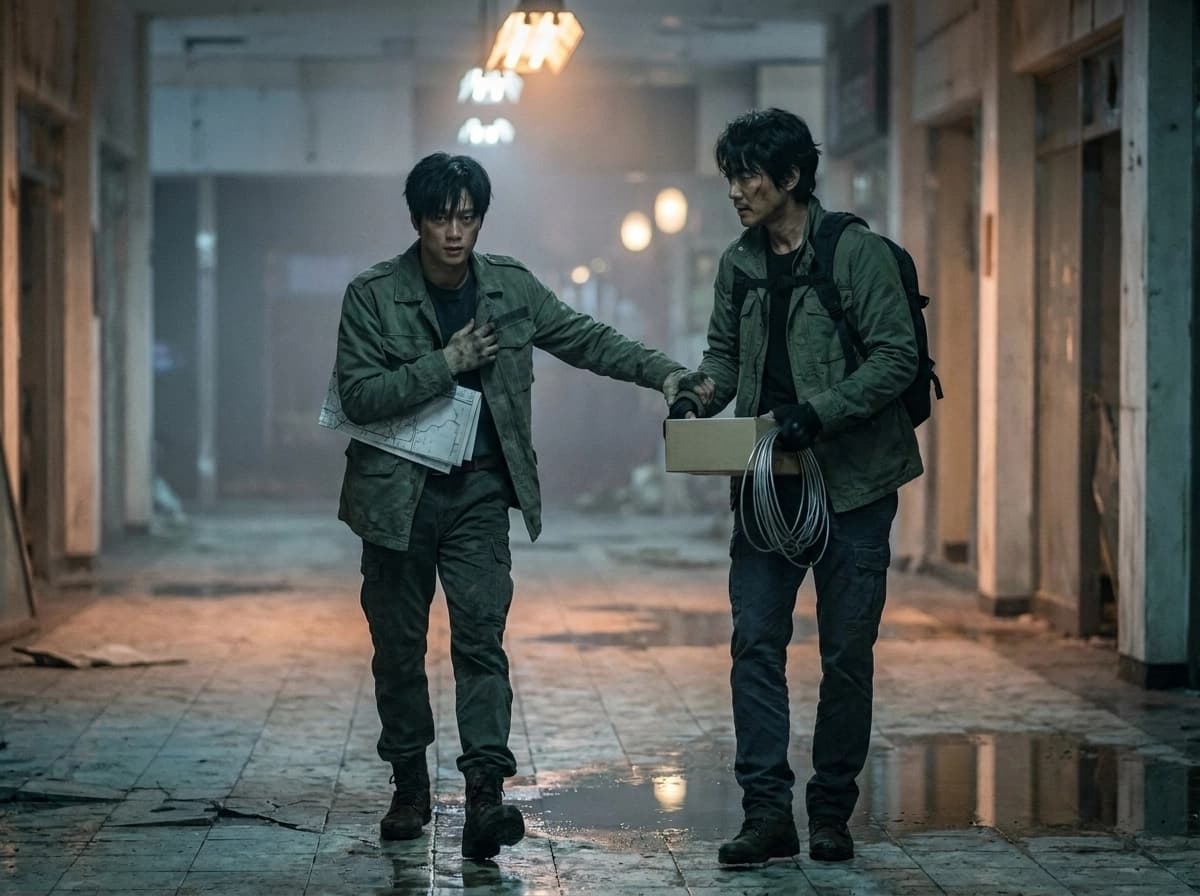
Instead of defending himself, Juyeon shoulders his bedroll, ration box, and folded maps and steps down from the bus. Kevin silently takes the lighter bundles—tools, the stripped stash, a coil of wire—and walks beside him through the corridor, and when one bundle slips on wet tile, Juyeon catches Kevin’s wrist before the maps hit the water, then keeps moving with him toward the chapel.
Impact
Juyeon makes his answer physical: he abandons the bus as an exit post and relocates his life toward the communal center. Carrying the load together turns private feeling into visible action and commits both men to a shared space where others can see what they are choosing.
Juyeon lifts the bedroll off the bus seat, tucks the transit maps under his arm, and jumps down to the wet tile before Kevin can ask again. Kevin grabs the ration box and wire coil and falls into step beside him through the mall’s dim corridor, grow-light spill and puddle shine breaking around their feet; when a bundle skids, Juyeon catches Kevin at the wrist, steadies the load, and neither of them lets go long enough to pretend this is only hauling supplies.
Scene 5
scene 5 image
Place
Near Battery Rack Chapel at the edge of the Skylight Grow Atrium, beside stacked repair crates and the pump control line
Time
Late night, as the pumps cycle in rationed bursts
Action
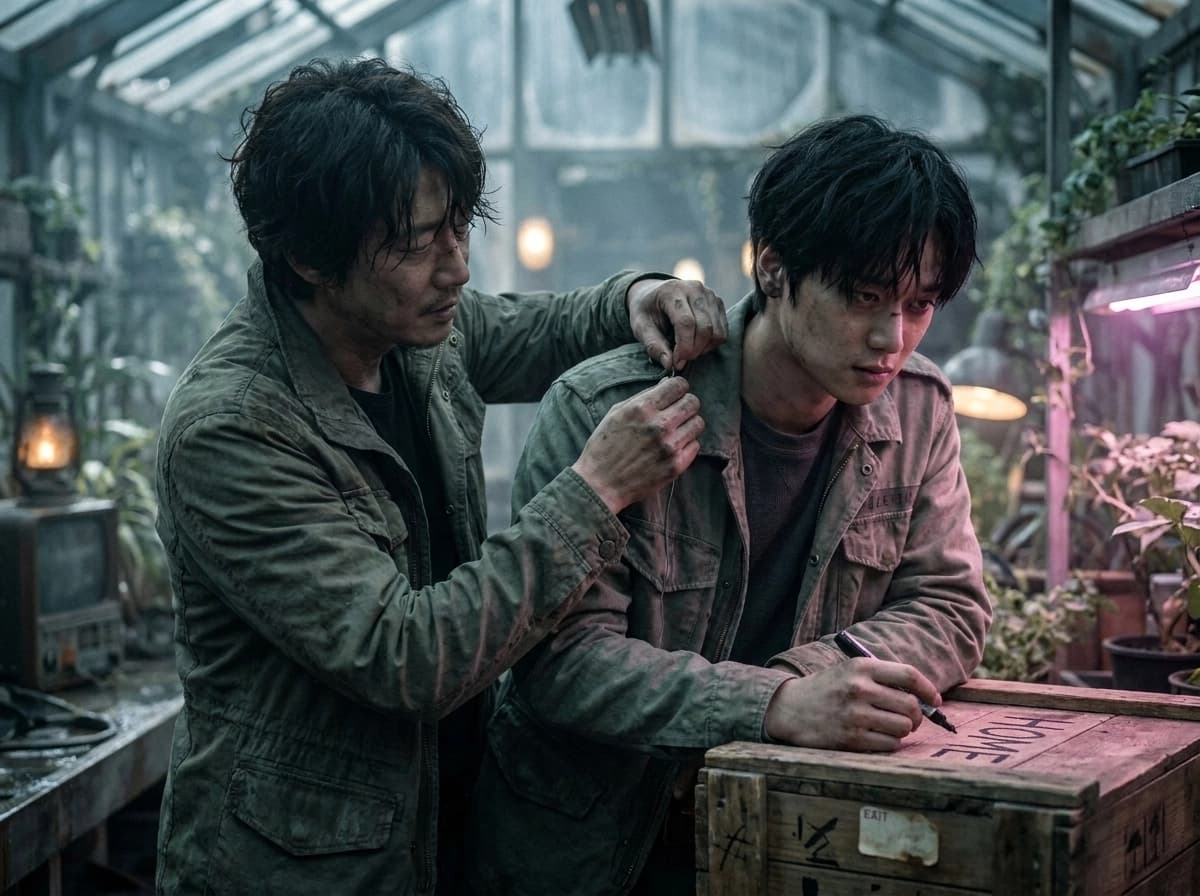
While Juyeon sets down the last crate and starts scraping off its old emergency-departure label, Kevin reaches past his shoulder to twist a loose wire back into the chapel warning circuit and leaves his hand resting there. Juyeon turns his own hand up to catch Kevin’s fingers against his shoulder, keeps them there for one quiet beat, then takes the grease marker and writes HOME across the crate lid in broad black strokes.
Impact
The chapter resolves Juyeon’s central choice in a visible, durable act: he claims the greenhouse as destination instead of fallback. The touch with Kevin stays small enough for this world, but the labeled crate makes that choice legible to anyone who sees it next.
Kevin leans in over Juyeon’s shoulder to pinch a loose wire back into place while the pumps thud somewhere behind the battery wall, and his hand stays warm against the damp fabric instead of pulling away. Pink grow light stains the tile and the side of Juyeon’s face as he turns his palm up to hold that touch, then drags the marker across the crate’s scraped wood—HOME, large and final, over the place where an exit label used to be.
'(THE BOYZ) Poster Maps for Black Water'Story Chat

Want to chat with the characters from this story?

'(THE BOYZ) Poster Maps for Black Water'Story Chat

Want to chat with the characters from this story?

story image
story image
story image
story image
story image

You might also like

Comments0

theme music