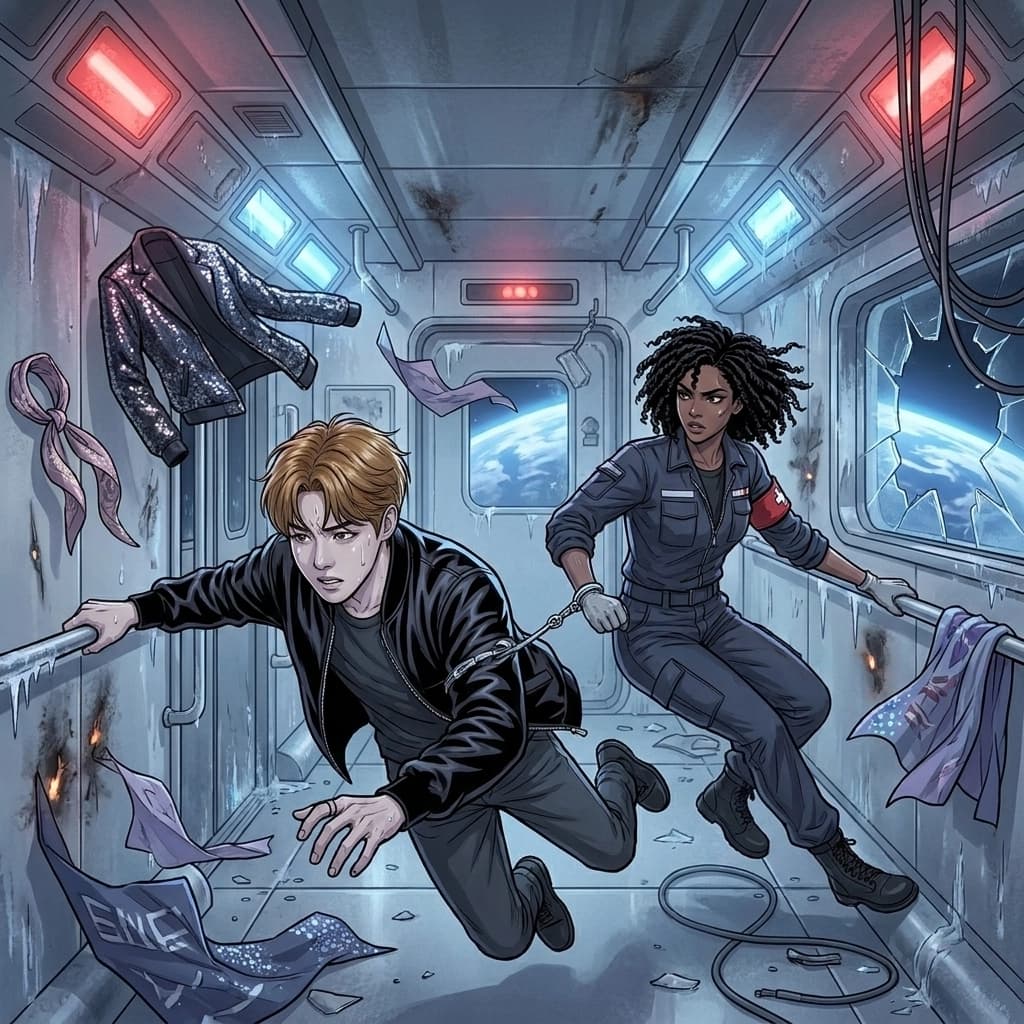
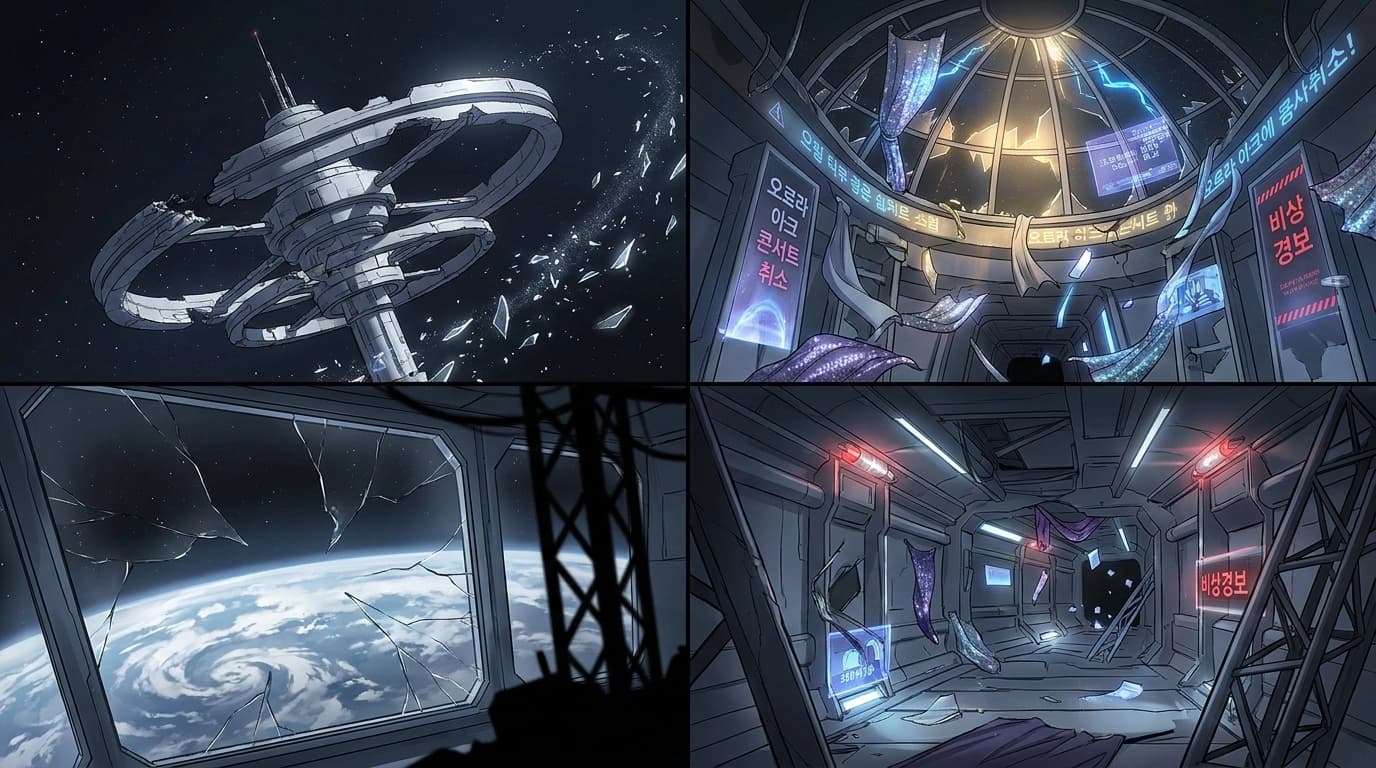
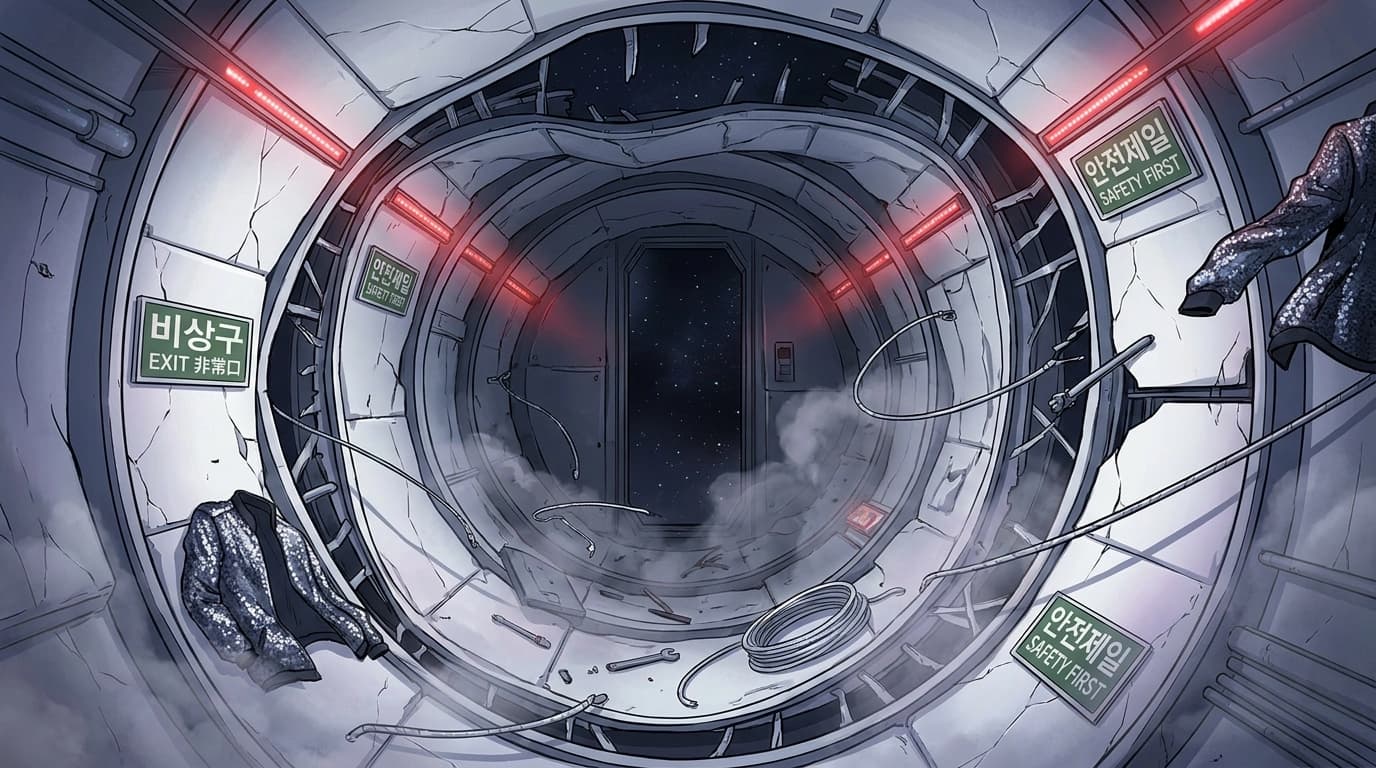
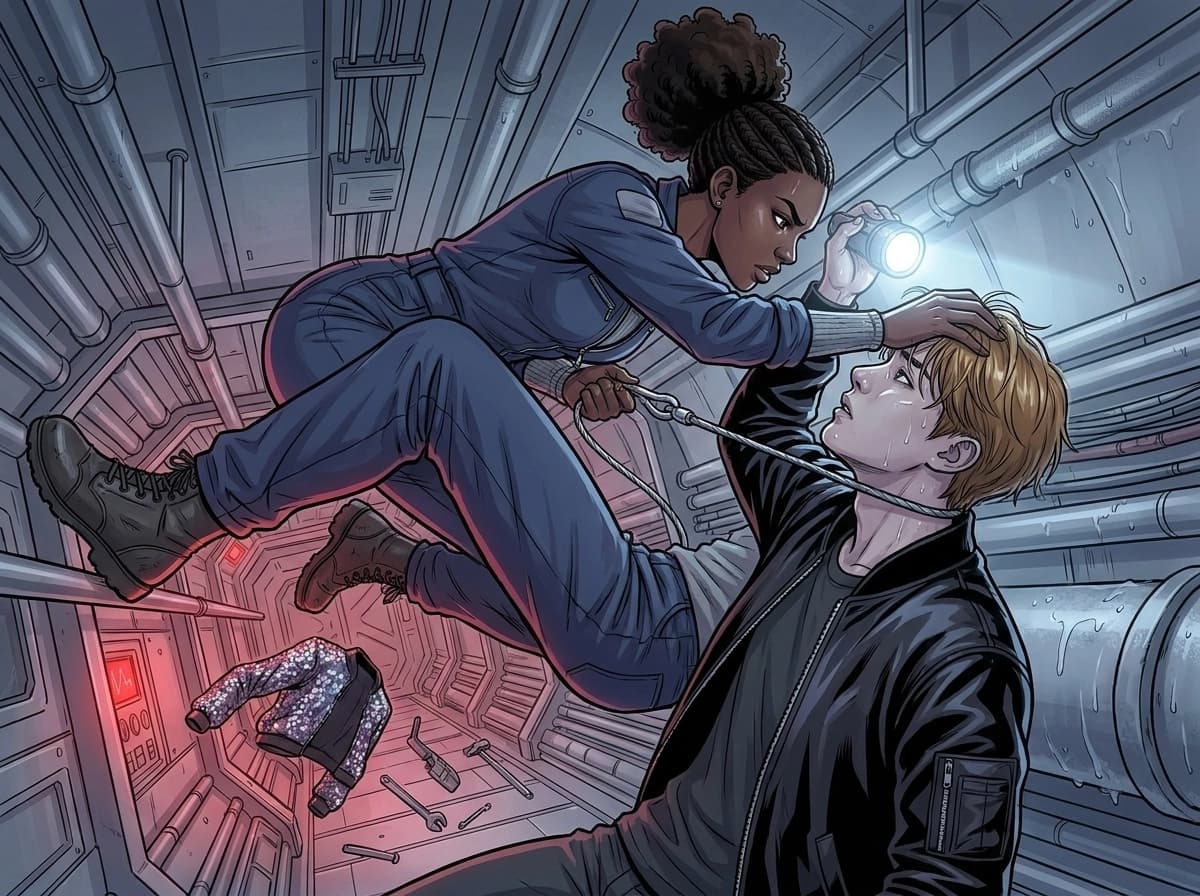
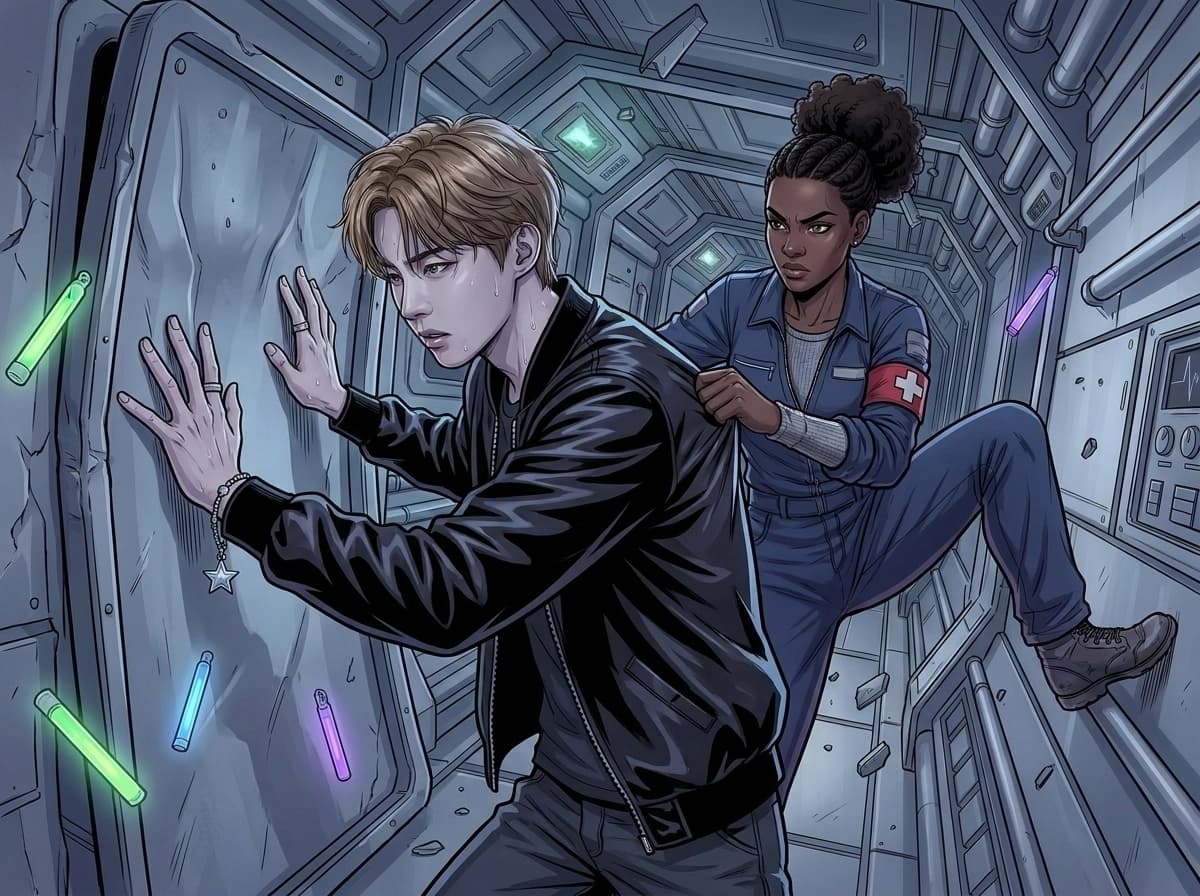
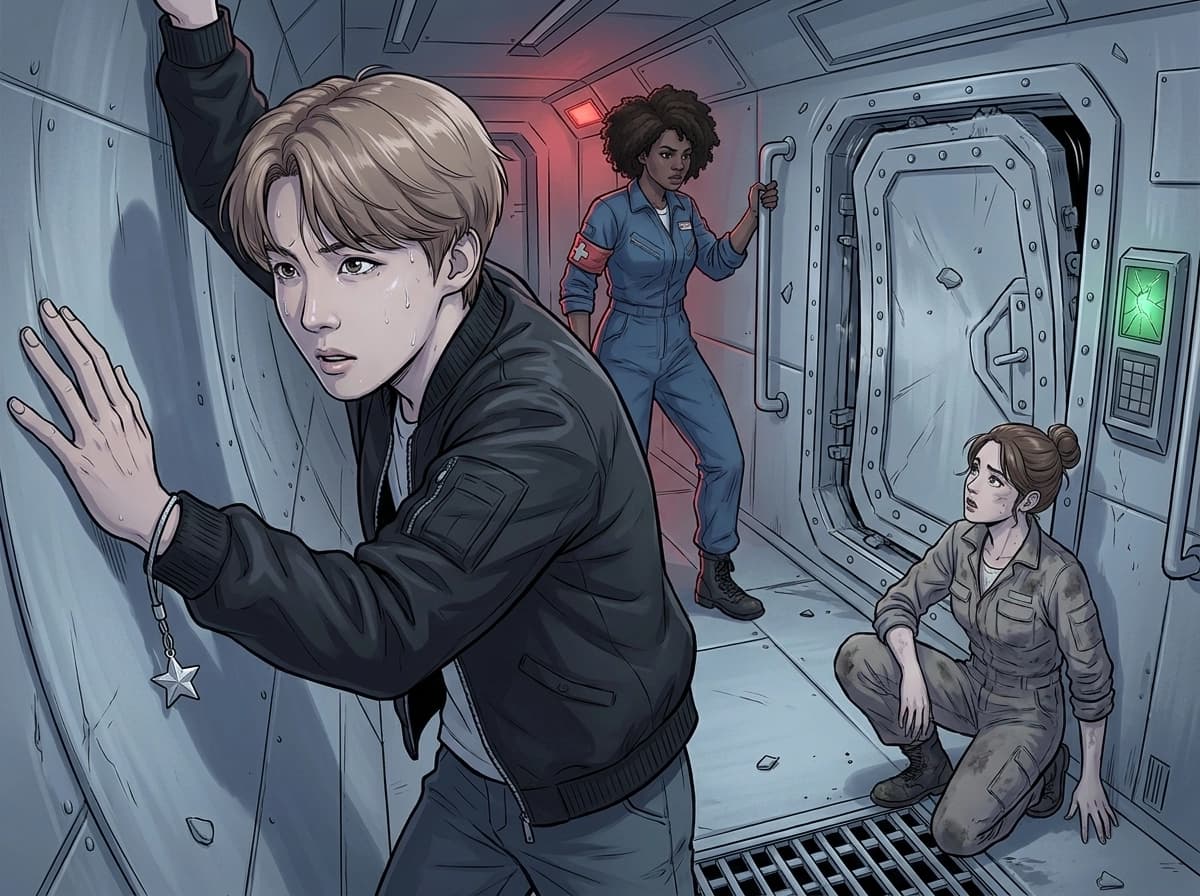
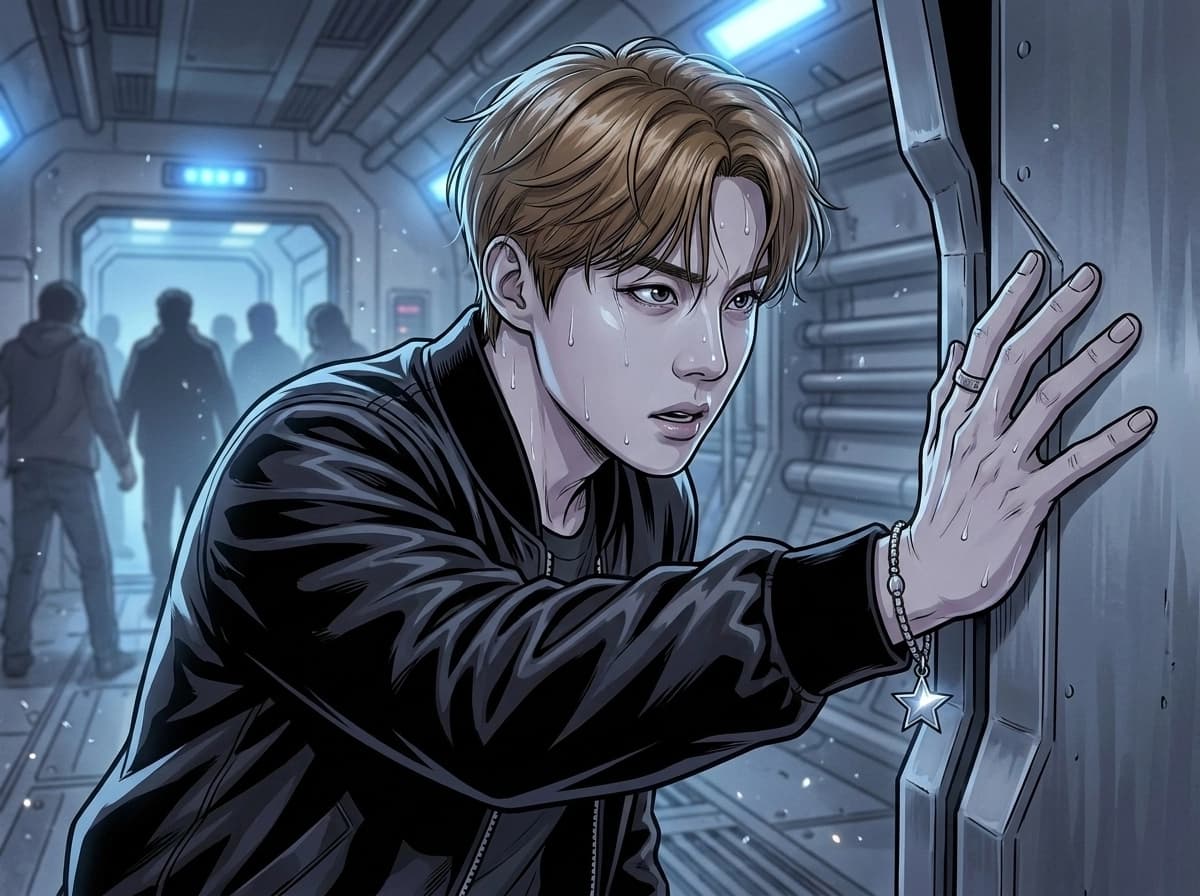
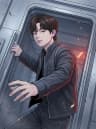
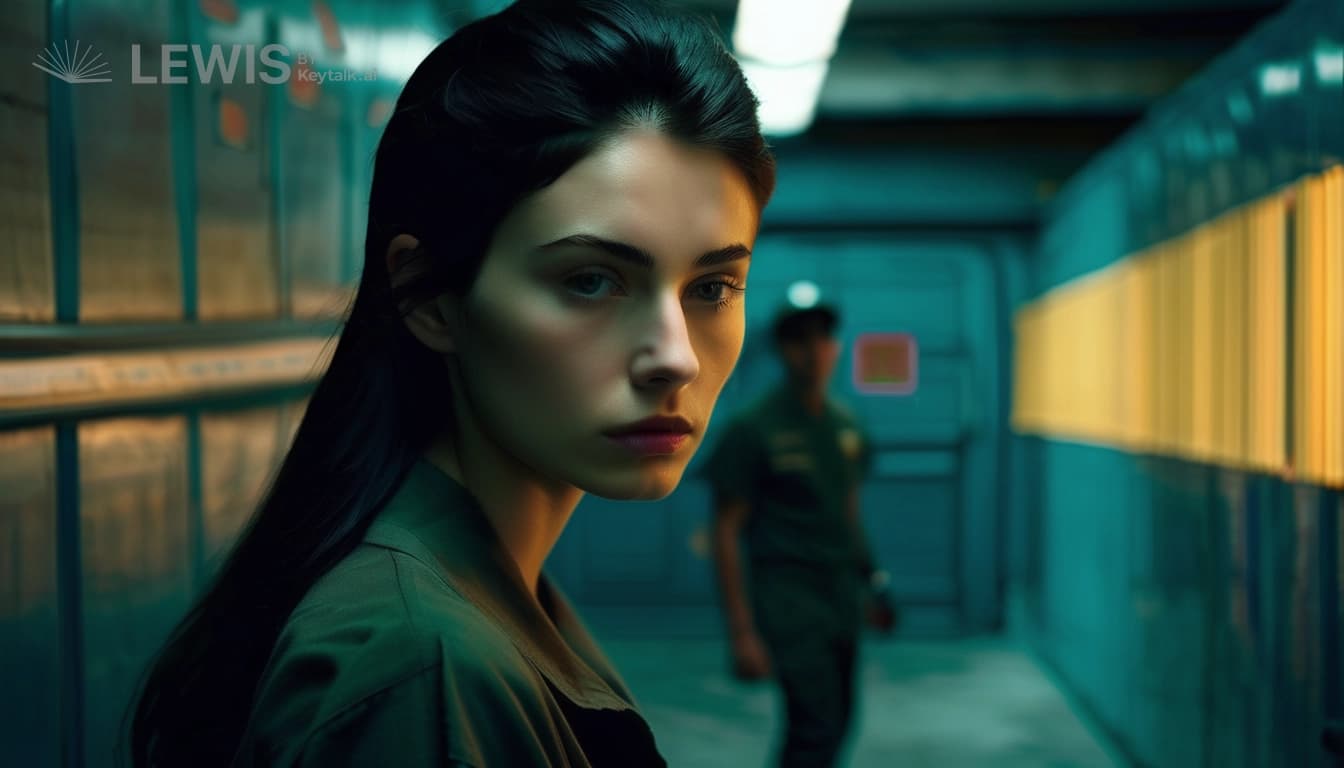
J-Hope comes to upside down in a maintenance cradle with blood in one ear, emergency red washing the aluminum walls, and a stranger’s wrist cuff locked to his own. The stranger is Imani Brooks, still in concert makeup under the sweat on her face, already checking his pupils and the pulse of a flight attendant pinned against a coolant pipe. Around them, sequined stage jackets and paper banners drift through the dark like party debris in a flooded room. The station’s alarms are barking in Korean, English, and Japanese, and through the metal they can hear something worse: the long, bending groan of the outer ring beginning to tear away. J-Hope’s first instinct is to soothe. He smiles too fast, tells the waking passengers they’re going to get through this, and starts counting breaths out loud to keep them from thrashing in the unstable spin. Imani cuts through him at once. She rips silk from a costume rack for bandages, checks the biometric tags on the nearest bodies, and tells him that if he keeps talking like everyone can be saved, people who should stay still will waste air trying to run.
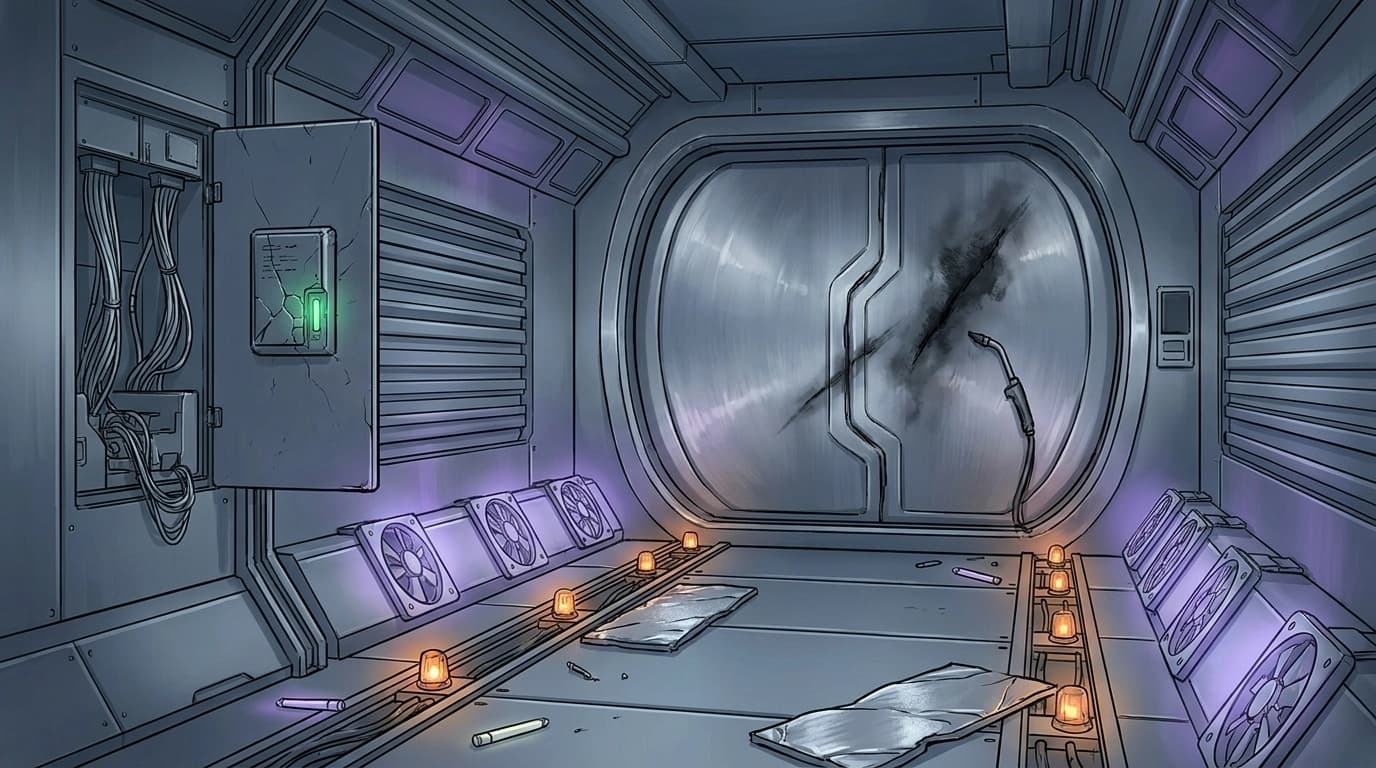
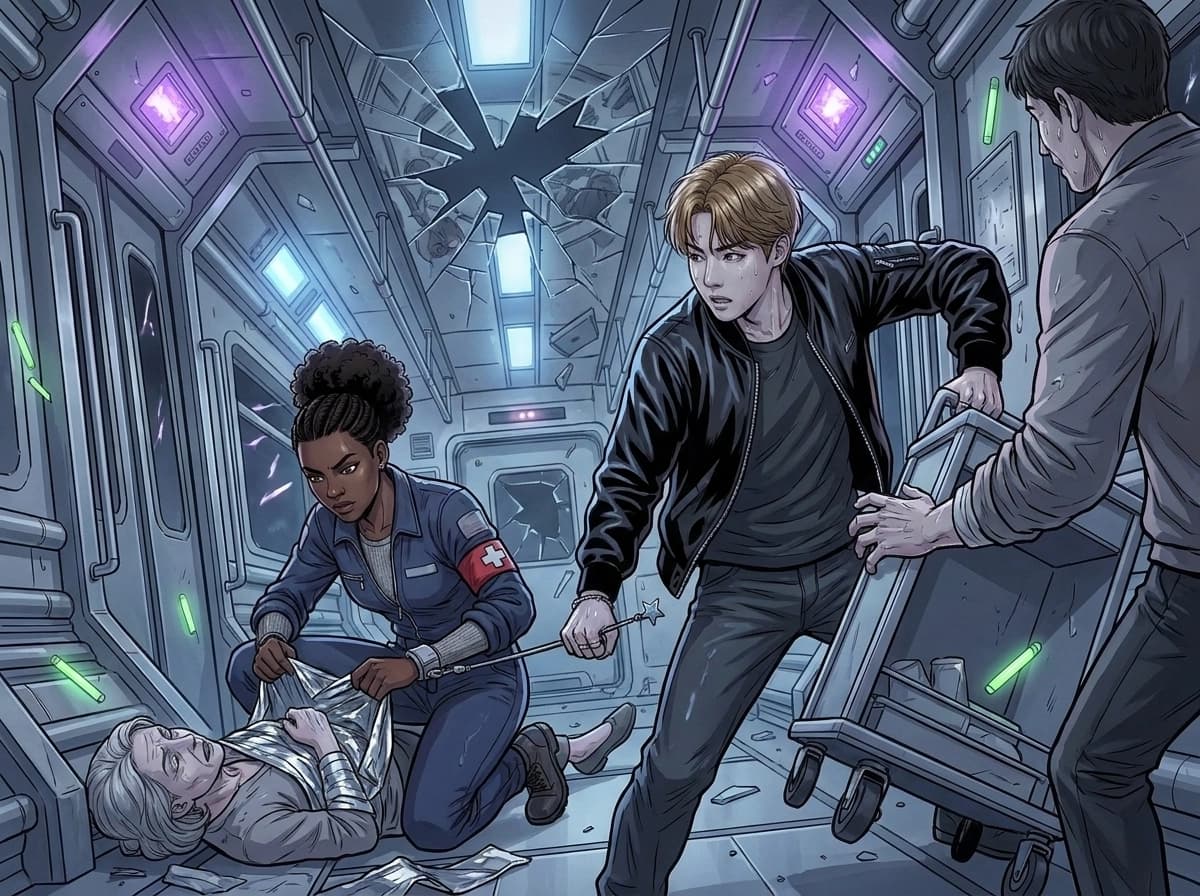
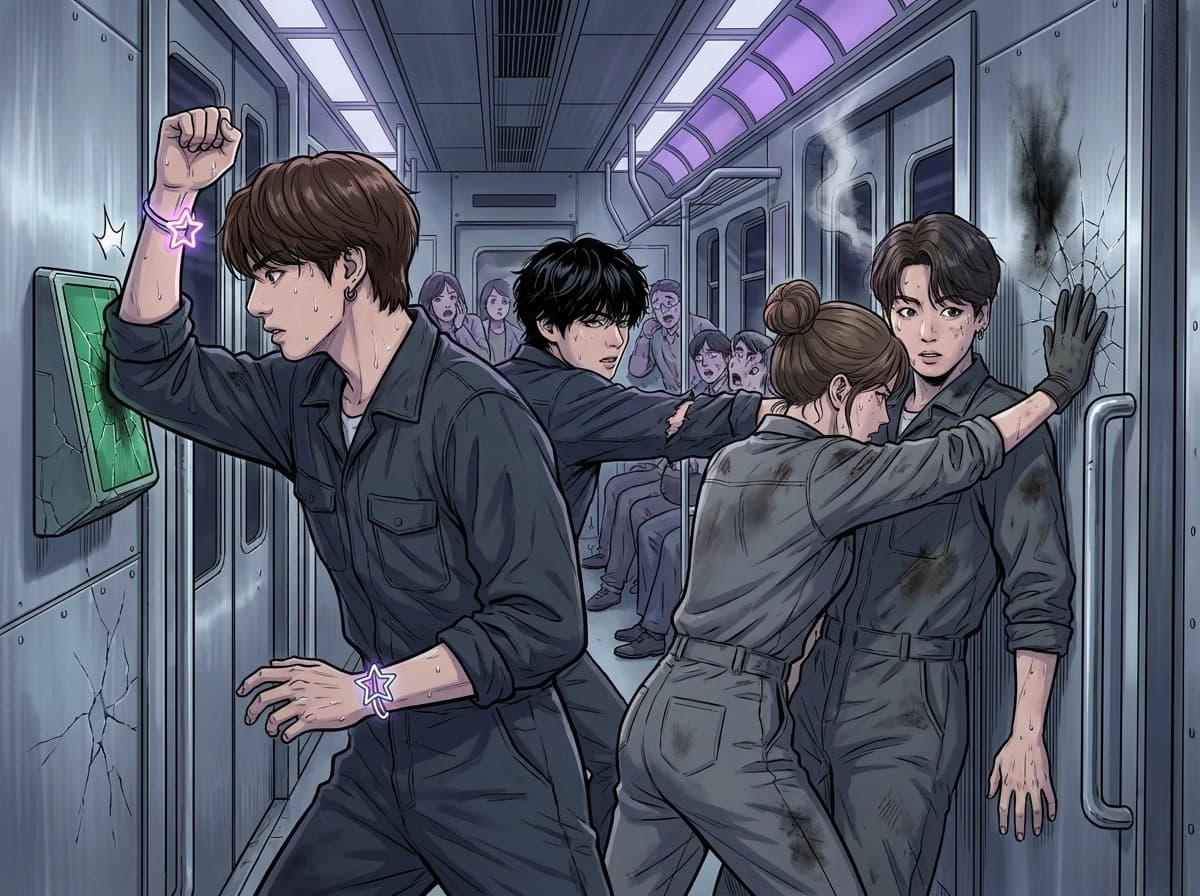
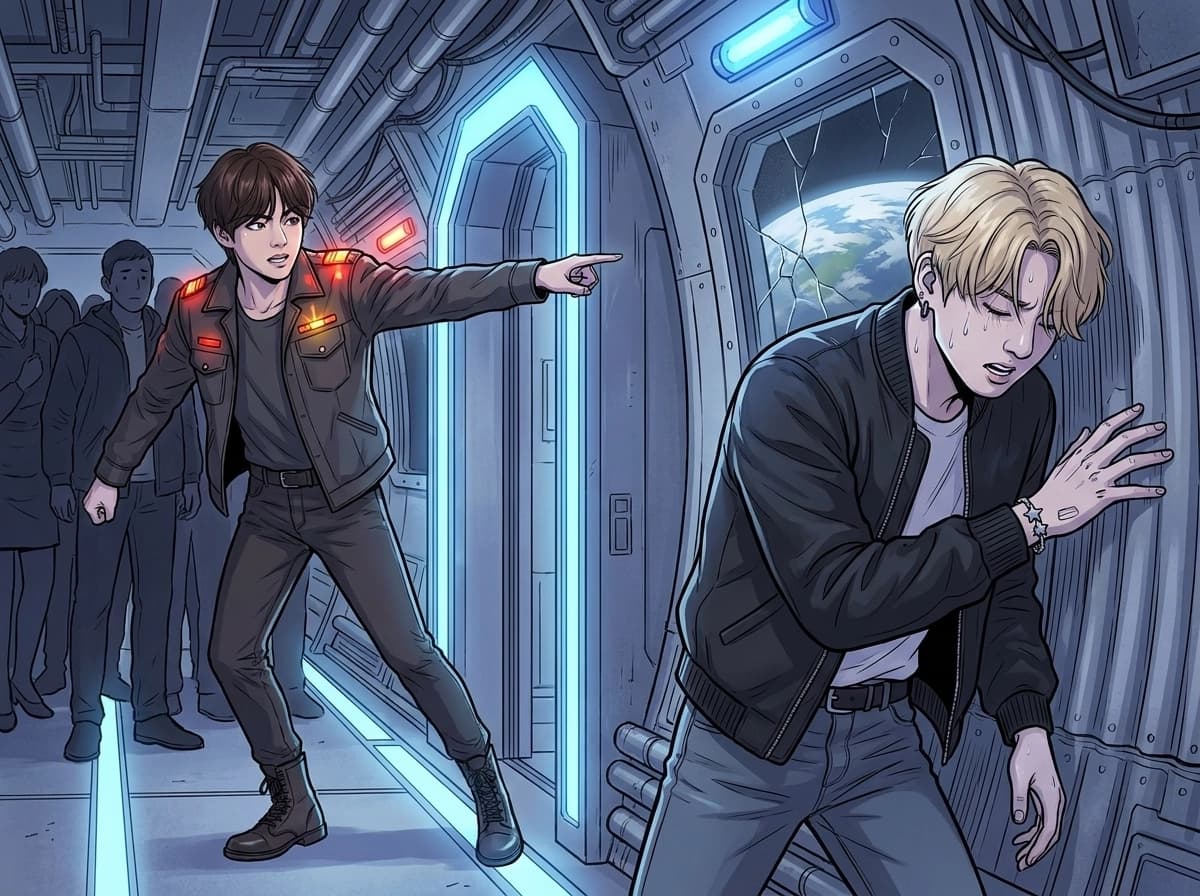
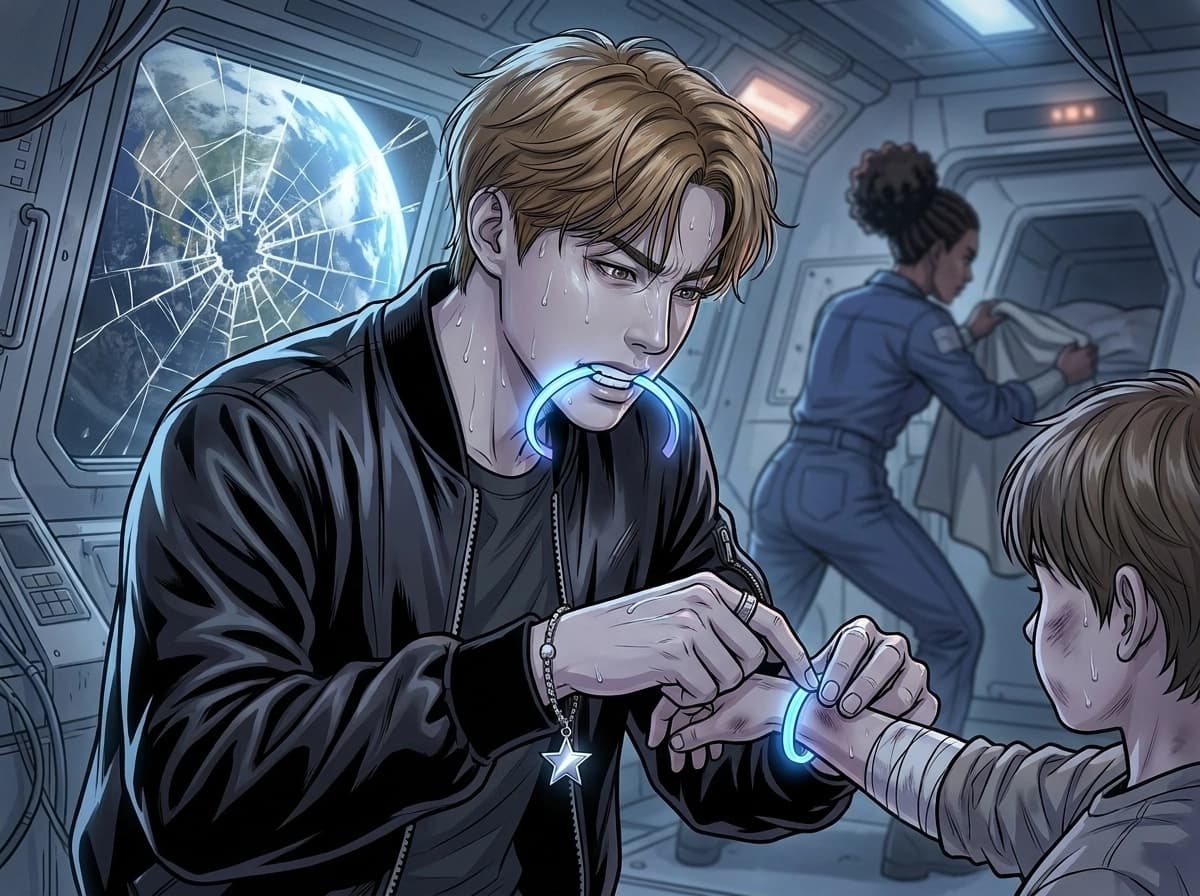
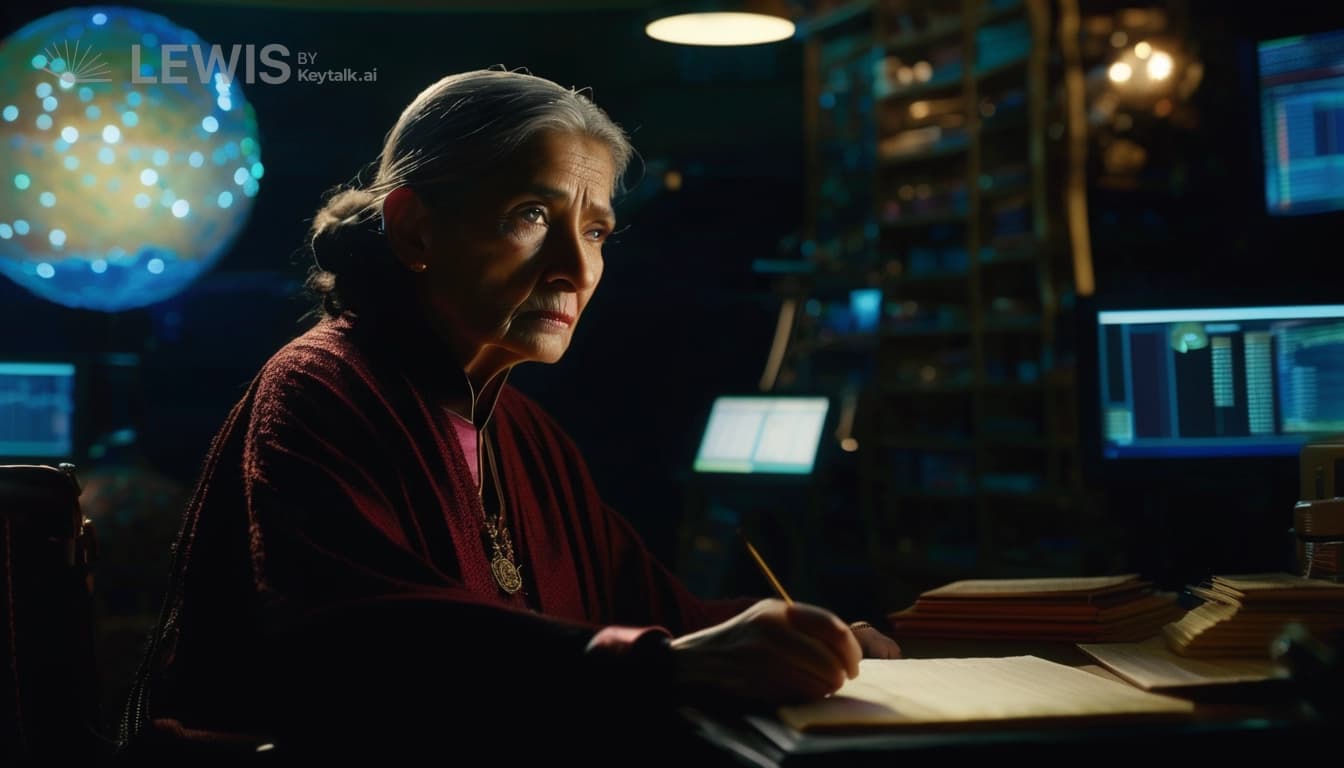
In another section of the crippled ring, V, Jungkook, and Clara Bell are trapped behind a bulkhead that has buckled inward like a kicked can. Their compartment holds two dozen injured fans, one child with a crushed wrist, a box of glow sticks from a merch cart, and a cutting torch whose battery is half gone. Clara listens to the hull with her fingertips pressed to the deck and knows, from the pitch of the vibration, that the station is shedding load unevenly. She also knows why before anyone else does. Hours earlier she flagged a maintenance tremor in the service ring as noise from concert bass bleed and let the event schedule continue. Now the hidden weakness has opened under real impact, and every shiver in the wall is partly her fault. She says none of this. Instead she starts assigning hands: break glow sticks, mark the floor, sort the injured by breathing and body temperature, and nobody touches the bulkhead until she says. When frightened passengers recognize V and Jungkook, they begin pleading for the stars to get out first, as if fame itself could pry steel open. V answers with a dry joke about everyone looking equally terrible in emergency lighting, gets a few strained laughs, and turns the room into a call-and-response breathing exercise. Jungkook is already eyeing the maintenance seam above the hatch.
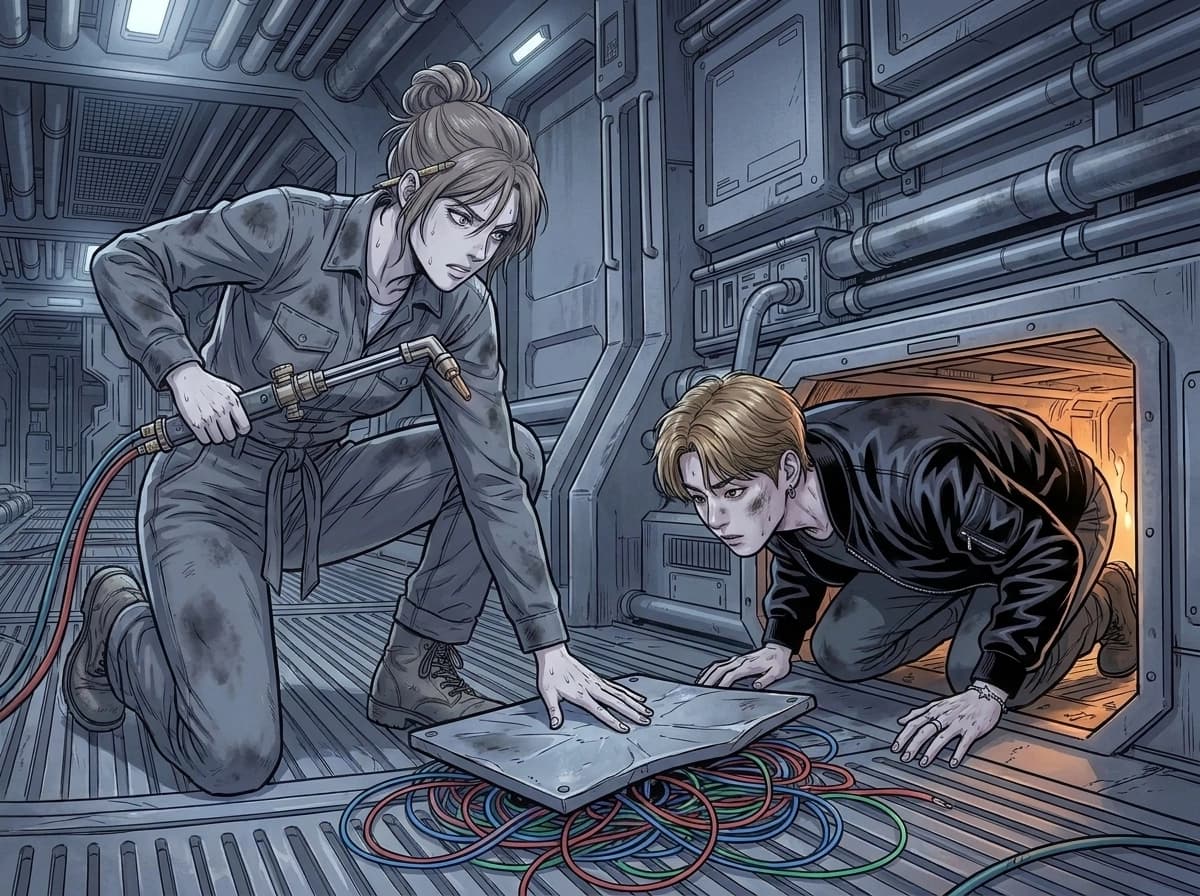
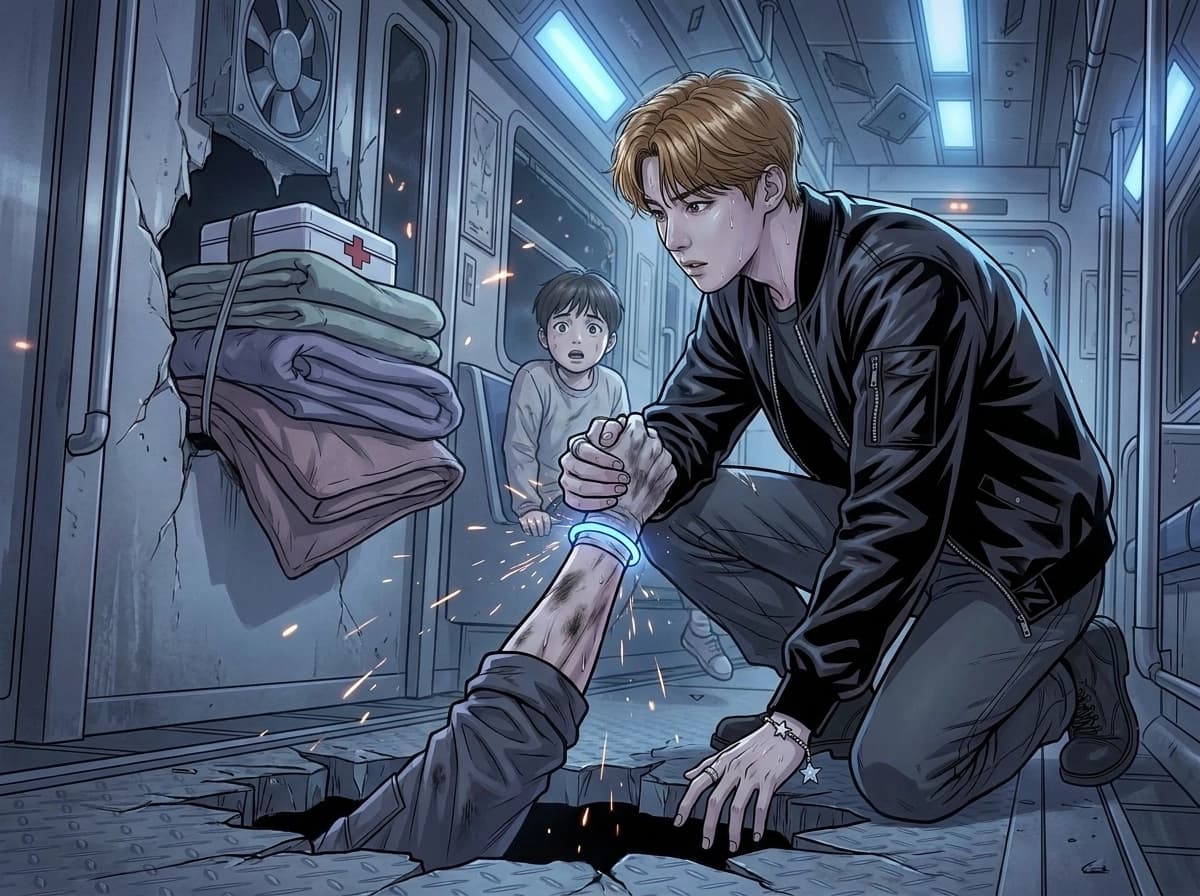
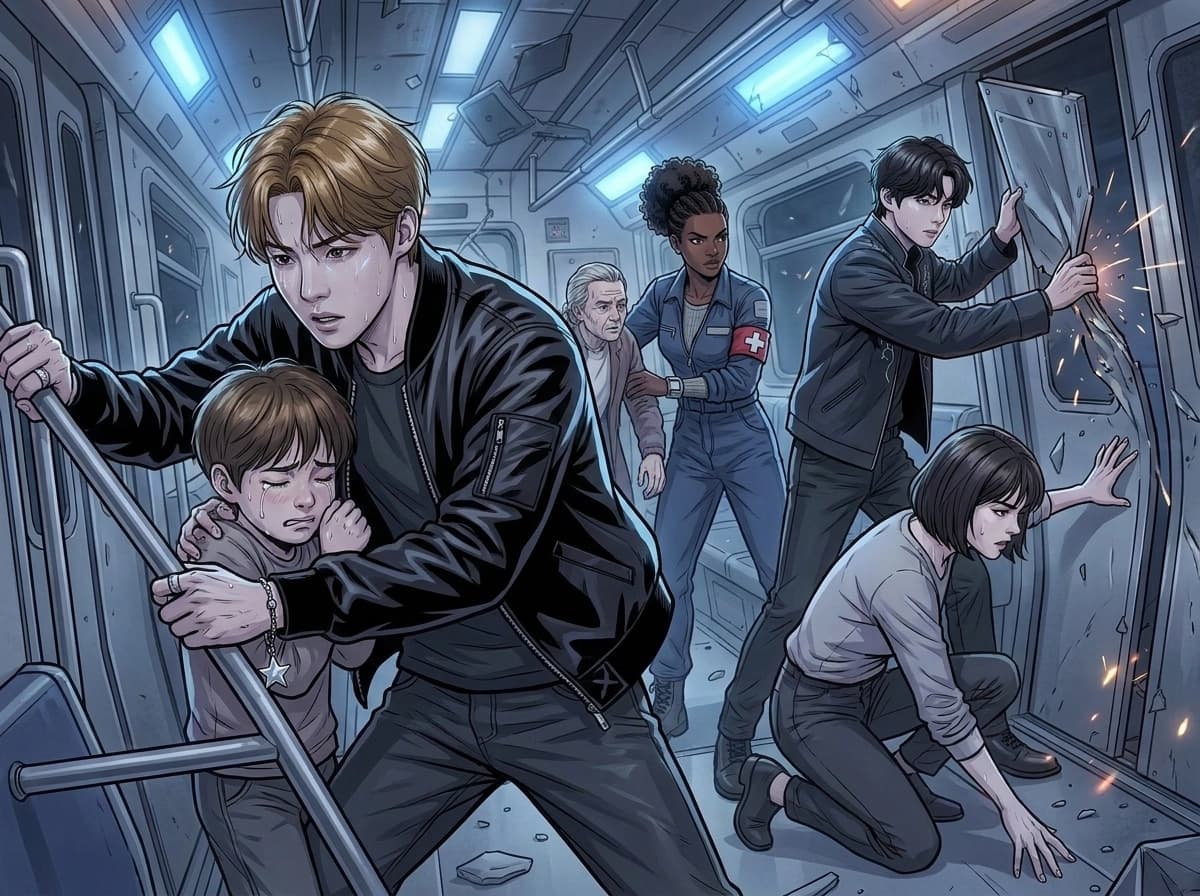
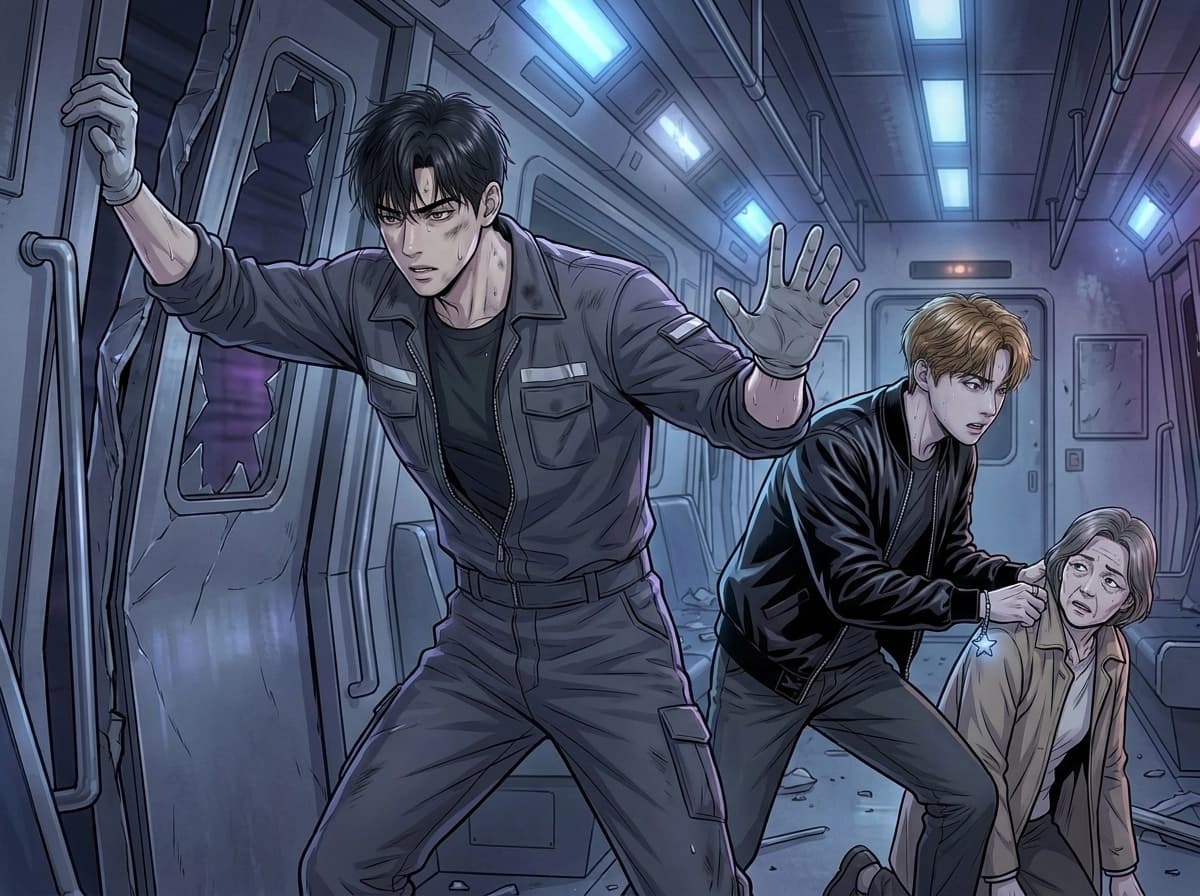
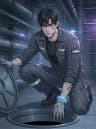
The first link between the two trapped groups comes when Jungkook wriggles into a cable chase barely wide enough for his shoulders. Clara tells him not to go; the chase runs beside a compromised pressure lane, and one careless kick could rupture it. He goes anyway because he can hear people pounding somewhere beyond the wall. He returns scraped, filthy, and triumphant with a med kit, two thermal blankets, and the code stenciled on a service plate that leads toward J-Hope’s section. Tucked against his chest is a sobbing little boy he found drifting in a dead-end utility bubble with a dead fanlight clutched in his fist. The compartment cheers him like a hero. Jungkook hates it. He shoves the praise away, hands the child to V, and asks Clara which hatch opens next.
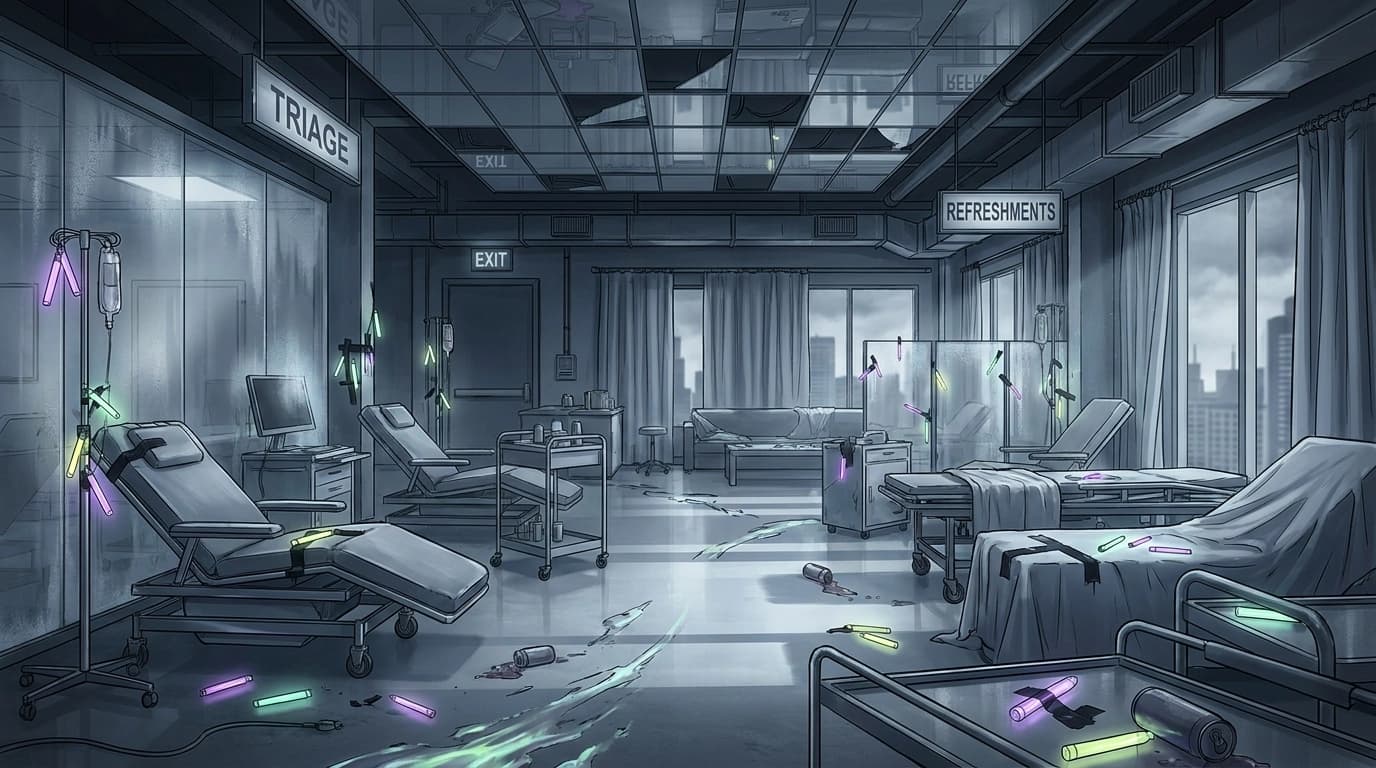
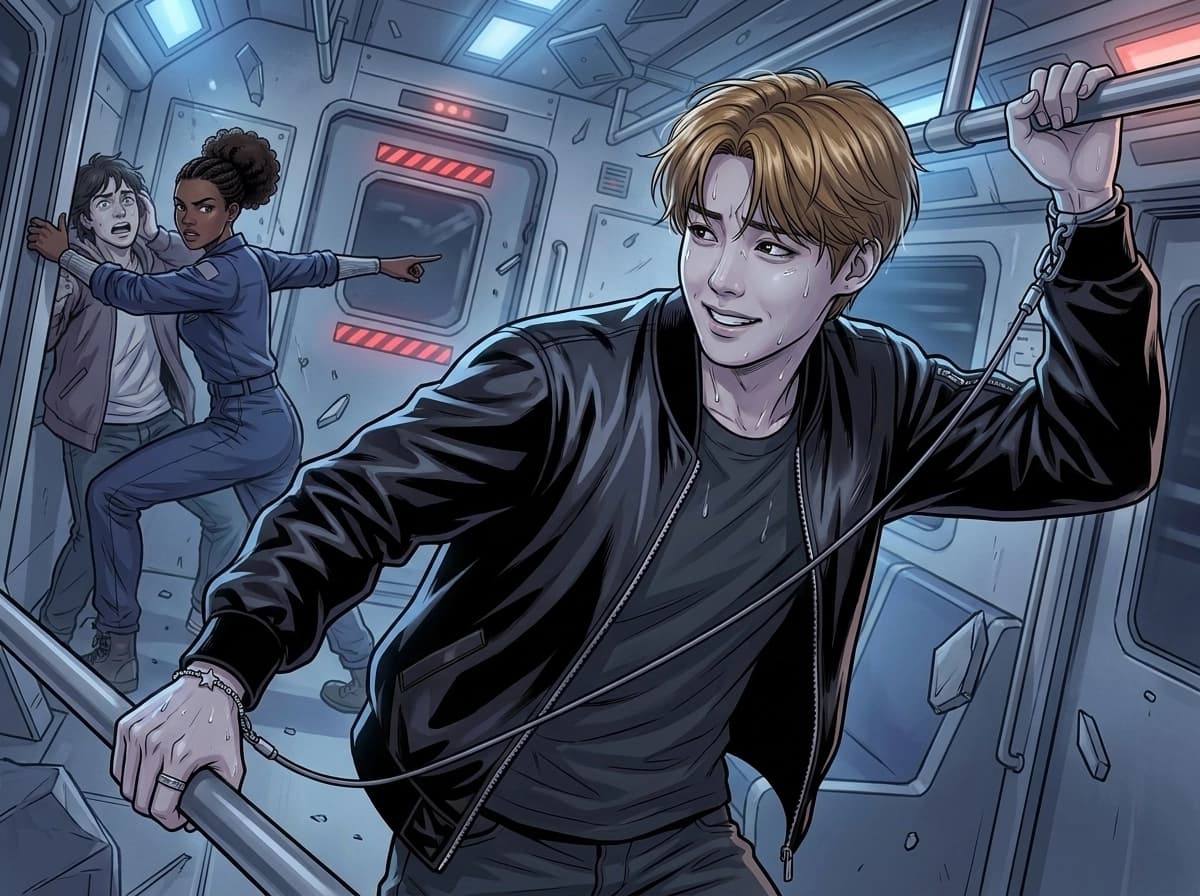
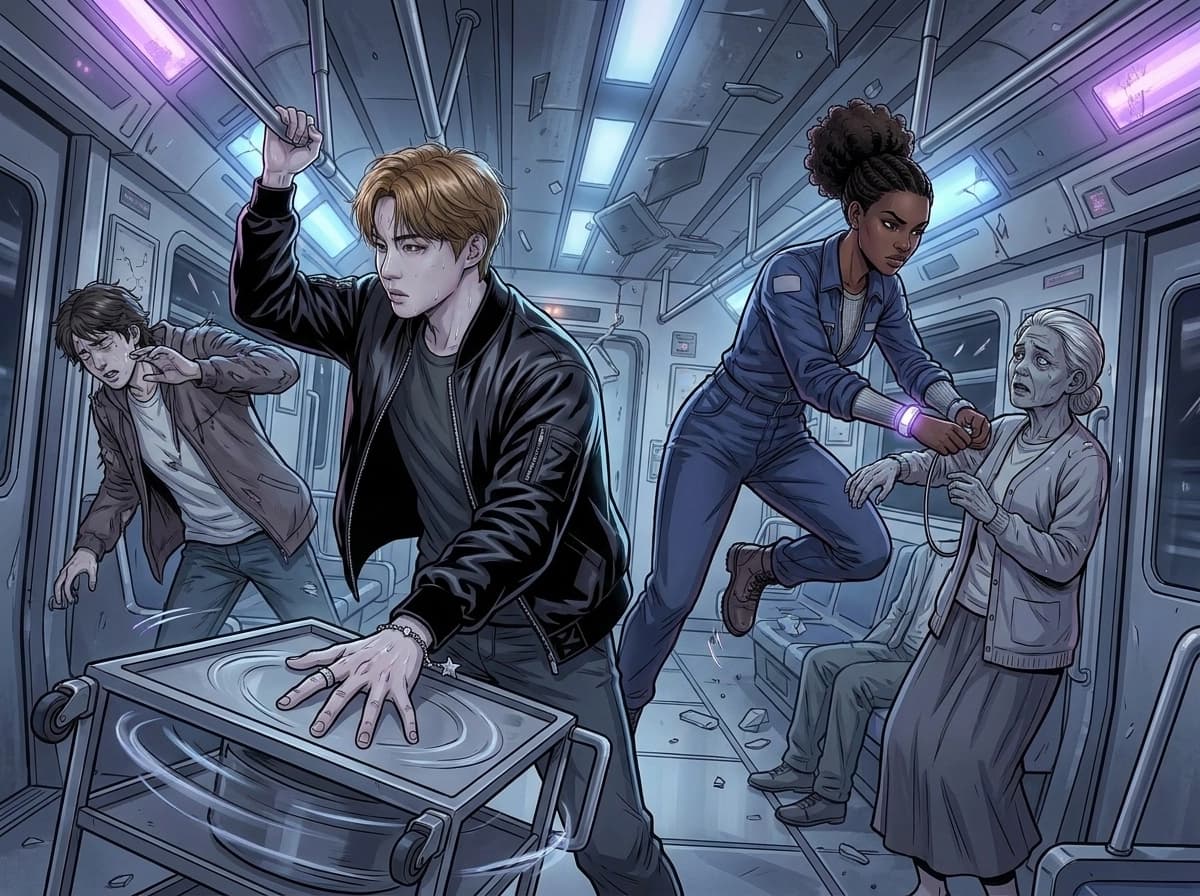
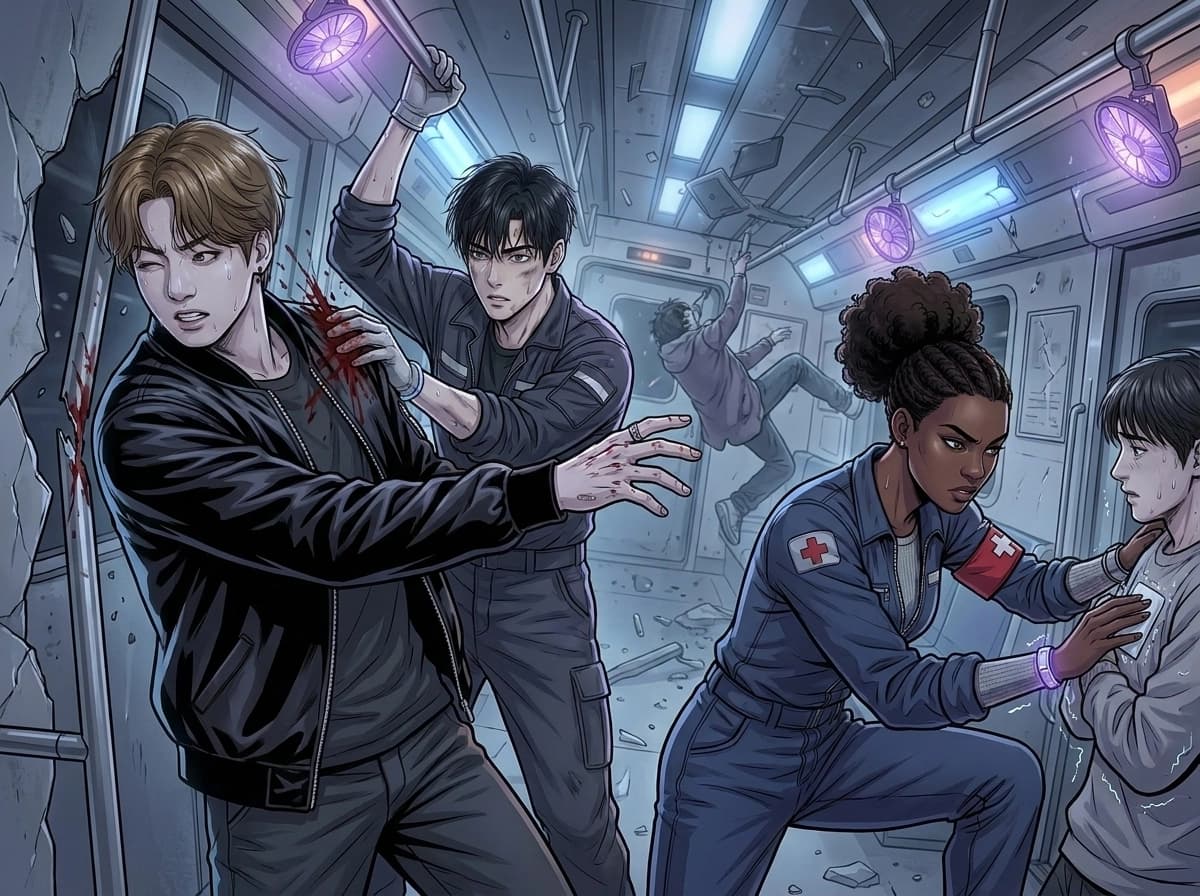
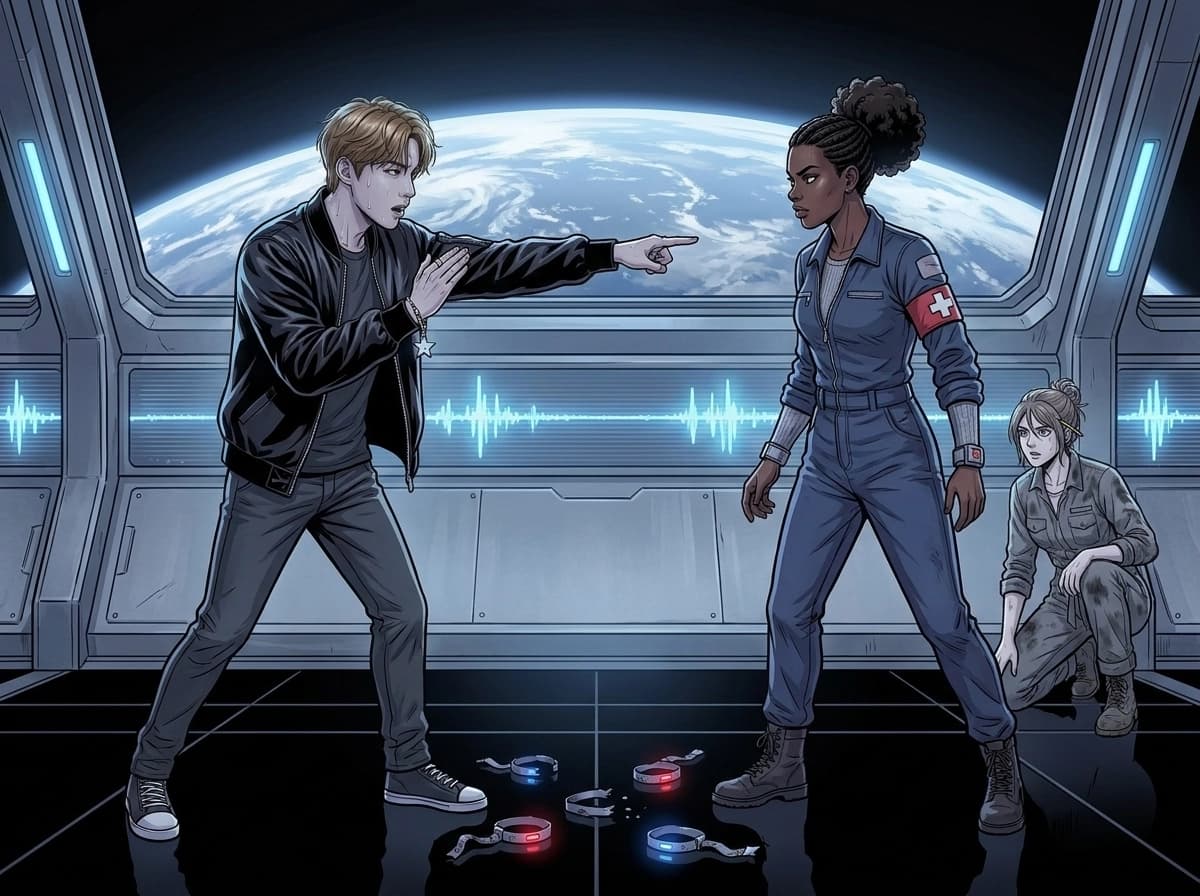
J-Hope and Imani build a pocket of order in their own section by turning fan objects into triage tools. Glow sticks become light markers for the dizzy and half-conscious. Fanlight batteries warm the inside of blankets for children and older passengers. J-Hope, still cuffed to Imani, becomes her extra pair of hands. He braces bodies while she splints limbs, repeats her instructions so people obey them, and uses the same bright stage presence that usually pulls screams from arenas to pull one simple thing now: compliance. Every time someone asks if rescue is close, he says yes before he can stop himself. Every time, Imani’s eyes flick to him with irritation sharp enough to cut metal. When one passenger with a green-tagged wristband insists he has priority because the station’s emergency system moved his name to the front with the VIPs, Imani reads his oxygen and shoves him toward a safer wall anyway because a gray-faced grandmother nearby is crashing. J-Hope backs her in public, but the moment lodges in him. The station’s neat categories are wrong, and everyone is still looking at him as if he has the right to make them.
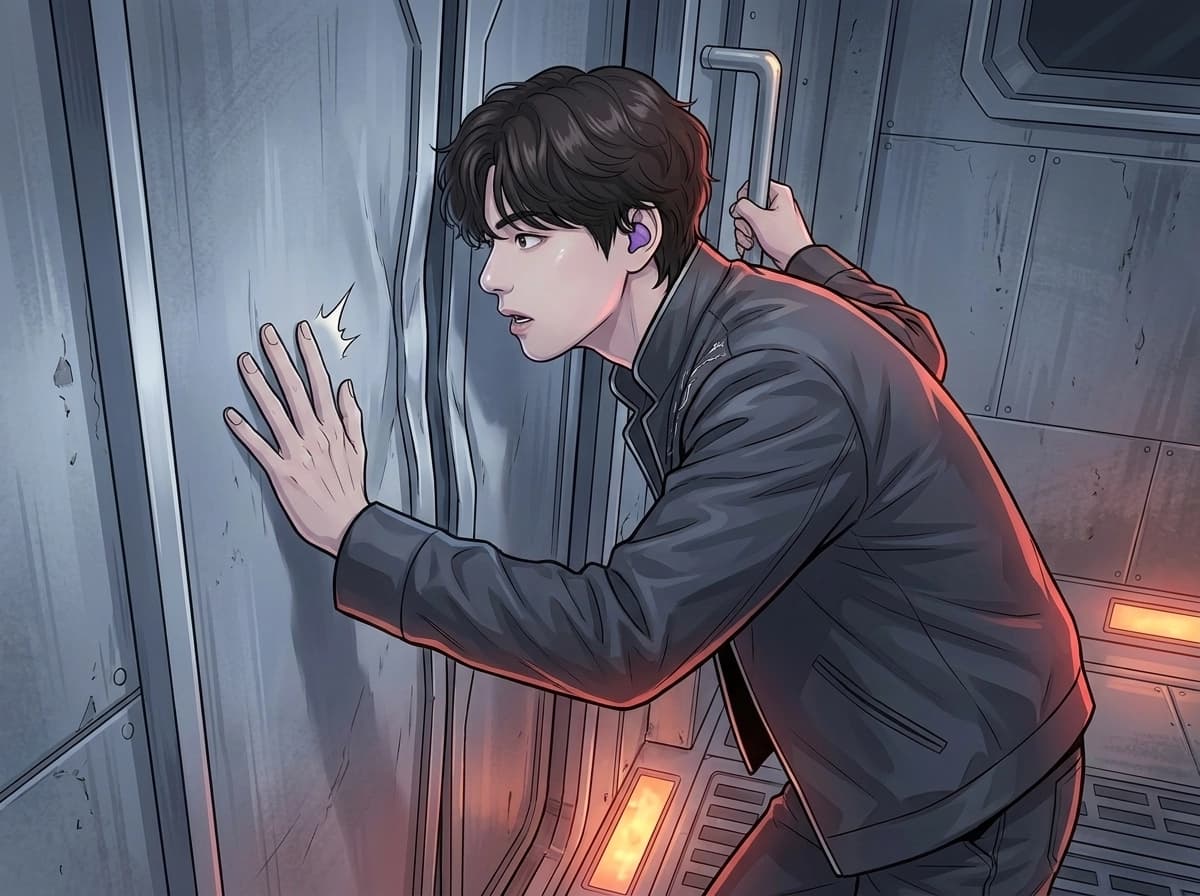
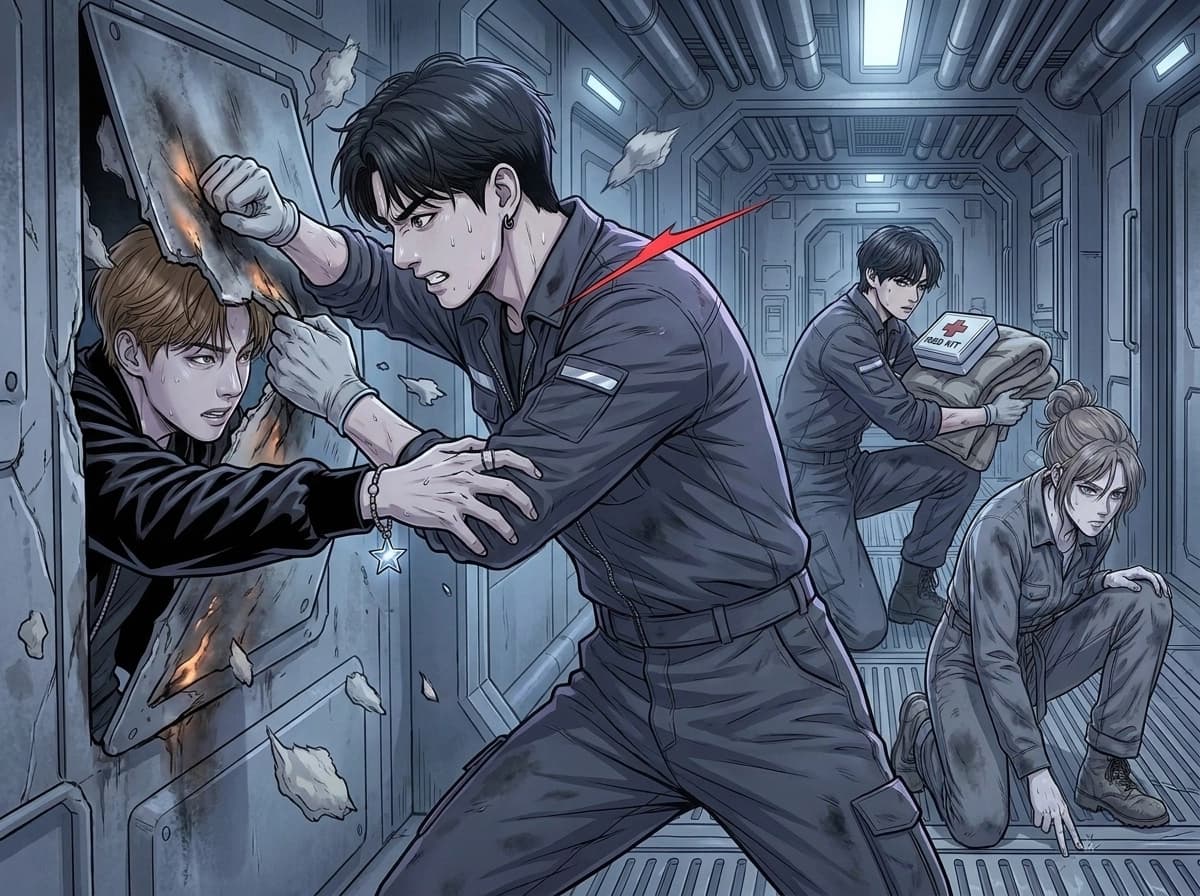
A damaged service hatch finally lets sound pass between the groups before it lets bodies through. V’s voice comes through first, absurdly calm, singing half a chorus through six inches of warped alloy until J-Hope answers with the other half. The trapped passengers on both sides cheer because hearing a familiar voice through a wall feels like proof that the station is still one place. Clara kills the cheering quickly and makes them listen. The wall is taking load it was never meant to bear. If they torch through at the wrong point, both compartments could lose pressure. If they wait, the ring may shear before rescue arrives. She maps the stress path with a marker on the metal while V watches her too closely. He has noticed the repair tags she will not explain, the way she flinches before each new groan, the precision of someone hearing a tune she already knows. He asks, softly and in front of everyone, what she is not saying. Clara lies that she is calculating odds. V lets it go for the moment, but he does not believe her.
They manage a brutal, careful breakthrough at a maintenance crawlspace instead of the main hatch. Jungkook and J-Hope are the first to clasp forearms through the opening, with Imani barking at them not to yank and not to waste motion. For a few precious minutes the main cast is finally in one cramped, freezing service throat together, passing children, blankets, and supplies body to body while Clara times the pressure equalization and V keeps the panicking passengers answering simple questions so no one hyperventilates. The reunion costs them. A loose panel slices Jungkook’s shoulder. A frightened fan lets go of a handhold and slams into a vent housing, making Imani abandon one patient to save another. J-Hope watches her choose in three seconds which body gets the last intact heat patch. She gives it to the person least likely to survive without it, not the loudest one, not the one wearing a premium band, and not one of the celebrities. That decision becomes the moral shape of the rest of the night.
Once the groups combine information, the route to the only functioning shuttle becomes clear and ugly. A partial power spine still connects three compartments to Dock Three, where a six-seat emergency shuttle remains fueled and pressurized. But the spine cannot hold life support across all surviving sections at once. Someone must manually reroute reserve power compartment by compartment from junction boxes hidden behind decorative walls. Each reroute opens a path and saves one cluster while another goes dark, cold, and thin on air. The station’s official emergency queue keeps pushing the famous men and top-tier guests to the front. Word spreads fast, and now the worst pressure on J-Hope is not the hull but the people begging him to claim the place the system keeps offering. Some ask him to save himself because it will help them stay calm. Others accuse him of stealing air by existing at the center of attention. Borrowed brightness becomes a burden he cannot set down.
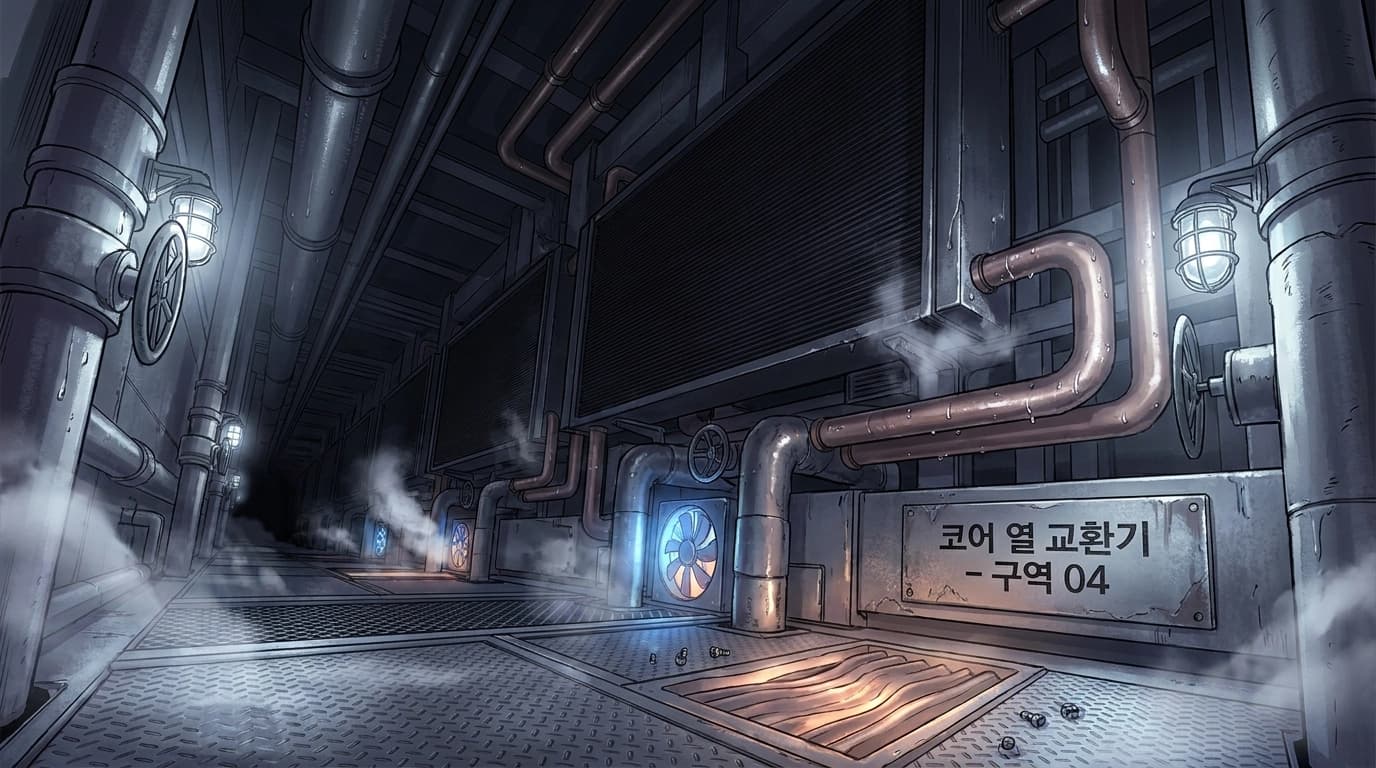
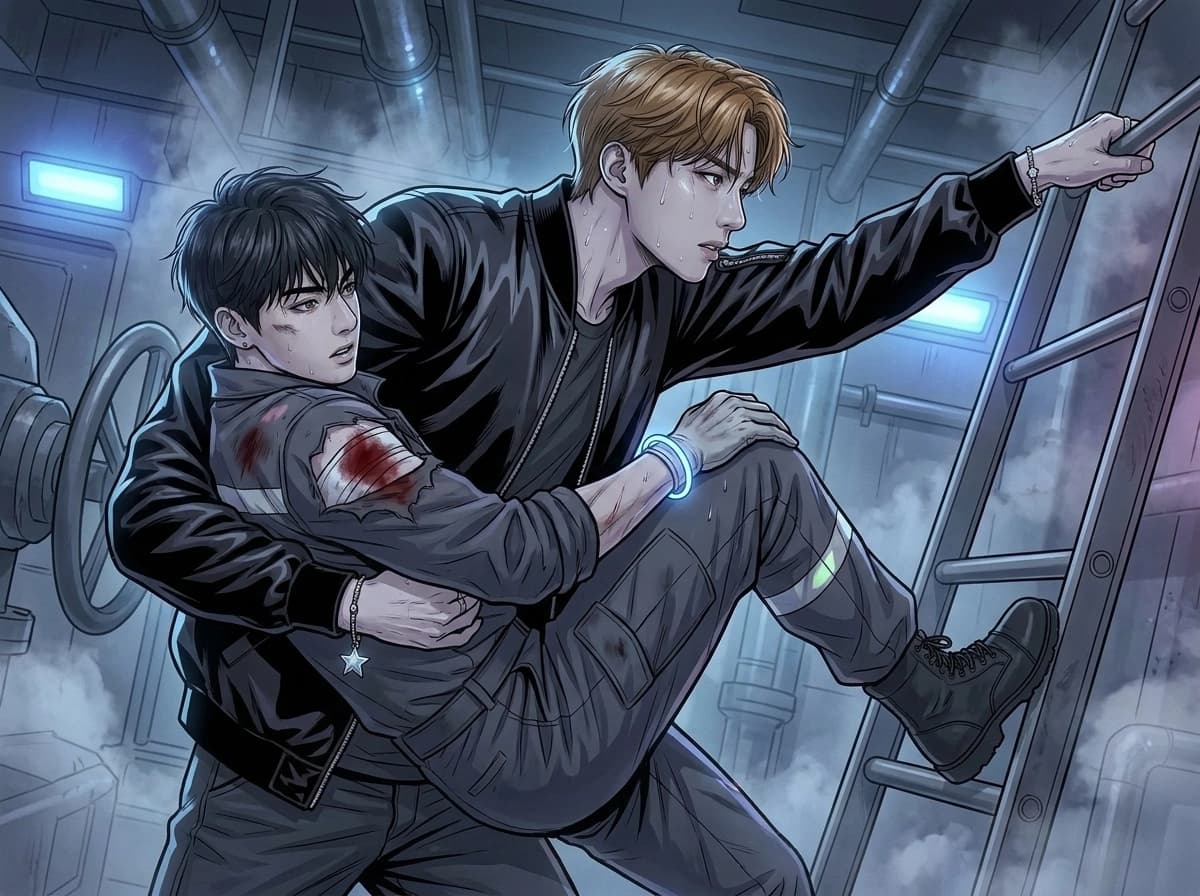
They move in stages, never breaking the station’s pressure rules, hauling one compartment at a time toward Dock Three. Clara leads them by vibration and memory, pressing fingers to bulkheads and saying things like, “Not this ladder. The next one will snap on the third rung.” She is right too often. V uses humor like a handrail. He points at a floating designer shoe lodged in a vent and remarks that even in space nobody can survive fashion choices; people laugh, then breathe. He also gathers details while he comforts: an outdated maintenance label half-peeled behind a merch panel, a service seal signed off in Clara’s initials, the exact look on her face when the wall sings. Jungkook keeps vanishing into shafts to open the next path from inside, returning each time with less air and more blood on his sleeves. Imani finally corners him in a junction chamber, hooks her cuffed arm through a rail so he cannot launch away, and tells him flatly that if he turns himself into spare equipment one more time, she will sedate him with his own med kit. He almost laughs, then nearly passes out from blood loss. J-Hope sees how close they are to losing him and, for the first time, gives an order that sounds more like refusal than comfort: Jungkook is done with solo runs. Jungkook hates him for ten minutes and obeys anyway.
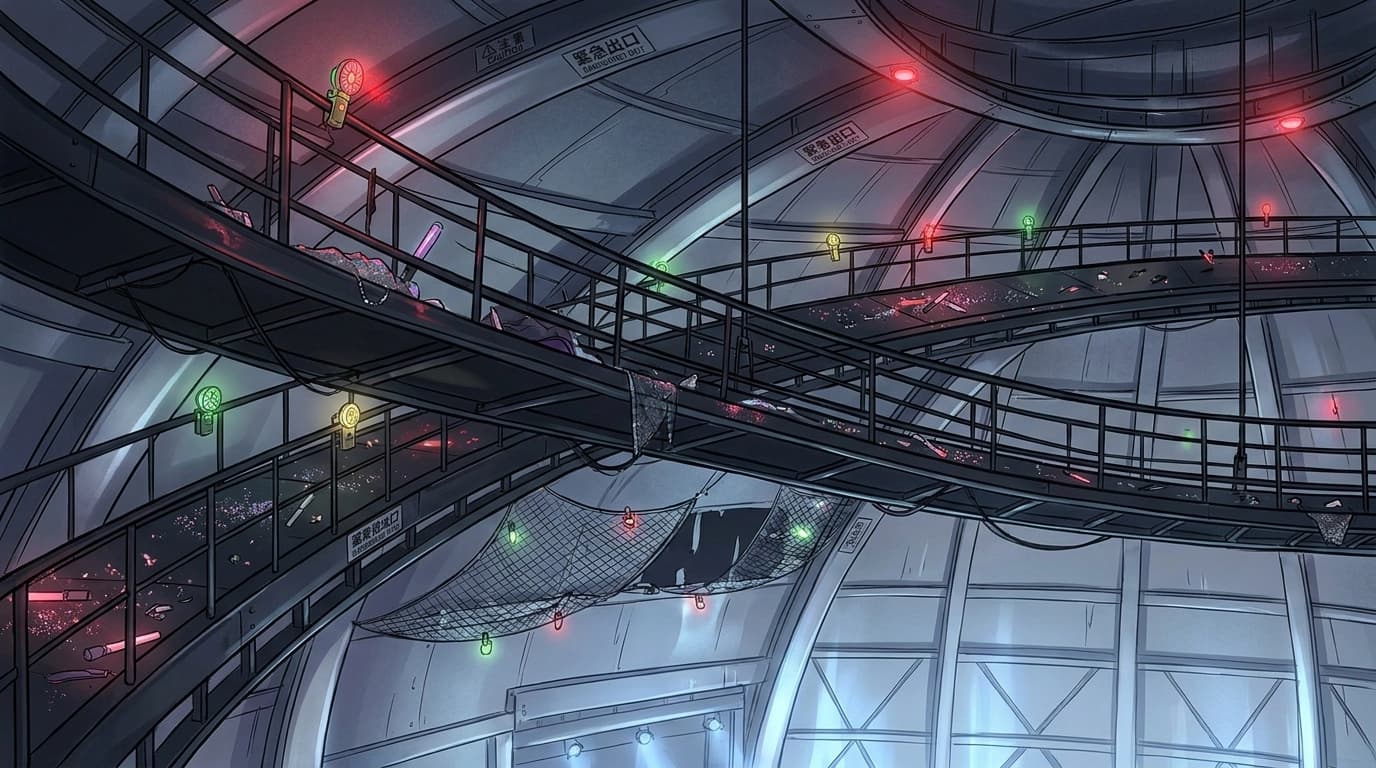
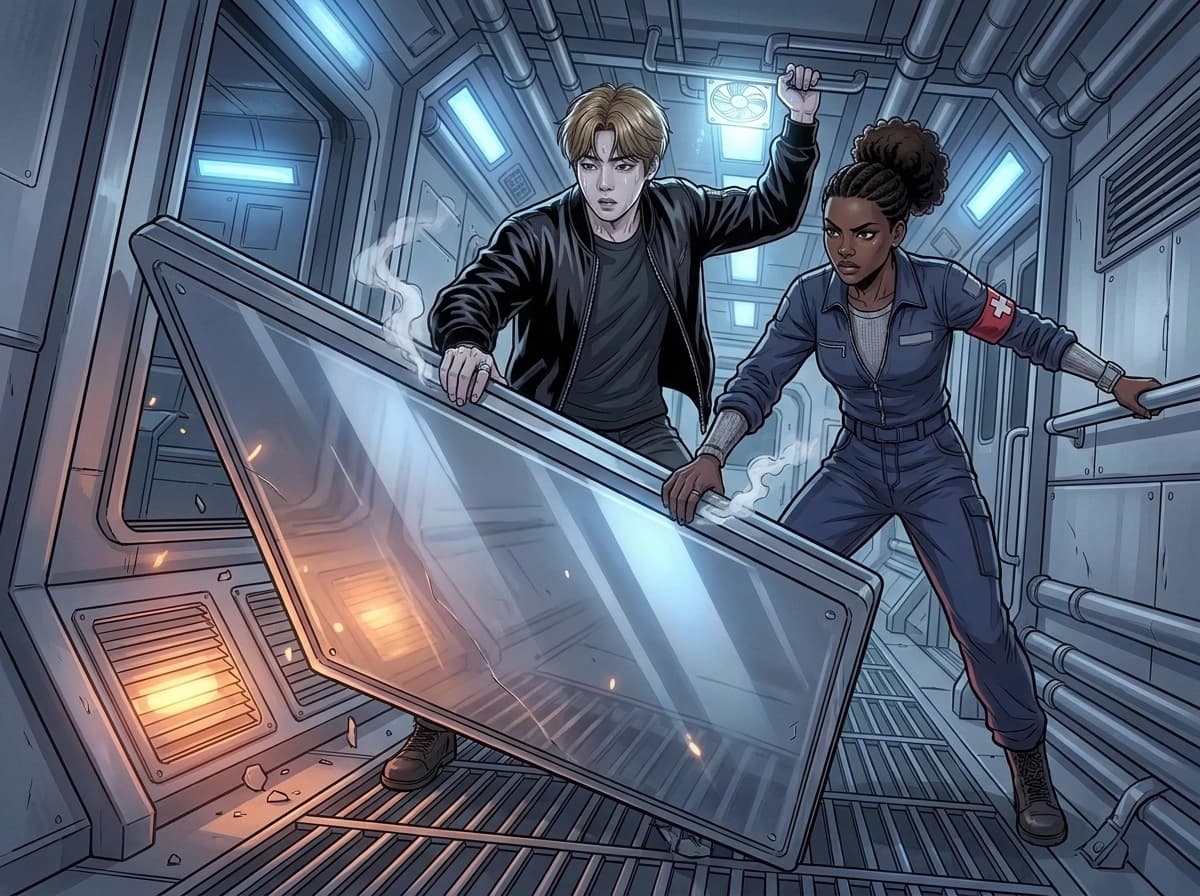
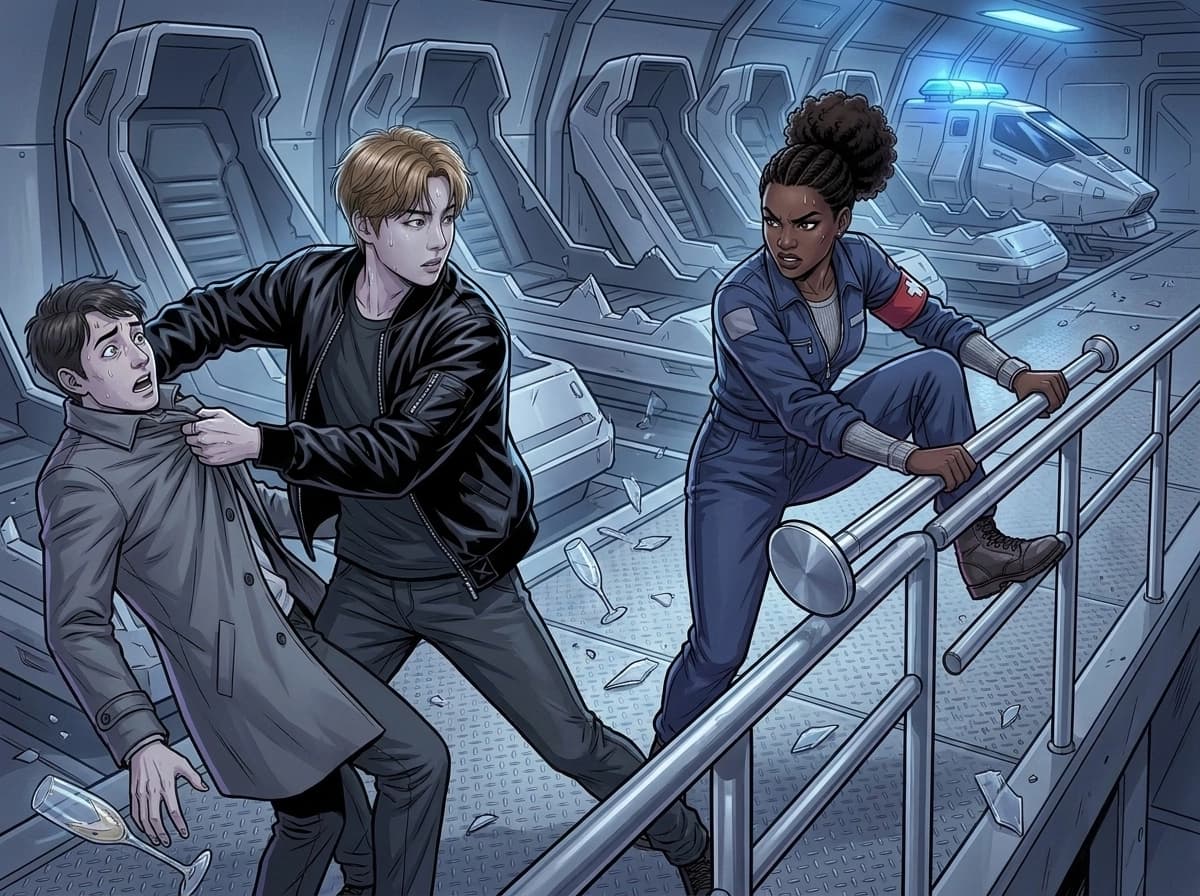
The central reversal arrives when they reach a grand viewing corridor skinned in cracked mirror and dead hologram petals. Through the ruptured ceiling they can see Earth, serene and blue, while passengers huddle under tour banners for warmth. Dock Three lies just beyond two pressure doors and one main power transfer node. Clara listens to the node housing and goes still. The load pattern she has been fearing is here. The debris strike did not simply damage the ring; the station’s hidden remodeling, done to make public decks look cleaner and more luxurious, removed visible redundancies and shifted emergency strain into the very corridor now packed with survivors. The maintenance warning she dismissed had been the structure trying to tell her it was already singing out of tune. V forces the confession by planting himself in front of her with his back against the pressure door so no one can rush past the truth. Clara, shaking but exact, admits she signed off on the false-noise assumption. The crowd turns on her instantly. One man lunges. J-Hope catches him, not gracefully, just hard, shoulder to chest, and keeps Clara on her feet because hating the only engineer left alive will not hold the station together.
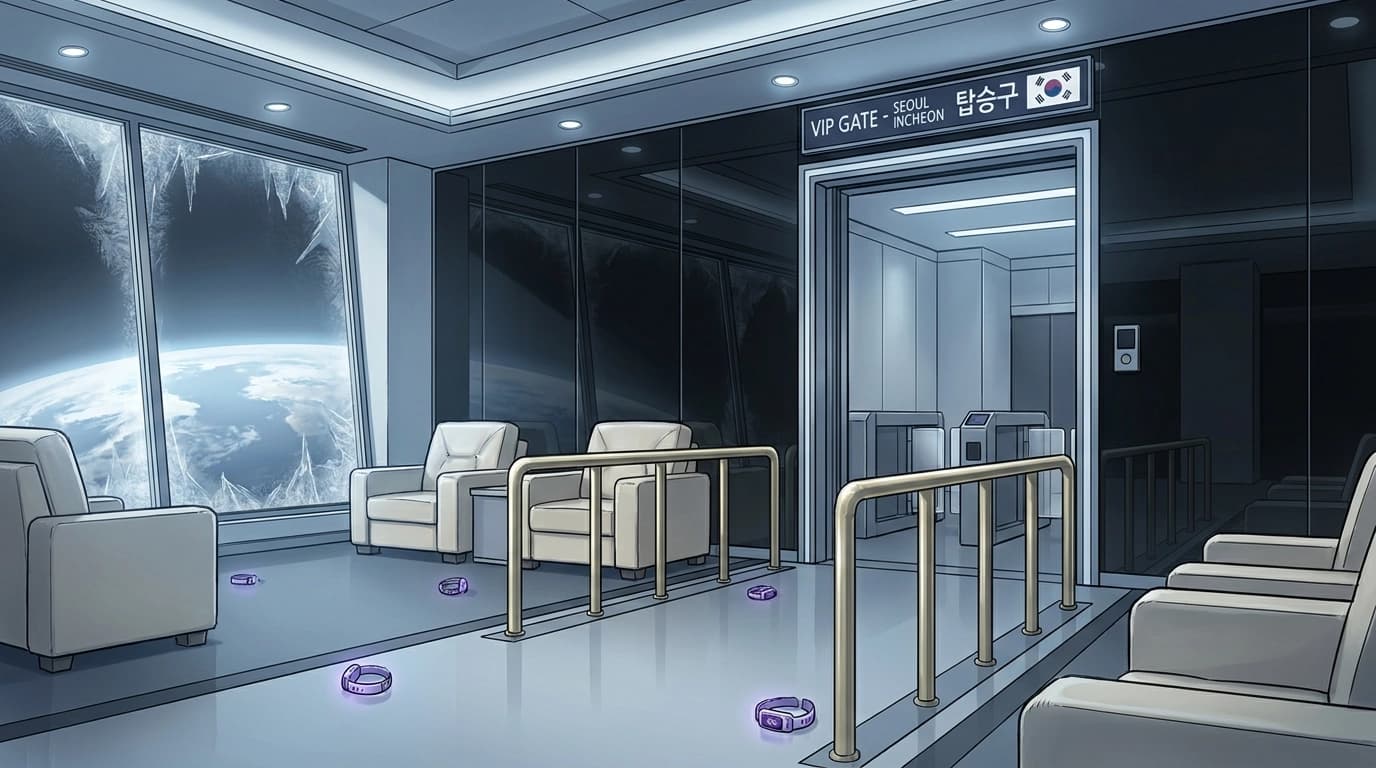
Clara’s confession changes the terms of the final choice. The route to Dock Three can still work, but only if they abandon the biometric queue entirely and cut power to a VIP lounge on an adjacent spur where a smaller group still has stable air. If they follow protocol, the shuttle path stays lit for the highest-priority tagged passengers, including the famous men, while weaker survivors in the corridor lose heat before they can move. If they override it, the lounge goes dark and those passengers will have to be rescued later, if later exists. Through an interior pane they can see the lounge occupants pounding the glass, some of them recognizable influencers and sponsors who spent the week buying proximity. They can also see two kids in the corridor starting to shiver uncontrollably. The station makes the moral question brutally physical.
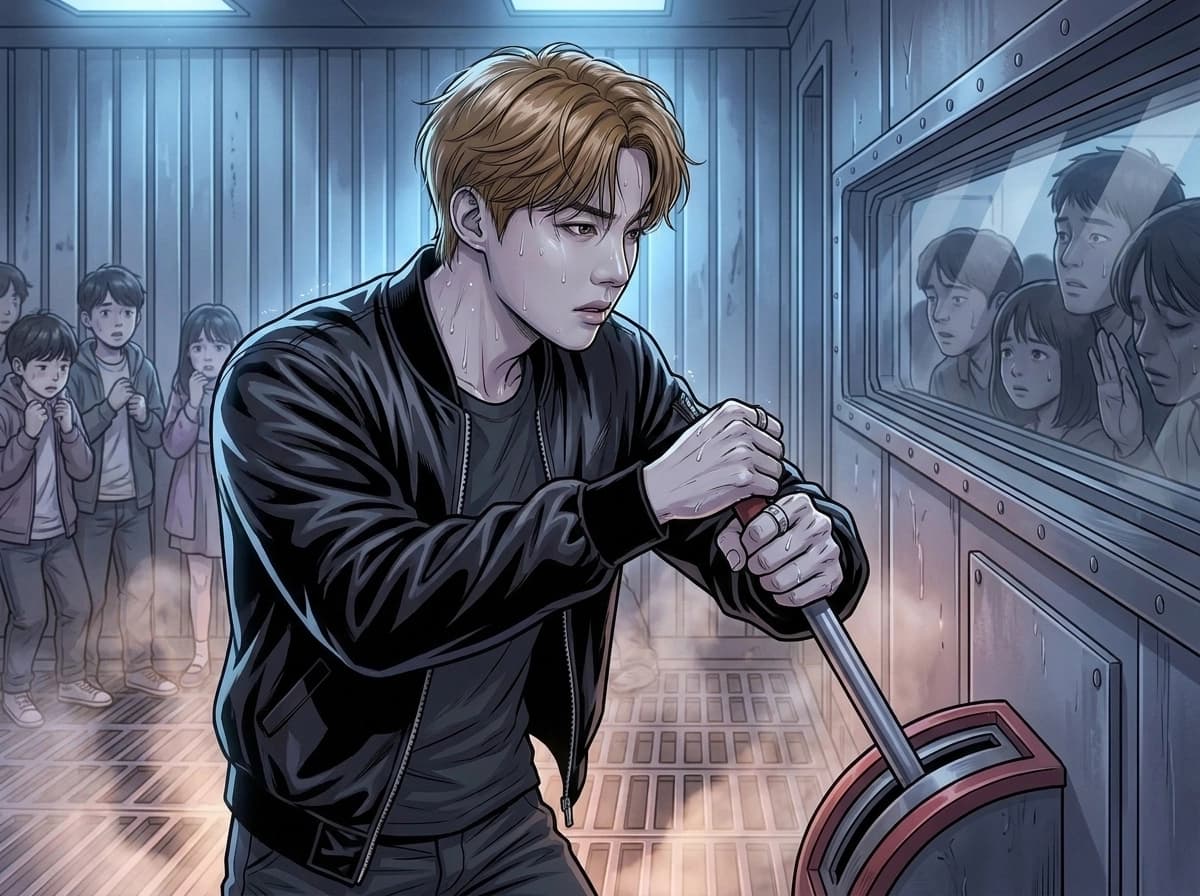
J-Hope is the one everyone turns to because the system has kept turning to him all night. For once he does not offer comfort first. He asks Imani for the numbers. She gives them without softening them: body temperatures dropping, available oxygen, Jungkook’s blood loss, the corridor’s time margin. Clara explains what the reroute will do. V says the lounge people will hate them and might survive anyway; the corridor children will not. Jungkook, pale and sweating, says to cut the lounge. J-Hope feels the last of his stage smile go useless on his face. Then he takes the manual power lever with both hands and chooses the people in front of him over the people the station ranked above them. The lights in the VIP spur die. The viewing corridor warms by a few precious degrees. Behind the glass, the dark blooms all at once and the pounding intensifies. J-Hope has made the choice he has dreaded since waking: not who to save in theory, but who to let suffer first with his own hands on the mechanism.
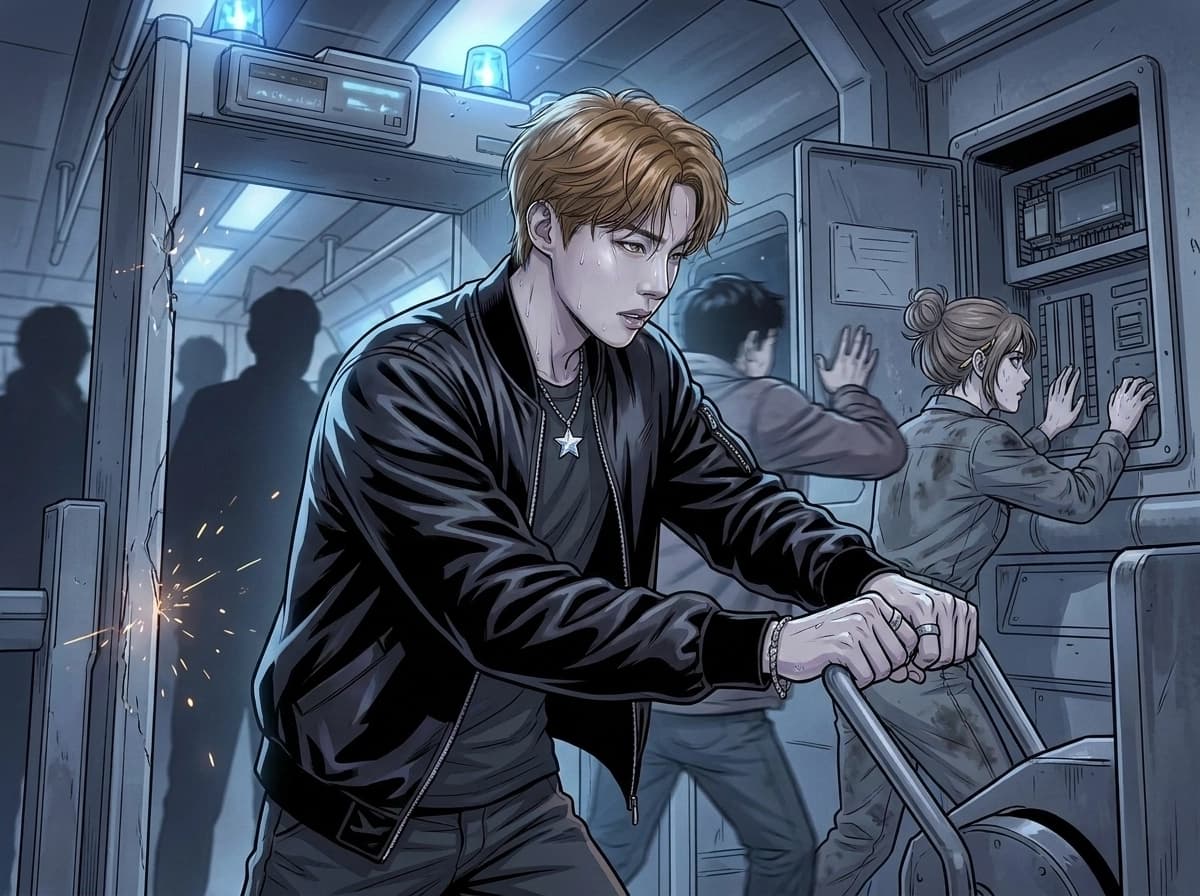
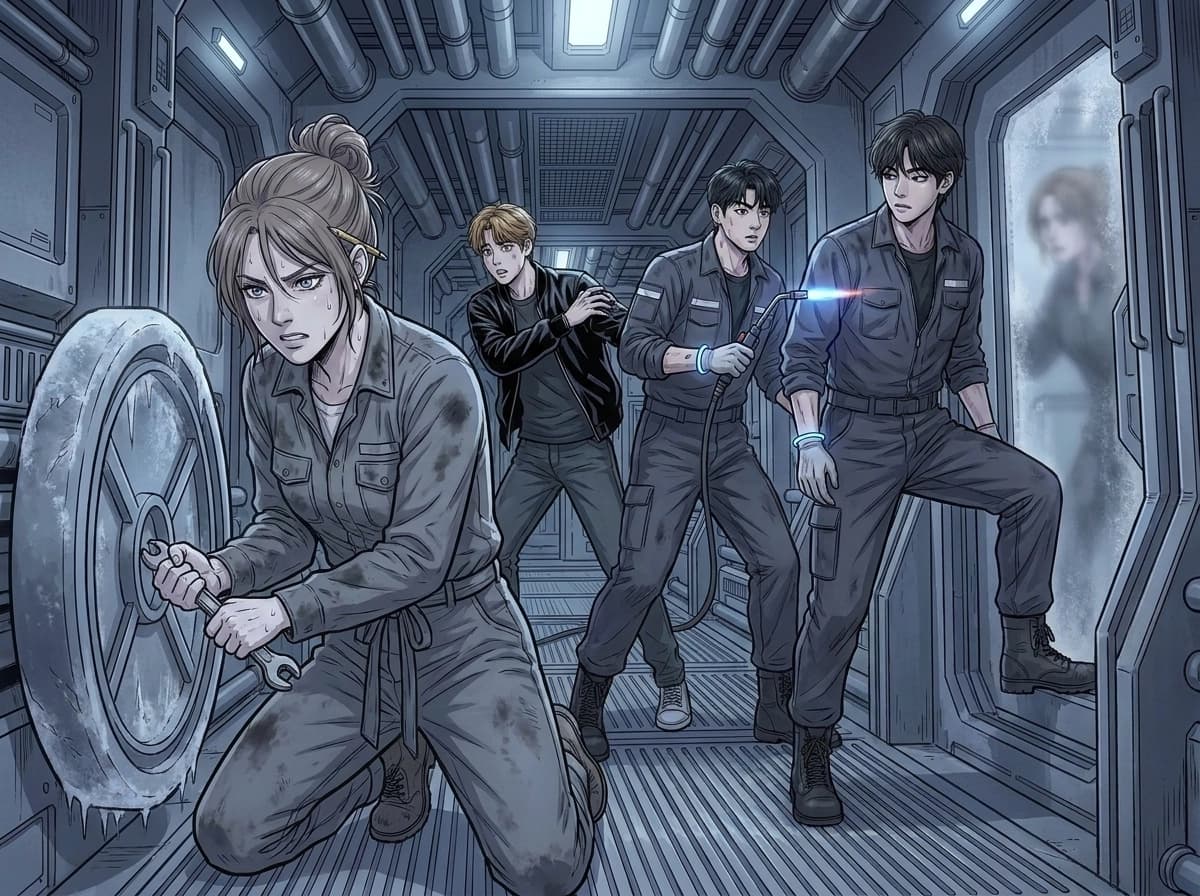
The climax unfolds as the power reroute destabilizes the already strained corridor. Clara hears a new note in the hull, thin and rising. The ring is starting to peel. They have minutes to get everyone through the final pair of doors to Dock Three, but the pressure door cycle sticks halfway, its decorative cladding twisted into the track. No one can solve this from a console. They have to force it in person while the deck tilts and loose glass starts to drift. Jungkook tries to throw himself at the jam, but his injured shoulder buckles. V wedges himself in the narrowing gap and keeps the crowd from surging by sheer voice, turning panic into rhythm: one line shouted, one answer back, everybody move on the beat. Imani and J-Hope drag the weakest passengers one by one through the opening, J-Hope counting breaths the way he counted fans into choruses, Imani overriding anyone who tries to swap places. Clara crawls into the torn cladding with the cutting torch, carving away warped metal inches from a pressure seam while sparks float around her like fireflies.
When the hull gives a louder, uglier scream, Clara realizes what must happen. The door can be opened fully only if someone stays behind at the transfer wheel in the corridor and manually balances the pressure surge during the cycle. Once engaged, the wheel must be held until the lock completes from the dock side. Let go too soon and the door slams half shut, crushing whoever is in the threshold and venting the dock. She does not announce this like a noble sacrifice. She just starts moving toward the wheel because this is the debt that fits the shape of her mistake. V sees it and grabs her arm. J-Hope sees both of them and understands immediately. He says he will do it; people will listen on the other side if he is the last face they see. Imani says no before he finishes the sentence, because his body in that corridor helps move three more people and because martyrdom is just another pretty lie if it wastes function. In the end Clara wrenches free, shoves the torch into Jungkook’s good hand, and tells J-Hope that if he wants to make one honest promise tonight, it should be that he will get the others airborne.
The final crossing happens in a rush of breath, orders, and metal. Clara braces at the wheel. V backs through the door last among the moving group, still talking to her, still trying to keep her anchored with the sound of another human voice. Jungkook and J-Hope haul the final stretcher across. Imani slams her palm against the dock-side release and shouts the count. Clara holds the wheel through the pressure hit. The door seals. Through the small wired pane they see her standing in strobes and drifting sparks as the corridor beyond her buckles. There is no graphic end, only a violent jolt, a shower of silver insulation, and then the pane whites out with frost as the section loses heat and signal. Her load-song ends in silence.
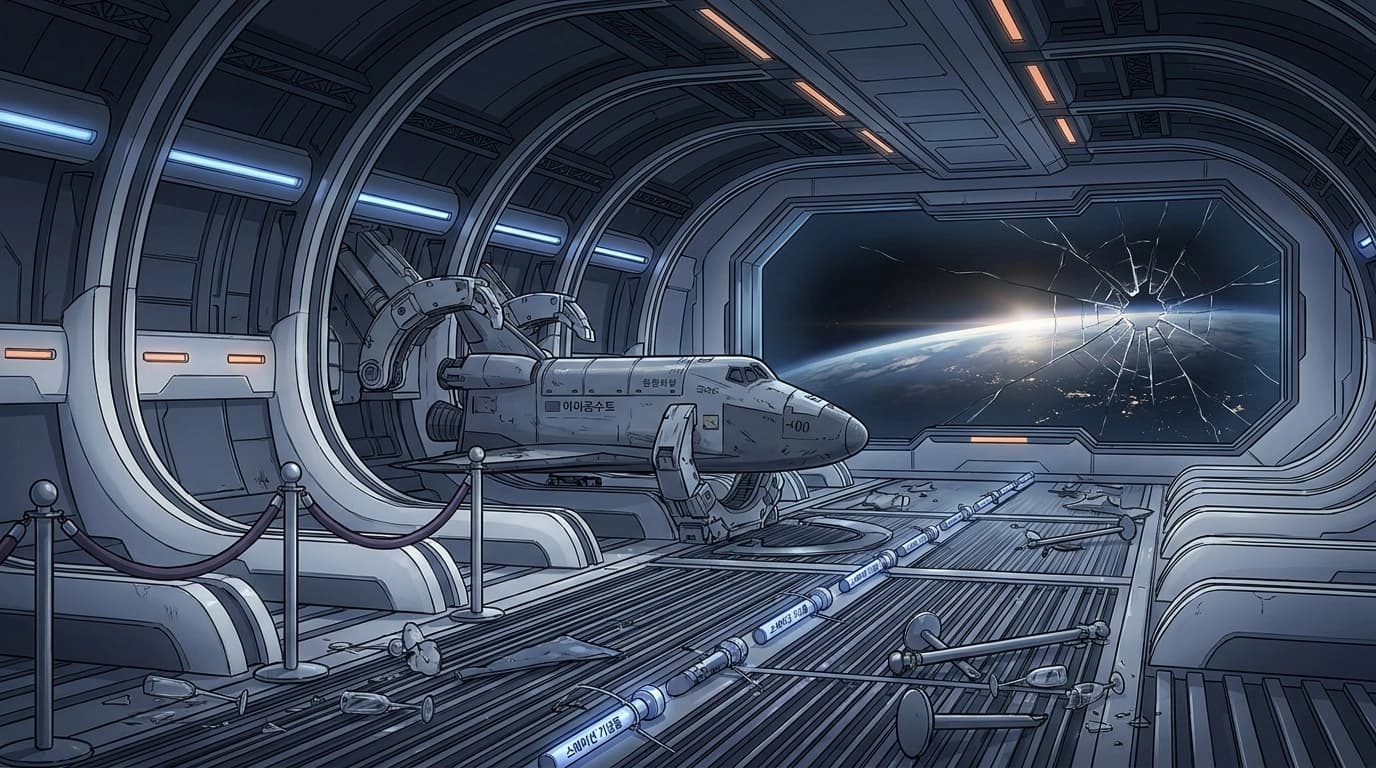
Dock Three is not salvation, only the last workable machine. The shuttle has six seats and room on the floor if people strap in wrong and breathe carefully. Official protocol again tries to force the celebrities to the front. J-Hope tears his own priority band off and wraps it around the wrist of the crushed-wrist child Jungkook rescued. V follows suit, then Jungkook. Imani physically rearranges bodies according to who can survive launch and who cannot survive waiting. Some of the stronger passengers stay behind voluntarily once the choice becomes visible and not abstract. The stars are not first aboard. They help pack others in, tighten straps, and wedge fanlight rods into a broken cargo brace to keep the cabin secure.
When rescue finally reaches Aurora Ark, it finds not a clean hierarchy but the mess the five survivors made against the station’s design: famous men carrying strangers, fan merchandise tagged to medical notes, a shuttle loaded by human judgment instead of algorithm, and a dead engineer whose final act overruled the system she once trusted. In the aftermath, J-Hope is praised for calm heroism and hates how easily that story forms. He remembers the dark behind the VIP glass when he pulled the lever. Imani corrects every interview that turns triage into inspiration and insists on naming Clara Bell along with the dead and the saved. Jungkook wakes in treatment furious that he is alive and then quieter when the child from the utility bubble visits with his repaired fanlight. V, who spent the disaster turning fear into song, is the one who pushes hardest for the inquiry that exposes Aurora Ark’s hidden structural shortcuts and the crowd-protection tags that valued visibility over fragility. The survivors do not come away clean. They come away bound by the fact that in a station built to sell closeness, real closeness finally arrived only when the lights failed and someone had to decide, with cold hands on a manual lever, which strangers counted as theirs.





Comments
Comments · 0