Keytalk Original · 15 scenes · 5 chapters

Put Me Back in the River

# Sign Back

In a county courthouse interview room, a court sign-language interpreter catches the murder suspect’s hands describing a boy dragged through snow behind a shuttered icehouse—the winter her younger brother vanished—while his voice calmly accepts blame for a stabbing he did not commit. With nine minutes left on the tape, she must keep translating for the detective behind the glass, who hears only the spoken confession and is already reaching for cuffs. After the interview, the suspect’s transport is delayed, and he leads her to a late-night diner under the Lake Street elevated tracks, where he folds a sugar packet into the shape of a bridge and signs the same question again: “Will you put me back in the river?” At the Chicago Riverwalk beside the Clark Street Bridge, patrol lights roll across the water as she must either sign the sentence that seals his false murder confession or let him walk her to the place her brother was taken.

  • 4 characters
  • 5 locations
  • 15 scenes
  • Plot 9,059 chars
Put Me Back in the River cover image

Characters

Characters

Marisol Varela

Female

A freelance court sign-language interpreter assigned to a taped homicide interrogation after covering arraignments all day

Profile

Marisol wants the record to hold what Darnell Rusk is actually signing, even if it destroys the professional neutrality that keeps her working in Cook County courts. Her vanished brother, Tomas Varela, was fourteen when the icehouse story began, and Detective Eamon Kelleher can end Marisol’s access to the case with one complaint.

She keeps voicing Darnell’s false murder confession cleanly while slipping questions into her signs that no one behind the glass can hear.

Description

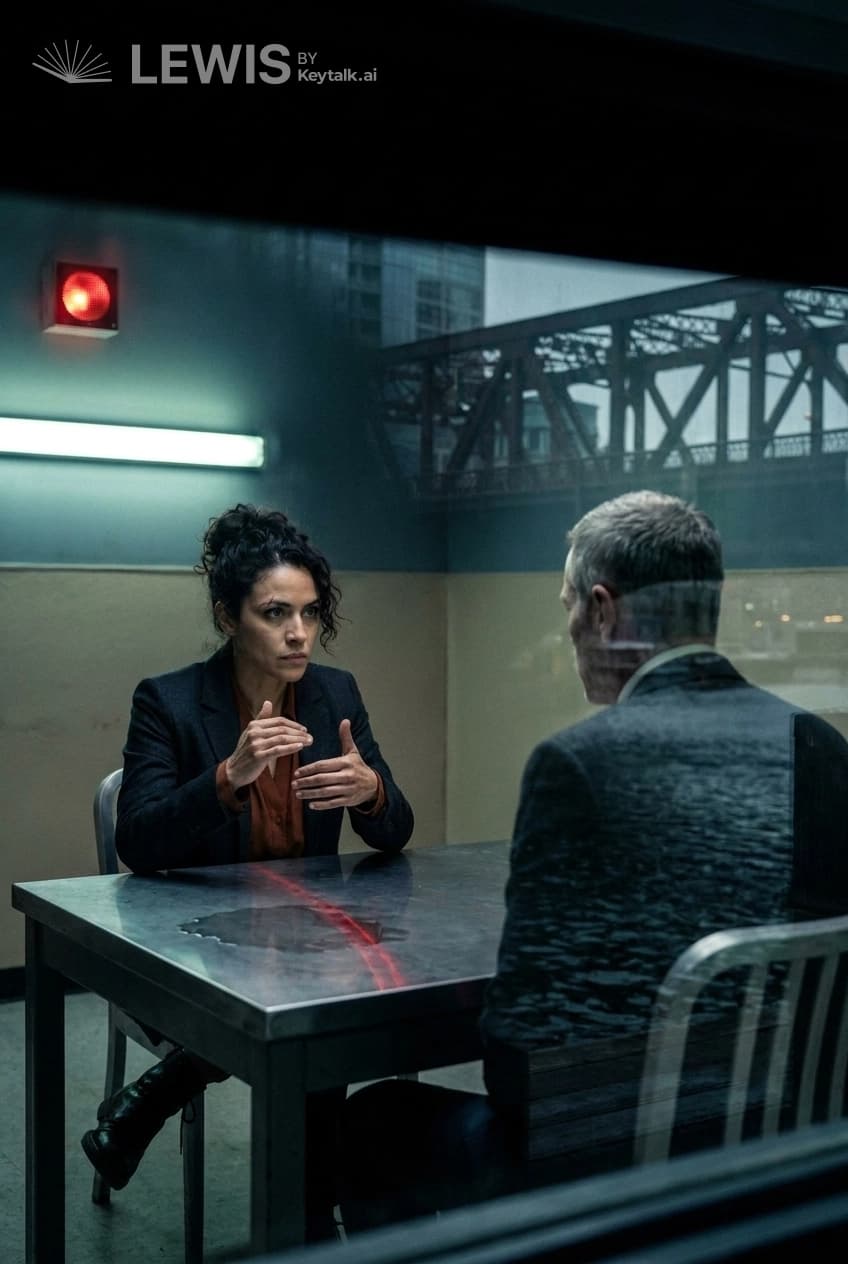
Marisol Varela wears the practical uniform of a woman who has spent twelve hours moving between courtrooms: a charcoal wool blazer over a rust-colored blouse, black trousers, and scuffed leather ankle boots planted squarely beneath the interview table.

Her dark curls are pinned into a low, imperfect knot, and a thin pale scar cuts through her left eyebrow; she holds both hands poised at chest height, her face composed for the camera while her fingers ask a question no one behind the glass can hear. The fluorescent light catches the fatigue under her eyes and the stubborn set of her jaw.

Darnell Rusk

Male

A river-tow mechanic held in courthouse lockup after agreeing to confess to a stabbing he says he witnessed but did not commit

Profile

In exchange for being put back in the river, Darnell wants Marisol Varela to carry him to the place where Tomas disappeared, though every signed detail makes him look more guilty. He has spent years accepting blame that belonged to men who could afford lawyers, and his bargain with Detective Eamon Kelleher has bought him neither safety nor silence.

At the diner, he turns a sugar packet into the Clark Street Bridge because he cannot risk saying the location aloud.

Description

Darnell Rusk wears a faded navy work jacket over a thermal henley, its cuffs darkened by old engine grease that no lockup sink can remove. At forty-one, he has a river worker’s thick shoulders and a guarded stillness; he keeps his hands raised loosely near his chest as if they are the only part of him allowed to tell the truth.

A pale, rope-thin scar circles his left wrist, visible beneath the cuff whenever he folds his fingers into the precise shape of a bridge.

Eamon Kelleher

Male

A Major Crimes detective trying to close a politically watched stabbing before the morning press briefing

Profile

A clean, recorded confession from Darnell Rusk will protect Eamon’s unit from another unsolved killing, but Marisol Varela’s hesitation threatens the case he has promised his commander. He was the young patrol officer who wrote the first missing-person report for Tomas Varela and classified the snowbound icehouse lead as neighborhood rumor.

He watches Marisol through the glass and mistakes her grief for incompetence because admitting otherwise would reopen the report he buried.

Description

Eamon Kelleher wears a charcoal suit gone shiny at the elbows beneath a rumpled white shirt and a loosened navy tie, as if he has been standing under courthouse fluorescents since before dawn.

At fifty-two, his close-cropped iron-gray hair and heavy, watchful eyes give him the fixed look of a man who has already decided what the room means; one thumb hooks beneath his belt while he studies the interrogation through the glass. A pale, crooked scar cuts through his left eyebrow, the only break in a face trained to reveal nothing.

Nia Baines

Female

The overnight server at a diner beneath the Lake Street elevated tracks, saving tips while her landlord sells the building around her

Profile

Nia wants to keep her diner’s last night shift open long enough to make rent, but letting Marisol Varela and Darnell Rusk use the back booth puts her between police attention and the owner’s warning not to invite trouble.

She recognizes Darnell from winters when he came in shaking river ice from his boots, yet she never saw him speak with his hands until Marisol answers him. When Eamon Kelleher’s officers arrive, Nia must decide whether to surrender the security footage or erase the minutes that show who followed whom.

Description

Nia Baines stands behind the diner counter in a faded navy work shirt, black apron, and scuffed non-slip shoes, one hand resting near the register while the other grips a ring of keys hard enough to whiten her knuckles.

Her close-cropped black curls frame a watchful face; a thin pale scar cuts through her left eyebrow, and she keeps her body angled toward the back booth and the security monitor at once. The elevated train rattles overhead, turning the chrome and coffee pots silver-blue as she decides who gets to remain unseen.


Synopsis

Plot

Marisol Varela enters the courthouse interview room expecting a routine final assignment: translate Darnell Rusk’s confession to a politically charged stabbing before Detective Eamon Kelleher faces reporters at dawn. Darnell speaks in a flat, resigned voice, placing himself beside the victim and accepting the knife. But his hands tell Marisol something else. Beneath his spoken answers, he signs about a fourteen-year-old boy in a red knit cap dragged through snow behind a shuttered icehouse, then loaded into a truck that smelled of river mud and diesel. He signs Tomas Varela’s name without fingerspelling it, using the childhood sign Marisol alone would recognize. The ceiling camera’s red light burns above them. Kelleher watches from behind the glass. Marisol voices Darnell’s spoken confession accurately, then begins slipping questions into the signs she returns: Who took him? Why now? Darnell’s reply is a warning. Kelleher is not listening, but he is watching.

With nine minutes left on the tape, Darnell signs that he saw the stabbing but did not commit it. Years earlier, he was a tow mechanic who serviced a barge used by men moving bodies and contraband along the river. The night Tomas vanished, he saw a boy alive in the back of a truck near the icehouse. He did nothing because one of the men held his younger cousin at gunpoint. Kelleher, then a patrol officer, arrived after the truck was gone and wrote the icehouse lead off as rumor. Darnell says Kelleher later found him, offered him protection from the river crew, and demanded silence. Now Kelleher needs a confession for the stabbing, and Darnell has agreed because he believes prison is safer than the people whose names he could give.

Marisol breaks protocol by asking Darnell where Tomas was taken. Kelleher sees the change in her posture through the glass and storms into the room. He grips the back of Marisol’s chair, ordering her to interpret only what is said aloud. When she refuses to lower her hands, he leans close enough that she smells stale coffee on his breath and tells her he remembers the Varela file: a frightened mother, a missing boy, no evidence. He says grief has made Marisol careless. Darnell interrupts in speech, loudly confirming the stabbing, but signs to Marisol that the proof is under Clark Street Bridge. Then he signs the same question he has been shaping all night: Will you put me back in the river?

Kelleher ends the interview and moves Darnell toward lockup, but a jammed service elevator and a shift change create a gap between courthouse deputies. Marisol follows as Darnell is cuffed to a transport rail. He drops to the floor as if ill, forcing a deputy to unlock one cuff so he can be moved. Marisol uses the confusion to pull the rail’s emergency release lever. Darnell runs with one cuff still hanging from his wrist. Marisol follows him through a loading corridor because she cannot bear losing the only person who has spoken Tomas’s name in fifteen years. Kelleher gives chase, shouting that Darnell is dangerous and that Marisol is destroying her career. She chooses the stairwell over Kelleher’s command and reaches the street with Darnell just as a train rattles over Lake Street.

They take refuge in Nia Baines’s diner beneath the elevated tracks. Nia recognizes Darnell, sees the half-open cuff and Marisol’s courthouse badge, and nearly calls the police. Darnell’s hands shake too badly to explain until Marisol signs with him. Nia watches the silent exchange, then locks the front door and turns the sign to CLOSED, sacrificing the last of her overnight business. She tells them Darnell used to come in during deep winter with ice in his boots and blood under his nails, always sitting beneath the broken security camera. She has kept the diner’s old footage because the owner’s threats taught her never to trust a landlord with a master key.

Kelleher arrives outside with two officers, but Nia blocks the door with her body and tells them a burst pipe has flooded the kitchen. Through the diner window, Marisol sees Kelleher studying the back booth. Darnell folds a sugar packet into the shape of a bridge and signs that Tomas was not buried under it. He was used to anchor a weighted crate beneath the bridge’s service ledge, where river mechanics could retrieve it when the current ran low. Darnell says the crate was meant for evidence from the river crew: weapons, cash, names. Tomas was alive when he was taken there, and Darnell believes the boy’s red cap was caught in the crate’s rope. The river crew made Darnell help lower it. He has carried the knowledge ever since, telling himself he could not save Tomas because he had been saving someone else.

Nia leads them through the kitchen and out a grease-slick rear exit before the officers circle the building. Kelleher catches Marisol in the alley. He grabs her blazer sleeve and tries to pull her back toward the diner, insisting that Darnell is using her loss to escape a murder charge. Marisol tears free, leaving a button in his hand. Kelleher finally admits he recognized the icehouse lead the moment Darnell began signing. He had not buried it because it was flimsy; he buried it because the truck belonged to a police informant whose information had protected Kelleher’s unit. He tells her Tomas may already have been dead when the truck left, and reopening the past will only turn Marisol’s brother into another tool for a guilty man. Marisol answers by signing Tomas’s childhood name directly in Kelleher’s face, then runs after Darnell.

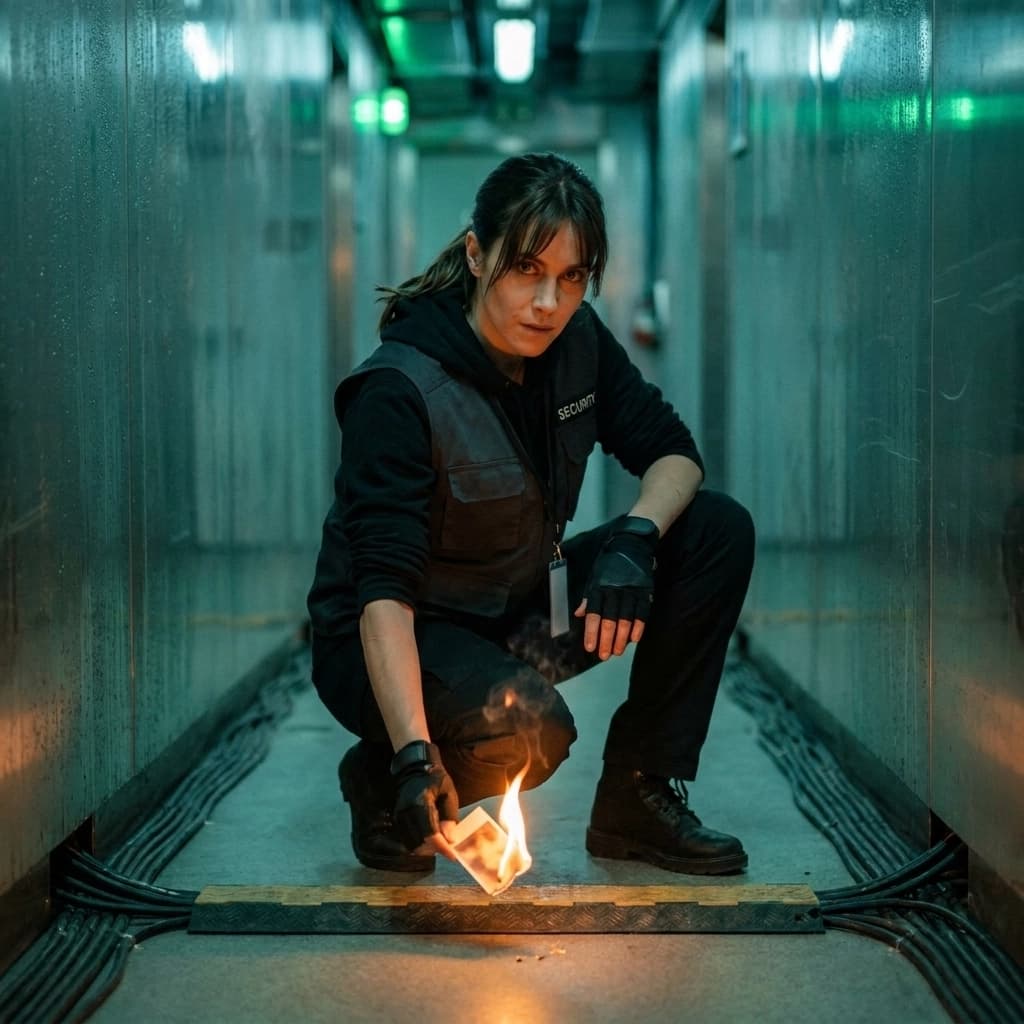
At the Riverwalk beside Clark Street Bridge, the wind cuts through their wet clothes. Darnell leads Marisol down a narrow maintenance stair toward the low service ledge. A half-submerged towline is still looped around an iron cleat, hidden behind a curtain of black water. He wades in despite the cold, using the dangling cuff to hook the line. Marisol braces herself against the railing and hauls with him until her palms split. The line rises inch by inch, bringing up a corroded crate snagged against the bridge structure.

Kelleher reaches the ledge with the officers behind him. He orders Marisol away from Darnell and steps onto the slick stone to seize the rope. Darnell refuses to let go. Kelleher kicks at Darnell’s hand, and Darnell slips beneath the water. Marisol drops to her knees, catches the chain of his cuff, and drags him against the ledge before the current can pull him under. Kelleher reaches for the crate instead, trying to force it back into the river, but Nia appears at the top of the stairs with a tire iron from the diner kitchen and blocks the officers from descending. She tells them they can arrest her after they watch what their detective does next.

Marisol wedges the rope around the cleat and holds it there with both arms while Darnell, coughing river water, tears at the crate’s rusted lid. Kelleher lunges for him. Marisol swings her shoulder into Kelleher’s chest, driving him against the railing. He catches himself, then sees what Darnell has pulled from the crate: a child’s red knit cap sealed inside a cloudy plastic evidence bag, its faded yarn marked with the stitched initials T.V. Beneath it lies a tow-company ledger wrapped in oilcloth and an old patrol report bearing Kelleher’s younger signature. The report records the icehouse call, the truck plate, and the informant’s name—details Kelleher claimed never existed.

The officers lower their weapons. Kelleher does not flee. He stands in the bridge light with river water dripping from his cuffs and says the informant promised Tomas would be released. His voice is smaller than it was in the courthouse. Marisol does not forgive him or strike him. She makes him look at the cap while she says, aloud and clearly, that he wrote her brother out of the city.

Darnell asks Marisol, in signs, whether she will now translate the confession he gave on tape. She looks at the crate, at Nia holding the stairwell, and at Kelleher surrounded by the consequences he tried to keep underwater. Then she answers in speech for everyone present: Darnell witnessed the stabbing. He did not commit it. She repeats it until the officers hear every word. Darnell is taken into custody for the years he concealed, but not as the convenient killer Kelleher needed. Marisol walks beside him as far as the ambulance doors, keeping his hands visible when an officer tries to force them behind his back.

By morning, Kelleher is led through the courthouse where he once watched Marisol from behind glass. The press briefing becomes a public collapse instead of a clean closure. Nia opens her diner late, accepts the lost night’s wages in an evidence receipt and a promise no one can guarantee, then keeps the back booth empty beneath the train shadows. Marisol returns to the interview room and sits beneath the red recording light. She gives a corrected interpretation of Darnell’s statement, including every place where his hands had been made invisible. When she reaches Tomas’s name, her voice catches once. She signs it anyway.
World

The world

representative image

setting

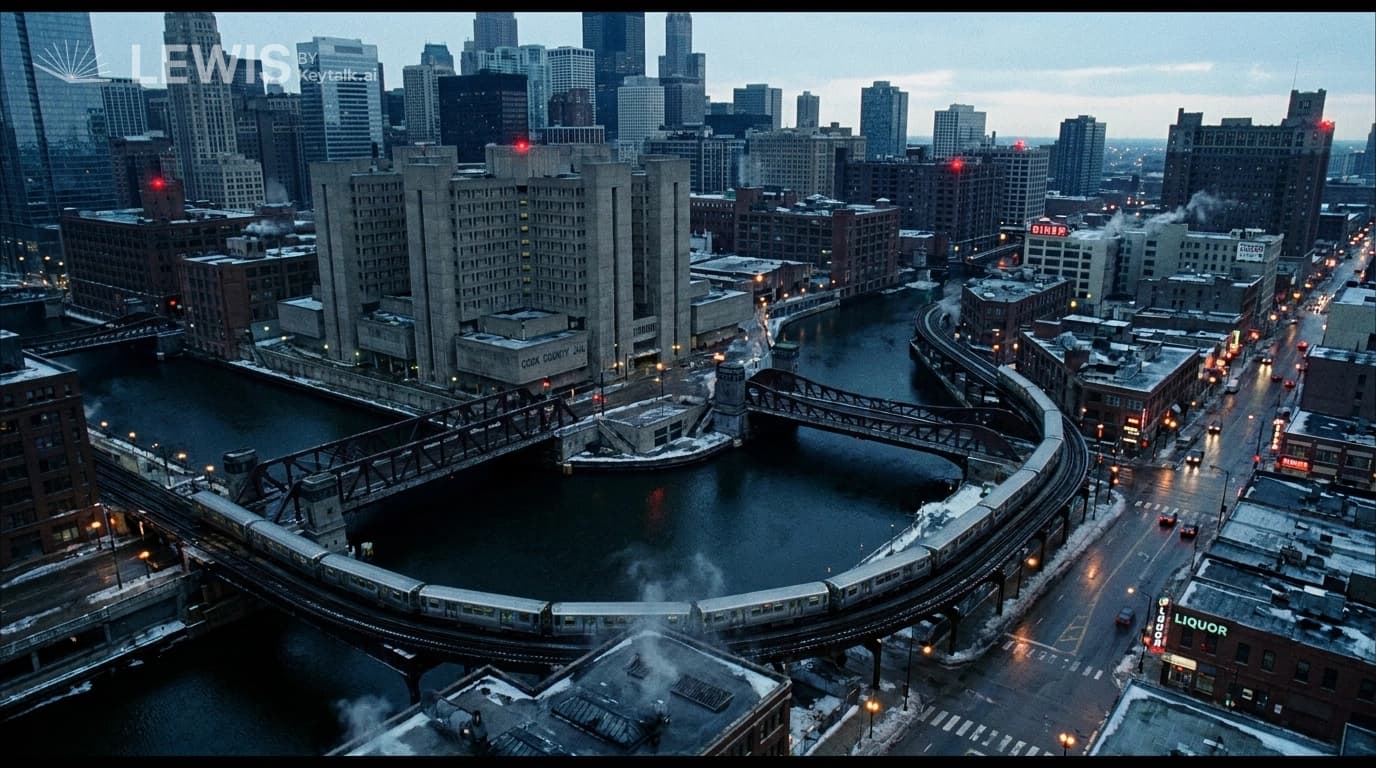
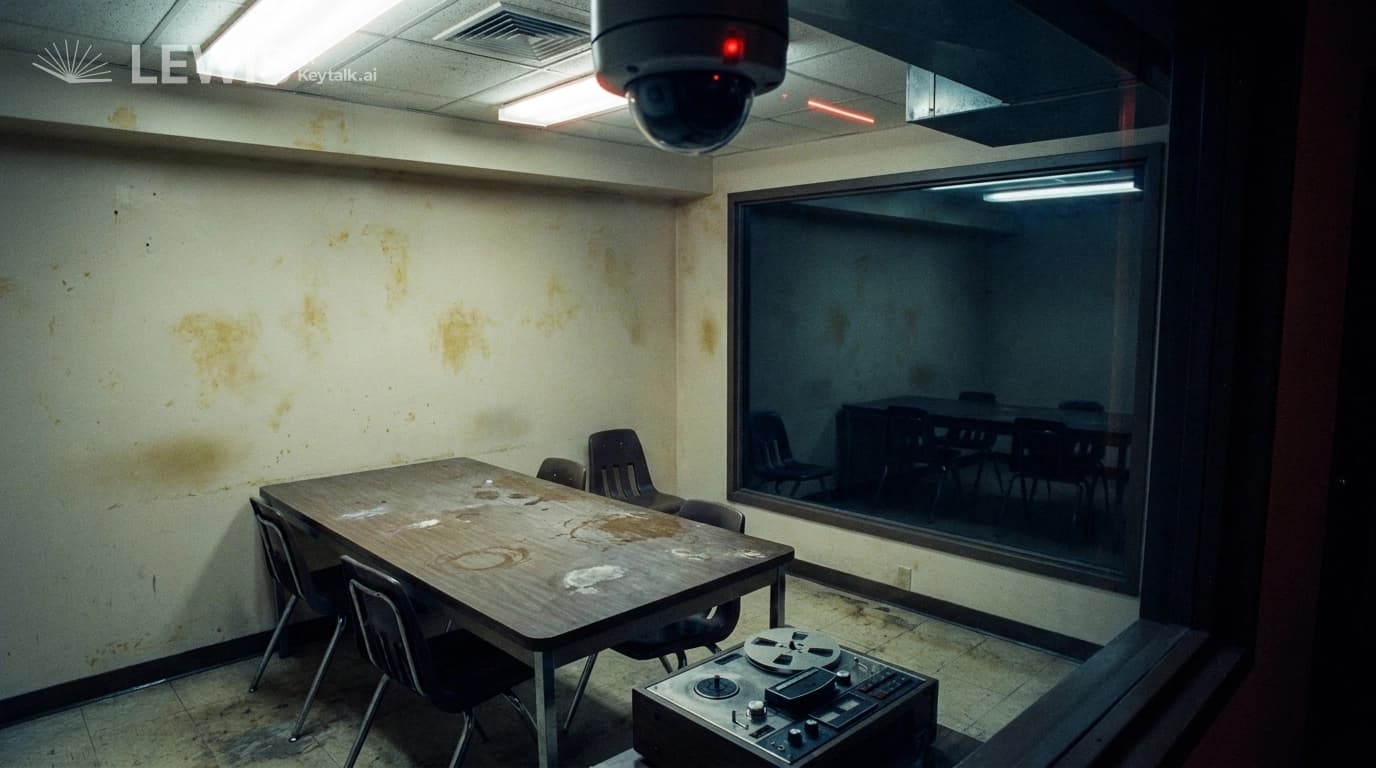
Cook County, Chicago, over one wet winter night that begins inside the county courthouse and narrows toward the river. The interview room is a beige box below street level: scratched laminate table, bolted chairs, a ceiling camera with a red recording light, one-way glass, stale coffee, and heat that clicks on without warming anyone. Above it, the courthouse runs on elevators, holding cells, security doors, and exhausted clerks trying to finish before dawn.

Outside, Lake Street is black with thawing slush. The late-night diner beneath the elevated tracks shakes whenever a train passes overhead. Its windows sweat with grease and steam; its booths smell of bleach, fried onions, and old coffee. The Clark Street Bridge and Riverwalk form the final corridor: iron railings, wet limestone steps, tourist lights reflected in dark water, and the constant mechanical groan of bridge traffic. The river is not picturesque here. It is a working channel with tow scars, oil sheens, and years of things dropped where no one wanted them found.

time period

Present-day Chicago, in late February, during the final cold stretch before spring. The city is caught between old records and new surveillance: everything is recorded, but not everything is heard.

A morning press briefing waits at the end of the night, and the department needs a solved stabbing before reporters ask why an older missing-boy file was allowed to disappear.

rules

A court interpreter must translate what is communicated in the room without becoming an advocate; if Marisol openly challenges Darnell’s spoken confession during the recording, she risks removal, professional discipline, and the loss of any access to his signed account.

The taped interview preserves voices, faces, and broad gestures, but it does not reliably capture the grammar, speed, or private corrections of American Sign Language; Darnell can tell Marisol one story with his hands while the official transcript records another through her voice.

Police control a detainee’s movement, transport, and access to counsel, but a delay creates small unsupervised gaps between departments; Darnell’s chance to reach the diner and river depends on exploiting one such gap before Kelleher turns a temporary failure of procedure into a permanent arrest.

The Chicago River gives up evidence only when the current, weather, and municipal machinery allow it; anything left beneath the bridge may be gone, damaged, or unreachable by morning, forcing Marisol to choose before proof can become certainty.

technologies philosophies

The city trusts official records because they are easy to file: body cameras, interview tapes, digital case logs, surveillance footage, and transcripts signed by people who were not always understood. That trust gives Kelleher power. A clean recording can outweigh an incomplete truth, especially when the truth lives in a language the people in charge do not know.

ASL is both access and concealment in this world. It allows Marisol and Darnell to communicate beneath the notice of those who assume interpretation is a transparent service. But that same assumption isolates Marisol: everyone treats her voice as neutral evidence while ignoring the labor, judgment, and risk inside each translated sentence.

Chicago’s institutions reward closure over repair. A solved murder protects careers, a reopened missing-person case creates blame, and a diner owner would rather erase trouble than invite police scrutiny. Yet informal systems endure beneath the official ones: night-shift workers who remember faces, river mechanics who know currents, and people who keep the names that reports misfile or forget.

visual description

The world is steel blue, nicotine yellow, sodium orange, and the dull red of a recording light. Courthouse fluorescence flattens skin and makes every tired face look guilty. Through the diner windows, elevated trains cut the night into moving bands of shadow. Chrome surfaces catch amber booth lamps; rain beads on glass and smears passing headlights into long white wounds.

Chicago’s architecture presses down in layers: courthouse concrete, riveted elevated-track steel, brick storefronts with painted-over signs, and glass towers standing aloof across the river. The visual signature is a city divided by surfaces that reflect but do not reveal: one-way interrogation glass, diner windows, rain-black pavement, and river water carrying broken copies of bridge lights.

Theme music for the world
Lyria
Track 01 (World theme)

Locations

Where it happens

location 1 image

County Courthouse Interview Room

Flat fluorescent tubes bleach the beige walls nicotine-yellow above a scratched laminate table and two bolted plastic chairs, leaving every fingerprint and coffee ring plainly visible. A ceiling camera holds its red recording light over the table while the ventilation clicks in uneven bursts and the tape machine hums beneath the silence.

One-way glass fills an entire wall, dark enough to reflect the raised hands of anyone seated there but not the faces watching from the other side.

location 2 image

Jammed Service Elevator

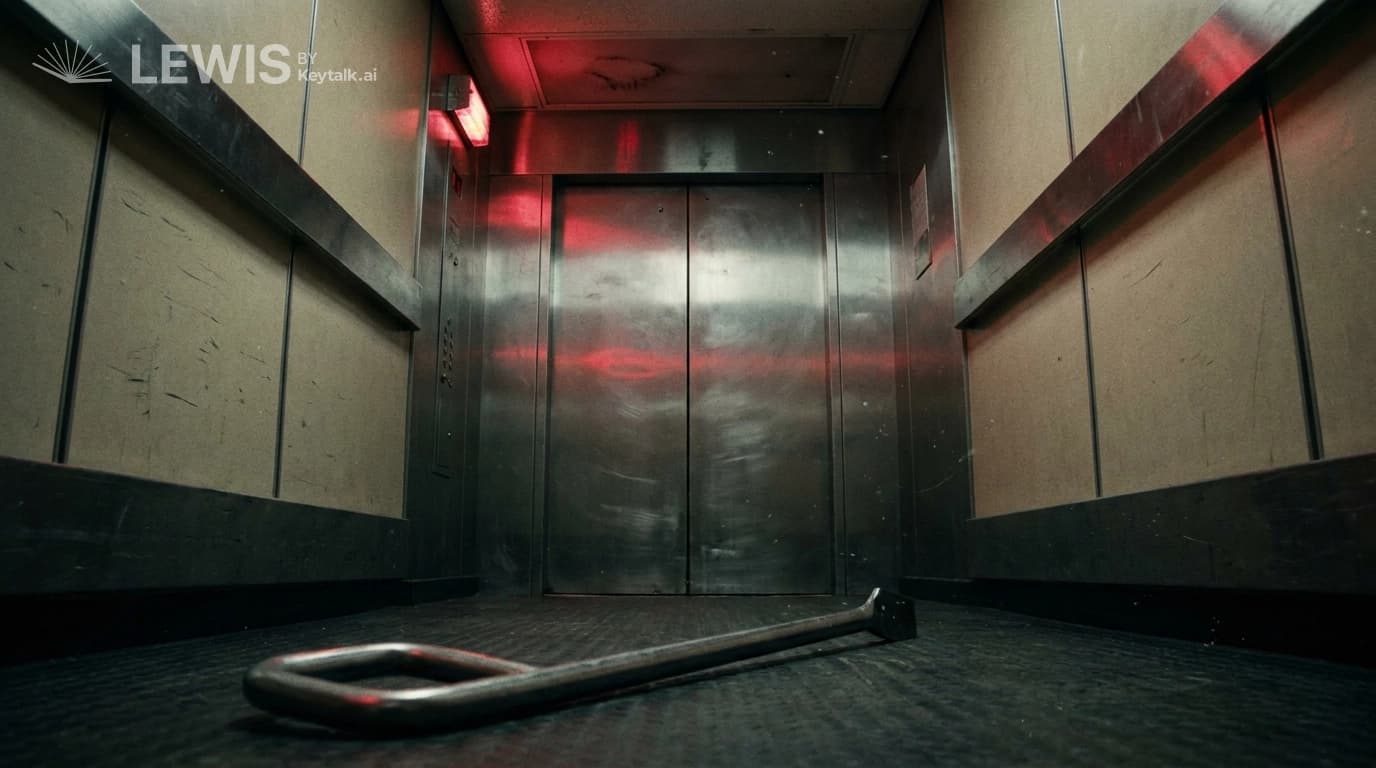
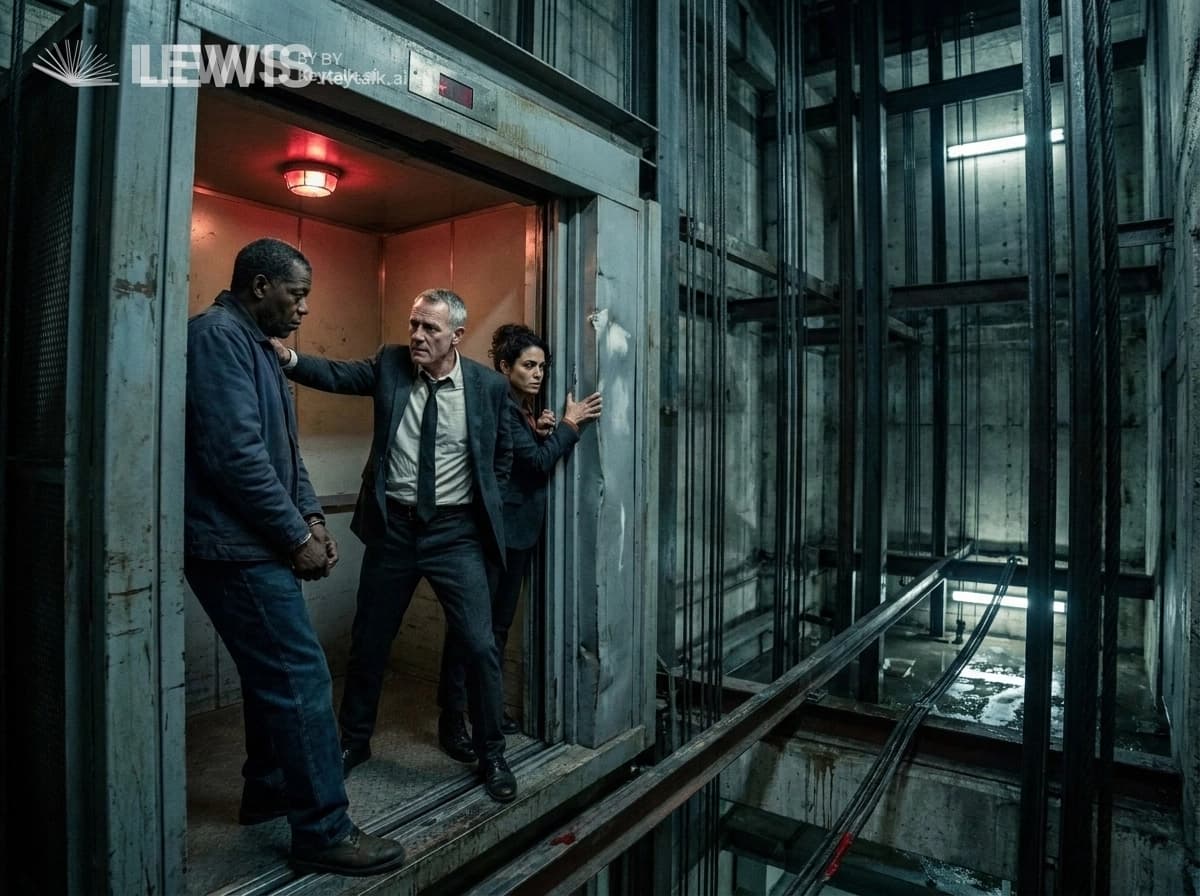
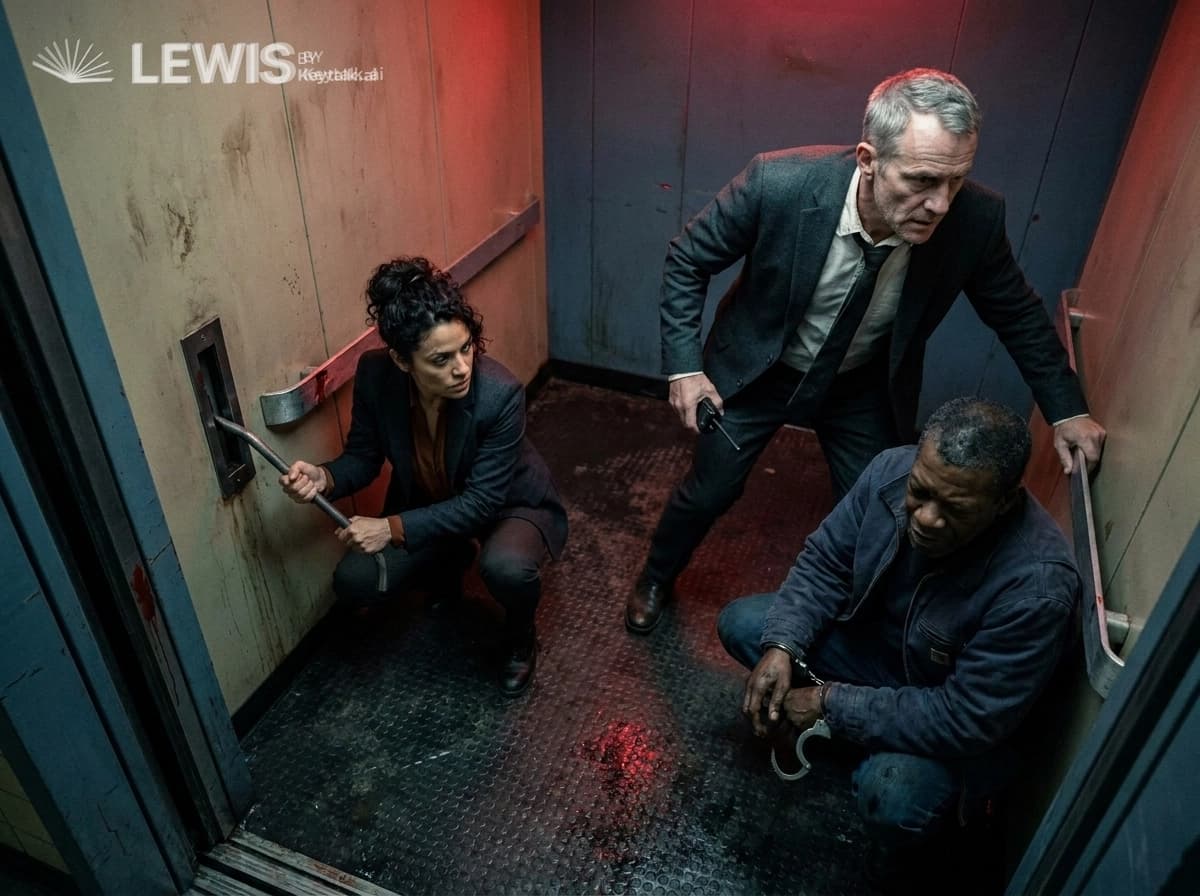
The service elevator shudders between floors, its dented steel walls washed in a dull red emergency lamp that turns every face into a warning.

A cable groans somewhere above the ceiling panel while distant radio chatter leaks through the sealed doors; the rubber floor is scuffed with boot marks and a single bent transport-rail lever lies loose beside the threshold. The car is barely wide enough for a cuffed man, a deputy, and the mistake that lets someone run.

location 3 image

Nia’s Lake Street Diner

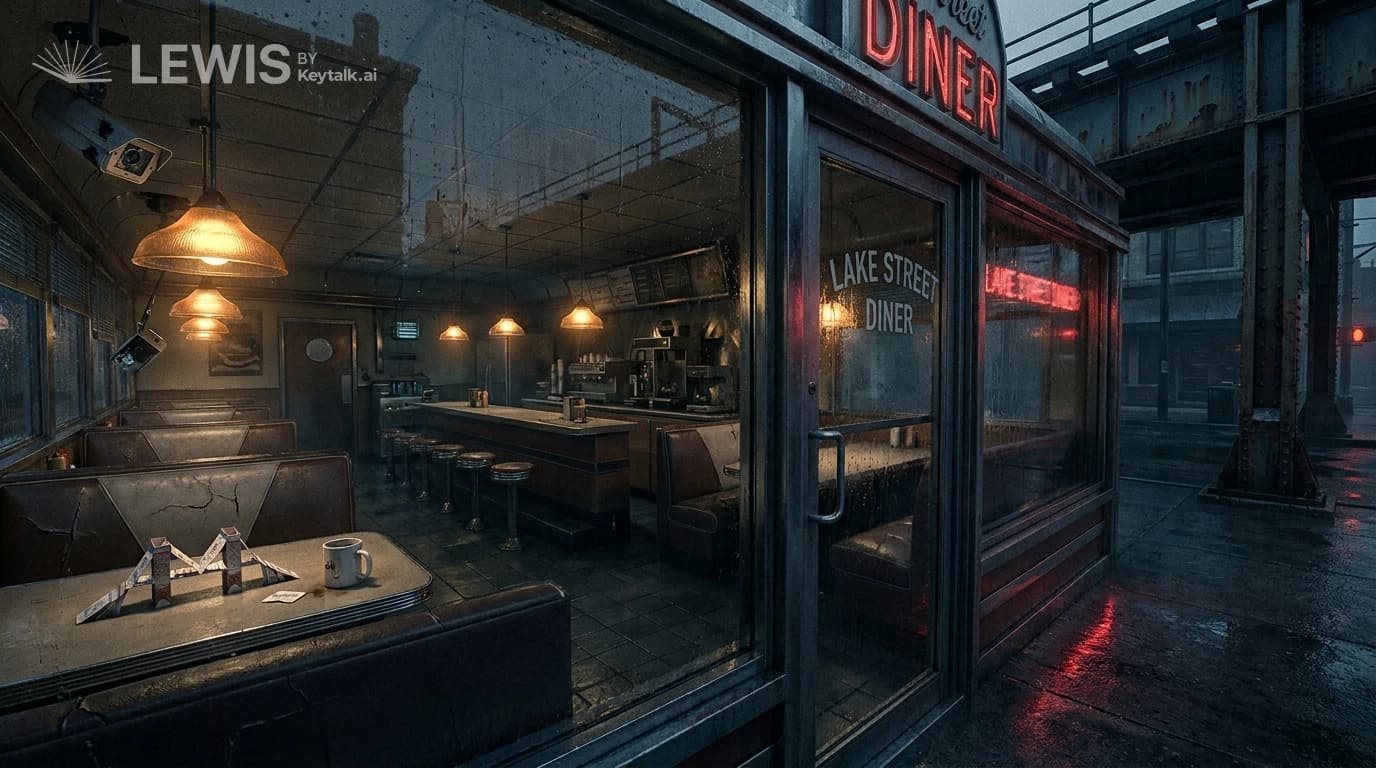
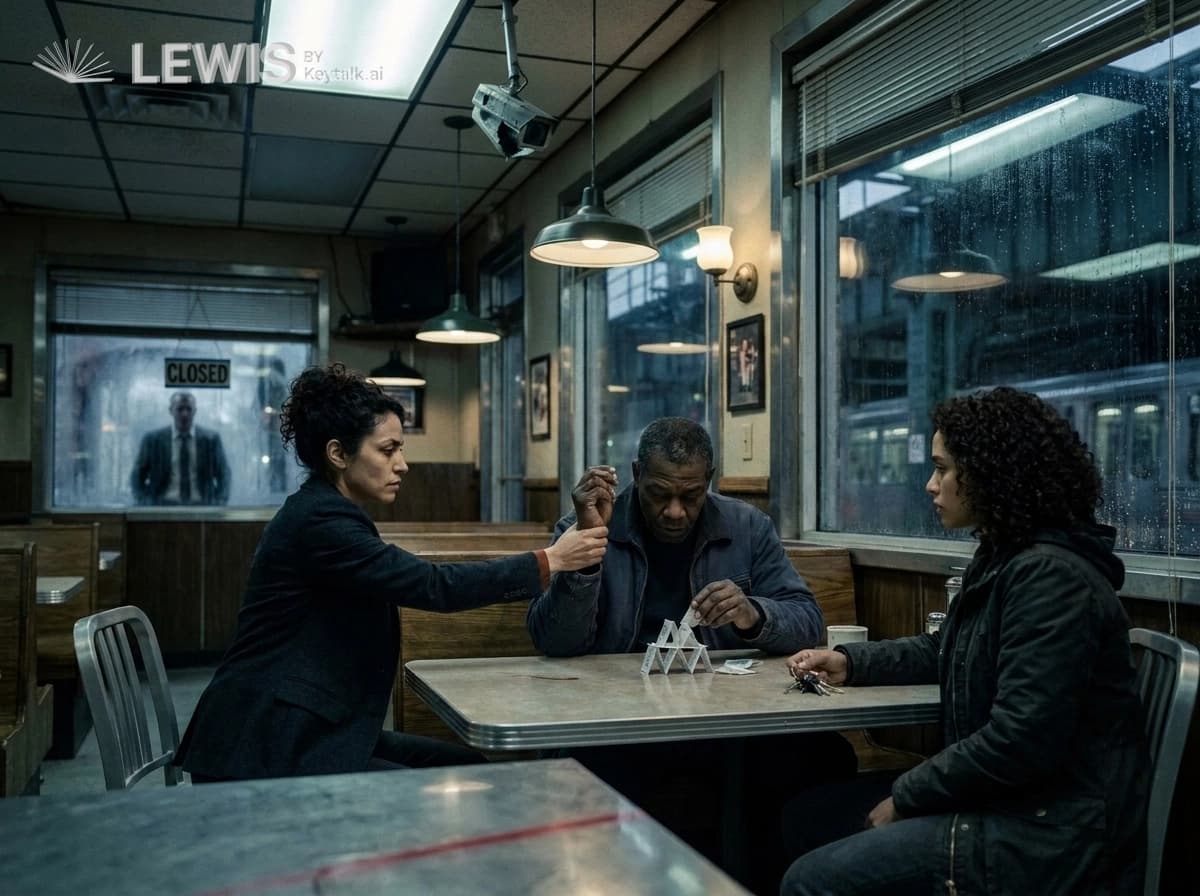
Nia’s Lake Street Diner holds its low ceiling beneath the elevated tracks, where amber lamps pool across cracked vinyl booths and chrome trim flashes whenever a train makes the windows shudder. Coffee sputters behind the counter, fried onions cling to the greasy tile, and each passing train swallows conversation for a few hard seconds.

In the back booth, beneath a broken security camera, a folded sugar packet bridge can sit beside a sweating coffee mug—small, ordinary shapes made dangerous by who remembers them.

location 4 image

Shuttered Icehouse Loading Yard

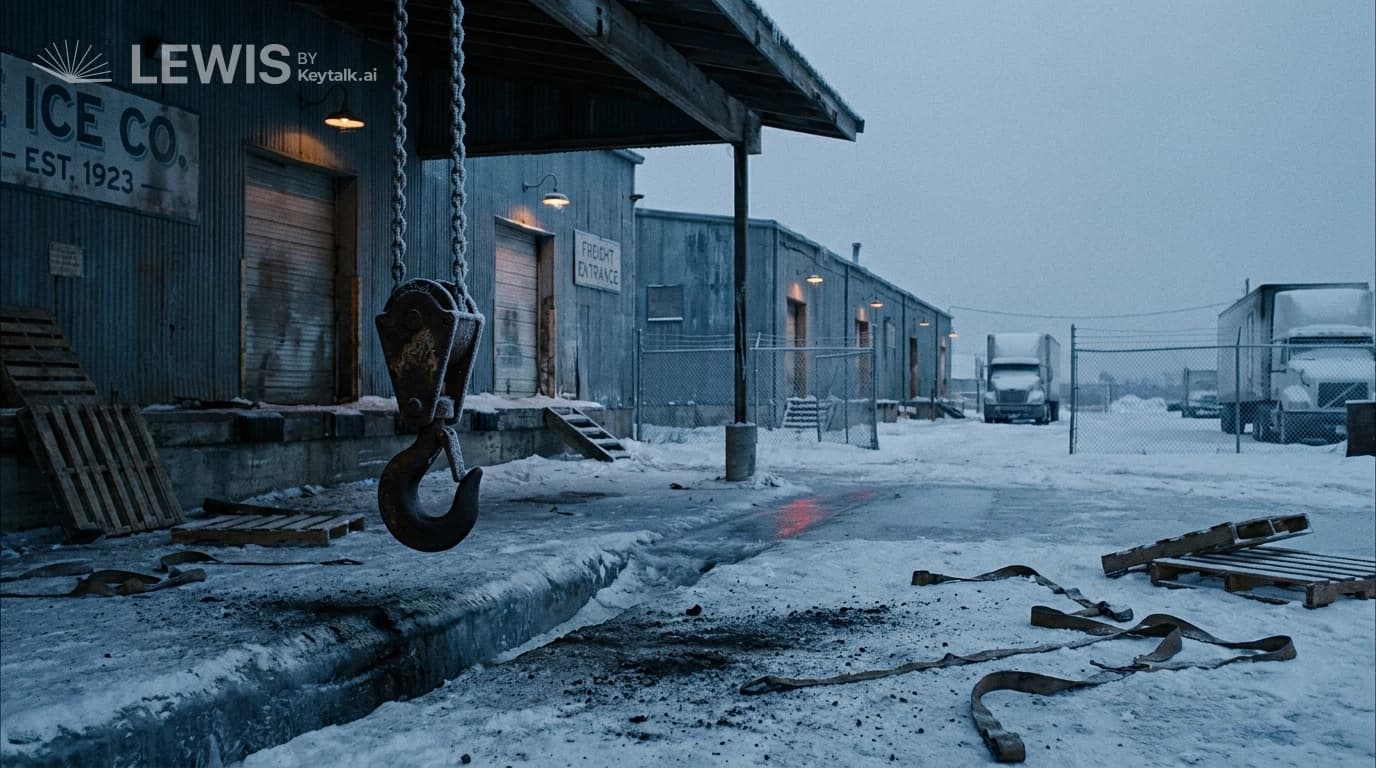
The loading yard lies open behind the shuttered icehouse, a broad field of packed snow scored by truck ruts and scattered with splintered pallets, broken straps, and diesel-black grit. Overcast light turns the corrugated walls blue-white, while wind rattles loose chain-link hard enough to hide the idle cough of engines beyond the fence.

A rusted loading hook hangs from one sagging canopy beam, its frozen chain ending inches above a dark groove in the snow where something heavy was dragged toward the waiting trucks.

location 5 image

Clark Street Bridge Service Ledge

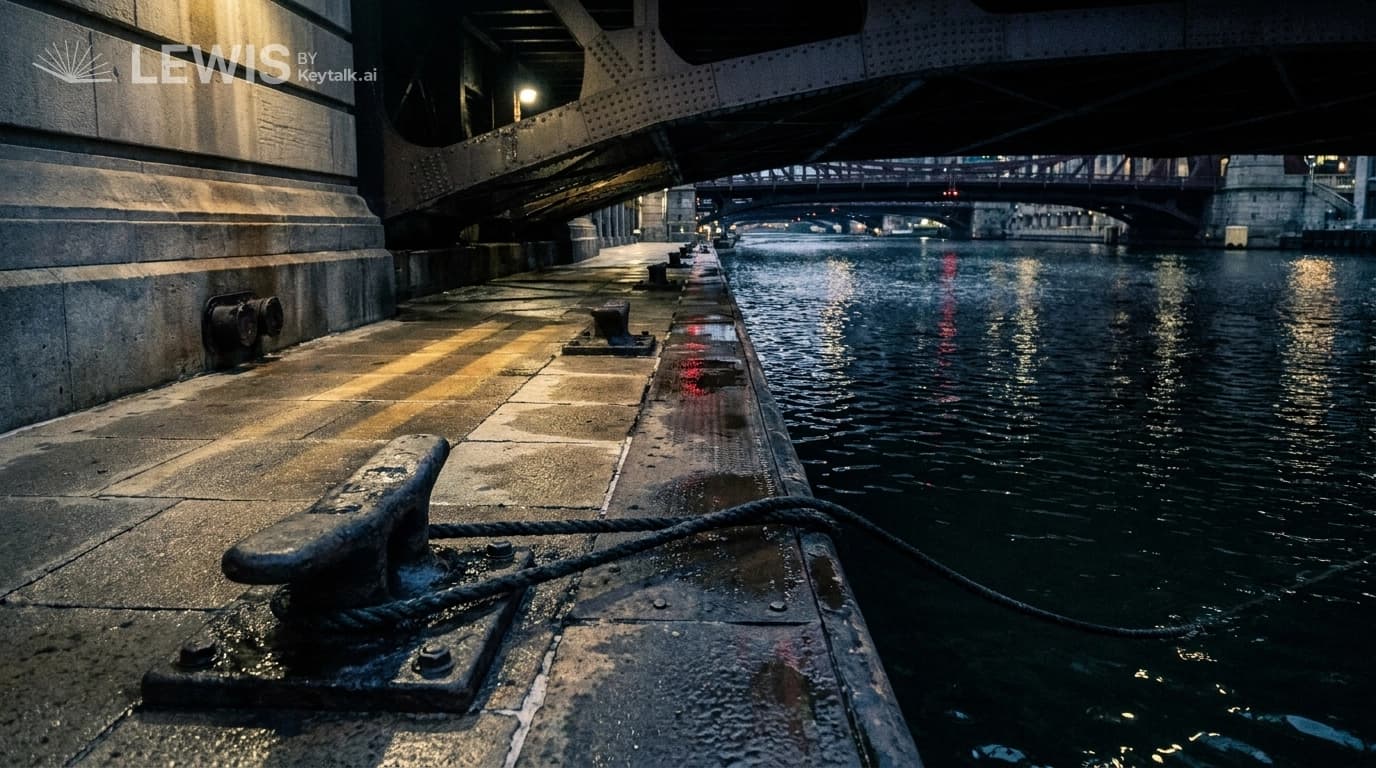
The service ledge clings to the bridge’s limestone base only a few feet above the black river, narrow enough that one misplaced boot can slide straight into the current. Sodium lamps stripe the wet stone orange while bridge traffic groans overhead, and each passing truck sends a shiver through the iron cleats bolted along the wall.

An oil-sheened towline loops around one cleat and disappears beneath the water, its frayed fibers catching scraps of reflected light as the current slaps the ledge.


Scenes

Scene by scene

Chapter 01

Scene 01· Late February, after midnight

The Red Light

The Red Light
PlaceCounty Courthouse Interview Room
TimeLate February, after midnight
ActionMarisol begins interpreting Darnell Rusk’s spoken admission to the stabbing while Detective Eamon Kelleher watches through the one-way glass. Darnell keeps his voice steady, but lowers his hands beside the table and signs a second account: snow, diesel, a child pulled across a loading yard behind a shuttered icehouse. Marisol continues the official translation without breaking rhythm, then shifts her hands beneath the table edge to ask who the child was.
ImpactThe interrogation becomes a double transcript: Kelleher receives the confession he needs while Marisol receives a buried account of Tomas’s disappearance. Darnell’s silent story gives Marisol a reason to risk professional neutrality, and Kelleher begins to see movement in the reflected hands he cannot understand.

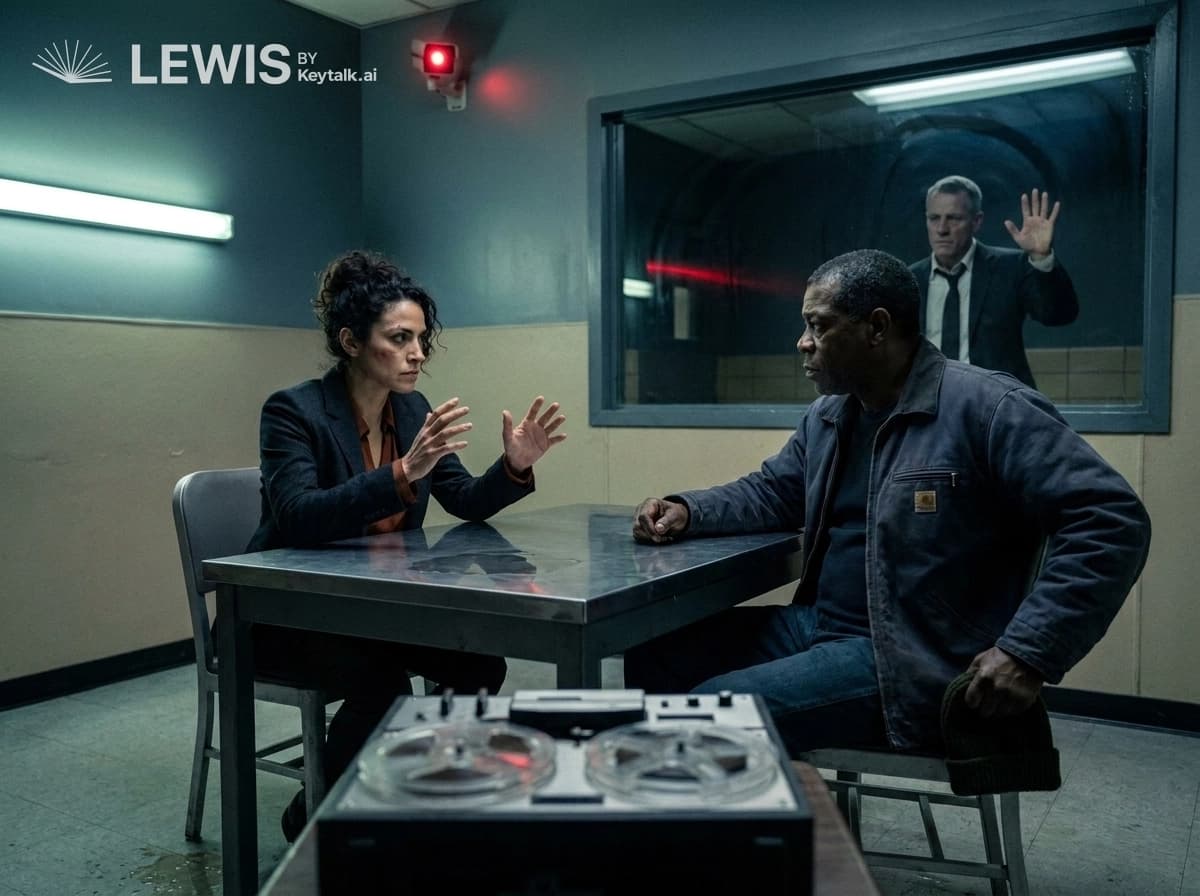
Marisol Varela raises both hands beneath the red camera light and voices Darnell Rusk’s confession across the scratched laminate table. “I had the knife,” Darnell says, his calm voice feeding the tape machine while fluorescent tubes bleach the beige room above them. Behind the dark one-way glass, Detective Eamon Kelleher’s broad shape shifts closer to the reflection.

Darnell’s hands drop low beside his chair, nearly hidden by the table, and form snow sweeping sideways across a yard. Then he signs a truck, a diesel engine, and a small body dragged by its arms beneath a sagging loading hook. Marisol’s mouth keeps pace with his spoken words—“I stabbed him once”—but her fingers answer under the table: *Who?*

Darnell looks directly at her and closes one hand around an invisible red knit cap. The tape hums on as Kelleher lifts a hand to the glass, watching Marisol’s reflected wrists move where no spoken confession requires them to move.

Scene 02· Late February night, minutes into the recorded interrogation

The Name No File Holds

The Name No File Holds
PlaceCounty Courthouse Interview Room
TimeLate February night, minutes into the recorded interrogation
ActionMarisol keeps voicing Darnell’s spoken admission while answering his hidden signs beneath the table edge. She asks who wore the red cap. Darnell forces his hands into the private childhood sign Tomas and makes Marisol repeat it back before continuing. Kelleher presses closer to the one-way glass, drawn by the movement he cannot interpret.
ImpactDarnell gives Marisol proof that his silent account concerns her brother, not a random missing child. Her role shifts from interpreter to the only person in the room who can recognize what is being said. Kelleher sees enough of her altered rhythm to begin suspecting the transcript is no longer under his control.

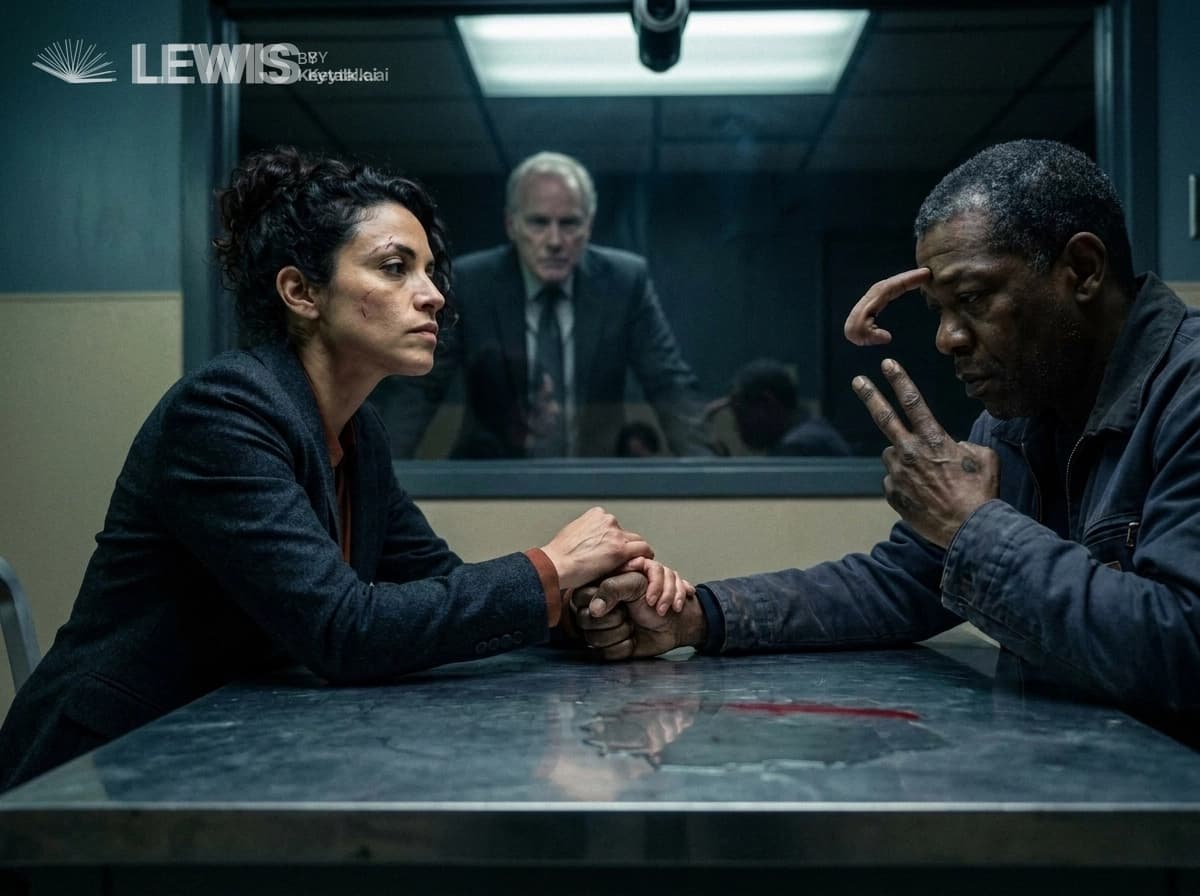
Marisol folds her hands over Darnell’s clenched fist, hiding the motion beneath the scratched laminate table, while her voice stays level for the ceiling camera. “I left the knife in the alley,” Darnell says aloud, and she gives the words back exactly as he offers them. Below the table, Marisol signs, *The boy. Who was he?*

Darnell pulls his hand free and raises it into the narrow strip of light between their bodies. He taps two fingers against his chest, then brushes his thumb across the side of his brow in a small crooked arc—the sign Tomas made at six after falling from his bike and splitting his forehead. Marisol’s fingers stop halfway to the next word. “Say it,” Darnell murmurs, his eyes fixed on hers.

Behind the dark glass, Eamon Kelleher steps close enough that his suit and pale face blur into the reflection. Marisol signs the childhood name back once, low and sharp. Darnell closes his hand around the invisible red cap again, then points beyond the room, toward the shuttered icehouse only he and she can see.

Scene 03· Late February night, moments after Darnell signs Tomas’s childhood name

Nine Minutes Remaining

Nine Minutes Remaining
PlaceCounty Courthouse Interview Room
TimeLate February night, moments after Darnell signs Tomas’s childhood name
ActionDarnell continues speaking a false confession while signing that he witnessed the stabbing and that Tomas was alive inside the diesel-smelling truck behind the icehouse. Marisol keeps voicing his spoken account, then breaks protocol by asking in ASL where the truck went. Kelleher sees the forbidden exchange through the one-way glass, opens the interview-room door, and orders Marisol to lower her hands.
ImpactMarisol gains the first direct confirmation that Tomas survived the initial abduction long enough to be transported away. Her question makes her private investigation visible to Kelleher, ending the fragile concealment that allowed the double transcript to exist. Kelleher’s entrance turns the interview from a controlled deception into an open confrontation.

Darnell Rusk lifts both hands into the camera’s red wash and signs *witness*, then points to his own chest as the tape machine counts down beside the scratched laminate table. Aloud, he says, “I held the knife,” and Marisol Varela translates without changing a syllable. Beneath the sentence, Darnell shapes a truck cab, twists an invisible key, then presses both palms flat against his ribs: a boy breathing in the dark. He signs the icehouse loading yard, the dragged tracks in snow, then Tomas’s crooked brow-sign again.

Marisol’s fingers cut through the space between them. *Where did they take him?* Darnell’s mouth keeps moving for the recording—“Nobody made me do it”—but his hands stop above the table. His eyes flick past Marisol to the black glass, where Eamon Kelleher’s reflected shape has become a pale face and a loosened tie.

The door slams open hard enough to rattle the bolted chairs. Kelleher enters and catches the back of Marisol’s chair with one hand. “Hands down,” he says. Darnell lowers his voice, but raises one finger toward the ceiling camera as Marisol keeps her hands suspended between her body and his, the unfinished question visible in the fluorescent room.

Chapter 02

Scene 04· Late night, with minutes left on the recording

The Last Answer

The Last Answer
PlaceCounty Courthouse Interview Room
TimeLate night, with minutes left on the recording
ActionKelleher grips Marisol’s chair and orders her to stop signing beyond Darnell’s spoken answers. Marisol keeps translating Darnell’s false confession aloud, then slips her question beneath the table: where did they take Tomas? Darnell answers by signing Clark Street Bridge, and Kelleher sees enough of the exchange to seize Darnell’s wrist and end the interview.
ImpactMarisol gets a specific location tied to Tomas before Kelleher can separate her from Darnell. Kelleher’s intervention makes their split-language exchange openly adversarial and turns Darnell’s removal to lockup into an immediate threat. The bridge becomes the only place Marisol can test whether Darnell’s account contains proof.

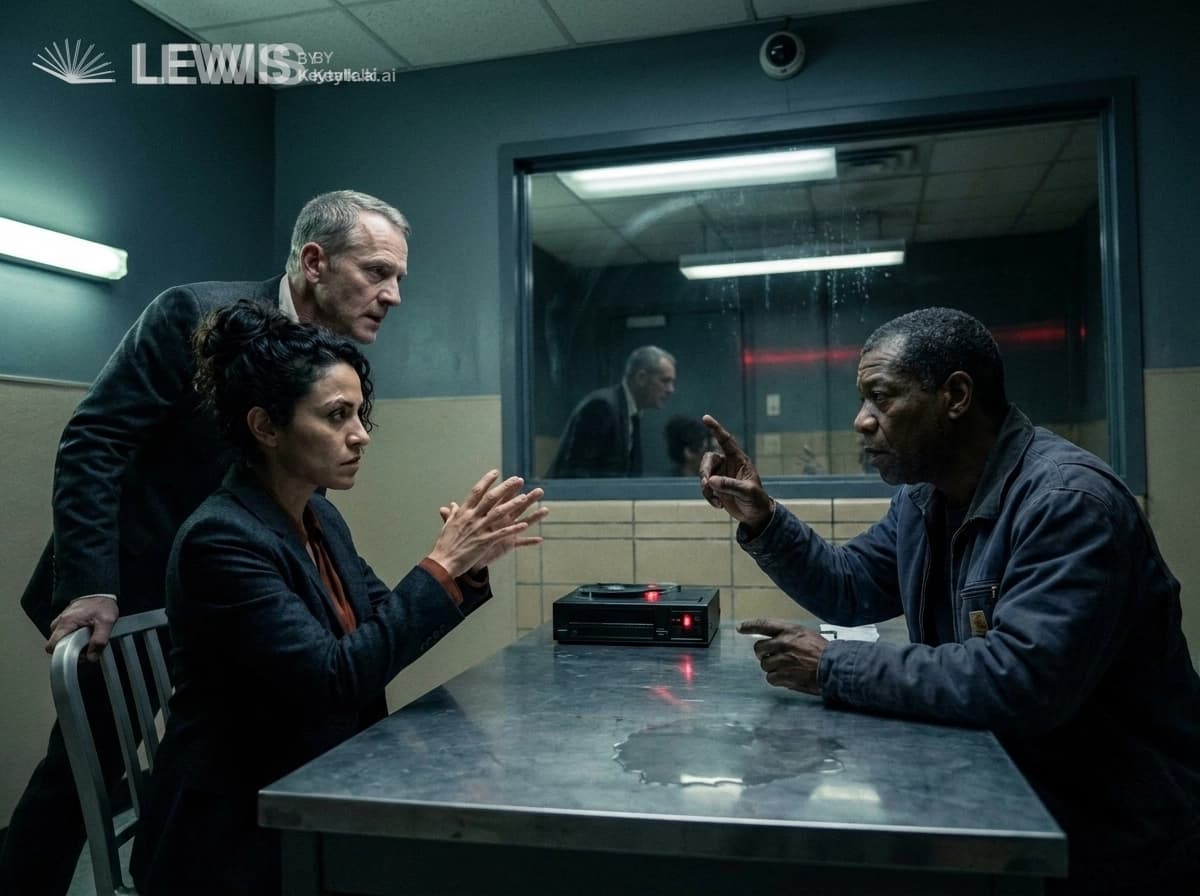
Marisol twists free beneath Kelleher’s hand on the back of her chair and lifts her palms again under the red camera light. “Nobody made me do it,” Darnell says into the tape machine, and she voices it cleanly while her fingers cut low beneath the scratched table: *Where did they take Tomas?* Kelleher leans over her shoulder, his loosened tie hanging near the laminate, and snaps, “Interpret what he says.”

Darnell keeps his face toward the camera as if he has surrendered, but one hand rises between the bolted chairs. He makes two steel uprights, joins them with a flat span, then hooks a finger beneath it and points down. Marisol catches the sign before Kelleher can block her view: Clark Street Bridge. “He says he acted alone,” she tells the recorder, her voice level as Darnell’s hand closes into a fist.

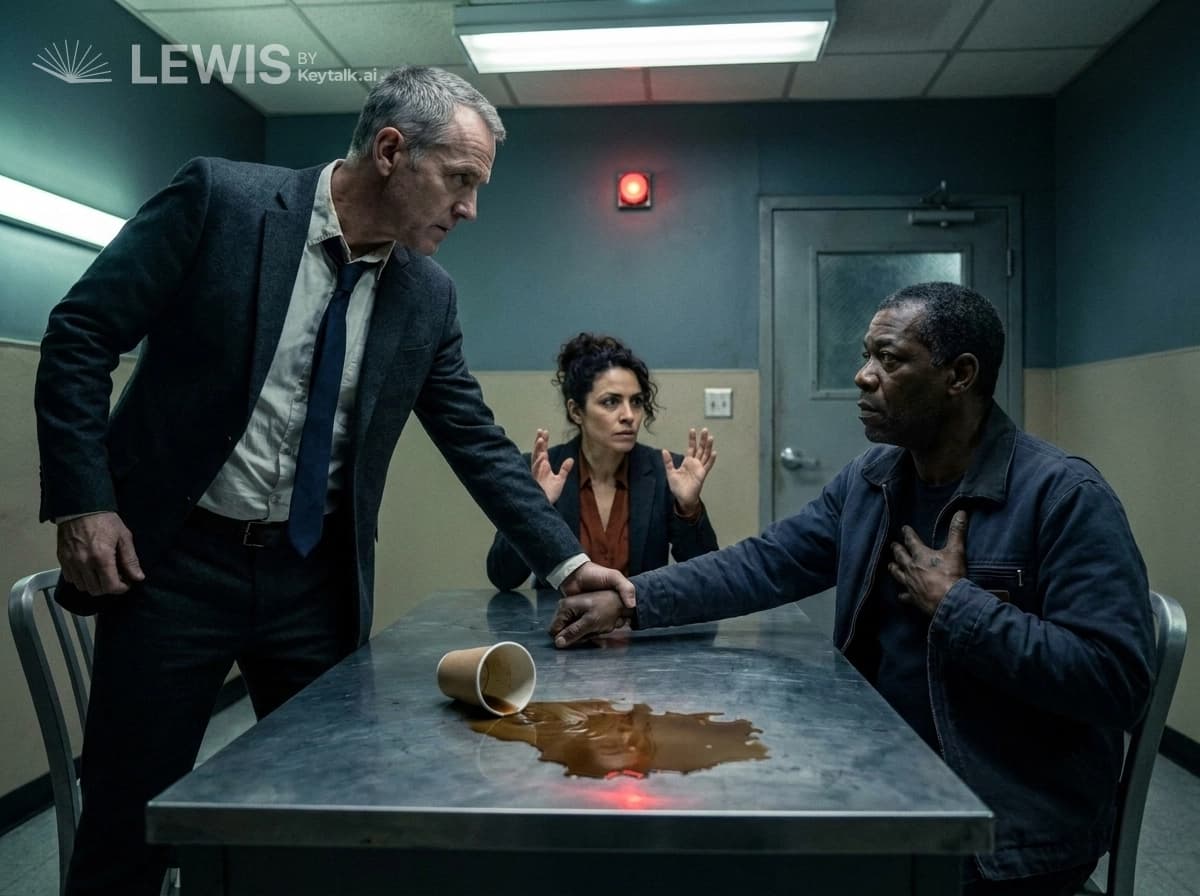
Kelleher reaches across the table and clamps around Darnell’s wrist, dragging it down hard enough to knock a paper cup onto its side. Coffee runs through an old ring on the laminate while Darnell looks at Marisol and presses his free hand once against his chest, then toward the door.

Scene 05· Minutes after the interview is cut off, late winter night

The Elevator Between Floors

The Elevator Between Floors
PlaceCook County Courthouse service elevator
TimeMinutes after the interview is cut off, late winter night
ActionKelleher forces Darnell out of the interview room and into the service elevator, keeping one hand locked on Darnell’s arm while Marisol is pressed in beside them. The elevator jolts between floors and stops under its red emergency lamp. Darnell folds over as if sick, and Kelleher reaches for the control panel instead of letting Marisol near him. At the threshold, Marisol sees the bent transport-rail lever lying loose where the elevator floor has buckled.
ImpactThe stalled elevator gives Marisol a narrow physical gap between Kelleher’s authority and Darnell’s transfer to lockup. Darnell’s feigned illness confirms that he is ready to act on the request he made with his hands. Marisol now has the lever, the confined space, and one chance to decide whether she will preserve the official process or break it.

Eamon Kelleher shoves Darnell Rusk through the dented steel doors of the service elevator, and Marisol Varela catches the door edge before it closes on her shoulder. The car lurches upward with all three of them packed beneath a dull red emergency lamp, Darnell’s cuffed wrists held close to the transport rail. Kelleher pins Darnell by the elbow and says, “You don’t get another word with her.”

The elevator bucks hard enough to throw Kelleher into the wall. A cable groans above the ceiling panel, then the car stops between floors with a metallic slam. Darnell drops to one knee and retches dryly against the scuffed rubber floor; Kelleher grabs the radio at his shoulder and barks for maintenance. Marisol kneels as if to check Darnell, but her fingers close around the bent lever lying beside the threshold.

Darnell lifts his face through the red light and signs one-handed against his chest: *river.* Kelleher turns toward the sealed doors, radio hissing in his fist. Marisol slides the loose lever inside her blazer sleeve while Darnell lets his cuffed hand fall against the rail with a single, deliberate clink.

Scene 06· Late February night, minutes before lockup transfer

Run While the Doors Hold

Run While the Doors Hold
PlaceCook County Courthouse service elevator and loading corridor
TimeLate February night, minutes before lockup transfer
ActionMarisol uses the bent transport-rail lever she concealed to release Darnell’s cuff from the rail while Kelleher is occupied with the stalled elevator radio call. Darnell forces the service doors apart before Kelleher can restrain him again, leaving one cuff hanging from his wrist. Marisol follows Darnell into the loading corridor as Kelleher breaks after them.
ImpactMarisol openly abandons the interpreter’s protected role and becomes part of Darnell’s escape. Darnell gains the brief freedom he needs to lead her toward the river evidence. Kelleher loses control of the transfer and turns the courthouse into an active pursuit.

Marisol Varela jams the bent lever into the transport rail’s release slot as Darnell Rusk folds over on the scuffed elevator floor, and the cuff snaps free with a hard metallic crack beneath the dull red emergency lamp. Eamon Kelleher whips around from his hissing radio. “What did you do?” he says, lunging past the narrow rail.

Darnell drives his shoulder into the dented service doors before Kelleher can seize him. The doors shudder apart a hand’s width, then wider, revealing a concrete loading corridor washed in weak security light. Kelleher catches Darnell’s jacket, but Marisol slams the loose rail lever against Kelleher’s wrist; his grip breaks, and the radio skitters across the rubber floor. Darnell tears through the opening with one cuff bouncing against his sleeve.

“Marisol, stay in that car,” Kelleher shouts. She steps over the fallen radio instead, catches the closing door with both hands, and forces herself through after Darnell. Behind her, Kelleher shoulders into the narrowing gap as Darnell runs down the corridor toward the loading doors, his dangling cuff striking the concrete wall in sharp, uneven beats.

Chapter 03

Scene 07· Late February, shortly after midnight

Closed Sign

Closed Sign
PlaceNia’s Lake Street Diner
TimeLate February, shortly after midnight
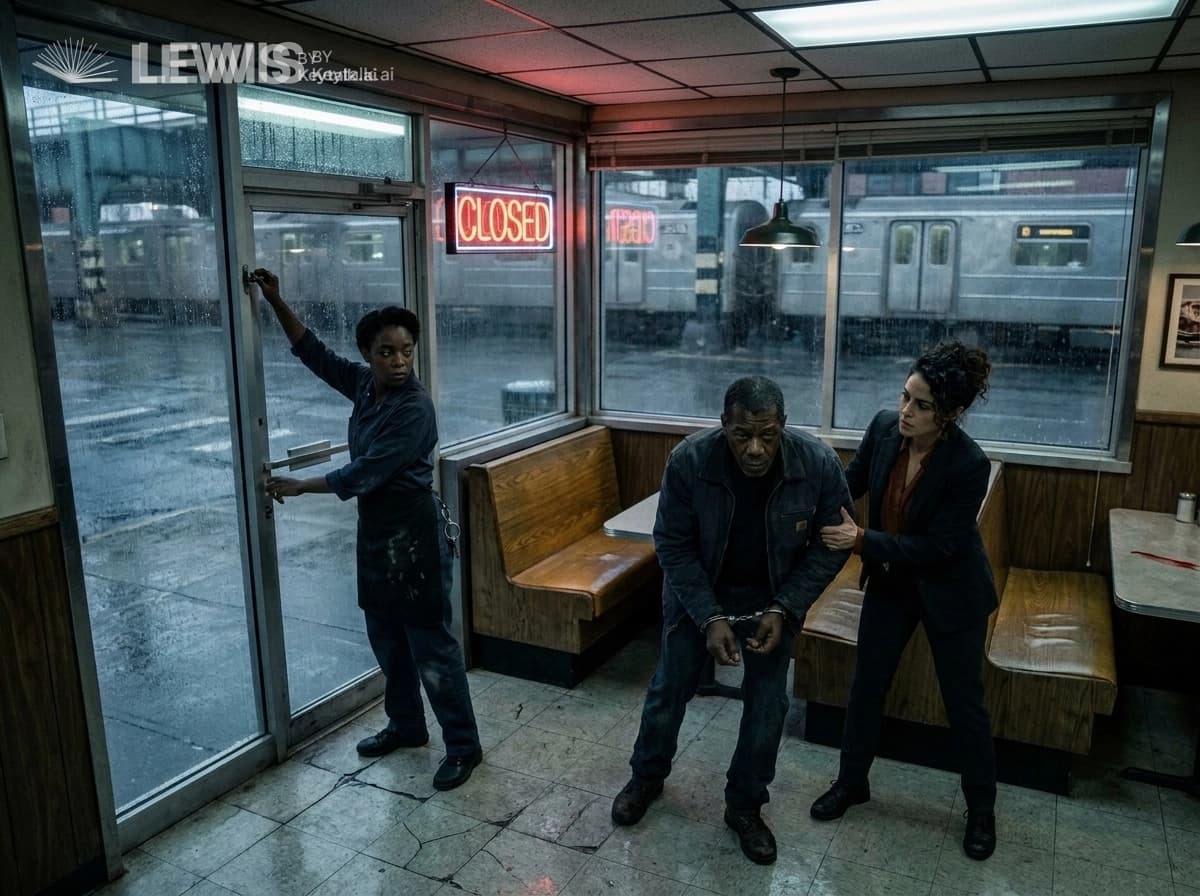
ActionNia Baines locks the diner’s front door behind Marisol Varela and Darnell Rusk, then flips the neon sign from OPEN to CLOSED. She forces them into the back booth beneath the broken security camera while Darnell tries to explain himself with shaking hands. Eamon Kelleher appears outside the steamed front window, close enough for Marisol to see his loosened tie and the hard shape of his face through the glass.
ImpactNia chooses to shelter two fugitives despite the risk to her diner and livelihood. Marisol becomes the only person who can tell Nia what Darnell is signing, while Kelleher establishes that the diner is no longer a refuge. The locked door turns the booth into a temporary hiding place and a trap.

Nia Baines slams the diner’s glass door shut behind Marisol Varela and Darnell Rusk, twists the deadbolt, and flips the neon sign so OPEN dies into a red CLOSED beneath the Lake Street tracks. A train rolls overhead, shaking amber light across cracked booths as Darnell stumbles toward the back, one loose cuff snapping against his wrist. Marisol catches his elbow before he falls into the vinyl seat.

Nia plants herself between them and the counter, her hand wrapped around the ring of keys at her hip. “Tell me why I just locked my business down for a man in cuffs.” Darnell lifts both hands, but they shiver so badly his first signs collapse into each other; Marisol steps close and answers him in ASL, forcing the pace slower. He shapes *river*, then makes the small dragging motion he used for Tomas, and Marisol’s mouth tightens as she turns to Nia. “He says he knows where evidence is.”

The front window clouds with a broad shadow. Eamon Kelleher stops beneath the diner awning, rain shining on his shoulders, and looks straight through the wet glass toward the back booth. Nia reaches up, kills the nearest row of overhead lights, and the CLOSED sign burns alone above the locked door.

Scene 08· Late night, minutes after the diner is locked down

The Folded Crossing

The Folded Crossing
PlaceNia’s Lake Street Diner, back booth beneath the broken security camera
TimeLate night, minutes after the diner is locked down
ActionDarnell Rusk tears a sugar packet from the chrome dispenser and folds it into the shape of Clark Street Bridge while Marisol Varela forces his shaking hands to slow. He signs that Tomas was alive when the river crew made him help lower a weighted crate beneath the bridge’s service ledge. Nia Baines watches from the counter as Eamon Kelleher’s silhouette remains fixed beyond the steamed front window.
ImpactMarisol receives a precise account of where the crate is hidden and why Darnell has kept silent for fifteen years. The evidence is no longer a vague promise beneath the river; it has a route, a mechanism, and a witness who helped conceal it. Kelleher’s presence outside makes clear that they must leave the diner before he can take Darnell back into his version of the record.

Darnell Rusk rips a sugar packet from the chrome dispenser and presses it flat against the scarred booth table, his loose cuff clicking against the laminate beneath the broken security camera. Marisol Varela catches his wrist before the paper tears, then releases him when he looks at her with wet, furious eyes. Nia Baines stands at the end of the booth with her keys clenched in one fist, watching Eamon Kelleher’s rain-dark shape hold still behind the diner’s fogged front glass.

Darnell folds the packet lengthwise, pinches two towers at either end, and bridges them with the remaining strip. His fingers move through the tremor: *Clark. Service stair. Low ledge.* Marisol signs back, sharp and close to his hands: *Tomas?* Darnell presses one palm flat over the tiny paper bridge, then hooks two fingers beneath it as if catching a rope. “Alive,” he says aloud, the word scraped raw. His hands continue: the boy was tied to a weighted crate; the crate held ledgers, names, weapons, and the records the river crew needed hidden.

A train hammers overhead, and the windows shiver in their frames. When the noise passes, Darnell makes the lowering motion again, slower this time, then points at his own chest and closes both hands as though fastening a lock. Marisol stares at the folded packet bridge between them while Kelleher’s shadow shifts outside, stretching across the red CLOSED sign.

Scene 09· Late night, minutes after Kelleher reaches the front window

The Kitchen Door

The Kitchen Door
PlaceNia’s Lake Street Diner
TimeLate night, minutes after Kelleher reaches the front window
ActionNia tells Kelleher through the locked front door that a kitchen pipe has burst, then forces him to wait outside while she moves Marisol and Darnell through the diner’s rear. As officers begin to circle the building, Nia unlocks the kitchen exit and gives them a narrow route toward Clark Street Bridge. Darnell takes the folded sugar-packet bridge with him.
ImpactThe diner stops being cover and becomes a trap Kelleher is closing from both sides. Nia makes an active choice to risk police attention, her job, and the diner’s future so Marisol and Darnell can reach the river. Marisol leaves with Darnell’s route and the first physical shape of the place where Tomas was hidden.

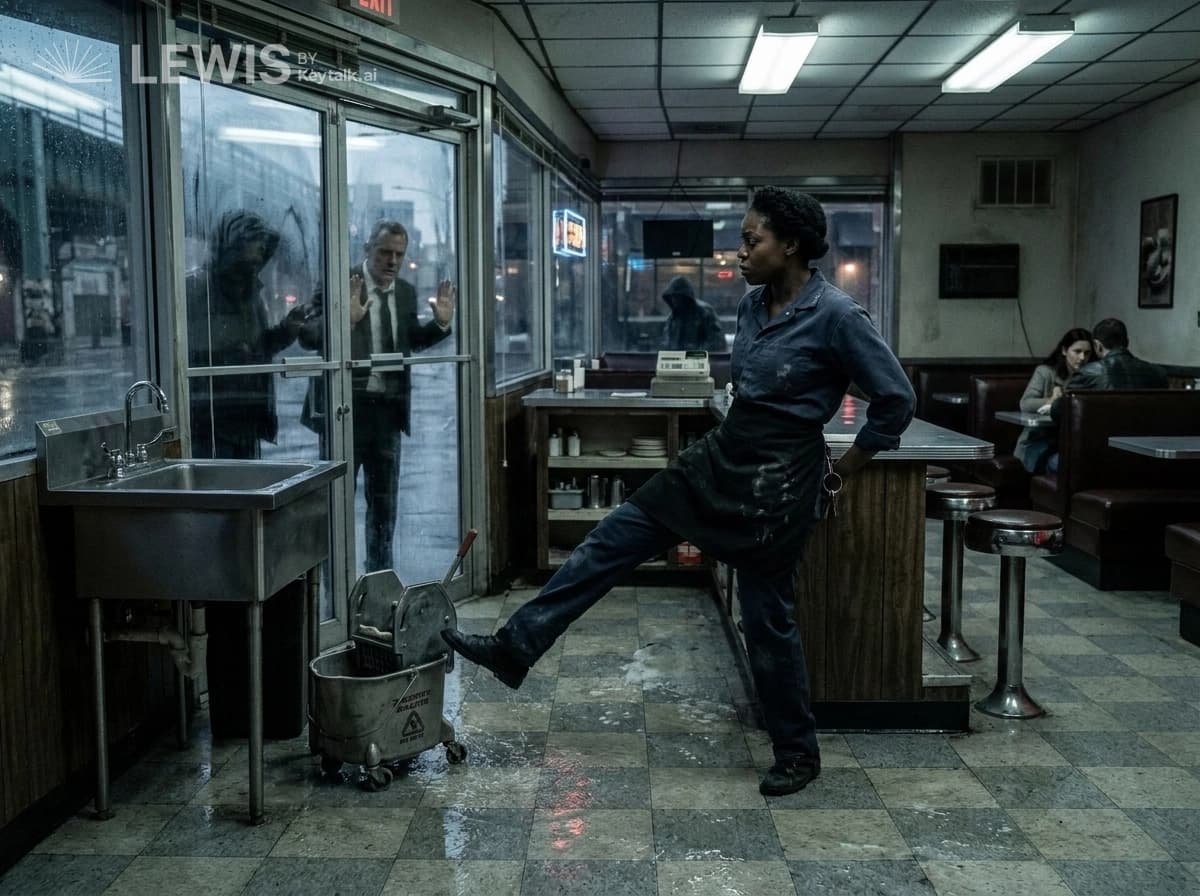
Nia Baines yanks a mop bucket beneath the kitchen sink and kicks it hard enough that gray water splashes across the tile as Eamon Kelleher raps once against the diner’s locked front glass. “Burst pipe,” she calls through the steam-fogged window, raising her voice over the train grinding above them. “You want to come in, bring somebody who knows plumbing.” Kelleher’s rain-dark face stays fixed on the back booth, then his hand lifts near his shoulder; beyond him, two shapes peel away from the awning and disappear along either side of the diner.

Marisol Varela grabs Darnell Rusk’s sleeve as he rises too fast from the booth, his loose cuff striking the table and scattering sugar crystals around the tiny paper bridge. “Rear door,” Nia says, already moving. Darnell snatches up the folded packet, presses it into Marisol’s palm, and signs with one shaking hand: *Stair. Ledge. Rope.* Marisol closes her fingers around the paper as Nia shoves open the swinging kitchen door.

The kitchen is narrow, greasy, and bright under a single fluorescent tube. Nia unlocks the rear exit, then braces it with her shoulder when a flashlight beam slides across the alley-facing window. “Go when I open it,” she says. The door swings out onto rain-black pavement, and Darnell runs through first while Marisol follows with the sugar-packet bridge crushed safely in her fist.

Chapter 04

Scene 10· Minutes after the escape from Nia’s Lake Street Diner, before dawn

The Line Beneath the Water

The Line Beneath the Water
PlaceClark Street Bridge Service Ledge
TimeMinutes after the escape from Nia’s Lake Street Diner, before dawn
ActionDarnell leads Marisol down the narrow maintenance stair beneath Clark Street Bridge and hooks his dangling cuff around the submerged towline. Marisol braces herself against the railing and joins him in pulling the oil-slick line free from the cleat. Nia follows them to the top of the stairwell, watching the street above for Kelleher and holding the kitchen tire iron beneath her coat.
ImpactThe towline moves for the first time in fifteen years, proving that something heavy remains caught beneath the bridge. Marisol commits herself physically to Darnell’s account, putting her body between the river and the evidence. Their struggle creates the delay that allows Kelleher’s pursuit to close in.

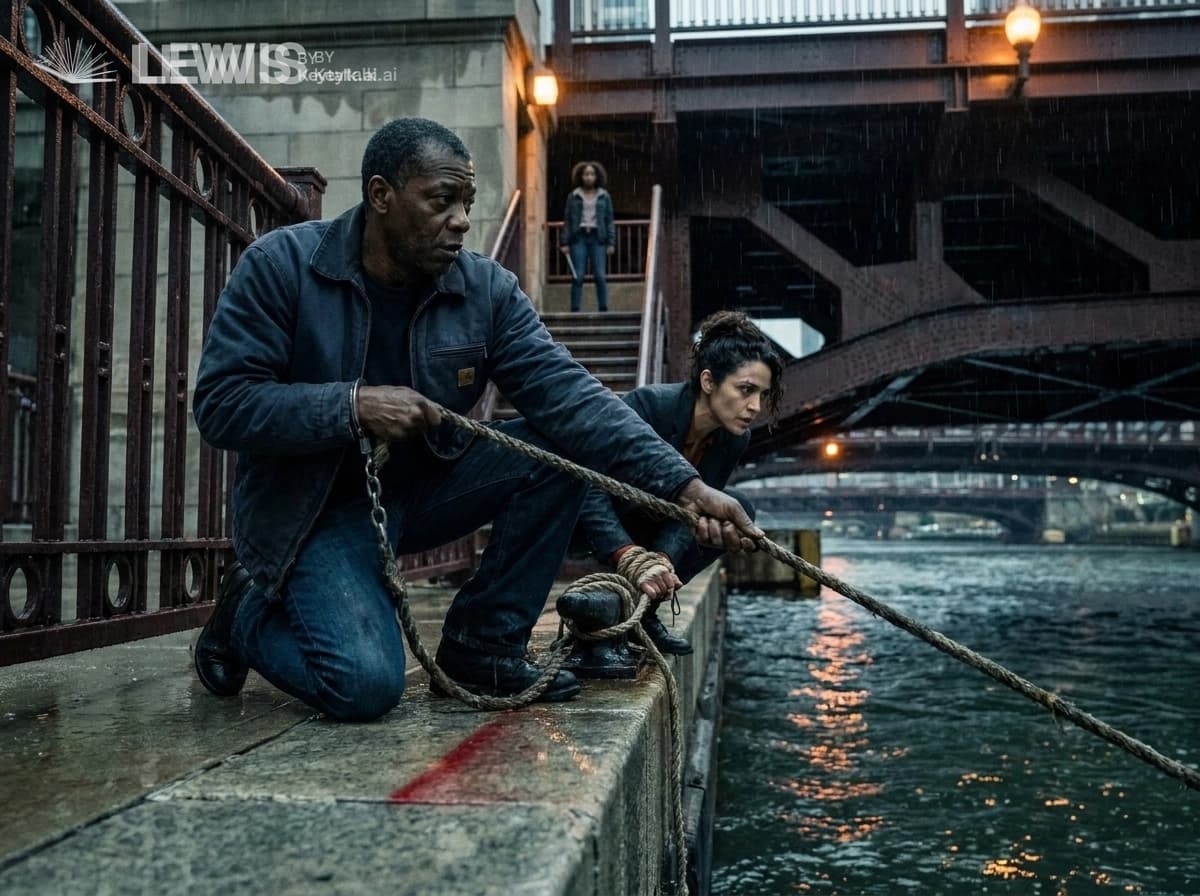
Darnell Rusk drops to one knee on the Clark Street Bridge service ledge and swings his loose cuff into the black water until the chain catches the oil-sheened towline. The river slaps the limestone inches below his boots, and orange sodium light breaks across the frayed rope as he hauls it toward an iron cleat. Marisol Varela grabs the line above his hands, wraps it once around her palm, and pulls with him until the fibers bite through the rain on her skin.

“It’s still there,” Darnell says, his jaw clenched against the strain. His free hand signs *deep—snagged—pull slow,* then slips when a truck rolls overhead and sends a shudder through the bridge. Marisol drives her shoulder into the wet railing, catches the rope before it whips back into the current, and yanks it around the cleat.

Above them, Nia Baines appears on the stair landing with the tire iron low against her thigh. She looks toward the riverwalk, then back at Marisol. “You have company coming.”

The towline tightens between Marisol and Darnell, then gives one heavy inch. Something unseen scrapes against the bridge wall below them, dragging up a cloud of river-dark silt.

Scene 11· Late February night, minutes before dawn

The Detective at the Steps

The Detective at the Steps
PlaceClark Street Bridge service ledge
TimeLate February night, minutes before dawn
ActionAs Marisol and Darnell pull the towline upward, Kelleher comes down the service stairs and orders Marisol away from the rope. Nia blocks the stair landing with her tire iron while Kelleher presses onto the ledge alone. Darnell refuses to release the line, and Kelleher kicks his hand free, sending him into the river.
ImpactThe crate shifts higher but remains snagged beneath the bridge, proving that the evidence is within reach. Kelleher makes his effort to stop its recovery physical and visible, ending any pretense that he is simply managing a fleeing suspect. Marisol must choose between holding the line and saving Darnell as the river takes him.

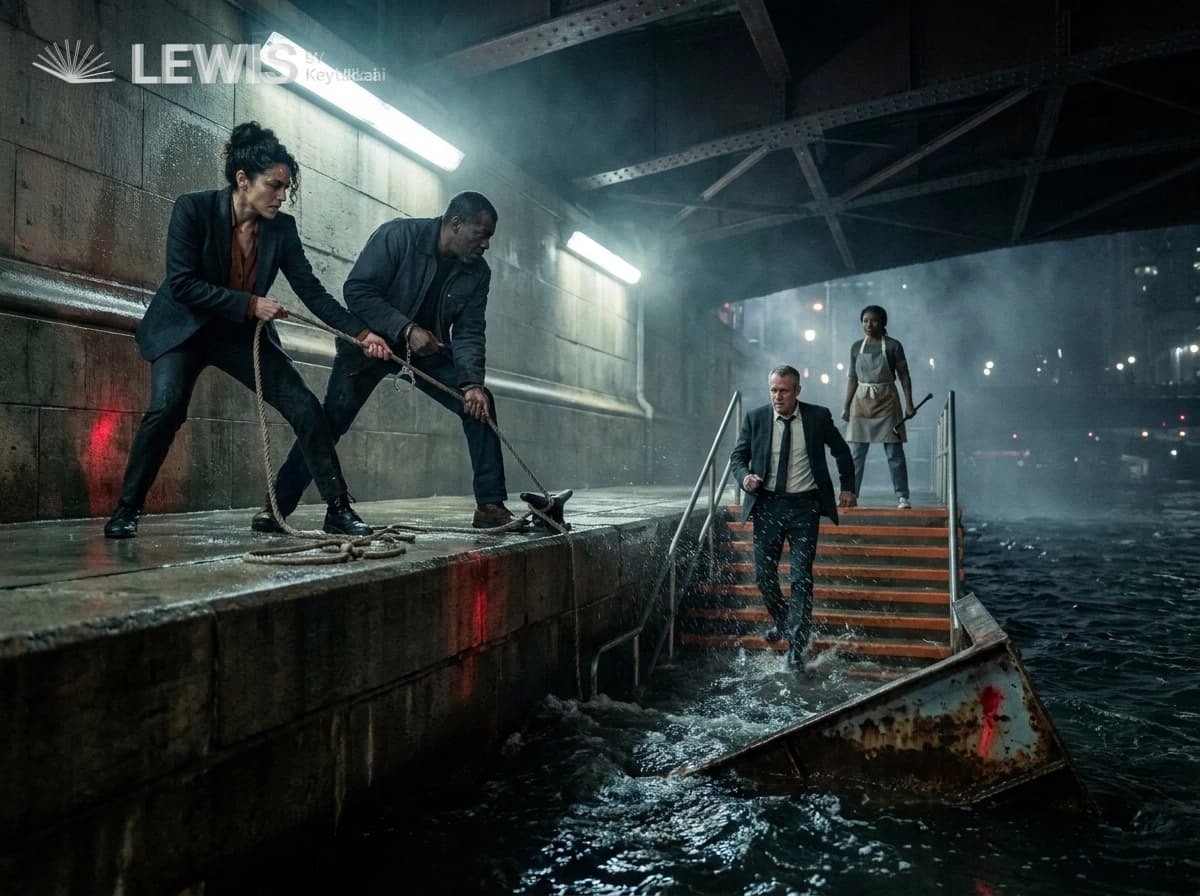
Marisol Varela yanks the towline around the iron cleat just as Eamon Kelleher pounds down the narrow service stairs, his shoes spraying water across the orange-striped limestone. Darnell Rusk braces one knee against the wall and hauls beside her, the loose cuff at his wrist striking the rope with each pull. Beneath them, something large grinds against the bridge base and rises another inch through black water.

“Step away from him,” Kelleher says, reaching the ledge with both hands open. Nia Baines plants herself across the top stair, tire iron held low, and blocks the way behind him. “You want past me,” she says, “you make it loud.” Kelleher ignores her and points at Darnell. “He is a fleeing killer. She is an interpreter who let grief take her apart.”

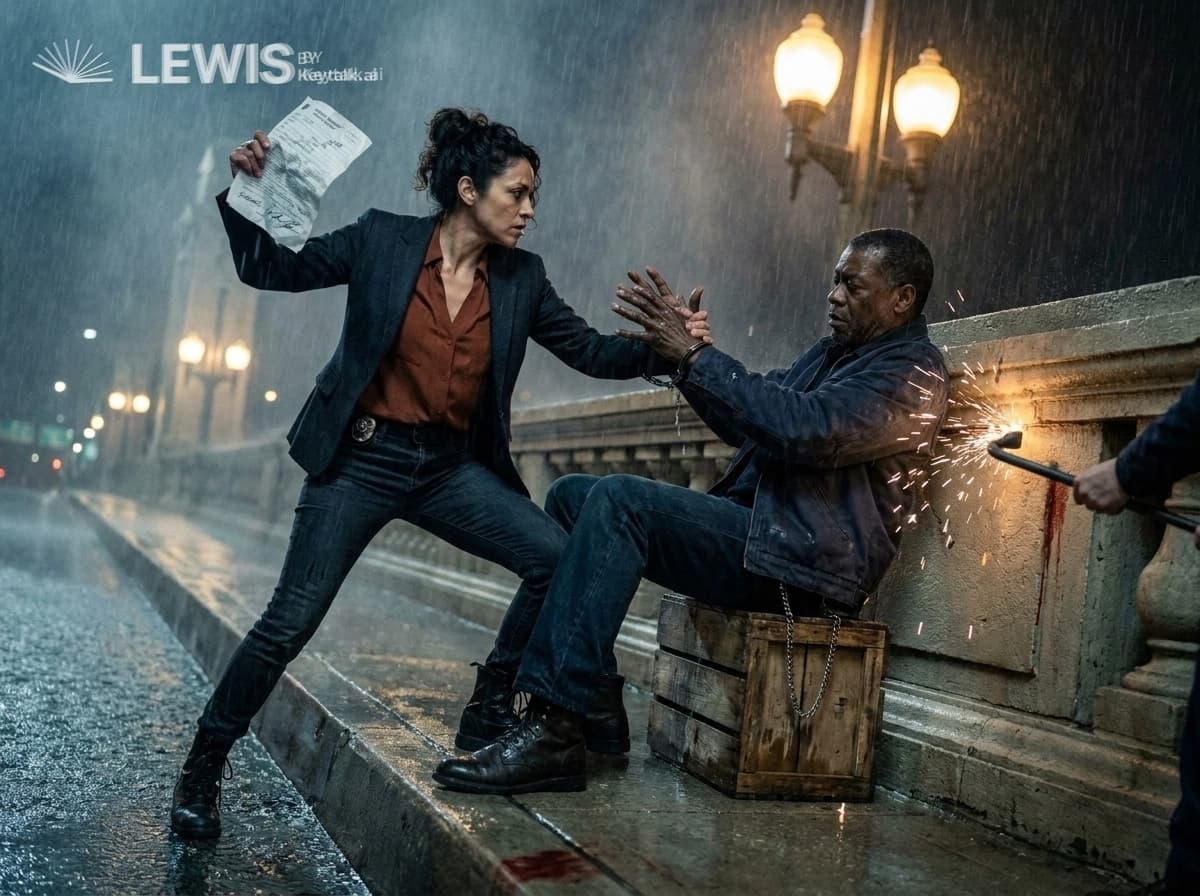
Darnell signs *not killer* without releasing the rope, then pulls again hard enough to drag a rusted corner briefly above the waterline. Kelleher steps close, catches Darnell’s wrist, and Darnell twists free. “Let it come up,” Marisol says. Kelleher drives his boot into Darnell’s gripping hand; the rope burns loose, and Darnell pitches over the ledge as the cuff chain flashes once before the river closes over him.

Scene 12· Late February night, minutes before dawn

What the River Kept

What the River Kept
PlaceClark Street Bridge Service Ledge
TimeLate February night, minutes before dawn
ActionMarisol catches Darnell by the dangling cuff chain as the river pulls him beneath the ledge, then drags him against the limestone while keeping the towline looped around the cleat. Nia blocks the service stairs with her tire iron when Kelleher tries to reach the rope. Darnell tears open the crate as it clears the water, exposing Tomas’s red cap, a tow-company ledger, and Kelleher’s signed patrol report. Kelleher lunges for the crate and tries to force it back into the river, but Marisol drives him away from it and makes the evidence visible to everyone on the ledge.
ImpactThe buried evidence becomes physical proof that Kelleher preserved and concealed the icehouse report. Darnell’s account can no longer be dismissed as an escape story told by a fleeing suspect. Marisol abandons any remaining deference to Kelleher’s authority and turns the ledge into a place where his actions can be witnessed.

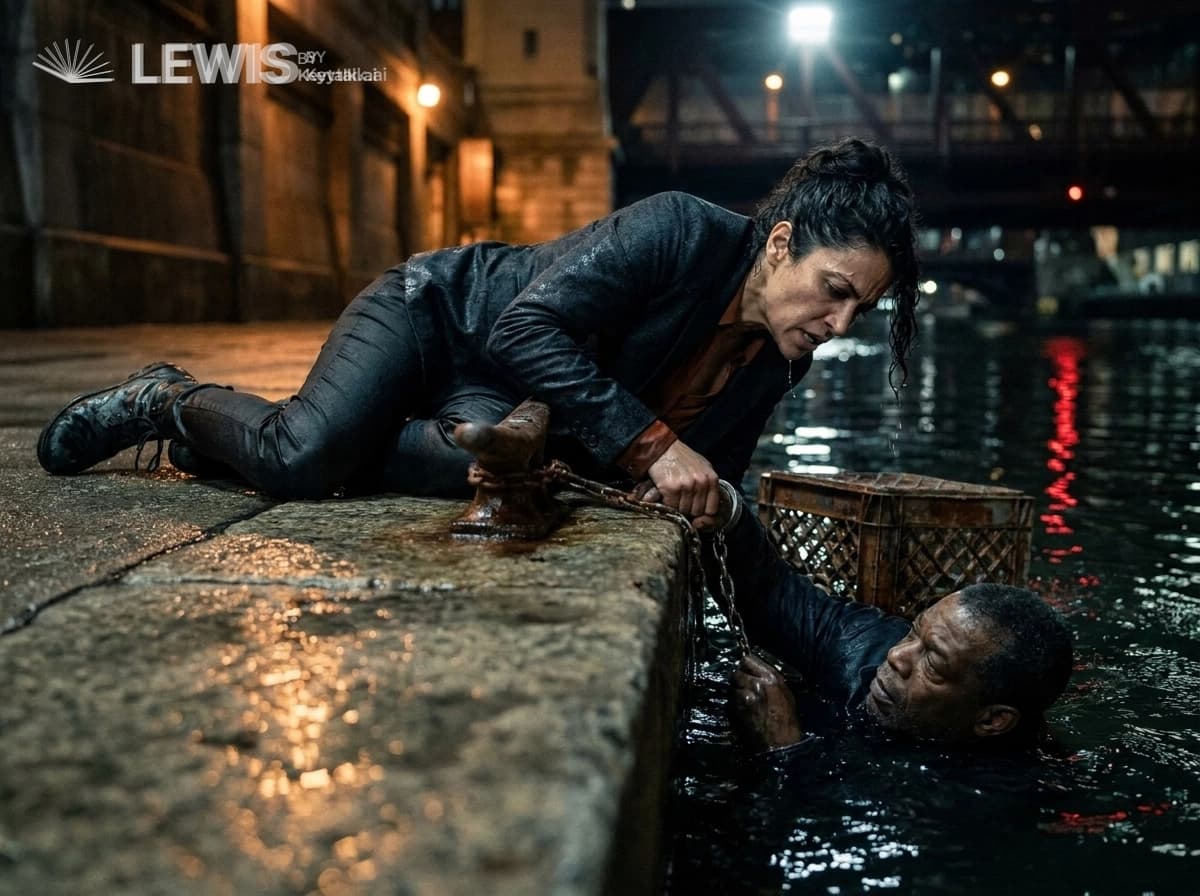
Marisol Varela drops flat on the wet limestone and grabs the chain hanging from Darnell Rusk’s cuff just before the current can pull him under the Clark Street Bridge service ledge. Her boots skid toward the black water, but she hooks one arm around the iron cleat and hauls until Darnell’s shoulder breaks the surface beside the rusted crate. “Hold on,” she says, dragging him hard against the wall as the towline grinds over stone.

Nia Baines plants herself across the stair mouth, tire iron raised now, and turns her body toward Eamon Kelleher. “You come down here, you come down loud.” Kelleher steps toward the rope anyway, but Marisol loops it twice around the cleat and braces both forearms against it while Darnell coughs river water onto the ledge. He jams his loose cuff beneath the crate lid, wrenches upward, and the corroded metal gives with a sharp crack.

Inside, a cloudy evidence bag rises in Darnell’s shaking hand: Tomas Varela’s red knit cap, its stitched T.V. dark beneath the plastic. A swollen tow-company ledger lies under it, wrapped in oilcloth beside an old patrol report bearing Kelleher’s younger signature. Kelleher lunges for the crate and shoves at its rim, trying to tip it back toward the water. Marisol drives her shoulder into his chest and pins the rope with her weight as the cap lies bright red in the orange bridge light.

Chapter 05

Scene 13· Late February night, minutes before dawn

The Cap in the Bridge Light

The Cap in the Bridge Light
PlaceClark Street Bridge Service Ledge
TimeLate February night, minutes before dawn
ActionMarisol tears the patrol report from the open crate before Kelleher can force it back into the river. She holds Tomas’s red cap and the report where Nia and Darnell can see them, then makes Kelleher answer for the signature on the page. Kelleher admits that the informant promised Tomas would be released.
ImpactKelleher’s connection to the buried icehouse report becomes public and physical, not merely Darnell’s accusation. The cap gives Marisol proof that Tomas was part of the river crew’s hidden cargo, while the report ties Kelleher to the decision that erased the lead. Darnell’s account now has evidence beside it, but Kelleher still tries to control how the officers will define him.

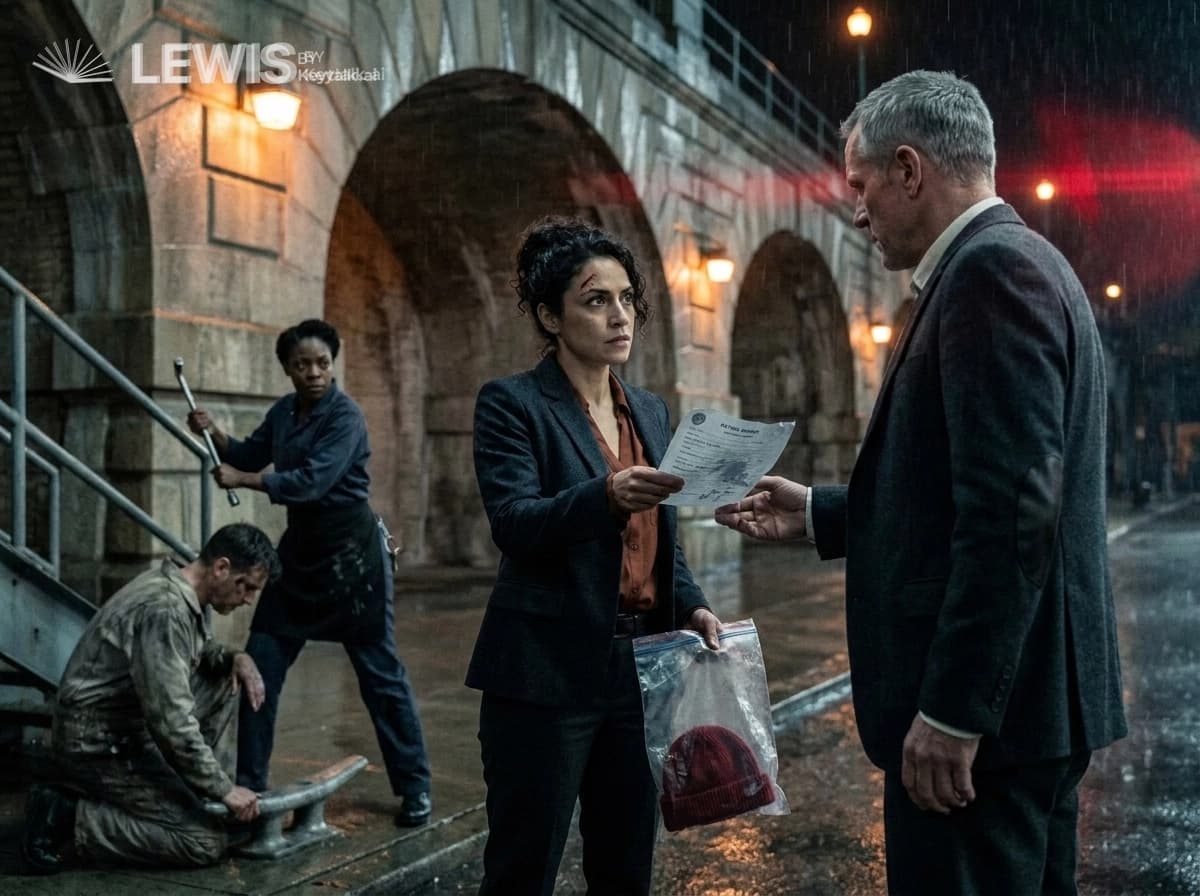
Marisol Varela snatches the soaked patrol report from the crate as Eamon Kelleher shoves at its rusted rim, and the paper slaps flat against her wet palm beneath the orange bridge lamps. Tomas’s red knit cap stays clenched in her other hand, bright through its cloudy evidence bag, while Darnell Rusk coughs on one knee beside the cleat and Nia Baines keeps her tire iron across the stair mouth. Kelleher reaches for the report. Marisol jerks it high, turning the page so his younger signature shows above the river-dark stains.

“You wrote this,” she says. “The truck plate. The icehouse. All of it.”

Kelleher’s hand closes on empty air. Bridge traffic groans overhead as he looks from the report to the cap, then down at Darnell. “The informant said the boy would be released,” he says. “That was the deal.”

Marisol steps closer until the plastic bag nearly touches Kelleher’s chest. Nia does not lower the tire iron, and Darnell lifts his shaking hands from the limestone, ready to sign. The red cap hangs between Marisol and Kelleher in the bridge light, its stitched initials facing him.

Scene 14· Pre-dawn, minutes after the crate is opened

What the Hands Said

What the Hands Said
PlaceClark Street Bridge Service Ledge
TimePre-dawn, minutes after the crate is opened
ActionDarnell Rusk raises his shaking hands and signs his account of the stabbing while Marisol Varela voices it aloud for Kelleher and Nia Baines to hear. Eamon Kelleher tries to interrupt by calling Darnell a fleeing murderer and reaching for the patrol report. Marisol keeps the report and Tomas’s cap out of his reach, then repeats the correction until Kelleher’s version can no longer occupy the ledge unchallenged.
ImpactMarisol makes the split between Darnell’s recorded spoken confession and his actual signed statement public. Kelleher loses the ability to frame Darnell solely as the killer he needs for the morning briefing. The river evidence and Marisol’s audible correction force the next decision: Darnell must be treated as a witness to the river crew and Kelleher’s concealed report.

Marisol Varela lifts Darnell Rusk’s wet hands between them on the slick Clark Street Bridge service ledge, turning his palms toward Eamon Kelleher as the red cap and signed patrol report press against her ribs. Darnell’s fingers tremble, then sharpen into the old account: knife, alley, another man’s face turned away, his own body standing back. Marisol follows every movement with her voice. “He saw the stabbing. He did not commit it.”

Kelleher lunges for the report, but Nia Baines swings the tire iron across his path and strikes the limestone hard enough to throw sparks. “Don’t,” she says. Kelleher points at Darnell. “He ran from custody. He confessed on tape.” Darnell signs *because you promised prison was safer,* then folds his hands into the sign for *witness* and holds it there.

Marisol raises the patrol report above the crate, its soaked page fluttering under the bridge lamps. “He witnessed the stabbing,” she says again, louder over the traffic. “He did not commit it.” Kelleher’s hand drops as Darnell’s cuff chain drips black river water onto the stone between them.

Scene 15· Dawn, hours after the Clark Street Bridge recovery

The Red Light Again

The Red Light Again
PlaceCounty Courthouse Interview Room
TimeDawn, hours after the Clark Street Bridge recovery
ActionMarisol returns to the interview room and starts a corrected recording beneath the same ceiling camera that captured Darnell’s false spoken confession. Nia places the sealed evidence bag containing Tomas’s red cap on the scratched table while Darnell, dry-clothed but pale after treatment, sits cuffed in the bolted chair and signs his account. Kelleher is escorted past the one-way glass, and Marisol stops the recording long enough to make him face the room before restarting it.
ImpactMarisol creates an official record that separates Darnell’s role as witness from the murder confession he was pressured to give. Tomas’s name, the icehouse lead, and Kelleher’s buried patrol report enter the record together. The interrogation room that once hid Darnell’s meaning now preserves it in Marisol’s voice and hands.

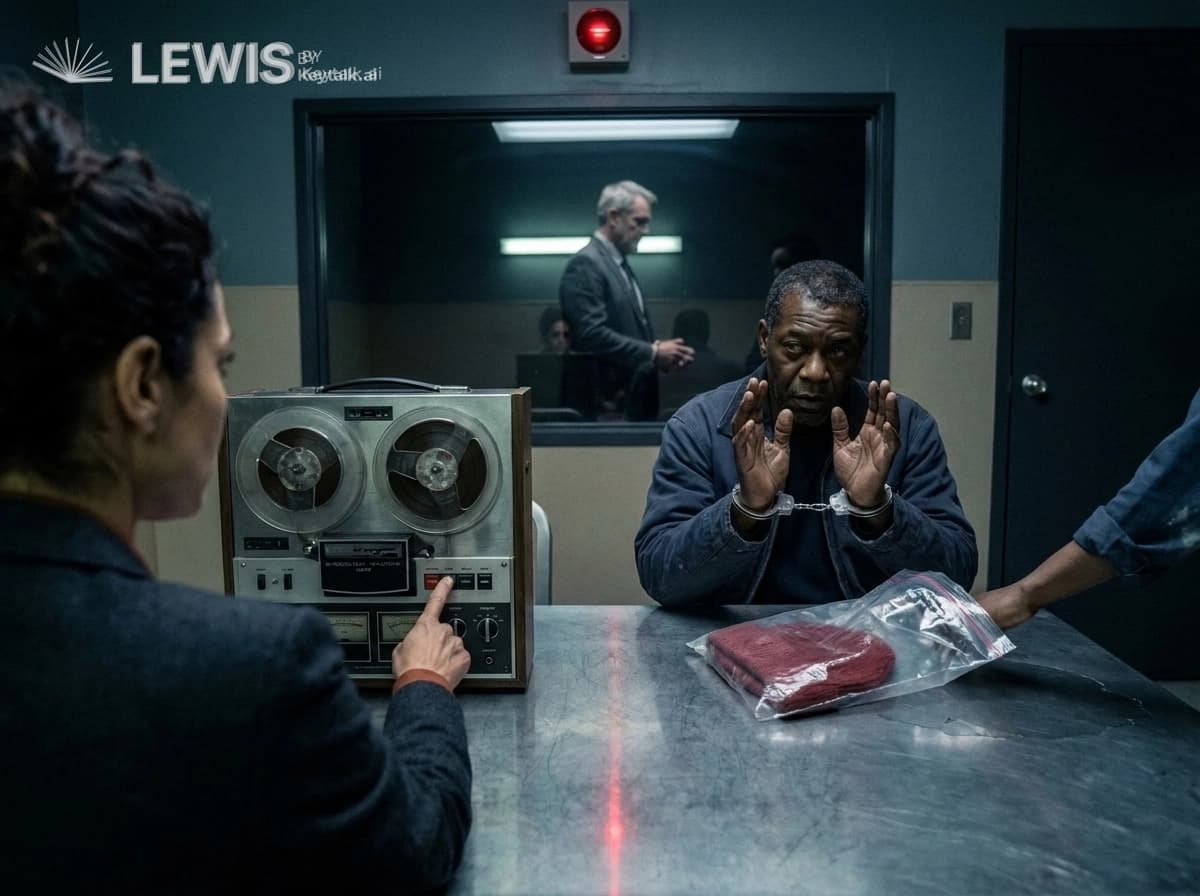
Marisol Varela presses the RECORD button, and the ceiling camera’s red light snaps on above the scratched laminate table in the County Courthouse interview room. Nia Baines sets Tomas’s cloudy evidence bag beside the tape machine, the red knit cap flattened against plastic, while Darnell Rusk raises his cuffed hands across from Marisol. The fluorescent tubes bleach the beige walls until the cap is the only warm color in the room.

“This is a corrected interpretation,” Marisol says into the camera. “The prior recording does not contain the full statement communicated by Darnell Rusk.” Darnell signs the alley, the knife, the man he watched strike, then his own body stepping back; Marisol gives each piece a voice without looking away from him. “He witnessed the stabbing. He did not commit it.”

Beyond the dark one-way glass, Eamon Kelleher passes between two moving shadows, his wrists held together in front of him. Marisol stops the tape, turns the patrol report so his old signature faces the glass, then starts again. Her voice catches once as Darnell forms Tomas’s childhood name, but her hands complete it beneath the red light.

'Put Me Back in the River'Story Chat

Want to chat with the characters from this story?

'Put Me Back in the River'Story Chat

Want to chat with the characters from this story?

story image
story image
story image
story image

Story details

Made with

Models

  • GPT-5.6 Terratext
  • Stable Diffusionimage
  • Gemini Proimage

Comments

Comments · 0

theme music